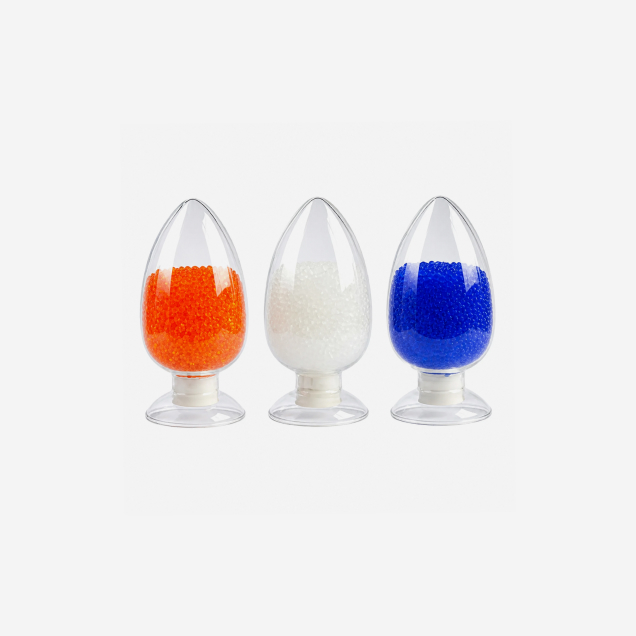
Silica gel is amorphous silicon dioxide grown into hard, glassy beads that are riddled with nanometre-scale pores. Those pores give a single gram of gel a few hundred square metres of internal surface, and water vapour clings to that surface through weak physical attraction. It is adsorption, a surface effect, rather than absorption into the bead, so nothing is used up or given off, the beads neither swell nor dissolve, and the gel stays a dry-feeling solid even while it holds a lot of water. In a sealed space it keeps drawing moisture until the air is quite dry. The plain white gel is the everyday desiccant and is chemically pure and safe; colour-indicating grades that change shade as they fill are a separate option for when a visual check matters.
The one habit worth understanding is that silica gel's appetite for water climbs with the humidity around it. In dry air it takes up modestly; in damp air it takes up far more. This is why capacity is quoted at several humidity levels rather than as a single figure:
| Relative humidity | Water adsorbed (of dry weight) |
|---|
| 20% RH | at least 10.5% |
| 50% RH | at least 23% |
| 80% RH | at least 36% |
We supply the gel in bead sizes from 1-3 mm up to 4-8 mm, loose in drums or bags or packed into printed sachets from a gram or two up to large container bags. Finer beads act quickly in small sachets; coarser beads suit big charges and container drying. When the gel eventually fills, a spell of gentle heat drives the water back out and the same beads serve again. To fix an amount, tell us what you are protecting, the size of the sealed space, how well it is closed and how long it must stay dry, and we will work out the grade, bead size and sachet weight.