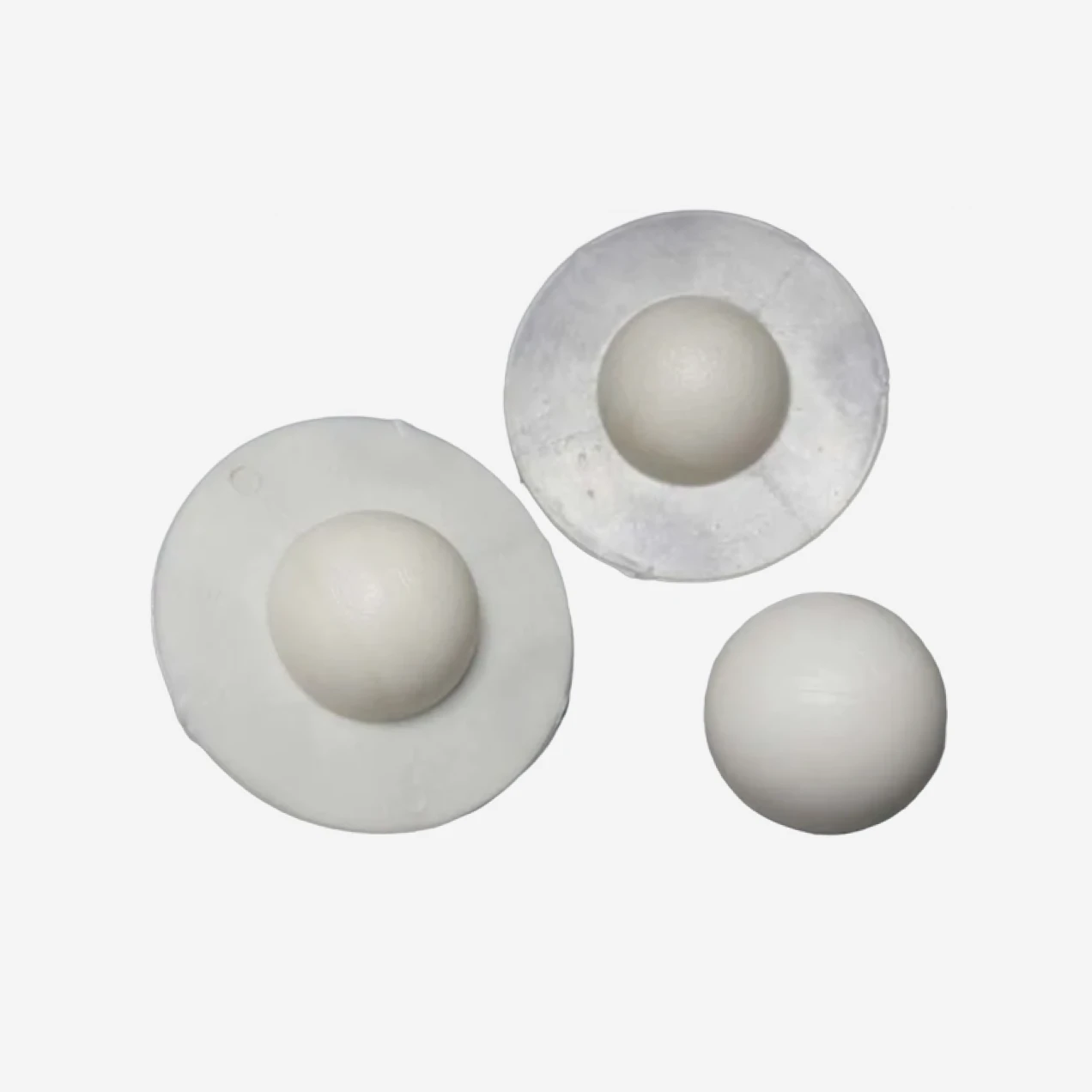
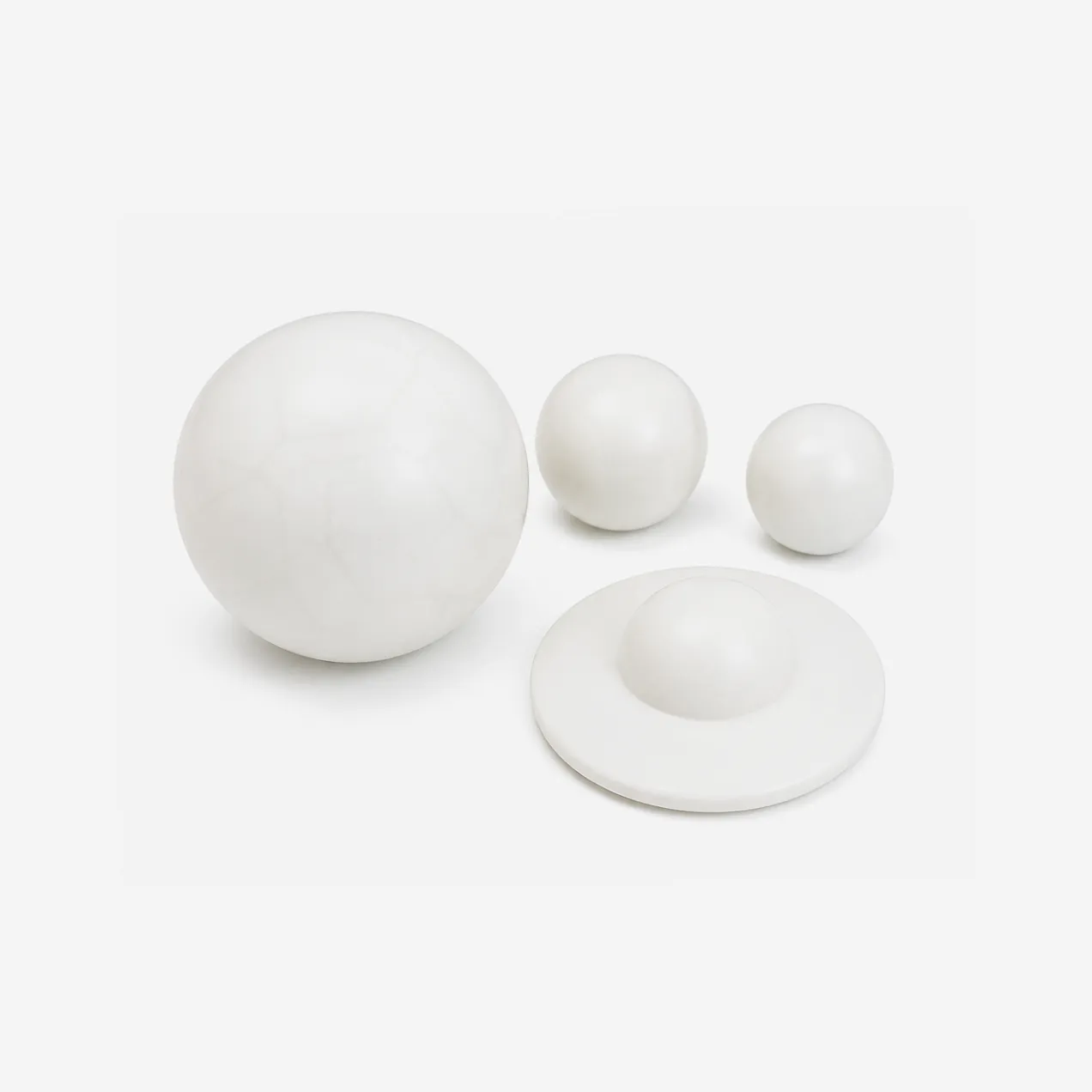
The liquid surface covering ball is not a tower packing at all — it is a floating cover. Each ball is a hollow polypropylene sphere, light enough to float high on a liquid and shaped to sit steadily, so a mass of them spreads across the top of a tank and locks together into a close, even layer. Depending on ball size, that layer blankets 91 to 99 percent of the surface. It is the blanket, not any single ball, that does the work, and it works in several ways at once.
What a floating layer of these balls does:
| The floating layer... | Effect |
|---|
| Blankets 91 to 99 percent of the surface | Cuts evaporation and the loss of the liquid |
| Traps rising vapour beneath it | Holds down acid fog and toxic mist above the tank |
| Seals the surface from the air | Slows the carbon dioxide and oxygen pickup that fouls the liquid |
| Insulates the top of the tank | Keeps heat in and saves energy |
That makes it the answer for open tanks of volatile or corrosive liquid: acid storage tanks upright and horizontal, plating and water-treatment tanks, condensate and desalination tanks. Made of PP, it shrugs off corrosion, floats on strongly acidic liquids down to about pH one, and holds up to around 120 degrees; it comes in sizes from 20 to 80 millimetres and in two densities. To size a batch, all we need is the surface area of the tank, the liquid and its temperature, and we will work out the ball size, density and quantity.