search
Search

Enter keywords to search for products, blog posts, and more.


Home > Ceramic Filter Tube

Ceramic Filter Tube
Ceramic Filter Tube

Ceramic Filter Tube

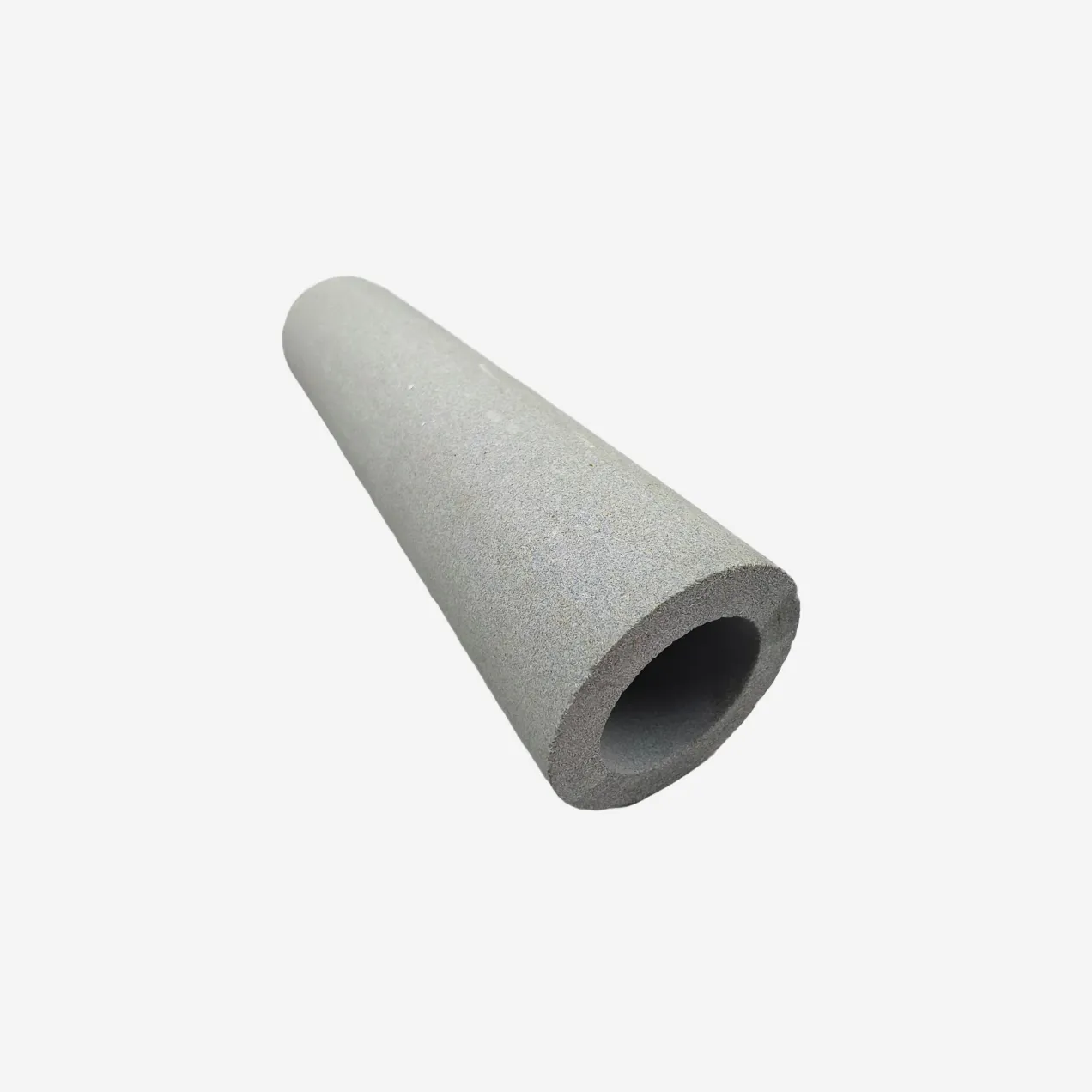
Ceramic filter tube is a porous, fired-kaolin ceramic tube used as a high-precision filter element for liquids and gases. Its wall is not solid but a fine, controlled network of pores, so fluid pumped into or across the tube passes through the ceramic wall while the solids, particles — and, at fine grades, even bacteria — are held back on the surface and in the pores, giving a clear filtrate. The precision is set by the pore structure, so it filters much finer than a granular bed and can be built to a defined rating. Because it is fired ceramic, the tube shrugs off acids and alkalis, takes high temperature without deforming, and is strong and non-toxic, so it works in harsh or hot process streams where plastic or paper filters would fail. When the pores load up with retained solids, the tube is cleaned and regenerated — usually by back-flushing — and used again, over a long life. It is made in a range of sizes, from WFG-30 up to WFG-300 (outer diameter 30 to 300 mm), typically 1000 mm long. Model RJ-449.

  • Porous kaolin-ceramic filter tube: high-precision filtration for liquids and gases.
  • Fluid passes through the fine porous wall; solids (and fine grades, bacteria) are held back.
  • Acid-, alkali- and heat-resistant; high strength; non-toxic; no deformation.
  • Cleaned and regenerated by back-flushing; long life.
  • Sizes WFG-30 to WFG-300 (OD 30–300 mm), 1000 mm long; model RJ-449.

Technial Parameters

ModelOuter diameter (mm)Inner diameter (mm)Length (mm)
WFG-3030201000
WFG-3535201000
WFG-4040201000
WFG-5050301000
WFG-6060401000
WFG-707040–501000
WFG-8080501000
WFG-10010060–701000
WFG-15015090–1001000
WFG-1801801201000
WFG-2002001401000
WFG-2602602001000
WFG-3003002301000


PropertyValue
Product TypeCeramic filter tube (porous ceramic filter element)
FunctionHigh-precision filtration: fluid passes through the porous ceramic wall; solids held back
Model NO.RJ-449
MaterialPorous kaolin ceramic
Colour / FormWhite or brown; cylindrical tube
SizesWFG-30 to WFG-300 (OD 30–300 mm, ID 20–230 mm); length 1000 mm
PropertiesHigh filtration precision, acid/alkali resistant, thermally stable, high strength, non-toxic, good sealing
UsesLiquid-solid separation, gas purification/filtration, disinfection
CleaningCleanable and regenerable (back-flush); reusable, long life
AdvantagesFine precision, harsh/hot-service capable, no deformation, easy to clean, durable
ApplicationsChemical, wastewater, process and gas filtration in demanding environments
TrademarkRONGJIAN
OriginChina
HS Code6909110000
Transport PackageSteel drum / ton bag / carton box

FAQs

What is a ceramic filter tube, and how does it work?

A ceramic filter tube is a hollow tube of porous ceramic, used as the filter element in equipment that has to separate solids from a liquid or a gas very cleanly. It looks like a plain ceramic pipe, but its wall is deliberately made porous, honeycombed with a fine, even network of tiny channels. That porous wall is the filter. In use the tube is fitted into a housing, and the dirty fluid is put under pressure on one side of the wall; the fluid is forced through the pores to the other side and comes out filtered, while the particles it was carrying are too big to pass and are left behind on the wall. How fine it filters is set by the size of the pores, which can be controlled in manufacture, so the tube can be made to a chosen precision, from simply clarifying a liquid down to holding back very fine particles or even bacteria. Because everything about it is fired ceramic, it filters where the going is hard: in hot fluids, in strong acids or alkalis, and in streams that would dissolve or clog an ordinary filter. It is a precise, rugged, reusable filter.

What is it used for — liquid, gas or disinfection?

Three main kinds of job. The first and commonest is liquid-solid separation: pulling suspended solids, precipitates or catalyst fines out of a process liquid to recover a clear filtrate, or to recover the solids, in chemical, pharmaceutical and wastewater work. The second is gas filtration and purification: the same porous wall filters dust and fine particulate out of a gas stream, including hot gases that would destroy a fabric filter, which is useful in high-temperature process and flue-gas cleaning. The third is disinfection, or sterile filtration: made to a fine enough grade, the ceramic pores are small enough to physically strain bacteria out of water, so the tube can produce microbiologically safe water without chemicals, the same principle as a ceramic drinking-water filter, scaled up. Across all three the appeal is the same: a fine, exact filtration that also survives heat, corrosion and repeated cleaning. Tell us the fluid and what you need to remove and we will suggest the grade.

How is a filter tube different from granular filter media?

They filter in different ways and at different scales. Granular media, sand, ceramic sand, gravel, is a loose bed of grains; water trickles through the spaces between the grains and the dirt is caught among them. It is simple and cheap and handles large flows, but it is relatively coarse: it clarifies water rather than filtering it to an exact fineness, and the grains just sit loose in a vessel. A ceramic filter tube is a single, solid element with a precisely made porous wall, so it filters much finer and to a defined rating, and it does so as a fixed piece plumbed into a housing. In short, granular media is for bulk clarification of large volumes, while a ceramic tube is for fine, precise separation, recovering a specific solid, polishing a liquid, or sterilising it, often on smaller, more valuable streams. Many plants use both: a sand bed for the rough work and ceramic elements for the fine. Tell us how clean the filtrate must be and we will say which suits.

What sizes and properties does it have, and how is it cleaned?

The tubes are made in a standard range, the WFG series, from WFG-30 to WFG-300, where the number is the outer diameter in millimetres, so from a 30 mm tube up to a 300 mm one, with the inner bore scaling from about 20 up to 230 mm, and a standard length of 1000 mm; several tubes are usually bundled into one housing for the flow needed. Whatever the size, the ceramic gives the same properties: a high, controllable filtration precision; strong resistance to acids and alkalis; thermal stability with no softening or deformation when hot; high mechanical strength; and a clean, non-toxic surface with good sealing at the ends. Cleaning is one of its best features. When the pores clog and the flow drops, the tube is regenerated rather than thrown away, most simply by back-flushing, reversing the flow to push the trapped solids back out of the pores, and where needed by chemical cleaning or firing. Done regularly, this returns the tube to near-new and it serves for a long time. Send us the fluid, the flow and the vessel and we will specify the tubes.

A ceramic filter tube is a porous, fired-kaolin ceramic tube that works as a precise, rugged filter element for liquids and gases. Its wall is a fine, controlled network of pores; mounted in a housing, it is fed the fluid under pressure, and the fluid passes through the pores while the solids — down to fine particles and, at the finest grades, bacteria — are held back, giving a clear filtrate. The pore size sets the precision, so it filters far finer than a granular bed. Being all fired ceramic, it withstands acids, alkalis and high temperature and is cleaned and reused for a long life.

What a ceramic filter tube is used for:

UseWhat it does
Liquid-solid separationRecovers a clear filtrate or the solids from a process liquid
Gas purificationFilters dust and fine particulate from gas, including hot gas
DisinfectionAt fine grades, strains bacteria out to give safe water without chemicals

It is used in chemical, pharmaceutical, wastewater and process-gas filtration, especially in hot or corrosive service where other filters fail. It is made in the WFG series, from WFG-30 to WFG-300 (outer diameter 30 to 300 mm), 1000 mm long, and is regenerated by back-flushing for repeated use. Tell us the fluid, the flow and what you must remove, and we will specify the tubes and the grade.