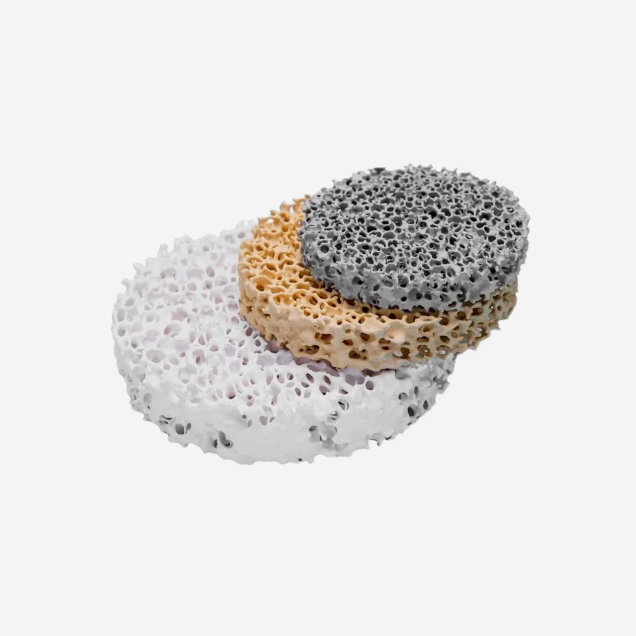
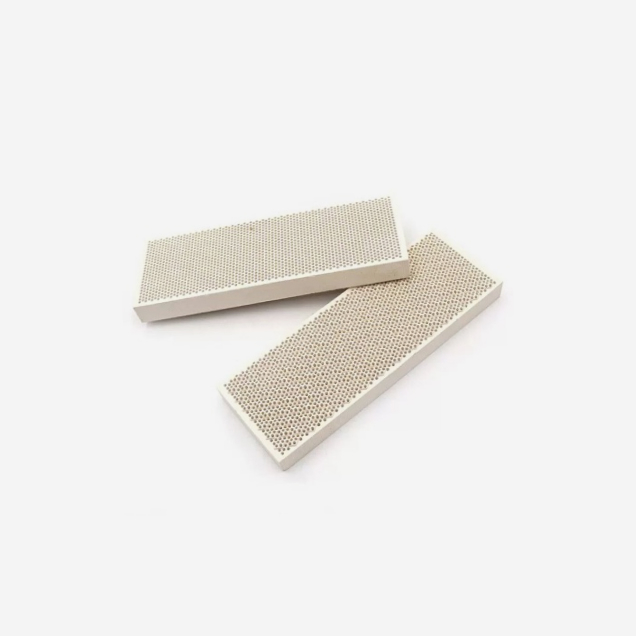
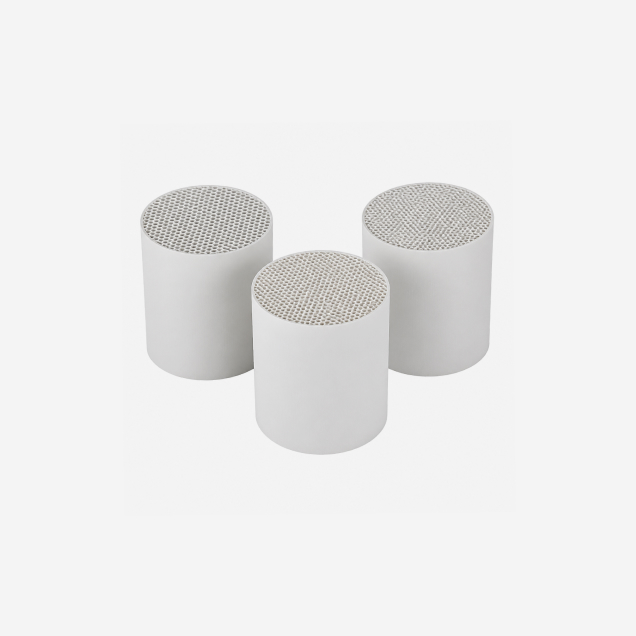
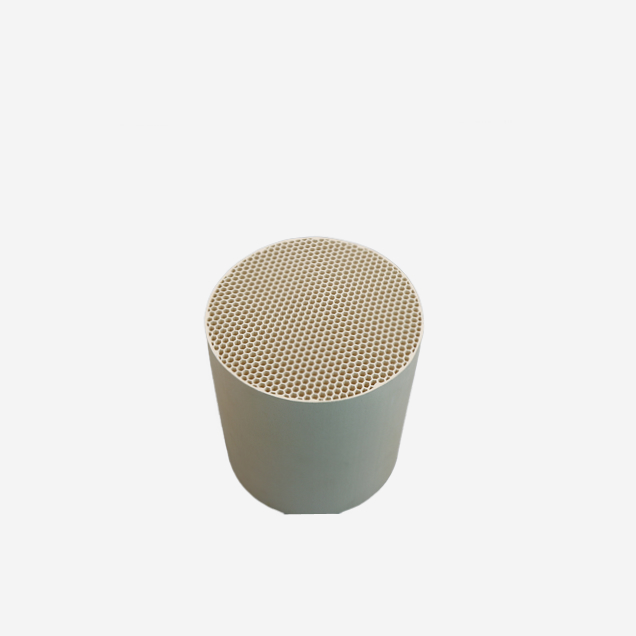
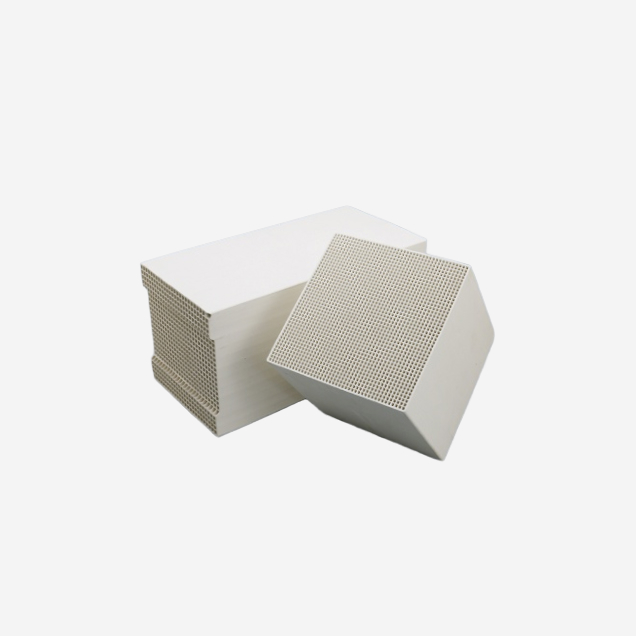
A ceramic foam filter cleans metal three ways at once. Particles larger than the pores are screened at the face; medium inclusions build a thin cake on the surface that then filters on its own; and the finest oxide films are caught deep inside, sticking to the strut walls as the metal winds through the maze. On top of that, the open structure breaks a turbulent pour into smooth, laminar flow, which stops the metal tearing in fresh oxides and pulling in air on the way to the mould. The payoff is a cleaner melt and a calmer fill.
Selecting a filter is a balance of grade, PPI and area. Grade comes first and follows the metal — alumina for aluminium and non-ferrous, silicon carbide for iron and copper, zirconia for steel — each rated for that metal's pouring heat; a grade rated too low will dissolve and contaminate rather than filter. PPI sets how fine the clean-up is: coarse cells for fast, high-volume or dirty pours, fine cells for critical or thin-section castings. Area sets capacity, since the filter has to pass the whole pour before its pores blind off, so heavier castings and faster pours want a larger filter or a coarser grade.
Placement and handling decide whether the filter delivers. It goes in a sealed print in the running system — the sprue base, a runner or the pouring cup — so every bit of metal is driven through it and none bypasses the edge, and the gating is opened up a little to make up for the added flow resistance. For iron and steel the filter is usually pre-heated, in the mould or by the first metal, to avoid cracking from thermal shock; light aluminium pours often bring it up to heat on their own. The filter is a single-use consumable — once the casting solidifies it stays in the runner and is knocked off with the gating. Used and placed properly, foam filtration cuts inclusion rejects, reduces machining loss from hard spots, and improves the pressure-tightness and fatigue life of the casting.