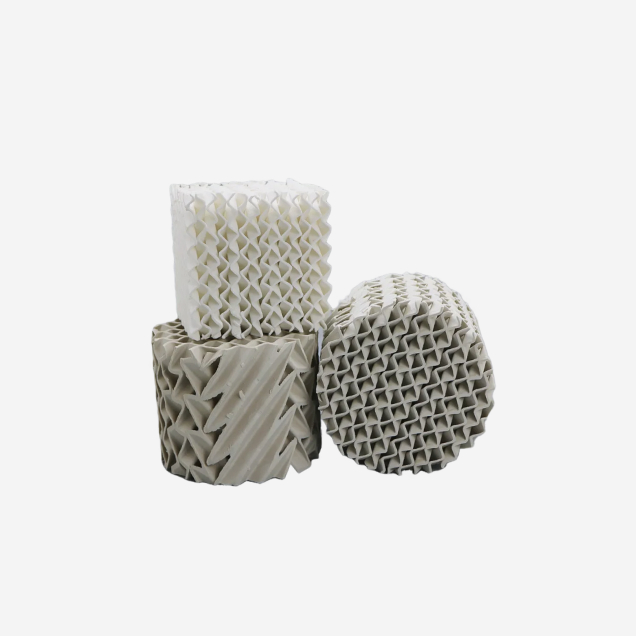
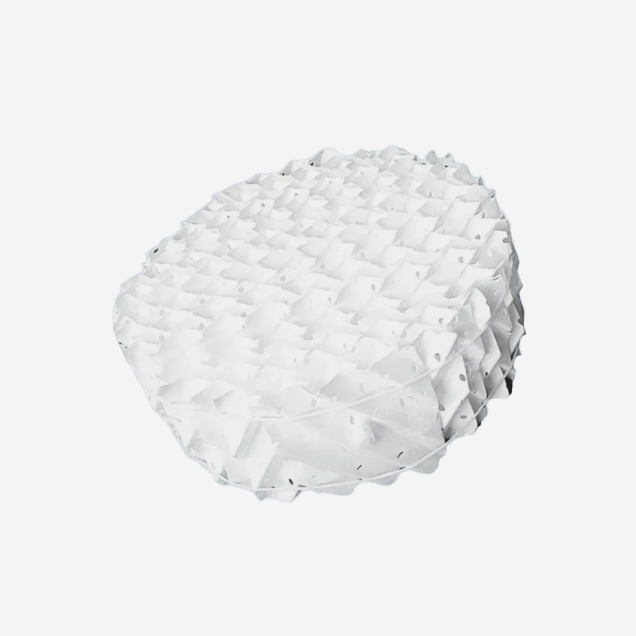
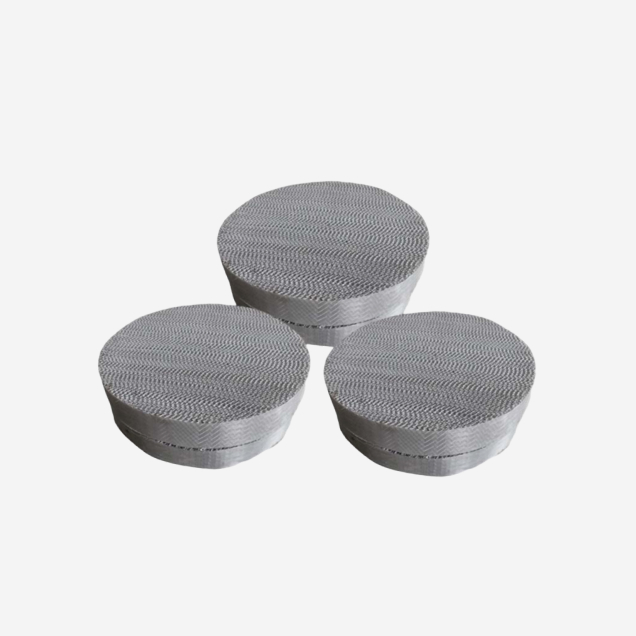
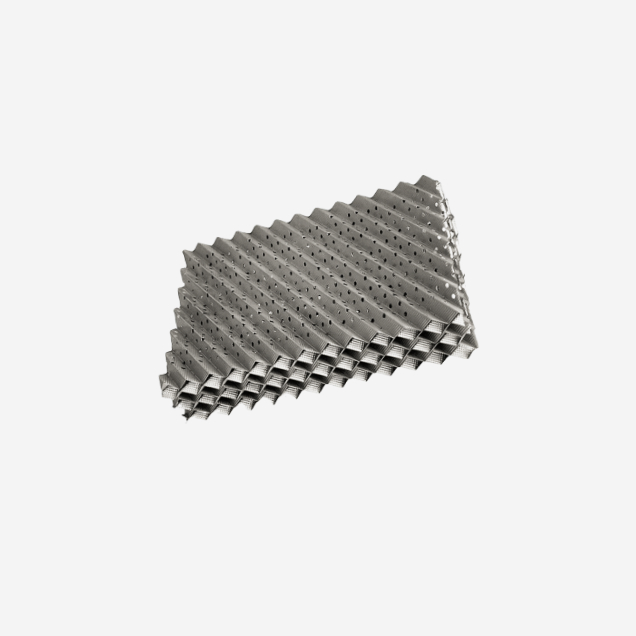
Plastic orifice corrugated packing is built by stamping thin plastic sheets into a regular wave profile, punching small holes across the face, then stacking the sheets so the corrugations of one layer cross the layer below. Every second layer is turned about 90°, which makes the gas and liquid change direction from one layer to the next and keep mixing. The corrugation angle sets the character of the packing: the common Y series runs at a 45° angle for higher efficiency, while X-series sheets sit at 60° for more capacity and lower pressure drop. The holes matter as much as the wave, because they let liquid cross between channels, wet the surface evenly and renew the film, which is what raises the mass transfer rate and keeps the bed from channelling.
Choosing the material is the first decision, and it comes down to the operating temperature and what is in the stream:
- PP — most water-based scrubbing, mild acids and alkalis, service to about 100°C. The default, lowest-cost grade.
- PVC / CPVC — chlorinated and acidic media; PVC for cooler duty near 60°C, CPVC where the stream runs hotter, to about 100°C.
- PVDF — strong oxidisers, hot acids and temperatures up to about 150°C.
- PTFE — the most aggressive chemistry and the highest heat, with a non-stick surface that resists fouling and scaling.
After the material, the model sets the balance between separation and throughput. Lower numbers such as 125Y have wide channels, high void fraction and low pressure drop, which suits high liquid loads and vacuum service where pressure drop has to stay small. Higher numbers such as 350Y and above pack more surface area into the same volume for tighter separations, at the cost of some capacity. Most absorption and stripping columns run in the 125Y to 250Y band, while distillation that needs more theoretical stages moves higher. When you upgrade an existing tower, the same shell can often take a higher-area grade to gain stages without a bigger vessel.
Typical duty covers acid gas absorption, CO2 and H2S removal, degassing and deaeration, solvent recovery, chlorine and HCl handling, flue gas and odour scrubbing, and wastewater stripping. In each of these the plastic body earns its place by resisting the corrosive medium while staying light enough to load and change by hand. Where the process is clean and runs hotter than plastic allows, metal structured packing is the alternative; where the stream is dirty and corrosive, plastic corrugated packing is the practical, lower-cost choice.