
Activated alumina is a porous form of aluminum oxide that plants use to pull water and specific contaminants out of gases and liquids. It shows up in three very different jobs: drying compressed air and natural gas, stripping fluoride and arsenic from drinking water, and carrying catalysts in refineries. The same white spheres do all three because of one shared trait, a large internal surface that holds onto polar molecules. This guide covers what activated alumina is, how it works, the grades and sizes you can buy, where it is used, and how it compares with silica gel and molecular sieve. We manufacture activated alumina and the related adsorbents, so the figures here reflect what we ship and the questions buyers actually ask.
What is activated alumina?
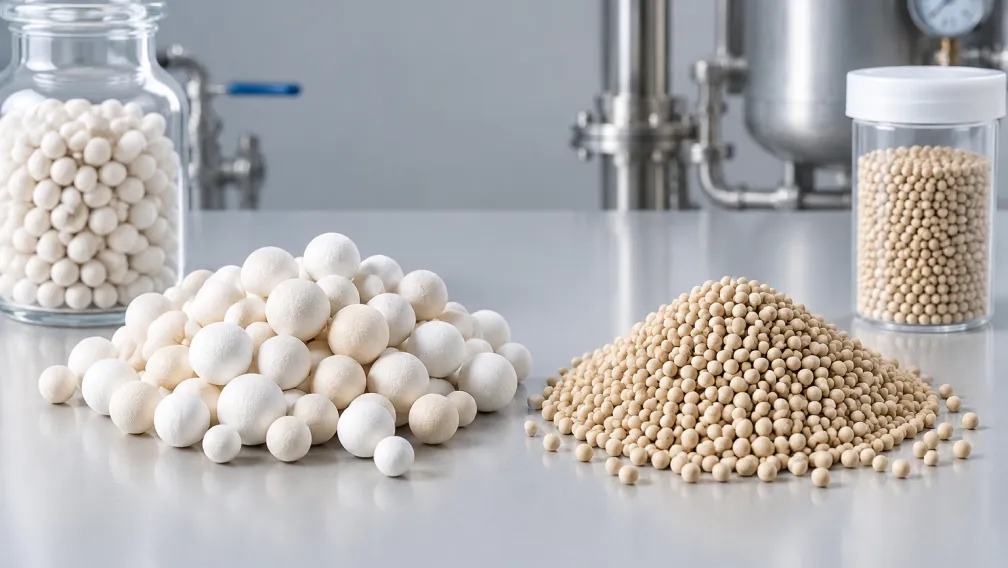
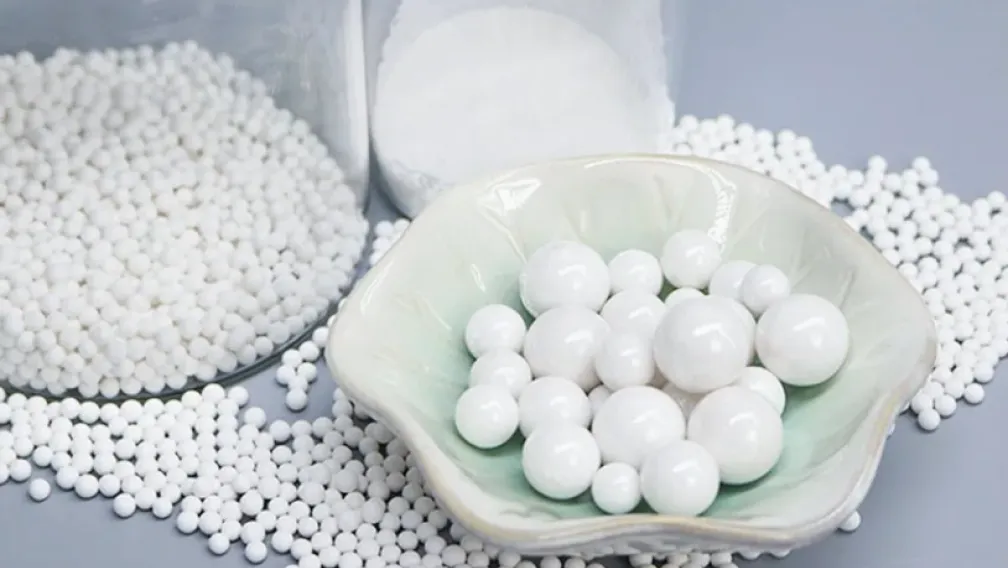
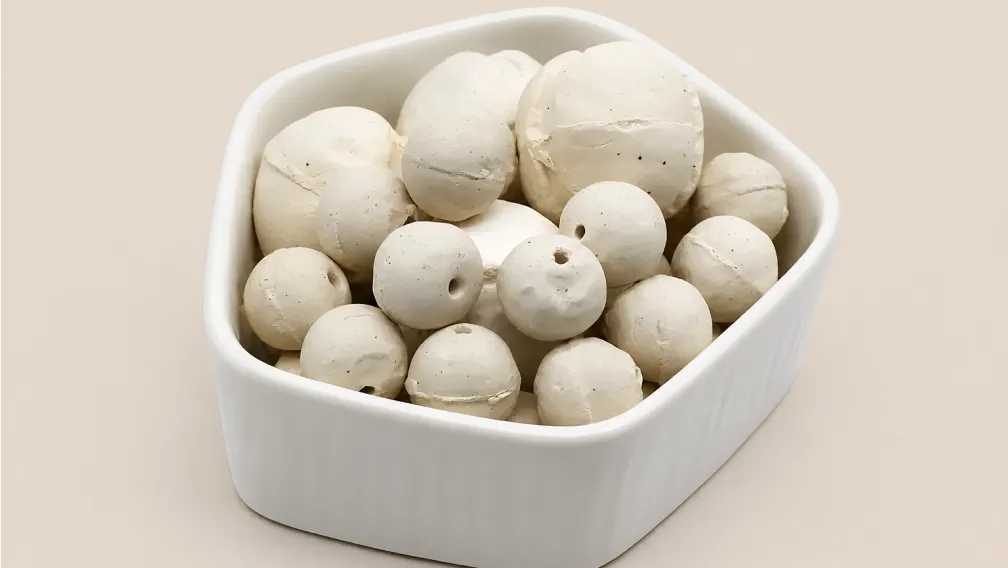
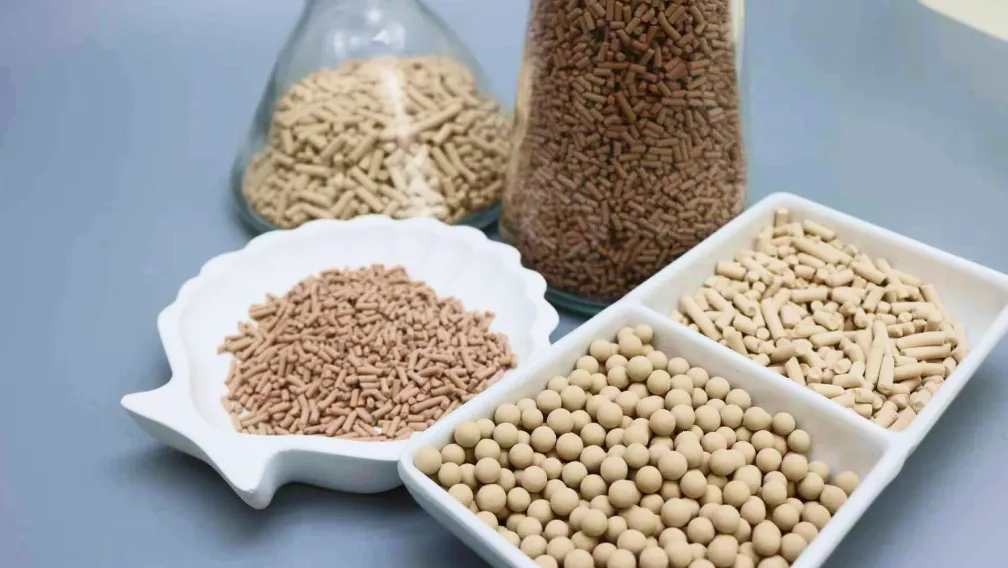
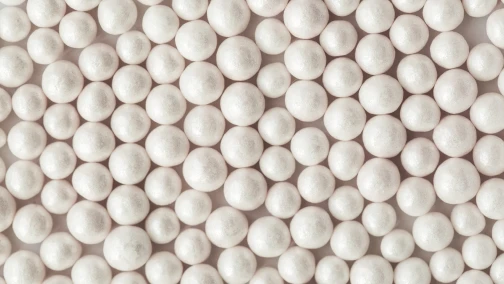
Activated alumina is aluminum oxide, Al2O3, made porous on purpose. Producers start with aluminum hydroxide, usually from bauxite, and calcine it, heating it to roughly 300 to 600 °C to drive off most of the bound water. What is left is a transition alumina, mainly gamma phase with some boehmite, riddled with fine pores. That thermal step is what separates activated alumina from ordinary, inert aluminum oxide. The result is a hard, off-white bead or granule with an internal surface area in the range of 200 to 350 m² per gram. Almost all of that surface sits inside the pores, which is where the adsorption happens. The material is chemically stable, does not dissolve in water, and holds its shape when it takes up moisture.

How activated alumina works
Activated alumina works by adsorption, which means molecules stick to the pore walls rather than soak into the solid. The surface carries a mix of acidic aluminum sites and hydroxyl groups, so it has a strong pull on polar molecules. Water is small and highly polar, so it is held tightly, and that is why the material is such a good drier. As a gas or liquid flows through a packed bed, water and other target molecules diffuse into the pores and stay there while the rest of the stream passes on.
The process is physical and reversible. Once a bed is loaded, you regenerate it with heat or a chemical wash and run it again. A good desiccant grade takes up around 20 percent of its own weight in water at saturation, and it keeps drying down to low dew points even after the incoming stream is already fairly dry.
Key properties that matter in service
Buyers usually care less about the chemistry than about how the media behaves inside a vessel. Activated alumina is popular because it is tough. The properties worth checking are:
- High crush strength, so beds hold up under their own weight and under pressure without breaking down.
- Resistance to thermal shock and abrasion, which matters during fast loading and repeated regeneration cycles.
- It does not swell, soften, or turn to powder when it gets wet, which is a common failure mode for cheaper desiccants.
- A wide working window across temperature and pH, so one bed can handle varied duty.
- A lower regeneration temperature than molecular sieve, which trims energy cost.
One limit is worth knowing. Held too hot in humid conditions, above about 260 °C, the pore structure starts to crystallize and the material loses activity, so regeneration is kept below that point.
Grades, shapes, and sizes
Activated alumina is not a single product. It is sold in a few shapes and several grades tuned for different jobs.
- Spheres, the most common form, from about 2 mm (1/16 inch) up to 13 mm (1/2 inch). Smaller beads give more surface and tighter drying; larger beads give lower pressure drop.
- Granular and extruded shapes for specific reactor and filter designs.
- Standard desiccant grade for drying air, gas, and liquids.
- Promoted or impregnated grades, such as alkali-treated media, built to lift fluoride and arsenic capacity in water treatment.
- Catalyst-carrier grade with controlled pore volume and crush strength for use as a support.
Matching the size and grade to the duty is most of the selection work, which the last section walks through.

What activated alumina is used for
Three uses cover most of the market, and the same base material serves all of them.
Drying gases and liquids
The largest use is as a desiccant. In a twin-tower dryer, one vessel dries the stream while the other regenerates, and the towers switch on a timer. Activated alumina is the standard fill for compressed air dryers, where it brings the pressure dew point down to about -40 °C in a heatless, pressure-swing design and to -60 °C or lower in a heated design. It also dries natural gas ahead of processing, along with hydrogen, argon, and many hydrocarbon and solvent streams. The aim in every case is the same, keep water out so downstream lines and equipment do not corrode or foul. Because it regenerates at a lower temperature than molecular sieve, it is often the cheaper choice when a -40 °C dew point is dry enough.

Removing fluoride, arsenic, and other contaminants from water
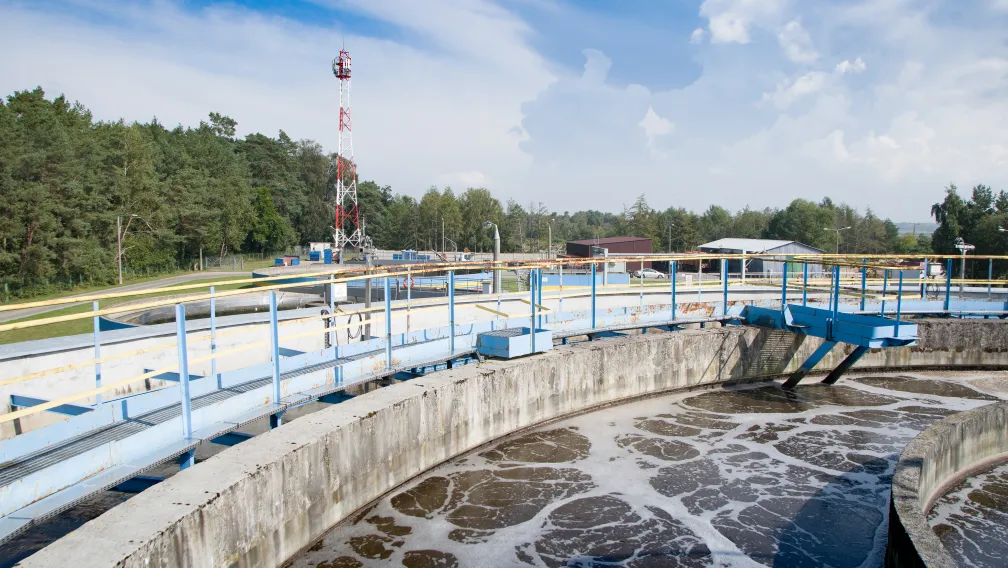
In water treatment, activated alumina is the workhorse for defluoridation. The surface attracts fluoride ions and holds them through ion exchange and surface reaction, and regulators list it among the proven technologies for both fluoride and arsenic. It performs best in slightly acidic water, around pH 5.5 to 6.5, where a bed can cut fluoride from 10 ppm to below the 1.5 ppm drinking-water limit, often removing well over 90 percent. Typical fluoride loading is on the order of 1 to 2 mg per gram of media before the bed needs attention. The same media also takes up arsenic, selenium, and silica. When it saturates, it is regenerated with a caustic soda wash followed by acid neutralization, then put back in service. It is one of several water treatment media used for this duty.

Carrying catalysts and supporting beds
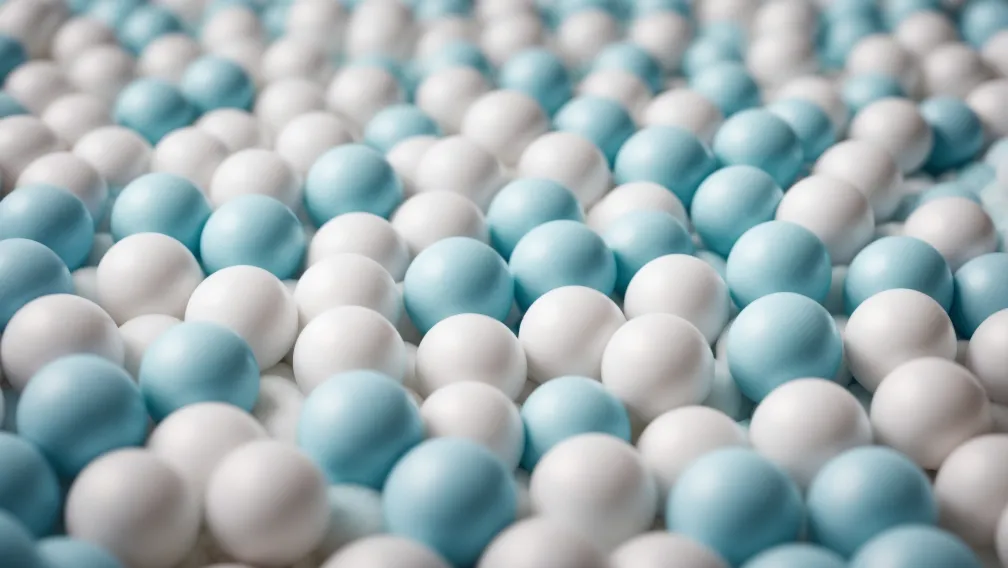
Refineries and chemical plants use activated alumina as a catalyst carrier and as bed support. Its high surface area and even pore structure make a stable platform for spreading an active metal, so it appears in hydrotreating, hydrocracking, and sulfur recovery. In Claus sulfur units it works as active bed support at the top and bottom of the converters. In hydrogen peroxide plants it sits in the hydrogenation tower. Where a reactor needs plain, non-reactive support to hold the catalyst and spread flow, high-alumina inert ceramic balls handle that job, and the two are often loaded in the same vessel.
Activated alumina vs silica gel and molecular sieve
Activated alumina is one of three adsorbents that dominate industrial drying, and the right pick depends on how dry you need the stream and the conditions you run it under. In short, activated alumina is the rugged middle option: it reaches a -40 °C dew point, shrugs off hot, wet gas, and costs less to regenerate, so it suits compressed air and general gas drying. Silica gel holds more water at room temperature and costs the least, which fits static packs and moderate duty, but it is softer and can break down if liquid water hits it. Molecular sieve drives dew points far lower, to -60 °C to -80 °C and below, and can separate molecules by size, but it needs a much higher regeneration temperature. Plenty of real systems layer them, letting alumina or silica gel take the bulk of the water and a molecular sieve finish the drying. Our desiccant selection guide works through the trade-offs in detail.
Regeneration and service life
Activated alumina is built to be reused, not thrown away. In drying service it is regenerated by thermal swing, heating the bed with a dry purge to drive the water off, kept below the crystallization point so the pores survive. In defluoridation it is regenerated chemically with caustic soda and acid. Either way a bed runs for hundreds of cycles. In compressed air dryers, operators typically replace the desiccant every 3 to 5 years in heatless dryers and every 2 to 3 years in heated ones, though the honest measure is the outlet dew point, not the calendar. When the dew point starts to climb, pressure drop rises, or moisture shows up downstream, the bed is spent.
How to choose the right activated alumina
A few questions settle most selections:
- What are you removing? Water from a gas or liquid points to a standard desiccant grade. Fluoride or arsenic from water points to a promoted defluoridation grade. A catalyst platform points to a carrier grade.
- What is the target? A -40 °C dew point, or a fluoride result below 1.5 ppm, sets the grade and the bed size.
- What are the conditions? Temperature, pressure, flow, pH, and whether you regenerate by heat or by chemistry all shape the bead size and the bed design.
Get those three right and the rest is sizing. If you are unsure, send us the numbers and we will match the grade and quantity.
Where Rongjian fits
We manufacture activated alumina across the full range of sphere sizes, along with the molecular sieve and silica gel that often share the same bed. Our media goes into compressed air and gas drying, defluoridation, and catalyst duty in more than a hundred countries, shipped as beads to your size with a test report on every batch. Tell us the stream, the contaminant or dew point target, and your regeneration method, and we will recommend the grade, bead size, and quantity. Reach us through the enquiry form or your Rongjian contact for advice or a quote.
Frequently asked questions
What is activated alumina used for?
Activated alumina has three main uses: drying gases and liquids as a desiccant (compressed air, natural gas, solvents), removing fluoride, arsenic, and selenium from drinking water, and acting as a catalyst carrier or bed support in refineries and chemical plants. All three rely on its porous surface and its strong pull on water and other polar molecules.
How does activated alumina work?
It works by adsorption. As a stream passes through a packed bed, water and other target molecules diffuse into the material's fine pores and are held on the surface, while the rest of the stream flows through. The surface is polar, so it grips water tightly. The process is reversible, so the bed is regenerated with heat or a chemical wash and used again.
Is activated alumina the same as aluminum oxide?
It is a form of aluminum oxide (Al2O3), but not the same as ordinary, inert alumina. Activated alumina is made by heating aluminum hydroxide to create a porous, high-surface-area structure, mostly gamma-phase alumina. That porosity is what gives it its adsorbent and drying ability; dense, corundum-type alumina does not have it.
How does activated alumina remove fluoride from water?
Fluoride ions in the water are drawn to the alumina surface and held there by ion exchange and surface reaction. It works best in slightly acidic water, around pH 5.5 to 6.5, and can cut fluoride to below the 1.5 ppm drinking-water limit, often removing more than 90 percent. A typical bed holds roughly 1 to 2 mg of fluoride per gram before it needs regenerating with a caustic and acid wash.
Can activated alumina be regenerated?
Yes. In drying service it is regenerated by heating the bed with a dry purge to drive off the water, kept below about 260 °C so the pores are not damaged. In water treatment it is regenerated chemically with sodium hydroxide followed by acid. A bed lasts for hundreds of cycles, and desiccant fills are usually replaced every 2 to 5 years depending on the dryer type and conditions.
What is the difference between activated alumina and silica gel?
Activated alumina reaches lower dew points, around -40 °C, and is tougher against hot, wet gas and liquid water. Silica gel holds more water at room temperature and costs less, which suits static desiccant packs and lighter duty, but it is softer and can break down if liquid water contacts it. Many systems use silica gel for bulk moisture and alumina or molecular sieve for deeper drying.
What dew point can activated alumina reach?
In a heatless, pressure-swing compressed air dryer, activated alumina typically reaches a pressure dew point of about -40 °C. In a heated, heat-reactivated dryer it can reach -60 °C or lower. For the very lowest dew points, molecular sieve is often added as a final layer.
How long does activated alumina last?
With proper regeneration, activated alumina runs for hundreds of cycles and several years. In compressed air service a common guide is every 3 to 5 years for heatless dryers and every 2 to 3 years for heated dryers, but the real signal is performance: when the outlet dew point rises, pressure drop increases, or moisture reaches downstream equipment, it is time to change the bed.
-

Rongjian
Process Media Manufacturer Since 2010
Rongjian produces tower packing, molecular sieves, ceramic grinding media and other process media from our Pingxiang production base. We supply to industrial projects in over 100 countries.