search
Search

Enter keywords to search for products, blog posts, and more.


Home > Ceramic Bio Glass Ring

Ceramic Bio Glass Ring

Ceramic Bio Glass Ring

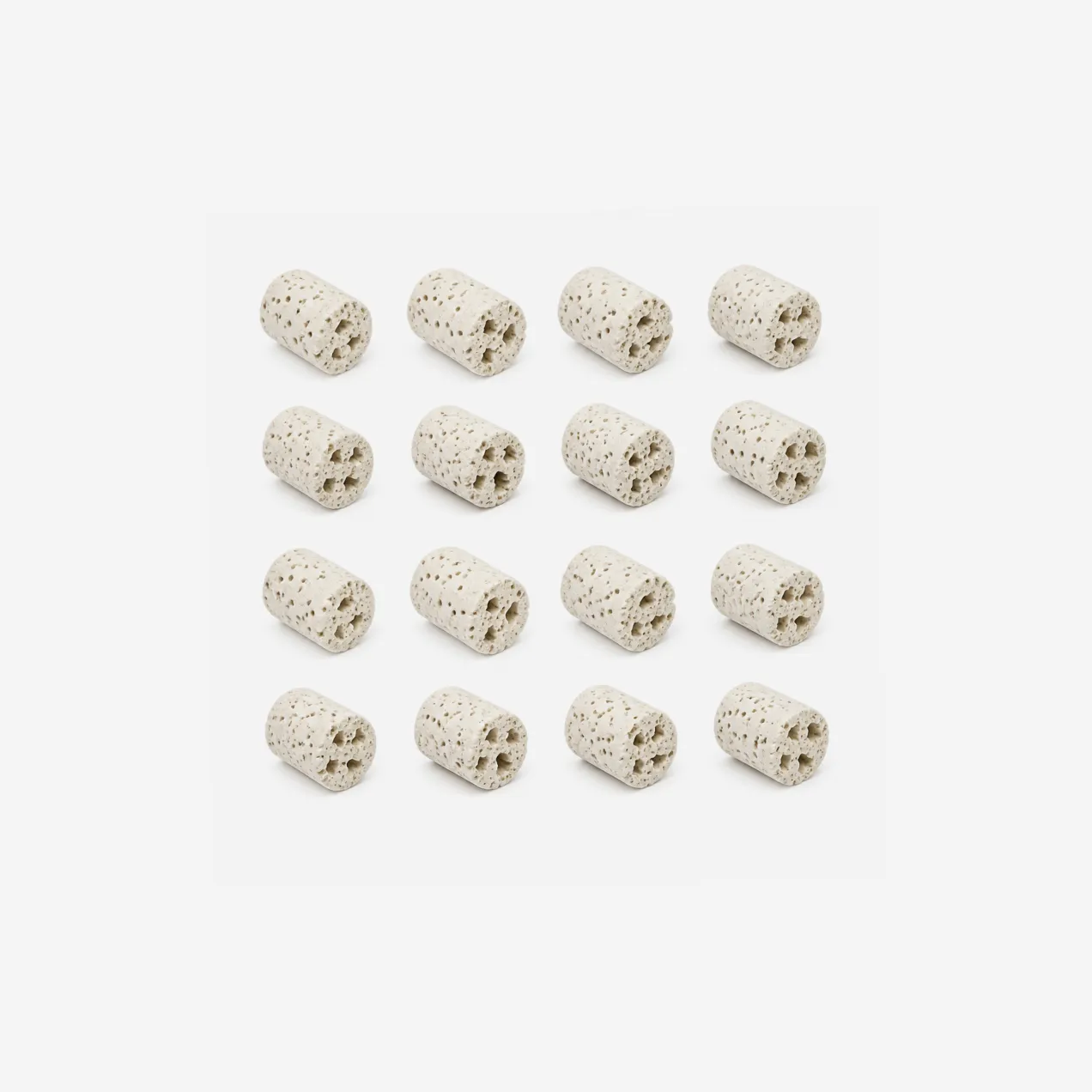
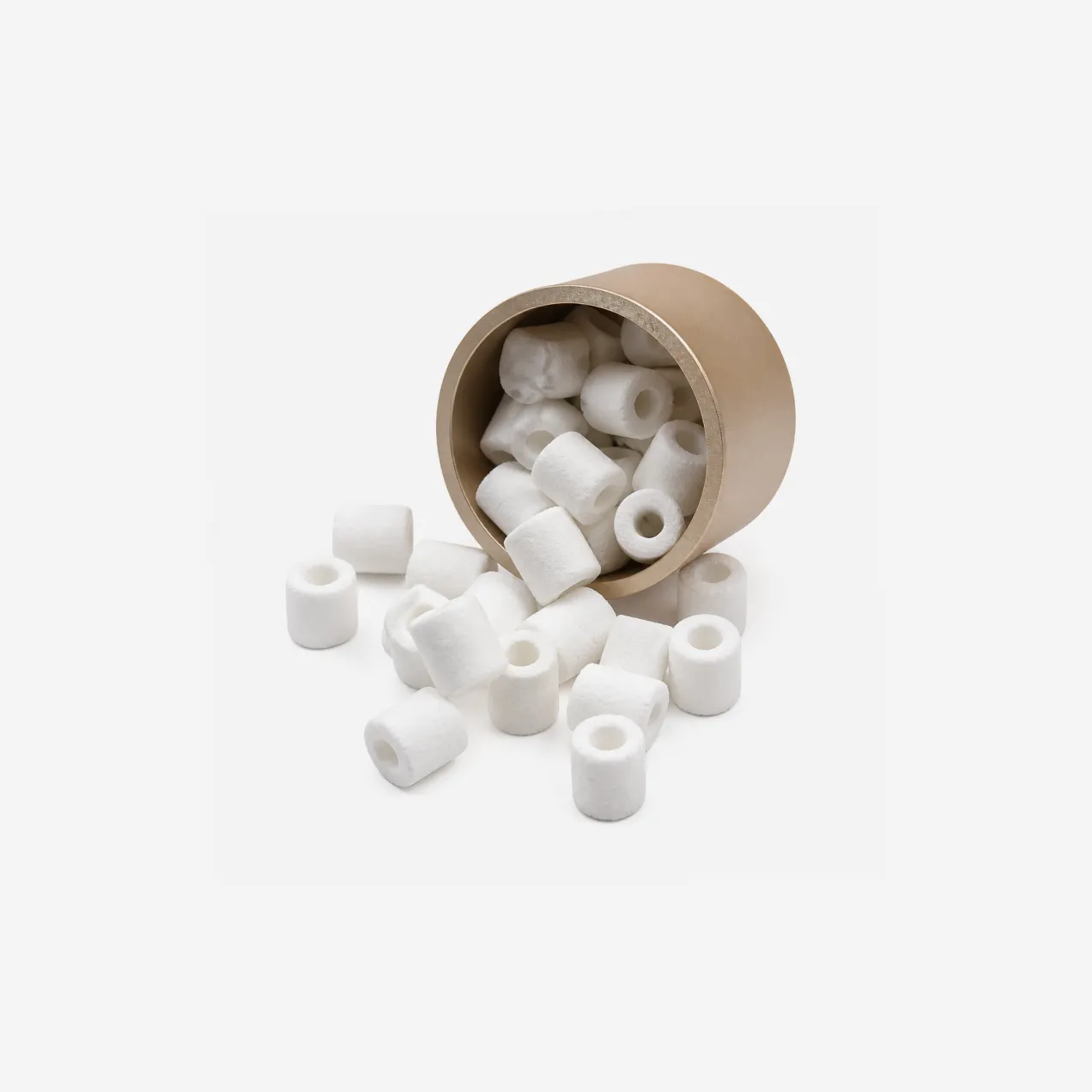
Ceramic bio glass ring is a porous, hollow-cylindrical ceramic used as biological filter media in aquarium and pond filters. Fired from kaolin at high temperature, it is riddled with micro-pores from a fraction of a micron up to about 100 microns across, giving it a surface area many times that of plain media — a vast internal landscape for beneficial bacteria to colonise. In a running filter, nitrifying bacteria settle in those pores and multiply, and as tank water passes through they convert the toxic ammonia from fish waste first to nitrite and then to far less harmful nitrate, keeping the water safe and clear. The rough, hollow shape stirs the water into small eddies as it flows through, which helps the bacteria work and breaks down organic waste. The ceramic is chemically inert, safe in fresh and salt water, crush-resistant, and lasts a year or more, rinsing clean for reuse. Porosity is about 65 percent; size 10 to 25 mm. Model RJ-2850.

  • Porous kaolin-ceramic bio ring: biological filter media for aquariums and ponds.
  • Micro-pores (0.1–100 µm) give a huge surface for nitrifying bacteria to colonise.
  • Bacteria break down ammonia to nitrite to nitrate, keeping water safe.
  • Inert and safe in fresh and salt water; crush-resistant; lasts a year or more.
  • Porosity about 65.54%; density 1.13 g/cm³; size 10–25 mm; model RJ-2850.

Technial Parameters

ParameterValue
pH7.1
Porosity (porous ratio)65.54%
Water adsorption58.56%
Bulk density1.13 g/cm³
Compressive strength17 N/mm
Micro-pore size0.1–100 µm
Surface areaAbout 10× conventional media
SiO₂80.92%
Al₂O₃7.87%
CaO8.44%
TiO₂0.13%
MgO0.71%
Fe₂O₃0.53%
K₂O0.53%
Na₂O0.11%


PropertyValue
Product TypeCeramic bio ring (biological aquarium filter media)
FunctionBiofilm carrier: grows nitrifying bacteria that break down ammonia, nitrite and nitrate
Model NO.RJ-2850
MaterialPorous kaolin ceramic (sintered natural silicate)
Form / SizeHollow cylindrical; 10–25 mm
ColourWhite / yellow / blue
Porosity65.54%
Micro-pore Size0.1–100 µm
WaterFreshwater and saltwater
FiltersInternal, external, canister, drip and pond filters
Lifespan≥1 year (reusable after rinsing)
AdvantagesHuge bacterial surface, chemically inert, crush-resistant, low water pollution
ApplicationsAquarium and pond biofiltration; freshwater, marine, coral and dragonfish tanks
TrademarkRONGJIAN
OriginChina
HS Code6914900000
Transport PackageSteel drum / ton bag / carton box

FAQs

What is a ceramic bio ring, and how does it work?

A ceramic bio ring is a small, porous ceramic tube used as the biological stage of an aquarium or pond filter. On its own it does nothing; its job is to house bacteria. Fish, uneaten food and plant waste release ammonia into the water, and ammonia is toxic to fish even in small amounts. In a healthy tank, colonies of beneficial nitrifying bacteria convert that ammonia in two steps, first to nitrite, which is also toxic, and then to nitrate, which is far safer and is removed by water changes or plants. Those bacteria have to live on a surface, and that is what the bio ring provides. Its ceramic body is full of tiny interconnected pores, so a handful of rings offers an enormous area for the bacteria to grow on, far more than the same volume of smooth media. Water from the tank is pushed through the rings by the filter, the bacteria in the pores strip the ammonia and nitrite out of it as it passes, and clean water returns to the tank. In short, the ring is the home for the living filter that keeps the water safe.

Why is the porous ceramic so good at growing filter bacteria?

It comes down to surface area and the shape of the pores. Nitrifying bacteria grow as a thin film on solid surfaces, so the more surface a media offers, the more bacteria it can hold and the more waste it can process. This ceramic is deliberately made porous, honeycombed with pores ranging from a fraction of a micron up to about a hundred microns, so its real surface, counting all the internal pore walls, is roughly ten times that of a plain, non-porous media of the same size. The range of pore sizes matters too: the larger pores let water carry oxygen and food deep inside, while the smaller ones shelter the bacteria from being scoured away. The hollow, rough shape adds a last touch, breaking the flow into little eddies that bring waste and oxygen to the bacteria rather than letting water slide straight past. More surface, sheltered and well fed, means a bigger, faster biological filter in a smaller space.

Is it for freshwater or saltwater, and which filters take it?

Both. The ceramic is chemically inert and does not leach anything or shift the water chemistry, so it is safe in freshwater and in marine tanks alike, and it is a common choice for demanding set-ups such as coral reef tanks and dragonfish tanks. It fits almost any filter that can hold media: internal filters, hang-on-back and external canister filters, sump and drip systems, and pond filters. The usual arrangement is to put it after a mechanical stage, a sponge or filter pad that catches the visible dirt first, so the water reaching the bio rings is already clear and the bacteria are not smothered by debris. That is the physical-then-biological, two-stage layout most filters are built around. Just keep the rings wet and flowing once bacteria have established, and they will keep working. Tell us your tank size and filter and we will suggest how much to use.

How long does it last, and how should I clean it?

A ceramic bio ring lasts a long time, a year or more, and often much longer, because the ceramic itself does not wear out; what ages is the pore structure slowly filling with fine sediment. So the care is mostly about cleaning it correctly, and the key rule is gentle. Never wash bio media in tap water or hot water: the chlorine in tap water and the heat both kill the nitrifying bacteria you have spent weeks growing, which would restart the tank's cycle and risk the fish. Instead, when flow drops, rinse the rings in a bucket of water taken from the tank itself, or in dechlorinated water, swishing off the loose sludge and no more. Do not scrub them clean or replace them all at once; if you are refreshing the media, swap only part of it at a time so the bacterial colony survives. Handled that way the rings hold their filtering power for years. Send us your set-up and we will advise the quantity and the cleaning routine.

A ceramic bio glass ring is the biological workhorse of an aquarium filter: a porous ceramic tube that houses the bacteria which clean the water. Fish waste turns into toxic ammonia, and colonies of nitrifying bacteria living in the ring's pores convert it, ammonia to nitrite to nitrate, into a far safer form. The ceramic is riddled with micro-pores that give a huge internal surface, about ten times a plain media's, so a small amount holds a large, active bacterial colony, and its hollow, rough shape stirs the water so waste and oxygen reach the bacteria. It is inert and safe in fresh and salt water and lasts for years.

Where it fits — the three stages of aquarium filtration:

StageWhat it doesTypical media
MechanicalTraps visible debris and particlesSponge, filter floss, pads
BiologicalGrows bacteria that remove ammonia and nitriteCeramic bio rings (this product)
ChemicalAdsorbs dissolved colour, odour and toxinsActivated carbon, zeolite

Placed after the mechanical stage so it stays clear of debris, the bio ring suits internal, external, canister, drip and pond filters, in freshwater, marine, coral and dragonfish tanks. It is a porous kaolin ceramic, about 65.54% porous, in sizes of 10 to 25 mm, and it rinses clean in tank water for reuse. Tell us your tank and filter and we will suggest how much you need.