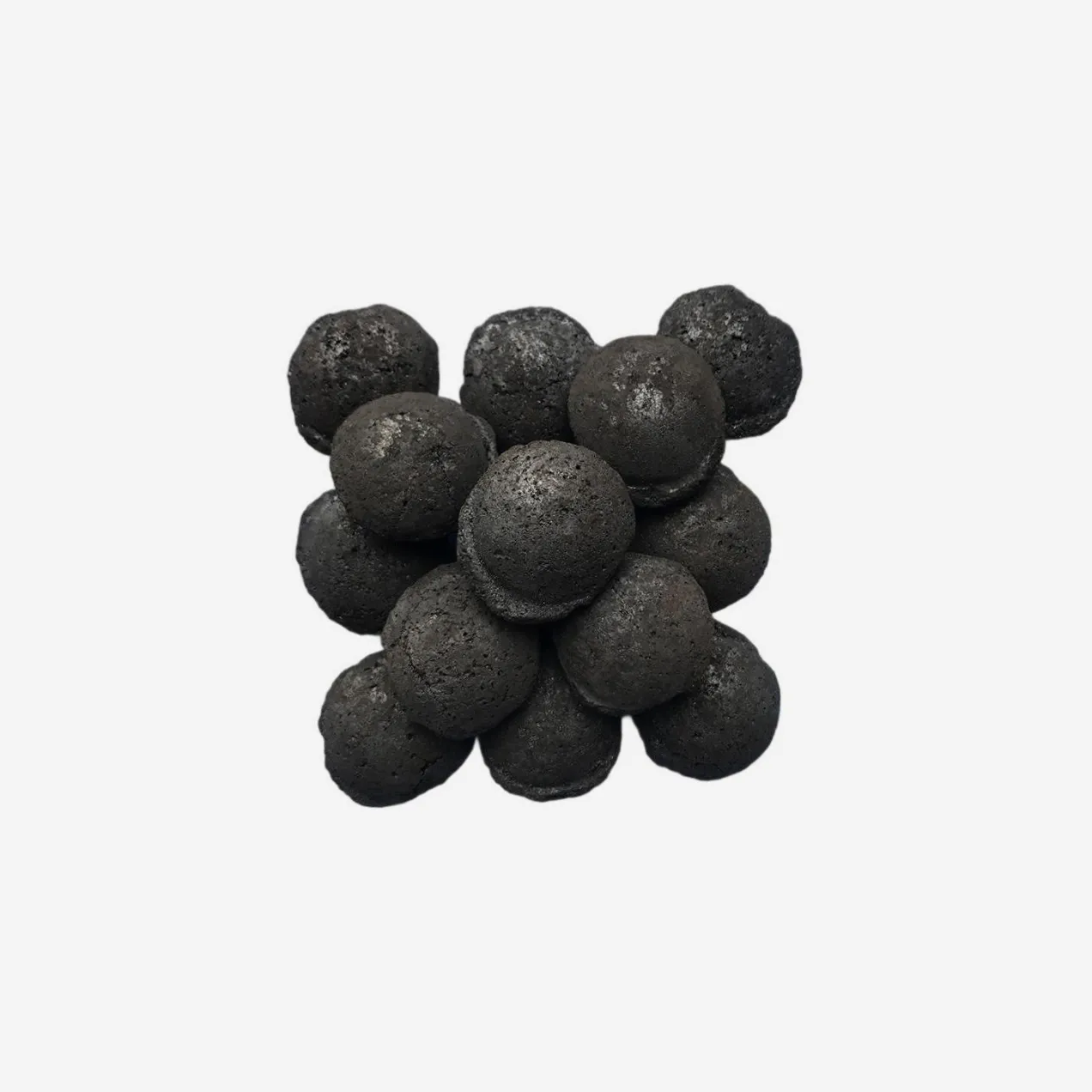
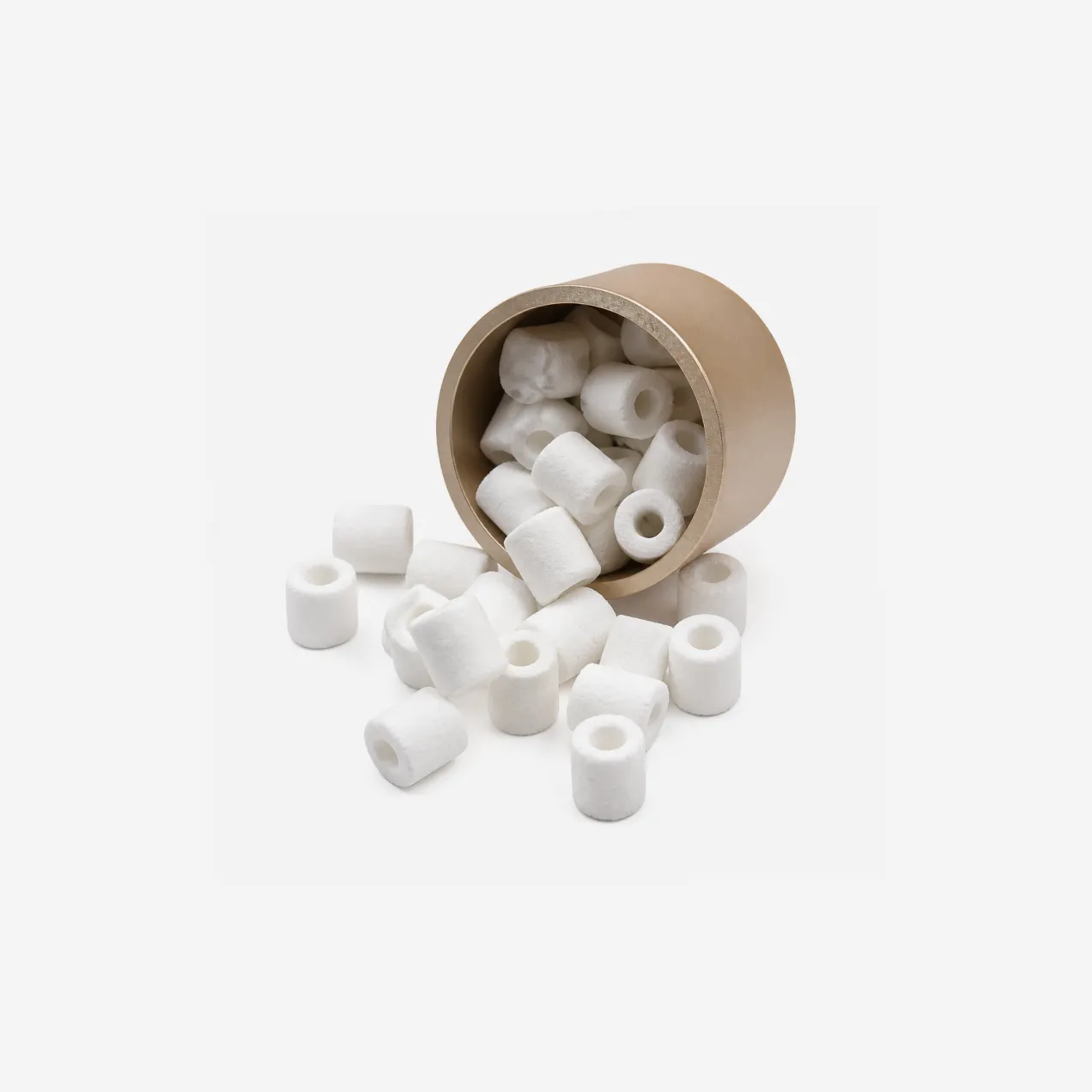
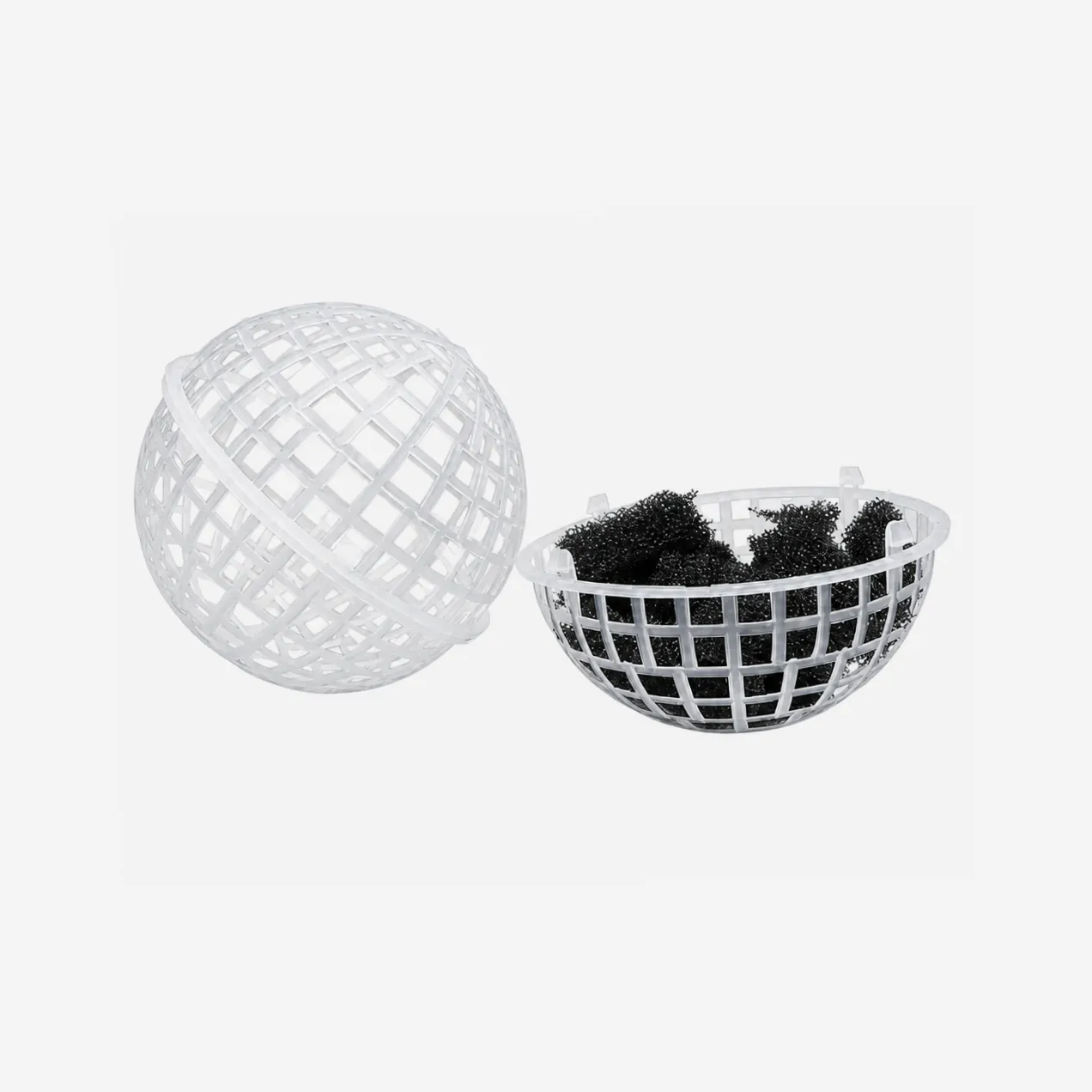
Iron-carbon micro-electrolysis filler, or Fe-C media, is a wastewater medium that breaks down pollutants biology cannot, using electrochemistry that runs on itself. Each pellet packs iron and carbon together with a catalyst; immersed in wastewater the iron and carbon form countless tiny galvanic cells, iron as anode and carbon as cathode, that drive a small current with no external power. That current powers reduction and hydroxyl-radical oxidation, which tear apart the complex, refractory organic molecules that a normal biological plant passes straight through. The effect is measured in COD removed and in water made biodegradable.
What the micro-electrolysis does:
| Reaction / effect | What it achieves |
|---|
| Galvanic microcells (Fe–C) | Drive a current with no external power |
| Iron reduction + ·OH oxidation | Break down refractory organics; cut COD (60 to 85%) |
| Molecules cracked smaller | Raise the B/C ratio — water becomes biodegradable |
| Iron released as coagulant | Remove dye colour and some heavy metals |
It is used as a pretreatment ahead of biological treatment for high-strength, refractory or toxic wastewater from dye, plating, chemical and pharmaceutical works. The pellets are made from iron powder, coke and a catalyst, in sizes from 3 to 18 mm, strong (over 3 MPa, breakage under 3%) and dense, with about 65% free volume in the bed, and they run without electricity. Tell us your wastewater and flow, and we will size the media and the reactor.