search
Search

Enter keywords to search for products, blog posts, and more.


Home > Igel Ball

Igel Ball
Igel Ball

Igel Ball

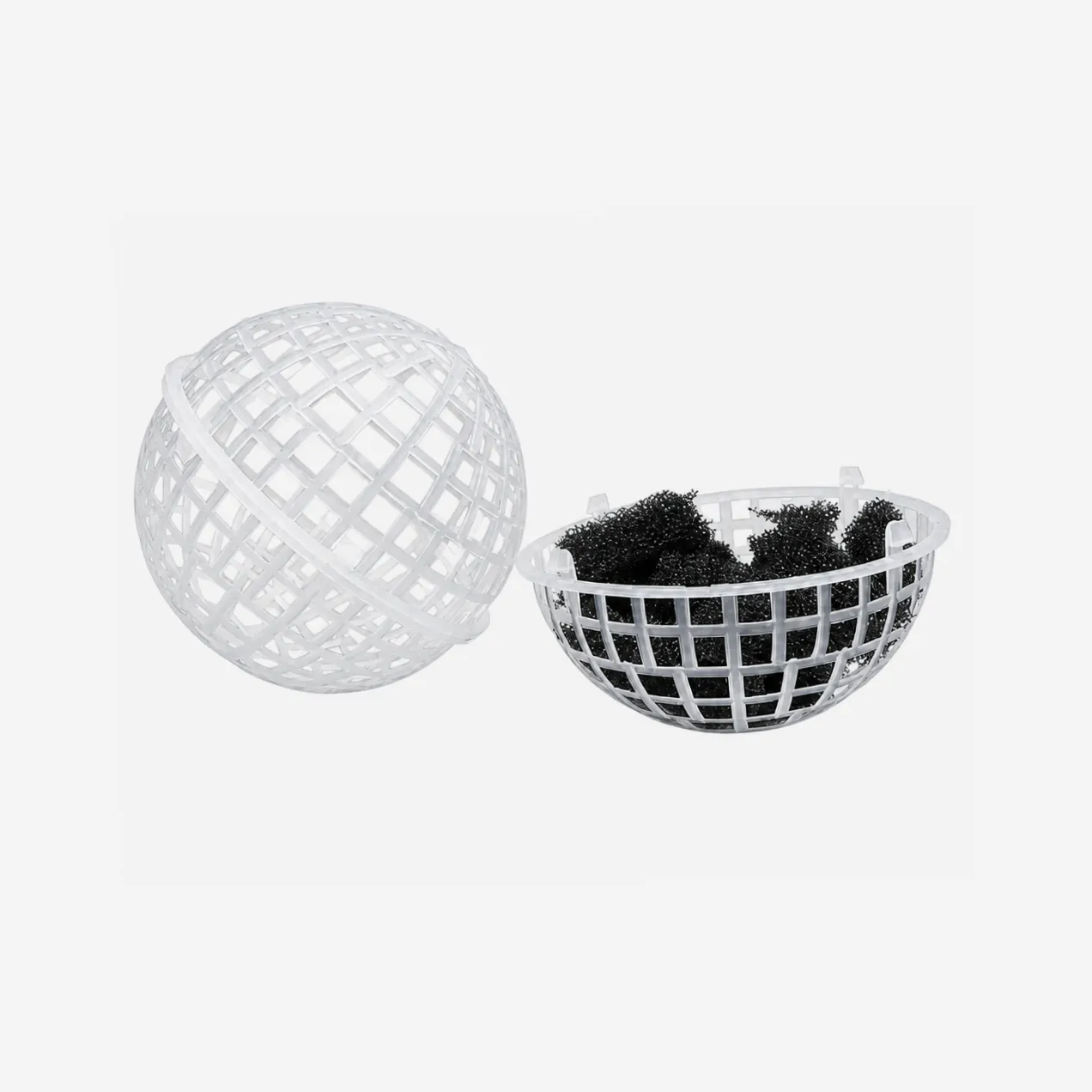
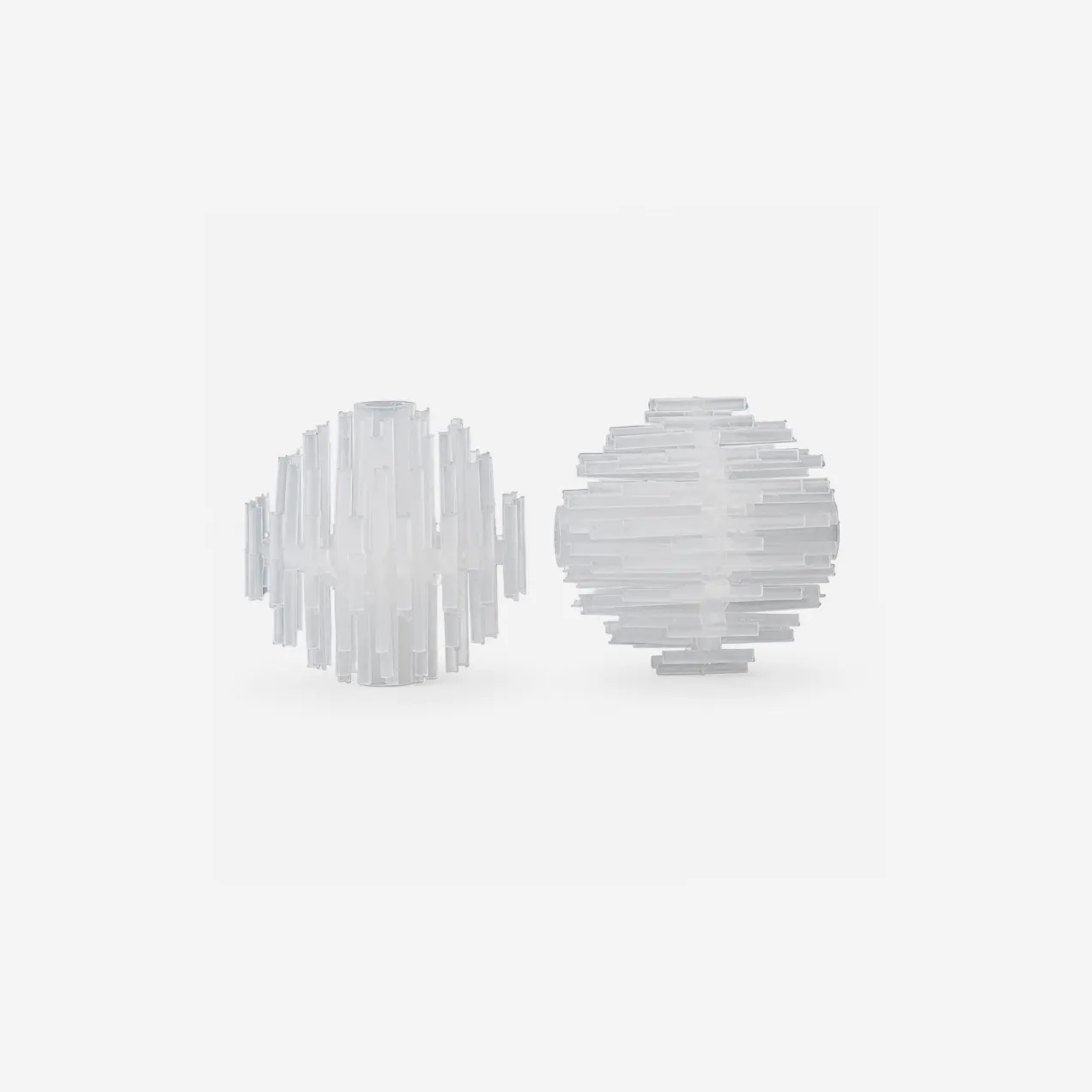
Igel ball, better known as a sea urchin or hedgehog ball, is a suspended biofilm carrier for water and wastewater treatment. It is a ball built from many thin plastic strips that fan out from the centre in all directions, so the finished piece bristles with soft spikes like a sea urchin. That shape does two useful things. The mass of strips gives a very large surface for treatment bacteria to grow on as a biofilm, and the open, spiky form leaves the ball almost entirely hollow, so water and air pass straight through and there is nowhere for solids to lodge and clog it. Dropped into an aeration or contact tank, the balls carry a dense biofilm that consumes the pollutants in the water as it flows past. Being light plastic and very open, they suspend and move easily on aeration, or can be held in a frame. They are typically made of PP or PE and are a good deal larger than small moving-bed media. Sold by volume.

  • Sea urchin / hedgehog ball: suspended biofilm carrier of radiating plastic strips.
  • The strips give a large surface for the bacteria that treat the water.
  • Open, spiky shape: high void, free water and air flow, anti-clogging.
  • Light and open — suspends and moves on aeration, or is held in a frame.
  • Typically PP or PE plastic; larger than small moving-bed carriers.

Technial Parameters

PropertyValue
Product TypeIgel ball / sea urchin (hedgehog) ball — suspended biofilm carrier
FunctionGrows biofilm on radiating strips; treats water and wastewater
ShapeBall of thin plastic strips radiating from the centre (sea-urchin form)
MaterialTypically PP or PE plastic (not specified on the supplied listing)
SizeTypically about 100–150 mm diameter (indicative; no datasheet supplied)
StructureVery open and spiky: high void, high surface, anti-clogging
Use in tankSuspended and moving on aeration, or held in a frame
AdvantagesLarge biofilm surface, high void, resists clogging, free water/air flow, durable
ApplicationsAeration tanks, contact-oxidation and biofilm processes; municipal and industrial wastewater
CategoryWater treatment media (biofilm carrier)
TrademarkRONGJIAN
OriginChina
HS Code3926909090 for plastic media (not shown on supplied listing; confirm)
Unit / TransportSold by volume; ton bags

Note: the supplied listing is a catalogue line (name only), with no model number, material or dimensions. The material, size and figures above are the usual ones for a sea urchin biofilm carrier and are indicative; confirm them for your tank before ordering.
FAQs

What is an Igel (sea urchin) ball, and what is it for?

An Igel ball, Igel being German for hedgehog, and the piece is also called a sea urchin ball, is a plastic biofilm carrier used to hold the bacteria that clean water in a treatment tank. It is made by fanning many slim plastic strips out from a common centre, so the ball ends up covered in soft, flexible spikes, much like a sea urchin. Like all biofilm media its purpose is to give bacteria a surface to live on: a film of pollutant-eating bacteria grows over the strips, and as water flows through the ball the biofilm strips the organic matter and ammonia out of it. What the sea urchin form adds is a lot of surface with almost no bulk, since the ball is mostly empty space between the strips, so it holds plenty of biofilm while letting water and air move through freely. It is used in the biological stage of water and wastewater treatment, where it sits in the tank, covered in its living film, quietly doing the cleaning.

Why the sea urchin shape — what do the radiating strips do?

It is about getting the most surface into an open, non-clogging shape. Bacteria treat water only where they can grow, so a biofilm carrier is really just a way to pack a large surface into a tank. A solid ball would offer only its outer skin; the sea urchin design instead splits the material into dozens of thin strips and spreads them out, so both faces of every strip become growing surface, multiplying the area many times for the same amount of plastic. Just as important, spreading the strips leaves wide gaps between them, so the ball is almost all open space. That high void means water and the air bubbles from aeration flow straight through the ball rather than around it, feeding the biofilm and keeping it supplied with oxygen, and it means suspended solids cannot bridge across and blind the media the way they can with a tightly packed filler. The flexible strips also flex in the moving water, which helps shed excess biofilm so it does not choke itself. Lots of surface, lots of open space, that is the point of the shape.

How is it different from small MBBR media like K1?

They are both plastic biofilm carriers, but they are different sizes and work a little differently. Small moving-bed media like K1 are little cylinders, a centimetre or two across, that grow their biofilm on a sheltered surface inside a protective cross and fins; huge numbers of them tumble freely through the tank, and the shelter is what keeps the biofilm from being scrubbed off as they collide. A sea urchin ball is much larger, often ten centimetres or more, and grows its biofilm on the outside, on its radiating strips; because it is big and its spikes are soft, it does not batter itself the way small hard media would, so an exposed surface works well. In practice, small moving-bed media suit tanks designed for a freely circulating, fully mixed carrier, while sea urchin balls suit larger, gentler installations and are often used where a bigger, easily handled carrier is wanted, sometimes held loosely in a zone or frame rather than filling the whole tank. Tell us your process and we will say which fits.

What is a sea urchin ball made of, and where is it used?

A sea urchin ball is made of plastic, usually polypropylene or polyethylene, chosen because it is light, durable, and unharmed by the water and the biofilm over a long service life. It is used in the biological treatment stage across municipal sewage works and industrial effluent plants: in aeration tanks, in contact-oxidation and biofilm reactors, and in upgrades where extra biofilm surface is dropped into an existing tank to lift its capacity. Wherever it goes, the job is the same, to hold a large, healthy biofilm in an open shape that will not clog. Because the listing supplied gives only the name, with no material, size or model, the details here are the usual ones for this kind of carrier; please confirm the material, the ball size and the quantity for your tank before ordering. Send us your tank and the treatment duty and we will advise the media and the amount.

An Igel ball, or sea urchin ball, is a suspended biofilm carrier made of many thin plastic strips fanned out from a centre into a soft, spiky sphere. Its job is to hold the bacteria that clean water: a biofilm grows over the strips, and as water passes through the open ball the film consumes the pollutants. The value of the sea urchin form is that it combines a large biofilm surface with a very open, non-clogging structure, so it holds plenty of active bacteria while letting water and air flow straight through.

What the sea urchin design gives:

FeatureWhat it delivers
Many radiating stripsA large surface for biofilm, from little material
Wide gaps between stripsHigh void; free water and air flow; anti-clogging
Soft, flexible spikesFlex in the flow to shed excess biofilm; no self-damage
Large, light ballSuspends on aeration; easy to handle and install

It is used in the biological stage of municipal and industrial water treatment, in aeration tanks, contact-oxidation and biofilm reactors, and as extra surface in tank upgrades. It is typically moulded in PP or PE. The supplied listing gives only the name, so the material and size here are indicative — confirm them for your tank. Tell us your process and flow, and we will advise the media and the quantity.