search
Search

Enter keywords to search for products, blog posts, and more.


Home > Ceramic Cross Ring

Ceramic Cross Ring
Ceramic Cross Ring

Ceramic Cross Ring

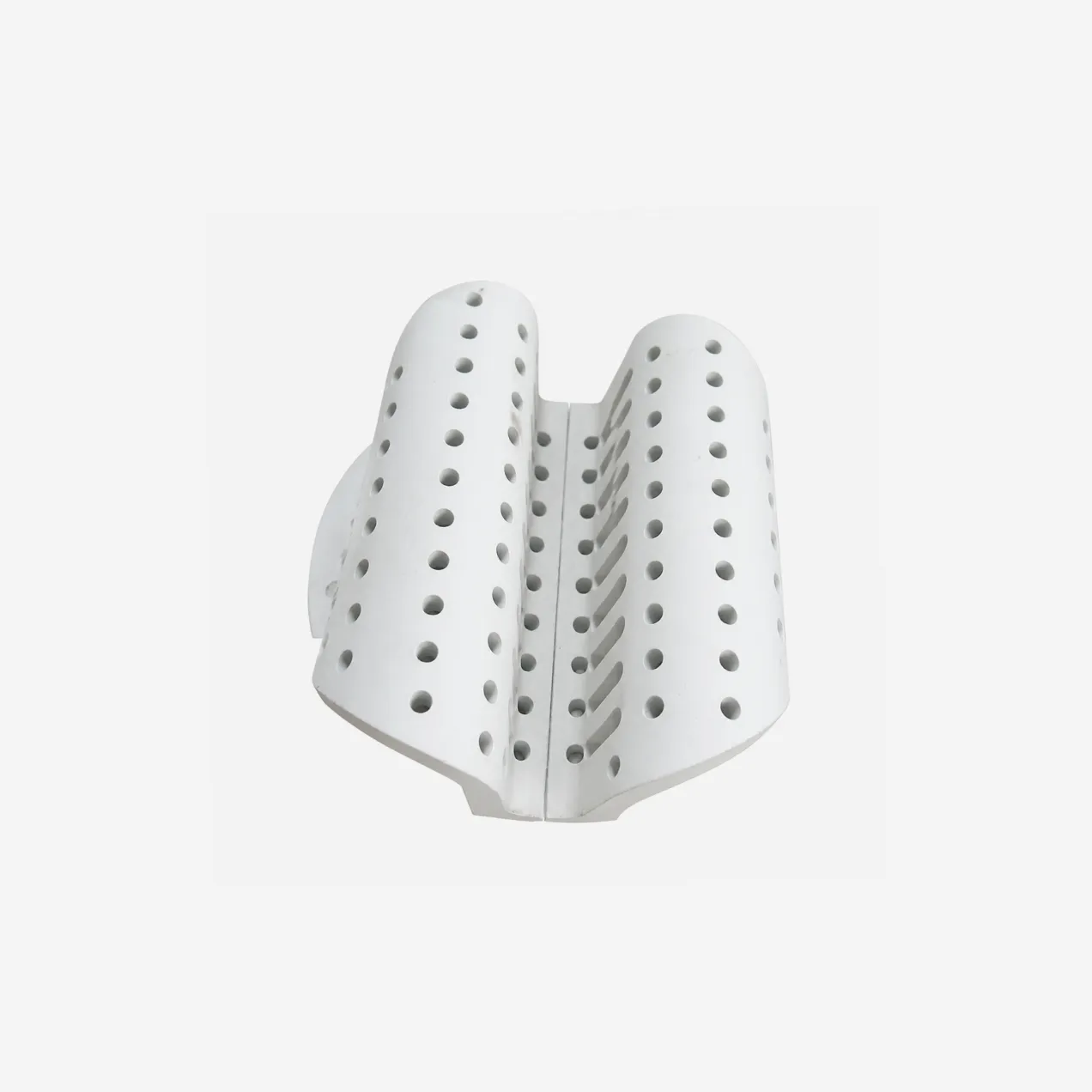
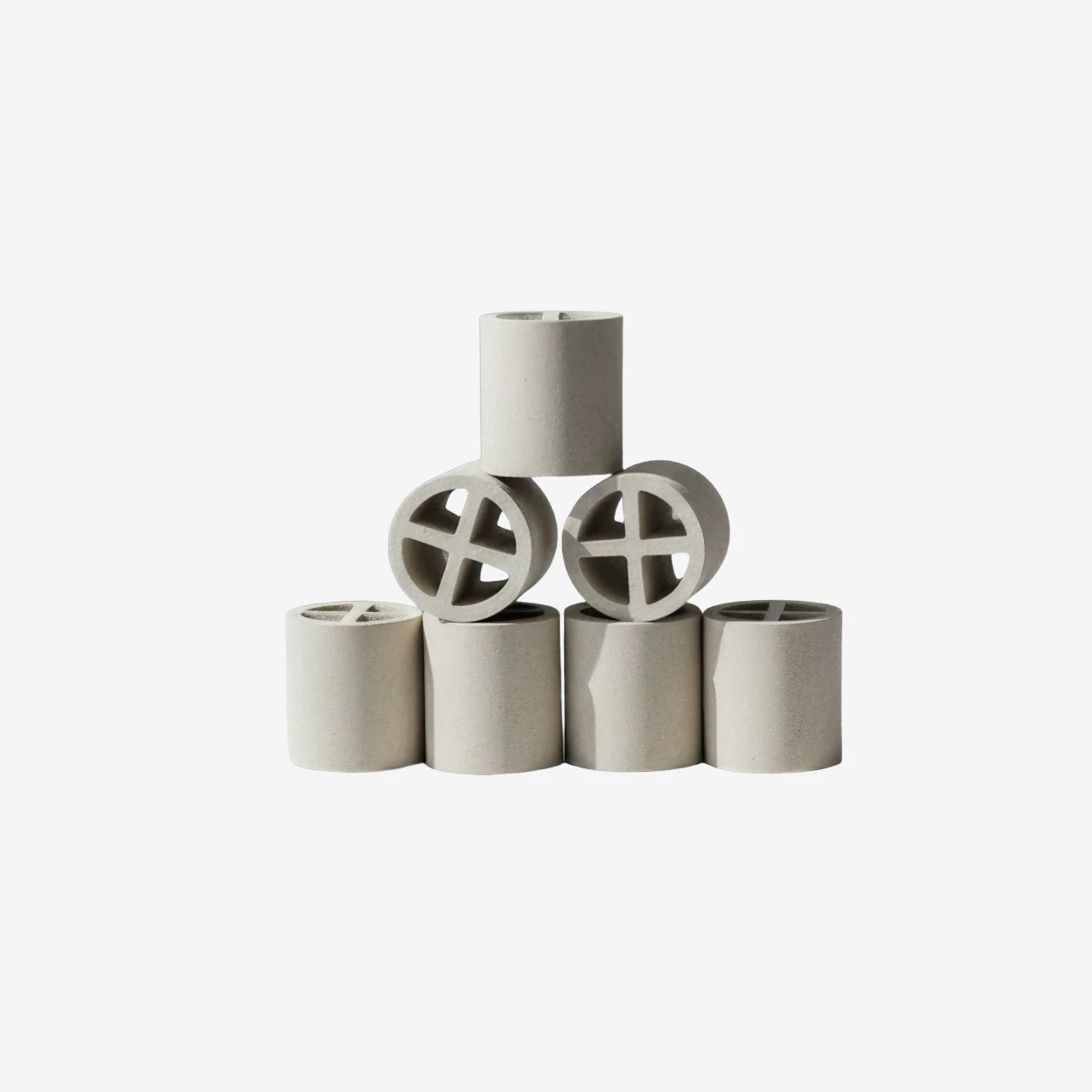
Ceramic cross partition ring is a strong ceramic ring with a cross-shaped wall moulded inside it, and it is used differently from a dumped packing. Rather than being tipped loose into a bed, it is stacked neatly at the bottom of the tower, where it forms the support and distribution layer that carries the random packing above and spreads the gas and liquid evenly into it. The internal cross is what makes this possible: it braces the ring so it bears the heavy load of the packing stacked on top without crushing. It is thick-walled ceramic — walls run about 3 to 15 mm — so it resists heat and stands up to acids and alkalis, apart from hydrofluoric acid. Diameters 25 to 150 mm; model RJ-985.

  • Ceramic ring with an internal cross partition, for high compressive strength.
  • Stacked neatly as the tower-bottom support and distribution layer under dumped packing.
  • The cross braces the ring to bear the load of the packing above.
  • Thick-walled ceramic; resists heat, acids and alkalis (except hydrofluoric acid).
  • Diameters 25 to 150 mm; real per-size data below; model RJ-985.

Technial Parameters

SpecificationSize D×H×wall (mm)Surface area (m²/m³)Free volume (%)Pieces per m³Bulk density (kg/m³)Dry packing factor (m⁻¹)
φ2525 × 25 × 31604841,000660582
φ5050 × 50 × 5145506,400600565
φ8080 × 80 × 8120561,950820356
φ100100 × 100 × 10110531,000850252
φ120120 × 120 × 127555370860146
φ150150 × 150 × 156058295650101

Size is diameter × height × wall thickness (mm); the φ80 entry (shown as 80**80*8) is read as 80×80×8. The last column, labelled bulk density (m⁻¹) on the source, is the dry packing factor. The description also cites void greater than 60% for the stacked support layer; the free-volume column above is the per-ring figure. Confirm before ordering.


PropertyValue
Product TypeCeramic ring (cross partition ring), used as a stacked support/distribution layer
StructureRing with an internal cross partition (four channels); thick-walled
MaterialFired ceramic (kaolin / porcelain)
Model NO.RJ-985
Standard Sizesφ25, φ50, φ80, φ100, φ120, φ150 mm
Wall ThicknessAbout 3–15 mm
Surface Area60–160 m²/m³
Free Volume48–58% (per ring)
Bulk Density600–860 kg/m³
Dry Packing Factor101–582 m⁻¹
ColourCreamy white
Chemical ResistanceAcids and alkalis, except hydrofluoric acid; heat-resistant
RoleStacked support and distribution layer at the tower bottom, under dumped packing
ApplicationsScrubbers, cooling, recycling, desulfurization, drying and absorption towers; reactor lining; chemical, metallurgy, acid and gas production, pharmaceutical
TrademarkRONGJIAN
OriginChina
HS Code6909110000
Transport PackageCarton box / ton bag / steel drum

FAQs

What is a ceramic cross partition ring, and how is it used?

A ceramic cross partition ring is a ceramic ring with a cross moulded inside it — two walls crossing at right angles, dividing the bore into four sections. What really sets it apart, though, is not the cross but how the ring is used. Unlike the packings that are tipped loose into a column, the cross ring is meant to be stacked neatly, and its usual job is to sit at the very bottom of the tower as a support layer. There it does two things: it holds up the loose packing dumped on top of it, and, because the stacked rings leave regular openings, it spreads the incoming gas and liquid evenly across the base of the bed. So although it is shaped like a packing, its role is structural — it is the strong, orderly floor that the working packing rests on.

Why is the cross ring stacked as a support layer instead of dumped?

It comes down to strength and order. The cross inside the ring turns a plain tube into a rigid, braced block that can carry a great deal of weight, and the packing piled above a support layer, sometimes metres of it, is heavy. A hollow ring might crush under that load; the cross-braced ring does not. That is why the cross ring is stacked, not dumped: laid in neat, interlocking courses it forms a stable, load-bearing grid, and the regular gaps in that grid double as a distributor, feeding gas and liquid uniformly into the packing above rather than letting them enter unevenly. Dumping it loose would waste both the strength and the ordered openings, which is why the makers say it is only suitable for neat stacking. Its value is as a strong, tidy support-and-distribution base.

What can a ceramic cross ring resist, and what is it made of?

The cross ring is fired ceramic, and its great strength is chemical: it resists attack from acids and alkalis alike, across the wide range of aggressive chemistry a process tower can throw at it. There is one well-known exception, common to all silica-based ceramics, and that is hydrofluoric acid, which attacks the ceramic itself; for that duty a different material is needed. Short of HF, though, the ring shrugs off corrosion, and it also withstands high temperatures, so it holds up as a permanent tower-bottom fixture in hot, corrosive service. Because its job is to bear load, it is made thick-walled and dense, which adds to both its strength and its durability. Tell us what the tower runs and we will confirm the ceramic suits it.

Where is a ceramic cross partition ring used?

The ceramic cross partition ring is found at the base of packed towers throughout the process industries. Its own role is the support-and-distribution layer beneath the dumped packing, and the towers it serves include scrubbers, cooling towers, recycling and desulfurization towers, drying towers and absorption towers; it is also used to line reactors. By industry that spans chemical processing, metallurgy, acid and gas production, oxygen production, pharmaceuticals and fine chemicals. In each, it is chosen for the same reasons: the compressive strength to carry the packing above, the ordered openings to distribute the flow, and a ceramic body that resists heat and almost every acid and alkali. Where a packed tower needs a strong, corrosion-proof base, the cross ring is the standard answer. Send us the tower and the size of packing it carries and we will confirm the cross-ring size.

The ceramic cross partition ring is built and used unlike the packings dumped into a column. It is a ceramic ring with two walls crossing inside it at right angles, and that cross makes it a rigid, load-bearing block rather than a light, tumbling piece. Its job matches its strength: it is stacked neatly at the bottom of the tower, where it forms the support-and-distribution layer that the loose packing rests on. Stacked in orderly courses, the rings carry the weight above them and, through the regular gaps they leave, feed the gas and liquid evenly up into the bed. It is thick-walled fired ceramic, so it resists heat and almost every acid and alkali, and it stays put as a permanent base.

As a stacked support layer, the cross ring gives:

What it doesWhat it provides
Carries the loose packing dumped above itHigh compressive strength, from the internal cross
Stacks into a neat, open gridEven distribution of gas and liquid into the bed
Is thick-walled, dense ceramicDurability under load, heat and corrosion
Resists acids and alkalis (bar hydrofluoric acid)Long life as a tower-bottom internal

That is why it sits at the base of scrubbers, cooling, recycling, desulfurization, drying and absorption towers, and in reactor linings, across chemical, metallurgical, acid, gas and pharmaceutical plants. It is made in diameters from 25 to 150 mm, with thick walls of about 3 to 15 mm; the per-size surface area, free volume and packing factor are tabulated above. Note that this ring is intended for neat stacking as a support layer, not for dumping as loose packing. Tell us the tower and the packing it must carry, and we will confirm the cross-ring size.