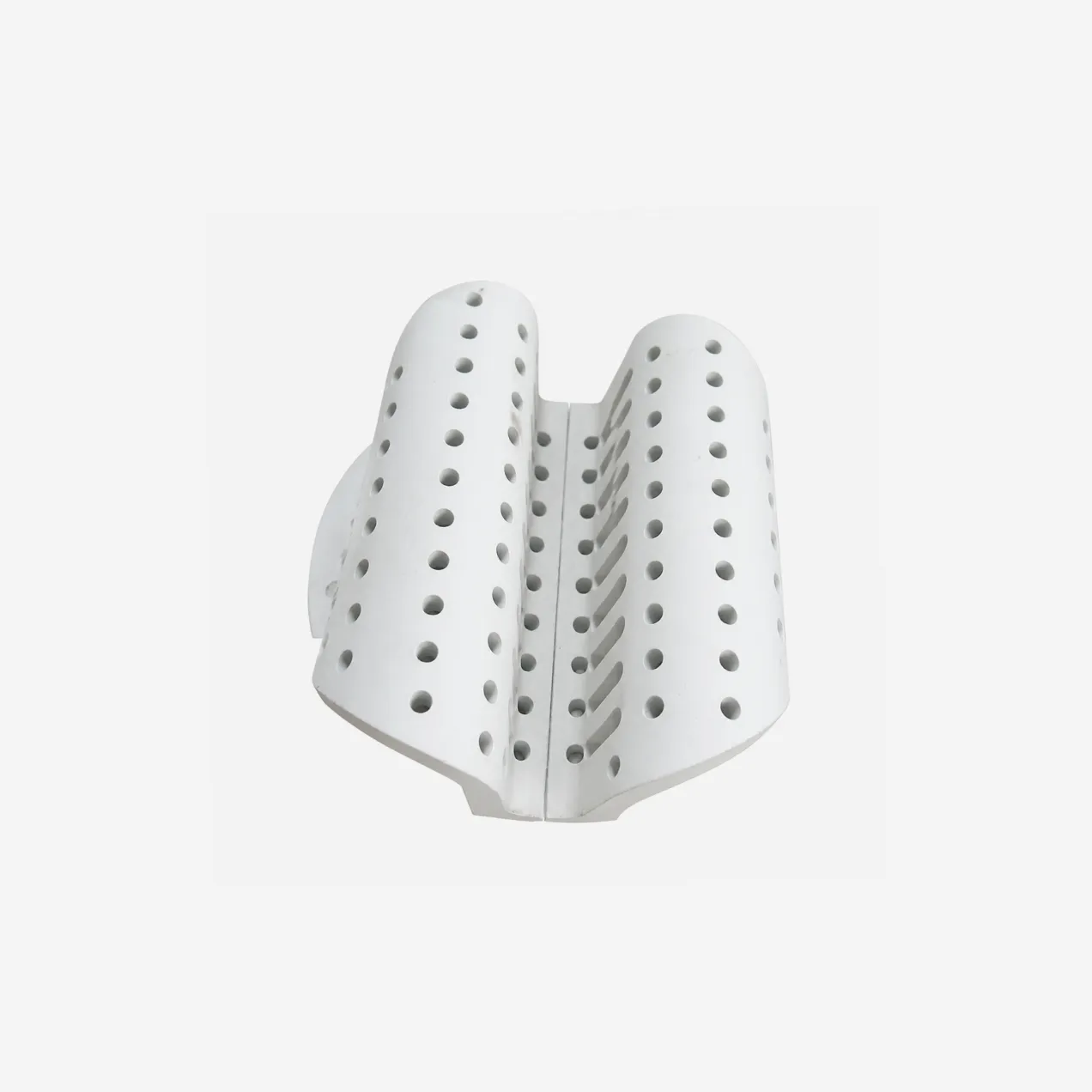
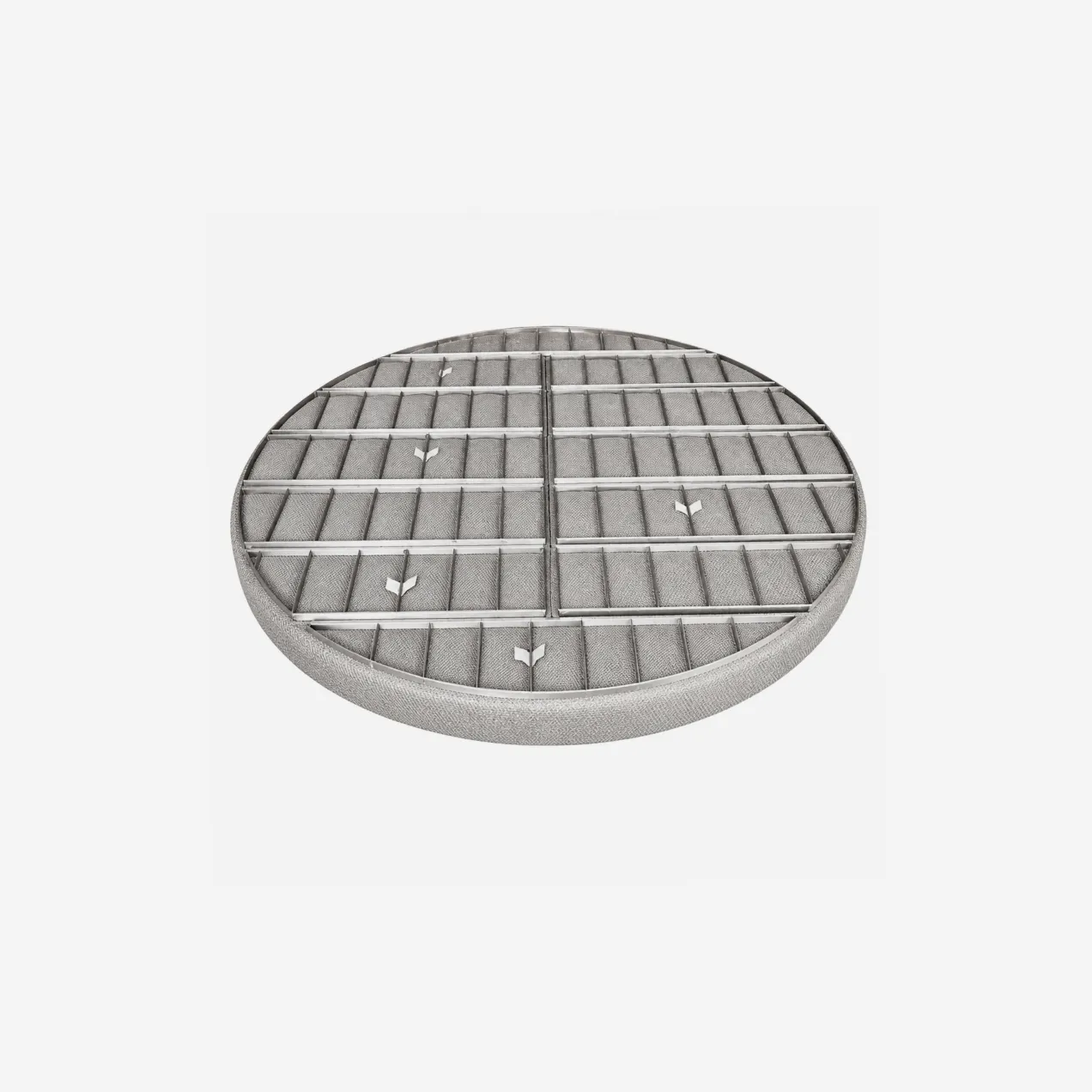
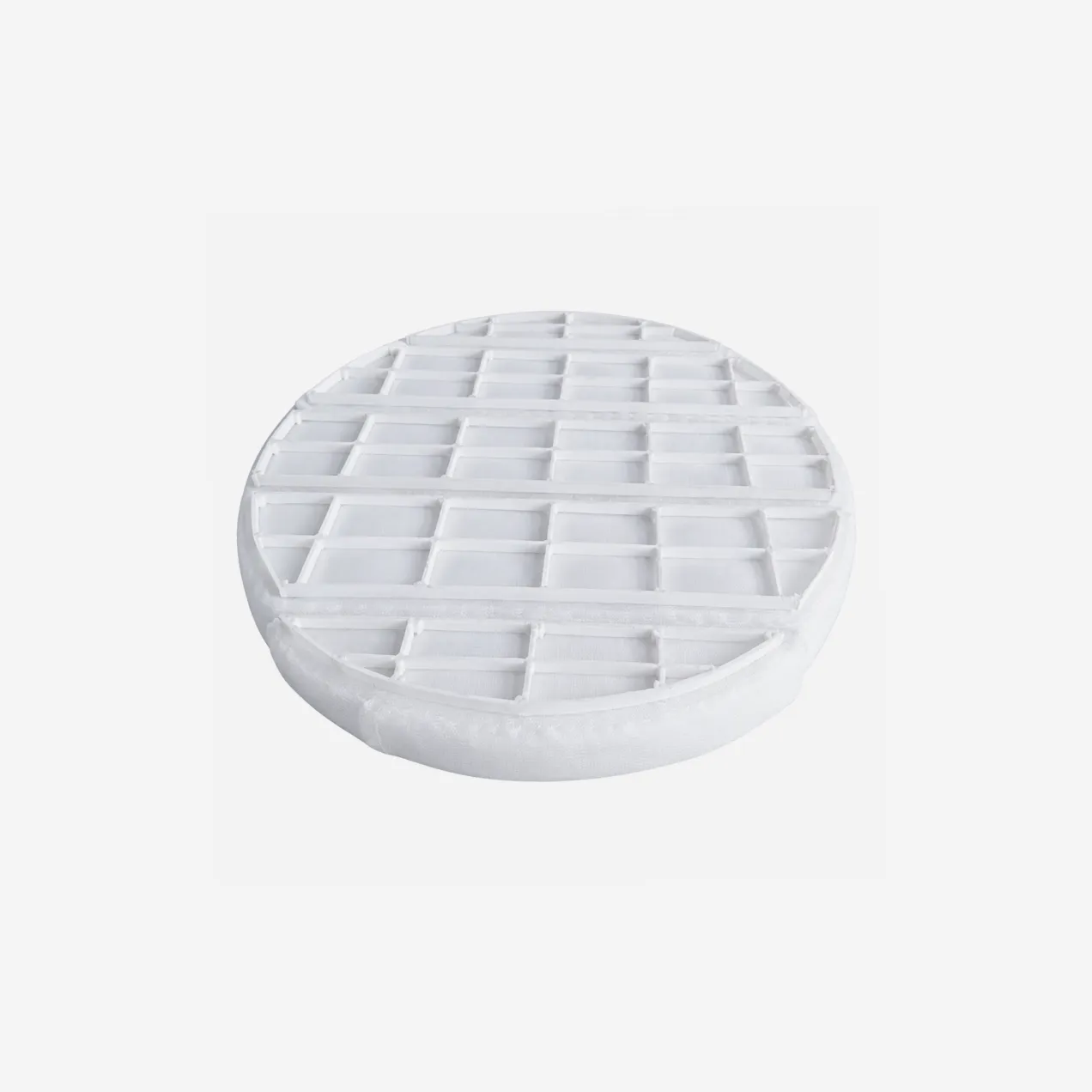
A plastic demister pad is a knitted mesh mist eliminator. Fine plastic wire — PP, PE, PVC or PTFE — is knitted into a deep, multi-layer mesh and fitted across the top of a vessel. A gas carrying fine droplets is forced through it, and the droplets, unable to dodge the mass of crossing wires, hit them and stick, coalesce into larger drops, and drain back down out of the pad. Because the wires are fine and countless, the pad catches small mist — down to about 3 to 5 microns — on a large collecting surface, while staying almost entirely open, near 97 to 98 percent void, so it barely holds back the gas. Being plastic, it does this in corrosive, acidic service that would eat a metal pad.
Choosing the plastic for the mesh:
| Plastic | Handles | Best for |
|---|
| PP | To about 100 degrees; many acids and alkalis | General-purpose acidic mist |
| PE | Cooler duty; chemistry similar to PP | Lower-temperature service |
| PVC | To about 60 degrees; acids | Cold acidic gas |
| PTFE | To about 250 degrees; nearly all chemicals | Strong acids/alkalis and hot gas |
It is used to cap FGD towers, absorption columns and scrubbers, to treat waste gas and recover acid mist, to dry natural gas and to clean sterile and process gas — anywhere mist must be stripped from a corrosive or wet gas to protect downstream equipment and meet emission limits. It is knitted in mesh grades SP, HP, DP and HR and sized to the vessel, from DN100 up to DN10000. Tell us the gas, the mist and the vessel, and we will size the pad and choose the mesh and the plastic.