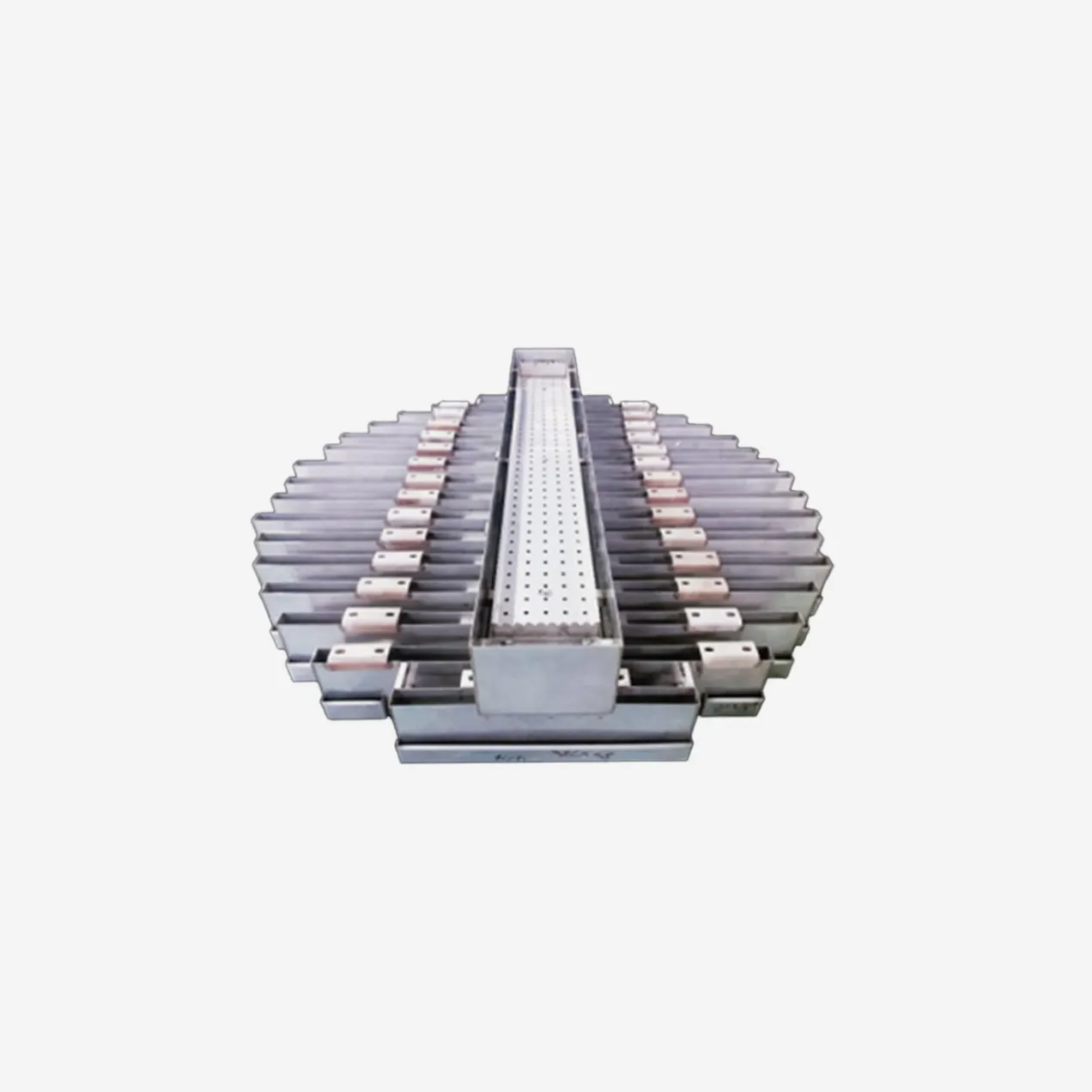
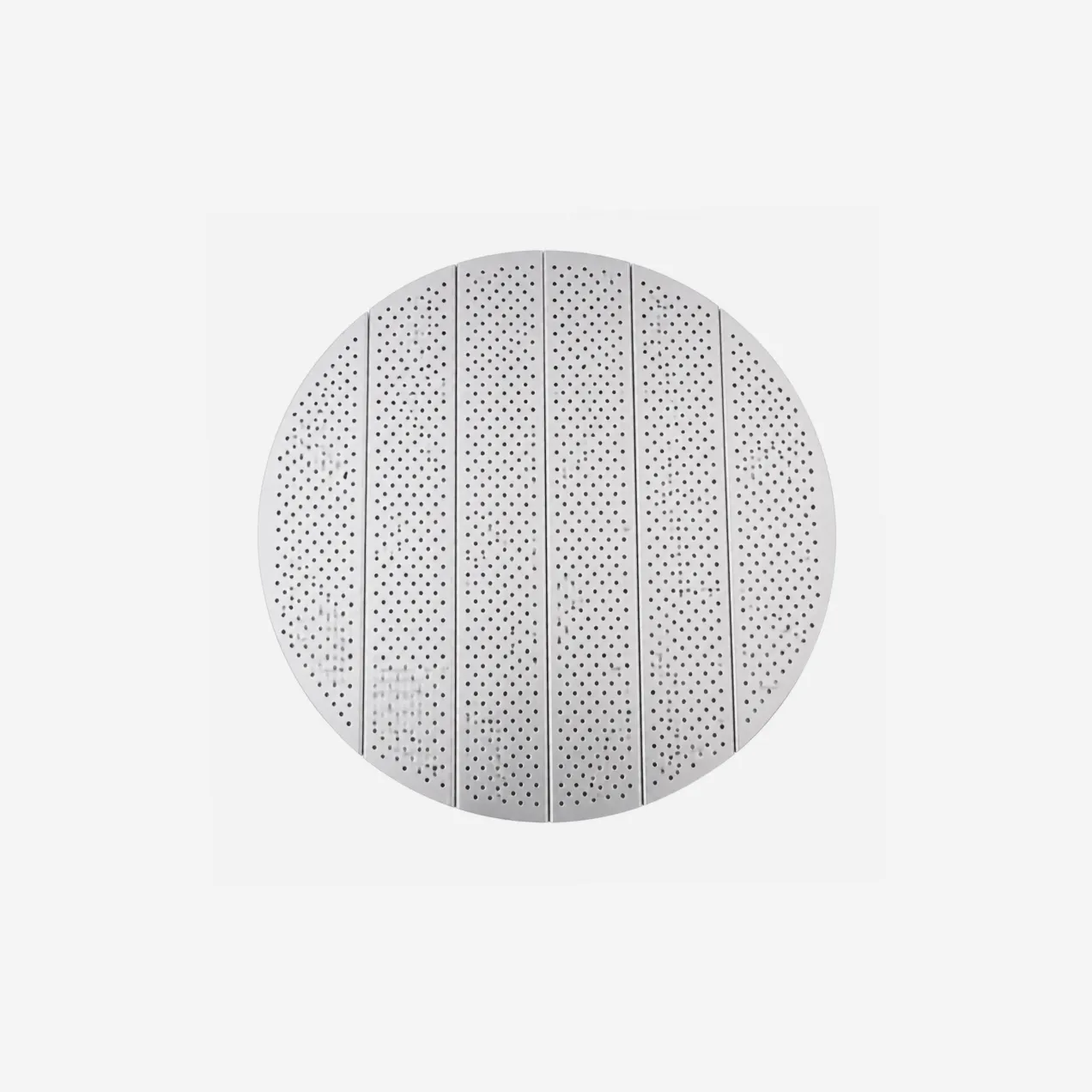
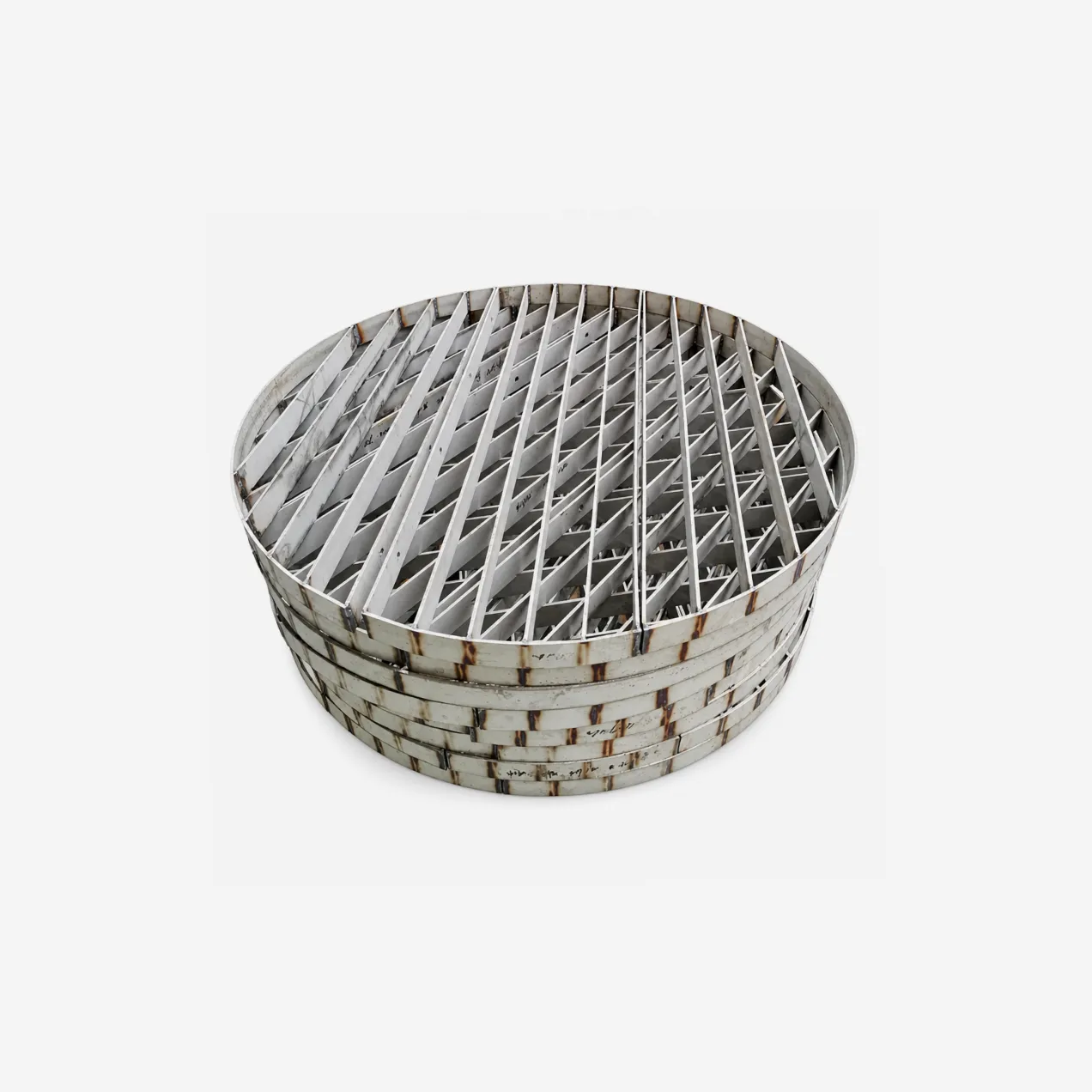
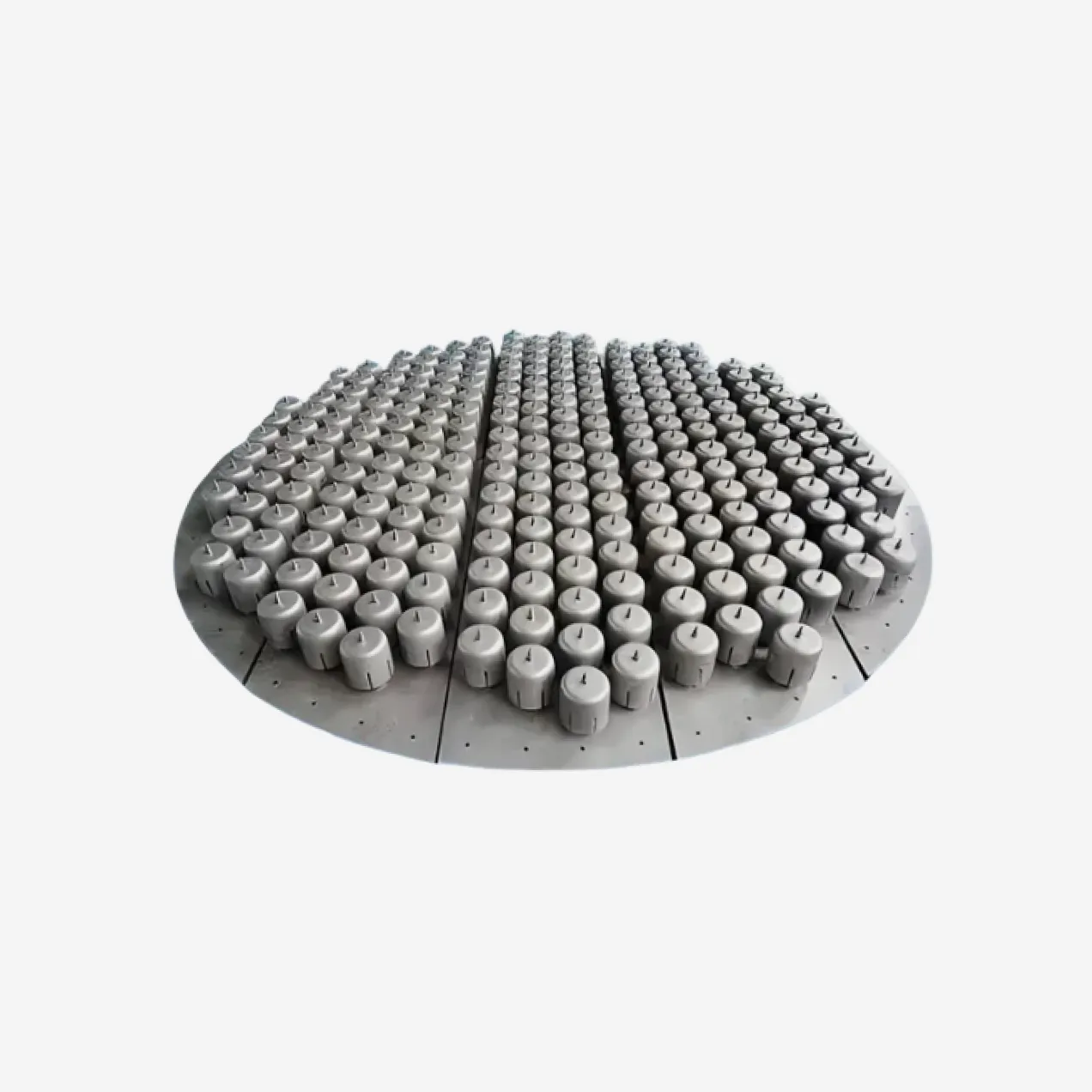
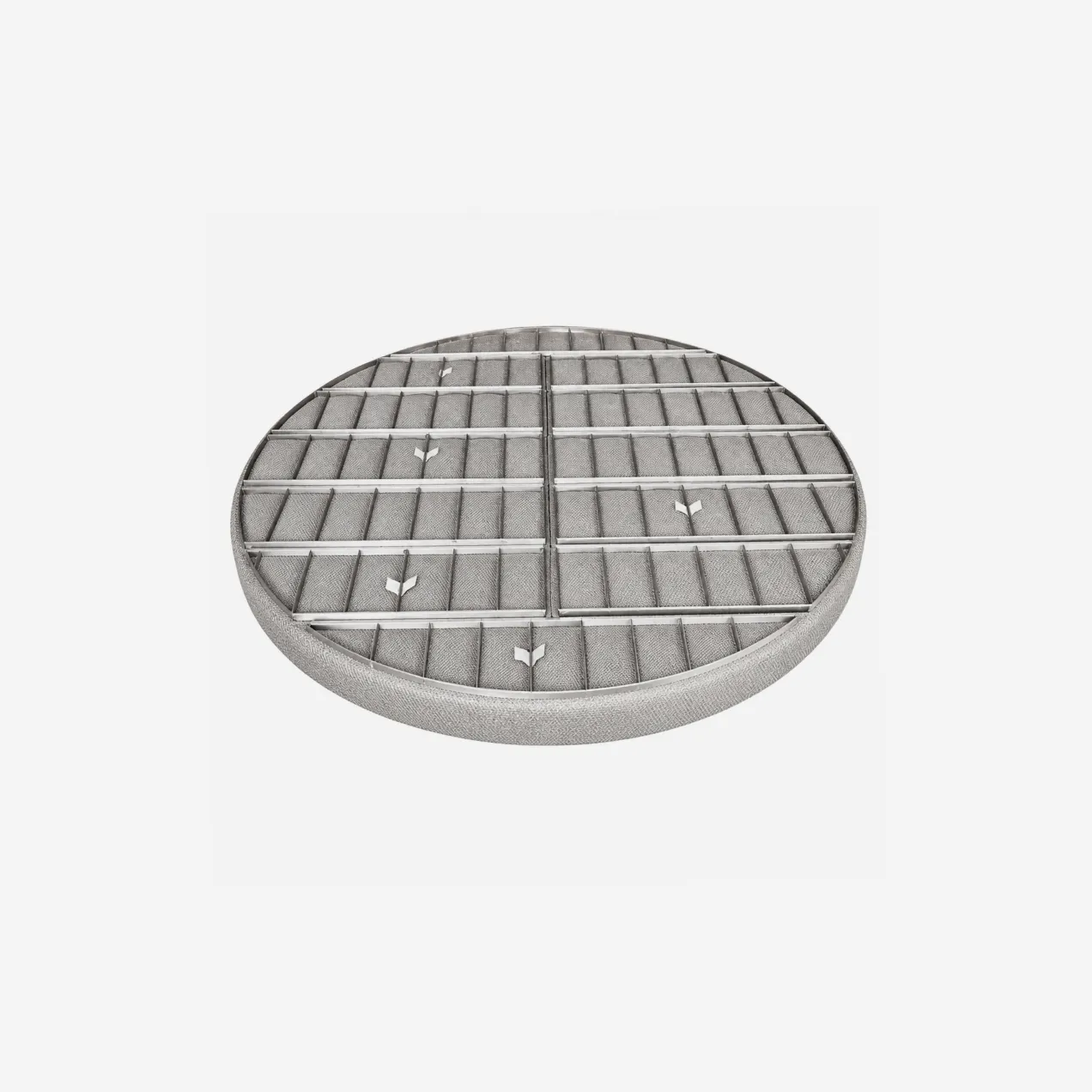
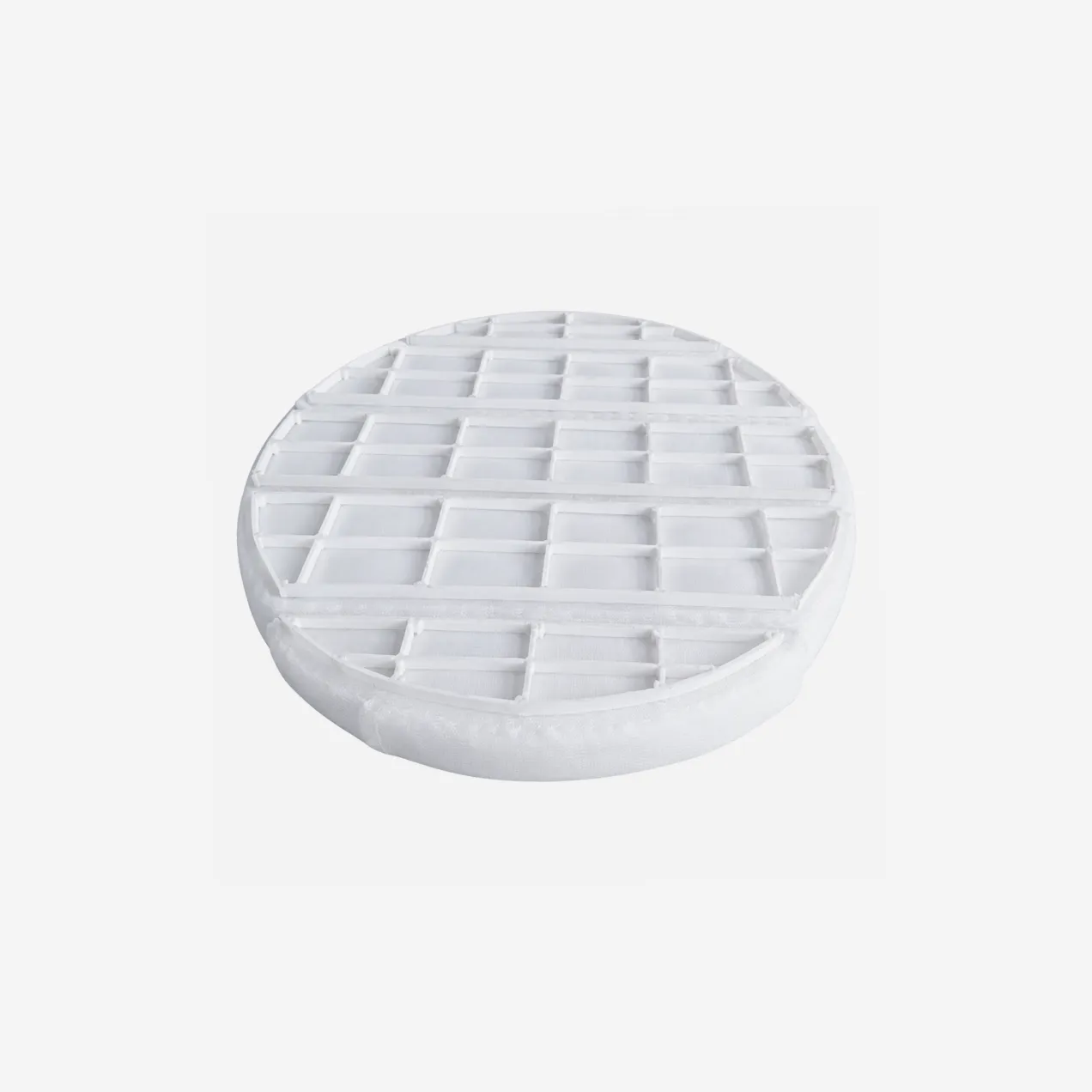
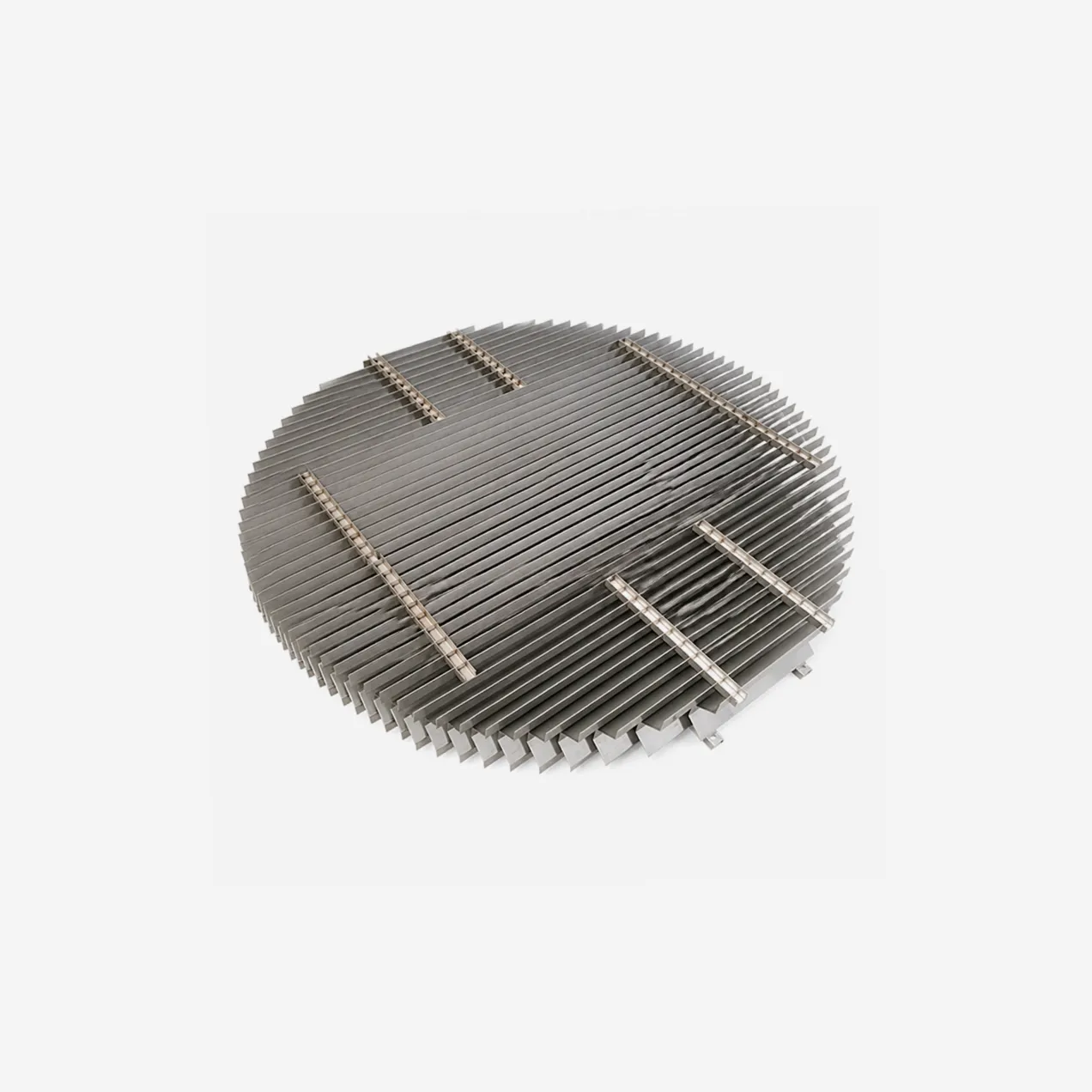
A metal demister pad is a metal-wire mist eliminator. Fine stainless or alloy filament is woven into a deep pad and spanned across a tower or vessel outlet, and the departing gas is driven through it. Its droplets are removed three ways together — the heavy ones ram the wire (impaction), the fine ones brush and stick to it (interception), and each merges into the film already there (coalescence) — until the collected liquid grows heavy and falls from beneath the pad. Because it is metal the pad bears load without buckling and shrugs off heat that would slump a plastic pad, so it is the natural pick for hot and heavy-duty towers. The filament can be almost any metal to suit the stream.
Choosing the metal for the mesh:
| Metal | Resists | Typical use |
|---|
| Carbon steel (Q235) | Dry, non-corrosive gas | Cheapest; clean service |
| 304 / 304L | General corrosion, oxidising acids | Standard stainless choice |
| 316L | Chlorides and harsher acids | Chloride and acid duty |
| 321 | High temperature (stabilised) | Hot gas |
| Nickel / titanium | Hot caustic; chlorides, wet chlorine | Severely corrosive service |
It caps distillation towers, absorbers and reactors and rides on separators and storage tanks across the chemical, petrochemical, pharmaceutical, light-industry and environmental sectors, wherever mist must come out of a gas to tighten the separation, keep product in and guard the equipment beyond. Each is woven circular and trimmed to its vessel, usually around DN300 to DN5200 and bigger on request, and certified to ISO 9001. Give us the stream, its temperature and the bore, and we will fix the pad depth and the alloy.