search
Search

Enter keywords to search for products, blog posts, and more.


Home > 3A Molecular Sieve

3A Molecular Sieve
3A Molecular Sieve

3A Molecular Sieve

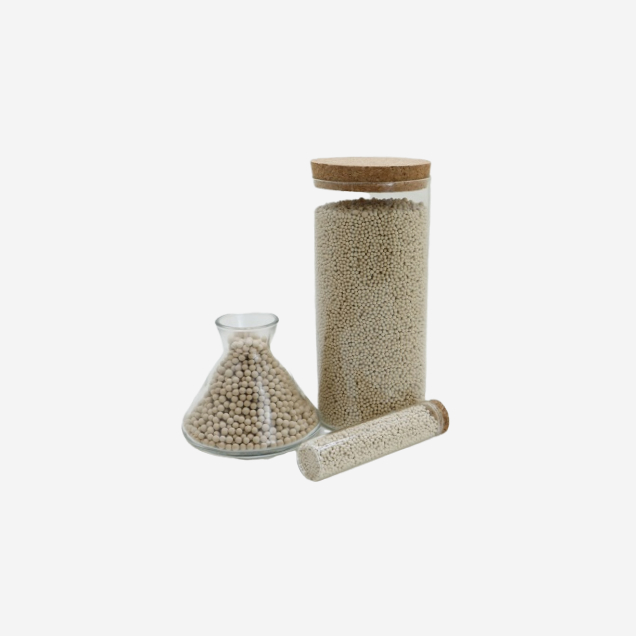
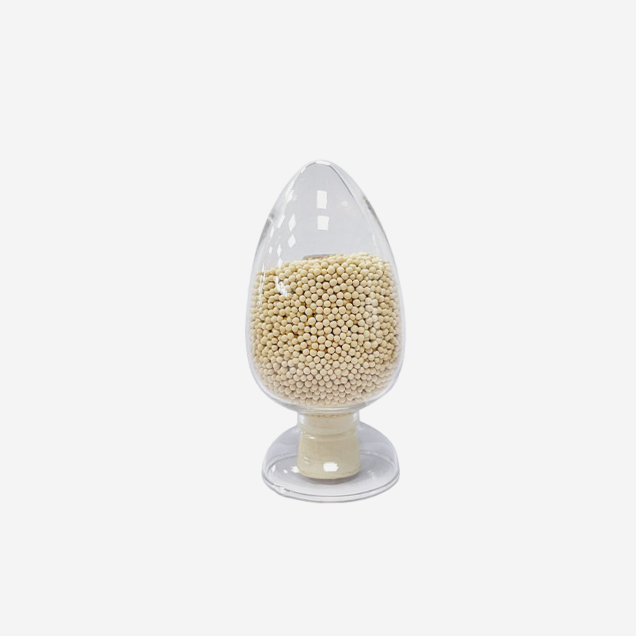
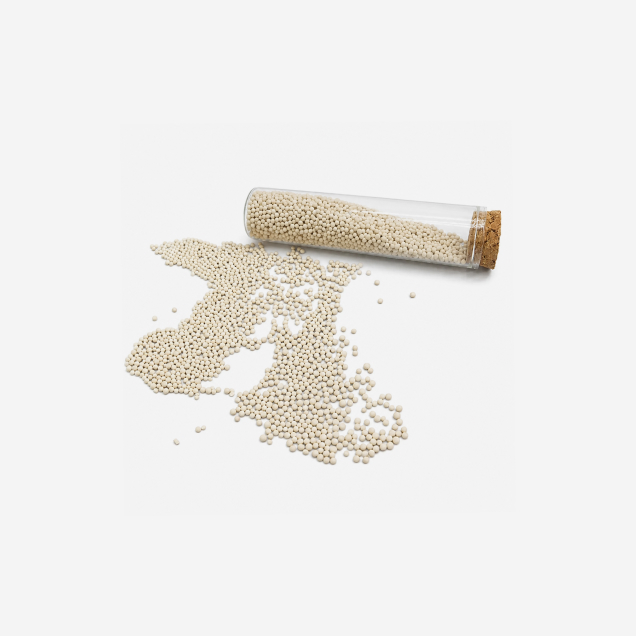
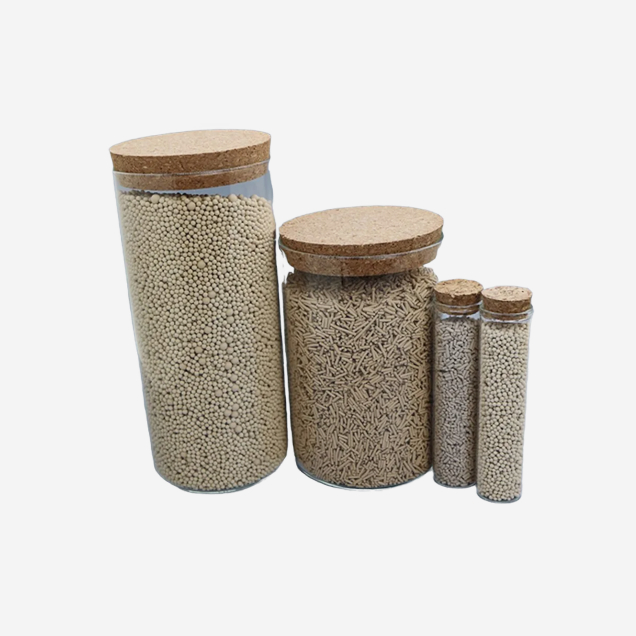
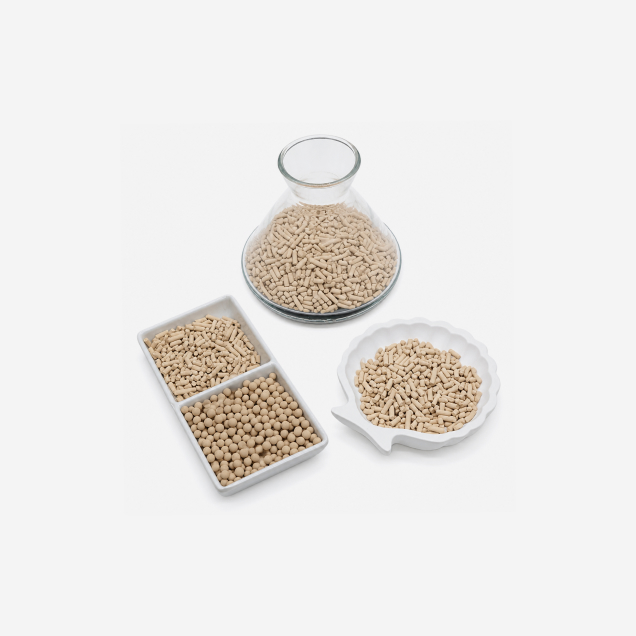
3A molecular sieve is the potassium form of type A zeolite, with a pore opening of about 3 angstroms. That small pore is the whole point: water gets in while almost everything larger is shut out, so the sieve dries a stream without pulling the product or reactive molecules in with it. This selective drying makes 3A the standard choice for insulating glass units, for drying unsaturated hydrocarbons like ethylene and cracked gas, and for taking the last water out of ethanol and other solvents. We supply it as beads and pellets, ready to load into dryers, insulating-glass spacer bars or packed columns.

  • Pore size around 3Å — adsorbs water, excludes ethanol, nitrogen, oxygen and most hydrocarbons.
  • Static water adsorption of at least 20% and low residual water out of the drum, so it works from the first load.
  • Spherical beads and extruded pellets in several diameters for different beds and pressure-drop targets.
  • High crush strength and low attrition, holding up to loading, cycling and vibration.
  • Fully regenerable by heating, for many adsorption cycles before replacement.

Technial Parameters

PropertyPellet – 1.5–1.7 mmPellet – 3.0–3.3 mmBead – 1.7–2.5 mmBead – 3.0–5.0 mm
Size ratio on grade (%)≥98≥98≥96≥96
Bulk density (g/ml)≥0.60≥0.60≥0.60≥0.60
Wear ratio (%)≤0.20≤0.25≤0.20≤0.20
Crush strength (N)≥45 N/cm≥60 N/cm≥45 N/pc≥45 N/pc
Static water adsorption (%)≥20≥20≥20≥20
Water content (%)≤1.5≤1.5≤1.5≤1.5


PropertyValue
Type3A zeolite (potassium form of type A)
Pore SizeAbout 3Å (0.3 nm)
AppearanceBeige beads and pellets
Purity99.9%
SiO2 / Al2O3≈ 2
Regeneration TemperatureAbout 200–300°C
EINECS215-684-8
TrademarkRONGJIAN
OriginJiangxi, China
HS Code2842100000
Transport PackageSteel drum / carton box / ton bag
Production Capacity10000 tons/year

FAQs

What is 3A molecular sieve used for?

3A molecular sieve is a selective drying agent. Its roughly 3 angstrom pores take up water but block larger molecules, so it dries a stream without stripping out the product. Common jobs are the desiccant seal in insulating glass, drying of unsaturated hydrocarbons such as ethylene, propylene and cracked gas, dehydration of ethanol and other solvents, and water removal from natural gas, refrigerants and compressed air. Wherever water has to come out but nothing else should, 3A is the usual pick.

What is the difference between 3A and 4A molecular sieve?

Both are the same type A zeolite with different pore openings. 4A has a pore near four angstroms and adsorbs water plus larger molecules like carbon dioxide, ethanol and unsaturated hydrocarbons. 3A is ion-exchanged with potassium, which narrows the pore to about three angstroms so it takes up water only and leaves the bigger molecules alone. That is why 3A is chosen for drying reactive or valuable streams: it avoids co-adsorption losses and the polymerisation or coking that can happen when an unsaturated gas gets inside a wider pore.

Why is 3A the preferred desiccant for insulating glass?

In a sealed insulating glass unit the desiccant has to pull moisture out of the air gap without touching anything else. A wider sieve would also adsorb nitrogen and oxygen from the trapped air, which changes the pressure and can bow the glass as the temperature swings. The 3A pore is too small for air, so it dries the cavity while leaving the gas alone, keeping the unit flat and clear. It also ignores the sealant solvents, so the spacer keeps working over the life of the window.

How is 3A regenerated, and which shapes and sizes do you supply?

3A is regenerated by heating to drive the water back off, usually around 200 to 300 degrees Celsius with a purge or under vacuum, and it can be cycled many times before it loses capacity. On format, we supply spherical beads and extruded pellets in the standard sizes listed in the specification table, so the shape and diameter can be matched to your bed and pressure drop. Tell us the process, the water load and whether you want beads or pellets and we will point to the right grade and fill.

3A molecular sieve is made by taking type A zeolite in its sodium form (4A) and swapping part of the sodium for potassium. The larger potassium ion sits in the pore mouth and narrows the opening from about 4 to about 3 angstroms. Because adsorption in a molecular sieve is a straight size cut-off, that small change flips the selectivity: water, at roughly 2.6 angstroms, still walks in, while ethanol, carbon dioxide, nitrogen, oxygen and hydrocarbon molecules are now too big to enter. The sieve fills its internal cavities with water and passes everything else through.

That single property drives every 3A application. In insulating glass, the sieve dries the sealed air space but ignores the trapped air, so the unit does not develop a vacuum and bow. In an ethylene, propylene or cracked-gas dryer, 3A takes out water without letting the reactive gas into the pore, which avoids the polymerisation and coking a wider sieve can trigger. In ethanol and solvent work it holds water while excluding the alcohol, so the product comes off dry and breaks the water azeotrope that distillation alone cannot. In natural gas it removes water while helping to avoid COS formation on the bed.

It helps to see where 3A sits in the molecular sieve family:

TypePore sizeAdsorbsTypical use
3A~3ÅWater, smallest moleculesInsulating glass, unsaturated-HC and solvent drying
4A~4ÅWater, CO2, ethanol, H2SGeneral drying of gases and liquids
5A~5ÅPlus n-paraffinsPSA oxygen, n-/iso-paraffin separation
13X~9–10ÅLarger molecules, mercaptansGas sweetening, air pre-purification

A few practical points. Keep the sieve dry until it goes in, because it grabs moisture from the room air, so open drums are best used quickly and resealed. Do not drop beads into standing water or hit a hot bed with liquid water; the fast heat of adsorption can crack the granule. Load gently to limit attrition, and size the bed so the stream has contact time to dry down to the dew point you need. Treated this way, a 3A charge runs through many adsorption and regeneration cycles before capacity falls off and it needs changing.