search
Search

Enter keywords to search for products, blog posts, and more.


Home > Lithium Molecular Sieve

Lithium Molecular Sieve

Lithium Molecular Sieve

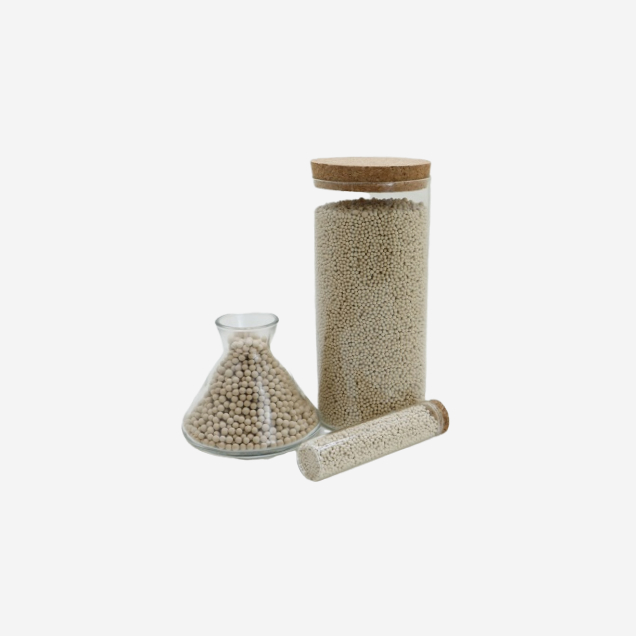
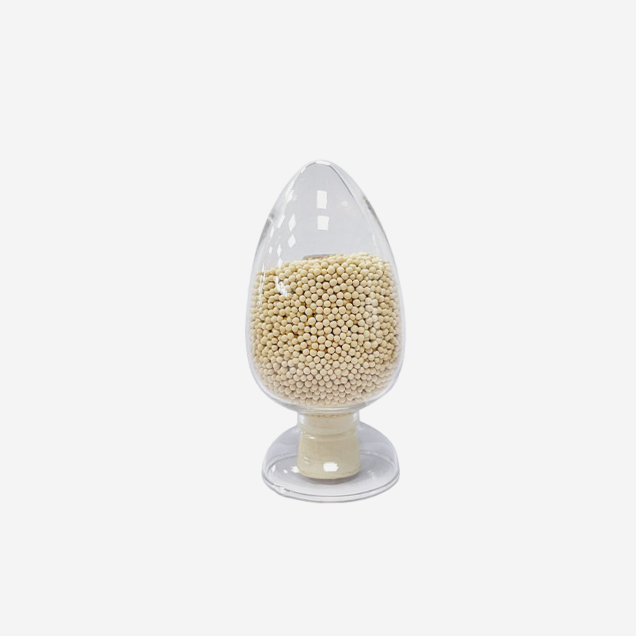
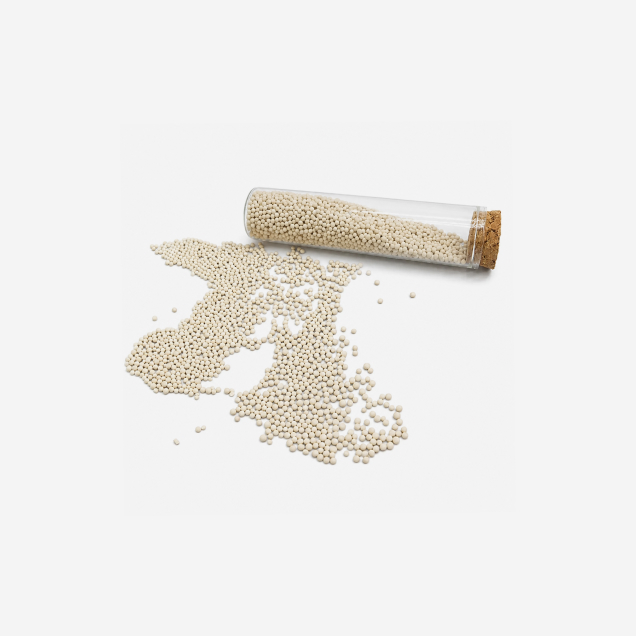
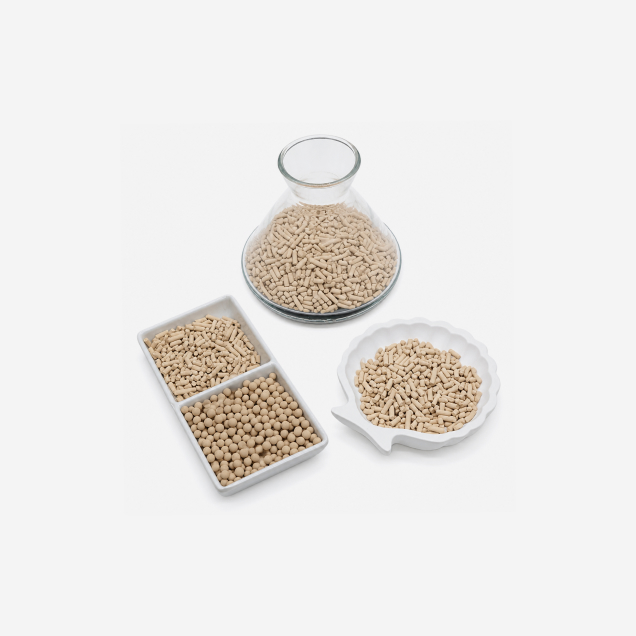
Lithium molecular sieve is a lithium-exchanged X-type zeolite, and it is the highest-performing adsorbent for making oxygen from air. Where a sodium sieve holds nitrogen only moderately, exchanging the sodium for lithium gives the framework a much stronger pull on the nitrogen molecule's quadrupole, so the bed adsorbs far more nitrogen and lets oxygen pass as the product. This is equilibrium separation by cation strength, not a size or speed effect. The lithium form carries roughly double the nitrogen-oxygen selectivity and about three times the nitrogen capacity of a sodium sieve, and it keeps that pull at low pressure, which is what makes it the grade of choice for VPSA and compact oxygen concentrators. We supply it as beads for portable and industrial oxygen systems.

  • Lithium-exchanged X-type zeolite (LiX / LiLSX), the top tier of PSA and VPSA oxygen adsorbents.
  • Nitrogen-oxygen separation coefficient of at least 6.2 and static nitrogen uptake of at least 22.5 mL/g.
  • Strong nitrogen pull even at low pressure, cutting the energy of VPSA oxygen production.
  • Delivers oxygen at around 93 to 96%, meeting medical-grade purity.
  • Moisture-sensitive — store sealed and dry, since humidity saps the nitrogen capacity.

Technial Parameters

PropertyLithium sieve – 0.4–0.8 mmLithium sieve – 1.3–1.7 mm
Diameter0.4–0.8 mm1.3–1.7 mm
Bulk density≥0.63 g/mL≥0.63 g/mL
Crush strength/≥15 N/piece
Static N2 adsorption (1 bar, 25°C)≥22.5 mL/g≥22.5 mL/g
N2 / O2 separation (1 bar, 25°C)≥6.2≥6.2
Attrition≤1 wt%≤1 wt%
Moisture content≤0.5 wt%≤0.5 wt%
Oxygen purity93%±3%93%±3%
ApplicationPortable / VPSA medical concentrators, 1–10 L/minIndustrial & hospital PSA oxygen plants, 300–10000 Nm³/h


PropertyValue
TypeLithium molecular sieve (LiX / LiLSX)
MaterialLithium-exchanged X-type zeolite
Separation MechanismEquilibrium (Li+ / nitrogen quadrupole interaction)
Model NO.RJ-2933
ColorLight grey
Oxygen Purity93%±3% (up to about 96%)
RegenerationPressure swing / vacuum swing (PSA / VPSA)
Moisture SensitivityHigh — store sealed and dry, reseal opened packs
CertificationISO 9001
TrademarkRONGJIAN
OriginJiangxi, China
HS Code2842100000
Transport PackageVacuum plastic bag / steel drum / carton box

FAQs

What is lithium molecular sieve used for?

Lithium molecular sieve is used to make oxygen from air in PSA and VPSA oxygen concentrators. It is the adsorbent charge in medical oxygen concentrators, from small portable units up to hospital and industrial oxygen plants, and it also feeds ozone generation, aquaculture and metal cutting. What sets it apart is efficiency: it recovers more oxygen from less air than a sodium sieve, so it is the grade chosen where purity, output or a small, low-energy machine matters most.

Why does lithium give better oxygen performance than a sodium sieve?

It is the cation in the zeolite. A sodium sieve like 13X holds nitrogen through a modest pull between the sodium ion and the nitrogen molecule. Swap the sodium for lithium and that pull becomes much stronger, because the small lithium ion interacts far more strongly with the quadrupole of the nitrogen molecule. The bed then grabs far more nitrogen per pass, so more oxygen comes through. In round numbers the lithium form has about double the nitrogen-oxygen selectivity and roughly three times the static nitrogen capacity of a sodium sieve. It is a stronger pull, not a different pore, that does it.

When is lithium sieve worth choosing over 13X or 13X-HP?

When output, purity or energy is worth paying for. A sodium 13X or 13X-HP sieve makes good oxygen and costs less, and for a simple, non-critical duty it is often enough. Lithium sieve earns its higher price where the machine has to be small and light, as in a portable concentrator, or where oxygen recovery and low running energy matter, as in a large VPSA plant. Its strong nitrogen pull holds up at low pressure, so a vacuum-swing unit can run gently and cheaply. If the concentrator is compact, the purity target is high, or the power bill is large, lithium is usually the better buy.

What oxygen purity and sizes do you supply, and how is it stored?

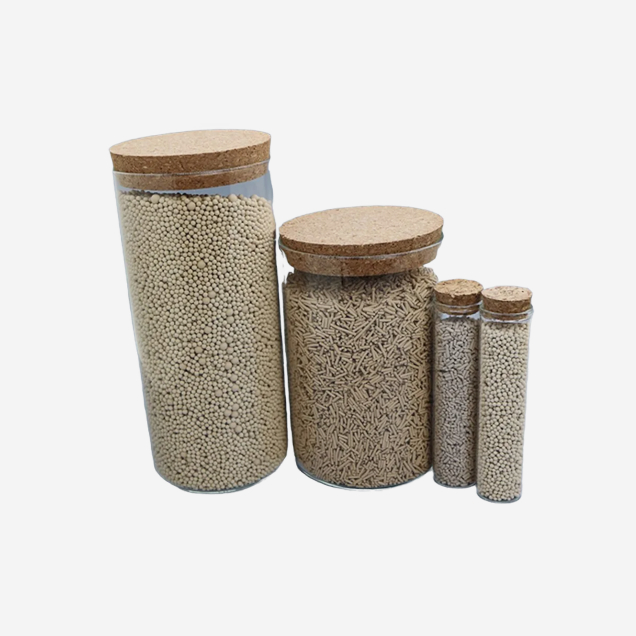
Lithium sieve delivers oxygen at around 93 to 96 percent, which covers medical-grade needs. We supply two bead sizes for two duties: a fine bead for portable and vacuum-swing concentrators, where fast cycling matters, and a larger bead for industrial and hospital PSA plants. Storage is the main handling point: the material is hungry for water and a damp charge makes less oxygen, so it ships vacuum-packed with a set shelf life, and any opened pack should be resealed and used before it draws in humidity. Tell us the oxygen flow, the purity and whether the unit is PSA or VPSA and we will match the grade and size.

Lithium molecular sieve is an X-type zeolite in which the sodium ions have been exchanged for lithium, and that single change is why it outperforms every other oxygen adsorbent. Nitrogen and oxygen both fit easily into the wide pores of an X-type zeolite, so the separation is not about size — it is about how strongly the framework holds each gas. Nitrogen carries a quadrupole moment and oxygen barely does, and the small, strongly charged lithium ion latches onto that nitrogen quadrupole far harder than a sodium ion can. The bed fills with nitrogen and passes oxygen, which is the whole point of a PSA or VPSA oxygen unit.

Two things follow from the strong lithium interaction. The lithium form holds roughly three times the nitrogen of a sodium sieve and separates nitrogen from oxygen about twice as sharply, so a given bed makes more oxygen at higher recovery. Just as important, it keeps a firm grip on nitrogen at low pressure, so a vacuum-swing plant can cycle gently near atmospheric pressure and still work well, and that low-pressure operation is where most of the energy saving in modern oxygen generation comes from. The oxygen sieve line has moved from calcium and sodium grades up to lithium for exactly this reason: more oxygen, less air, smaller equipment, lower power.

The bead size is matched to the machine:

Bead sizeConcentrator typeTypical capacity
0.4–0.8 mmPortable and vacuum-swing (VPSA) medical concentrators1–10 L/min
1.3–1.7 mmIndustrial and hospital PSA oxygen plants300–10000 Nm³/hour

The one weakness to manage is water. A lithium bed takes up moisture readily, and a wet charge simply makes less oxygen, so the material is vacuum-packed with a shelf window, opened packs are resealed, and the concentrator carries a dryer and filter on its feed air. Handled dry, the charge keeps its high performance for years of cycling.