search
Search

Enter keywords to search for products, blog posts, and more.


Home > Carbon Molecular Sieve

Carbon Molecular Sieve

Carbon Molecular Sieve

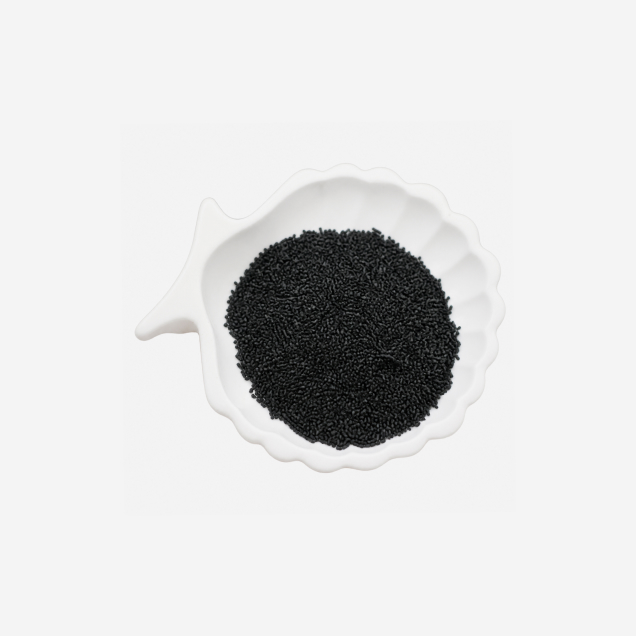
Carbon molecular sieve, or CMS, is a black carbon adsorbent that separates nitrogen from compressed air for on-site nitrogen generation. Unlike the zeolite sieves, it works by speed rather than capacity: its fine carbon micropores let oxygen diffuse in much faster than nitrogen, so during the short adsorption step of a PSA cycle the oxygen is taken up and nitrogen passes through as the product gas. It runs at room temperature and low pressure, which makes PSA nitrogen cheaper to install and run than a cryogenic plant. We supply it in grades matched to the nitrogen purity and output you need.

  • Kinetic separation — oxygen diffuses into the carbon pore faster than nitrogen, leaving nitrogen as the product.
  • Delivers nitrogen from 95% up to 99.999%, set by the cycle and the grade.
  • Grades CMS-220, 240, 260 and 280 — the higher the grade, the more nitrogen per charge.
  • Runs at ambient temperature and low pressure, with fast start-up and low running cost.
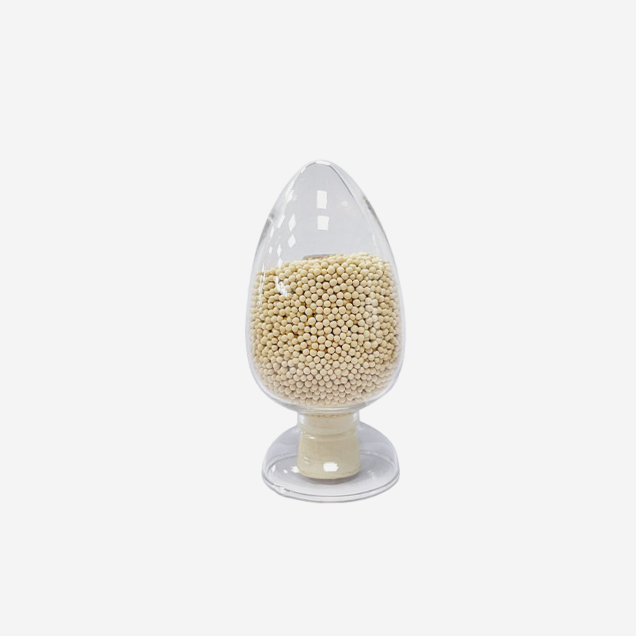
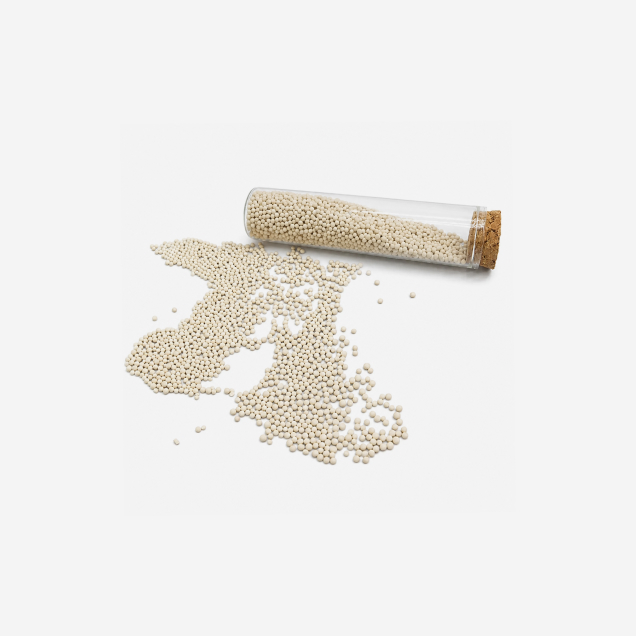
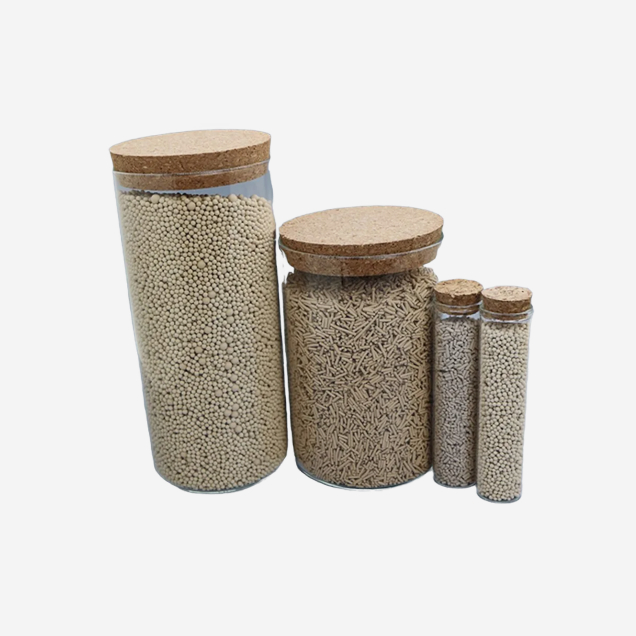
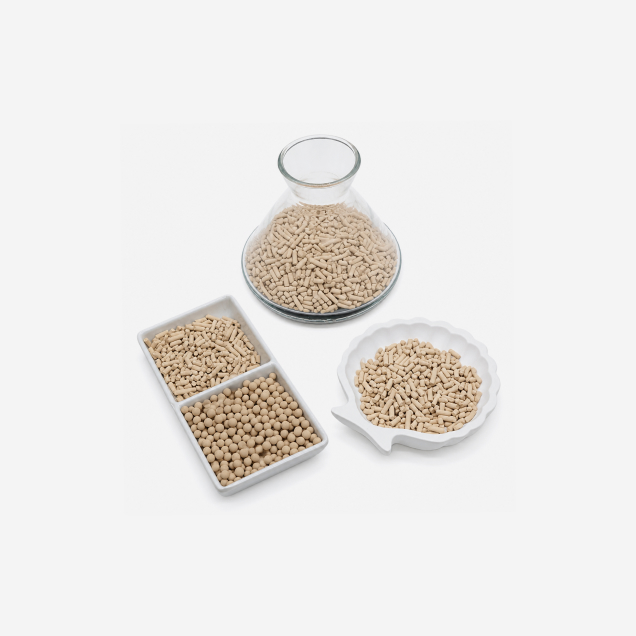
  • Hard black cylindrical pellets with high crush strength and low dust for long PSA life.

Technial Parameters

PropertyValue
TypeCarbon molecular sieve (CMS)
MaterialCarbon (elemental carbon)
AppearanceBlack cylindrical pellets
Diameter0.95, 1.1–1.3, 1.3–1.5, 1.5–1.8, 1.8–2.0 mm
Crush Strength≥50 N/pc
Bulk Density630–680 g/L
Adsorption Pressure0.75–0.8 MPa
Adsorption Time2×60 s
Nitrogen Purity95% up to 99.999%
GradesCMS-220, CMS-240, CMS-260, CMS-280
RegenerationPressure swing (heatless)
ApplicationPSA nitrogen generation
TrademarkRONGJIAN
OriginJiangxi, China
HS Code3802100000
Transport PackageSteel drum / carton box / ton bag
Production Capacity10000 tons/year


GradeAdsorption Pressure (MPa)N2 Purity (%)N2 Output (m³/t·h)Air / N2 Ratio
CMS-2200.75–0.8954202.0
963802.1
973402.2
983002.3
992602.4
99.52202.6
99.91453.7
99.991004.8
99.999556.8
CMS-2400.75–0.8954401.8
964002.0
973602.1
983202.2
992802.3
99.52402.5
99.91603.5
99.991104.6
99.999656.6
CMS-2600.75–0.8954701.7
964301.9
973902.0
983502.1
993202.2
99.52602.3
99.91753.4
99.991204.6
99.999756.5
CMS-2800.75–0.8955001.6
964551.8
974102.0
983652.1
993352.2
99.52802.3
99.91903.4
99.991354.5
99.999906.4

FAQs

What is carbon molecular sieve used for?

Carbon molecular sieve is the working material in a PSA nitrogen generator, making nitrogen from ordinary compressed air on site. That nitrogen is used to blanket and purge tanks and reactors in chemical and oil-and-gas plants, to keep oxygen away from packaged food, to hold an inert atmosphere in electronics and metal heat treatment, and for laser cutting, tyre filling and mine inerting. Anywhere a plant needs its own steady nitrogen supply, CMS in a PSA unit is the common way to make it.

How does CMS separate nitrogen from air?

By speed, not by capacity, which is what sets it apart from a zeolite sieve. The carbon pores are sized so that oxygen molecules slip inside faster than the slightly larger nitrogen molecules. In a PSA generator, air is held on the bed for only a few seconds, and in that short window the oxygen is drawn into the carbon while most of the nitrogen sweeps past and leaves as product gas. The pressure is then dropped to release the oxygen and refresh the carbon, and a second bed takes over so the nitrogen flow stays steady. It is the difference in diffusion rate, not a hard size cut-off, that does the separating.

How do I choose the grade and nitrogen purity?

Grade and purity trade against each other. We stock CMS-220, 240, 260 and 280, and the higher the number the more nitrogen a given charge makes at a set purity. Purity itself is set by how the generator is run: a slower, gentler cycle gives higher purity but less nitrogen, a faster cycle gives more nitrogen at lower purity. For inerting and blanketing a middle purity is plenty and the output is high; for electronics or analysis the cycle is tuned for the highest grades at a lower flow. Tell us the nitrogen purity and the flow you need and we will point to the grade and the loading.

How is CMS different from a zeolite molecular sieve, and how is it regenerated?

They are opposite tools. A zeolite oxygen sieve holds nitrogen by capacity and lets oxygen through, so it makes oxygen; carbon molecular sieve holds oxygen by speed and lets nitrogen through, so it makes nitrogen. CMS is carbon, not an aluminosilicate, and it separates on diffusion rate rather than pore size alone. Regeneration is by pressure, not heat: at the end of each short cycle the bed is vented to atmosphere, the oxygen comes back off, and the carbon is ready again, with no thermal step in normal PSA service. Kept free of oil and liquid water from the compressor, a CMS charge lasts for years.

Carbon molecular sieve is a black, cylindrical carbon adsorbent with a network of very fine micropores. It is not a zeolite and it behaves unlike ordinary activated carbon: the pore openings are engineered to sit right at the size difference between an oxygen and a nitrogen molecule. Oxygen, the slightly smaller molecule, diffuses into those pores faster than nitrogen, and that single difference in speed is what a PSA nitrogen generator turns into product.

In the generator, dry compressed air is pushed onto a bed of CMS and held for a few seconds. In that short time oxygen races into the carbon while most of the nitrogen has no chance to be adsorbed and flows out as nitrogen-rich product. The bed is then dropped to atmospheric pressure, the oxygen desorbs and is vented, and the carbon is ready for the next batch — two beds alternate so nitrogen comes out steadily. Running cold at modest pressure and regenerating on pressure alone, PSA nitrogen with CMS is cheaper to install and operate than a cryogenic nitrogen plant, and it starts in minutes.

How much purity you actually need depends on the job:

Nitrogen purityTypical use
95 to 99%Tank blanketing, purging, fire prevention, general inerting
99 to 99.9%Food packaging, chemical processing, plastics and rubber
99.99% and aboveElectronics, laser cutting, heat treatment, laboratories

Two things protect a CMS charge. First, the feed air must be clean and dry, because oil droplets and liquid water from the compressor coat the carbon and blunt its rate selectivity, so a coalescing filter and dryer sit ahead of the beds. Second, the higher grades such as CMS-260 and CMS-280 give more nitrogen from the same vessel, so matching the grade to the purity and flow keeps the running cost down. Kept clean and cycled within its range, a CMS bed holds its performance for many years.