search
Search

Enter keywords to search for products, blog posts, and more.


Home > 5A Molecular Sieve

5A Molecular Sieve
5A Molecular Sieve

5A Molecular Sieve

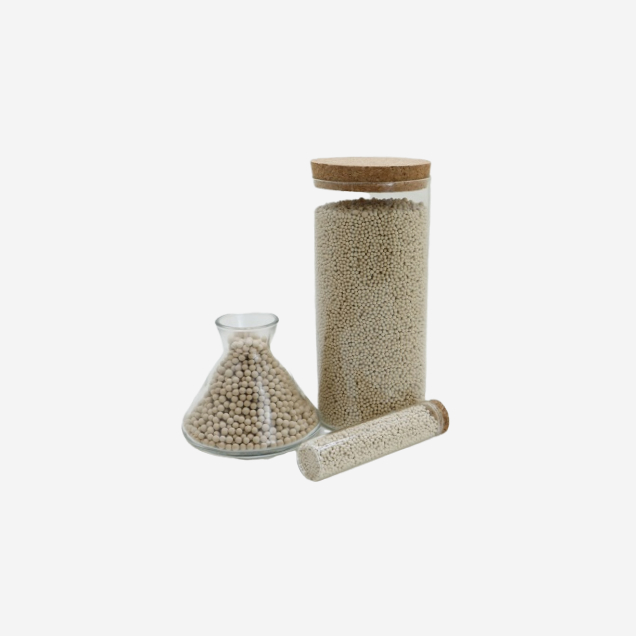
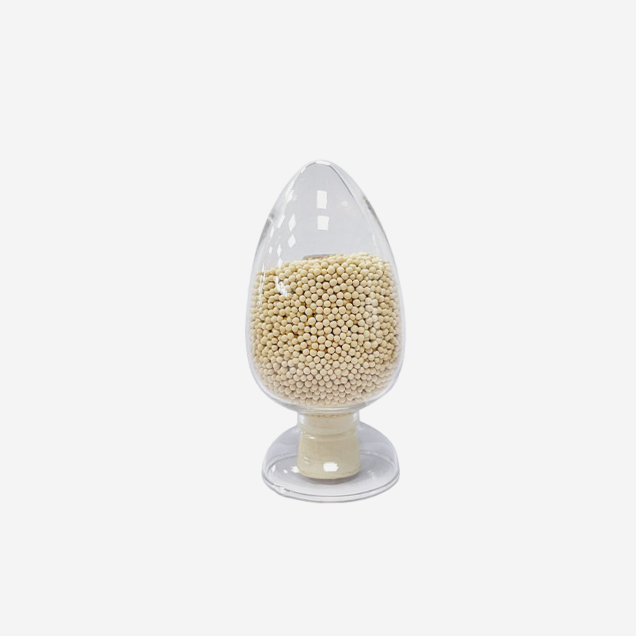
5A molecular sieve is the calcium form of type A zeolite, with a pore opening of about 5 angstroms. Swapping calcium in for sodium widens the pore, so 5A takes in everything the smaller grades do and larger molecules besides — up to and including normal, straight-chain paraffins, while still turning away branched and cyclic ones. That combination makes it the separation grade of the family: it lifts nitrogen out of air for oxygen concentrators, cleans up hydrogen in PSA, splits normal from iso paraffins, and clears water, CO2 and sulfur from sour gas. We supply it as beads and pellets for PSA units and packed beds.

  • Pore size around 5Å — adsorbs normal paraffins, CO2, H2S, mercaptans and water; excludes branched and cyclic molecules.
  • Selective for nitrogen over oxygen, the basis of PSA and VPSA oxygen generation.
  • Strong calcium sites give a high pickup of CO2 and sulfur while holding down COS formation.
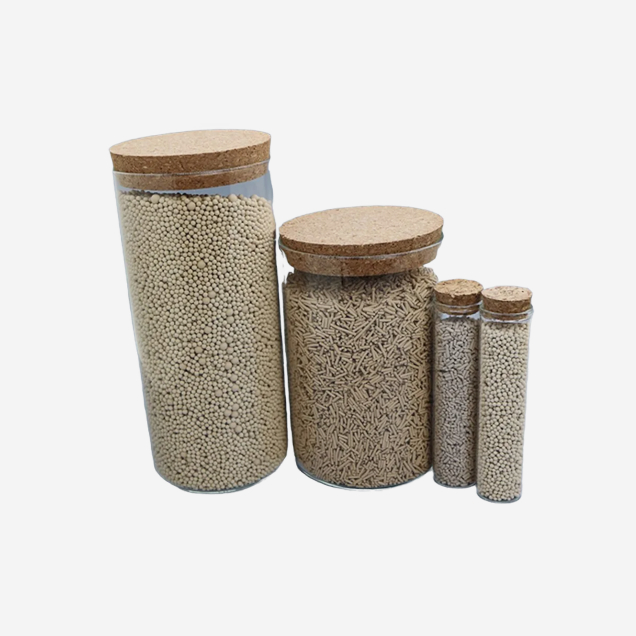
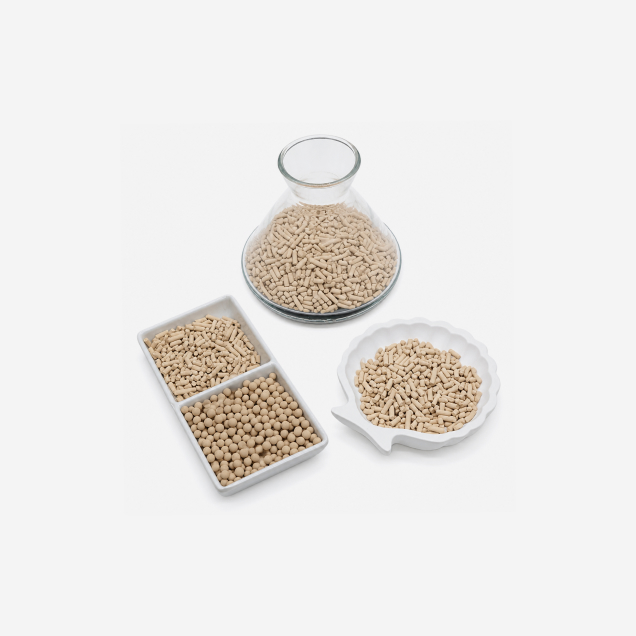
  • Supplied as spheres and cylindrical pellets in the sizes PSA and TSA beds call for.
  • Regenerated by heat or by dropping pressure, then run for many swing cycles.

Technial Parameters

PropertyPellet – 1.5–1.7 mmPellet – 3.0–3.3 mmBead – 1.7–2.5 mmBead – 3.0–5.0 mm
Size ratio on grade (%)≥98≥98≥96≥96
Bulk density (g/ml)≥0.60≥0.60≥0.60≥0.60
Wear ratio (%)≤0.20≤0.25≤0.20≤0.20
Crush strength (N)≥45 N/cm≥60 N/cm≥45 N/pc≥45 N/pc
Static water adsorption (%)≥20≥20≥20≥20
Water content (%)≤1.5≤1.5≤1.5≤1.5


PropertyValue
Type5A zeolite (calcium form of type A)
Pore SizeAbout 5Å (0.5 nm)
Chemical Formula0.7CaO·0.3Na2O·Al2O3·2SiO2·4.5H2O
AdsorbsWater, CO2, H2S, mercaptans, normal paraffins (under 5Å); excludes branched / cyclic
AppearanceBeige beads and pellets
Purity99.9%
Regeneration TemperatureAbout 250–350°C
CAS No.69912-79-4
TrademarkRONGJIAN
OriginJiangxi, China
HS Code2842100000
Transport PackageSteel drum / carton box / ton bag
Production Capacity10000 tons/year

FAQs

What is 5A molecular sieve used for?

5A is the separation-and-purification grade of molecular sieve. Its main jobs are gas separation in PSA and VPSA units — pulling nitrogen out of air to make oxygen, and cleaning up hydrogen — plus separating normal paraffins from branched and cyclic ones in refining. It also dries and sweetens sour natural gas, taking out water, carbon dioxide, hydrogen sulfide and light mercaptans in one bed while keeping COS low. Anywhere a process has to split a gas mixture or strip acid gases along with water, 5A is the grade to use.

How does 5A separate normal from branched hydrocarbons?

It works on shape and size. The roughly 5 angstrom pore is just wide enough for a straight-chain paraffin to thread in, but a branched or ring-shaped molecule of the same carbon number is too bulky to enter. Run a mixture of normal and iso paraffins through a 5A bed and the straight chains are held inside while the branched and cyclic ones pass on through. The trapped normal paraffins are then recovered in a separate desorption step. This is the basis of molecular-sieve dewaxing and normal-paraffin recovery from naphtha and kerosene.

Why is 5A used in oxygen concentrators?

An oxygen concentrator runs on pressure swing adsorption. Compressed air is pushed through a 5A bed, where the sieve grabs nitrogen and lets oxygen slip past, so the gas coming off is oxygen-rich. Once the bed fills with nitrogen the pressure is dropped, the nitrogen is released, and the sieve is ready again — two beds swap back and forth for a steady flow. The strong calcium sites and even pore size give 5A the nitrogen affinity and fast cycling a concentrator needs, and a well-run unit reaches oxygen in the mid-nineties percent.

How is 5A regenerated, and which shapes and sizes do you supply?

5A comes back to life by heating or by dropping the pressure. A thermal bake at roughly 250 to 350 degrees Celsius under a dry sweep clears water and acid gases, while in a PSA unit the sieve is regenerated by pressure alone on every cycle. Either way it holds up over a long run of swings. The bead and pellet diameters we stock are set out in the table above, so pick the size that fits your PSA vessel or packed bed. Send the separation or drying duty and the flow and we will size the fill.

5A molecular sieve is the calcium-exchanged version of type A zeolite. Replacing two sodium ions with one calcium ion clears the pore mouth and opens it to about 5 angstroms — wide enough to admit water, carbon dioxide, hydrogen sulfide, mercaptans and straight-chain hydrocarbons, yet still narrow enough to block branched and ring-shaped molecules. Because anything a 3A or 4A sieve can hold also fits a 5A, the grade doubles as a strong desiccant and acid-gas remover, but its real value is what it can separate.

Two separation jobs stand out. In pressure swing adsorption, 5A holds nitrogen more strongly than oxygen, so driving air through a bed and then cycling the pressure yields an oxygen-rich stream — the working principle behind oxygen concentrators and PSA nitrogen and hydrogen units. In refining, the pore acts as a shape filter: normal paraffins slip in and are retained while iso and cyclic ones wash through, which is how straight-chain paraffins are recovered from naphtha and kerosene and how fuels are dewaxed.

Where 5A earns its place across the process industries:

DutyWhat 5A does
Oxygen concentration (PSA / VPSA)Holds nitrogen, passes oxygen, for medical and industrial O2
Hydrogen PSARemoves CO, CO2, CH4, N2 and water to purify H2
n-paraffin separationRetains straight chains, rejects branched and cyclic
Natural gas sweeteningTakes water, CO2, H2S and light mercaptans, low COS

A practical note for PSA duty. The bed is cycled hard, with constant pressure and flow reversals, so bead hardness and low dust are what keep the pressure drop stable and stop the sieve powdering. Store unused sieve sealed against room humidity, and keep liquid water off a hot bed. Sized for the cycle and kept clean, a 5A charge holds its capacity through a long service life.