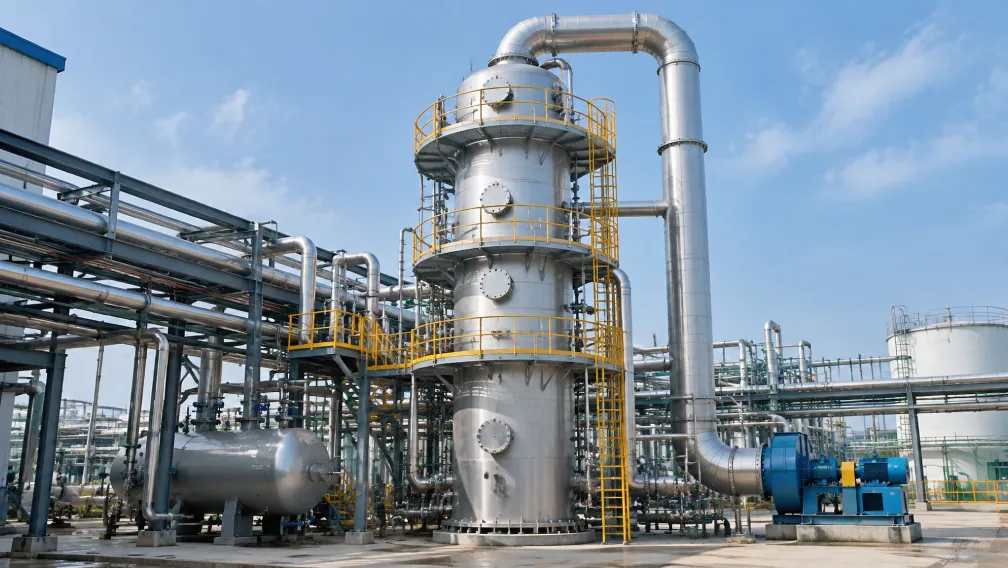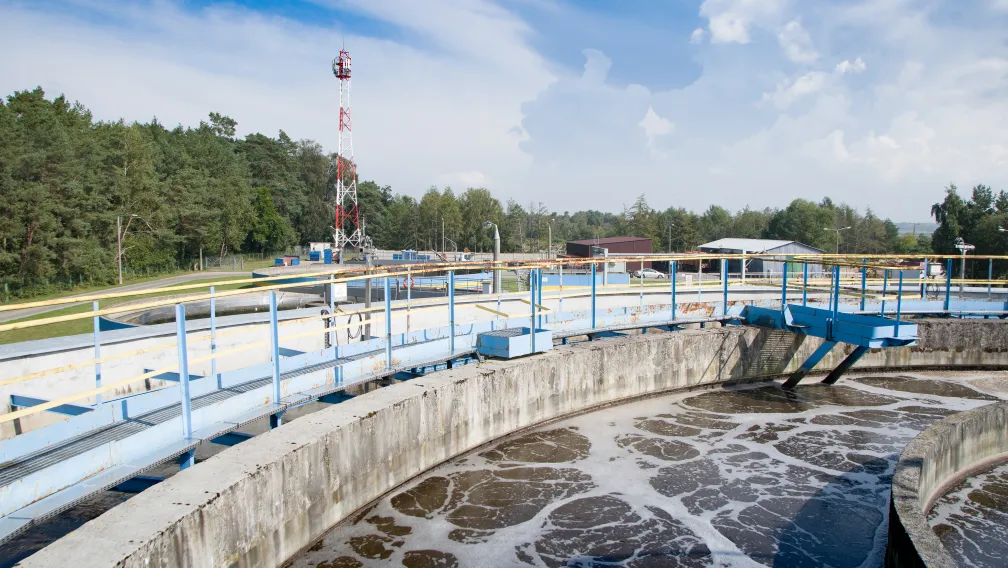

When a packed tower scrubber fails to meet environmental emission limits, process engineers must quickly diagnose the aerodynamic and hydraulic faults within the column. A scrubber is essentially a giant mass transfer contactor; its efficiency relies on maintaining a precise, uniform distribution of liquid and gas. When this uniform distribution collapses, the scrubber experiences severe mechanical and thermodynamic failures—most notably liquid channeling, severe foaming, and hydraulic flooding. Left uncorrected, these conditions lead to catastrophic gas breakthrough and regulatory violations. This guide details how to diagnose fluid dynamic failures by interpreting pressure drop trends, analyzing sight glass visuals, and executing mechanical corrective actions within the packing bed.
Diagnosing Liquid Channeling and Maldistribution
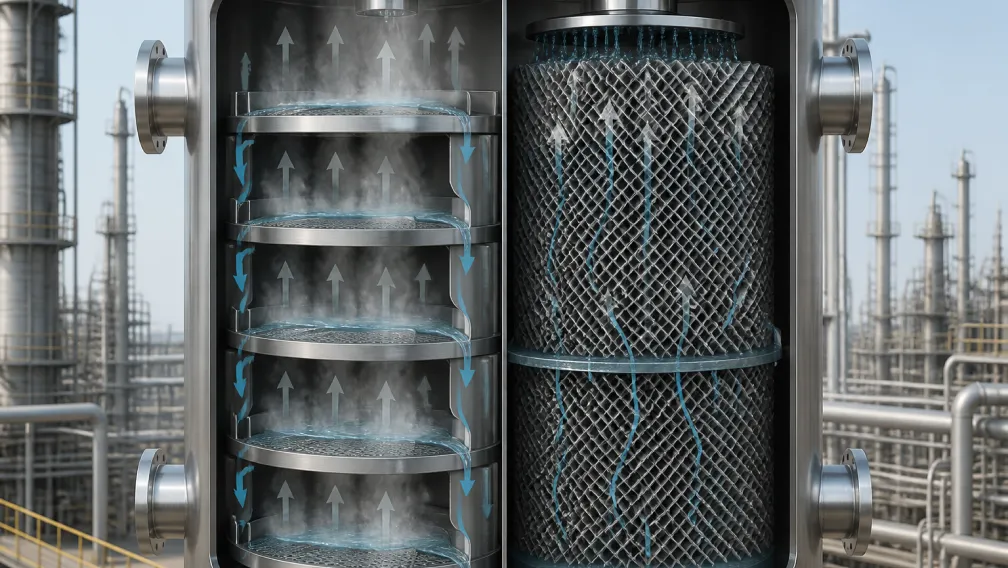
Liquid channeling occurs when the scrubbing liquor fails to spread evenly across the cross-sectional area of the packed bed. Instead of forming a thin, continuous film over all the random packing, the liquid consolidates into heavy streams that plummet straight down specific sections of the tower.
Because gas naturally seeks the path of least resistance, the ascending dirty gas bypasses the heavy liquid streams entirely, flowing upward through the dry, under-irrigated sections of the packing. Mass transfer drops to near zero.
Diagnostic Symptoms: Channeling presents a specific operational signature. The scrubber will fail its emission tests (e.g., high $SO_2$ or $HCl$ breakthrough at the stack), yet the overall differential pressure drop across the column remains perfectly normal or even drops slightly. This distinguishes channeling from flooding.
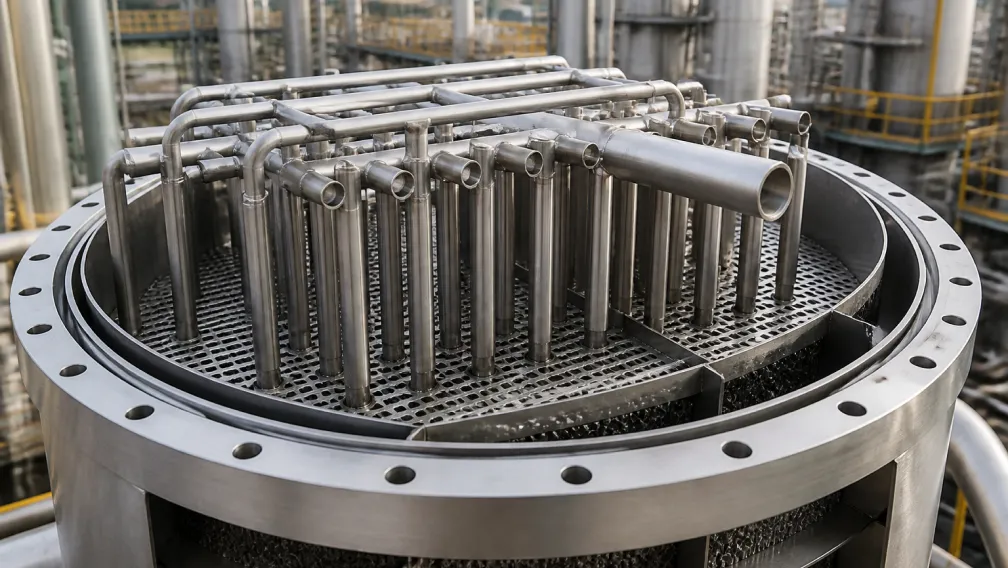
Root Causes and Solutions: The primary cause of channeling is a failed liquid distributor. If the feed nozzles plug with particulate matter or scaling, certain sections of the bed receive no liquid. Similarly, if a gravity trough distributor is installed out-of-level, fluid will dump to the low side. The corrective action requires shutting down the column, inspecting the tower internals, mechanically cleaning plugged orifices, and verifying horizontal leveling with laser precision.
The Physics of Foaming and Bed Flooding
Foaming is a chemical and mechanical failure that destroys the gas-liquid interface. When surface-active agents (surfactants), fine particulates, or dissolved organics enter the scrubbing liquor, they lower the surface tension of the liquid. As high-velocity gas violently shears this liquid inside the packing, billions of stable bubbles form.
This foam acts as a physical barrier. It fills the interstitial void spaces of the packing, essentially acting like a solid blockage. The ascending gas must now push through a dense wall of foam, causing the differential pressure to spike exponentially.
Diagnostic Symptoms: Foaming induces rapid, chaotic swings in the column's differential pressure transmitter. If the column is equipped with sight glasses, operators will visually confirm a thick layer of dense, stable suds accumulating above the liquid distributor or overflowing into the vapor return lines. If the foaming is severe, the foam will physically carry scrubbing liquid out the top of the stack (entrainment).
Corrective Actions: Immediate mitigation requires injecting a chemical antifoam agent (typically silicone or polyglycol-based) into the scrubber sump to break the surface tension of the bubbles. However, this is a bandage solution. The engineering fix requires identifying and eliminating the contaminant entering the feed gas or blowdown water. Additionally, if the process is inherently prone to foaming, engineers may need to retrofit the column with packing that provides a higher void fraction to accommodate the foam without choking.
Hydraulic Flooding at the Support Plate
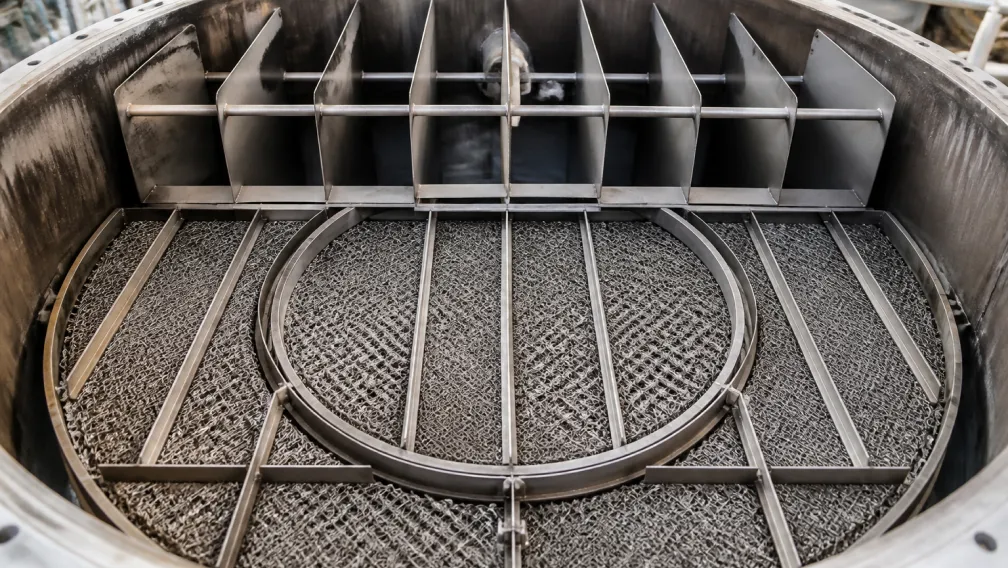
Flooding occurs when the downward flow of liquid is completely arrested by the upward aerodynamic drag of the gas. While flooding can initiate anywhere in the bed due to localized fouling, it most frequently occurs at the bottom packing support plate.
If a scrubber is pushed beyond its design capacity, the high-velocity gas entering the bottom of the bed prevents the liquid from draining through the support grid. The liquid pools on top of the plate, eventually submerging the lowest layers of the packing. This creates a massive restriction to gas flow.
Diagnostic Symptoms: Flooding causes a rapid, asymptotic rise in differential pressure. The column will begin to physically vibrate or "rumble" as massive slugs of gas violently tear through the accumulated liquid pool. Liquid level in the sump will drop inexplicably because the liquid is being held up inside the packed bed.
Corrective Actions: The immediate operational response is to drastically reduce the gas feed rate (turndown) to allow the liquid to drain. If the column continually floods at normal operating rates, the support plate is the bottleneck. The engineering solution requires retrofitting the tower with a gas injection hump support. These corrugated plates physically separate the vapor and liquid channels, preventing the gas from throttling the draining liquid and restoring the column's hydraulic capacity.
Scaling and Packing Replacement
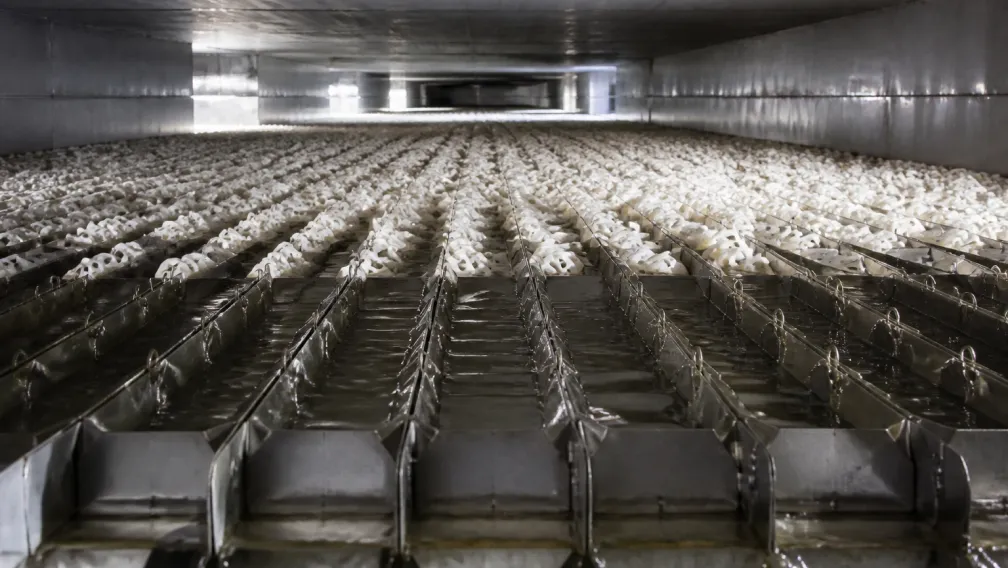
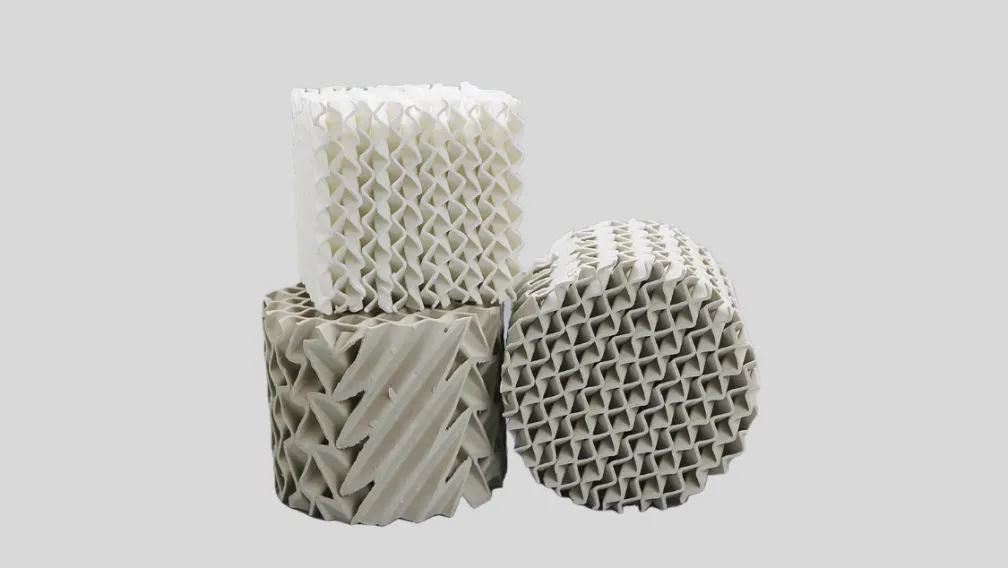
In harsh chemical scrubbing, such as flue gas desulfurization (FGD) using lime or caustic, insoluble salts precipitate directly onto the packing media. This scaling slowly bridges the gaps between the rings or saddles, continuously shrinking the available void fraction.
Unlike foaming, which causes sudden pressure spikes, scaling manifests as a slow, steady, irreversible increase in baseline pressure drop over several months. Once a bed is heavily scaled, chemical acid washing is rarely effective because the solvent cannot penetrate the massive solid blocks of nested packing. At this stage, the only viable solution is a complete mechanical turnaround: opening the manways, physically breaking out the calcified media, and repacking the column with fresh, high-void-fraction media to restore original operating parameters.
Where Rongjian Fits
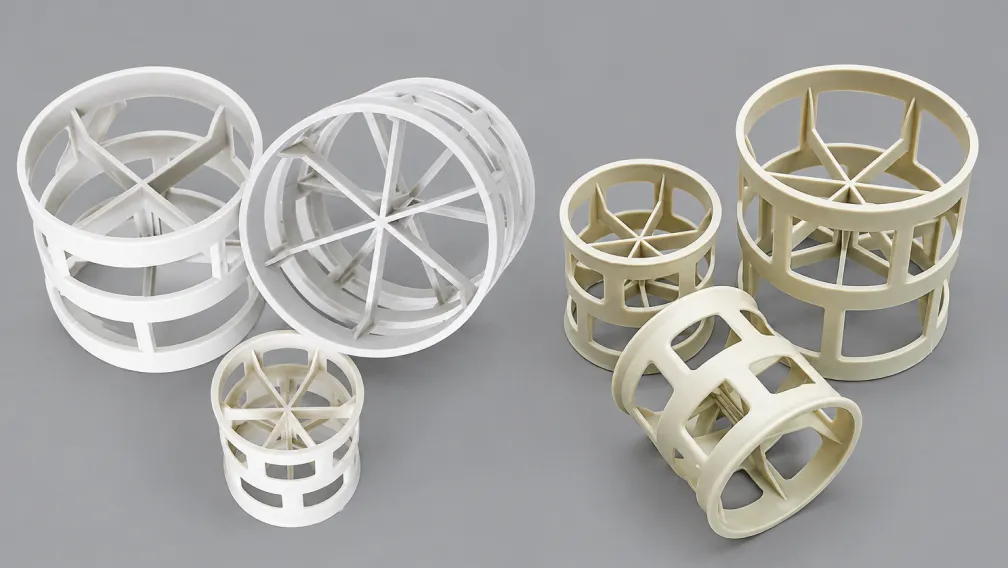
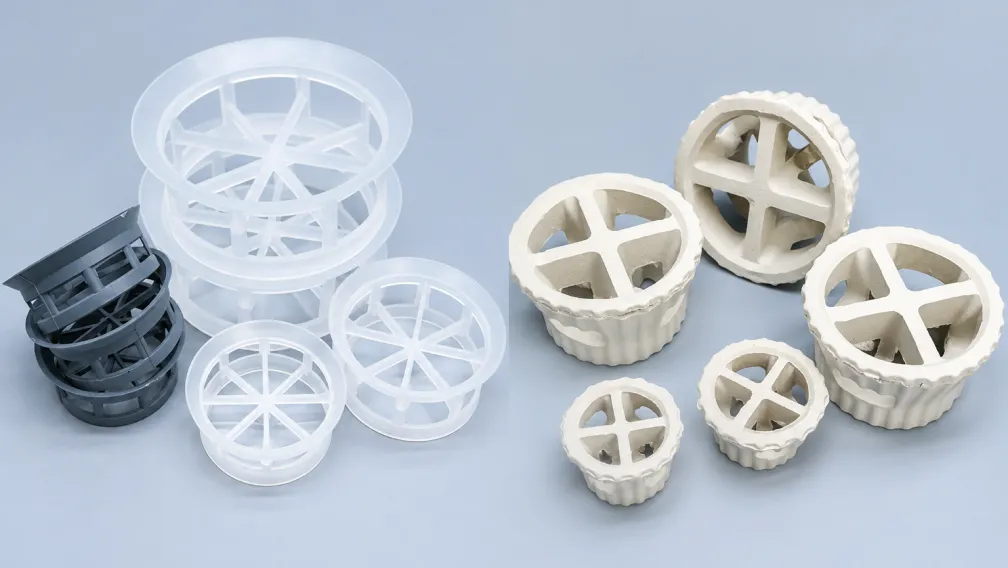
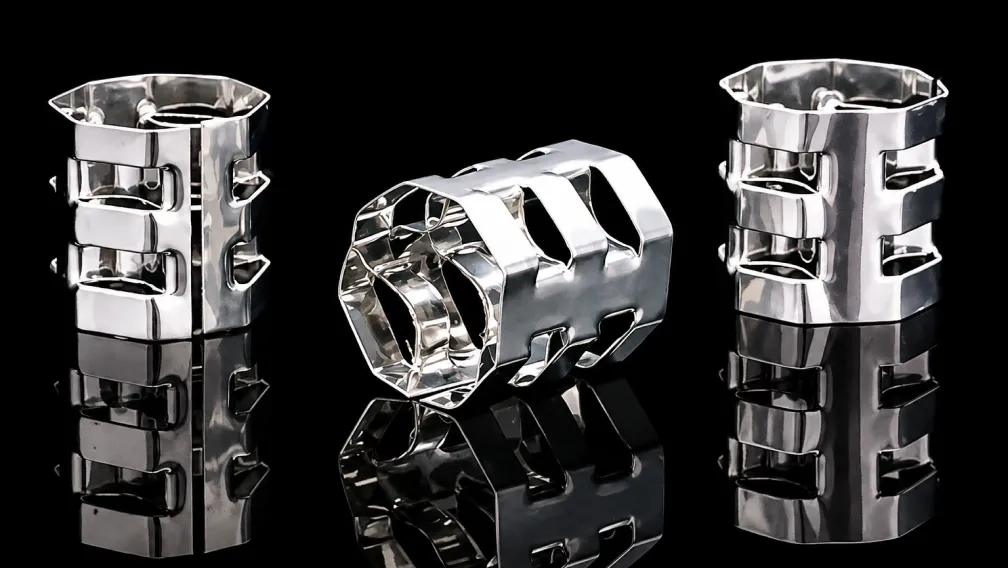
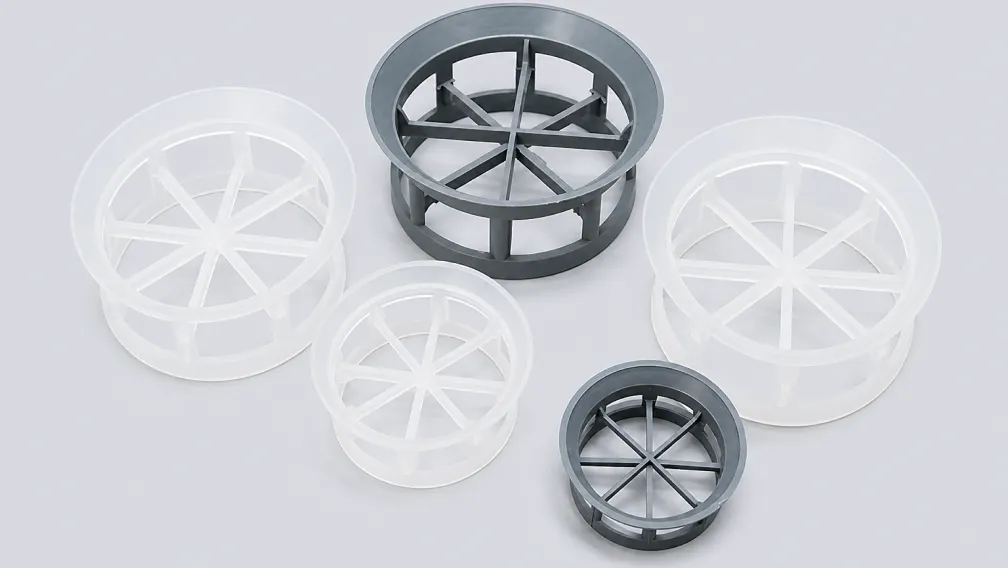
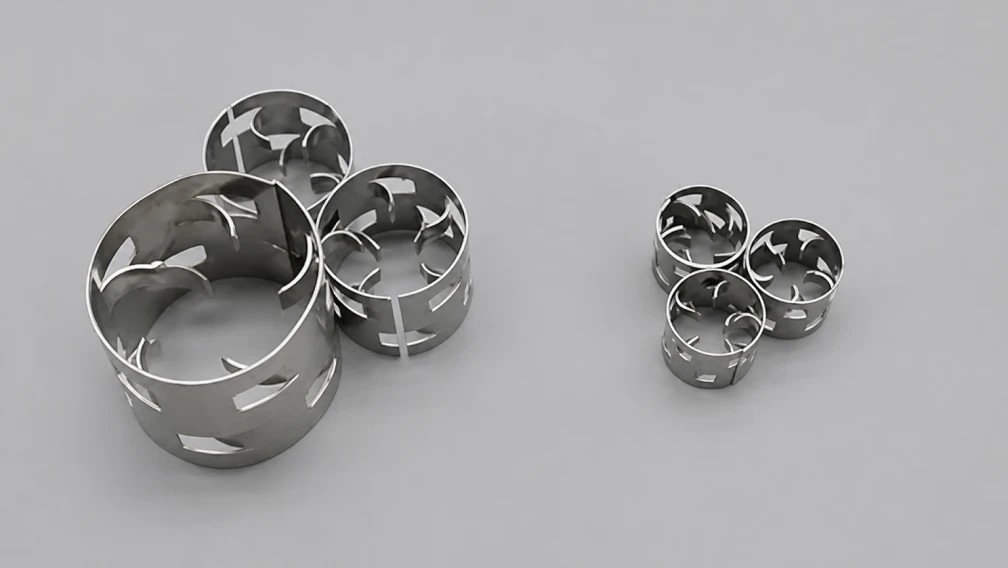
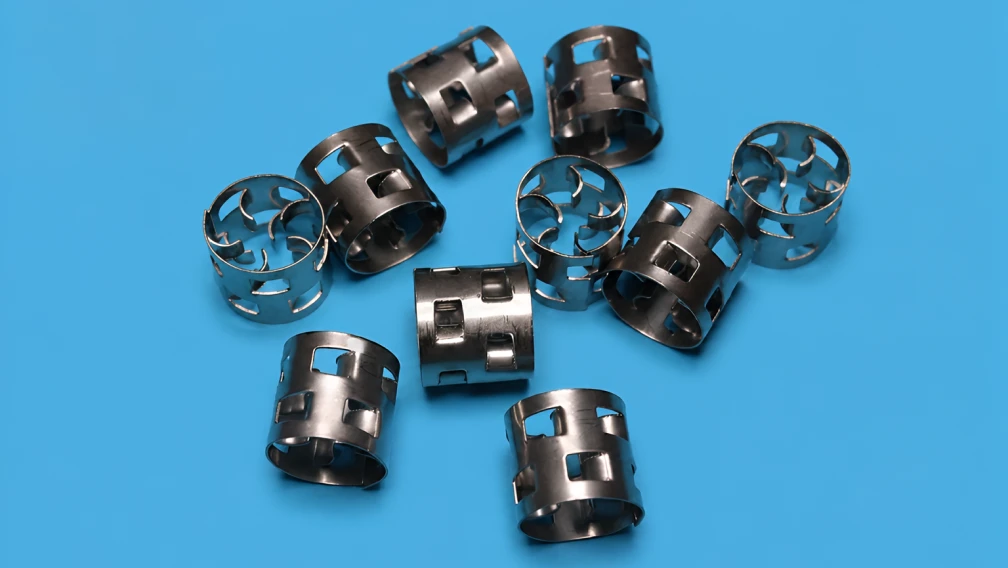
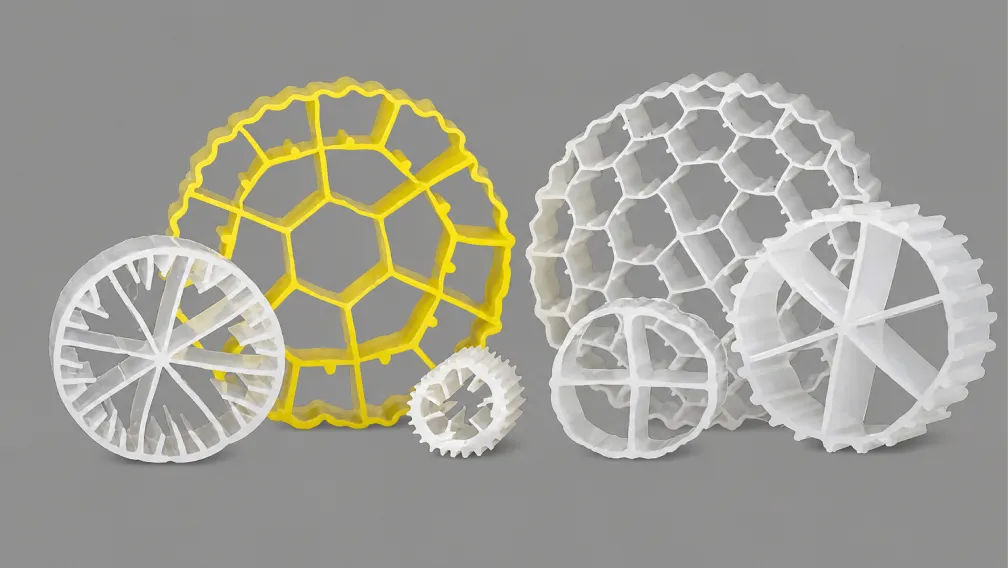
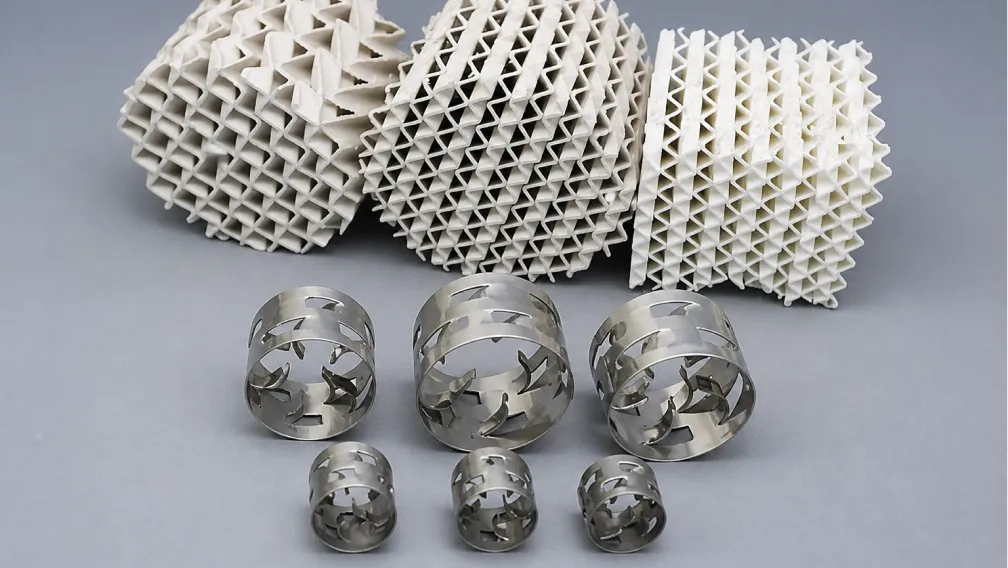
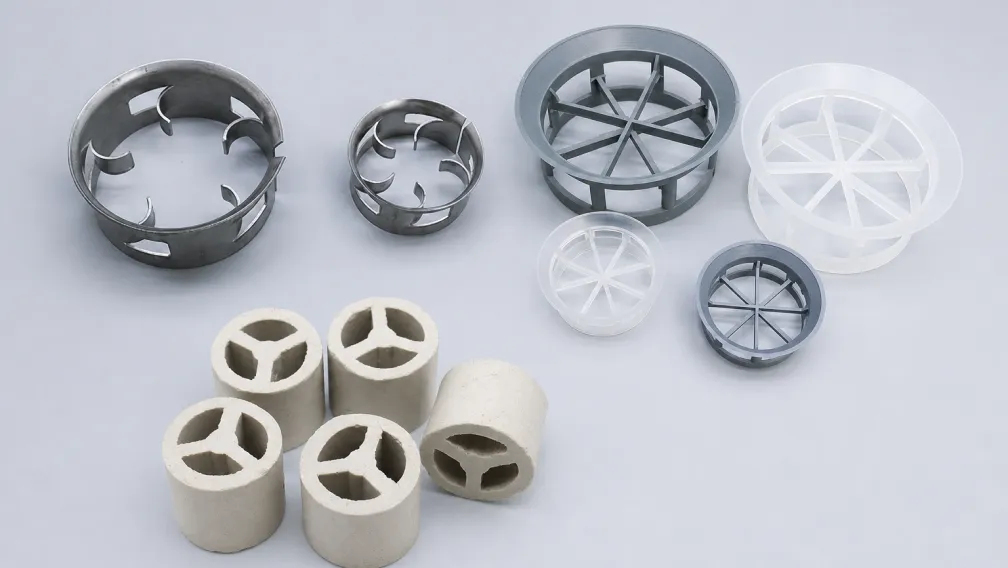
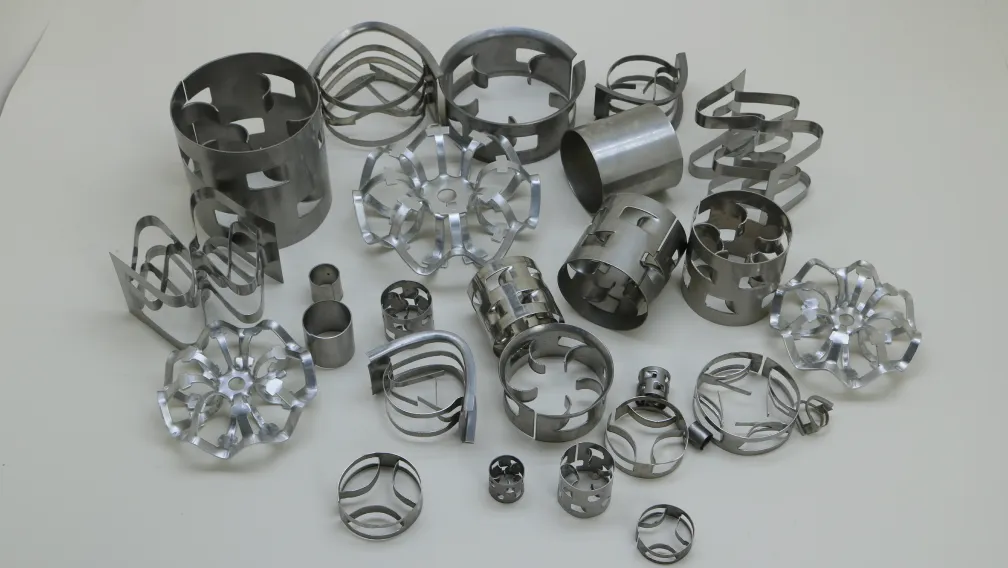
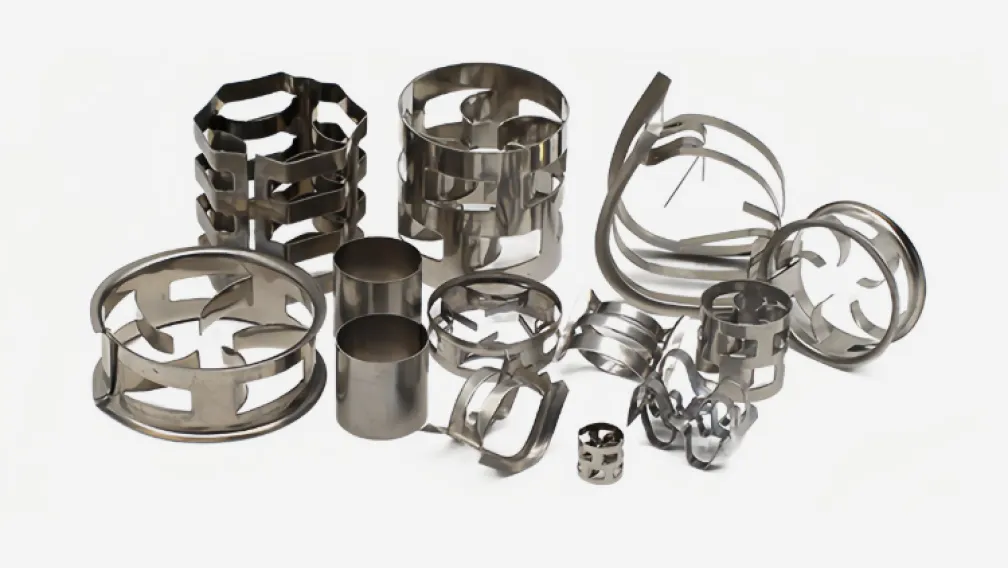
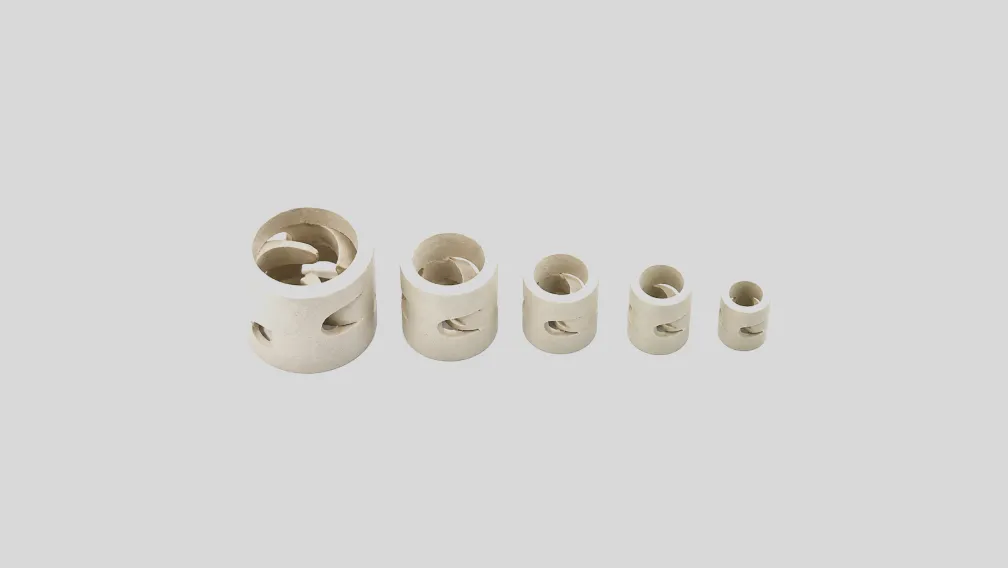
Pingxiang Rongjian manufactures heavy-duty separation media and internal components specifically designed to resist the hydraulic failures common in aggressive environmental scrubbers. We engineer high-capacity random packing—such as Pall rings and VSP rings—that provide maximum void fractions to resist fouling and accommodate foaming fluids without premature flooding. Furthermore, we design precision liquid distributors to eliminate channeling and gas injection hump supports to permanently resolve bottom-bed flooding. If your scrubber is consistently failing emission targets or suffering from high pressure drops, our engineering team can evaluate your fluid dynamics to pinpoint the bottleneck. Contact us today with your operating data for a comprehensive tower internal troubleshooting and replacement strategy.
-

Rongjian
Process Media Manufacturer Since 2010
Rongjian produces tower packing, molecular sieves, ceramic grinding media and other process media from our Pingxiang production base. We supply to industrial projects in over 100 countries.