
The liquid distributor is arguably the most critical internal component within a packed chemical separation column. Positioned directly above the packed bed, its sole function is to take the incoming liquid feed or reflux and distribute it uniformly across the entire cross-sectional area of the packing. The separation efficiency of a tower relies entirely on maximizing the contact area between the ascending vapor and the descending liquid. If the initial liquid distribution is uneven, the packing below cannot fully correct it. This leads to liquid maldistribution, which severely degrades mass transfer, increases the Height Equivalent to a Theoretical Plate (HETP), and ultimately causes the column to fail its purity specifications. This guide details the engineering principles of liquid distribution, the physical differences between trough, pan, and pipe designs, and the fluid dynamics governing turndown ratios.
The Cost of Liquid Maldistribution
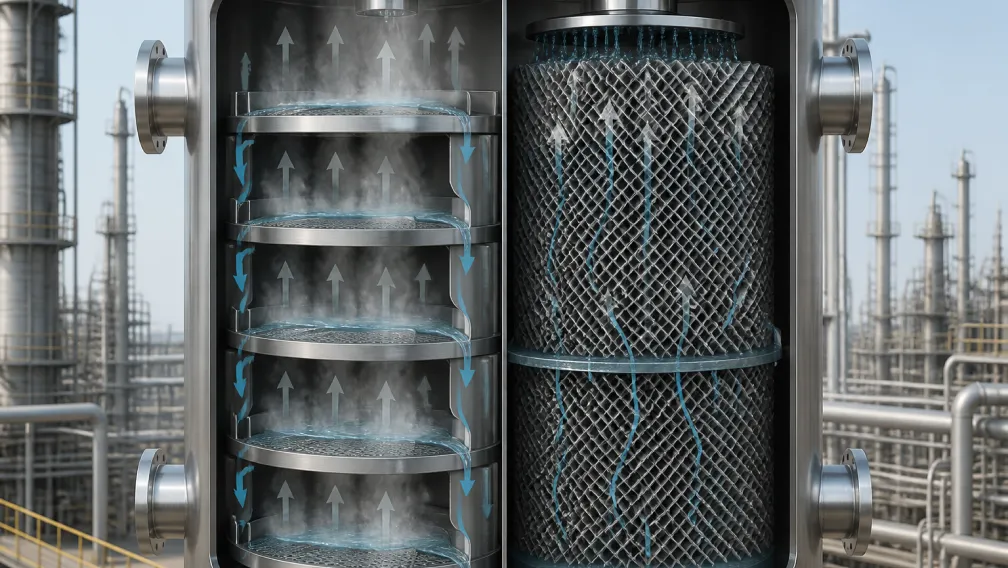
Packed towers operate on the principle of continuous vapor-liquid contact. The tower internals must ensure both phases remain evenly spread. When a liquid distributor fails to provide a uniform spray or drip pattern, localized areas of high and low liquid loads develop.
Fluid dynamics dictate that ascending gas follows the path of least resistance. In a packed column, the gas flows preferentially through the dry, under-irrigated sections of the bed. Simultaneously, the heavy liquid channels downward through the over-irrigated sections. The two phases effectively bypass one another. The wetted surface area of the packing drops, mass transfer stalls, and the separation efficiency of that specific packed bed collapses. In severe cases of maldistribution, adding more packing height does not improve product purity; it only increases the pressure drop.
Drip Point Density and Packing Types
The performance of a liquid distributor is primarily measured by its drip point density, defined as the number of liquid discharge points per square meter of column cross-sectional area. The required density depends strictly on the type of packing used in the bed below.
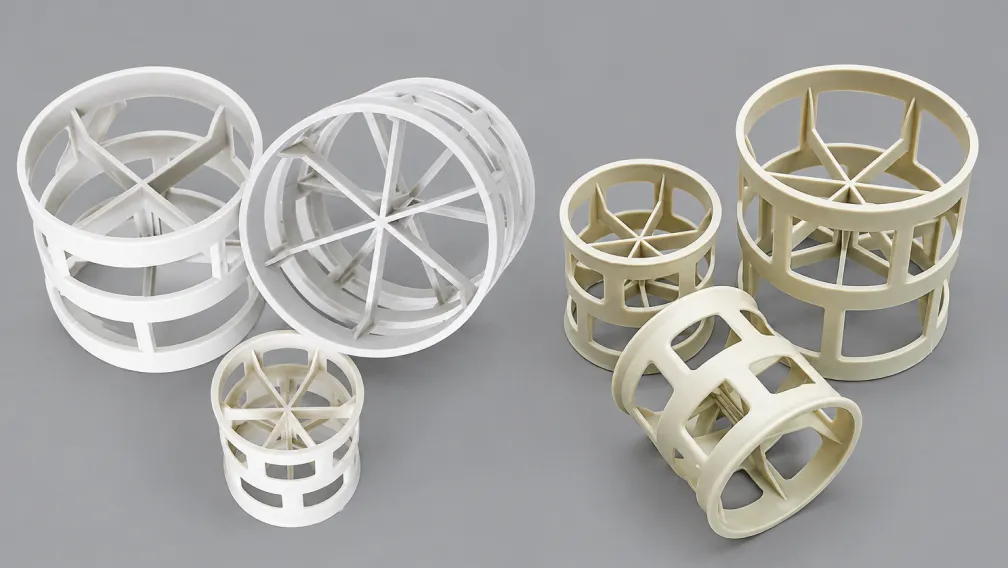
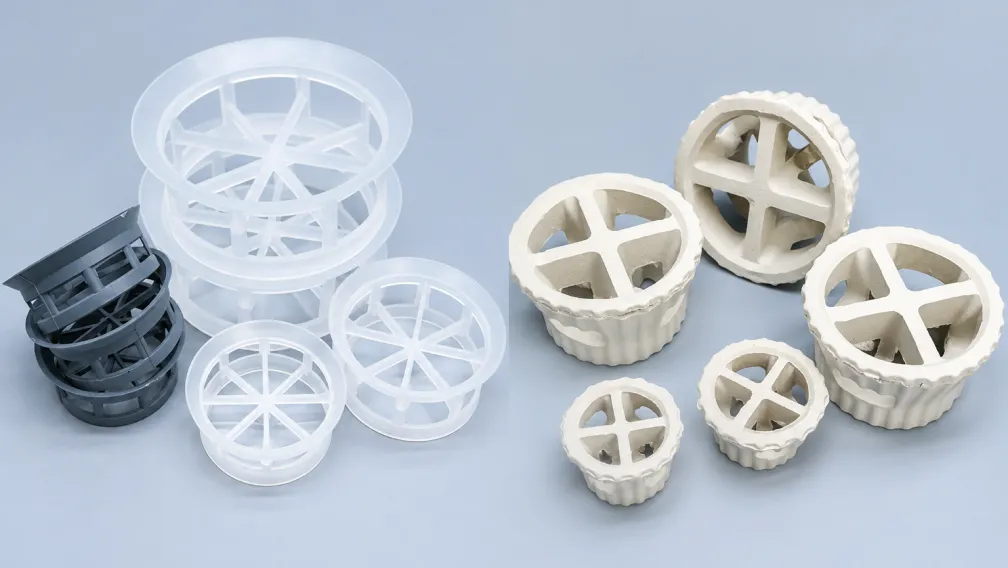
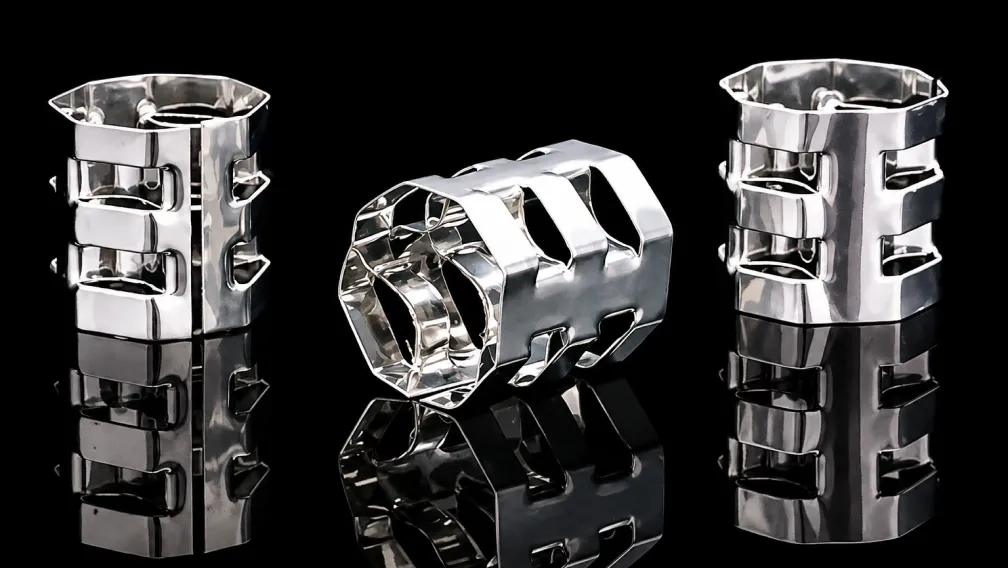
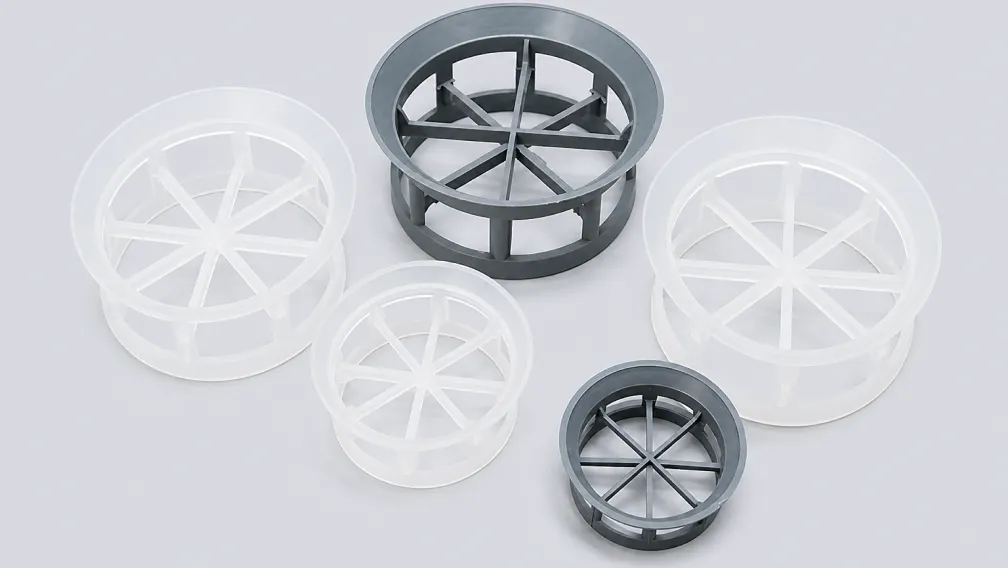
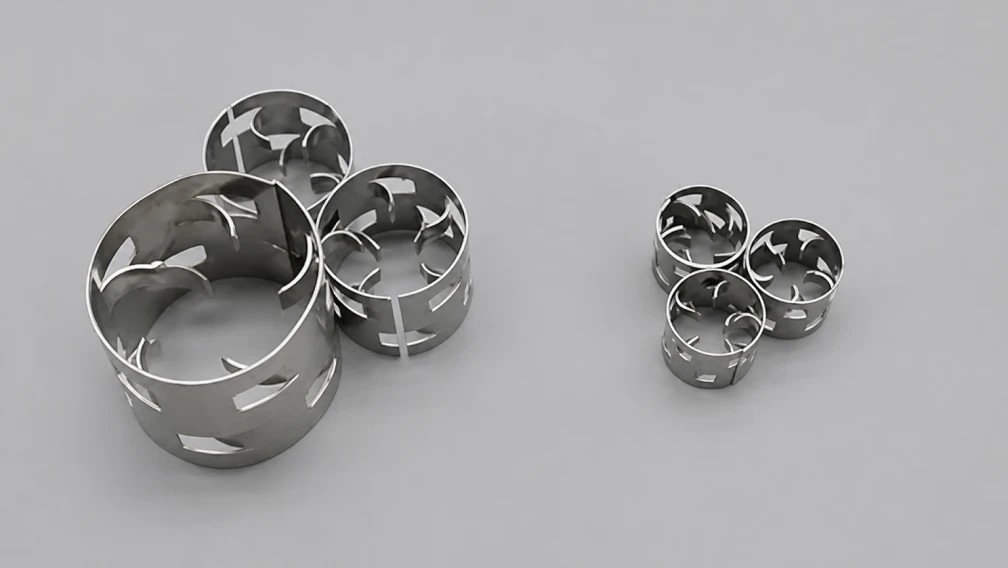
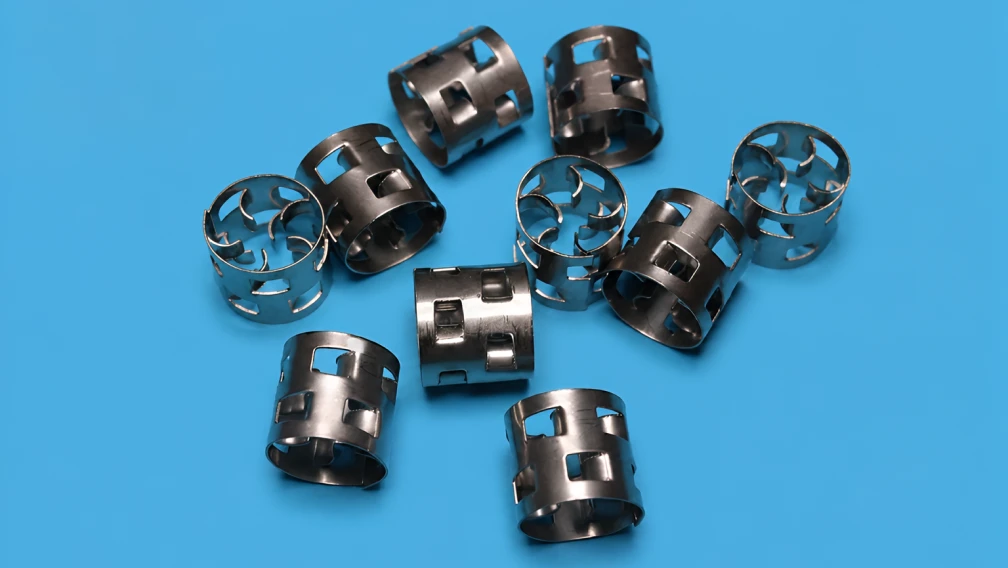
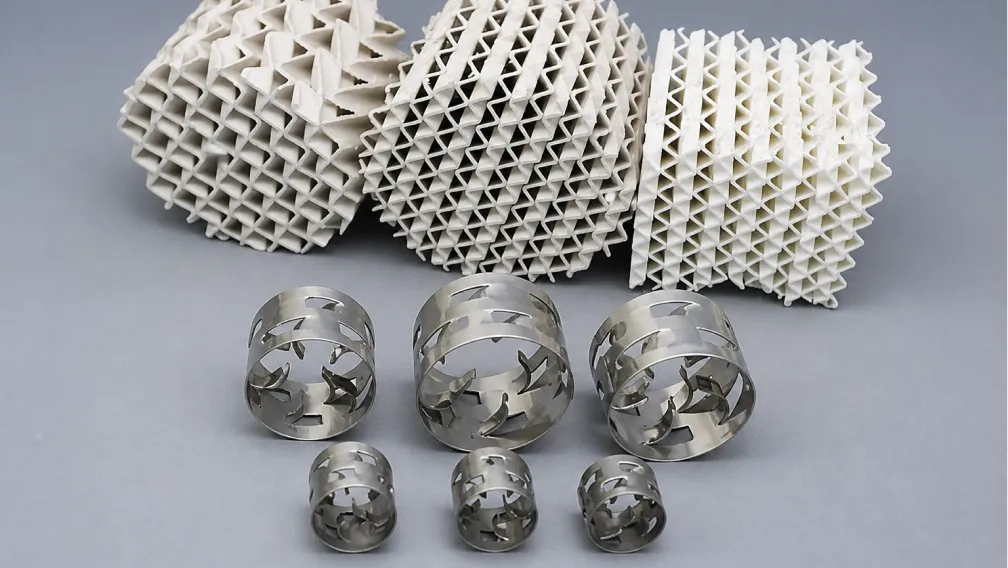
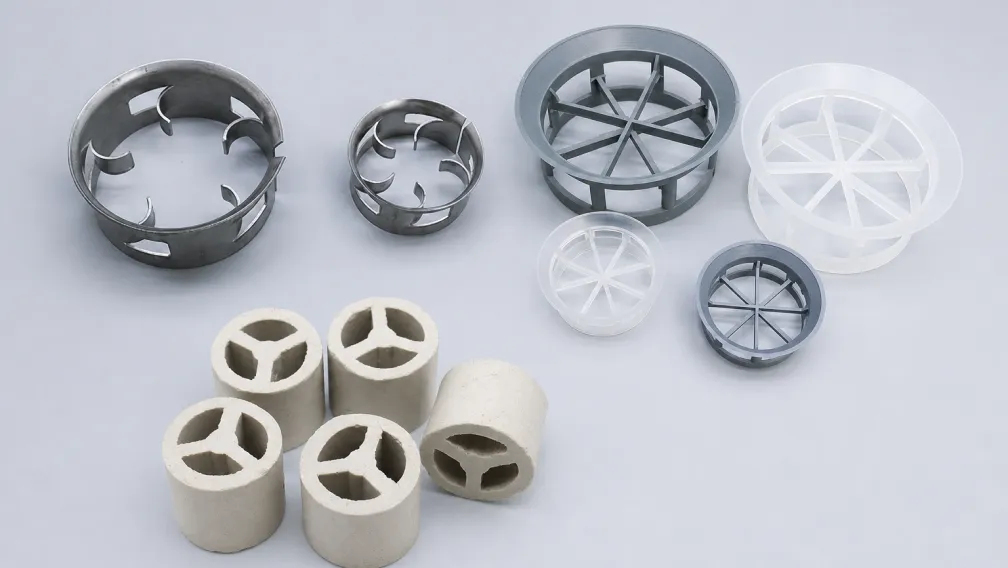
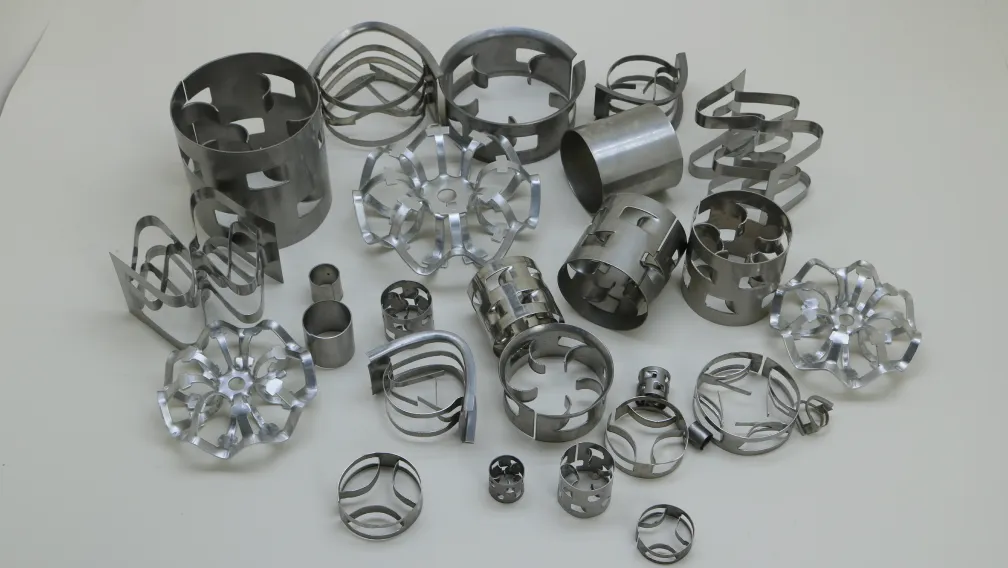
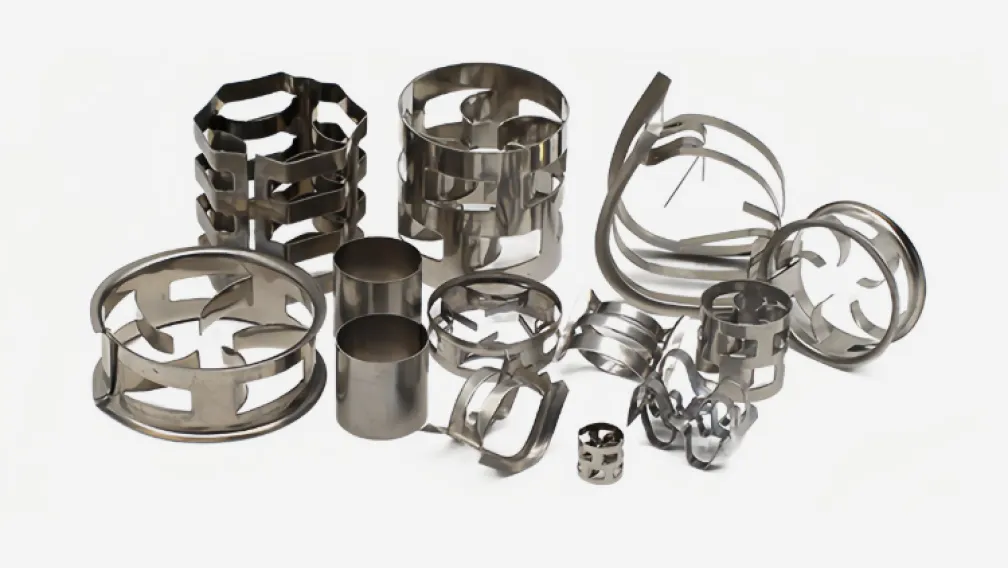
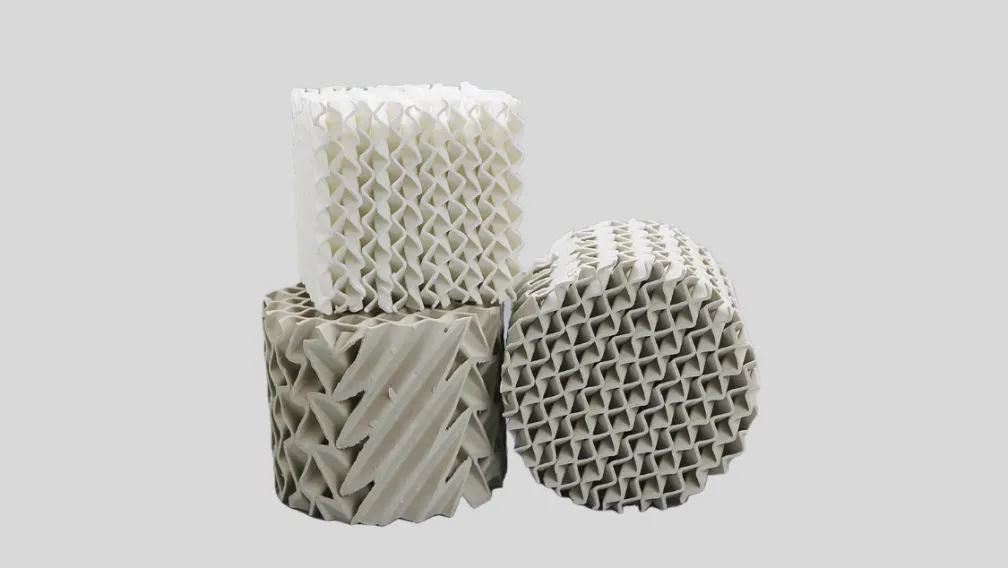
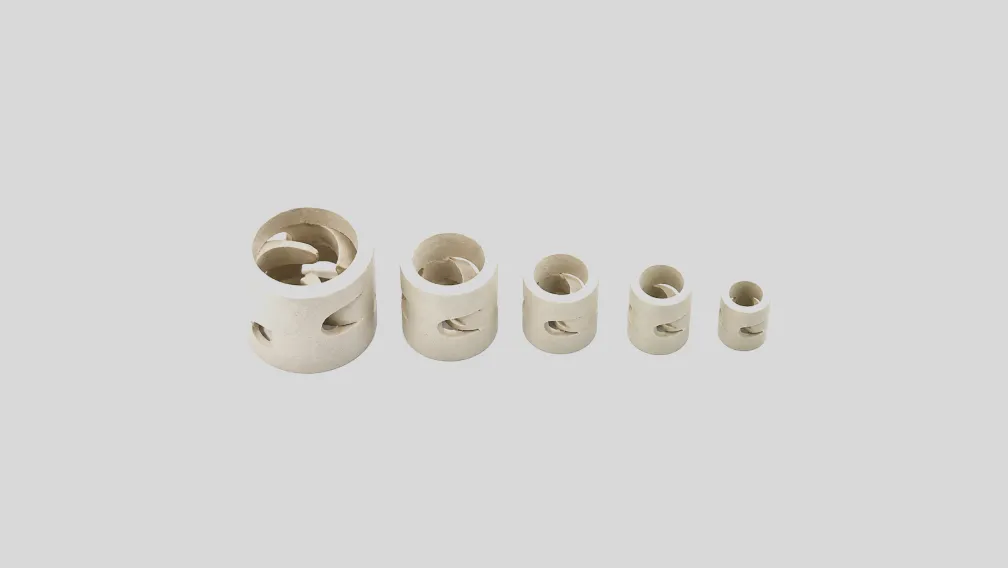
Random packing, such as Pall rings or Intalox saddles, possesses a high degree of radial liquid spread. As liquid trickles down through the random matrix, it naturally disperses outward. Therefore, standard random packing beds usually require a moderate drip point density of 60 to 100 points per square meter.
Conversely, structured packing consists of vertically oriented corrugated metal sheets. These sheets guide liquid downward rapidly but provide almost zero radial spreading across the sheets. If a drip point misses a specific corrugated channel at the top of the bed, that channel remains completely dry all the way to the bottom. Consequently, structured packing demands a much higher drip point density, typically ranging from 100 to 200 points per square meter, and sometimes higher for ultra-high efficiency distillation.
Turndown Ratio in Gravity Distributors
The turndown ratio represents the operational flexibility of the distributor. It is defined as the ratio of the maximum design liquid flow rate to the minimum operable liquid flow rate. For example, a turndown ratio of 3:1 means the distributor functions correctly even when the liquid feed drops to 33% of its maximum design capacity.
In standard gravity-fed orifice distributors, fluid mechanics dictate that the volumetric flow rate through a hole is proportional to the square root of the liquid head (the height of the liquid pool above the hole). To double the flow rate, the liquid head must increase by a factor of four.
This square-root relationship strictly limits the turndown ratio. If a column is turned down to 50% of its design flow, the liquid head in the distributor drops to 25% of its design depth. If the liquid head drops too low (typically below 25 mm), the liquid loses the pressure required to form steady, distinct streams. Instead, surface tension takes over, causing the liquid to weep irregularly down the underside of the distributor plate, destroying the distribution pattern. Standard orifice distributors are generally limited to a turndown ratio of 2:1 or 2.5:1.
Primary Types of Liquid Distributors
Engineers select the distributor type based on column diameter, liquid flow rates, fouling potential, and turndown requirements. The three dominant designs are trough, pan, and pipe distributors.
Trough Liquid Distributors
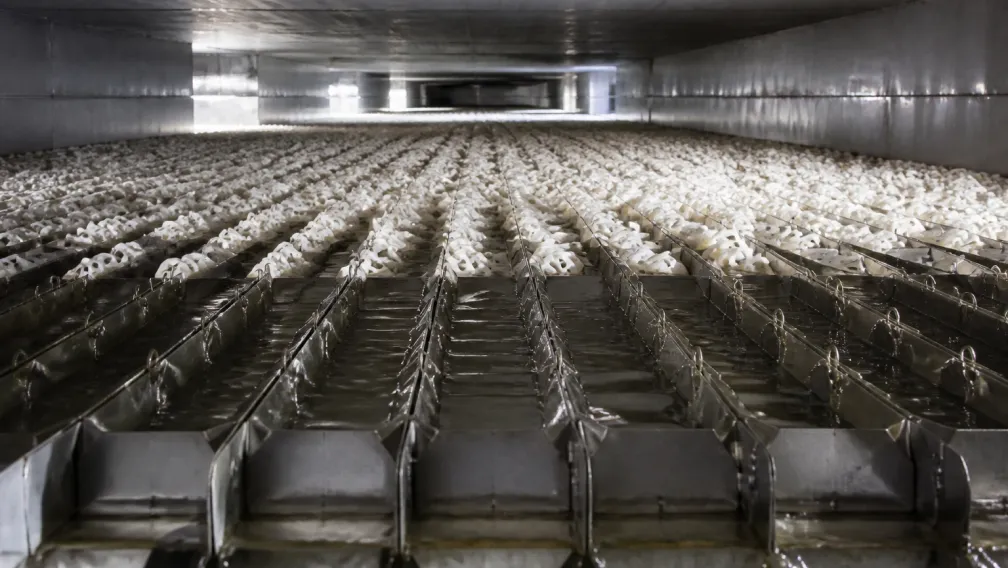
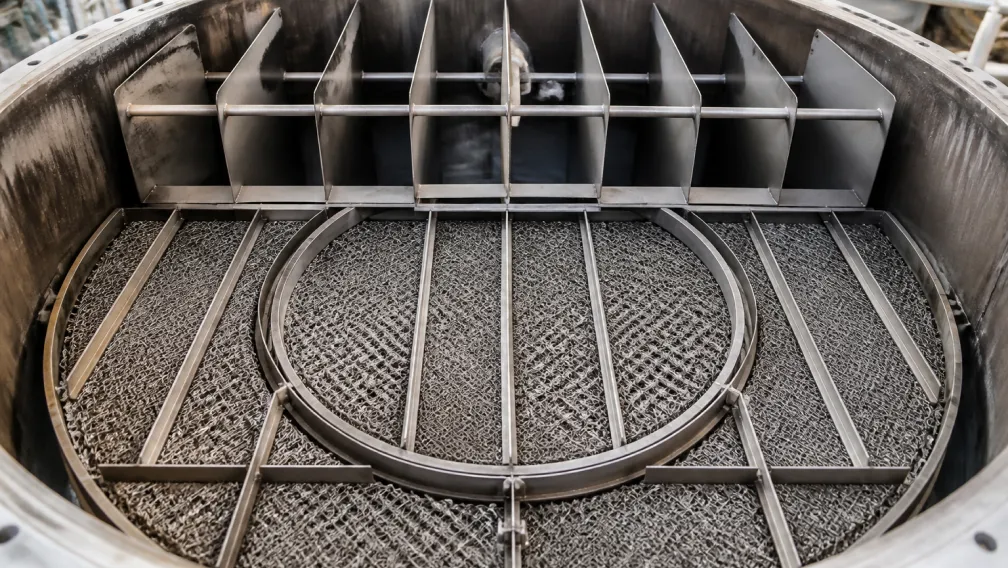
The stainless steel trough liquid distributor is the industrial workhorse for large-diameter columns (above 1 meter). It consists of a primary parting box that receives the feed pipe. This parting box meters the liquid into a series of parallel, lateral troughs. The open channels between the troughs allow the ascending vapor to pass upward with minimal pressure drop.
Trough distributors meter liquid onto the packing via bottom orifices or side-wall notches. Bottom-hole troughs provide precise distribution but are susceptible to plugging from scale and pipe debris settling on the floor. For dirty services, engineers specify V-notch weir troughs. The V-shaped notches are cut into the upper side walls of the trough. Solid debris settles harmlessly on the floor, while the clean liquid overflows through the notches. Furthermore, the flow rate through a V-notch is proportional to the liquid head raised to the power of 2.5 (h^2.5). This allows V-notch troughs to achieve massive turndown ratios, often exceeding 5:1 or even 10:1.
Orifice Pan Distributors
A pan distributor consists of a flat metal deck covering the entire column cross-section. Short vertical pipes, called vapor risers, are welded onto the deck to allow gas to flow upward. Small holes are drilled directly into the floor of the deck to allow liquid to drip downward.
Pan distributors excel in clean services and smaller columns (typically under 1.2 meters). Because the floor is continuous, engineers can drill holes anywhere, easily achieving the extreme drip point densities required for structured packing. However, they possess limitations. The solid deck obstructs vapor flow far more than a trough design, creating a higher gas pressure drop. Additionally, any solid particulates in the feed immediately settle on the pan floor, plugging the small orifice holes and destroying the distribution pattern.
Pipe Distributors
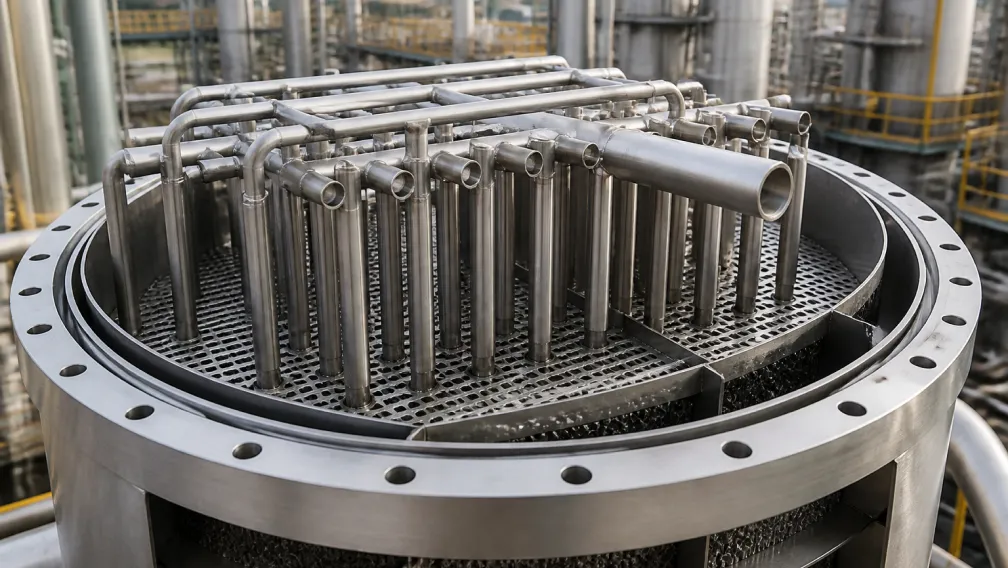
Pipe distributors consist of a central pressurized header that feeds an array of lateral pipes. Liquid exits the pipes through downward-facing drilled holes or engineered spray nozzles. Because they operate under pump pressure rather than gravity, they are not constrained by liquid head relationships.
Pipe distributors are low-profile and take up very little vertical height in the column. They are widely used in refinery pumparound zones and vacuum distillation units. However, they do not provide the exact, geometric drip point uniformity of a trough or pan. The spray cones from nozzles overlap, creating areas of localized over-irrigation. They are generally paired with high-capacity random packing or grid packing where extreme initial distribution uniformity is less critical.
The Necessity of Liquid Redistributors
Even with perfect initial distribution at the top of the bed, liquid naturally tends to migrate toward the column wall as it travels downward. This phenomenon is called wall flow. Once liquid hits the solid steel wall, it stops interacting with the ascending gas, severely reducing mass transfer.
To combat this, chemical engineers limit the continuous depth of a packed bed. For standard random packing, a bed should not exceed 6 to 8 meters (20 to 26 feet) in height. If the process requires more packing, the bed must be split. A liquid collector is installed to catch the descending liquid, mix it, and feed it into a liquid redistributor (essentially a second liquid distributor) which respreads the fluid evenly over the next bed below.
Installation Tolerances and Levelness
Gravity-fed distributors demand extreme precision during installation. The fluid dynamics governing flow through orifices and weirs assume a perfectly uniform liquid head across the entire device.
If a large pan or trough distributor is installed with a slight tilt, the consequences are severe. A tilt of just 5 mm (0.2 inches) across a 3-meter diameter column significantly alters the hydrostatic head. The orifices on the low side of the tilt will experience high liquid head and dump excessive liquid. The orifices on the elevated side will run dry. This tilt instantly creates massive liquid maldistribution before the column even begins operation. Installers must use laser levels or precision water levels to ensure the distributor plane is strictly horizontal, securing it firmly to the welded support rings to prevent shifting under thermal expansion.
Water Testing and Factory Acceptance
Because the mechanical dimensions of the holes and notches dictate the hydraulic performance, leading manufacturers assemble and test large liquid distributors at the factory prior to shipment. During this water test, the distributor is leveled, and water is pumped in at the exact design flow rates. Engineers measure the discharge from individual drip points and calculate the coefficient of variation (Cv). A high-performance distributor designed for structured packing must demonstrate a Cv of less than 5%, proving that every single drip point delivers identical liquid volume.
Where Rongjian Fits
Pingxiang Rongjian designs and manufactures high-performance tower internals for the global petrochemical, refining, and environmental industries. We engineer custom stainless steel trough liquid distributors, orifice pans, and pipe distributors matched precisely to your liquid flow rates, turndown requirements, and packing type. Our engineering team calculates optimal drip point densities to prevent maldistribution in both random and structured packing beds. Whether you are upgrading an existing distillation column for higher capacity or designing a new scrubber, we ensure your internals provide precise hydraulic performance. Provide us with your vapor-liquid loading data and vessel diameter for a detailed internal sizing evaluation.
-

Rongjian
Process Media Manufacturer Since 2010
Rongjian produces tower packing, molecular sieves, ceramic grinding media and other process media from our Pingxiang production base. We supply to industrial projects in over 100 countries.