
Selecting internal media for a distillation column fundamentally shapes the thermodynamic efficiency and hydraulic capacity of the separation process. Historically, sieve trays dominated petrochemical fractionation and heavy industrial distillation. Today, modern random and structured packing frequently replace traditional trays in plant debottlenecking projects. However, sieve trays remain absolutely indispensable in specific high-fouling or high-pressure applications where packing degrades or plugs. This guide evaluates the fluid dynamics of sieve trays against packed beds, analyzing differential pressure drop, operational turndown ratios, and the strict engineering criteria for determining when to retain trayed internals versus when to retrofit a column with packing.
Hydraulics of a Sieve Tray: Weeping and Entrainment
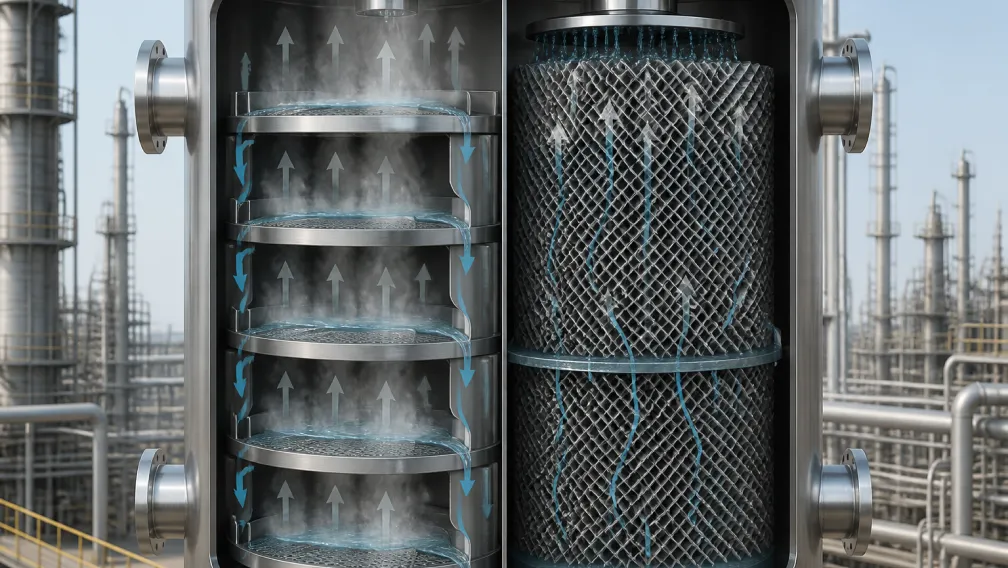
A sieve tray distillation plate consists of a flat, perforated metal deck installed horizontally across the column. Liquid flows across the deck and over a vertical weir, creating a continuous liquid pool. Ascending vapor pushes upward through the perforations, bubbling violently through the liquid pool to form a turbulent froth. This intense, forced cross-mixing creates a discrete thermodynamic equilibrium stage.
The hydraulic performance of a sieve tray is bounded by two operational extremes. If the vapor velocity drops too low, the upward gas pressure cannot support the weight of the liquid pool. The liquid drains straight through the perforations, bypassing the downcomer entirely. This phenomenon is known as weeping, and it destroys mass transfer efficiency because the vapor and liquid fail to mix. Conversely, if the vapor velocity rises too high, the high-speed gas shears fine droplets from the froth and carries them upward to the tray above. This is called entrainment, which severely reduces product purity and leads to premature column flooding.
Pressure Drop Comparison: Trays vs. Packing
Differential pressure drop is the most critical determining factor between trayed and packed column designs. In a trayed column, the ascending vapor must physically push through the static hydrostatic head of the liquid pool on every single tray. Consequently, a standard sieve tray generates a high pressure drop, typically ranging from 3 to 5 millibars per theoretical stage.
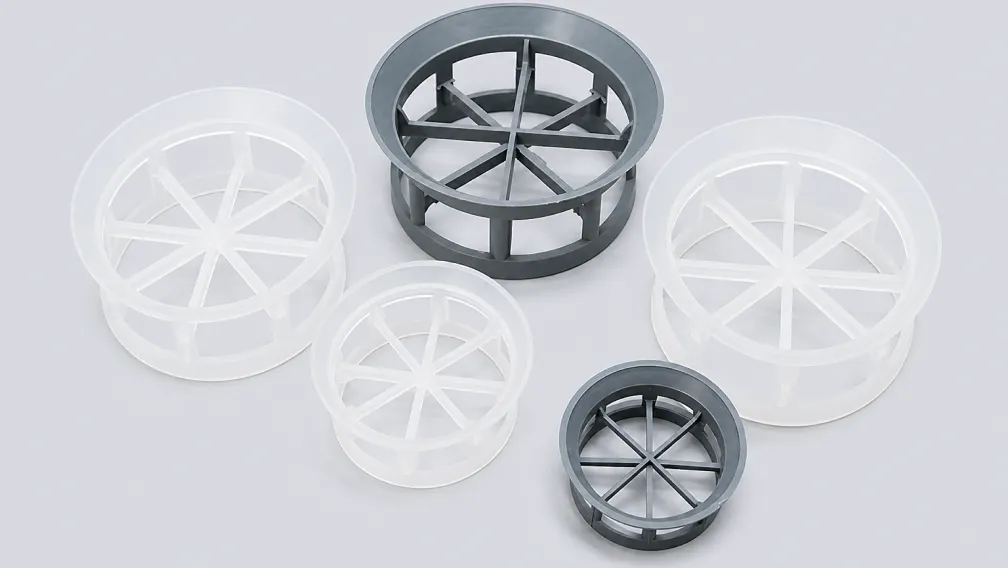
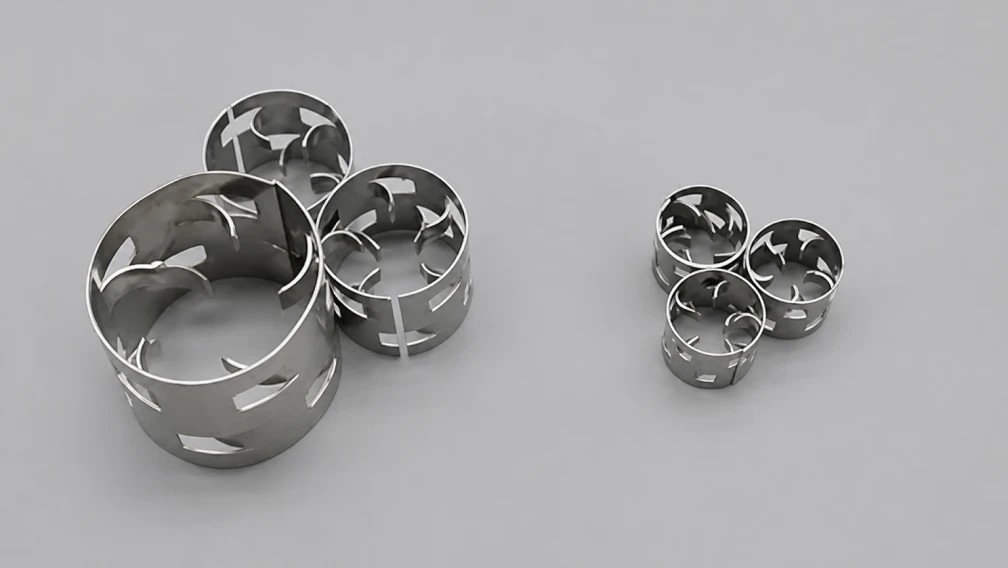
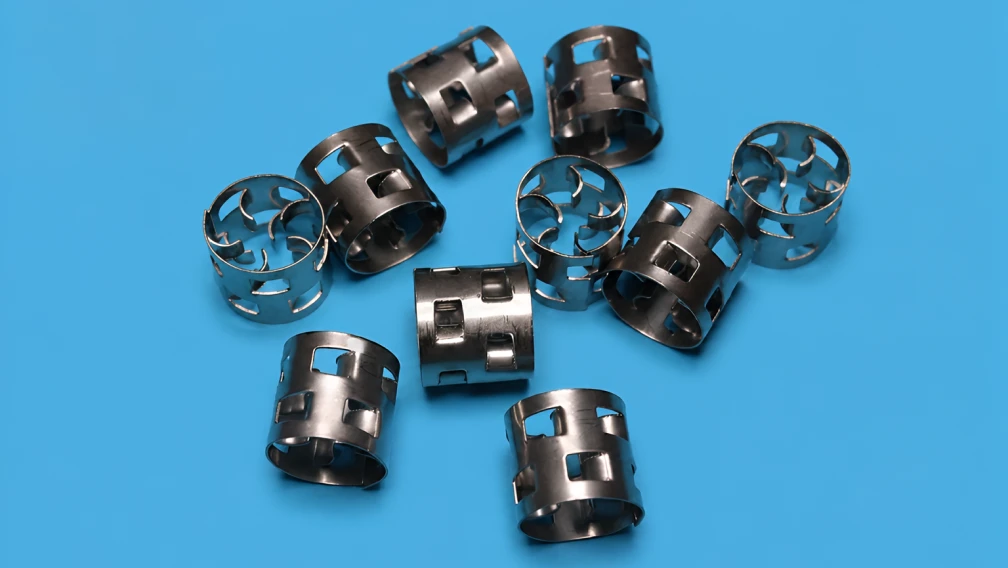
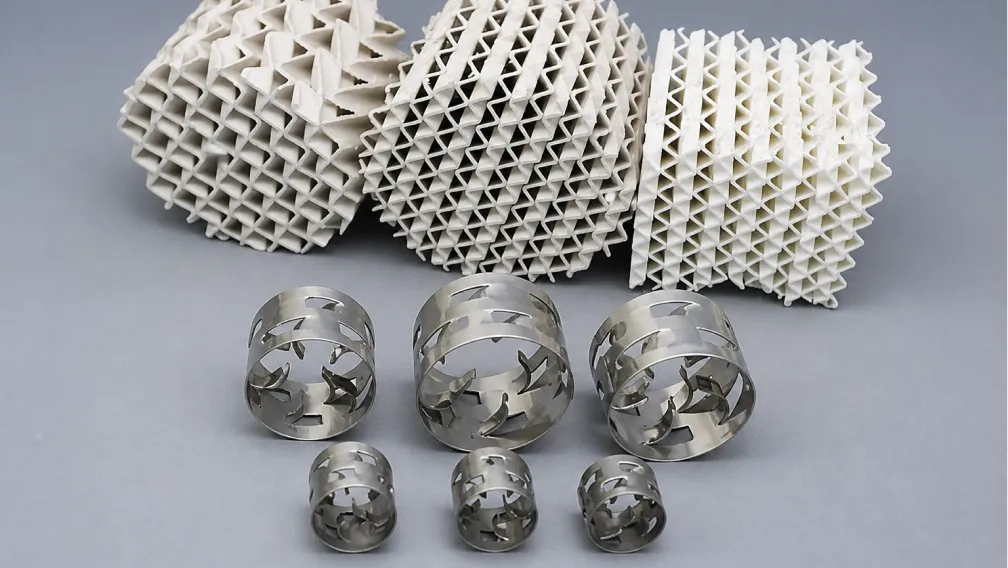
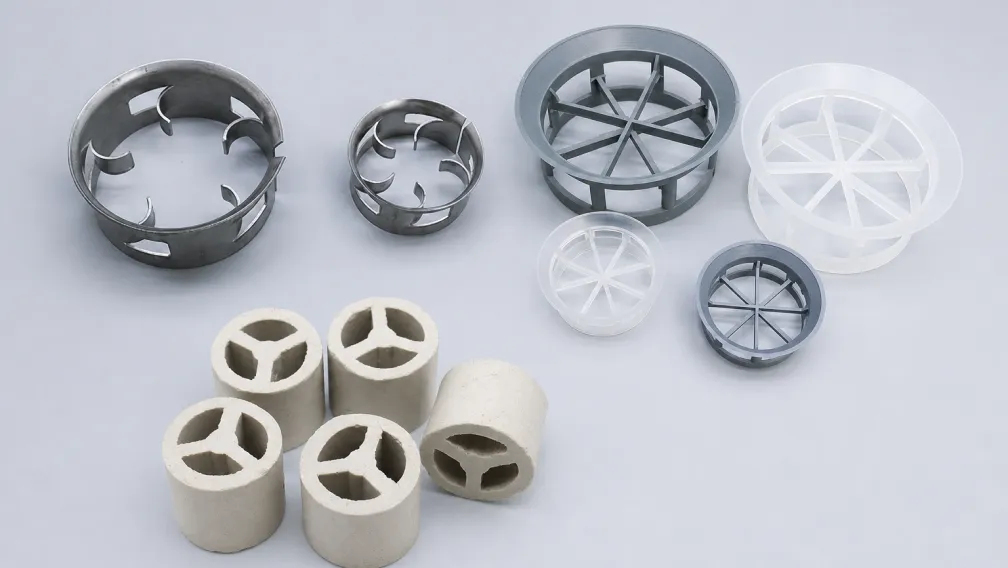
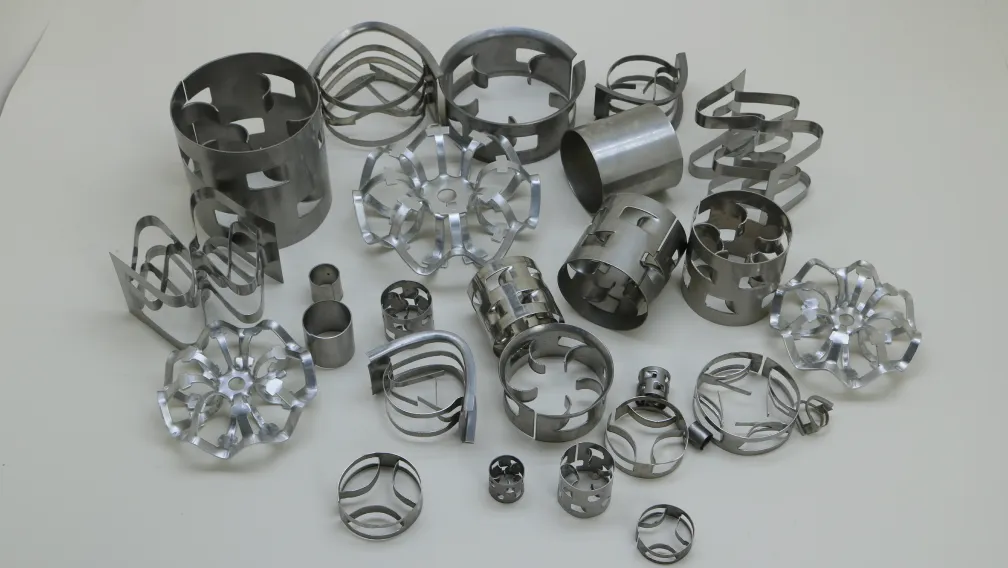
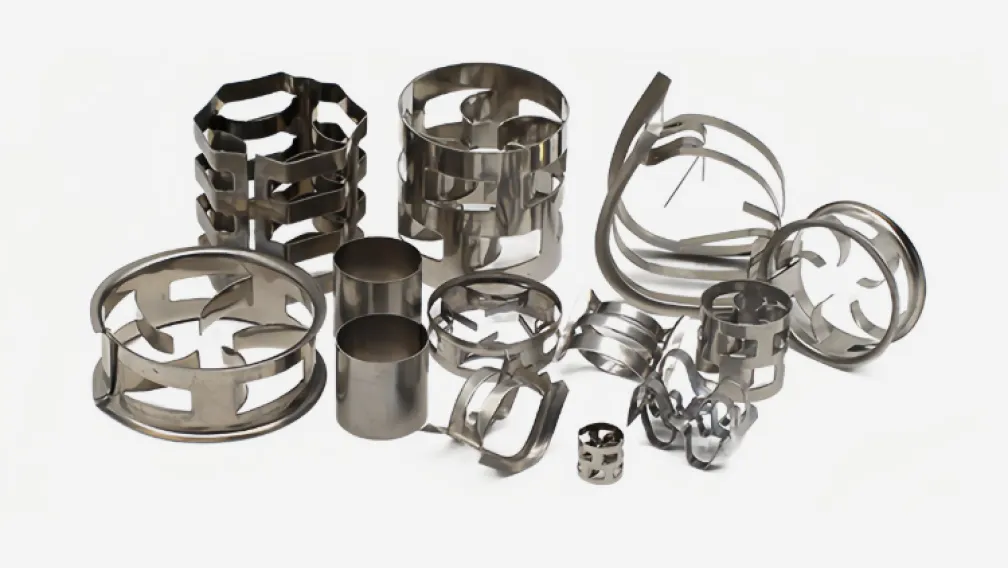
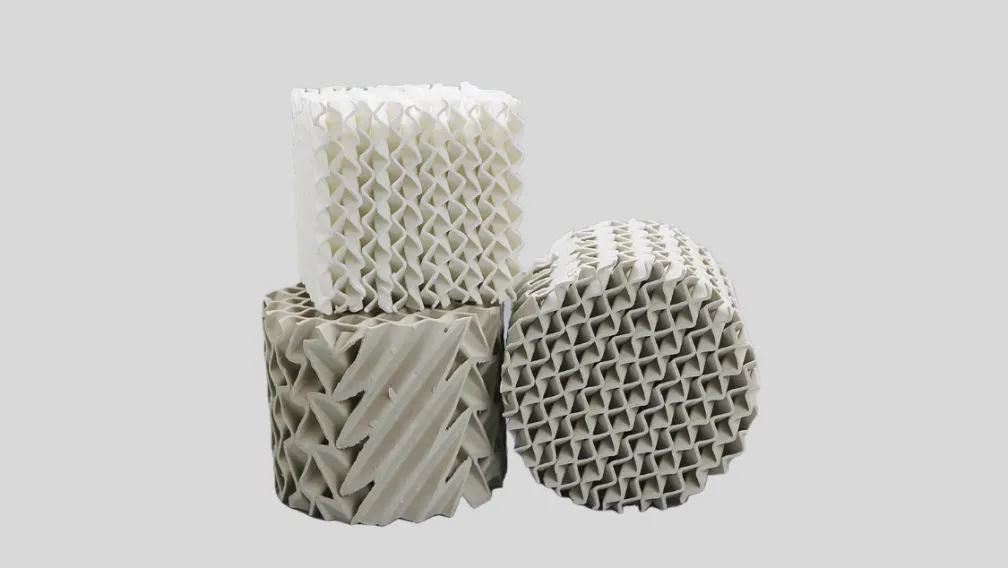
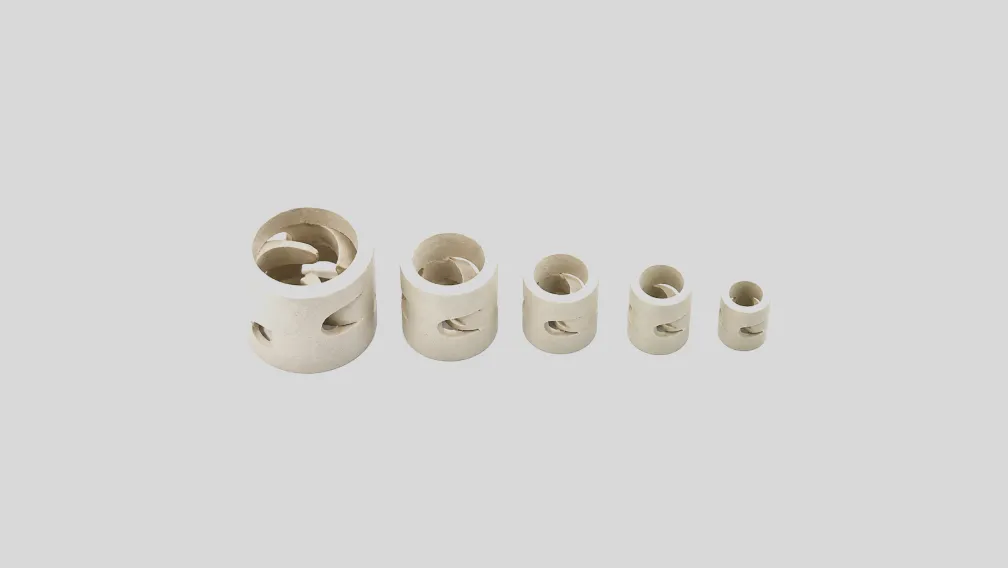
Structured packing and random packing operate on a continuous thin-film principle. Instead of forcing vapor through a pool of liquid, the liquid spreads as a thin film over the surface of the packing media while vapor flows unobstructed through the open void spaces. This aerodynamic geometry creates vastly lower resistance to gas flow. A high-performance packed bed typically generates only 0.1 to 1.5 millibars of pressure drop per theoretical stage.
This massive reduction in pressure drop makes packing absolutely mandatory for deep vacuum distillation. In a vacuum column, a high pressure drop drastically raises the required operating temperature at the bottom reboiler. High reboiler temperatures thermally degrade heat-sensitive chemicals, cause unwanted polymerization, and consume excessive boiler fuel.Turndown Ratio and Operational Flexibility
The turndown ratio defines a column's ability to operate stably below its maximum design capacity. Sieve trays possess a notoriously poor turndown ratio, often strictly limited to 1.5:1 or 2:1. Because sieve trays lack moving parts (unlike valve trays or bubble caps), any significant reduction in vapor flow immediately causes severe weeping, collapsing the froth regime and halting separation.
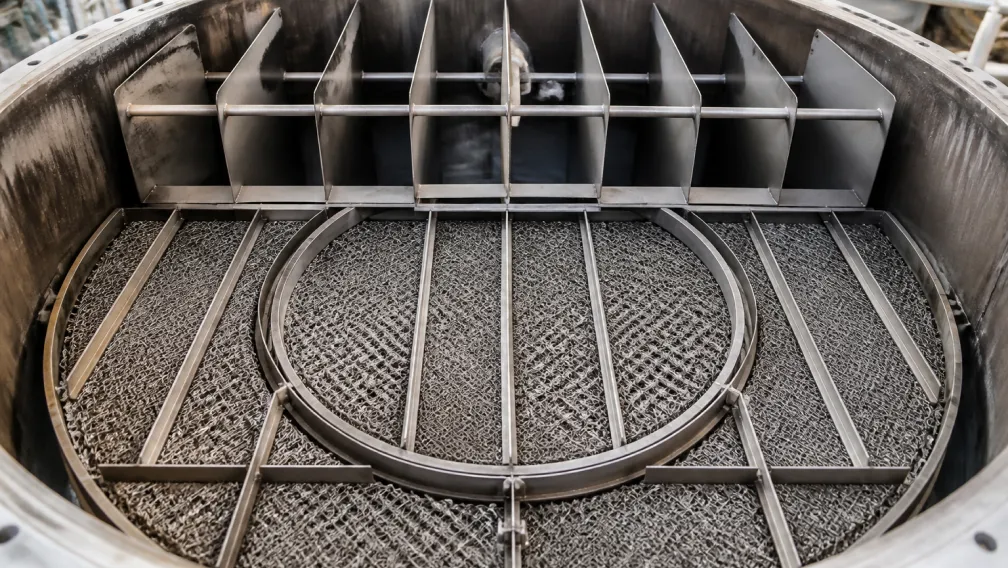
Packed columns offer significantly higher operational flexibility. Because mass transfer occurs continuously across the wetted surface of the media rather than relying on vapor-induced frothing, a properly designed packed bed can operate efficiently at a 3:1 or even 4:1 turndown ratio. The limiting factor in a packed column's turndown is not the packing itself, but rather the tower internals. The liquid distributors must be precision-engineered to maintain uniform dripping and prevent maldistribution at low feed rates.
Fouling Resistance and Cleaning Turnaround
While packing excels in vacuum distillation and low-pressure drop duties, sieve trays dominate high-fouling applications. If a process stream contains heavy tars, polymerizable monomers, or suspended solid particulates, the narrow geometric micro-channels of structured packing plug rapidly. Once a deep packed bed scales up, it is nearly impossible to clean in place and must be entirely replaced, incurring massive capital replacement costs.
Sieve trays are highly robust against fouling. The large, simple perforations (typically 12 mm to 25 mm in diameter) allow solids to pass through or remain safely suspended in the turbulent froth. If severe polymerization or scaling does occur, maintenance crews can easily enter the column via manways, physically hydro-blast the flat metallic decks, or unbolt and remove individual tray panels for mechanical cleaning. For this reason, chemical plants strictly retain trayed columns in fouling-prone services such as PVC monomer stripping, heavy crude atmospheric distillation, and caustic scrubbing.
Retrofitting Trays with Packing (Debottlenecking)
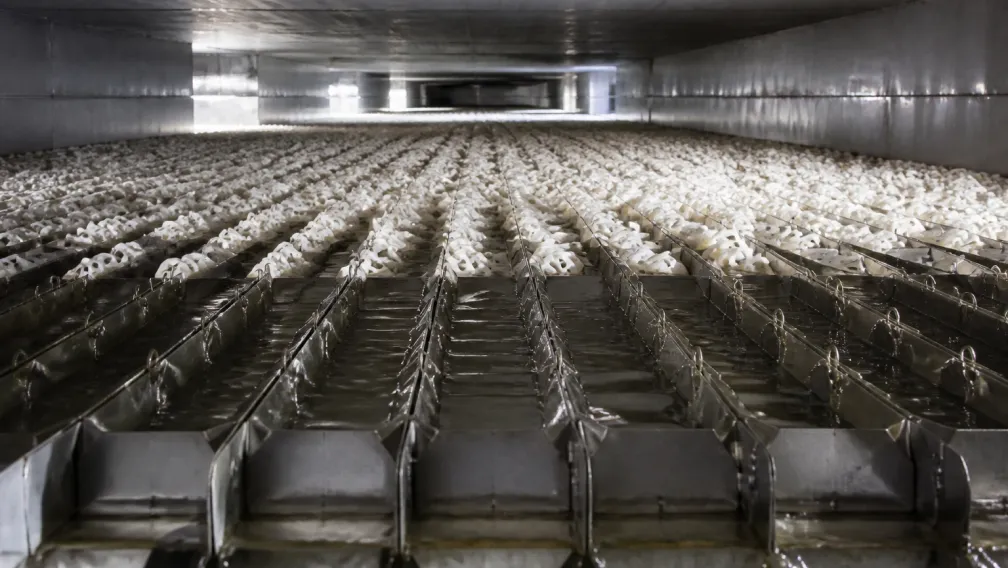
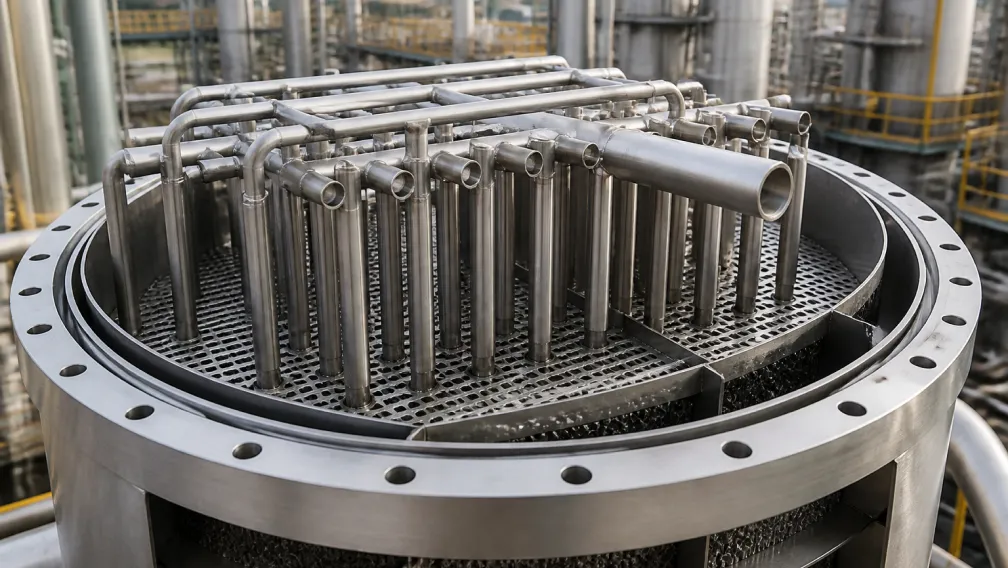
When a chemical plant needs to increase throughput without enduring the capital expense of fabricating a new column shell, process engineers frequently execute a tray-to-packing retrofit. This involves cutting out the existing tray support rings welded to the vessel wall and installing new liquid distributors, bed limiters, and packing support grids.
This retrofit dramatically increases the available interfacial surface area within the exact same vessel volume. Replacing sieve trays with third-generation random packing or corrugated structured packing usually increases the column's hydraulic capacity by 20% to 30%. Simultaneously, the retrofit reduces the total pressure drop across the tower, yielding higher distillate purity, lowering the required reflux ratio, and reducing the energy load on compressor fans and reboilers.
Where Rongjian Fits
Pingxiang Rongjian manufactures heavy-duty separation media and tower internals for global chemical and petrochemical distillation. We produce precision-punched sieve tray distillation plates tailored for high-fouling and high-pressure applications, alongside a complete portfolio of high-capacity random and structured packing for vacuum distillation. Our engineering team assists plant operators in evaluating column hydraulics to determine whether a failing column requires direct tray replacement or a full retrofit to packed beds. We supply all requisite hardware, including tray hardware kits, liquid distributors, and gas injection support plates. Provide us with your vapor-liquid traffic data and vessel dimensions for a detailed internal sizing evaluation.
-

Rongjian
Process Media Manufacturer Since 2010
Rongjian produces tower packing, molecular sieves, ceramic grinding media and other process media from our Pingxiang production base. We supply to industrial projects in over 100 countries.