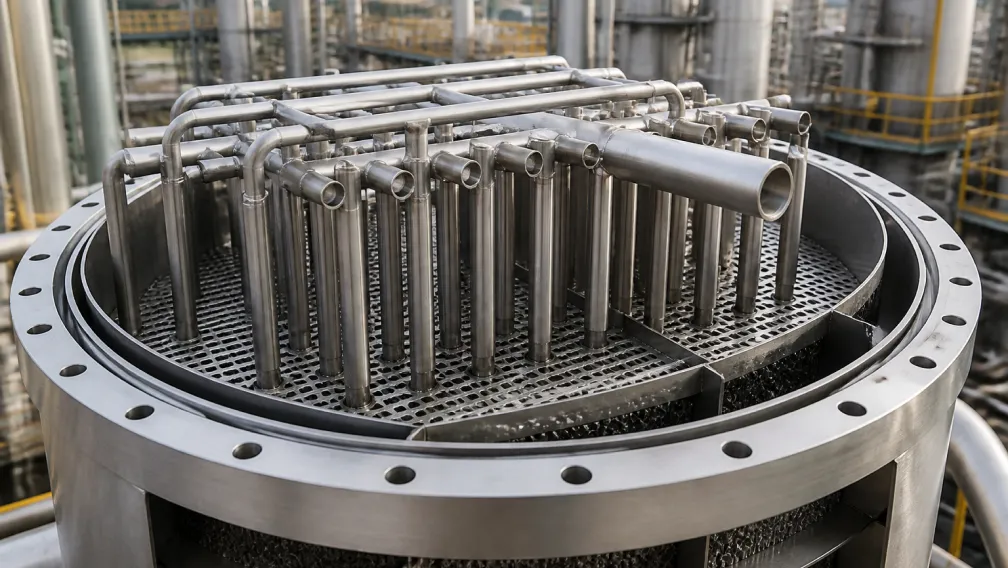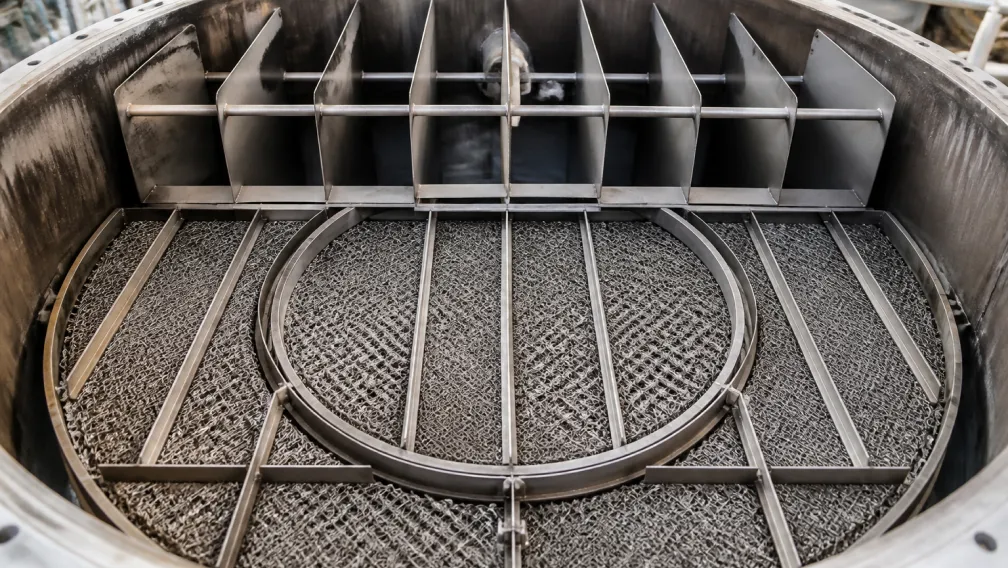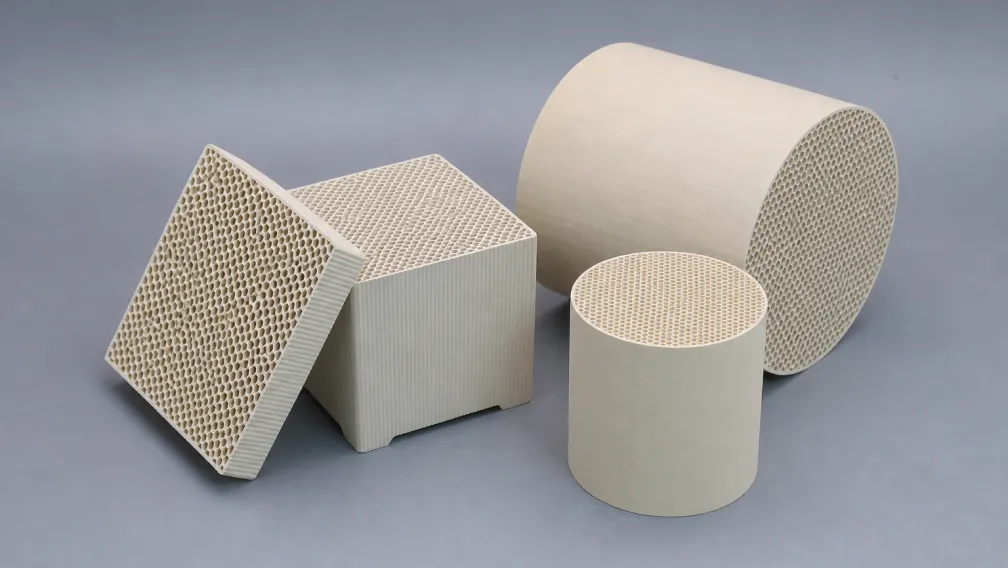

Honeycomb ceramic is the standard heat storage media inside a regenerative thermal oxidizer (RTO). The blocks are extruded ceramic monoliths with hundreds of straight, parallel channels, stacked into beds on either side of a combustion chamber. As the RTO cycles, the beds alternately absorb heat from the hot exhaust and release it to the incoming process gas, recovering more than 95 percent of the oxidation energy. This heat recovery is what makes thermal oxidation of dilute VOC streams economically viable. Choosing the right honeycomb ceramic—material, cell density, and block size—decides the pressure drop, thermal efficiency, and service life of the entire unit. This guide covers how the media works, how the common materials compare, and how to specify a bed that survives real operating conditions.

How an RTO Uses Ceramic Heat Storage Media
A standard two-chamber RTO works as a repeating cycle. Incoming VOC-laden air passes up through a bed of hot ceramic, which preheats the gas to near oxidation temperature before it reaches the combustion chamber. A burner holds the chamber at roughly 760 to 850 °C, where the VOCs oxidize to CO2 and water vapor with a destruction efficiency of 98 to 99 percent. The hot, clean gas then flows down through the second ceramic bed, transferring most of its heat into the blocks and leaving the stack at close to inlet temperature. Every 90 seconds to 3 minutes, the switching valves reverse the flow, and the two beds swap roles.
Three-chamber and rotary designs add a purge step that sweeps untreated gas from the inlet bed before it switches to outlet duty, which is how modern units hold destruction efficiency above 99 percent through every valve cycle. The volume of ceramic required scales with gas flow and the desired heat recovery: more media or denser cells recover more heat but raise pressure drop, so bed depth is set during RTO design against the fan curve and the stack temperature target. The ceramic bed therefore works as a thermal flywheel. It must absorb and release heat quickly, hold a large amount of energy per unit volume, survive a thermal swing of several hundred degrees every cycle, and pass large gas volumes with minimal resistance. Units running at 95 to 97 percent heat recovery often need burner fuel only at startup; once at temperature, the energy in the VOC stream itself sustains oxidation.
Why Honeycomb Replaced Random Media in RTOs
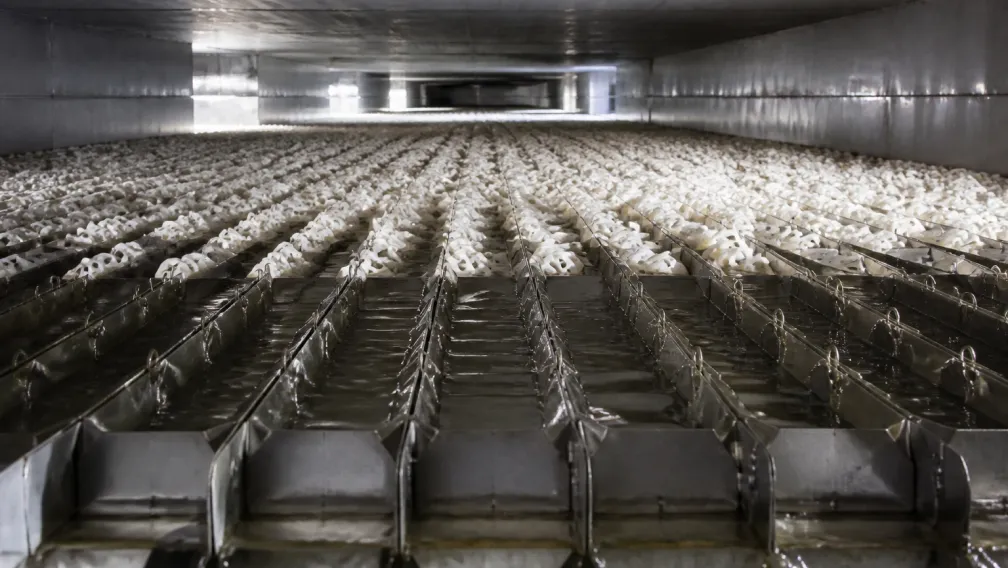
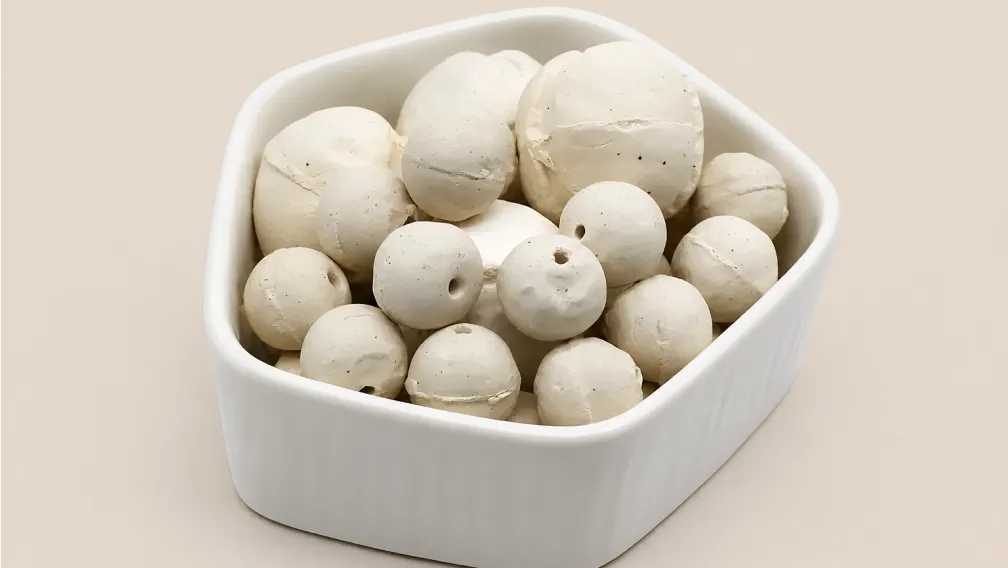
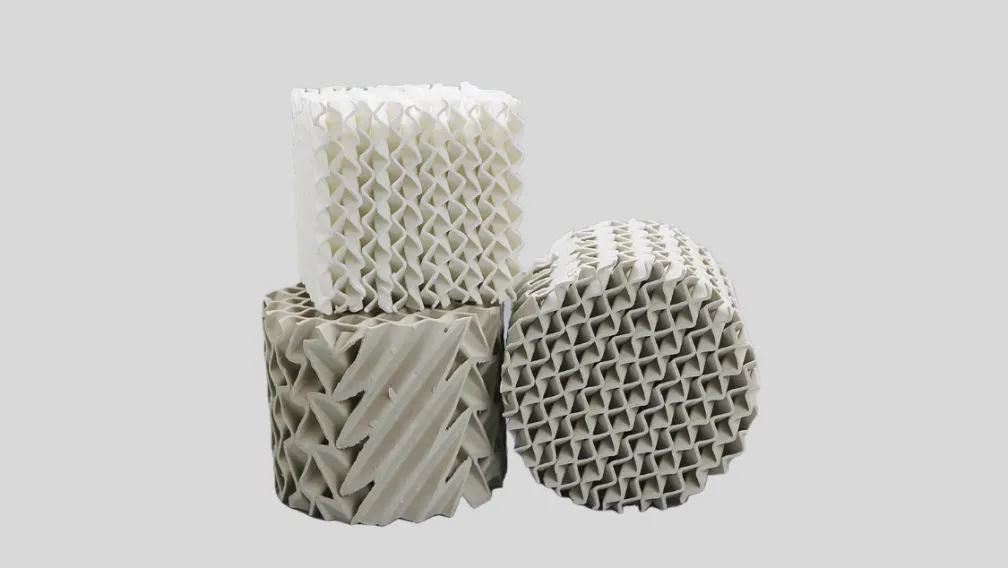
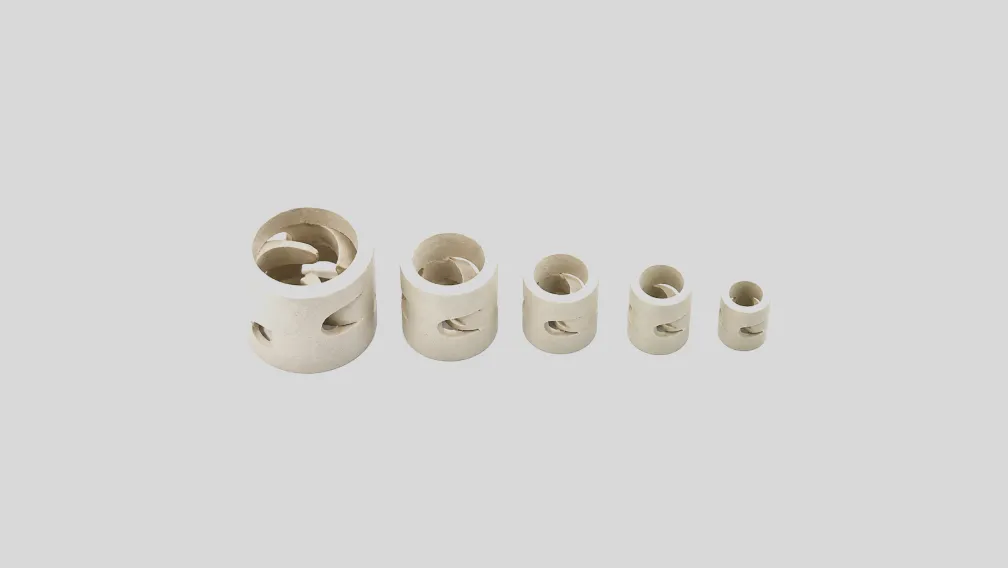
Early RTOs used random ceramic saddles or balls as the heat sink. Honeycomb monoliths displaced them for measurable reasons. The straight channels of a honeycomb block cut flow resistance to roughly one-third of a saddle bed of the same depth, which directly reduces fan power. The specific surface area exceeds that of ceramic balls by a factor of five, so heat transfers faster and the bed can be shallower. And the thin walls—0.45 to 1.0 mm depending on cell density—respond quickly to the cyclic temperature swing, raising heat recovery. The practical result is a smaller vessel, a lower fan bill, and tighter outlet temperature control, which is why nearly every RTO built in the last two decades uses honeycomb ceramic regenerator blocks or structured multi-layer media instead of dumped saddles.
Material Selection: Cordierite, Mullite, and Corundum
Material choice is a trade between thermal shock resistance, maximum service temperature, and cost. The three workhorse compositions cover most RTO duties.
| Material | Thermal expansion coefficient (×10⁻⁶/°C) | Thermal shock resistance (ΔT) | Max service temperature | Best fit |
|---|---|---|---|---|
| Cordierite | ≤3.0 | ≥450 °C | ~1,150 °C | Standard RTO beds with fast cycling and moderate temperatures |
| Cordierite–mullite | ≤3.5 | ≥350 °C | ~1,250 °C | General VOC oxidation, balance of shock resistance and refractoriness |
| Mullite | ≤5.5 | ≥350 °C | ~1,450 °C | Higher-temperature beds, top layers near the combustion zone |
| Corundum–mullite / high alumina | ≤6 | ≥300 °C | 1,350–1,500 °C | Hottest zones, halogenated or aggressive gas streams |
Cordierite’s very low thermal expansion gives it the best resistance to the daily thermal cycling an RTO delivers, and it is the default for the bulk of the bed. Where chamber temperatures run high or the top of the bed sees direct radiant heat, mullite or corundum-mullite layers carry the temperature load. Dense cordierite and dense alumina grades, with water absorption held below 5 percent, resist the alkali and silica attack that plugs porous bodies, and are worth the premium on dirty gas streams.
Cell Density, Block Size, and Pressure Drop
Standard RTO blocks are 150 × 150 mm in cross-section, in lengths of 150 or 300 mm, with cell counts from 25 × 25 up to 60 × 60 per block face. Higher cell density means more surface area and faster heat transfer, but narrower channels, higher pressure drop, and greater plugging sensitivity.
| Cells per 150 × 150 mm block | Channel width (mm) | Wall thickness (mm) | Specific surface area (m²/m³) | Open area (%) |
|---|---|---|---|---|
| 25 × 25 | 4.8–5.0 | 1.0 | ~577 | ~67 |
| 40 × 40 | 2.9–3.1 | 0.7 | ~886 | ~64 |
| 43 × 43 | 2.7–2.9 | 0.65 | ~950 | ~62 |
| 50 × 50 | 2.3–2.5 | 0.6 | ~1,084 | ~61 |
| 60 × 60 | 1.9–2.1 | 0.45 | ~1,294 | ~63 |
For most VOC streams, 40 × 40 or 43 × 43 blocks give the practical balance of efficiency and pressure drop. Reserve 50 × 50 and 60 × 60 for clean gases where the extra heat transfer area pays for itself. On dusty or condensable-heavy streams, 25 × 25 blocks tolerate contamination far longer before pressure drop climbs. Many beds are layered: open, robust blocks at the cold face where fouling concentrates, denser blocks higher in the bed.
Common Failure Modes and How to Prevent Them
Honeycomb ceramic is durable when matched to the duty, and three failure mechanisms account for most premature bed replacements:
- Thermal shock cracking. Rapid, uneven temperature swings exceed the material’s shock resistance, and blocks crack or powder. Prevention is material selection (cordierite bodies for fast-cycling units) plus controlled heat-up and cool-down ramps, typically held under 100 °C per hour during commissioning.
- Channel plugging. Particulates, polymerized organics, and condensed tars collect at the cold end of the bed. Silicon-bearing VOCs are the worst offender—they oxidize to fine SiO2 that fuses into a glassy deposit which cannot be burned off. Alkali salts in the gas attack cordierite the same way. Upstream filtration, a sacrificial cold-face layer of replaceable blocks, and a programmed bake-out cycle extend bed life. Streams with significant silicon or alkali loading should be evaluated for a rotary valve design or alternative abatement before specifying the media.
- Cold-end corrosion. When acid-forming compounds (sulfur, chlorine) condense below the dew point at the cold face, the ceramic and the vessel steel both suffer. Holding the cold-face temperature above the acid dew point, or switching the lower layers to acid-resistant grades, controls the damage.
A correctly specified honeycomb bed in a clean VOC application routinely runs five to ten years. Maintenance crews should track bed pressure drop trend between outages; a steady climb signals fouling long before visible damage, and an early bake-out is far cheaper than a full media change-out. Beds that foul are usually misdiagnosed Beds that foul are usually misdiagnosed as media failures when the real problem is upstream of the RTO.
Beyond Heat Storage: Related Honeycomb Products
The same extruded monolith platform serves adjacent duties. Coated with precious-metal or base-metal catalysts, the blocks become honeycomb ceramic catalysts for regenerative catalytic oxidizers (RCO), which destroy VOCs at 300 to 400 °C and cut fuel consumption further. Cordierite monoliths also serve as catalyst carriers in SCR denitration and vehicle exhaust systems, and infrared honeycomb ceramic plates distribute flame in gas-fired radiant burners. The selection logic stays the same across all of them: match the material to the temperature and chemistry, then match the cell geometry to the flow.
If you are specifying or re-bedding an RTO, send us the gas flow rate, VOC loading, operating temperature, and any silicon or halogen content in the stream. We will recommend the material, cell density, and bed layering, and supply blocks sized to your chamber. Contact us for a media proposal, or review our full honeycomb ceramic range.
-

Rongjian
Process Media Manufacturer Since 2010
Rongjian produces tower packing, molecular sieves, ceramic grinding media and other process media from our Pingxiang production base. We supply to industrial projects in over 100 countries.