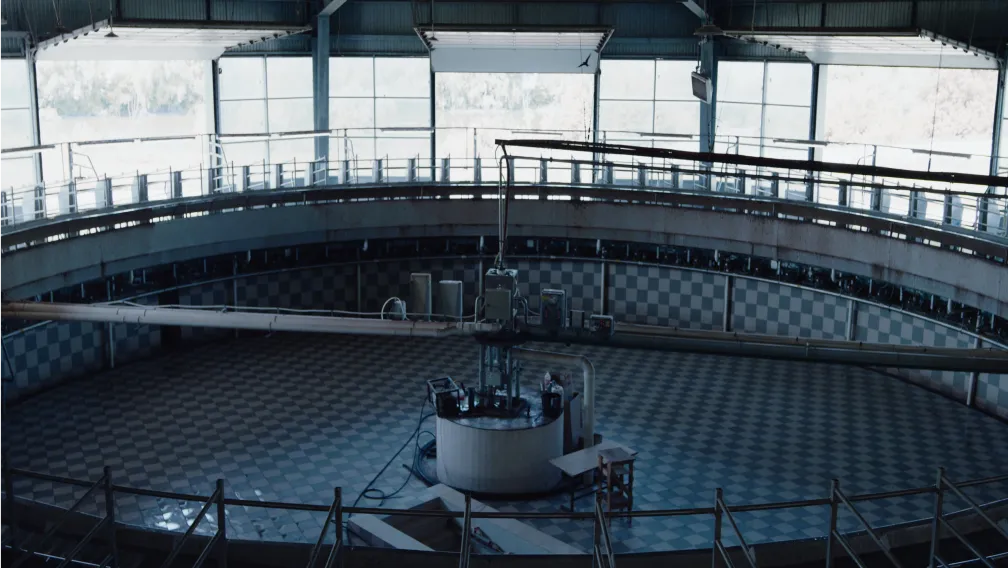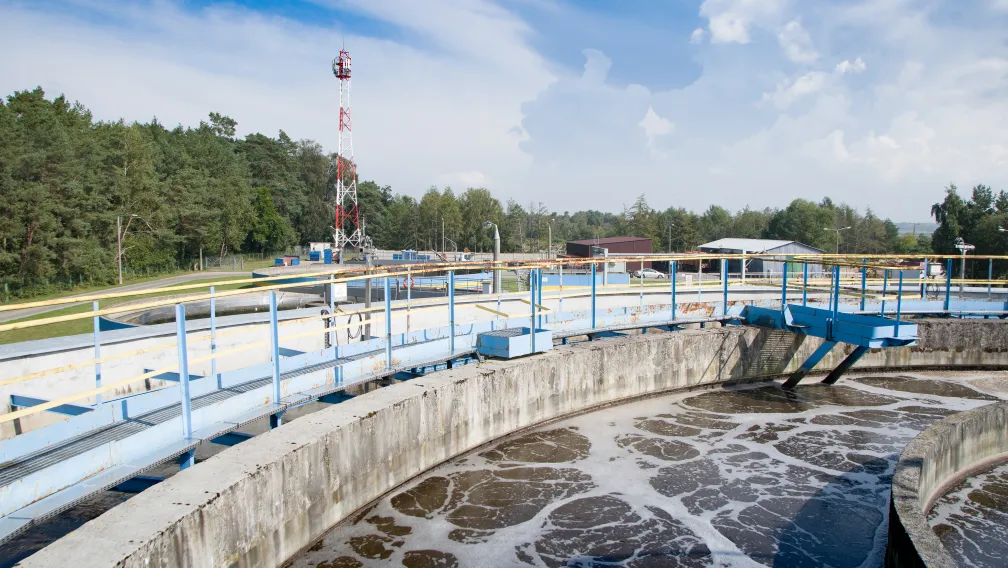

Gravity clarification is the most universally applied method for removing suspended solids and flocculated particles from municipal and industrial water streams. The throughput of a conventional settling tank is governed entirely by its surface overflow rate (SOR). To increase the capacity of a conventional clarifier, a municipality traditionally had to pour more concrete and build a wider tank. Tube settlers, operating on the principles of Lamella theory, circumvent this physical limitation. By inserting a matrix of inclined plastic tubes into the upper zone of the clarifier, engineers drastically multiply the effective settling area within the exact same footprint. This allows existing plants to double or triple their hydraulic flow rates without expanding the concrete basin. This guide details the fluid mechanics behind tube settlers, the critical variables of inclination angle and Reynolds numbers, and the material selection criteria for long-term structural integrity.
The Physics of Particle Settling and Stokes' Law
In a conventional open clarifier, a flocculated particle must travel vertically downward through the entire depth of the water column—often 3 to 5 meters—to reach the sludge collection zone. Simultaneously, the bulk water flows upward toward the effluent launders.
For a particle to be successfully removed, its downward terminal settling velocity must exceed the upward velocity of the water. Settling velocity is modeled by Stokes' Law, which demonstrates that velocity depends on the particle's density and diameter, and the viscosity of the water. Light, delicate biological flocs settle very slowly. If the plant operator increases the incoming water flow, the upward velocity of the water exceeds the downward settling velocity of the floc. The sludge blanket lifts, and solids wash out over the weirs.
Lamella Theory: Multiplying Effective Surface Area
Tube settlers fundamentally alter the geometry of the settling process. Instead of forcing a particle to fall 3 meters to reach the tank floor, a tube settler matrix provides a physical surface directly beneath the particle, often just 50 millimeters away.
The media consists of hundreds of parallel, closely spaced channels. As the water flows upward through these inclined tubes, the suspended particles only need to fall a few millimeters to strike the lower inner wall of the tube. Once a particle hits the plastic wall, it is mathematically considered removed from the flow. It adheres to the wall, agglomerates with other settled particles, and forms a dense sludge mass. As this mass grows, its weight overcomes the friction of the plastic wall, and it slides down the tube against the upward flow of water, eventually dropping into the hopper below.
This mechanism exponentially increases the equivalent settling area of the basin. The total effective settling area becomes the sum of the horizontally projected areas of every single tube in the matrix. A basin retrofitted with a 1-meter-deep block of tube settler media can achieve a settling capacity equivalent to a conventional tank possessing up to 10 times the surface area.
Reynolds Number and Forced Laminar Flow
Clarification efficiency plummets in the presence of turbulent flow. Turbulence creates eddies and cross-currents that tear apart delicate chemical flocs and resuspend settled solids. Open concrete basins are highly susceptible to wind-induced currents, density currents, and uneven thermal gradients, all of which generate turbulence.
Tube settlers act as massive flow straighteners. The narrow, geometric channels physically restrict the hydraulic radius. This forces the upward-flowing water into a strictly laminar flow regime, typically characterized by a Reynolds number ($Re$) well below 500. Under laminar conditions, the fluid moves in smooth, parallel streamlines. This quiescent environment is the absolute ideal condition for rapid solid-liquid separation, ensuring that even microscopic, low-density flocs are intercepted by the tube walls rather than being carried upward by turbulent eddies.
The 60-Degree Inclination Standard
The inclination angle of the tubes represents a strict engineering compromise between maximizing settling area and enabling self-cleaning sludge removal.
If tubes are positioned at a shallow angle (e.g., 30 or 45 degrees), the horizontally projected surface area is maximized, theoretically providing the highest separation capacity. However, at shallow angles, gravity cannot overcome the friction between the sludge and the plastic. The sludge accumulates, completely blocks the tube, and the system fails.
If tubes are positioned too steeply (e.g., 75 degrees), the sludge slides out effortlessly, but the horizontally projected surface area drops significantly, negating the primary advantage of the lamella design.
Hydraulic research and decades of industrial operation have established 60 degrees as the universal optimal angle for honeycomb inclined tube settlers. At 60 degrees, the projected surface area remains substantial enough to multiply basin capacity, while the slope is steep enough to ensure continuous, self-scouring sludge discharge for typical municipal and industrial floc types. A 55-degree angle is occasionally specified for exceptionally dense, heavy sludges (such as grit or mineral scales) that slide easily.
Tube Geometry: Chevron and Hexagonal Profiles
Early tube settler designs utilized simple round pipes. Round pipes present a major hydraulic flaw: the space between the adjacent pipes creates secondary, unregulated flow channels. Water channels through these gaps without being treated.
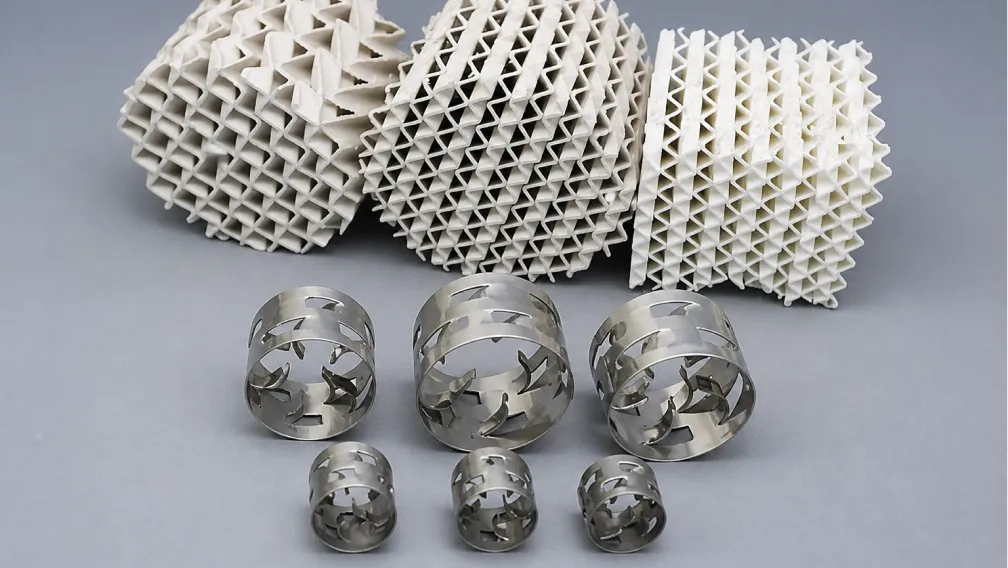
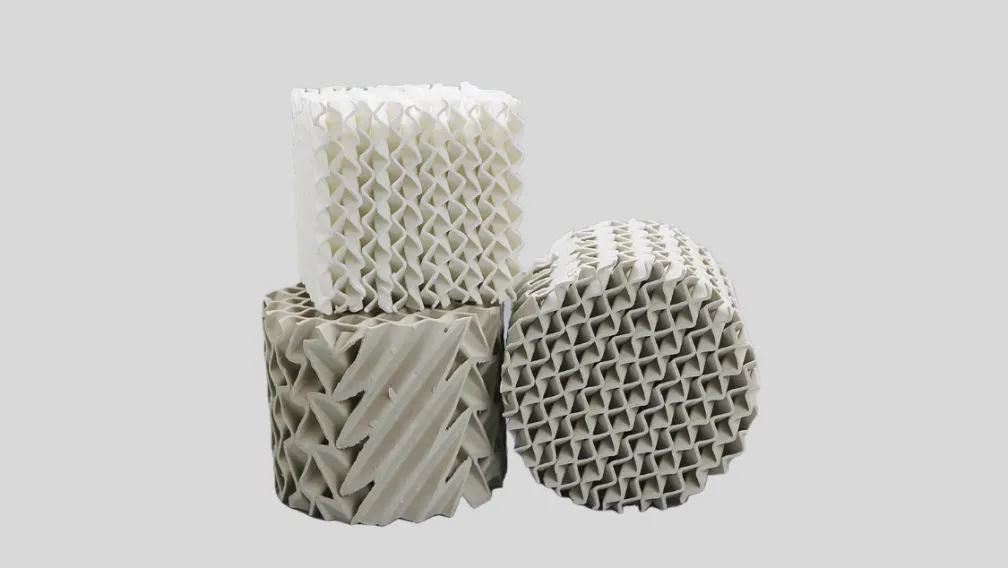
Modern tube settlers utilize chevron, hexagonal, or rectangular profiles. These thermoformed plastic sheets are corrugated and glued or thermally welded together. This interlocking assembly creates a continuous, rigid block of contiguous channels. The chevron profile is particularly effective. Its V-shaped bottom concentrates the settling solids into a dense trough. As the sludge thickens in this V-notch, it slides downward rapidly, vacating the channel for incoming water and minimizing the risk of blockage.
Material Science: PVC, PP, and Structural Integrity
Tube settler blocks span significant distances across the clarifier support grids and must bear their own weight plus the massive weight of the accumulating sludge. Material selection and sheet thickness are critical to preventing structural collapse.
Polyvinyl Chloride (PVC)
PVC is the dominant material for municipal drinking water and wastewater clarification. It is highly cost-effective, easily solvent-welded on-site into rigid blocks, and possesses excellent tensile strength. PVC naturally resists chemical degradation from standard coagulants and chlorine. When operators order PVC media, they must specify UV inhibitors (often carbon black) if the clarifier is an open-top, outdoor basin. Without UV protection, prolonged sunlight exposure causes the top edges of the PVC sheets to become brittle, crack, and break off into the effluent launders.
Polypropylene (PP)
PP is specified for high-temperature applications or industrial effluents containing aggressive solvents that degrade PVC. PP is physically lighter than water and provides excellent impact resistance. However, PP cannot be glued with standard solvents. PP tube settler blocks must be assembled using thermal welding or specialized mechanical interlocking tabs, which increases assembly labor compared to PVC.
Sheet Thickness
Manufacturers offer sheet thicknesses ranging from 0.4 mm to 1.2 mm. Specifying ultra-thin media (0.4 - 0.6 mm) saves upfront capital cost but poses a severe operational risk. Thin walls flex and buckle under the weight of heavy sludge loads, warping the 60-degree angle and leading to permanent blockages. For industrial applications or deep municipal basins, engineers mandate a minimum thickness of 0.8 mm to 1.0 mm to guarantee long-term structural rigidity during tank draining and high-pressure maintenance washing.
Installation and Maintenance Protocol
Tube settler blocks are supported by a grid of stainless steel or FRP beams spanning the clarifier basin. The media must be securely tied down to these supports. In the event of a high-flow surge or if the basin is flooded with highly aerated water, the buoyant forces can lift the entire plastic matrix off its supports, destroying the internal baffles.
Routine maintenance primarily involves managing biological fouling. In open basins, algae proliferates on the upper edges of the tubes exposed to sunlight, restricting the effluent flow. Operators control this by periodically lowering the water level below the top of the media and applying a high-pressure wash (held at a strict 60-degree angle to match the tubes) to sheer off the algae and force accumulated sludge down into the hopper.
Where Rongjian Fits
Pingxiang Rongjian engineers and manufactures structural mass transfer media for global water treatment media solutions. We produce highly robust PVC and PP tube settler media featuring optimized chevron and hexagonal profiles designed specifically to maximize lamella settling area. Our sheets are extruded with strict thickness tolerances (up to 1.2 mm) and integrated UV stabilizers to prevent embrittlement in open-air clarifiers. Whether you are upgrading an overloaded municipal wastewater plant to double its hydraulic capacity or designing a new raw water clarification basin, our technical team provides the exact block dimensions and structural support calculations required. Provide us with your basin dimensions and target overflow rates for a detailed sizing proposal.
-

Rongjian
Process Media Manufacturer Since 2010
Rongjian produces tower packing, molecular sieves, ceramic grinding media and other process media from our Pingxiang production base. We supply to industrial projects in over 100 countries.