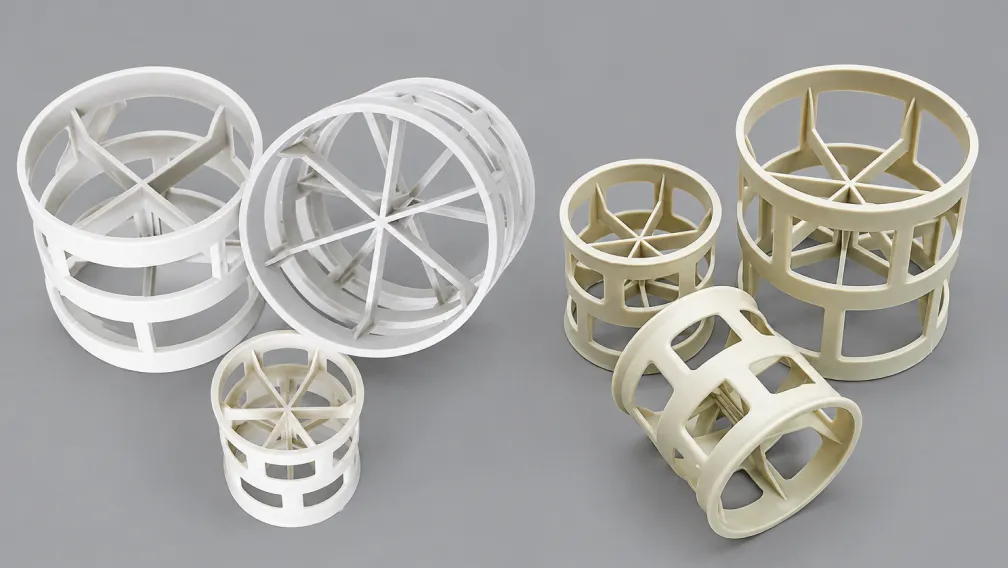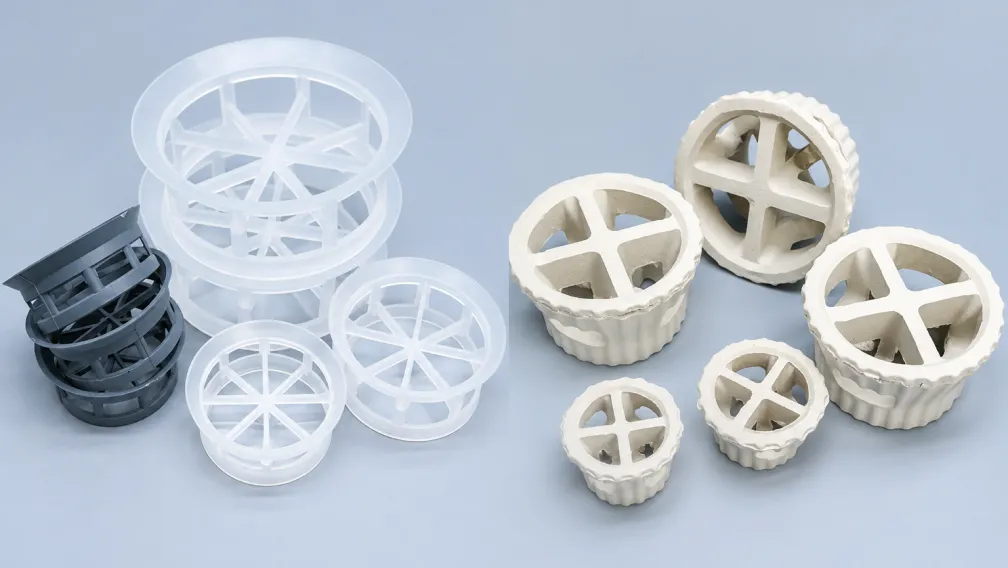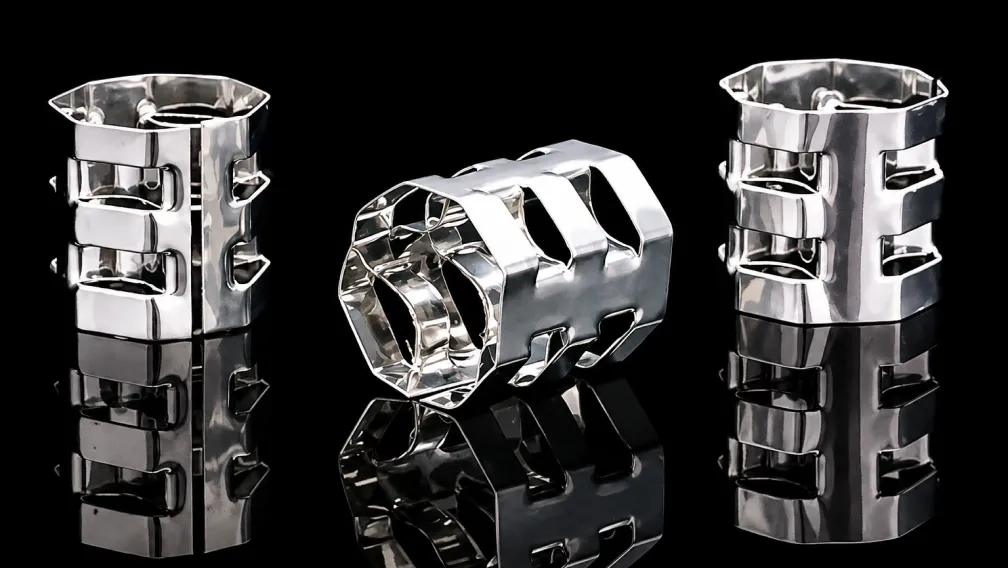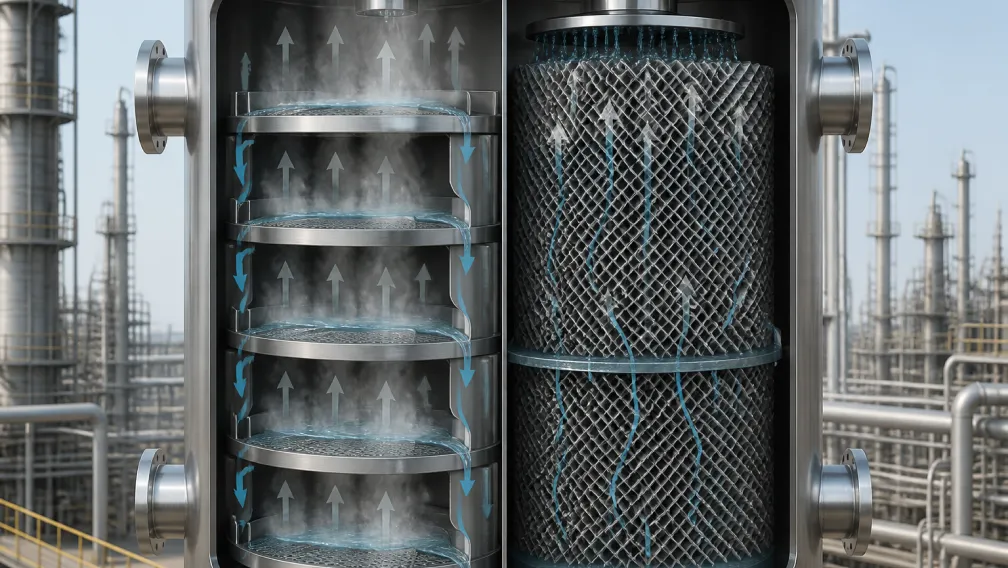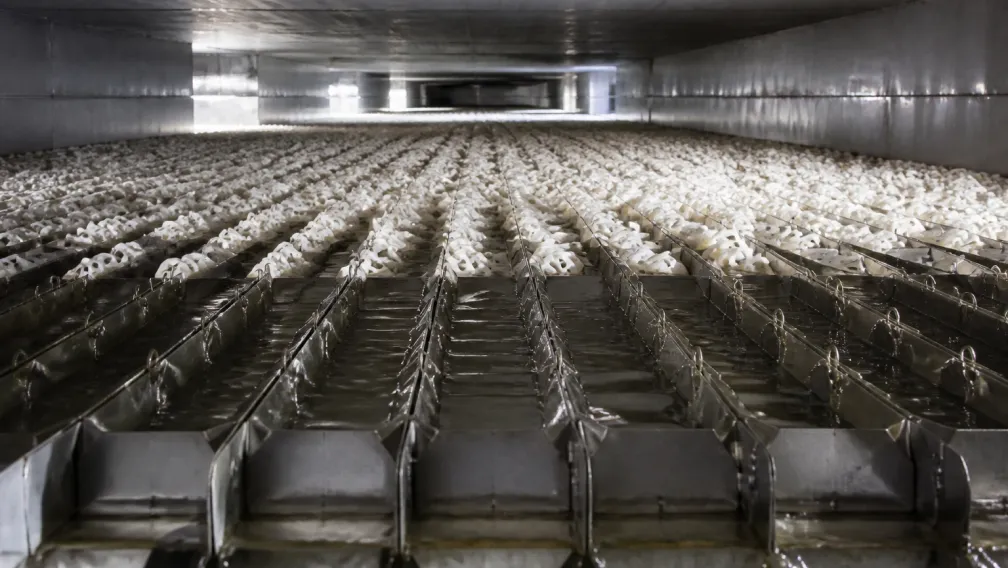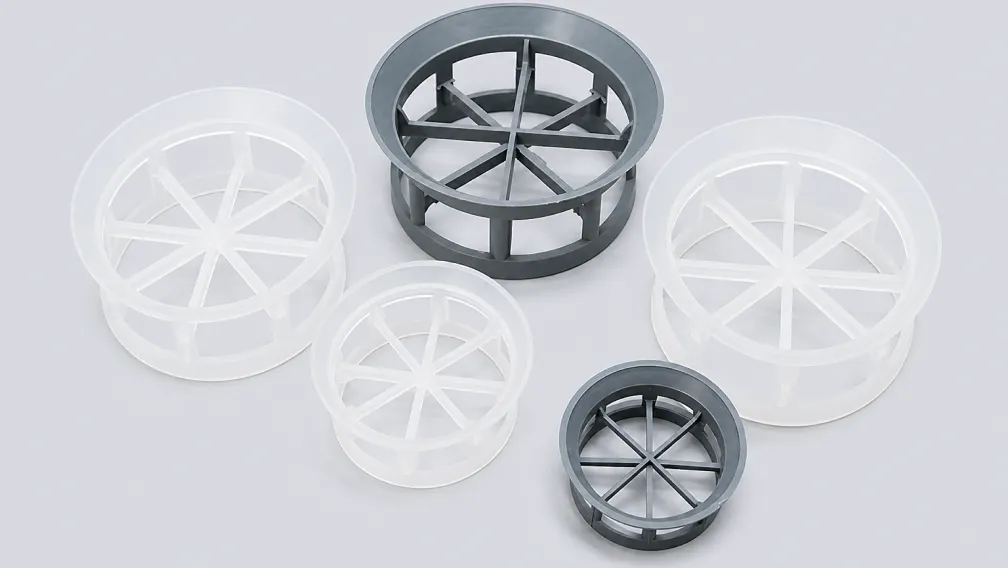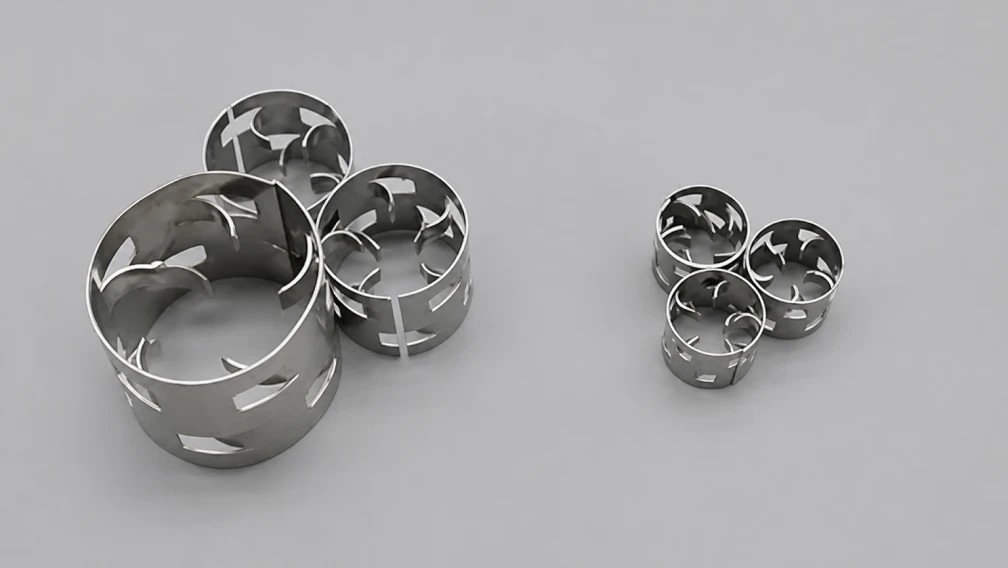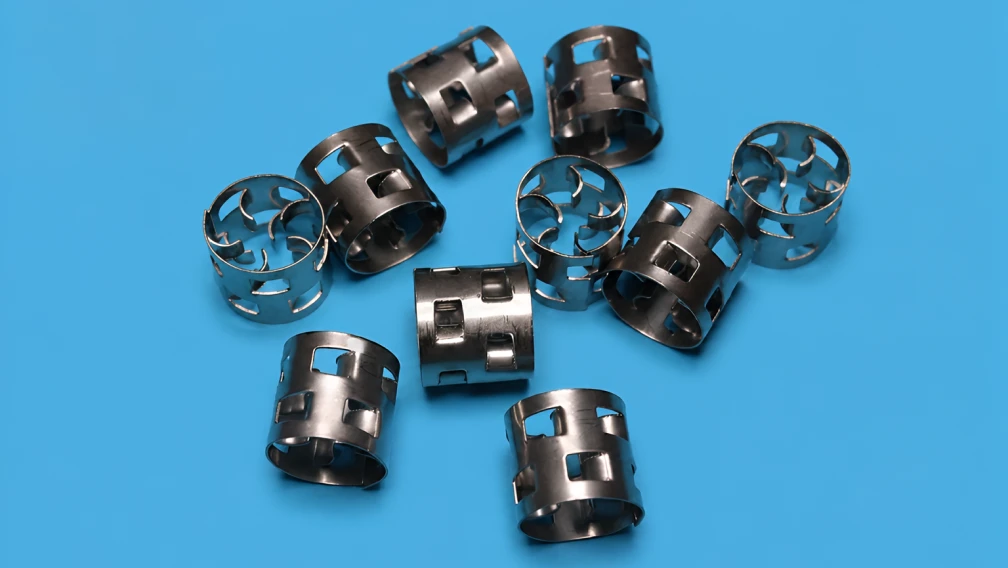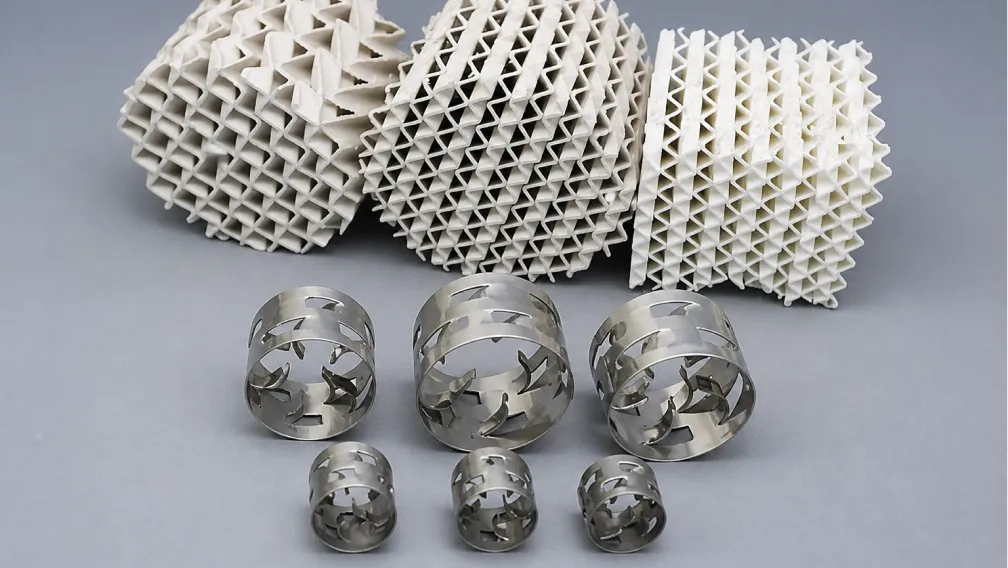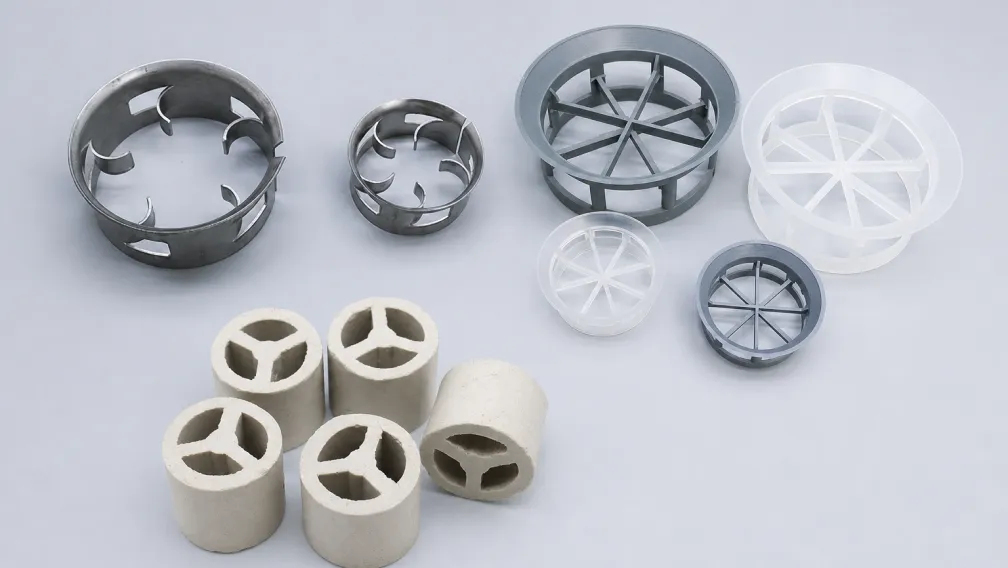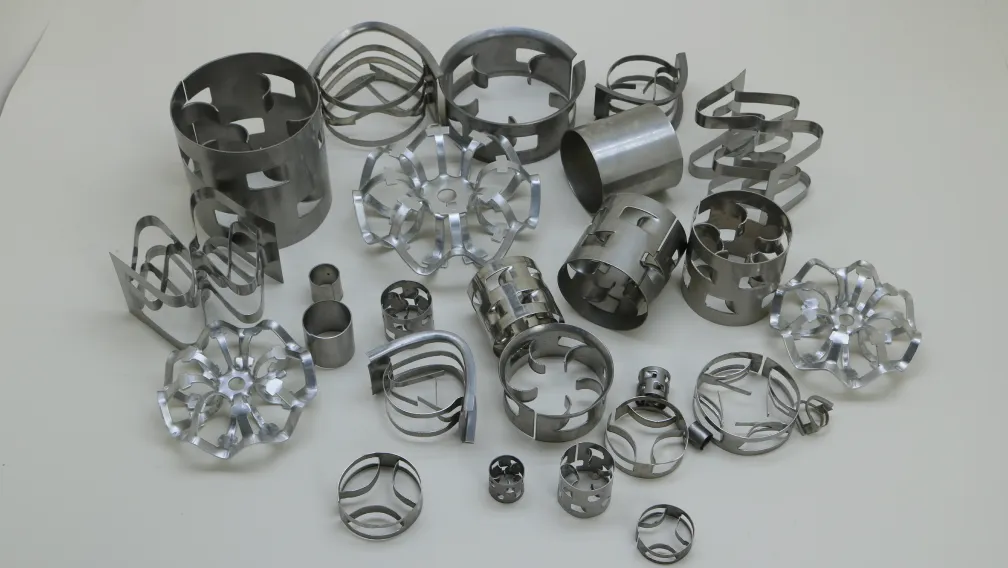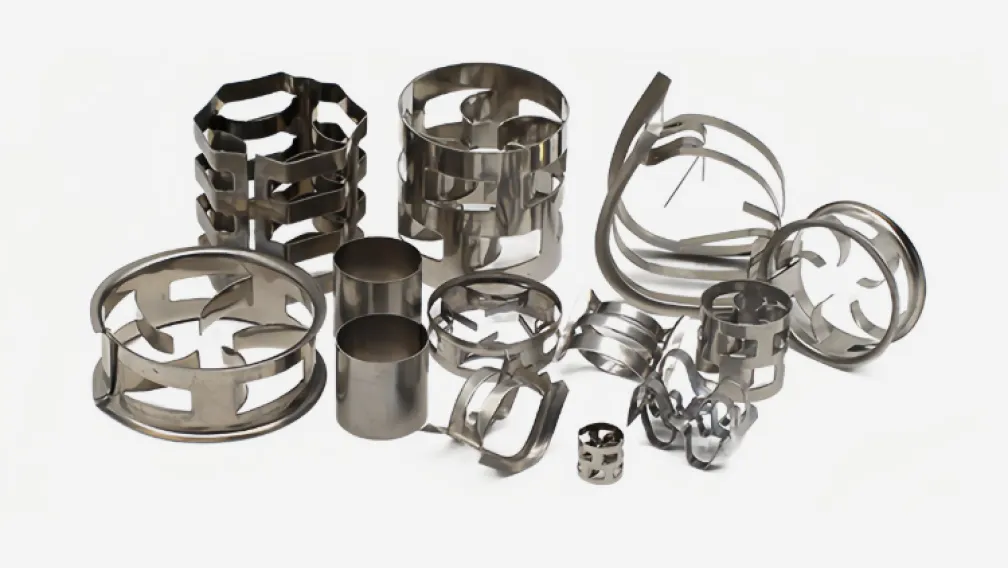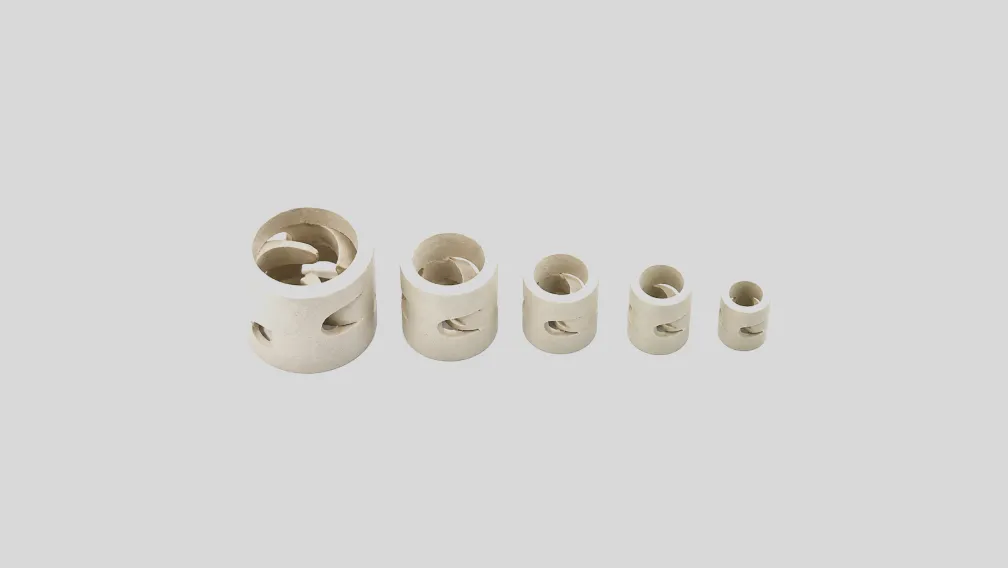

A Pall ring is a cylindrical random packing with window openings cut into the wall and the punched strips bent inward to form internal tongues. BASF introduced the design in the 1950s as an improvement on the Raschig ring, and it remains the most widely used random packing in the process industries today. The open geometry gives a Pall ring roughly half the pressure drop of a same-size Raschig ring, or substantially higher throughput at the same pressure drop, while also improving mass transfer efficiency. Pall rings are produced in metal, plastic, and ceramic, in nominal sizes from 16 mm to 100 mm, and they serve in distillation, absorption, scrubbing, and stripping columns across refining, petrochemicals, and environmental plants. This article explains how the design works, what performance to expect by size, and how to choose the right material for a given duty.
How the Pall Ring Design Works
A standard Raschig ring is a simple hollow cylinder with a height equal to its diameter. It creates surface area, but the solid wall forces gas to travel around the piece rather than through it. The Pall ring keeps the 1:1 height-to-diameter proportion and cuts one or two rows of rectangular windows into the wall. The punched material is left attached and bent inward, forming tongues that reach toward the center of the ring. The windows typically open up 30 to 40 percent of the wall area.
This change does two things. First, gas can now pass straight through the ring instead of only around it, which cuts resistance sharply. Second, the inward tongues break up and redistribute the liquid film running over the surface, constantly renewing the gas-liquid interface. Because liquid spreads more evenly, more of the nominal surface area actually participates in mass transfer. The result is a packing that delivers better efficiency per meter of bed while allowing higher gas and liquid rates before flooding.
Typical Performance Data by Size
Pall rings follow the universal rule of random packing: smaller pieces give more surface area and better efficiency, at the cost of higher pressure drop and lower capacity. Moving from a 50 mm ring down to a 25 mm ring nearly doubles the available contact area, but it also raises the pressure drop per meter by a similar factor. The correct size is therefore a balance between the stages you need and the gas velocity the column must carry. The table below lists typical values for metal and plastic Pall rings; exact figures vary slightly by material and wall thickness.
| Nominal size | Specific surface area (m²/m³) | Void fraction (%) | Typical HETP (mm) |
|---|---|---|---|
| 16 mm | 300–350 | 90–94 | 250–300 |
| 25 mm | 200–220 | 90–95 | 300–350 |
| 38 mm | 130–150 | 94–96 | 400–450 |
| 50 mm | 100–115 | 95–97 | 450–550 |
| 76 mm | 65–75 | 96–98 | 550–700 |
Two selection rules apply in practice. Keep the column-to-packing diameter ratio at or above 8 to 10 so liquid does not channel down the vessel wall. And reserve the smallest sizes for clean services—a 16 mm ring earns its HETP advantage only where fouling cannot plug the windows.
Pall Ring Materials and Where Each One Fits
Metal Pall Rings
Metal Pall rings in carbon steel, 304 or 316L stainless steel, and special alloys handle the highest temperatures and mechanical loads. Thin walls maximize free volume, so metal versions carry the best capacity of the three material classes. They are the default choice in refinery fractionators, gas treating columns, and petrochemical distillation where the medium is compatible with the alloy.
Plastic Pall Rings
Plastic Pall rings combine low weight and low cost with broad corrosion resistance in aqueous and mildly chemical systems. Temperature capability depends on the resin: polypropylene runs to about 90 °C, CPVC to roughly 100 °C, PVDF to about 150 °C, and PTFE to 260 °C. The PP Pall ring is the volume standard for scrubbers and cooling towers. Cooling tower and water treatment duties favor polypropylene for its cost and wet strength. Chlor-alkali and chlorine service typically specifies CPVC Pall rings, while aggressive oxidizing or solvent duty at elevated temperature calls for PTFE Pall rings despite their higher price.
Ceramic Pall Rings
Ceramic Pall rings resist nearly all inorganic acids and temperatures far beyond any plastic, with hydrofluoric acid and hot concentrated caustic as the standing exceptions. Their weight and brittleness limit bed depth and handling speed, but in sulfuric acid drying towers and similar hot, corrosive services they remain the proven selection.
Pall Ring vs Other Random Packings
Against the Raschig ring it descended from, the Pall ring wins on every hydraulic measure—lower pressure drop, higher capacity, better efficiency—and has displaced it in most new designs. Saddle-type packings such as the Intalox saddle spread liquid into thinner films and can edge out Pall rings on efficiency in some distillations, but they nest together when dumped and are more fragile in ceramic form. The cascade mini ring pushes the Pall ring concept further with a lower height-to-diameter ratio and flared edges, gaining roughly another 10 to 15 percent in capacity. For a broader look at how these designs compare, see our guide to random tower packing types.
Typical Applications
Pall rings show up wherever a packed bed must combine capacity, efficiency, and reliability:
- Distillation and fractionation. Metal Pall rings in refinery and petrochemical columns separating hydrocarbons, solvents, and intermediates.
- Gas absorption. CO2 removal in amine units, and absorption of HCl, SO2, and other acid gases into water or caustic.
- Air pollution control. Plastic Pall rings in fume scrubbers for plating, chemical, and waste treatment exhaust.
- Stripping. Removing ammonia, CO2, and volatile organics from process water and wastewater.
- Acid plants. Ceramic Pall rings in sulfuric acid drying and absorption towers.
Loading, Installation, and Service Life
Pall rings are dumped into the column in bulk, usually through the top manway. Two habits protect the bed during loading. Lower the packing in with chutes or sleeves instead of free-falling it over long drops, since ceramic pieces chip and thin metal rings deform on impact. And fill the column with water when loading ceramic, which cushions the fall and pre-wets the bed. After loading, level the top of the bed before fitting the hold-down grid; an uneven surface concentrates liquid in low spots and raises the measured HETP from day one.
In clean service, a Pall ring bed is a long-life asset. Metal rings in hydrocarbon distillation routinely run for more than a decade, and ceramic rings in acid towers often outlast the vessel lining. Replacement usually traces to four causes: fouling or precipitation plugging the windows, corrosion of an underspecified alloy, mechanical crushing from an overloaded support, or deformation of plastic rings held too close to their temperature limit. Because a random bed can be emptied and re-dumped in days, swapping a spent Pall ring charge is one of the fastest turnarounds in a plant, and it is common to upgrade material or size during the same outage.
Selection Checklist for Buyers
When specifying Pall rings for a new column or a replacement charge, four data points drive the decision. First, the process fluid and operating temperature fix the material class. Second, the required stages and available bed height set the size, with the HETP table above as a starting point. Third, a hydraulic rating should confirm operation at 70 to 80 percent of flooding, leaving margin for turndown and upsets. Fourth, the bed needs matched internals—an even liquid feed from a quality distributor and proper support and hold-down hardware—or the packing will underperform its rating regardless of design. General packed-column guidance on these points is covered in our article on what tower packing is and how packed columns work.
If you are sizing a Pall ring bed or replacing an existing charge, send us the column diameter, gas and liquid rates, operating temperature, and medium. Our engineers will return a hydraulic calculation with a recommended size and material. Contact us for a sizing proposal, or review the full random packing range for alternative geometries.
-

Rongjian
Process Media Manufacturer Since 2010
Rongjian produces tower packing, molecular sieves, ceramic grinding media and other process media from our Pingxiang production base. We supply to industrial projects in over 100 countries.