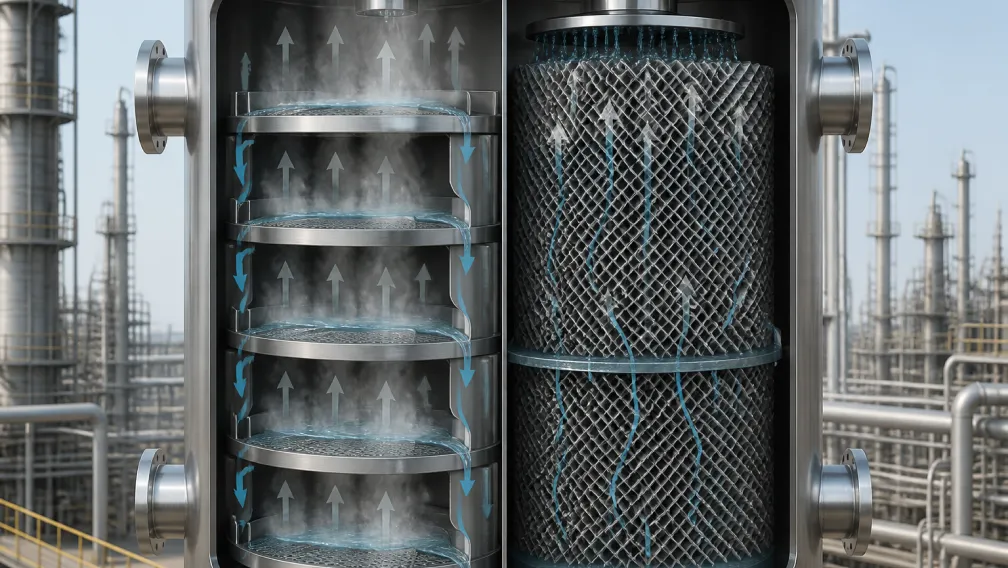

Packed columns frequently experience hydraulic bottlenecks not within the packing media itself, but at the interface where liquid exits and vapor enters the bed. As bed depth increases, the liquid load on the bottom support plate intensifies. Standard flat support grids force ascending gas and descending liquid to compete for the same physical openings, leading to premature liquid hold-up and catastrophic column flooding. Gas injection hump supports resolve this fundamental fluid dynamic conflict. By utilizing a corrugated, three-dimensional geometry, hump supports physically separate the vapor and liquid flow paths, maintaining high column capacity even under severe liquid loads. This guide details the hydrodynamic failure modes of flat grids, the mechanical design of gas injection plates, and the material selection criteria for deep-bed industrial columns.
The Fluid Dynamics of the Gas-Liquid Interface
In a counter-current packed tower, the support plate must bear the entire physical weight of the ceramic, metal, or plastic packing bed while simultaneously passing 100% of the vapor and liquid traffic. The fundamental failure of early column designs originated at this precise interface.
On a traditional flat perforated plate, heavy liquid films drain downward through the exact same holes that high-pressure vapor uses to travel upward. At elevated operating capacities, the kinetic energy of the ascending vapor—often measured by the F-factor ($F_s = V_v \sqrt{\rho_v}$)—physically prevents the liquid from draining. Aerodynamic drag overcomes gravity, causing the liquid to accumulate on top of the plate. This creates a highly turbulent liquid pool known as a holdup zone. Once this liquid pool rises into the actual packing bed, the void spaces within the packing flood. Mass transfer ceases completely, the pressure drop spikes exponentially, and the column reaches its hydraulic limit.
Chemical engineers dictate that a proper support plate must possess a free open area mathematically greater than the internal void fraction of the packing it supports. Since modern random packing typically boasts void fractions exceeding 95%, attempting to drill enough holes in a flat plate to reach 95% open area compromises its structural integrity, causing it to collapse under the weight of the bed. This engineering paradox necessitates a three-dimensional support solution.
How Hump Supports Separate Vapor and Liquid Channels
The hump support (also referred to as a gas-injection support plate) eliminates fluid competition by fundamentally altering the cross-sectional geometry of the column floor.
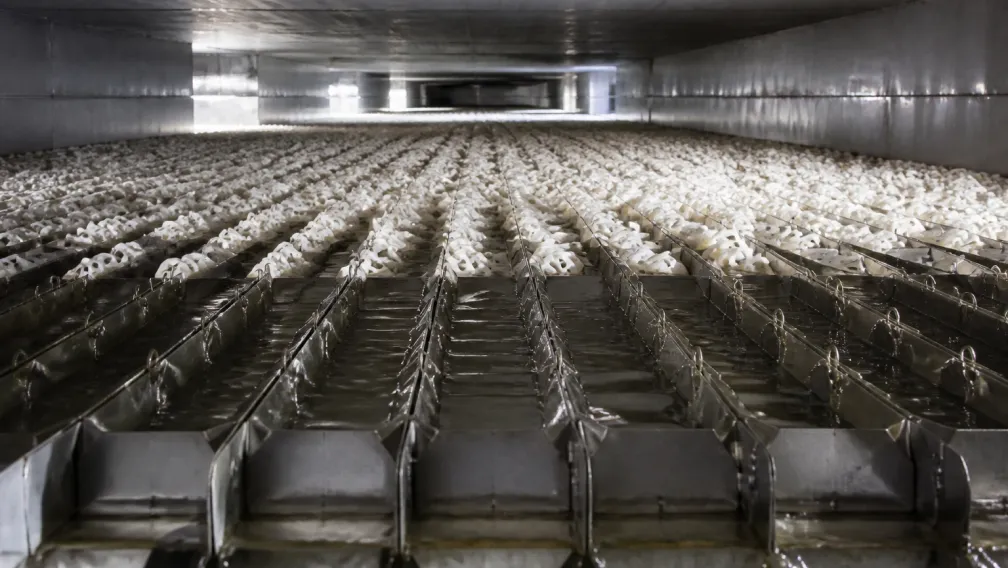
The plate is formed into a series of parallel corrugations or "humps." This three-dimensional wave pattern dictates fluid behavior through strict geometric routing. The ascending vapor naturally seeks the highest point in the structure and flows effortlessly through lateral slots punched into the upper vertical walls of the humps. Because these slots are elevated above the floor, they remain completely dry. Conversely, the descending liquid drains via gravity directly into the lower troughs and exits through separate perforations located at the absolute bottom of the plate.
This complete physical separation of phase pathways ensures that high-velocity vapor injection does not shear, atomize, or throttle the draining liquid. Furthermore, the corrugated design drastically increases the available surface area of the plate. Because the angled walls are perforated, a properly designed gas injection hump support provides a free open area exceeding 100% (often 120% to 140%) of the column's two-dimensional cross-sectional area. This guarantees that the support plate never becomes the hydraulic bottleneck of the separation tower.
Material Selection: Ceramic, Metal, and Plastic Variants
Support plates must perfectly match the corrosion resistance, thermal expansion profile, and mechanical strength of the random packing they hold.
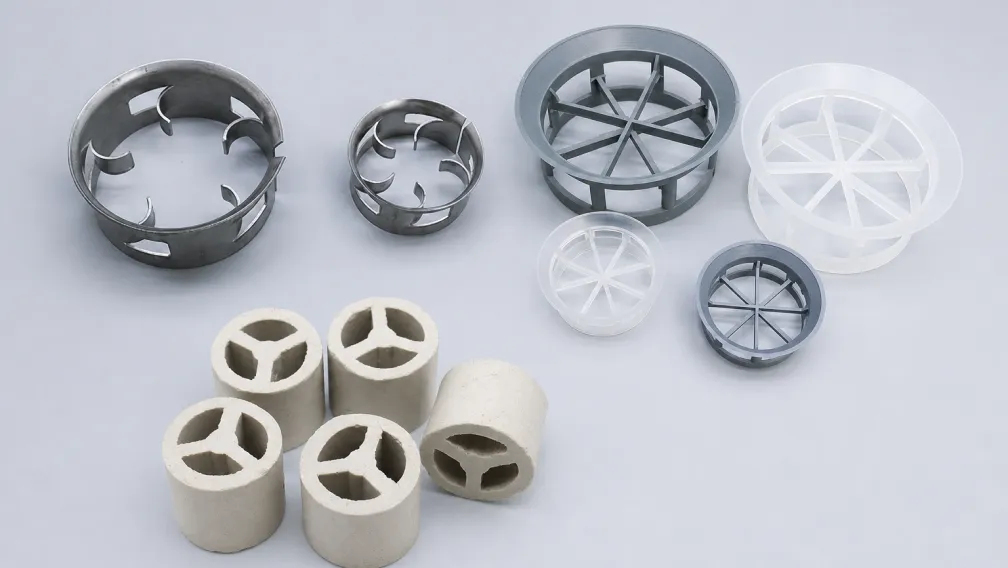
Ceramic Hump Supports
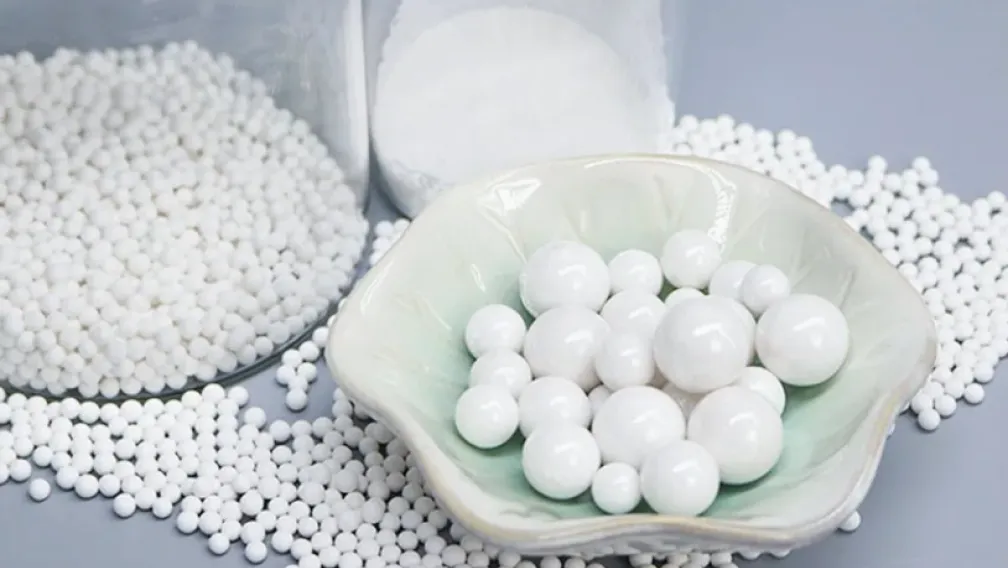
Ceramic hump supports are strictly mandatory for aggressive inorganic acid absorption, specifically in sulfuric acid ($H_2SO_4$), nitric acid ($HNO_3$), and halogen gas towers where metals undergo rapid catastrophic corrosion. Manufactured from dense, chemical-grade porcelain, ceramic humps provide massive compressive strength. However, they lack tensile elasticity. During installation in steel vessels, engineers must account for the disparate thermal expansion coefficients between the carbon steel shell and the ceramic plate. Ceramic plates are typically laid on support ledgers lined with PTFE or fiberglass rope gaskets. This provides a soft, compressible cushion that absorbs thermal expansion and prevents mechanical fracturing during severe temperature excursions.
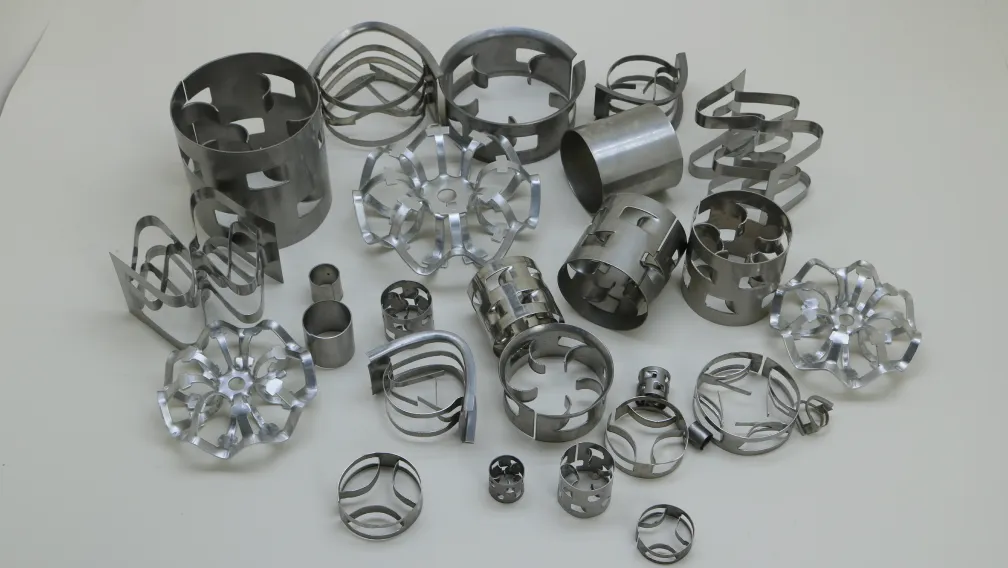
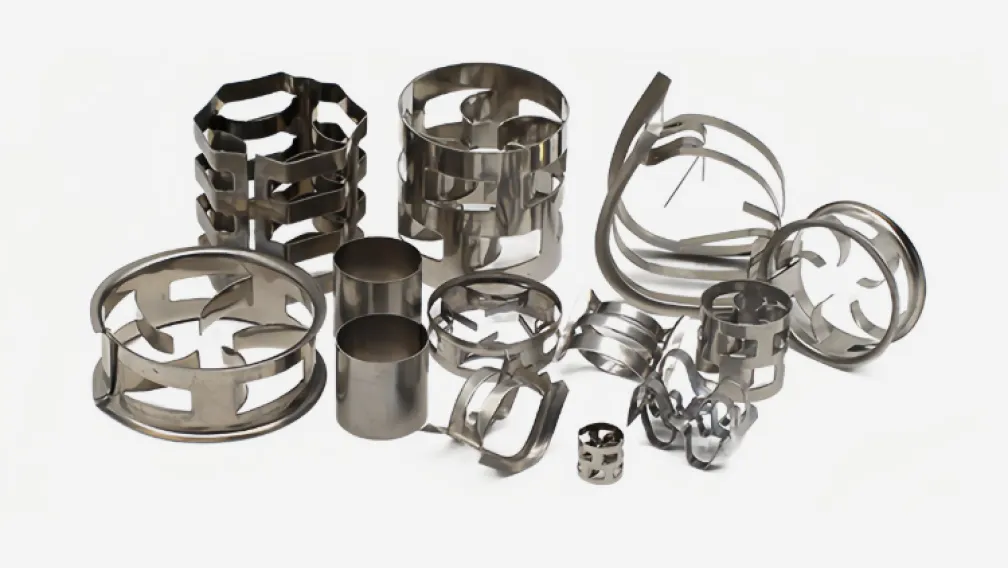
Metal Hump Supports
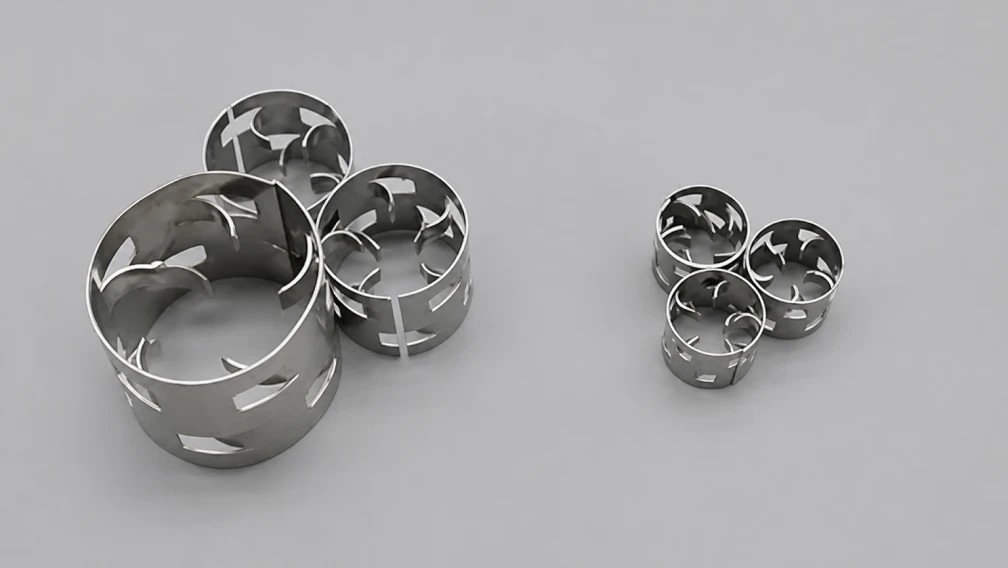
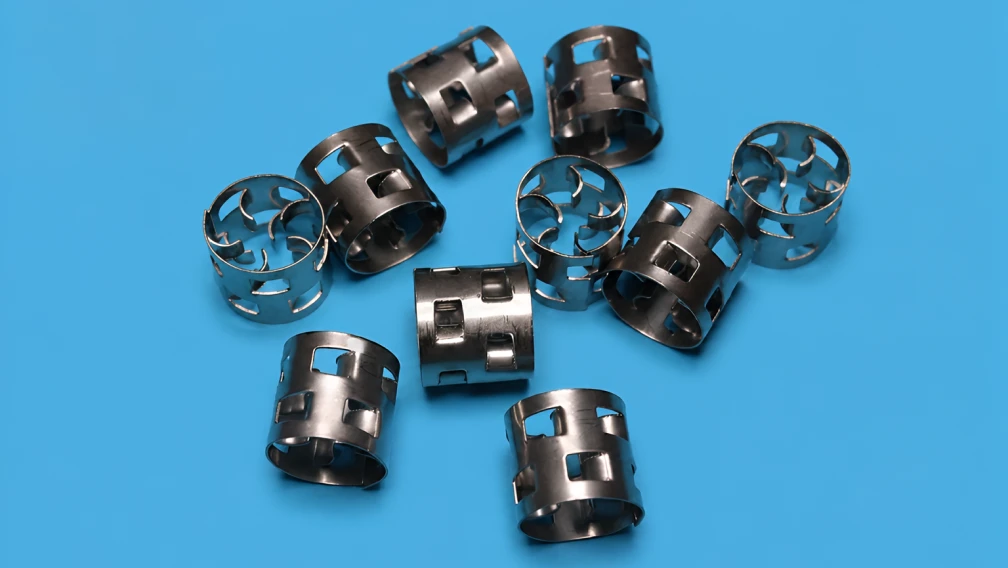
Metal hump supports are fabricated from stainless steels (such as 304L, 316L, 410) and specialized high-nickel alloys (Hastelloy, Monel). They offer the highest possible open area due to their thin-wall construction and high tensile strength. Metal humps are utilized in high-pressure petrochemical distillation, heavy hydrocarbon fractionators, and deep-vacuum distillation columns. Their high strength-to-weight ratio allows them to support extremely deep beds of heavy metallic random packing without buckling.
Plastic Hump Supports
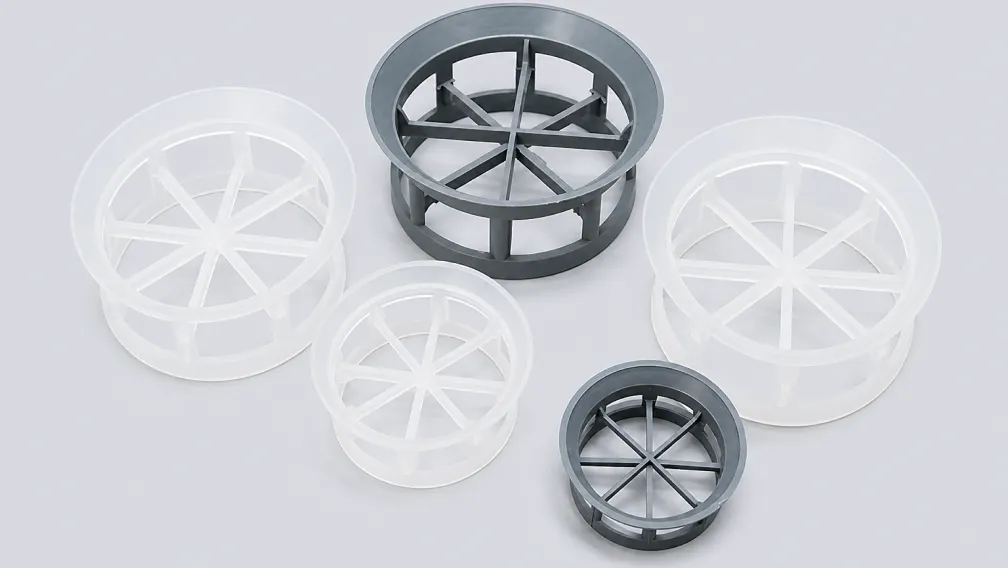
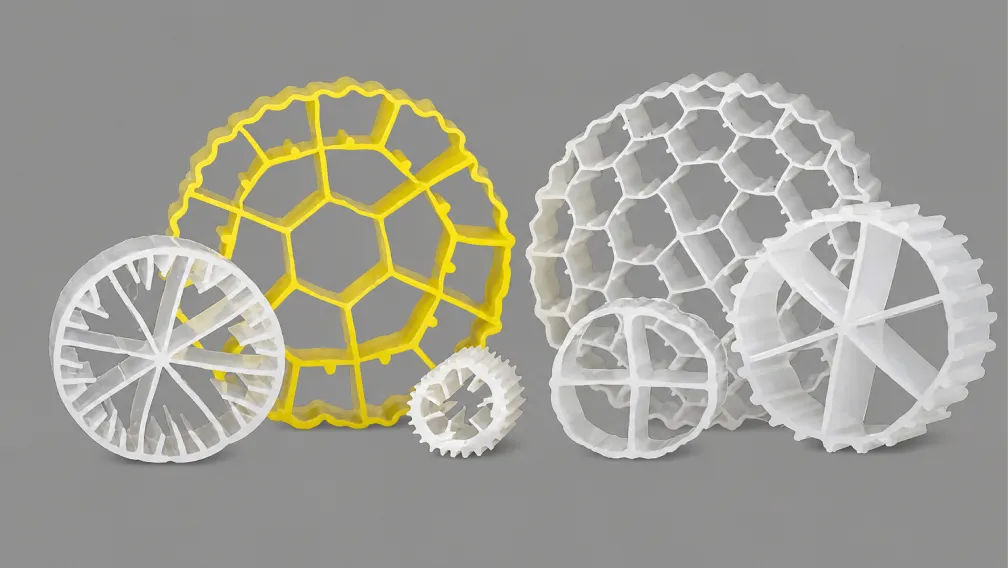
Plastic hump supports are molded or thermoformed from engineering polymers including PP, CPVC, PFA, and PVDF. These are specified for low-temperature environmental scrubbers, biological odor control units, and corrosive chloride services where titanium or exotic alloys are cost-prohibitive. Process engineers must strictly calculate the operating temperature limits when specifying plastic, as thermoplastic materials exhibit mechanical creep (cold flow) under the continuous weight of a deep packed bed at elevated temperatures.
Engineering Requirements for Deep Packed Beds
Deep packed beds exert massive compressive forces. For example, a 6-meter deep bed of dense ceramic saddles can exert a static load exceeding $4,000 \, kg/m^2$ directly onto the support plate.
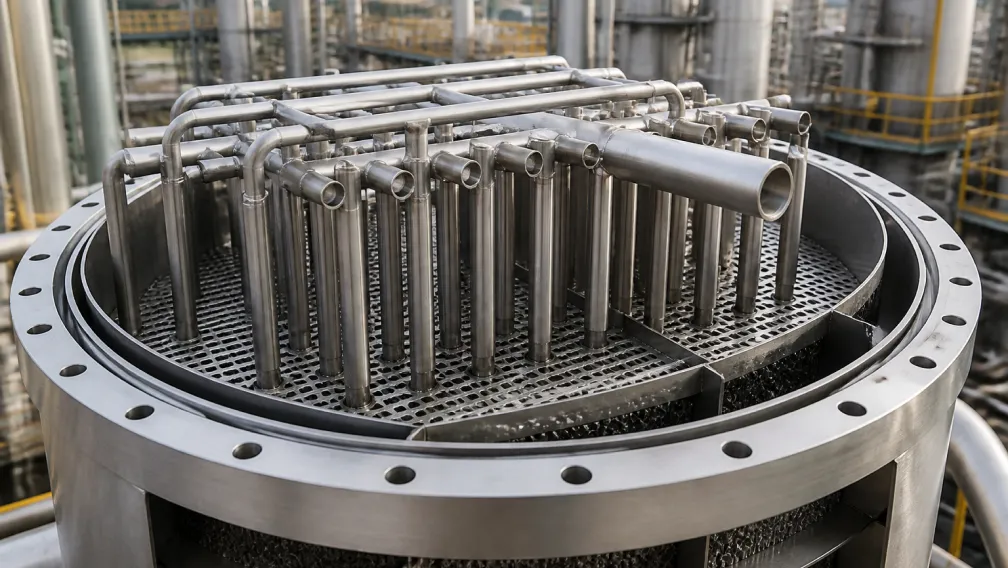
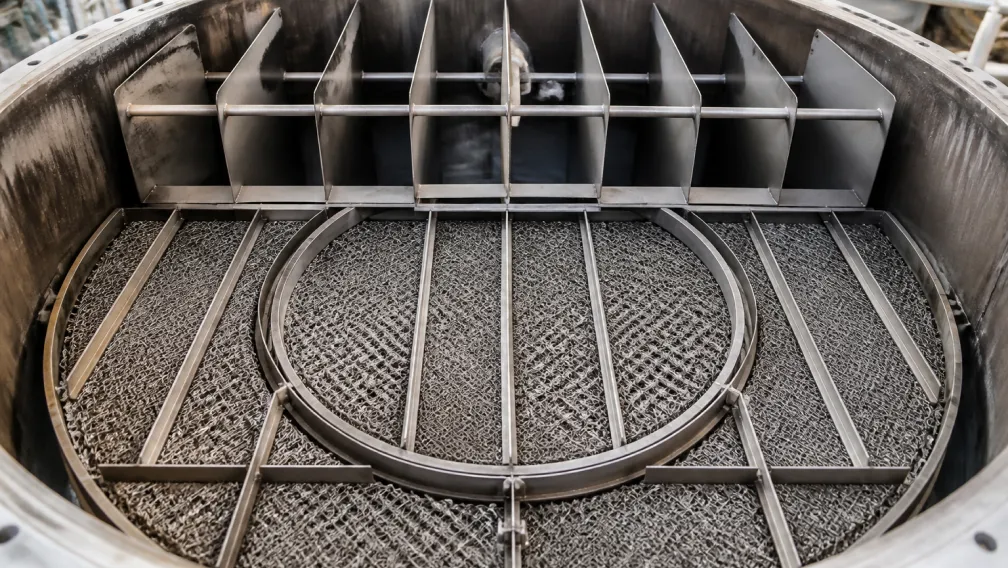
The corrugated geometry of a hump support naturally provides a very high moment of inertia, granting it exceptional structural rigidity compared to a flat grid. It acts essentially as a continuous series of structural beams spanning the column. For large-diameter columns (exceeding 1.5 meters), manufacturers design the hump plates in modular, interlocking segments. These segments are passed individually through the vessel manways and assembled on structural support ledgers and intermediate transverse I-beams welded directly to the interior vessel wall.
During installation, leveling is paramount. The support plate must be strictly horizontal across both axes. A tilt of just 5 millimeters can disrupt the hydrodynamics of the plate. Liquid will preferentially drain to the lower troughs while the elevated troughs run dry. This causes massive, localized liquid maldistribution that propagates downward through the redistributor into the subsequent packed bed, severely crippling the overall mass transfer efficiency (HETP) of the tower.
Redistribution and Bed Height Limits
No random packing bed can extend indefinitely. As fluid trickles down through the media, the liquid naturally migrates toward the column wall—a phenomenon known as wall channeling. To maintain separation efficiency, tower internals must intercept and re-mix the fluids.
Standard design limits continuous random packing beds to approximately 6 to 8 meters in depth. Exceeding this depth allows severe wall channeling and places dangerous compressive loads on the bottom packing layers, crushing them. When a process requires 15 meters of total packing, the column is divided into two or three distinct beds. At the base of each upper bed, a gas injection hump support holds the packing and allows the liquid to drain into an interstage liquid collector and redistributor, which uniformly sprays the liquid back onto the top of the next bed.
Where Rongjian Fits
Pingxiang Rongjian designs and manufactures high-performance tower internals for heavy-duty industrial separation columns. We engineer custom gas injection hump supports in chemical-grade ceramics, exotic metals, and highly resistant engineering plastics to precisely match the corrosive profile of your process stream. Our technical team calculates the optimal slot dimensions and free open area to guarantee that your support plates eliminate vapor-liquid competition and safely support maximum bed loads without premature flooding. Whether you are retrofitting a sulfuric acid absorption tower or debottlenecking a high-pressure petrochemical fractionator, we provide comprehensive sizing analysis and precise internal fabrication. Contact us with your column dimensions and vapor-liquid traffic data for a detailed engineering proposal.
-

Rongjian
Process Media Manufacturer Since 2010
Rongjian produces tower packing, molecular sieves, ceramic grinding media and other process media from our Pingxiang production base. We supply to industrial projects in over 100 countries.