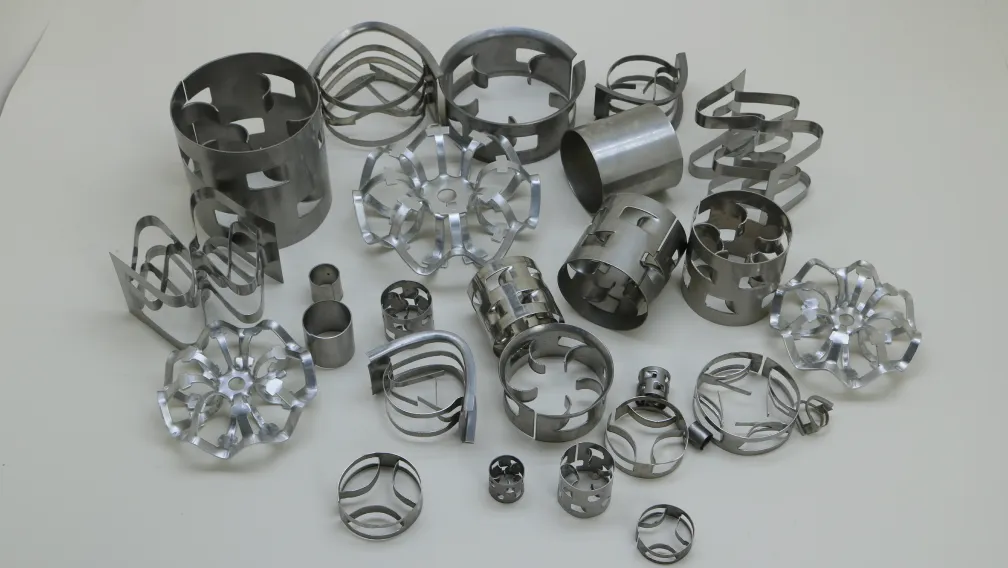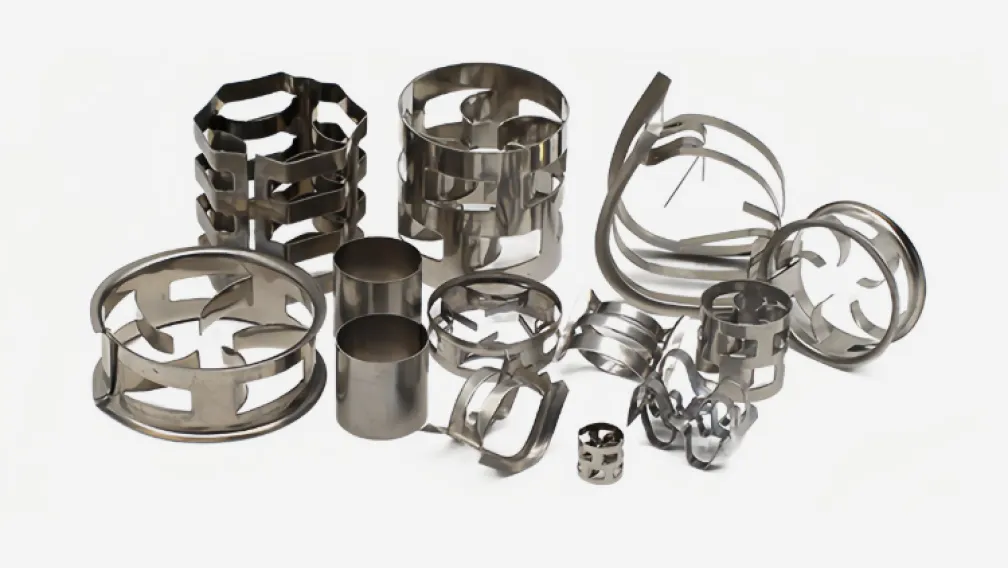

Industrial scrubbers tasked with removing sub-micron particulates and noxious gases require internal media that maximizes impaction rather than strictly minimizing pressure drop. The metal Tellerette ring, characterized by its complex toroidal helix geometry, achieves exactly this. Unlike standard cylindrical rings that prioritize high gas throughput, the Tellerette deliberately forces gas and liquid into chaotic, high-velocity collisions. This guide examines the fluid dynamics of inertial impaction, the structural benefits of the helical design in preventing solid accumulation, and the application of Tellerette rings in severe particulate and odor control scrubbing systems.
The Toroidal Helix Shape and Inertial Impaction
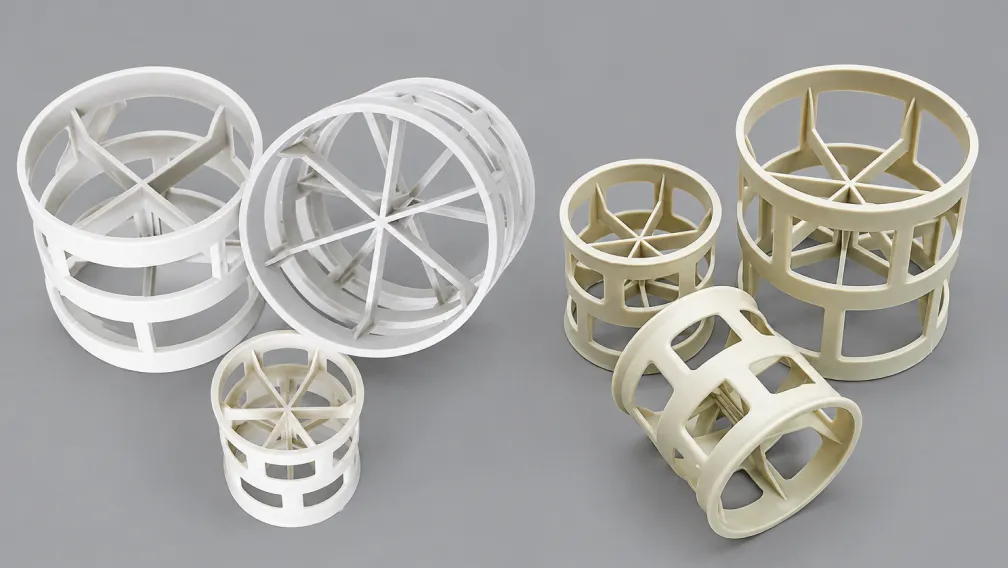
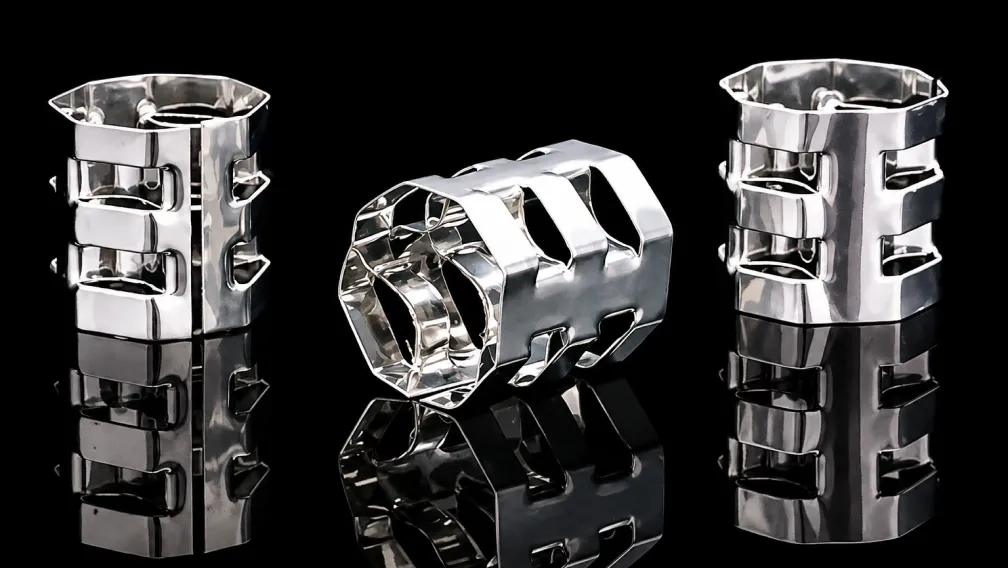
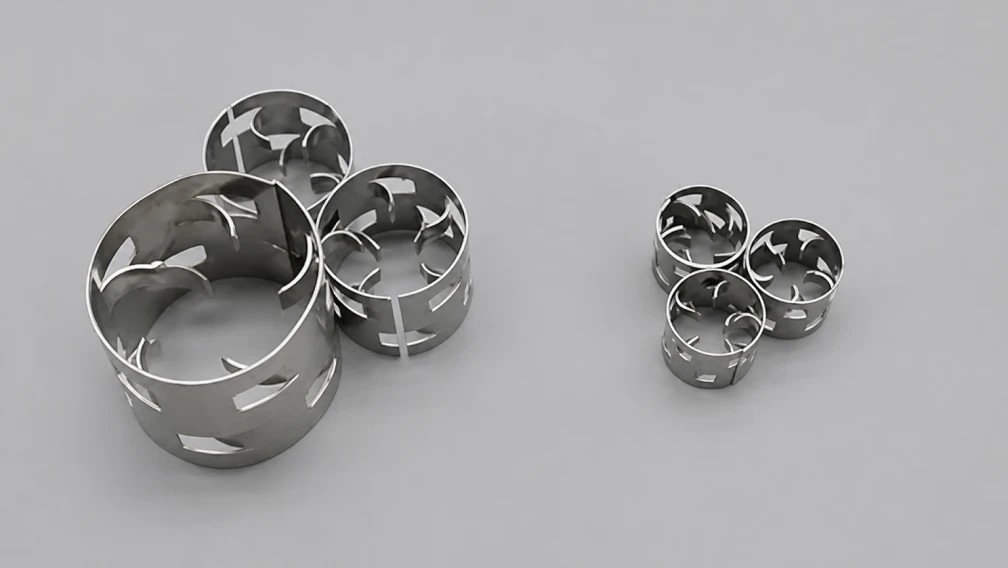
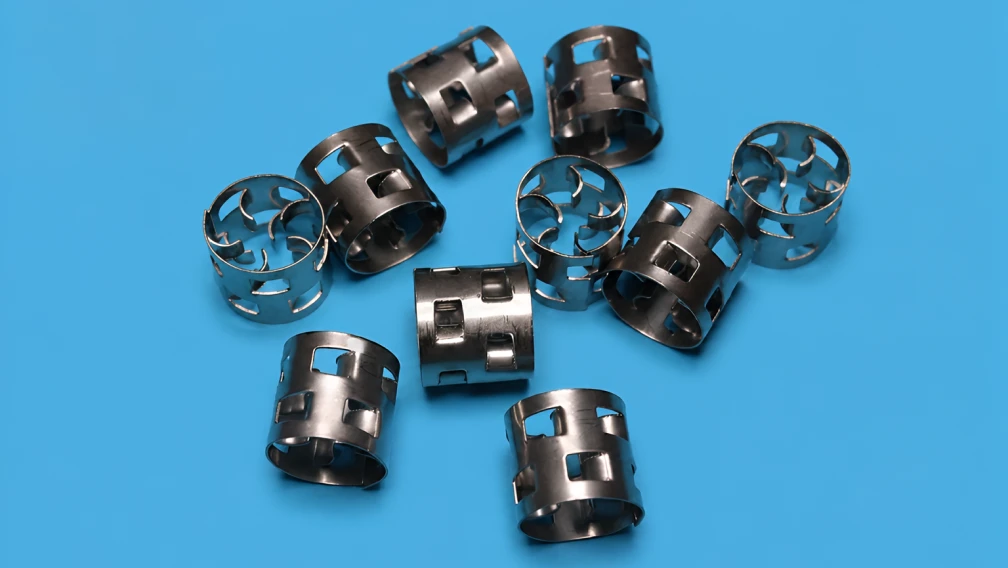
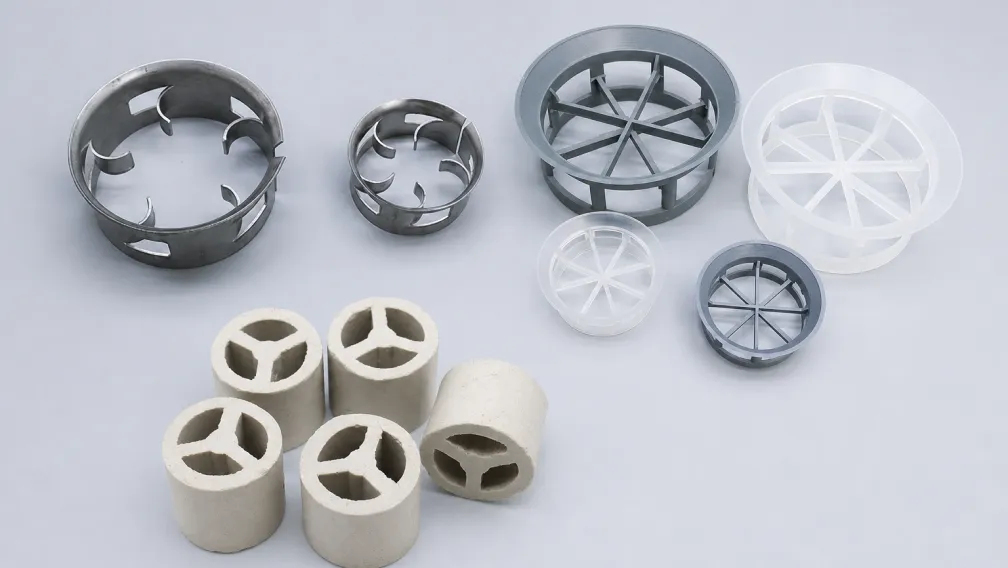
The Tellerette ring fundamentally deviates from the solid-wall cylinder of standard Raschig or Pall rings. It consists of a continuous metallic spiral forming a torus (a donut shape). This intricate geometry is not designed to streamline gas flow; it is engineered to disrupt it.
As particulate-laden gas travels upward through the packed bed, the dense network of spiral wires forces the gas stream to change direction violently and repeatedly. Sub-micron particulates suspended in the gas possess mass and momentum. When the gas stream bends around a spiral wire, the heavy particulates cannot follow the sharp aerodynamic curve. They travel in a straight line due to inertia, striking the wetted metal wire directly. This physical mechanism—inertial impaction—is the primary driver for removing microscopic dust, aerosols, and fine mists from industrial exhaust streams.
Enhanced Liquid Holdup and Residence Time
Standard high-capacity packing aims to shed liquid as quickly as possible to lower pressure drop. Tellerette rings are engineered to retain it. The open helical structure functions as a continuous network of interstitial liquid traps.
As scrubbing liquor trickles down through the bed, it catches in the loops of the spiral, creating thousands of suspended liquid droplets and thick internal films. This physical retention creates an exceptionally high liquid holdup. High liquid holdup directly increases the residence time of the gas-liquid interaction. For mass transfer processes limited by very slow chemical reaction rates—such as the alkaline scrubbing of hydrogen sulfide ($H_2S$) or mercaptans in odor control units—this extended residence time is absolutely mandatory to achieve the targeted parts-per-million (ppm) removal efficiencies.
Interstitial Void Space and Particulate Flushing
While the metal Tellerette ring intercepts solid particulates aggressively, its highly open spiral structure prevents the bed from acting as a static, easily blinded filter. The void fraction of a metal Tellerette bed typically exceeds 90%.
Because the ring possesses no flat, horizontal surfaces or internal cups to collect sludge, intercepted particulates cannot accumulate into solid, hardened blocks. The continuous, heavy downward flow of the scrubbing liquor continuously washes the captured solid particulates off the curved spiral wires and flushes them down to the scrubber sump. This self-scouring capability allows Tellerette rings to process gas streams with high dust and scaling loadings without experiencing the rapid, catastrophic pressure drop spikes associated with blinded tower packing.
Material Durability in Extreme Environments
Particulate scrubbing and acid gas neutralization subject tower packing to severe abrasion and chemical attack. To survive continuous operation under these conditions, Tellerette rings are fabricated from robust metallic alloys.
Standard industrial applications utilize 304L or 316L stainless steel. For scrubbers handling wet chlorine, hydrogen chloride, or high-temperature incinerator exhaust, engineers specify specialized high-nickel alloys such as Hastelloy C276 or Titanium. The metallic spiral structure provides massive mechanical crush strength. This allows plant operators to design extremely deep packed beds without the risk of the bottom packing layers collapsing under the extreme static weight of the retained scrubbing liquor.
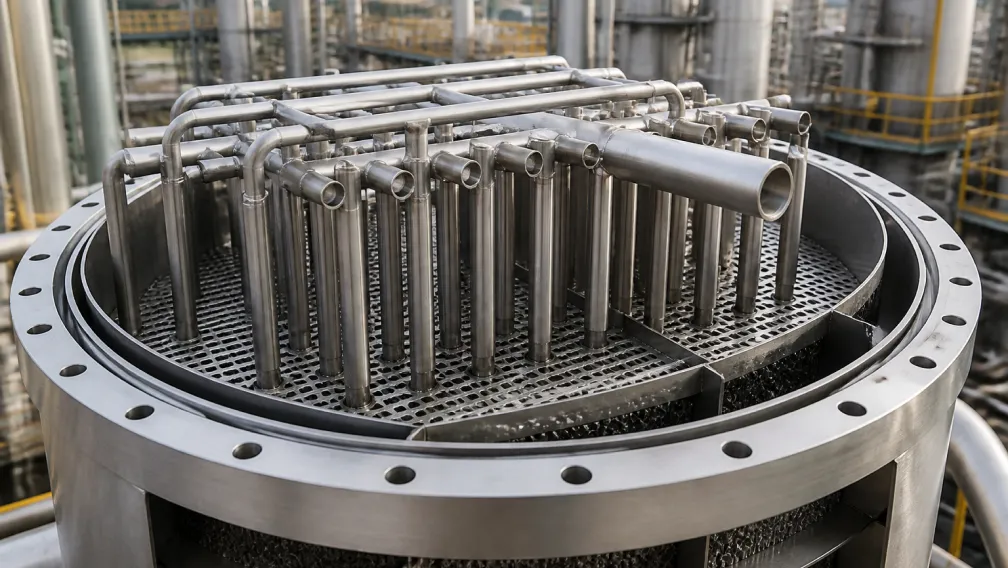
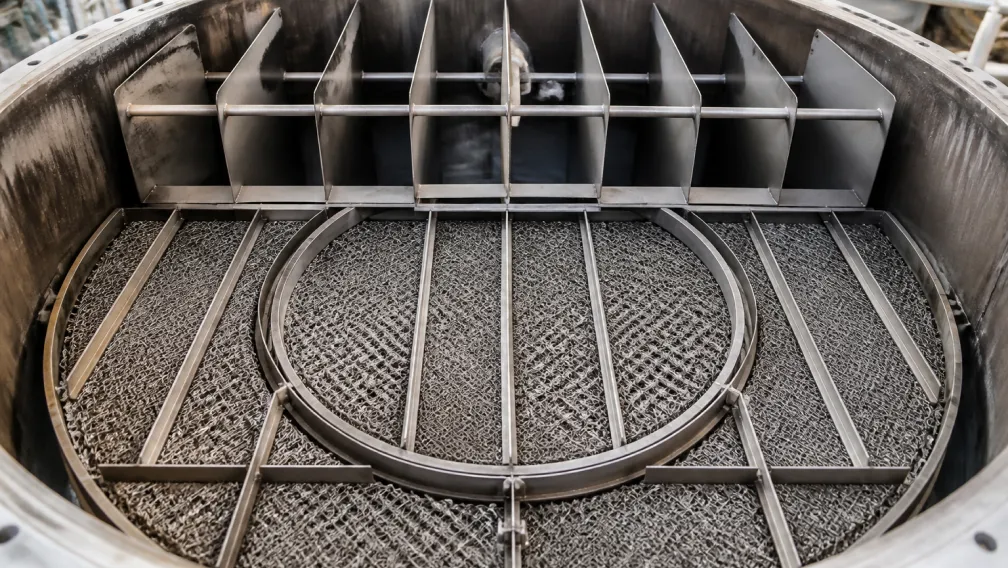
Because of this massive liquid weight, deep Tellerette beds require heavy-duty tower internals. Engineers must install robust gas injection support plates to bear the mechanical load while ensuring the ascending high-velocity gas does not throttle the heavy liquid effluent draining into the sump.
Where Rongjian Fits
Pingxiang Rongjian designs and manufactures high-efficiency mass transfer media for severe environmental scrubbing and chemical absorption applications. We produce precision-engineered metal Tellerette rings designed specifically to maximize inertial impaction and liquid holdup. Our manufacturing process guarantees exact spiral geometry and high mechanical crush strength across a full spectrum of stainless steels and exotic alloys. Whether you are designing an odor control scrubber for a municipal wastewater plant or a sub-micron particulate removal tower for a chemical incinerator, our technical team evaluates your gas flow rates and particulate loadings to recommend the optimal random packing size and configuration. Contact us with your hydraulic specifications for a detailed media proposal.
-

Rongjian
Process Media Manufacturer Since 2010
Rongjian produces tower packing, molecular sieves, ceramic grinding media and other process media from our Pingxiang production base. We supply to industrial projects in over 100 countries.