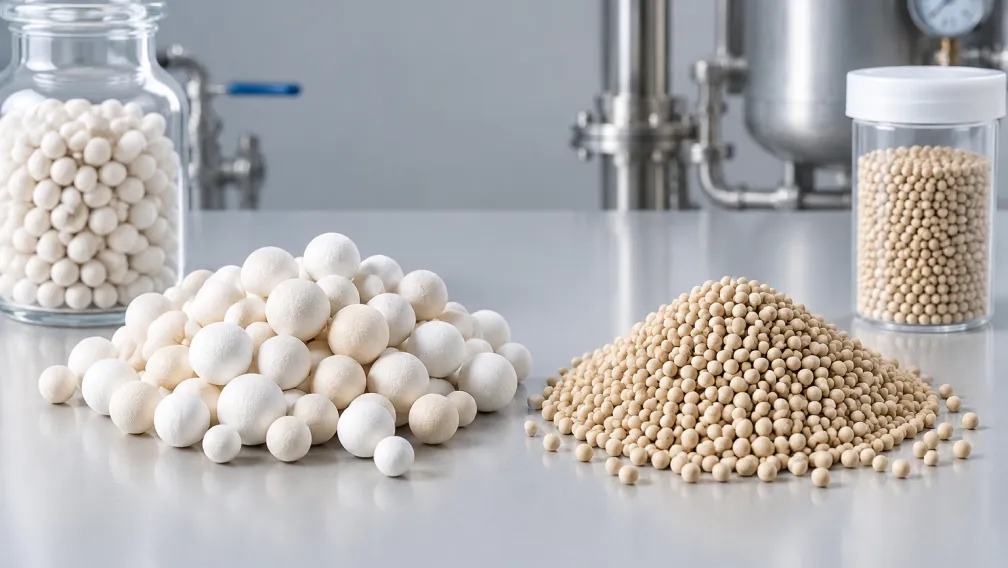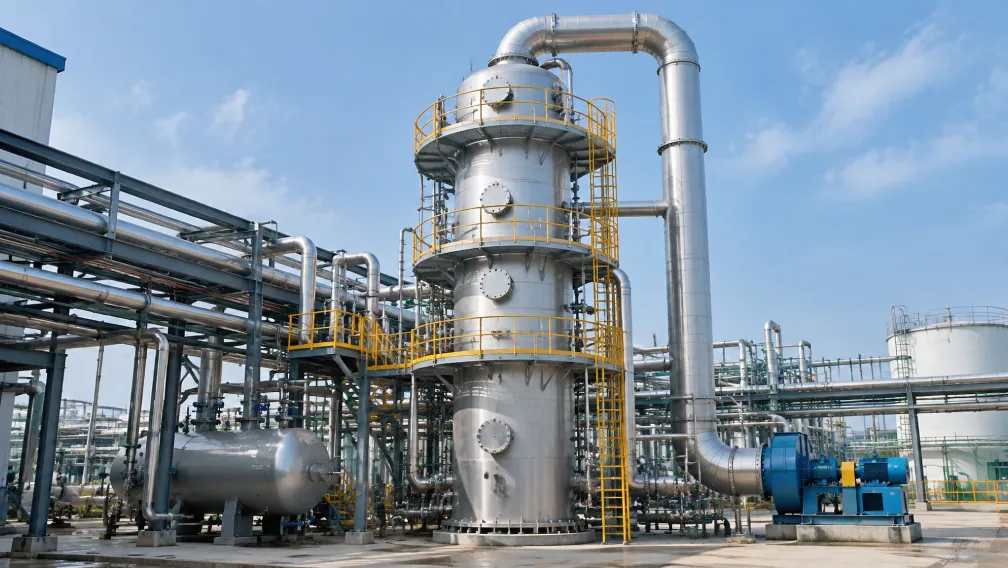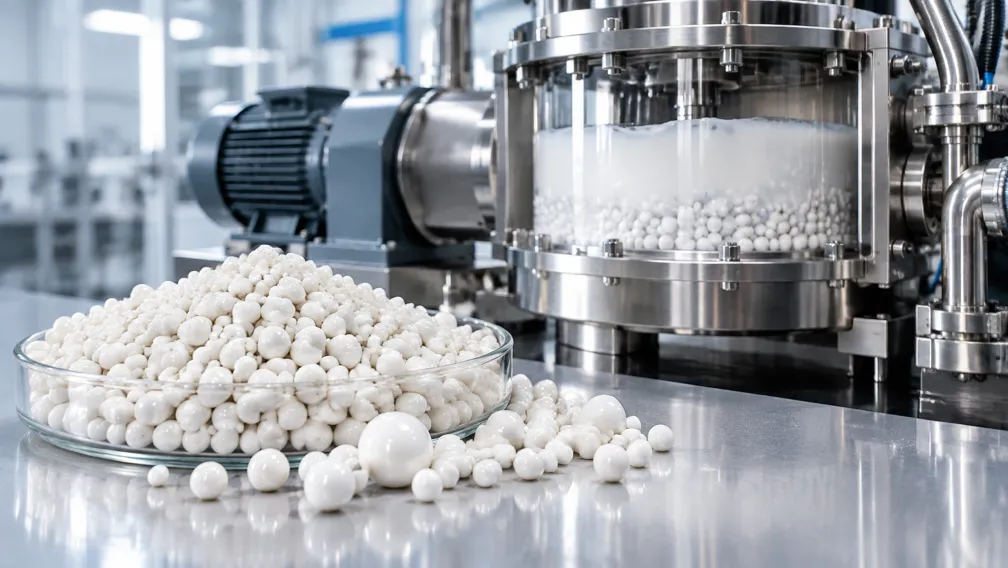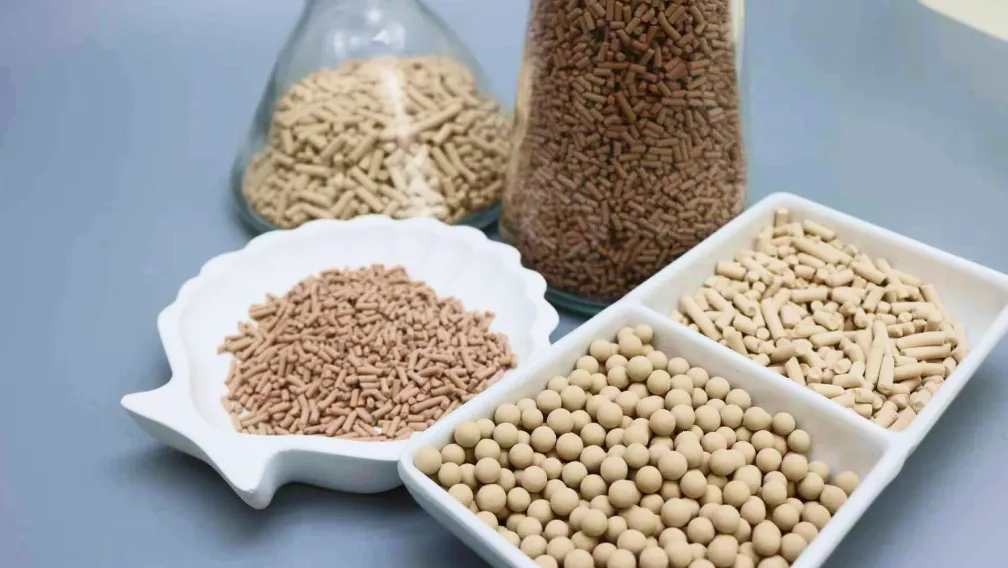

Activated alumina and molecular sieve handle the majority of industrial drying duties. Both are regenerable adsorbents supplied as beads or pellets, and both remove water vapor from gases and liquids. The engineering differences between them — pore structure, adsorption isotherm, achievable dew point, regeneration energy, and tolerance to liquid water — determine bed sizing, operating cost, and outlet gas quality. This guide compares the two materials on measurable parameters and maps each one to the applications where it performs best.
Material Structure and How Each Adsorbent Works
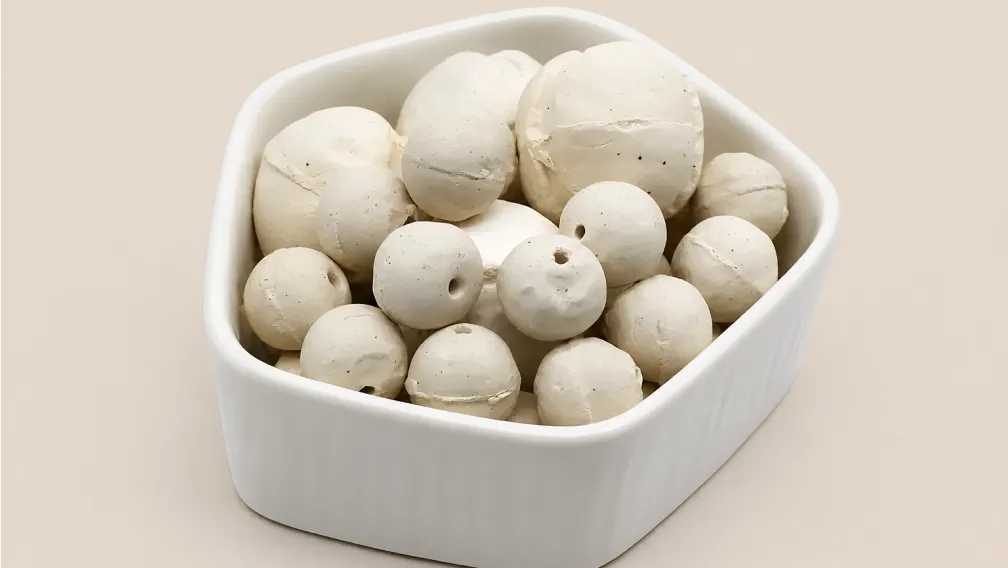
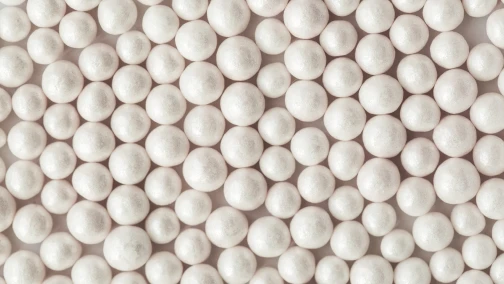
Activated alumina is a highly porous form of aluminum oxide (Al₂O₃) with a mixed mesopore and macropore structure and a surface area of roughly 300–380 m²/g. Water molecules attach to the pore walls through physical adsorption, and uptake rises steadily as humidity increases. A detailed material overview is available in our guide on what activated alumina is and how it works.
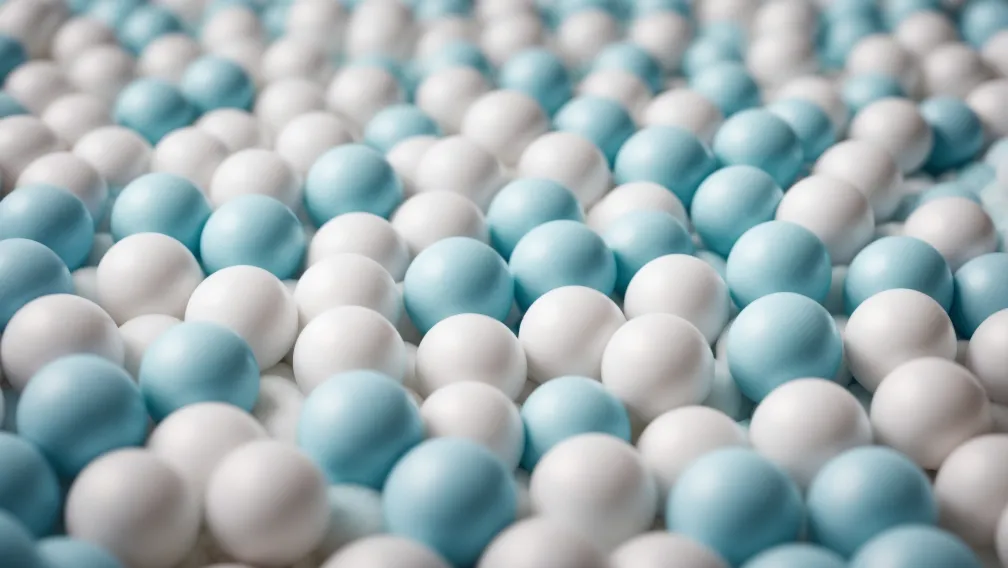
A molecular sieve is a synthetic crystalline aluminosilicate (zeolite) whose pores are uniform and precisely sized: about 3 Å in 3A, 4 Å in 4A, 5 Å in 5A, and close to 10 Å in 13X. Molecules smaller than the opening enter the crystal cavity; larger molecules stay out. Internal surface area runs 600–800 m²/g. The grade classification is covered in our article on molecular sieve types and their pore sizes.
The decisive difference is the adsorption isotherm. Molecular sieve holds close to its full water capacity even when the surrounding gas is nearly dry. Activated alumina loses capacity quickly below about 10% relative humidity. At 100 °C and roughly 1% relative humidity, a zeolite retains on the order of ten times more water than activated alumina. This single property explains most selection outcomes: deep dew points demand an adsorbent that still works when almost all the moisture is already gone.
Performance Comparison on Engineering Parameters
| Parameter | Activated Alumina | Molecular Sieve |
|---|---|---|
| Pore structure | Mixed mesopores and macropores | Uniform micropores, 3–10 Å by grade |
| Surface area | 300–380 m²/g | 600–800 m²/g |
| Practical pressure dew point | −40 °C standard; about −55 °C with heated regeneration | −70 °C and below; −100 °C achievable |
| Working capacity in cyclic dryers | 8–12% of bed weight | 12–18% of bed weight |
| Regeneration temperature (heated) | 150–230 °C | 200–300 °C |
| Liquid water tolerance | Withstands occasional slugs | Must be protected; hydrothermal damage causes attrition |
| Relative cost per kg | Baseline | Roughly 3–4× for 4A; higher for 13X |
| Typical service life | 3–5 years | 4–6+ years in clean gas service |
Achievable Pressure Dew Point
Outlet dryness is the first selection criterion. In a standard heatless compressed air dryer, activated alumina delivers a pressure dew point of −35 to −42 °C under real operating conditions — 35 °C inlet air at high humidity. Heated regeneration extends the range to roughly −55 °C. That performance covers ISO 8573-1 Class 2 and most general plant air duties.
Molecular sieve operates in a lower range. A 4A bed in a properly regenerated dryer holds −60 to −70 °C, and optimized systems reach −100 °C. This is the territory of ISO 8573-1 Class 1, breathing air, and cryogenic process feed. Below −40 °C, molecular sieve becomes the practical choice; below −60 °C, the equilibrium capacity of activated alumina is too low for an economically sized bed at any cycle time.
Regeneration Energy and Lifecycle Cost
Activated alumina regenerates at 150–230 °C in heated systems and releases water readily in pressure-swing cycles. Molecular sieve binds water more tightly and needs 200–300 °C for full regeneration, or considerably longer purge times at lower temperature — which cuts effective capacity between cycles.
Per kilogram, 4A molecular sieve typically costs three to four times as much as activated alumina, and 13X more still. The higher purchase price partially offsets over time: sieve beds commonly run five years or longer in clean gas service, while alumina beds in compressed air dryers are usually replaced on a three-to-five-year interval. Lifecycle cost therefore depends on the duty. For a −40 °C dew point, activated alumina wins on both purchase price and regeneration energy. For −70 °C, the cost comparison never starts, because alumina cannot reach the specification.
Liquid Water Tolerance and Mechanical Durability
Compressed air systems carry a real risk of liquid water carryover when separators or prefilters underperform. Activated alumina tolerates occasional slugs: the beads have high crush strength and recover after regeneration. Molecular sieve does not. Liquid water triggers hydrothermal attack on the zeolite and its binder, and the beads powder over time. The resulting dust raises bed pressure drop and migrates downstream into valves and instruments.
Oil aerosol damages both materials by blocking pores, so coalescing filtration upstream of the dryer is required in either case. Where upstream separation is unreliable, or where the inlet stream arrives saturated at elevated temperature, an activated alumina guard layer ahead of the sieve is standard practice.
Application-Based Selection
Compressed Air Dryers
For general plant and instrument air at −40 °C pressure dew point (ISO 8573-1 Class 2), activated alumina is the standard charge in heatless dryers and the lowest-cost compliant option. Class 1 duties at −70 °C — electronics manufacturing, powder coating, instrument air in cold climates — require molecular sieve, typically in 1.6–2.5 mm beads for fast adsorption kinetics.
Natural Gas Dehydration
Pipeline specifications commonly call for a water dew point near −70 °C at line pressure. At that target, 4A molecular sieve is the established adsorbent; the equilibrium capacity of activated alumina at such low humidity makes bed size and regeneration frequency uneconomical. Alumina still appears in these units as an inlet guard layer where slugging is expected.
Air Separation Pre-Purification
Cryogenic air separation requires removal of both water and CO₂ before the cold box. 13X molecular sieve, with its roughly 10 Å pore opening, co-adsorbs both contaminants. Activated alumina removes water but leaves CO₂ behind, so front-end purification units run on 13X or 13X-APG grades, frequently layered over alumina.
Ethanol, Refrigerant, and Selective Drying
Where the product molecule must be preserved, pore selectivity decides the grade. 3A molecular sieve admits water and excludes ethanol, unsaturated hydrocarbons, and refrigerant molecules, which is why it is specified for ethanol dehydration, cracked gas drying, and refrigeration filter-driers. Activated alumina offers no size exclusion and co-adsorbs hydrocarbons together with the water.
Layered Bed Configurations
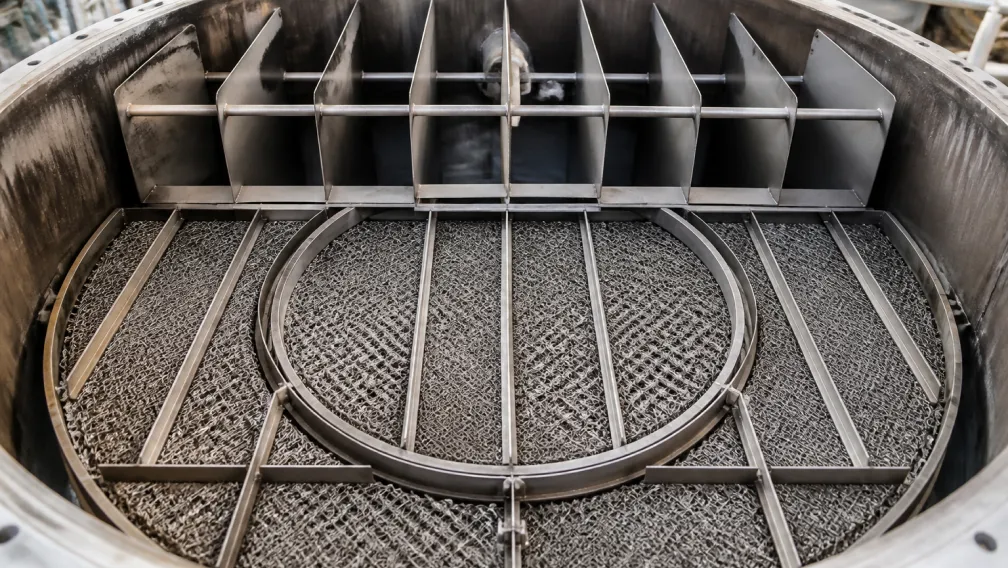
Many low-dew-point dryers load activated alumina at the inlet end and molecular sieve behind it. The alumina absorbs the bulk of the incoming moisture and shields the sieve from liquid carryover; the sieve polishes the gas to the target dew point. The arrangement reduces the volume of the higher-cost material without giving up outlet dryness. When recharging a layered vessel, the original layer proportions must be restored — filling a two-layer design with a single homogeneous material will not reproduce the original performance.
Handling, Storage, and Loading
Both materials adsorb moisture from ambient air during storage and loading. Drums should stay sealed until the vessel is ready, and loading should be completed in dry weather where possible. A bed charged on a humid day starts its first cycle partially loaded with water, which shows up as a high outlet dew point during the first hours of operation. Sieve beads are more sensitive in this respect: an opened drum left standing can pick up several percent of its weight in water within days. Screen out dust generated in transit before charging, since fines raise pressure drop from the first cycle onward.
Selection Checklist
The selection resolves to a short set of questions about outlet specification, stream composition, and operating conditions:
- Outlet dew point −40 °C or warmer: activated alumina is sufficient and lowest in cost.
- Outlet dew point −70 °C or below: molecular sieve is required; 4A covers general drying.
- Water and CO₂ removal together, as in air separation pre-purification: 13X.
- Drying ethanol, refrigerants, or unsaturated hydrocarbons where the product molecule must be excluded: 3A.
- Liquid carryover risk or unreliable upstream separation: activated alumina, or an alumina guard layer ahead of the sieve.
- Limited regeneration heating capacity: activated alumina regenerates at lower temperature and with shorter cycles.
Get a Grade and Bed Sizing Recommendation
Correct desiccant selection starts from stream composition, flow rate, inlet temperature, and target dew point. We supply activated alumina and molecular sieve in 3A, 4A, 5A, and 13X grades with batch documentation. Send your operating conditions through our contact page for a grade and sizing recommendation, or review the selection framework on our desiccant selection solutions page.
-

Rongjian
Process Media Manufacturer Since 2010
Rongjian produces tower packing, molecular sieves, ceramic grinding media and other process media from our Pingxiang production base. We supply to industrial projects in over 100 countries.