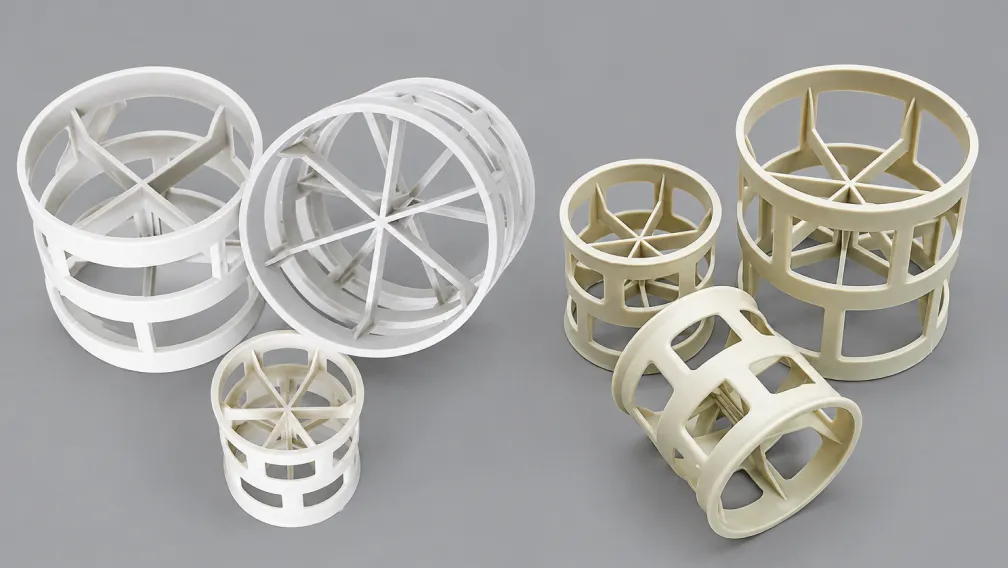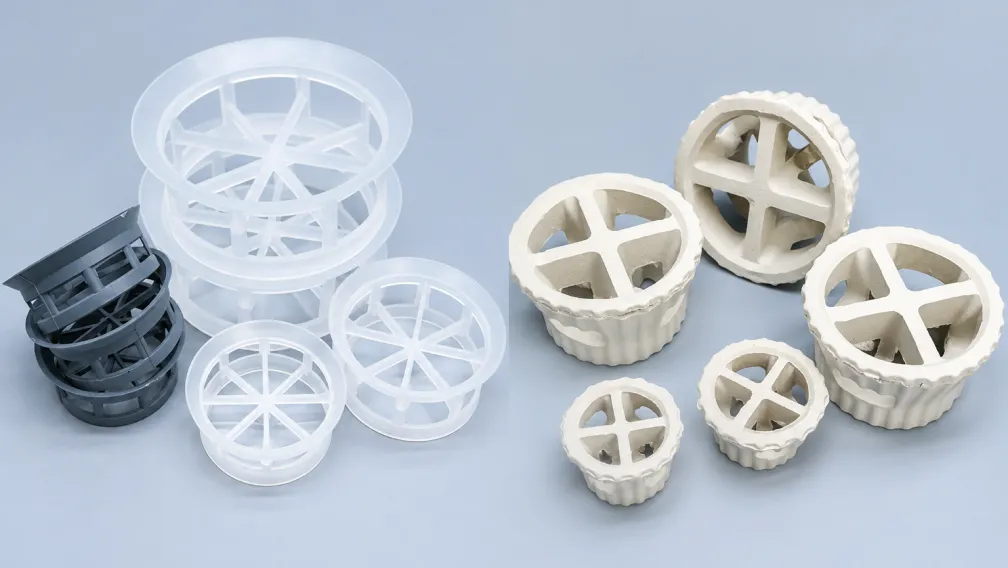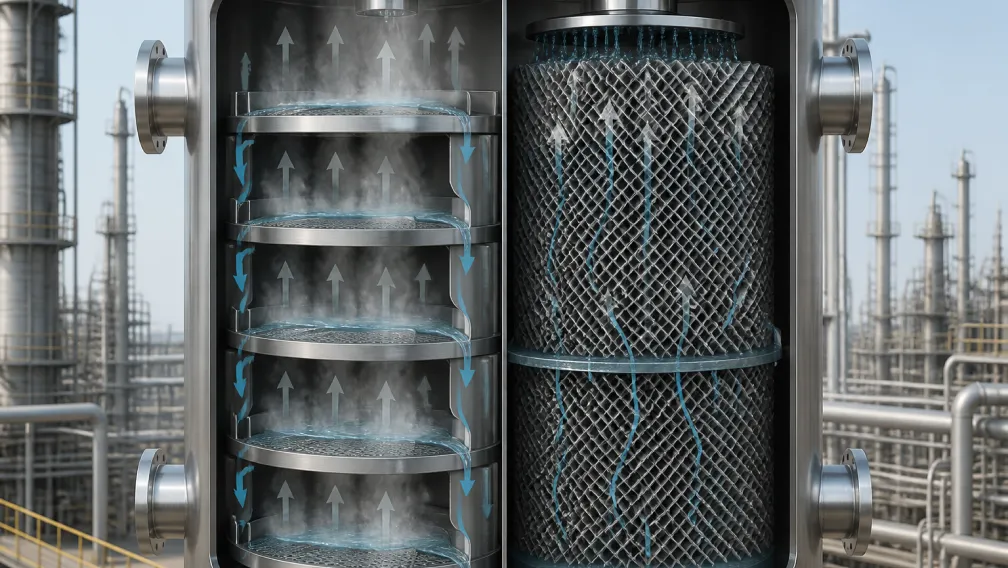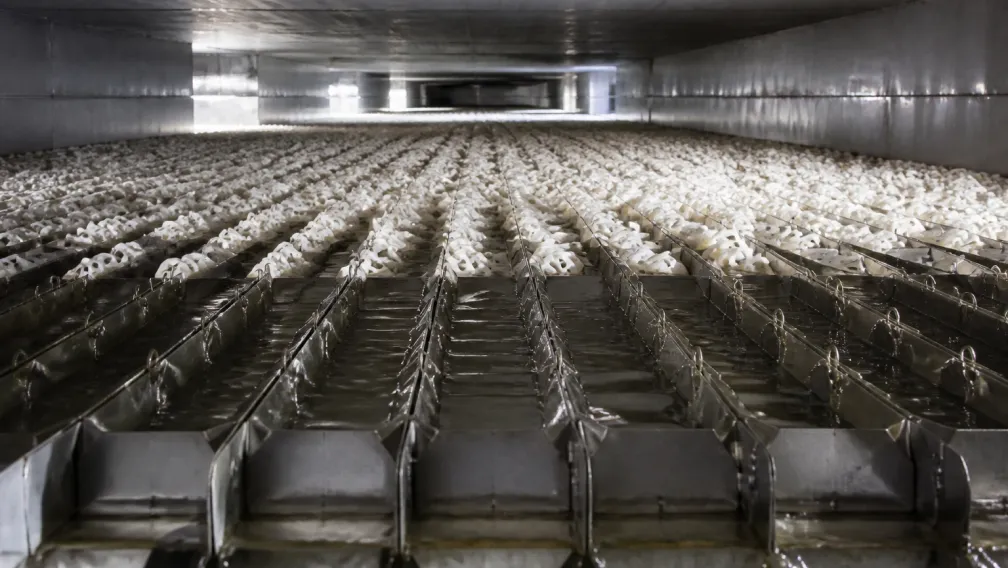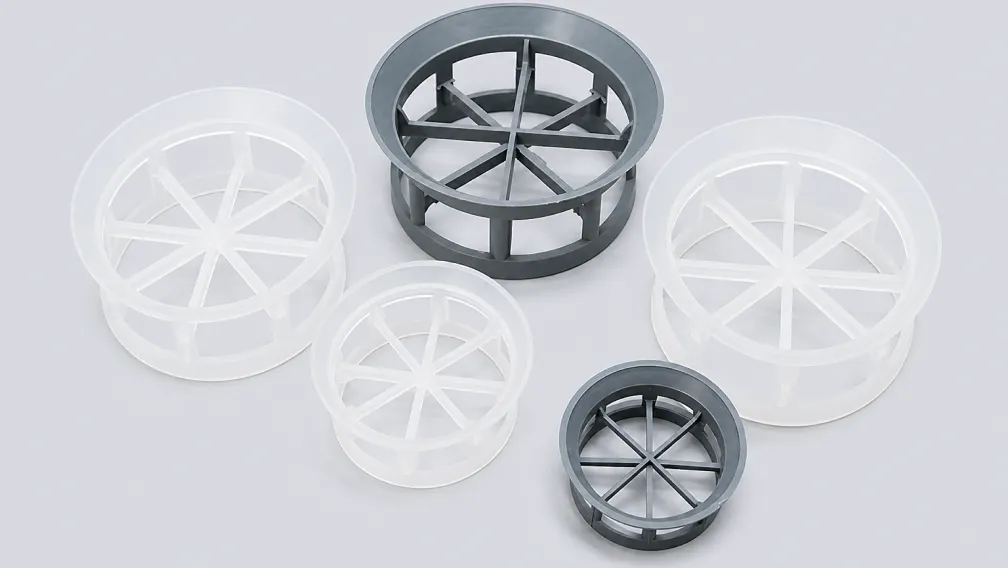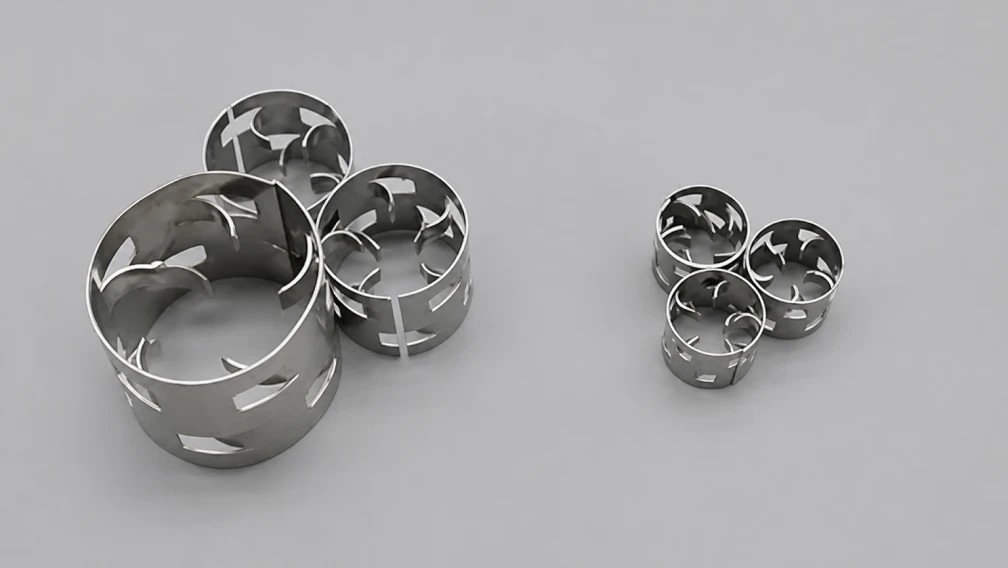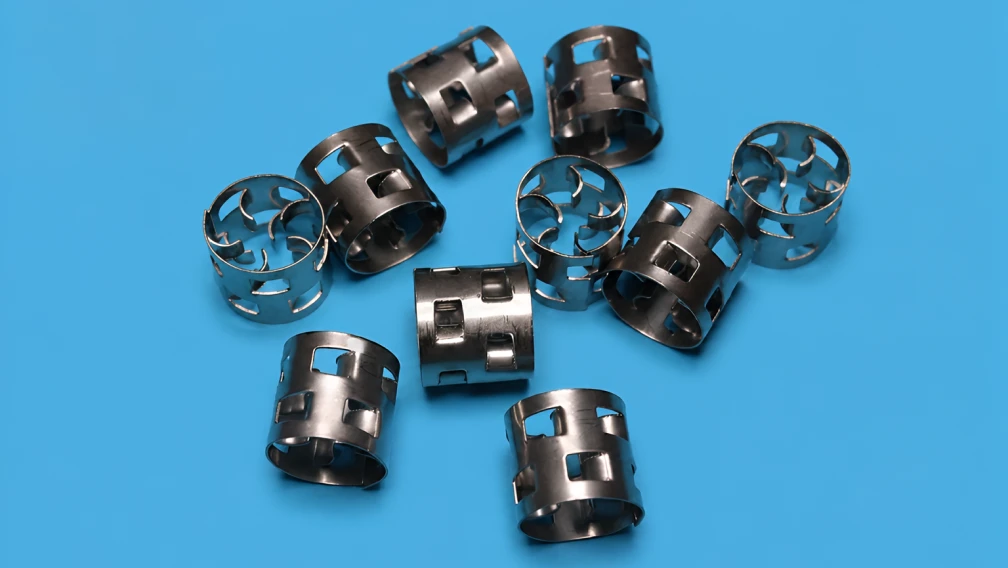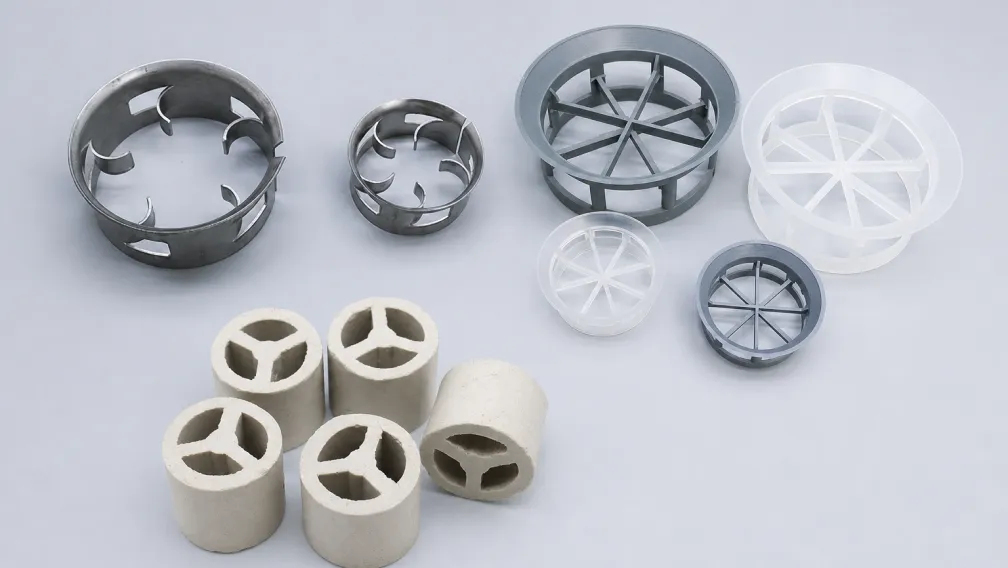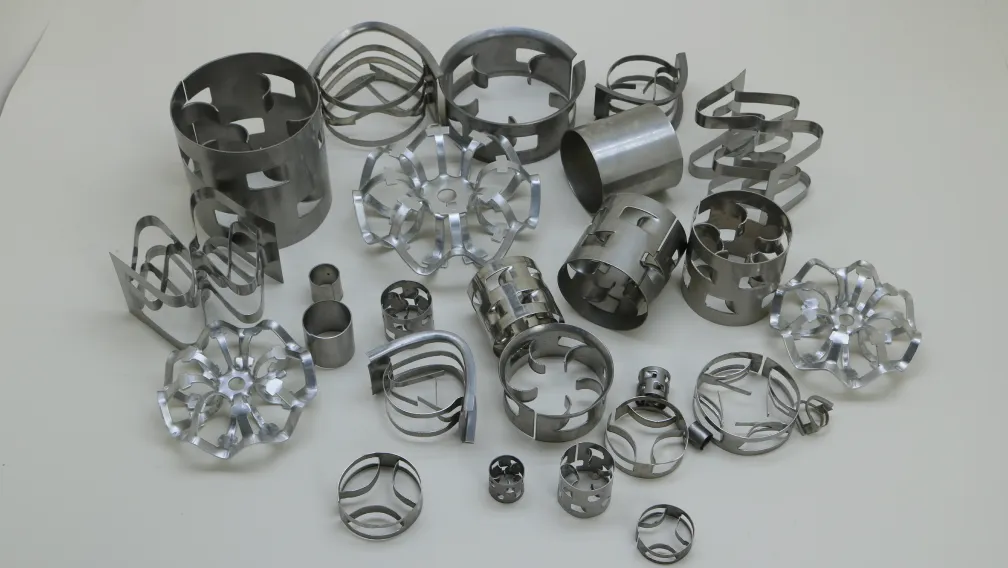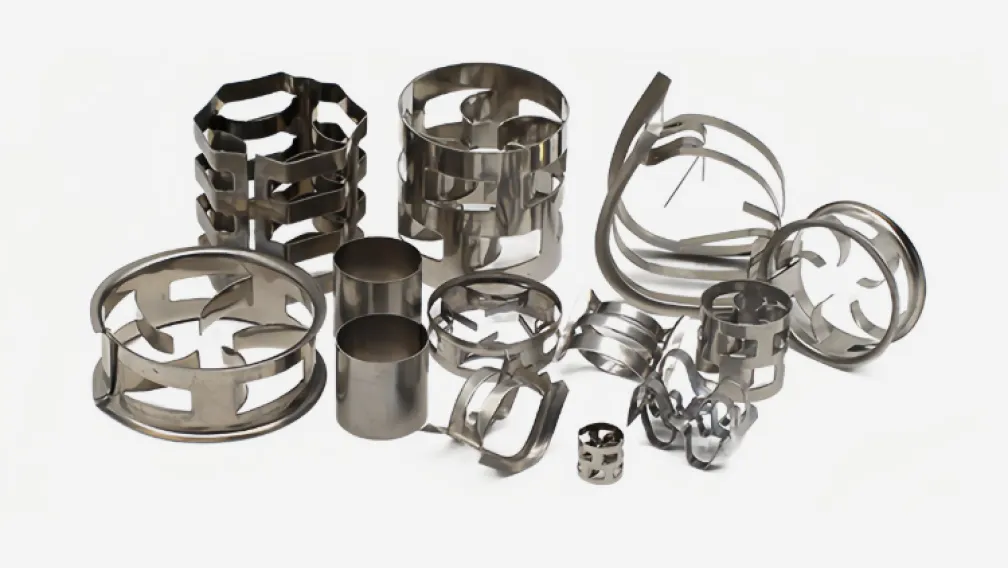

In chemical separation processes, the geometric shape of the packing media dictates the hydraulic capacity, pressure drop, and mass transfer efficiency of the entire tower. First-generation Raschig rings and second-generation Pall rings share a fundamental geometric constraint: an aspect ratio of 1:1, meaning their height equals their diameter. The Cascade Mini Ring (CMR) disrupted this standard by introducing a low aspect ratio of 1:3 (height equals one-third of the diameter). This seemingly simple reduction in vertical height completely alters how the rings orient themselves when dumped into a column. This preferential orientation creates massive aerodynamic advantages, drastically reducing pressure drop and making Cascade Mini Rings the premier random packing choice for complex liquid-liquid extraction (LLE) systems and high-capacity distillation units.
The Aerodynamic Advantage of a Low Aspect Ratio
When standard 1:1 Pall rings are dumped into a column, their symmetrical dimensions cause them to settle in a truly random orientation. A significant percentage of these rings align their solid cylindrical axes vertically, directly opposing the upward flow of gas. This vertical alignment creates physical blockages that generate high aerodynamic drag and pressure drop.
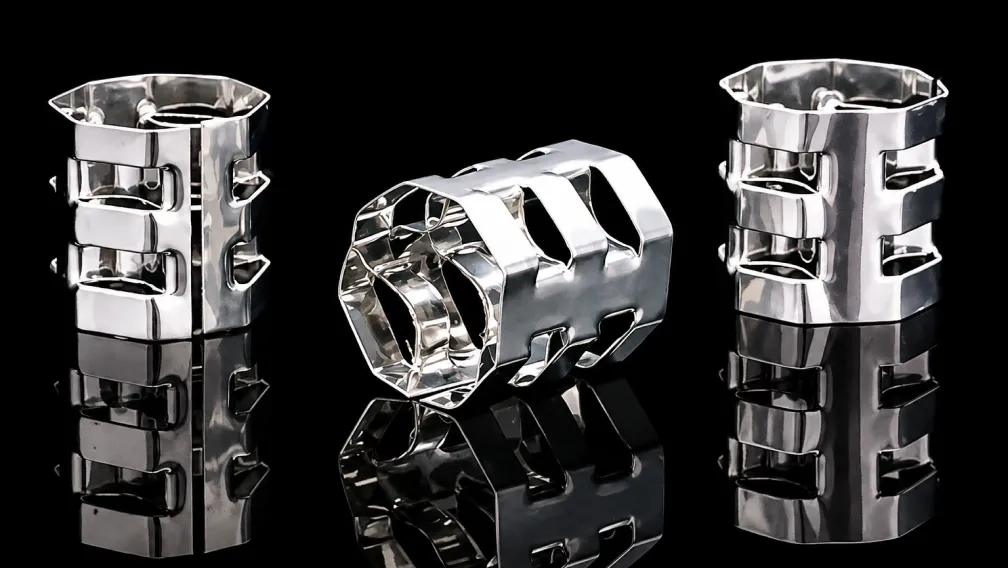
A metal cascade mini ring behaves differently. Because its height is only one-third of its diameter, its center of gravity forces it to settle preferentially in a horizontal plane. Instead of standing vertically on its narrow edge, the ring lies flat. This flat orientation exposes the maximum open cylindrical face to the ascending vapor stream. The vapor passes straight through the open ring rather than colliding with a solid vertical wall. This single geometric modification reduces the pressure drop across the packed bed by up to 30% compared to standard Pall rings of equivalent nominal diameter.
Reducing Nesting and Wall Flow Channeling
Traditional random packing frequently suffers from nesting. Nesting occurs when the sharp edges of one ring slide into the open face of an adjacent ring, locking them together into a solid clump. These nested clumps destroy the local void fraction, creating localized dead zones where liquid pools and gas bypasses entirely.
The low profile of the Cascade Mini Ring physically prevents deep nesting. Furthermore, the preferential horizontal orientation dictates the liquid flow path. In a bed of 1:1 rings, descending liquid naturally migrates toward the column wall (a defect known as wall flow channeling). Because Cascade Mini Rings lie horizontally, their internal surfaces direct descending liquid droplets laterally, forcing the fluid back toward the center of the bed. This self-correcting radial dispersion maintains uniform liquid distribution throughout deep packing beds, preventing dry spots and ensuring a highly consistent active mass transfer area.
The Flanged Edge: Mechanical Strength and Droplet Dispersion
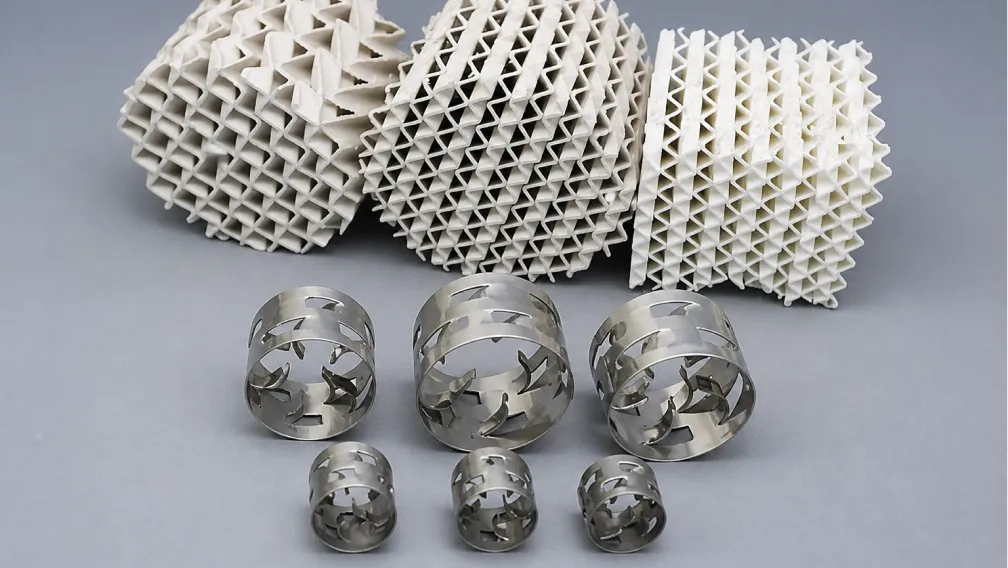
Beyond the aspect ratio, the second defining feature of a Cascade Mini Ring is its flanged edge. The top and bottom rims of the metallic cylinder are rolled or flared outward into a lip.
From a mechanical engineering standpoint, this rolled flange exponentially increases the hoop strength of the thin-walled cylinder. While the ring's low profile inherently reduces its structural rigidity compared to a tall cylinder, the flange acts as a continuous reinforcing rib. This allows manufacturers to stamp CMRs from extremely thin sheet metal (saving weight and material cost) without sacrificing the compressive crush strength required to survive deep packed beds.
From a fluid dynamic standpoint, the flanged edge serves as an aggressive drip point. As the liquid film travels down the wall of the ring, it reaches the flared lip. The sharp geometry of the flange breaks the surface tension of the liquid, tearing the continuous film into thousands of micro-droplets. This constant shearing and re-forming of droplets continuously exposes fresh liquid surface to the vapor phase, minimizing the Height Equivalent to a Theoretical Plate (HETP) and maximizing separation efficiency.
Performance in Liquid-Liquid Extraction Towers
Liquid-liquid extraction (LLE) involves transferring a solute from one liquid phase into another immiscible liquid phase. In an extraction tower, a heavy continuous phase flows downward while a lighter dispersed phase floats upward. Successful LLE relies entirely on maintaining the dispersed liquid as tiny, separate droplets. If the packing geometry causes these droplets to collide and merge (coalescence), the interfacial surface area collapses, and extraction efficiency plummets.
Cascade Mini Rings are exceptionally effective in LLE systems, such as aromatics extraction, caprolactam purification, and solvent recovery. Traditional 1:1 rings force the ascending dispersed droplets into tight internal channels where they inevitably collide and coalesce. The ultra-low profile of the CMR ensures that descending heavy liquids and ascending light droplets spend a very short residence time inside any individual ring. The dispersed droplets pass through the horizontal open faces with minimal coalescing. Simultaneously, the numerous flanged drip points constantly shear any large liquid globules back into a fine dispersion. This hydraulic profile allows CMR-packed extraction columns to operate at extreme throughput capacities without experiencing phase inversion or premature flooding.
Material Specifications and Tower Internals
To withstand diverse chemical environments, Cascade Mini Rings are stamped from robust alloys, including 304L, 316L, 410 stainless steels, and highly corrosion-resistant materials like Hastelloy and Monel. Because of their low pressure drop, they are frequently utilized to debottleneck aging columns, replacing older Raschig rings or valve trays to increase plant capacity by 20% to 40%.
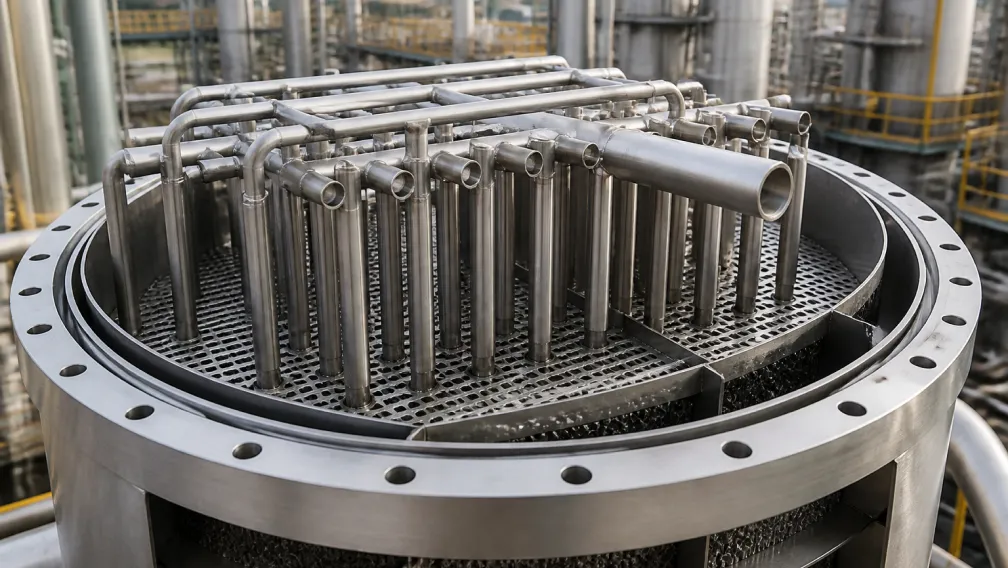
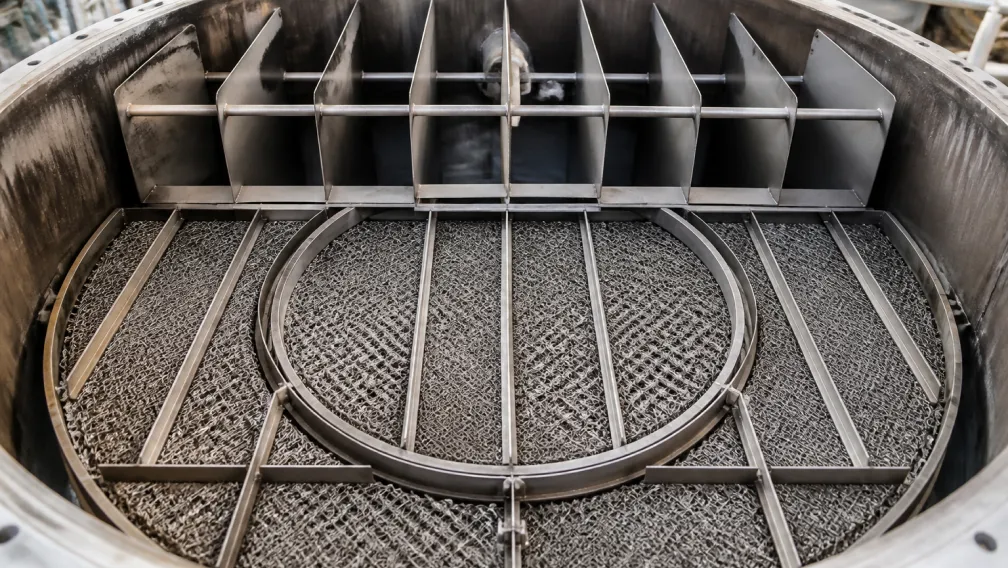
However, realizing the full aerodynamic potential of random packing like CMR requires precision-engineered tower internals. High-density liquid distributors must be installed at the top of the bed to ensure the liquid feed contacts the maximum number of horizontal ring faces immediately. Additionally, gas injection hump supports are mandatory at the bottom of the bed to bear the static weight of the metal rings while ensuring the high-velocity ascending vapor does not throttle the descending liquid effluent.
Where Rongjian Fits
Pingxiang Rongjian manufactures advanced mass transfer media for global petrochemical, refining, and specialty chemical extraction processes. We produce precision-stamped metal Cascade Mini Rings engineered with strict 1:3 aspect ratios and robust flanged edges to deliver extreme void fractions, superior crush strength, and ultra-low pressure drop. Our manufacturing process ensures exact geometric tolerances across all stainless steel and exotic alloy specifications. Whether you are debottlenecking a heavily loaded distillation column or optimizing droplet dispersion in a liquid-liquid extraction tower, our engineering team supplies the required packing sizes and the heavy-duty liquid distributors needed to maximize your operational throughput. Contact our technical team today with your fluid dynamics data for a detailed column sizing proposal.
-

Rongjian
Process Media Manufacturer Since 2010
Rongjian produces tower packing, molecular sieves, ceramic grinding media and other process media from our Pingxiang production base. We supply to industrial projects in over 100 countries.