
On July 28, 2026, the U.S. Trade and Development Agency (USTDA) signed a $5.7 million grant agreement with ORNX Laayoune 1 SASU to fund the pre-front-end engineering design (pre-FEED) study for a large-scale green ammonia plant in Laayoune, southern Morocco. The project carries an estimated total investment of $4.5 billion and is designed to produce up to 560,000 tons of green ammonia per year. The agreement marks the first direct U.S. federal financing for a private-sector project in the region.
Project Scope and Consortium
According to the USTDA announcement, the Laayoune facility is planned around the following components:
- Roughly 100,000 tons per year of green hydrogen, produced by about 900 MW of electrolysers.
- More than 2 GW of wind and solar capacity to power the plant, supported by battery storage.
- A seawater desalination plant using reverse osmosis to supply ultra-pure water for electrolysis.
- Up to 560,000 tons per year of green ammonia, for domestic fertilizer use and export.
ORNX pairs U.S. developer Ortus Climate Mitigation with the Spanish-German Acciona-Nordex Green Hydrogen joint venture. The consortium was selected in March 2025 under Morocco's national green hydrogen program and also holds plans for sites at Dakhla and Boujdour. KBR leads the pre-FEED study, with GE Vernova on power systems, Electric Hydrogen (EH2) supplying electrolyzer technology for assessment, and Terabase Energy designing the solar infrastructure. Engineering work is expected to begin later in 2026, with FEED and a final investment decision to follow.
Why Green Ammonia Production Demands Ultra-Pure Water and Dry Gas
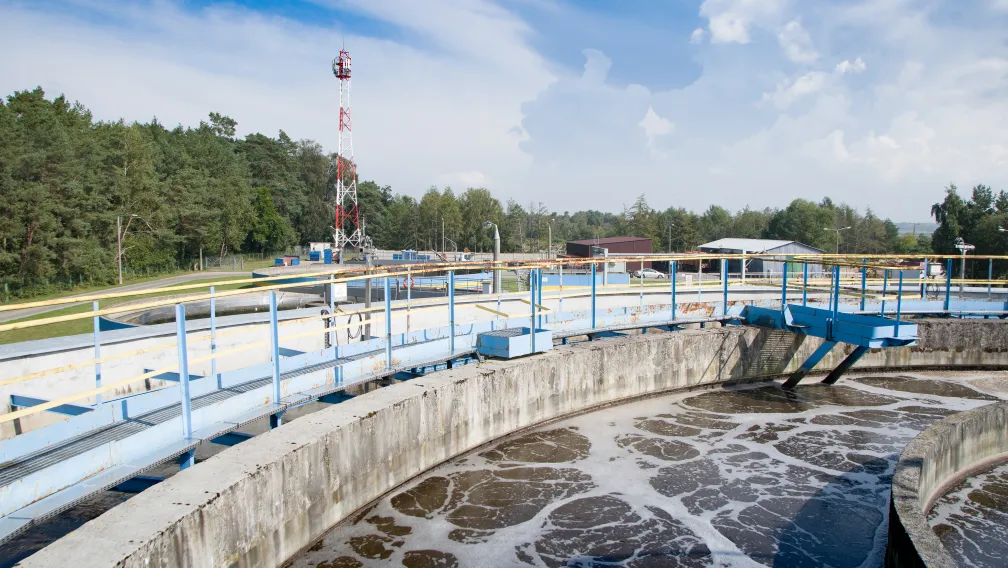
Two purification duties dominate the utility side of any green ammonia plant. The first is feedwater. Proton exchange membrane and alkaline electrolysers both require deionized water with extremely low conductivity, because dissolved salts and organics degrade membranes and catalysts. Reaching that quality from seawater takes a full treatment chain: media filtration, activated carbon beds to strip chlorine and organic compounds ahead of the membranes, reverse osmosis, and final polishing. At 900 MW of electrolyzer capacity, the water plant is a major system in its own right, and pretreatment media become a recurring consumable for the life of the facility.
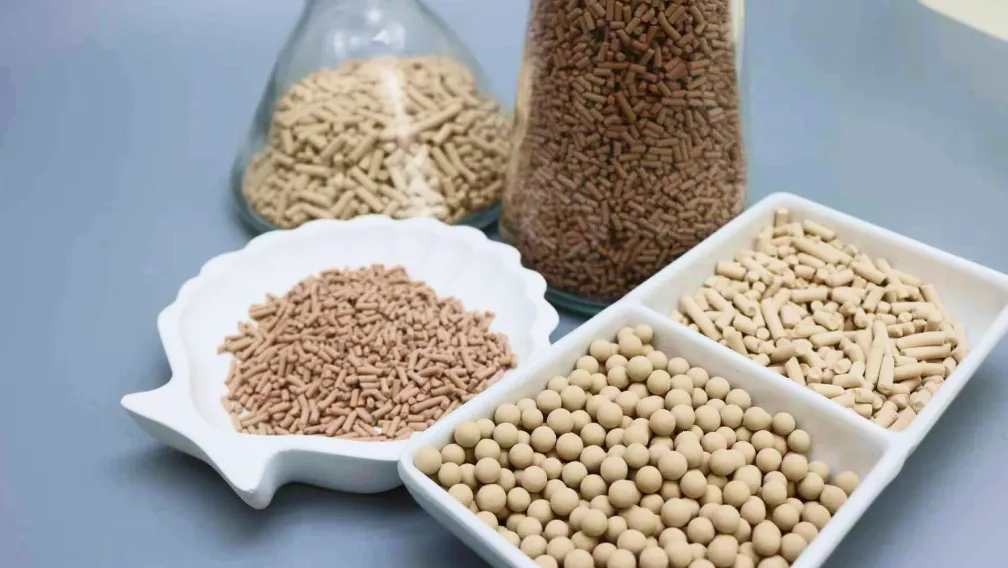
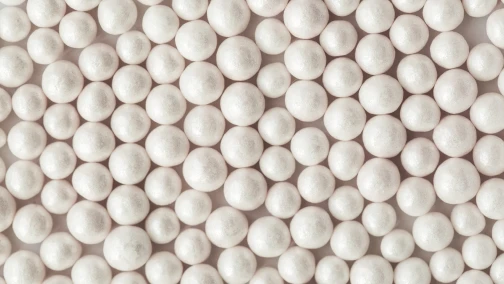
The second duty is gas drying. Electrolytic hydrogen leaves the cell stack saturated with water vapor, and ammonia synthesis catalysts are highly sensitive to moisture and oxygenates. Hydrogen therefore passes through thermal swing dryers packed with molecular sieve before compression and synthesis, achieving dew points low enough to protect the downstream loop. The same adsorption technology purifies nitrogen feed from the air separation unit and dries the ammonia product stream in refrigeration service.
What This Signals for Process Media Demand
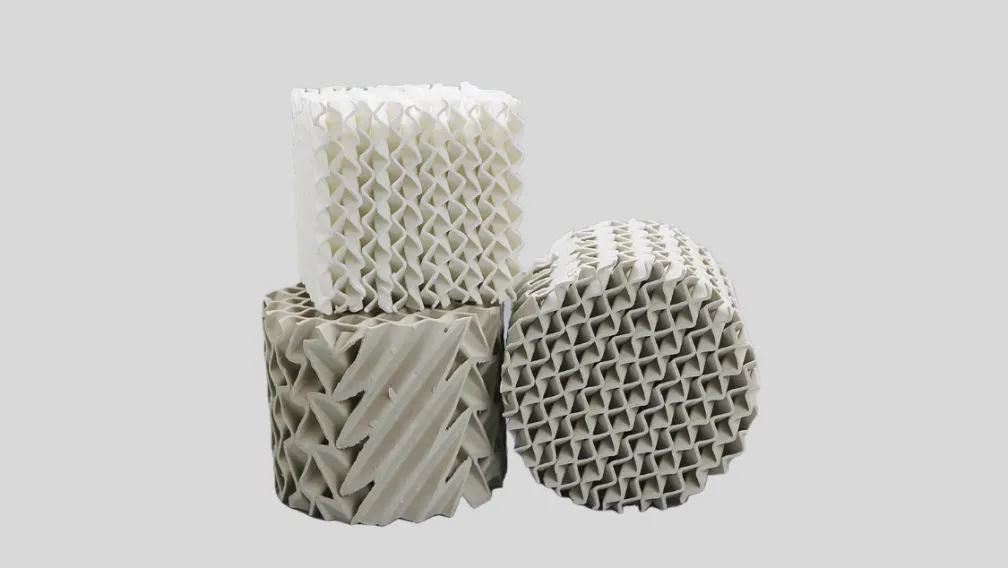
The Laayoune study is one project in a much wider build-out. The International Energy Agency projects nearly 8 million tons per year of near-zero-emission ammonia capacity to come online globally by 2030, and Morocco, the U.S. Gulf Coast, and the Middle East hold the largest announced pipelines. Each plant repeats the same purification chain: multi-stage water treatment for electrolysis, adsorption drying for hydrogen and synthesis gas, and column internals in the ammonia recovery and refrigeration systems. For procurement teams on these projects, adsorbent selection comes down to documented crush strength, attrition rate, and cycle life, since dryer beds in fast-cycling hydrogen service are replaced on schedule, not on failure.
Sources
- USTDA: USTDA Supports Major Ammonia Project in Morocco's Southern Provinces
- U.S. Embassy in Morocco: USTDA Supports Major Ammonia Project in Morocco's Southern Provinces
- BCInsight: US backs $4.5bn Morocco ammonia plant
-

Rongjian
Process Media Manufacturer Since 2010
Rongjian produces tower packing, molecular sieves, ceramic grinding media and other process media from our Pingxiang production base. We supply to industrial projects in over 100 countries.