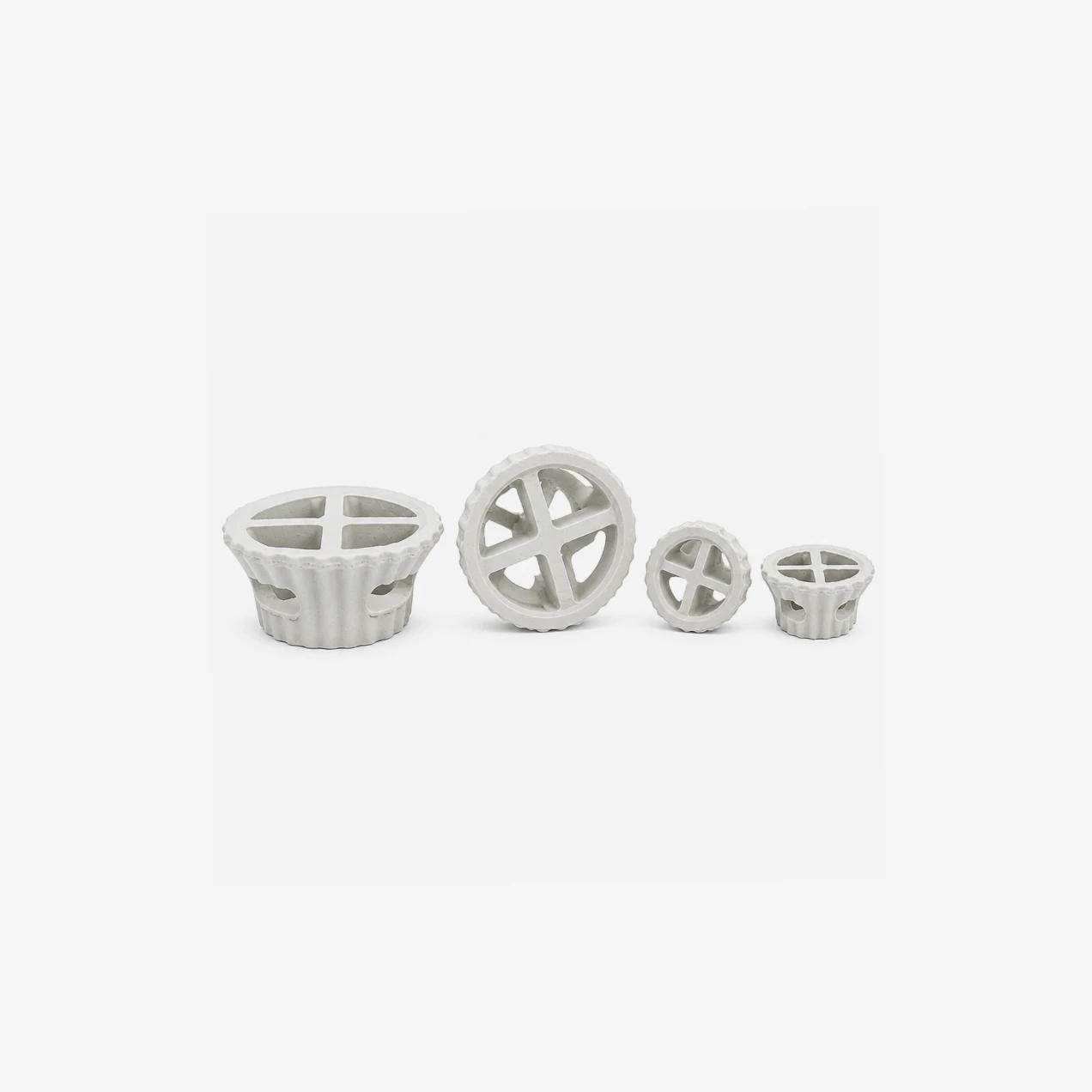
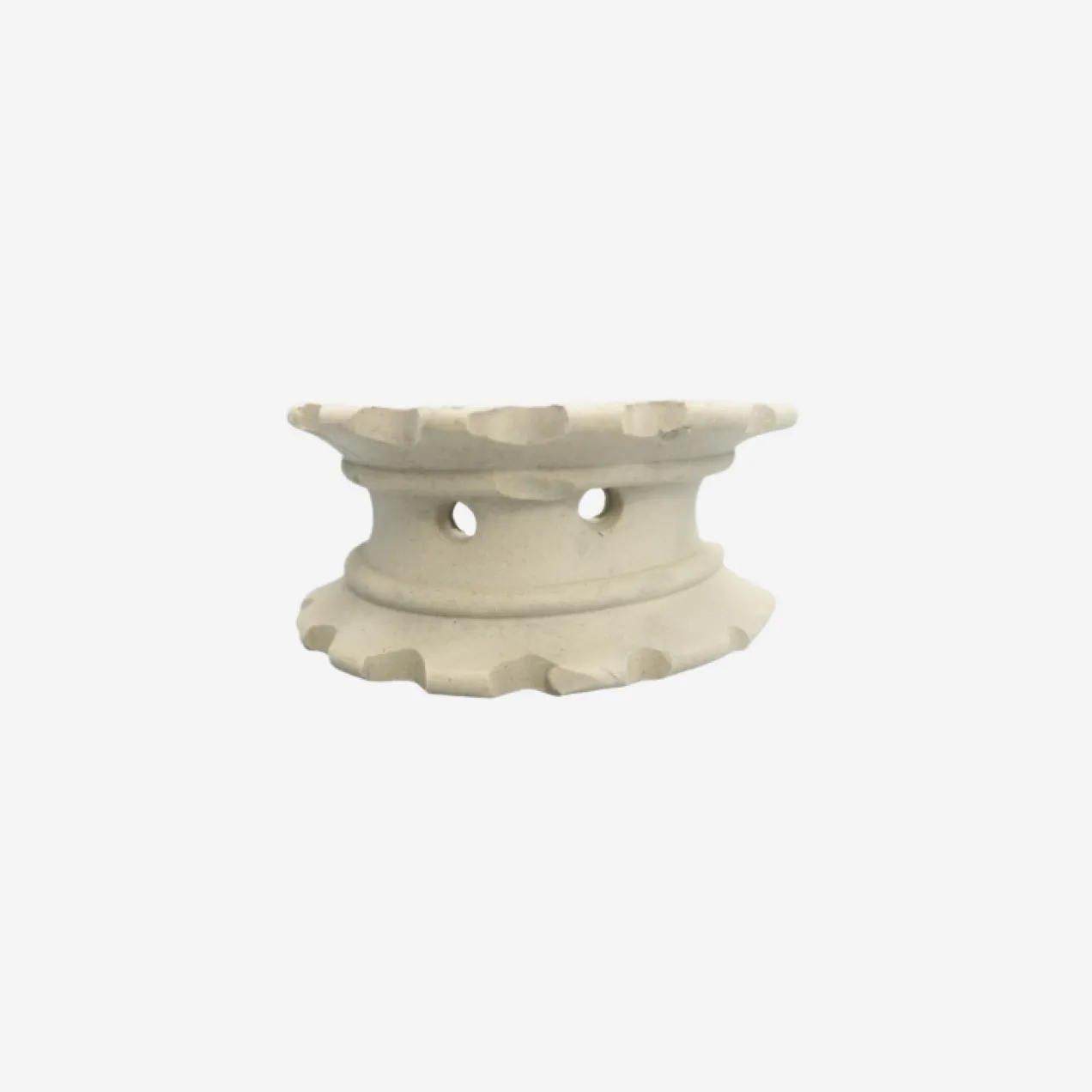
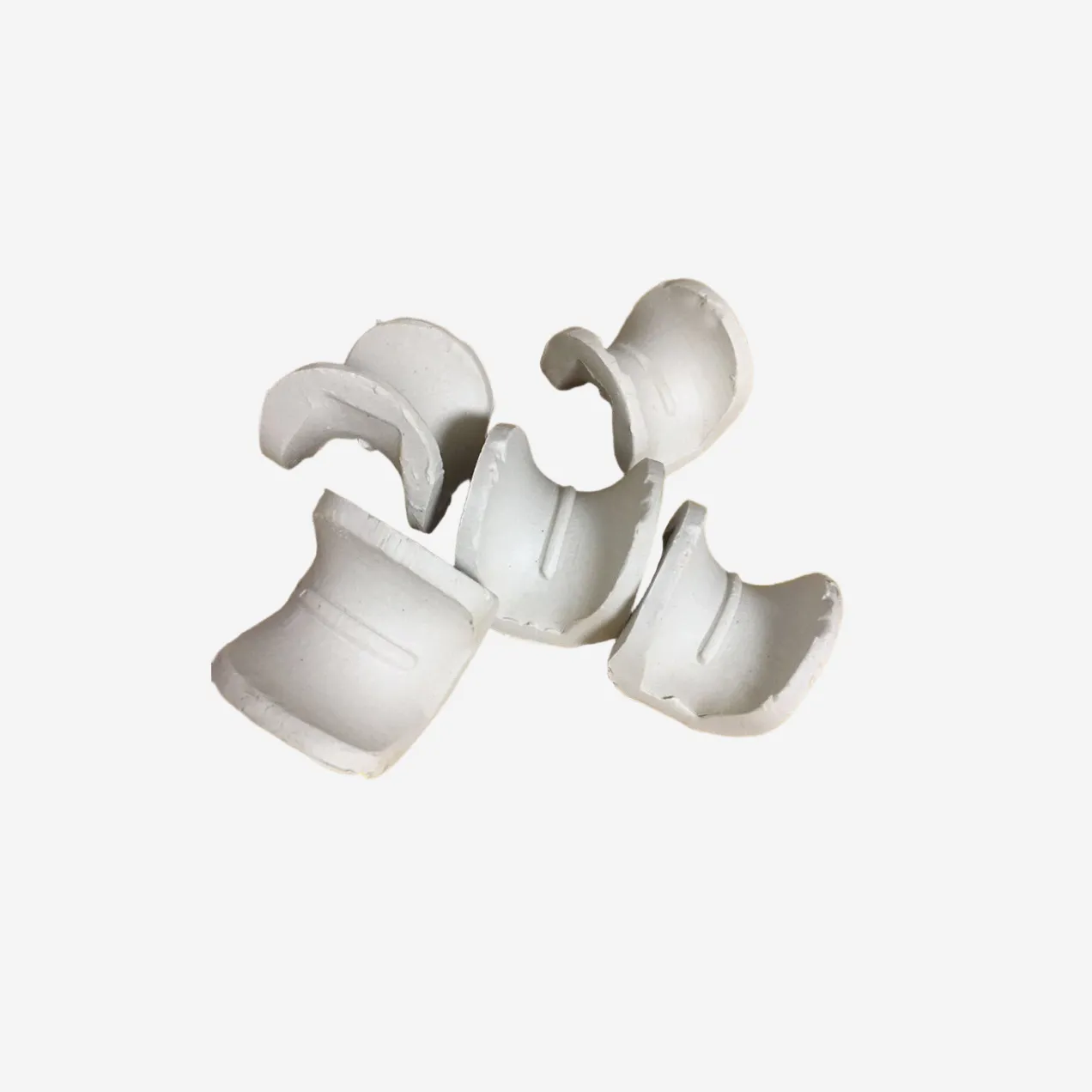
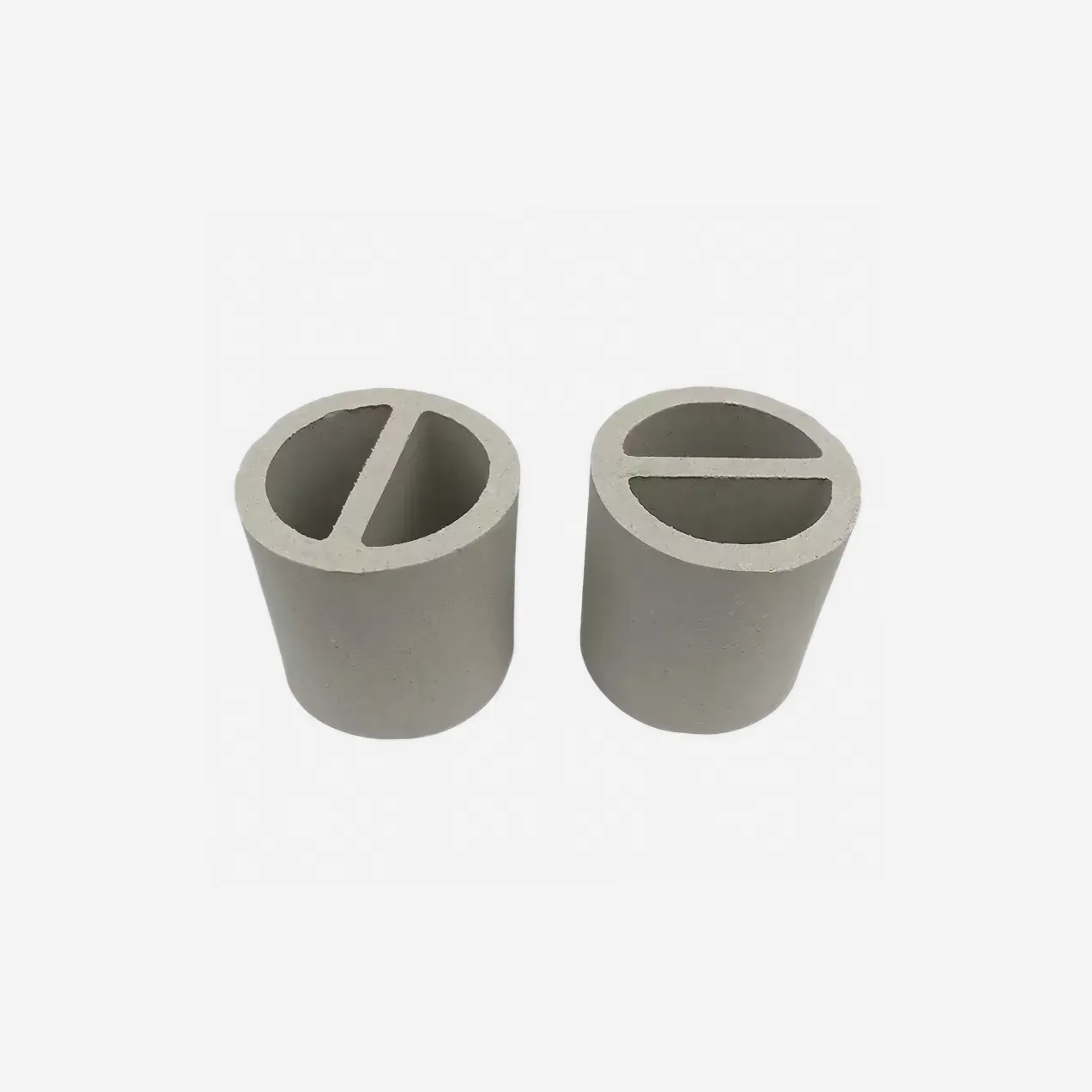
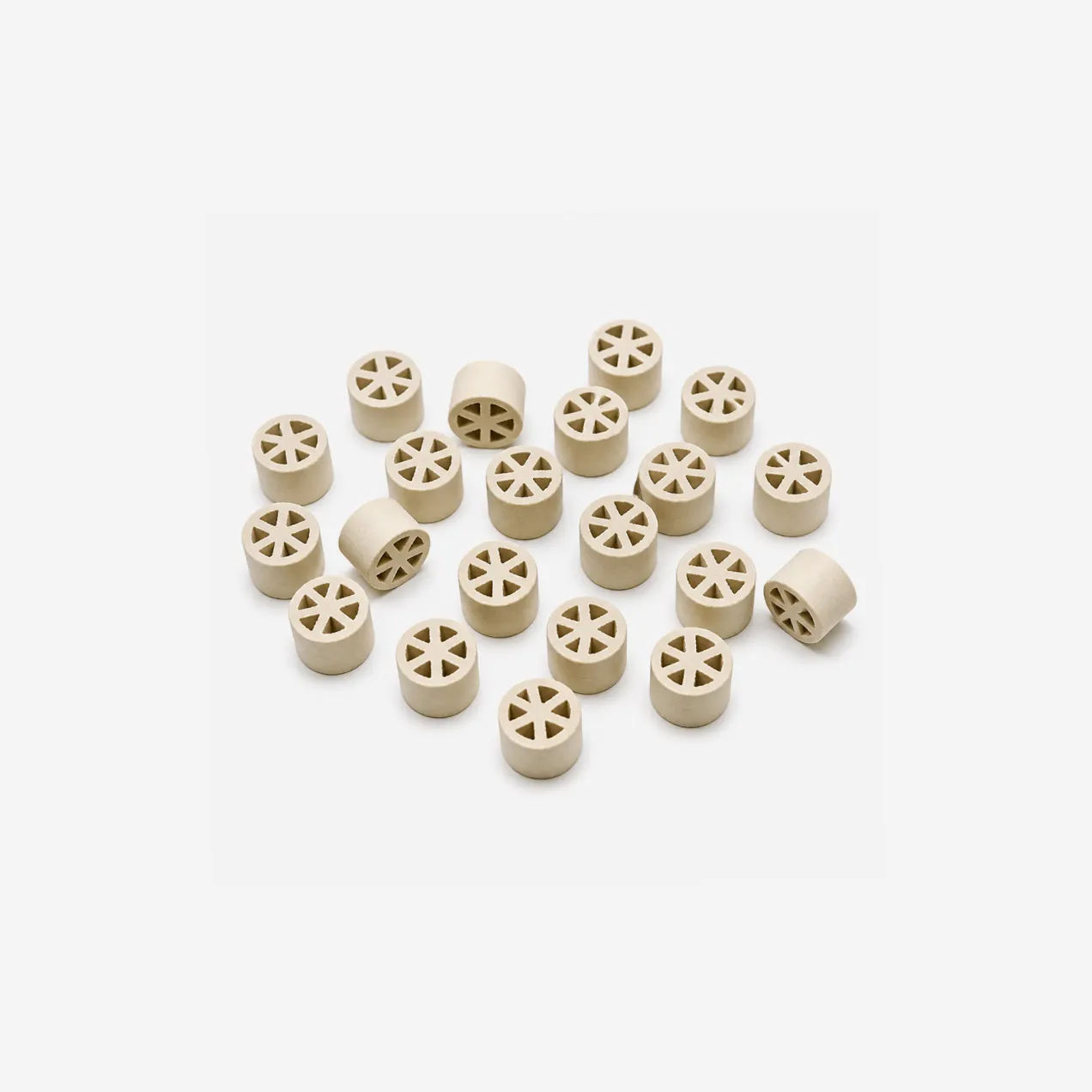
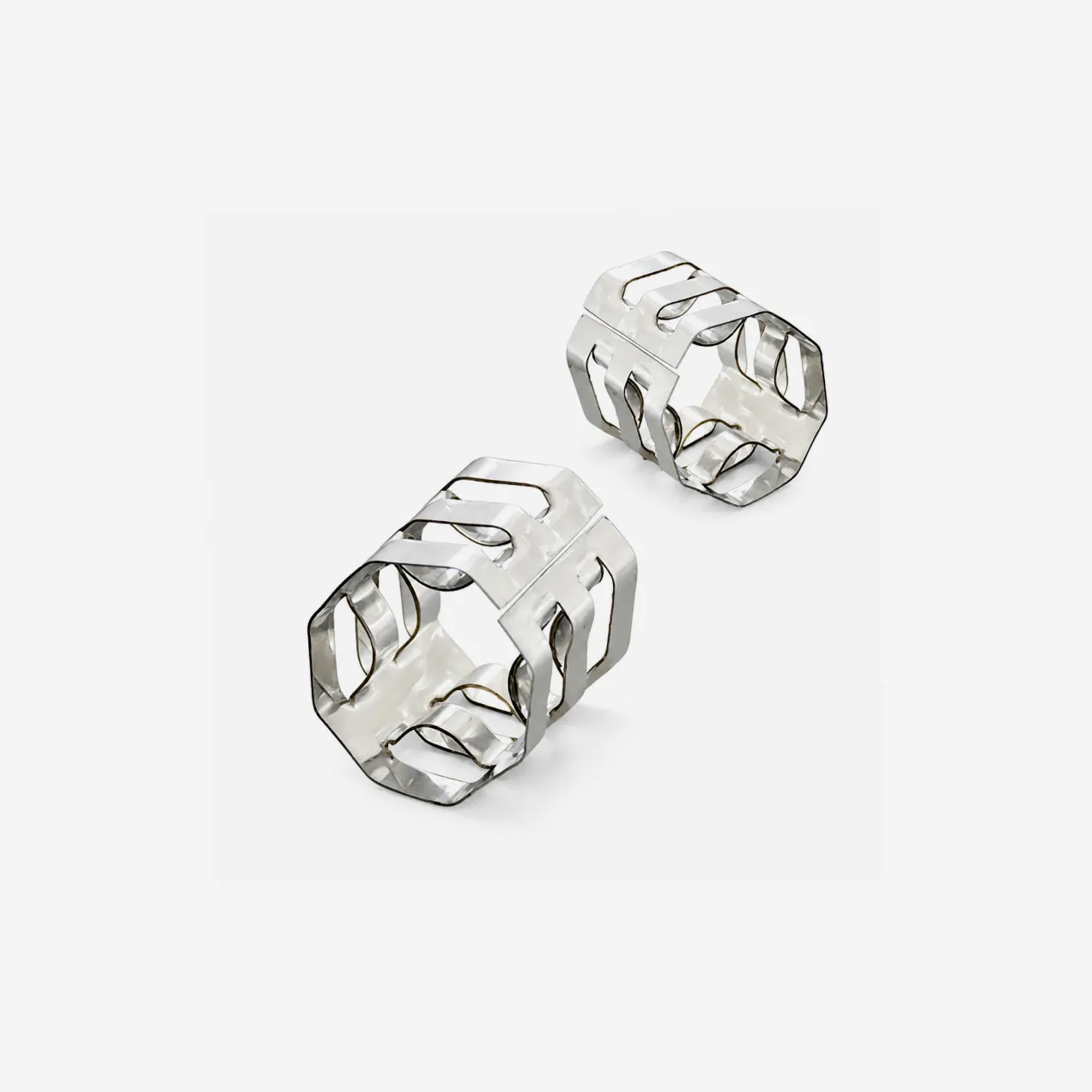
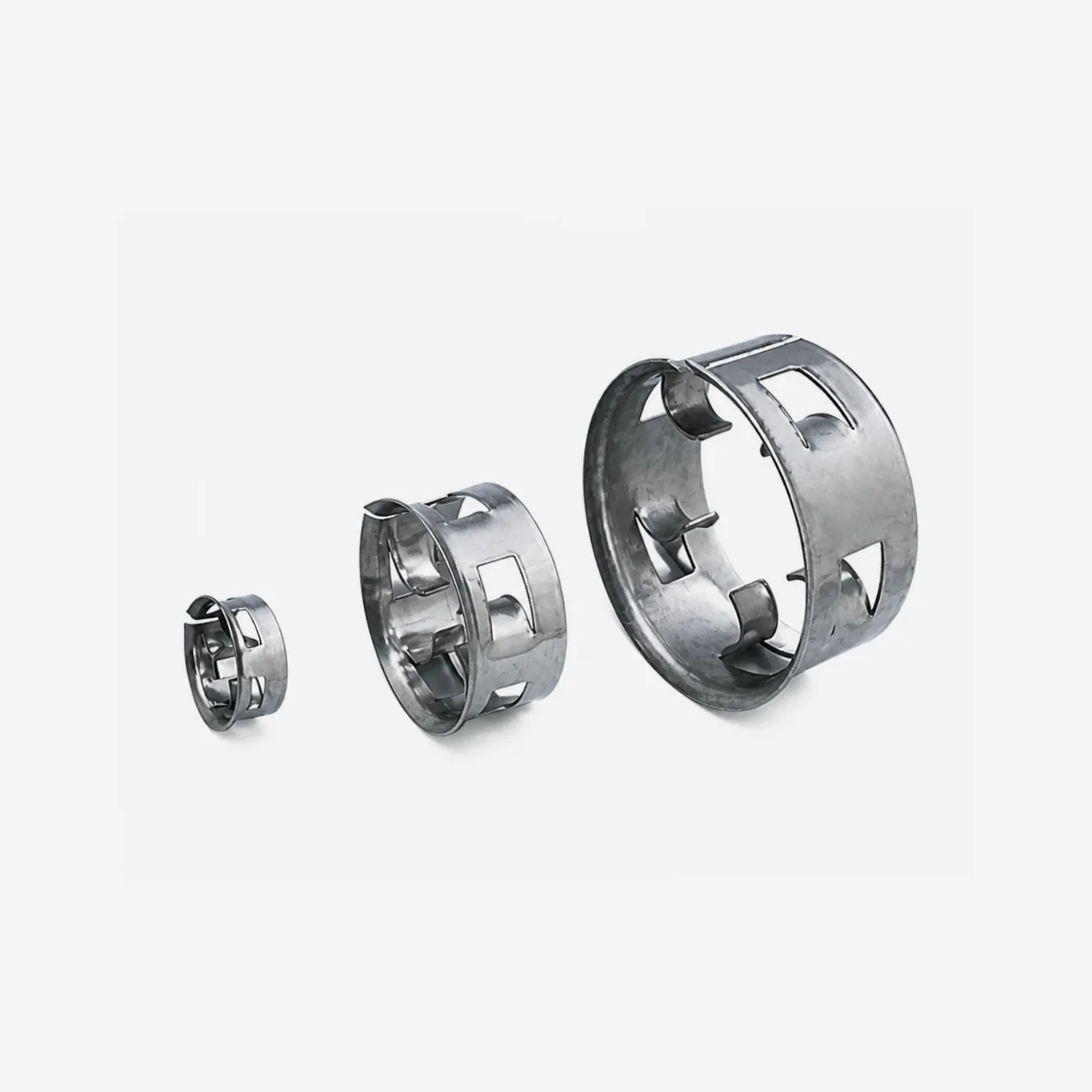
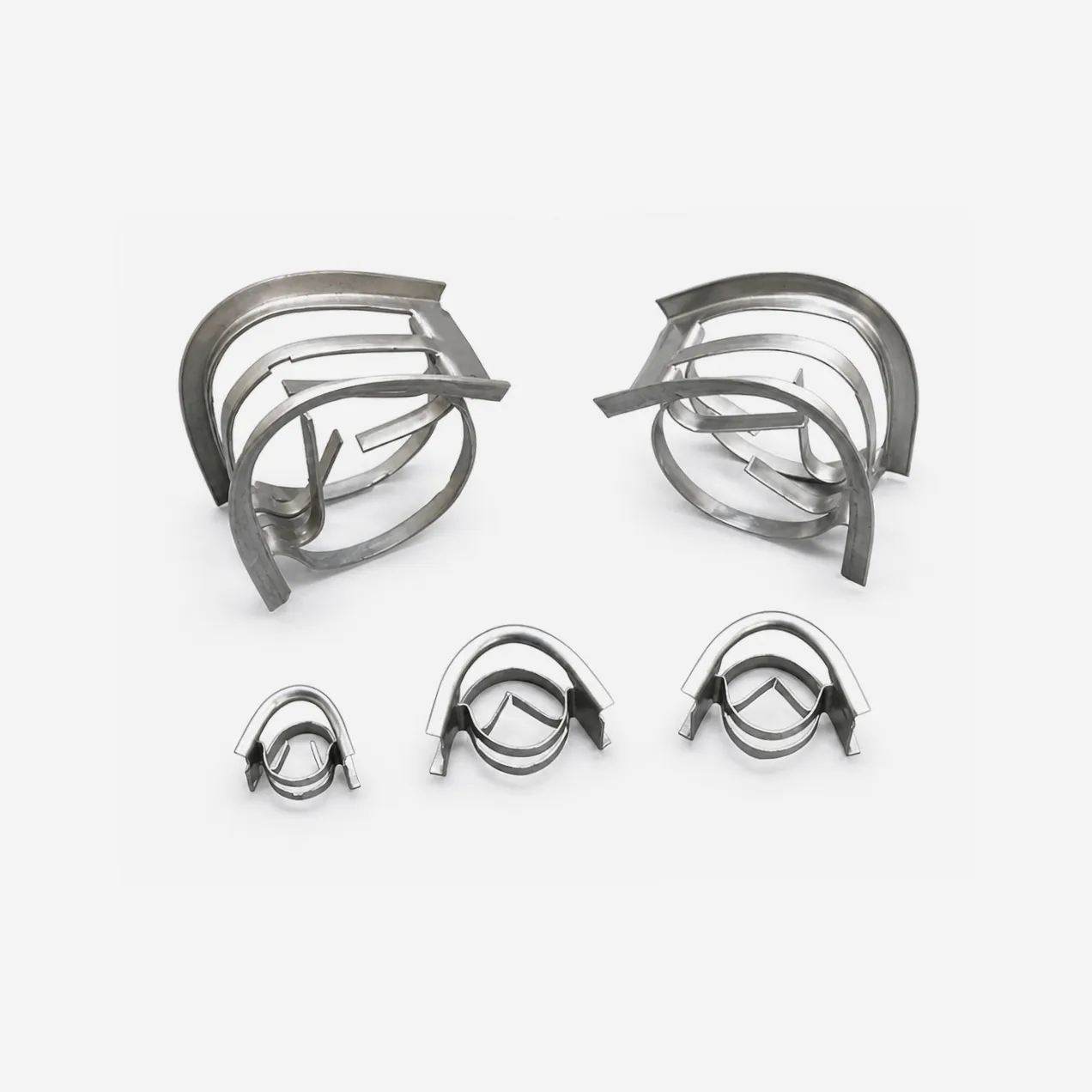
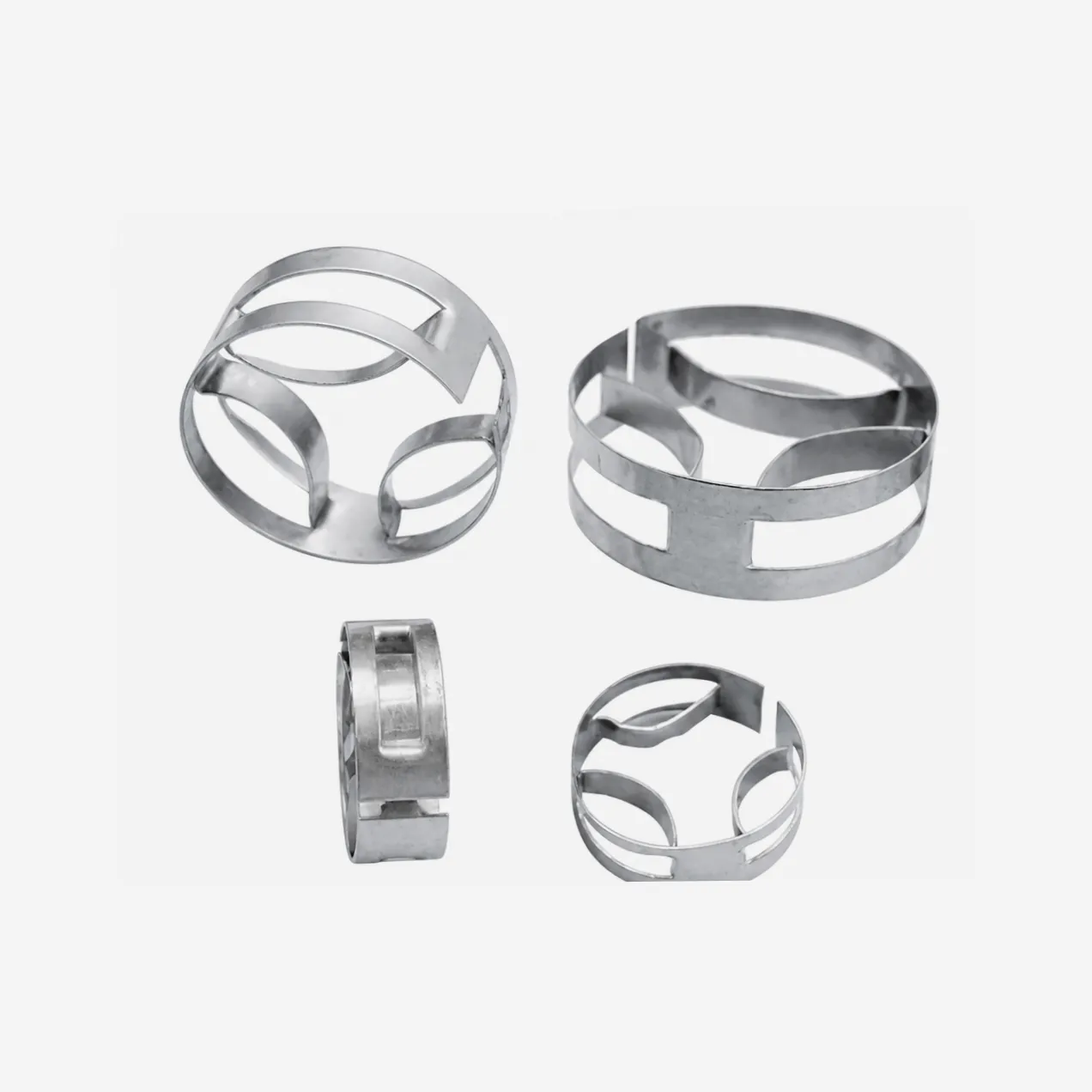
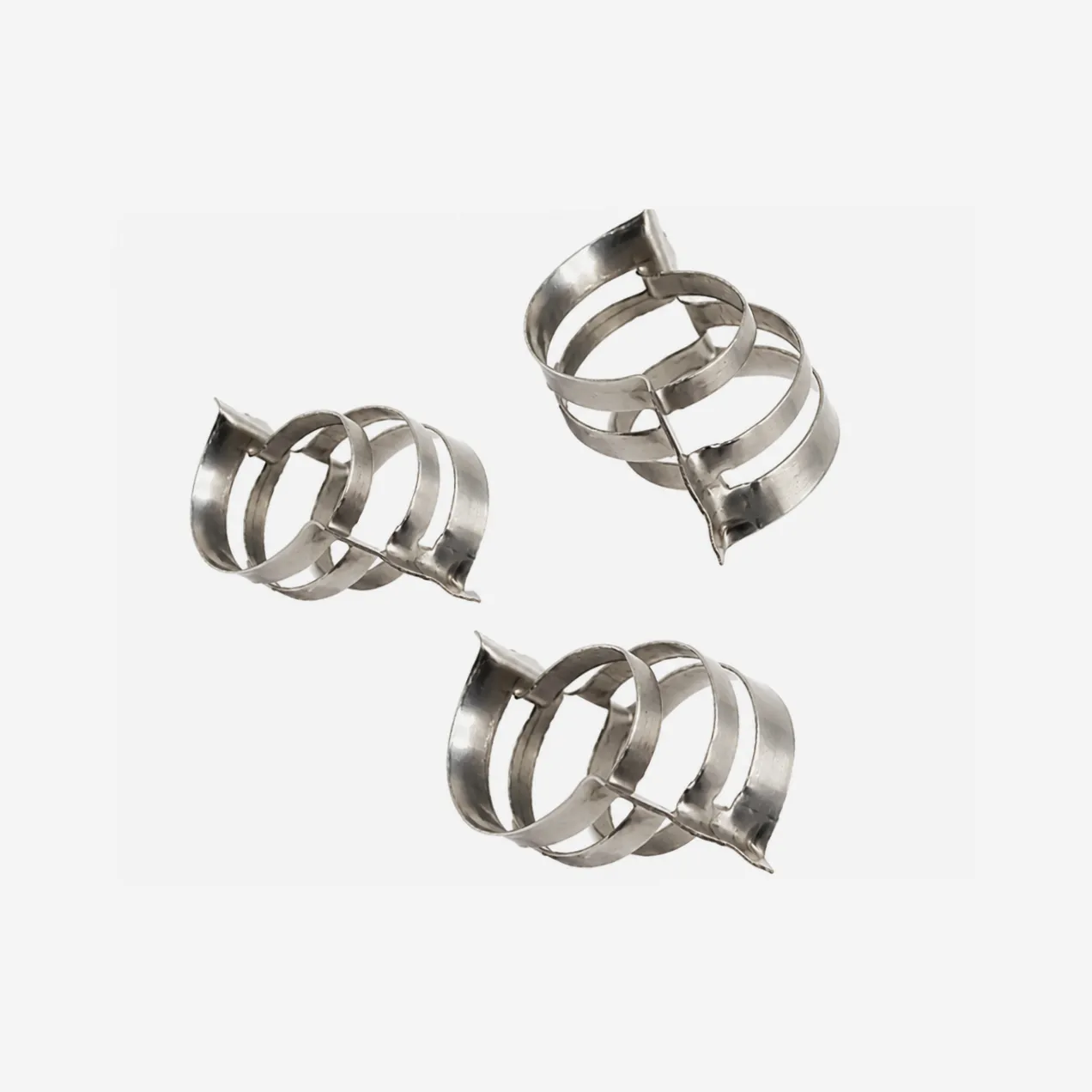
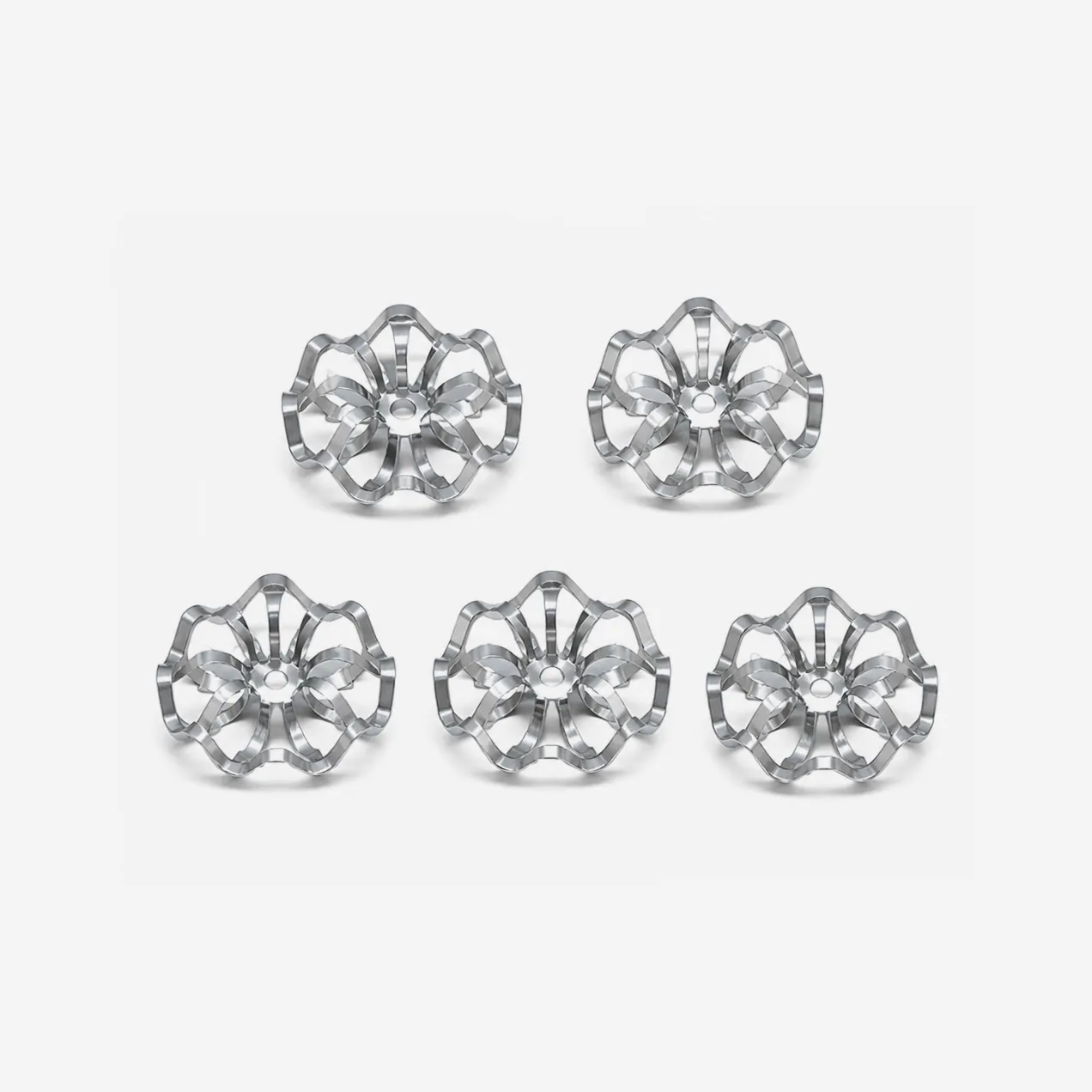
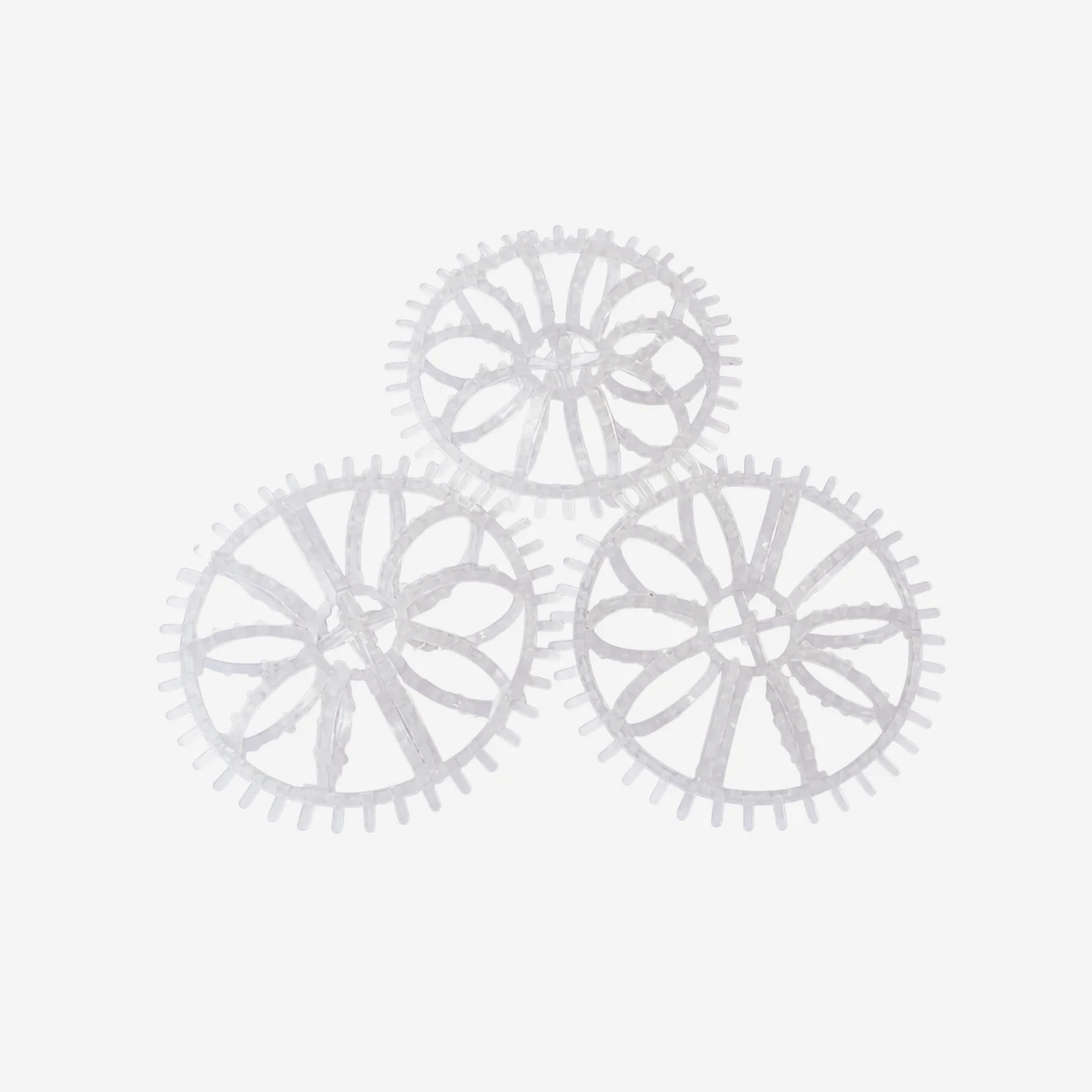
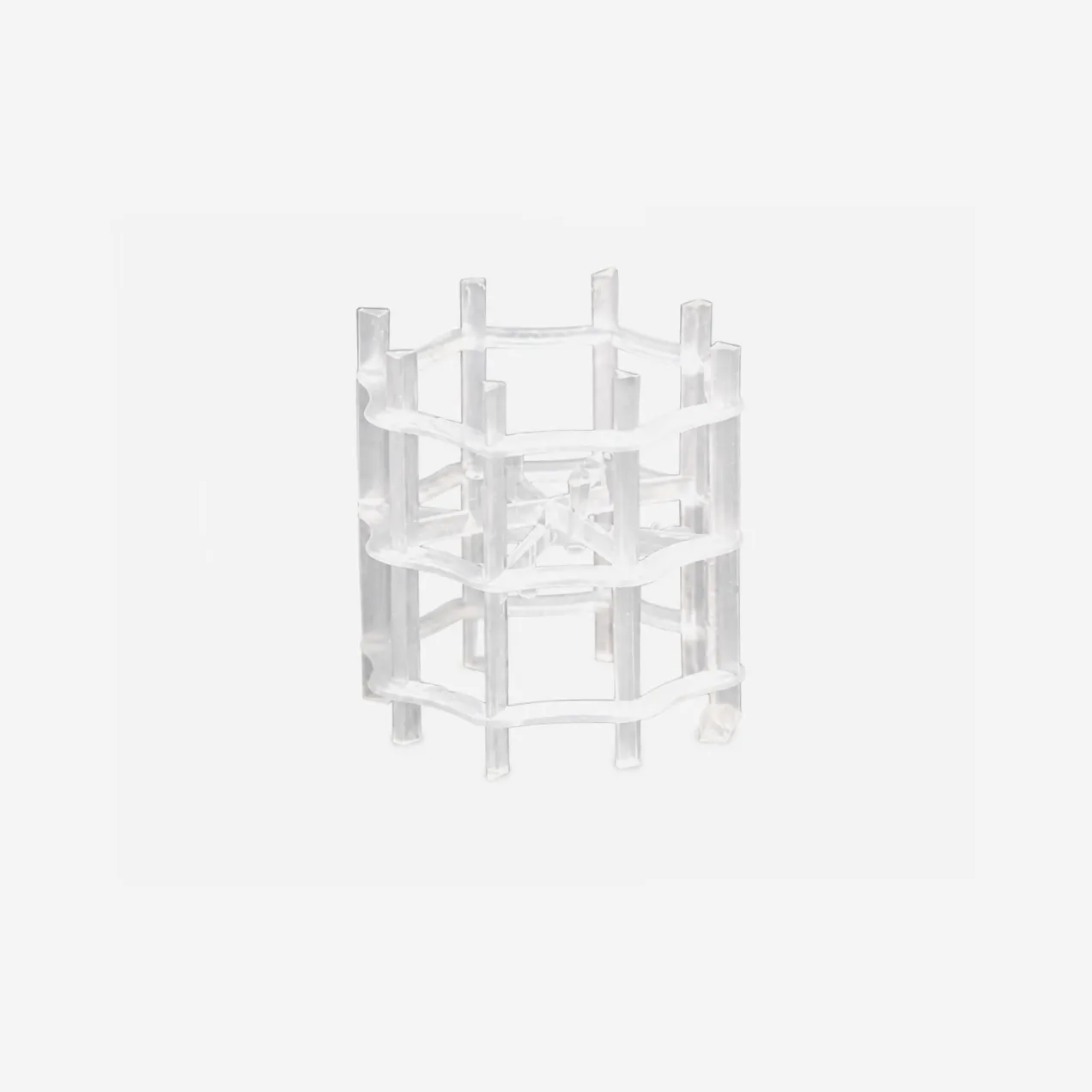
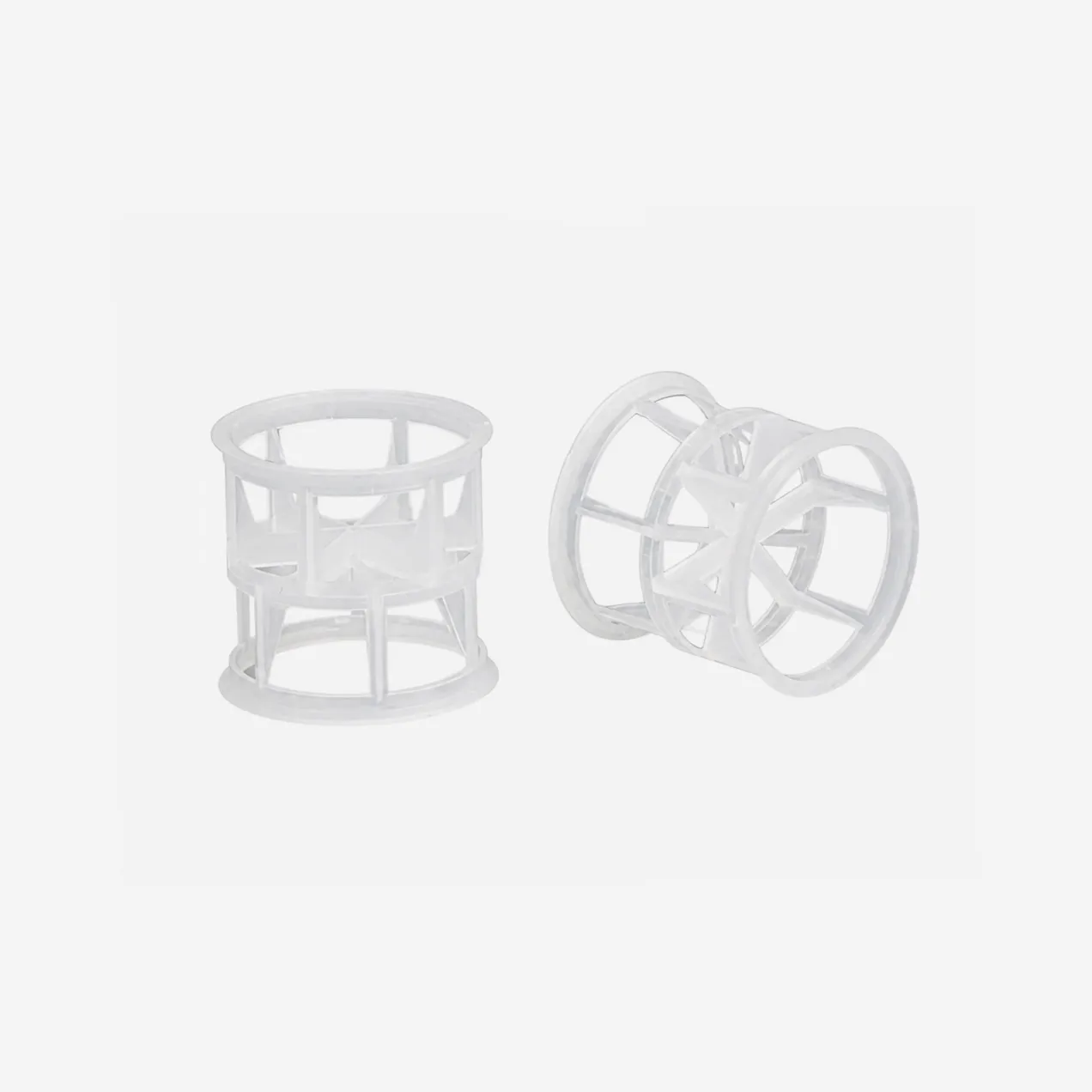
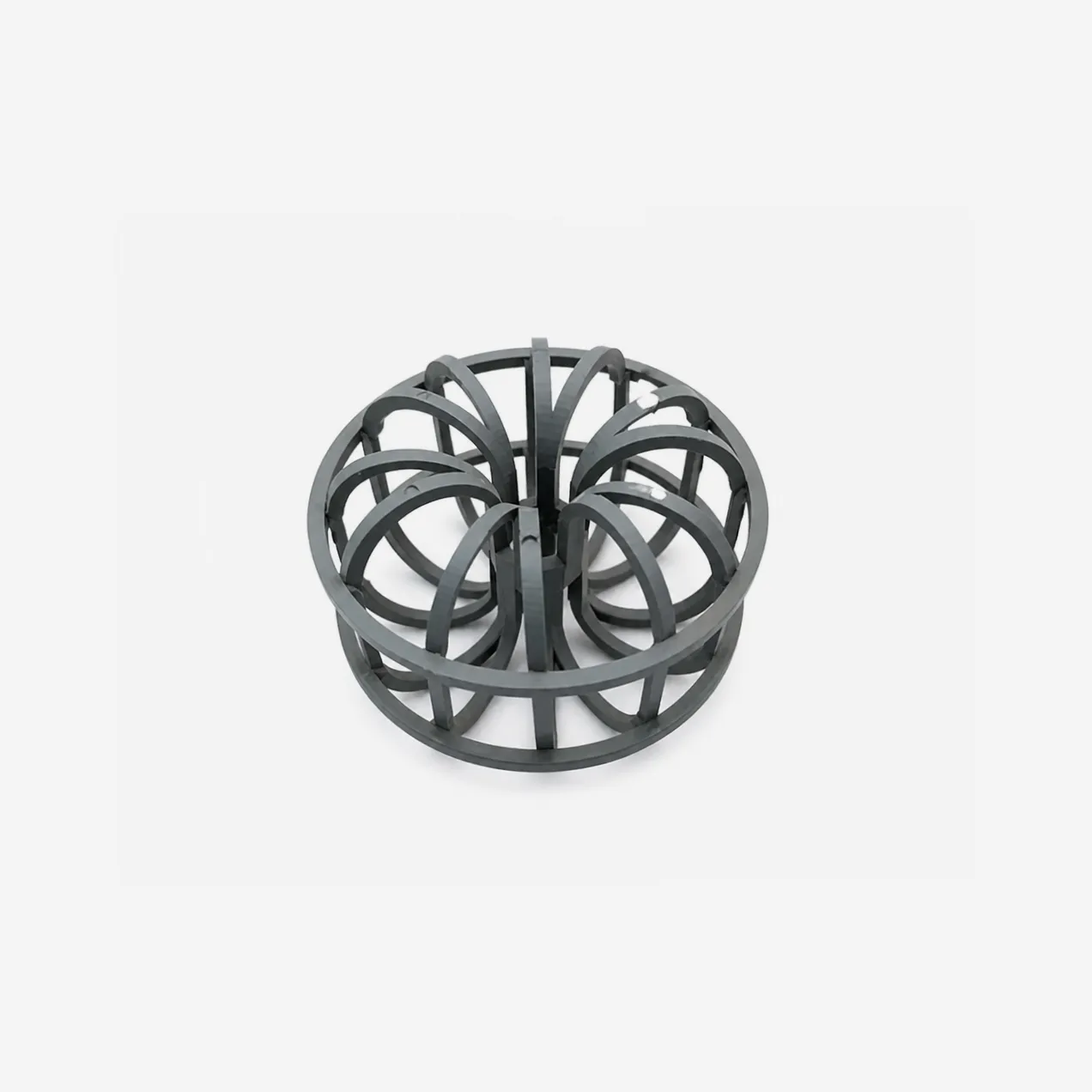
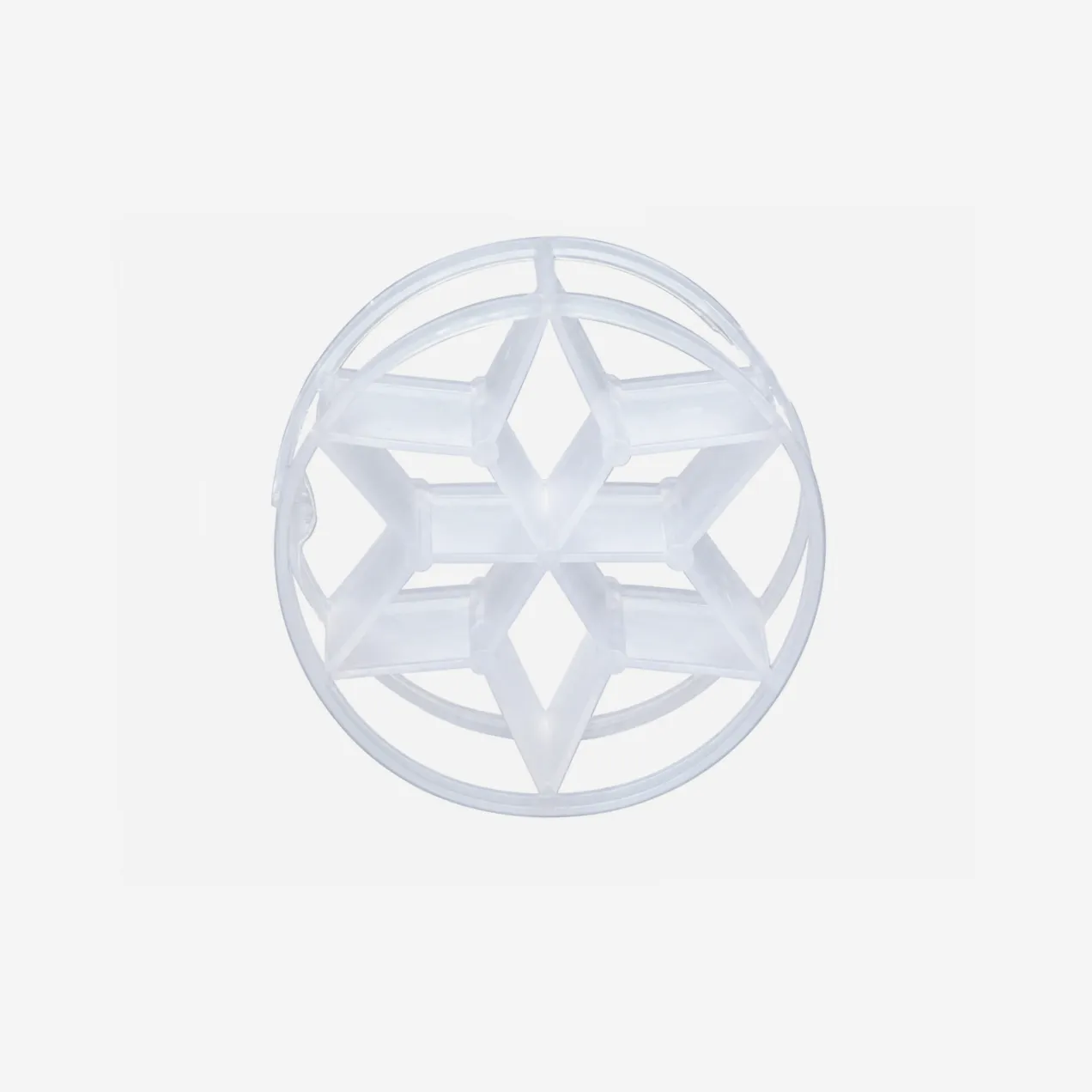
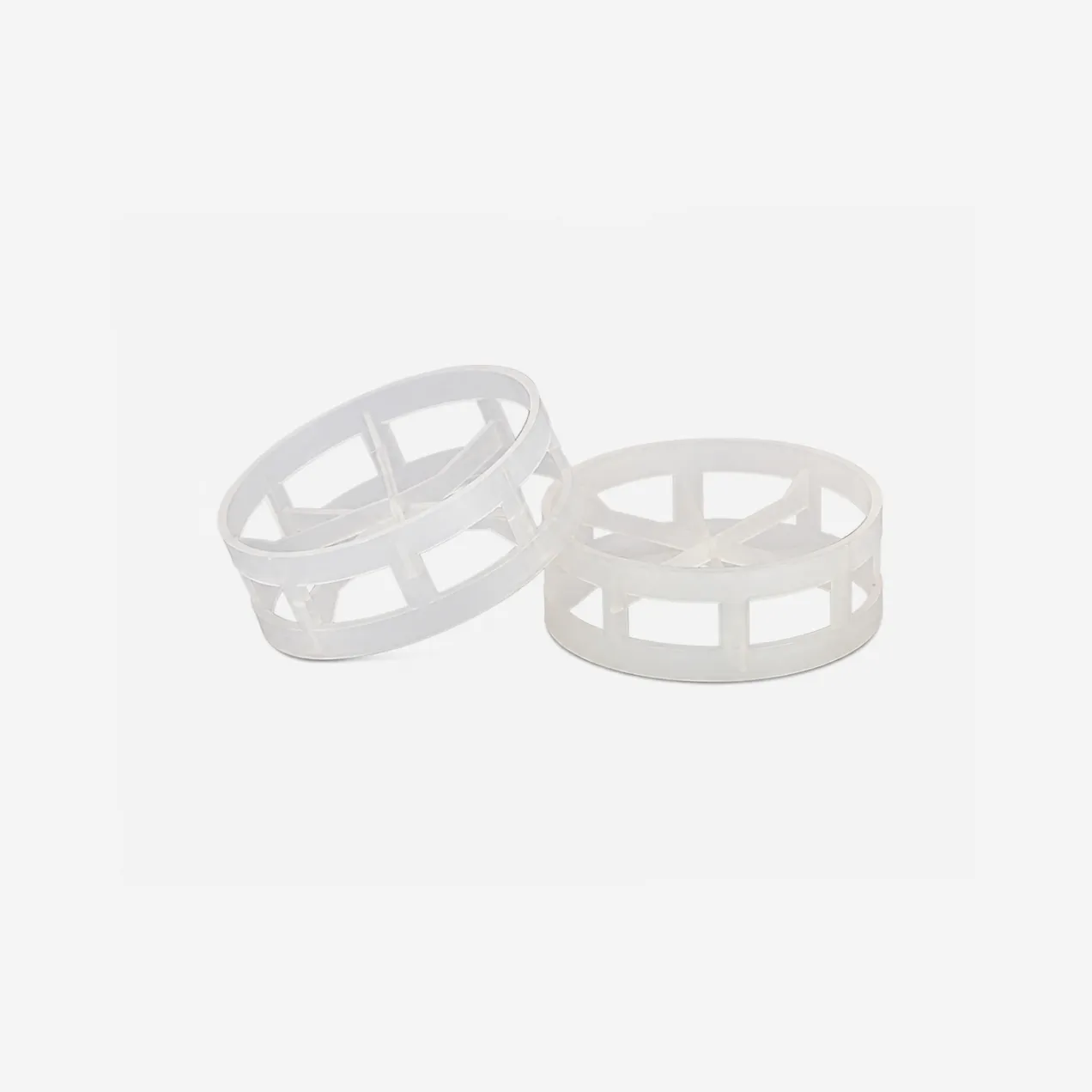
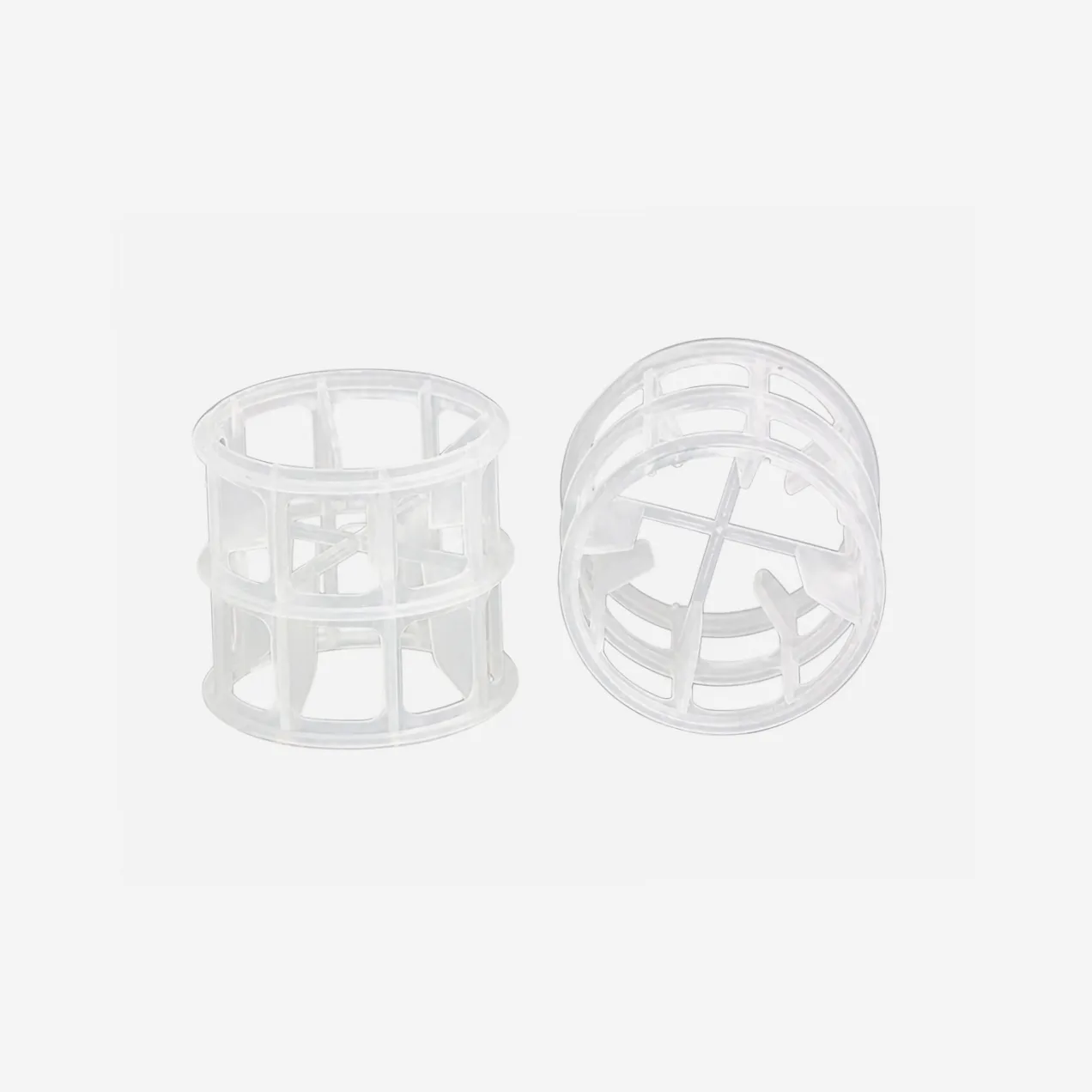
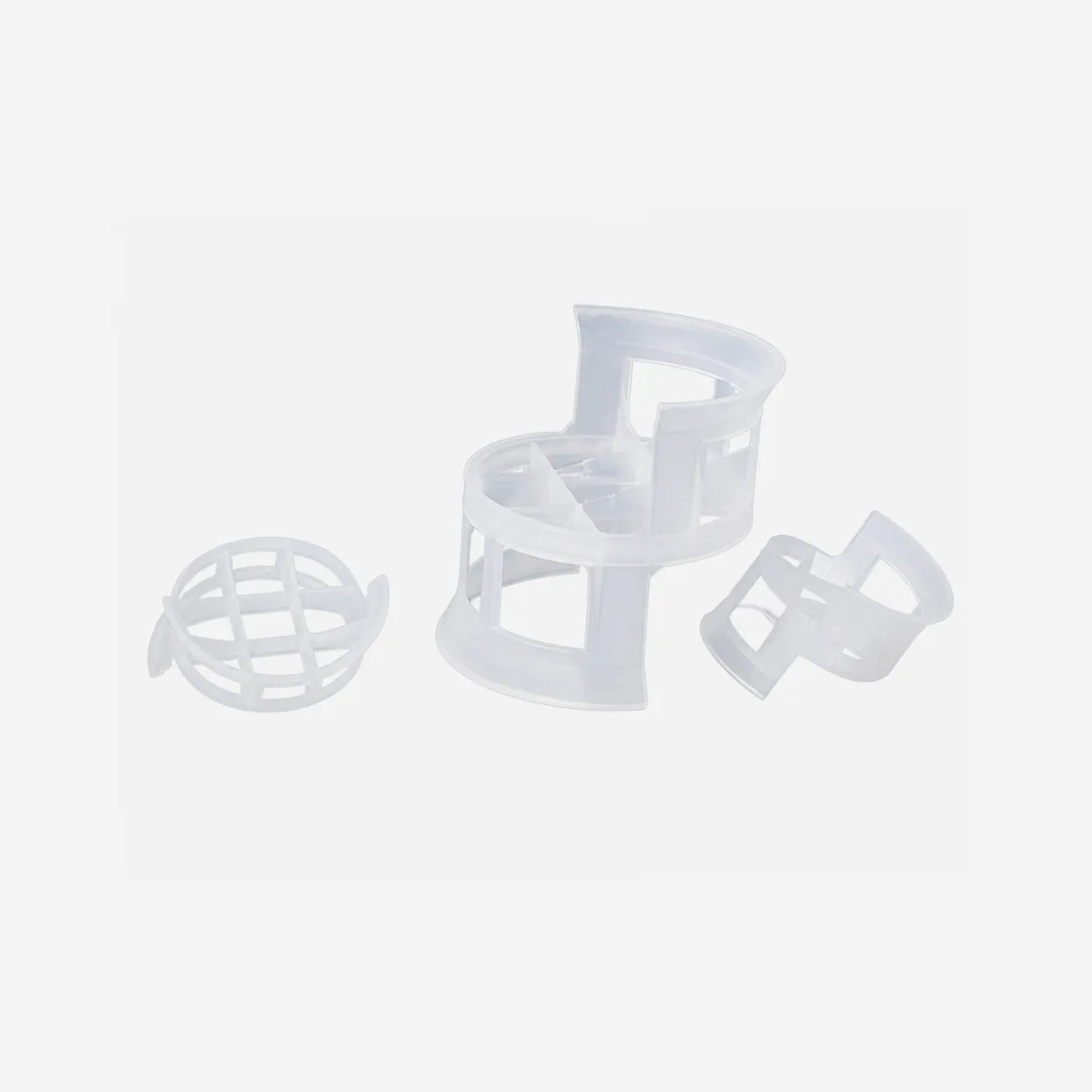
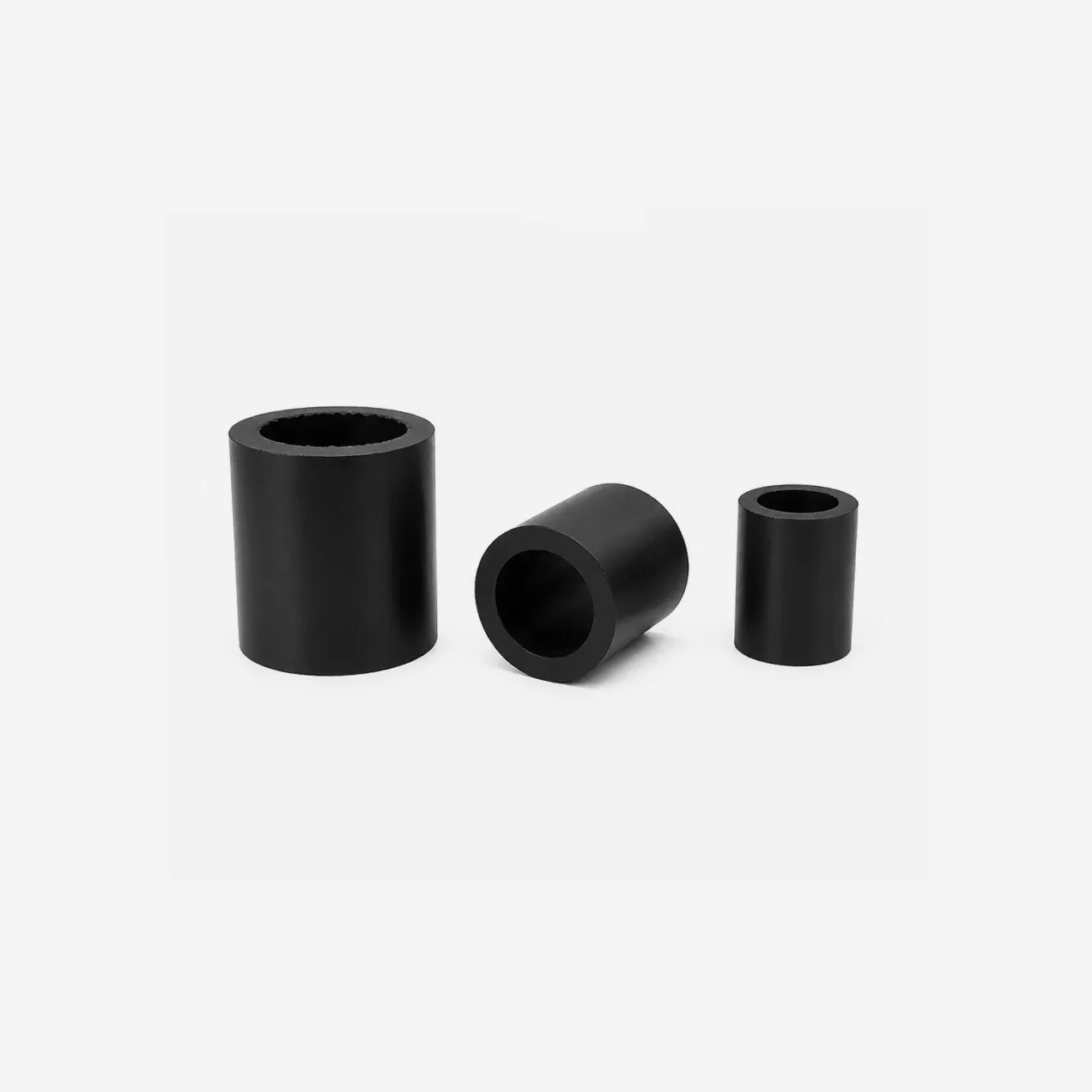
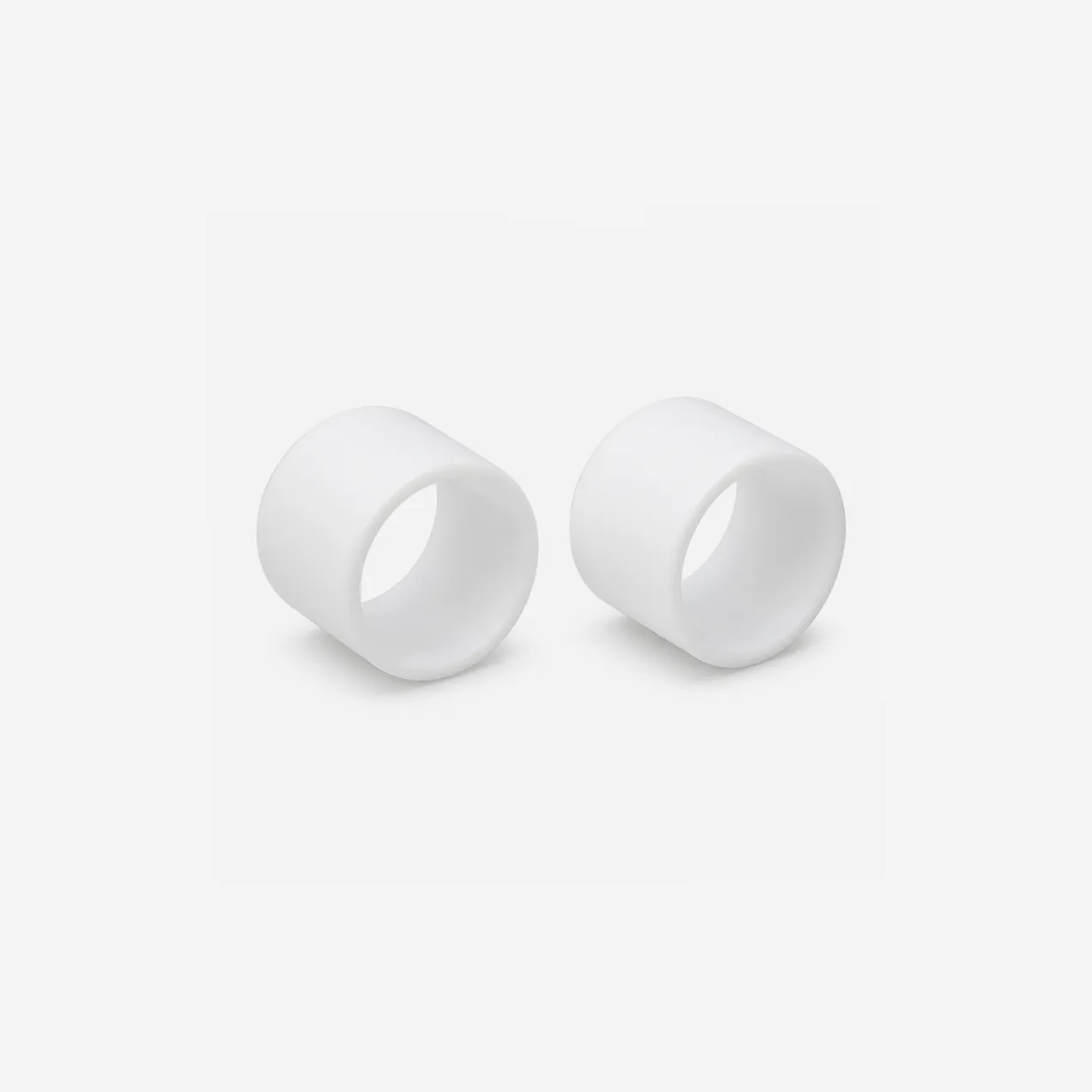
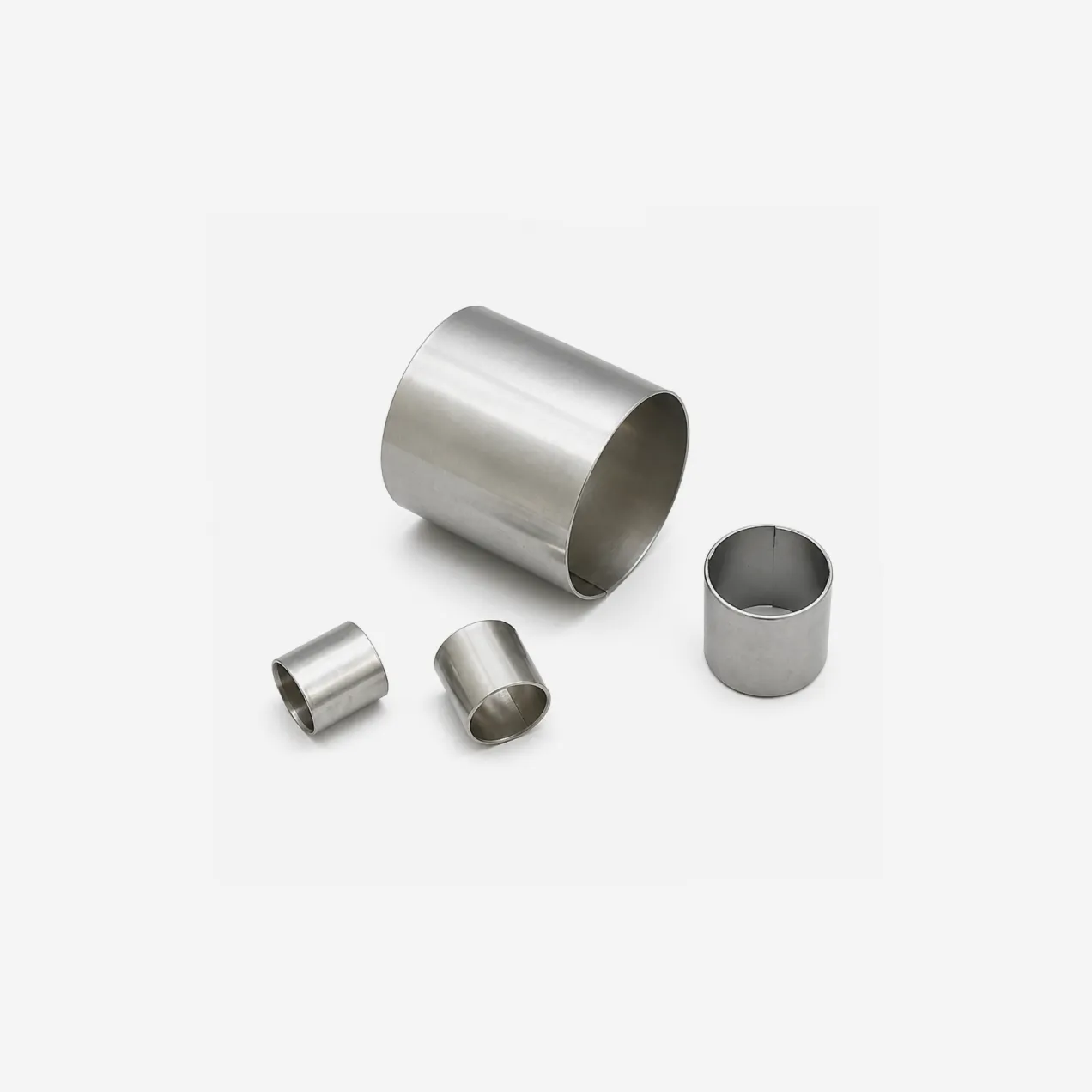
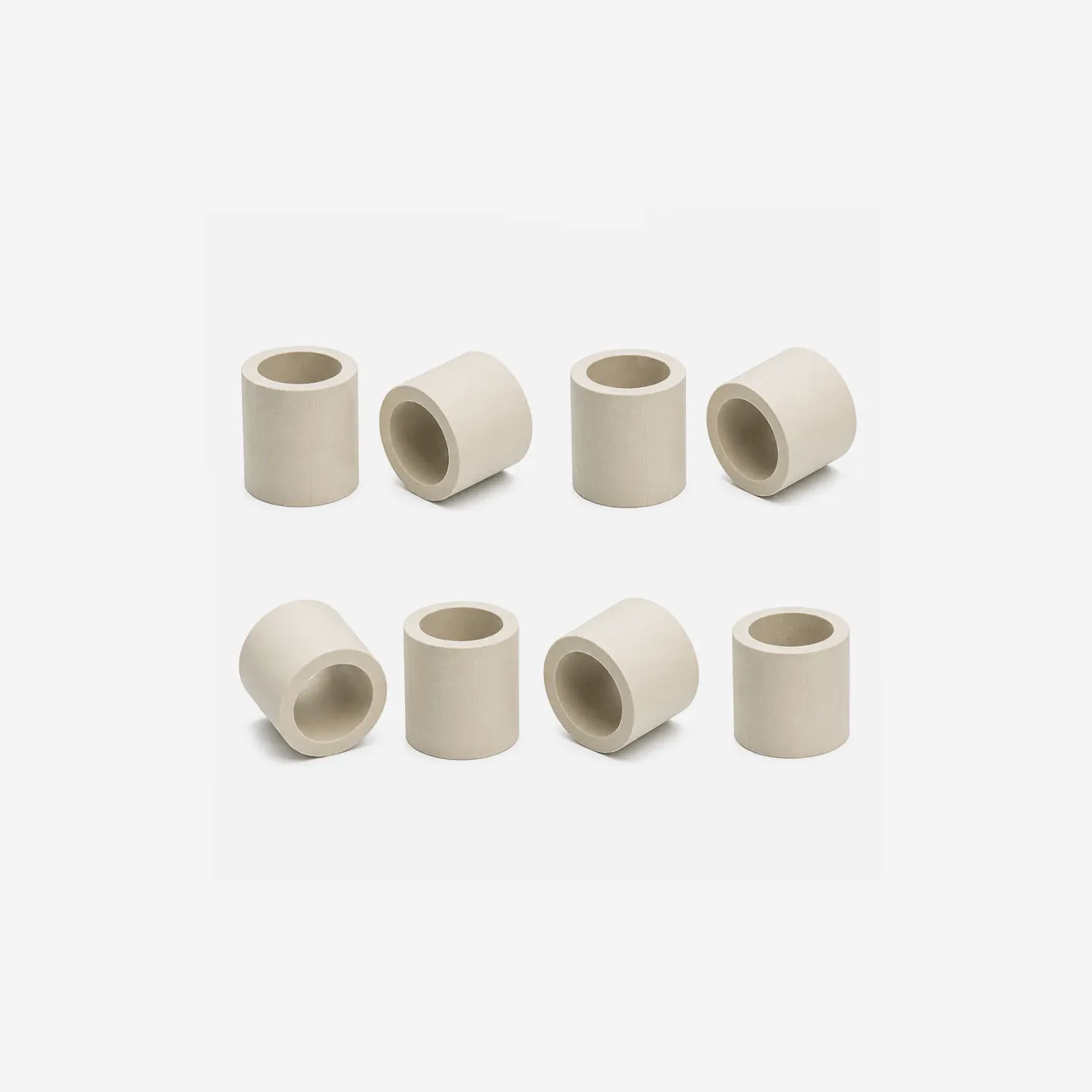
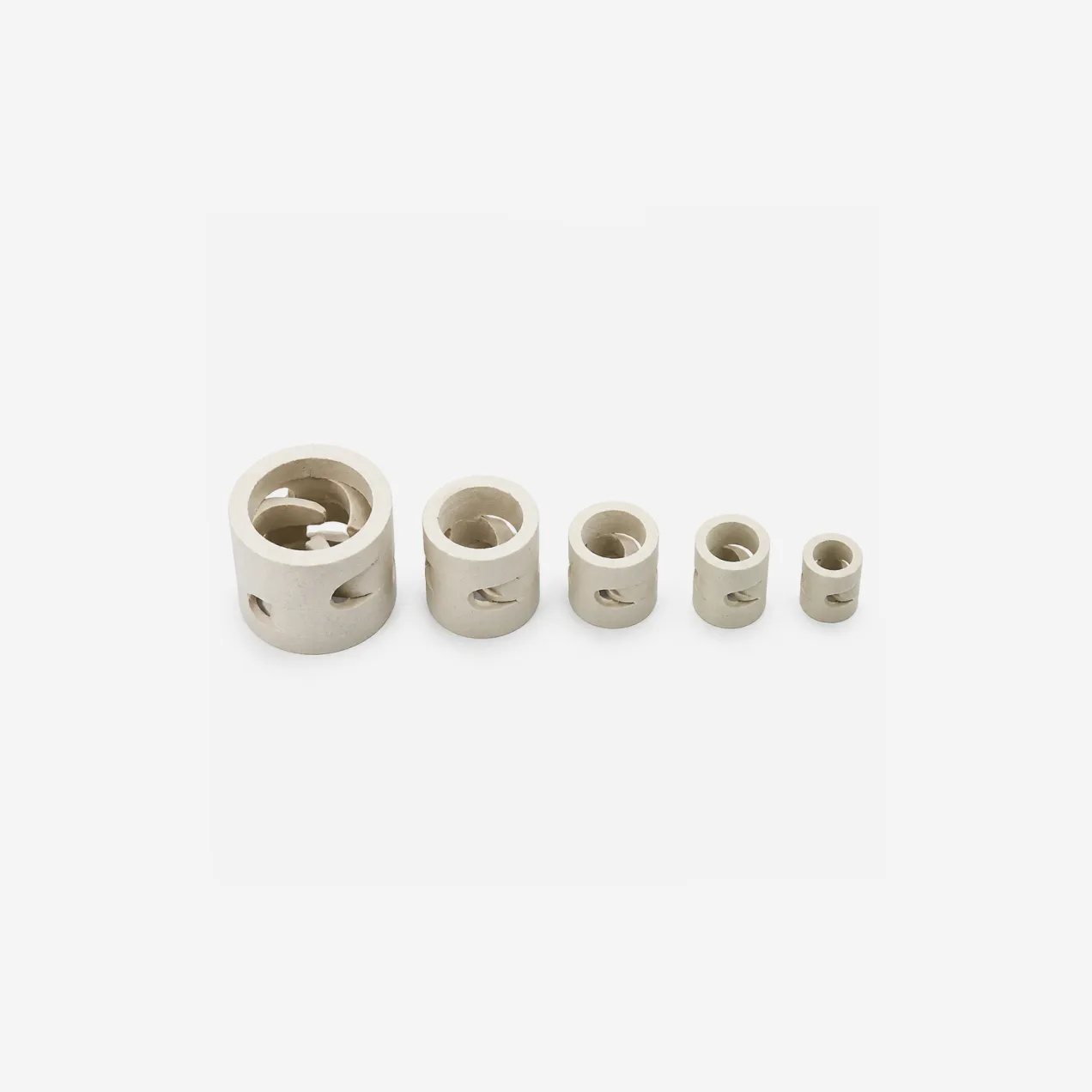
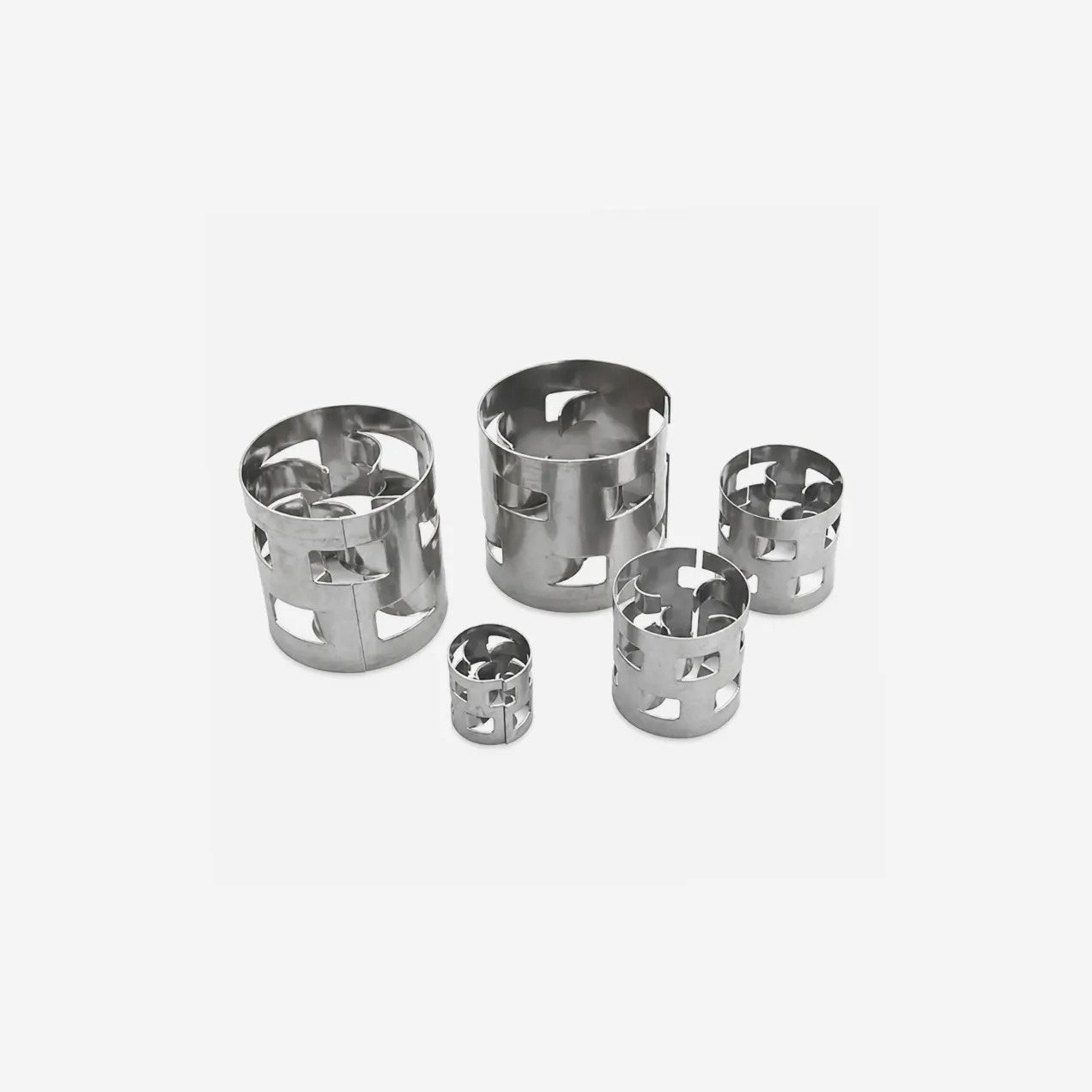
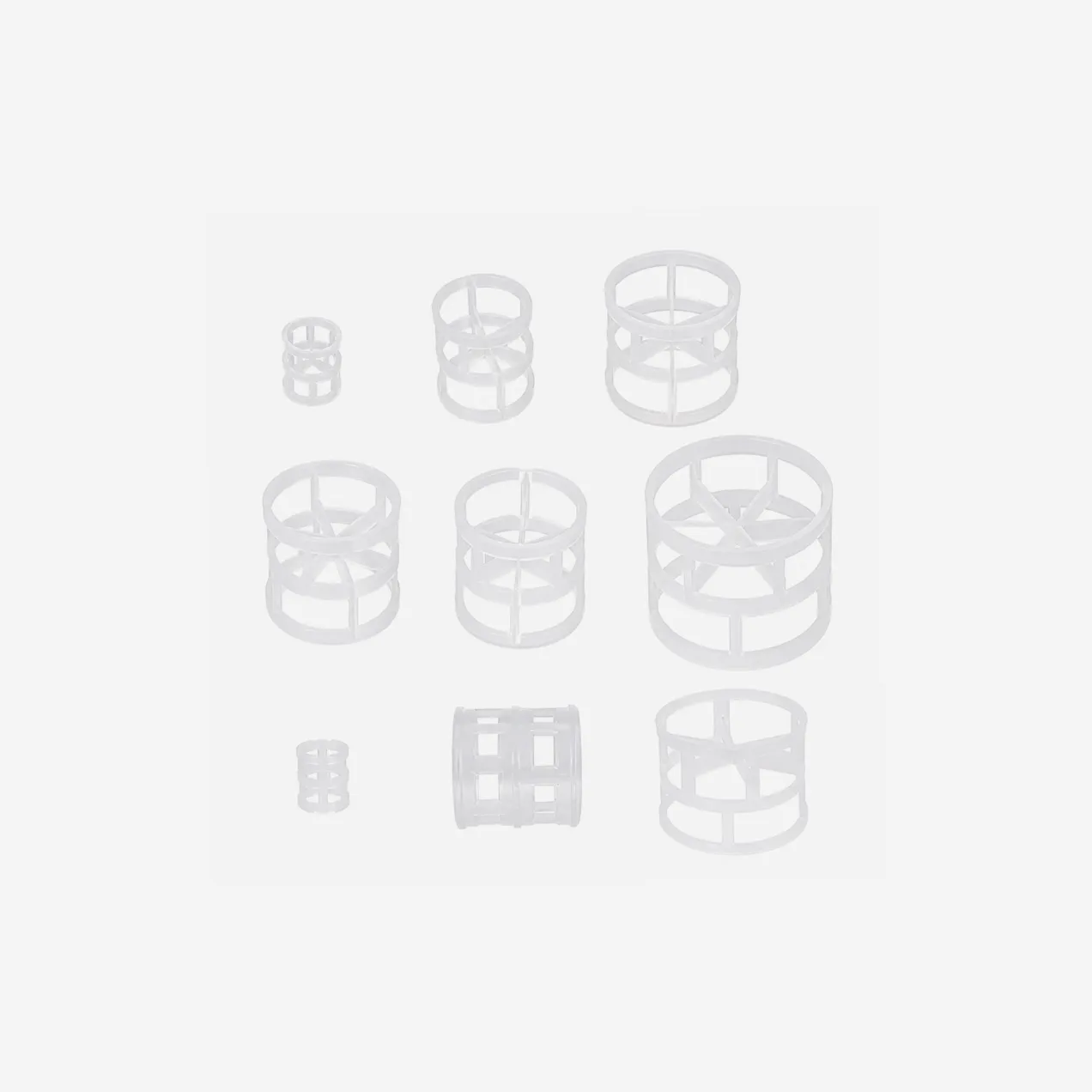
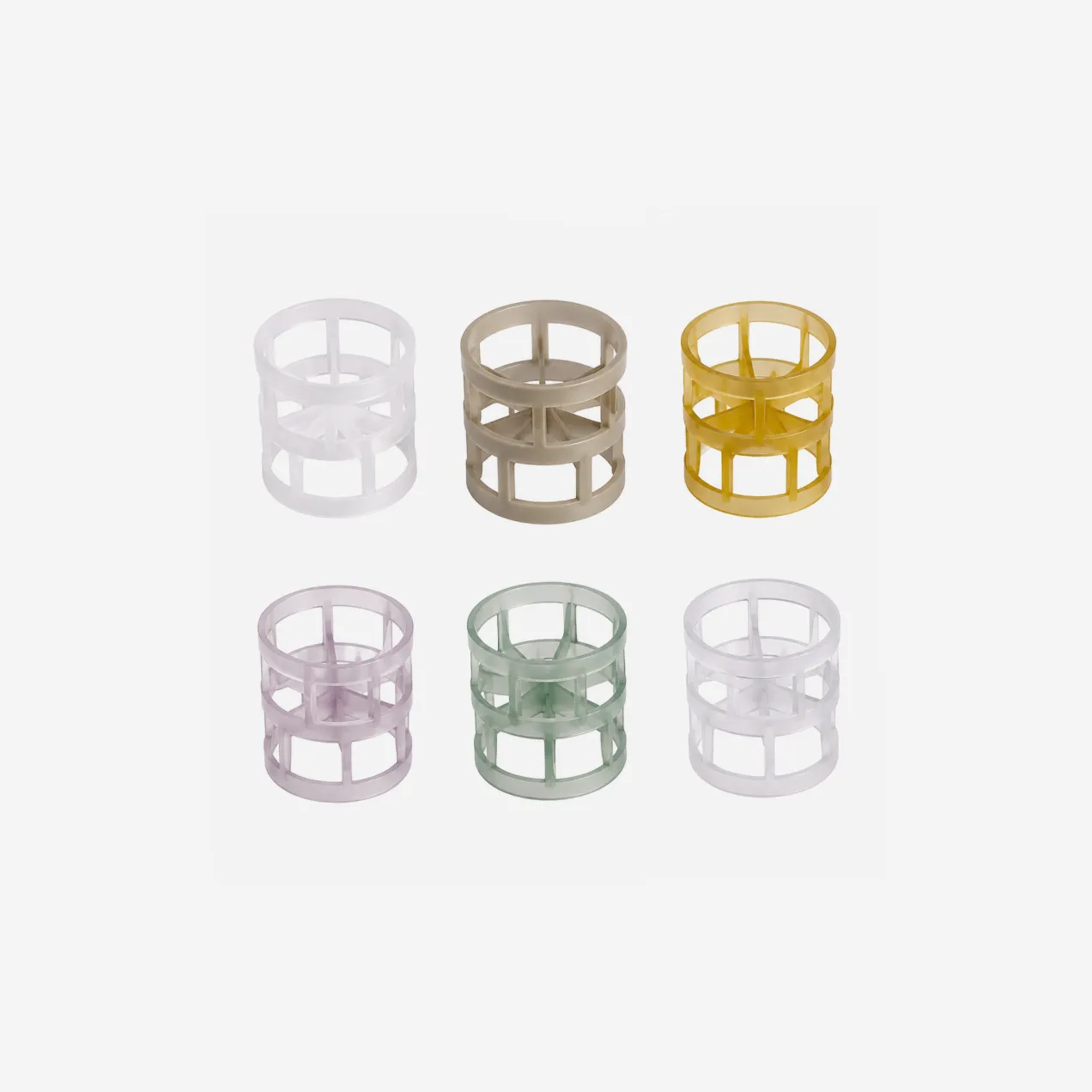
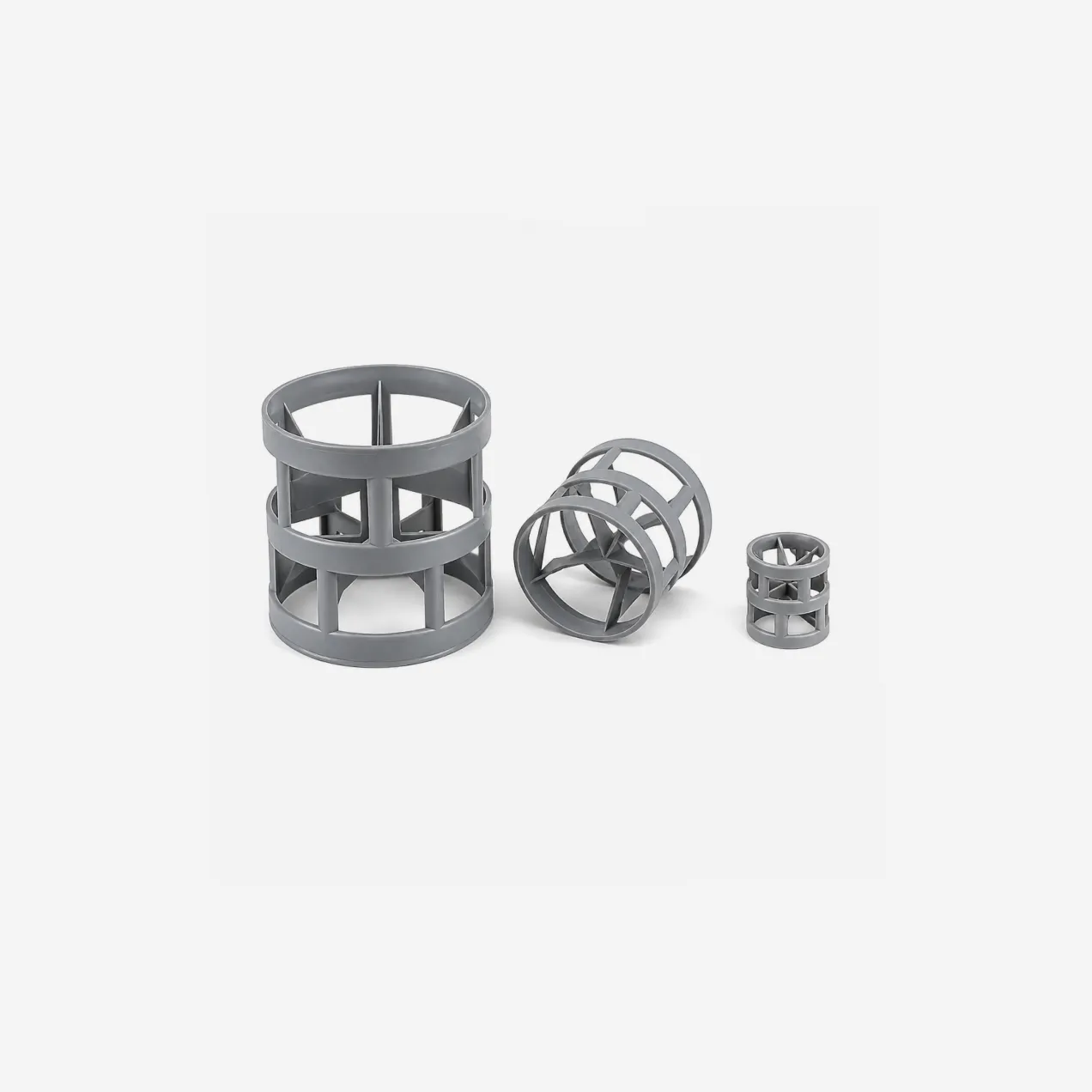
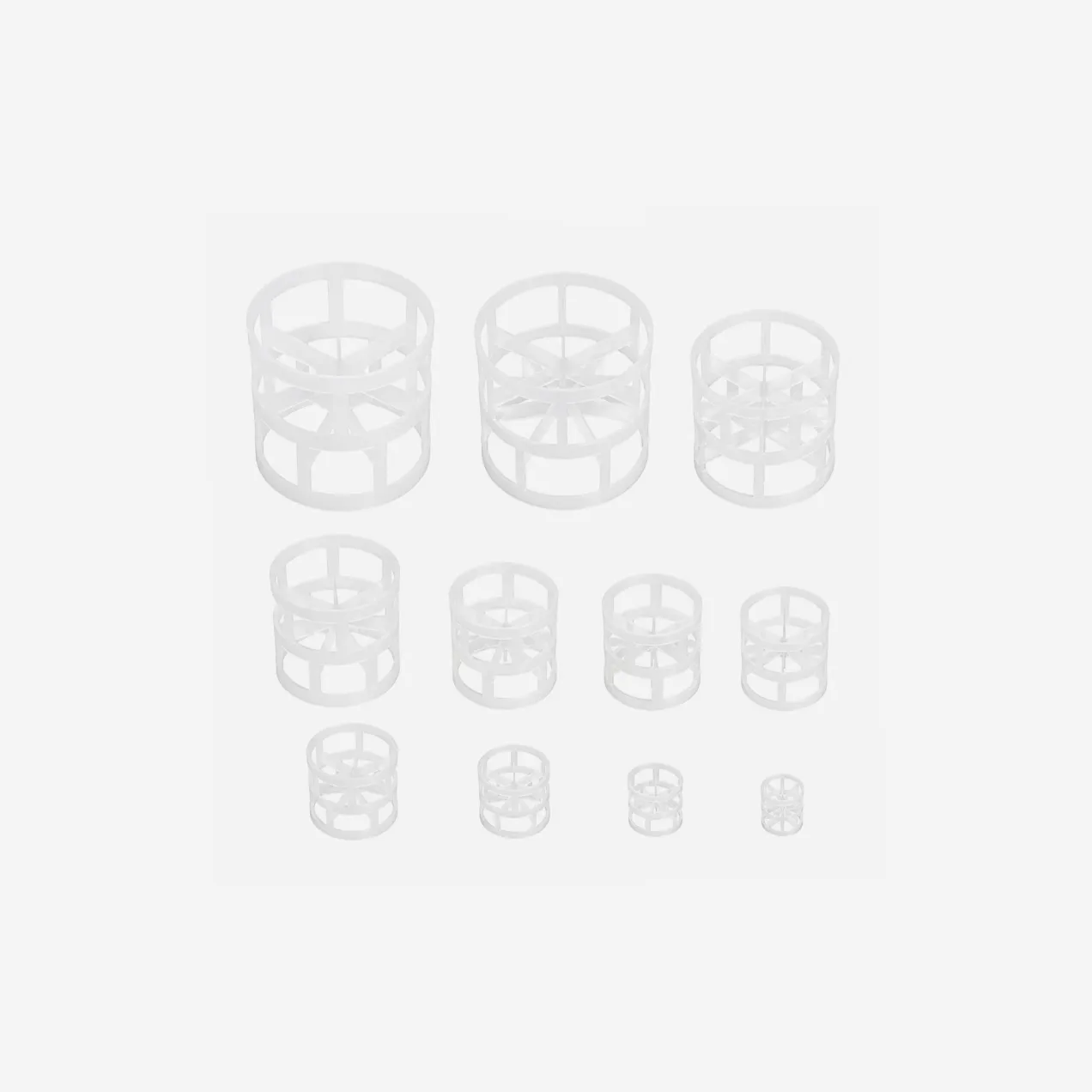
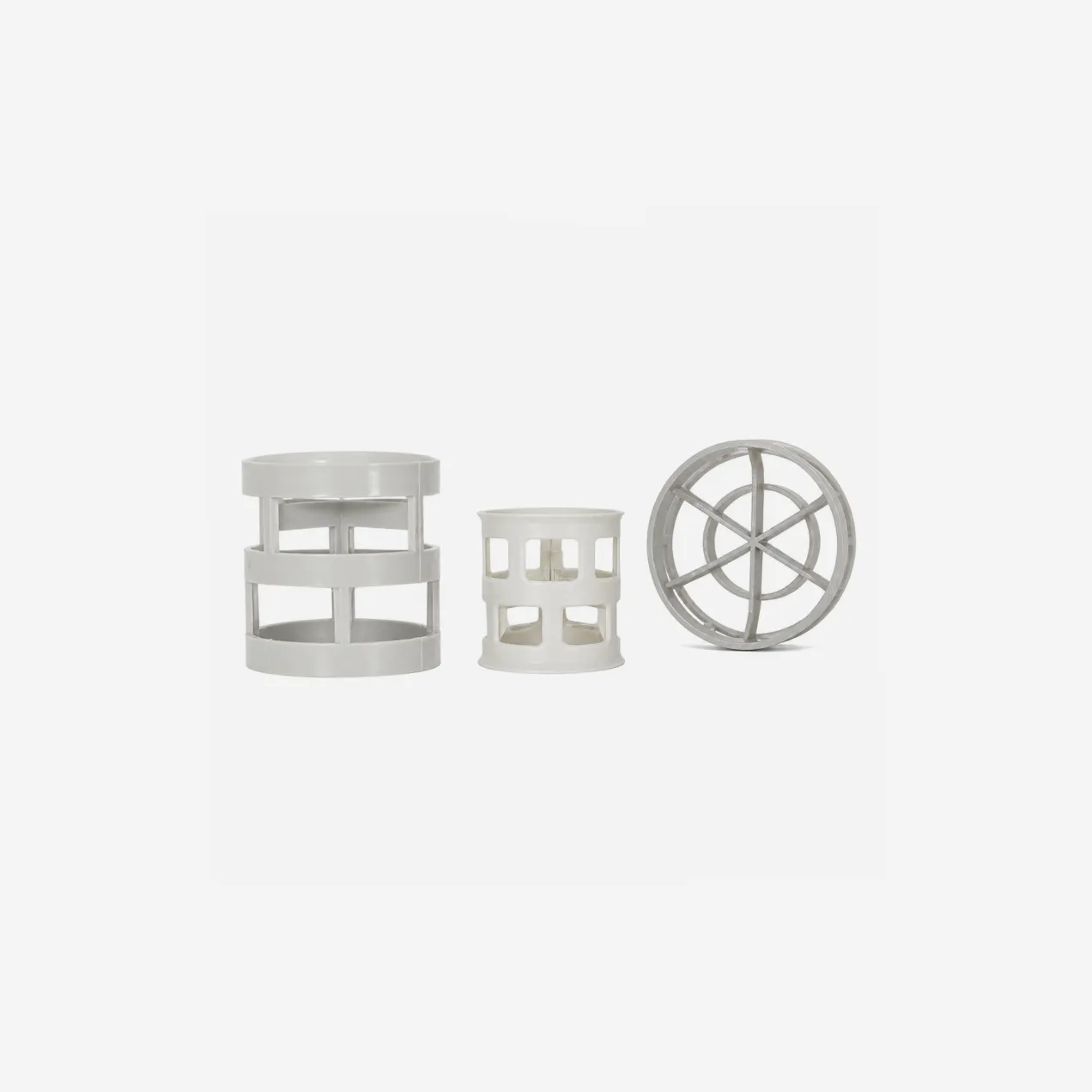
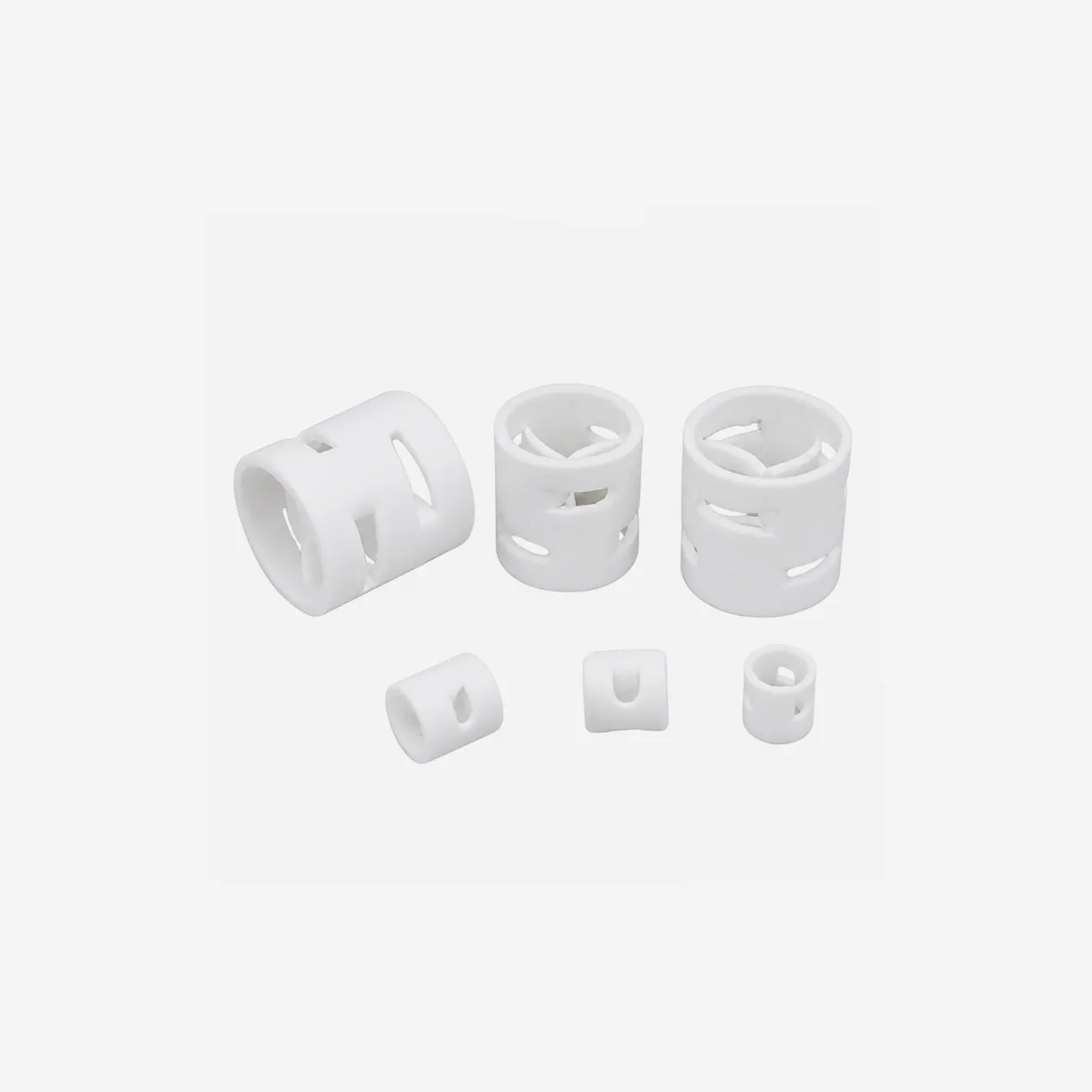
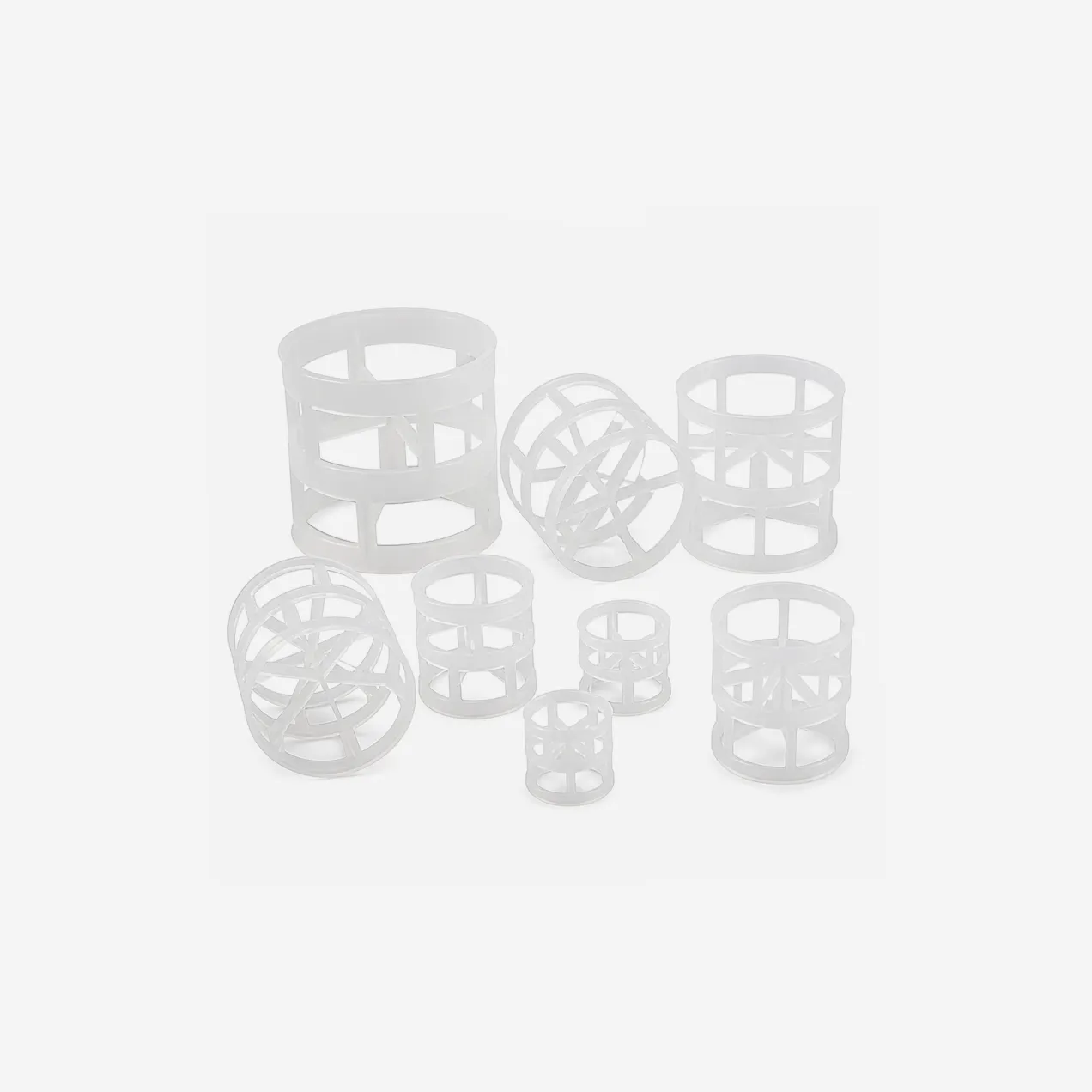
The ceramic Berl saddle, the Berl ring, is the original saddle packing: a small, curved ceramic saddle, thrown loose into a tower. Its whole advantage over the ring it replaced is the shape. A ring is a tube, and tubes can nest tightly inside one another and blind off parts of the bed; a saddle cannot. Dumped into a column, saddles fall into an open, random heap, so liquid spreads across their curved faces and gas slips through the gaps, with less of the channelling and dead space a bed of rings can suffer. Fired from ceramic, it resists heat and almost every acid, so it works where plastics and metals would not.
Berl saddle against the Raschig ring:
| Property | Ceramic Berl saddle | Ceramic Raschig ring |
|---|
| Shape | Curved, open saddle | Straight tube |
| Nesting and dead spots | Resists nesting; open bed | Can nest and blind off |
| Liquid distribution | Even, over curved faces | Less even |
| Effective surface | Higher | Lower |
| Pressure drop | Lower | Higher |
It suits the general run of packed-tower work — absorption, distillation, cooling, drying and scrubbing towers in chemical, metallurgical and gas plants — wherever a hot or corrosive duty wants ceramic. It is the forerunner of the Intalox saddle, which refines the same idea; for a brand-new column that is worth considering too. This listing arrived without a datasheet, so the sizes and ratings quoted here are typical of ceramic Berl saddles and indicative only. Tell us your tower and duty and we will confirm the exact size, surface area and rating.