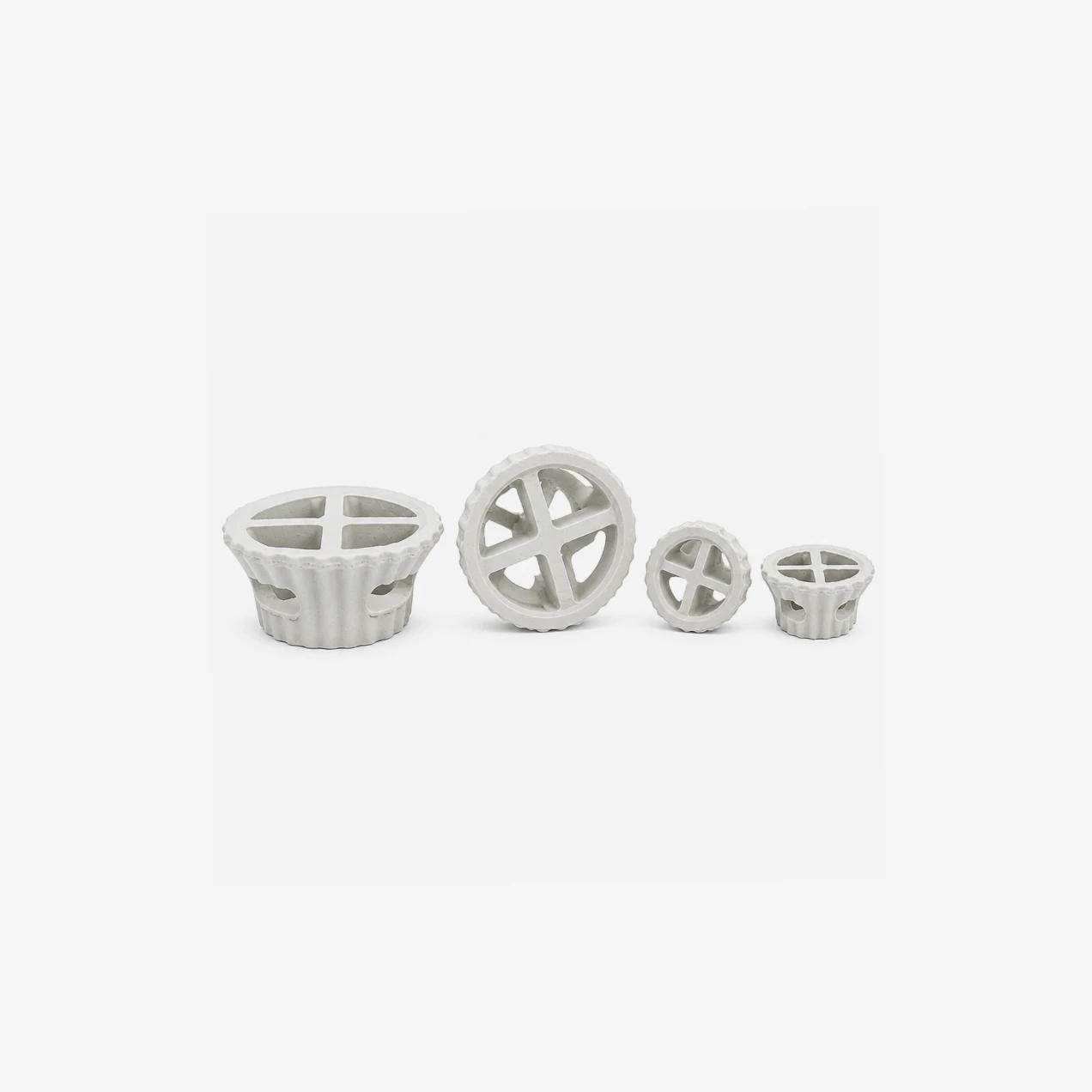
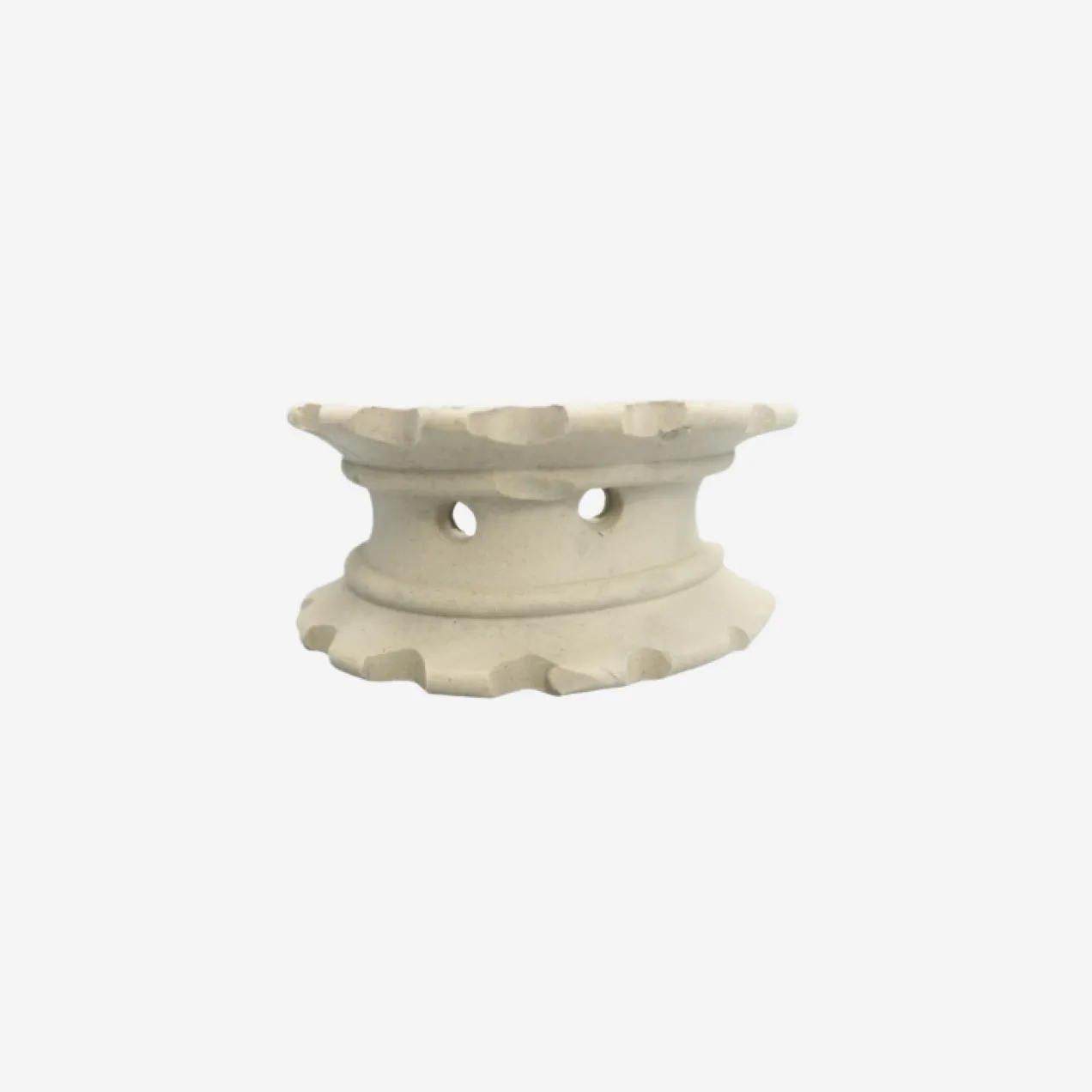
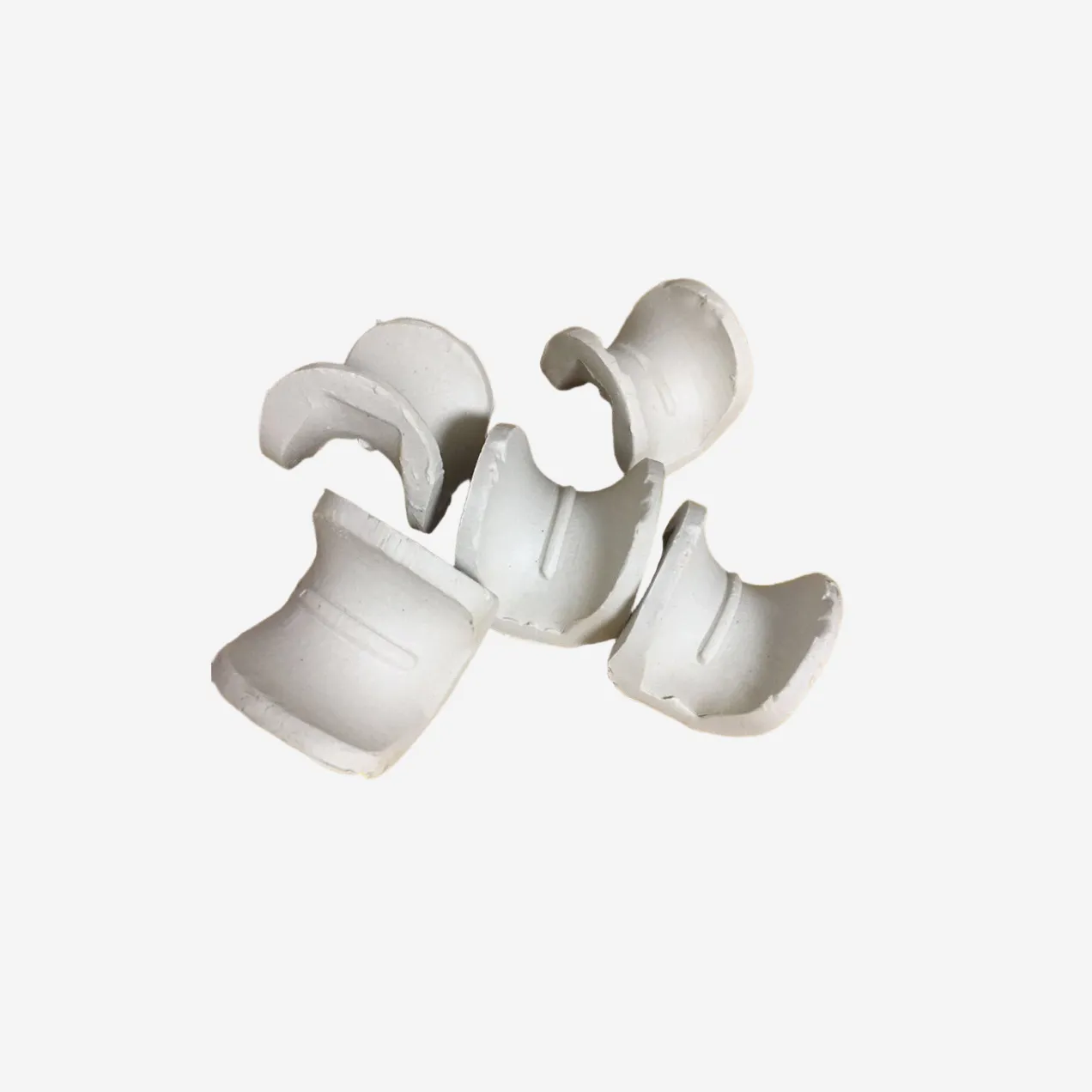
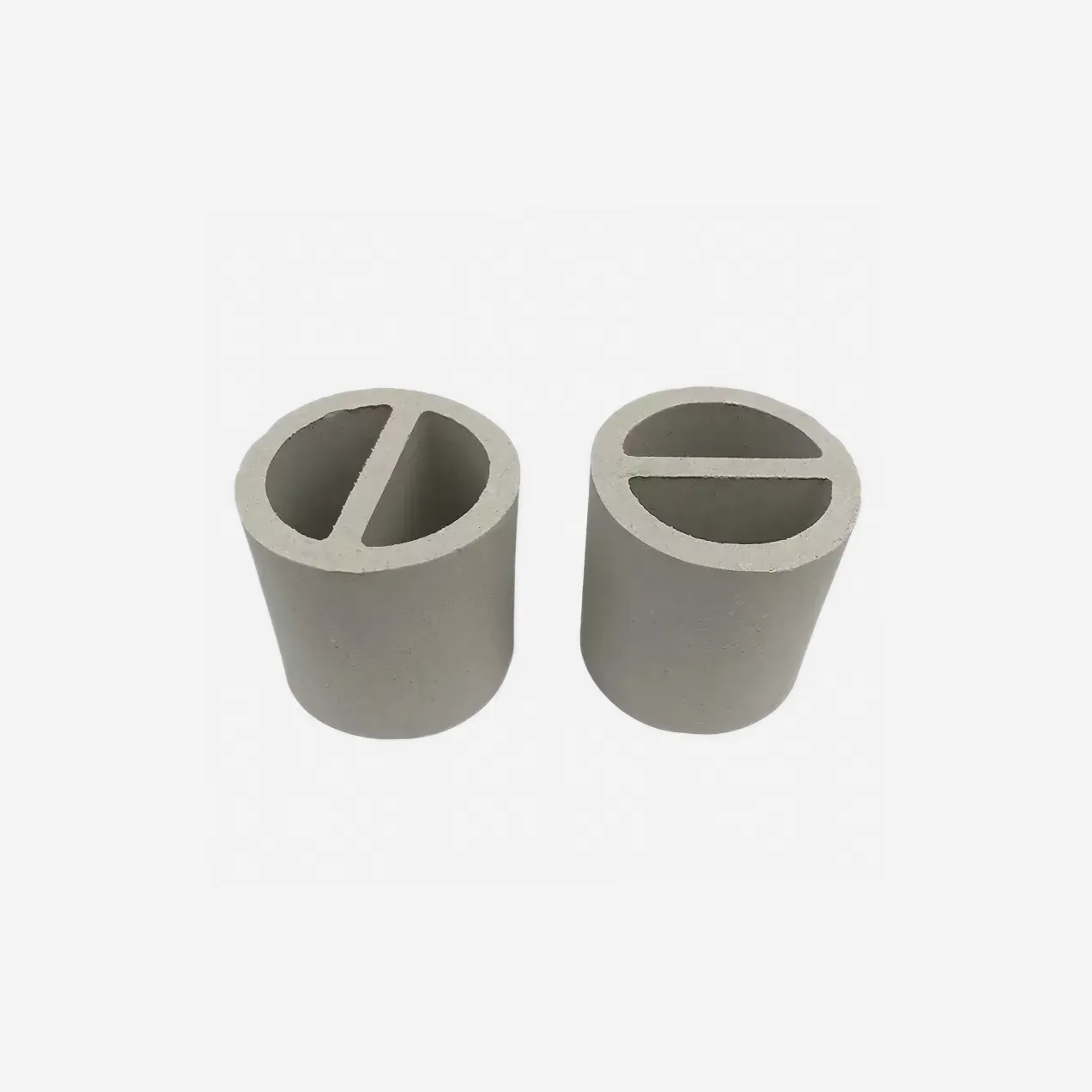
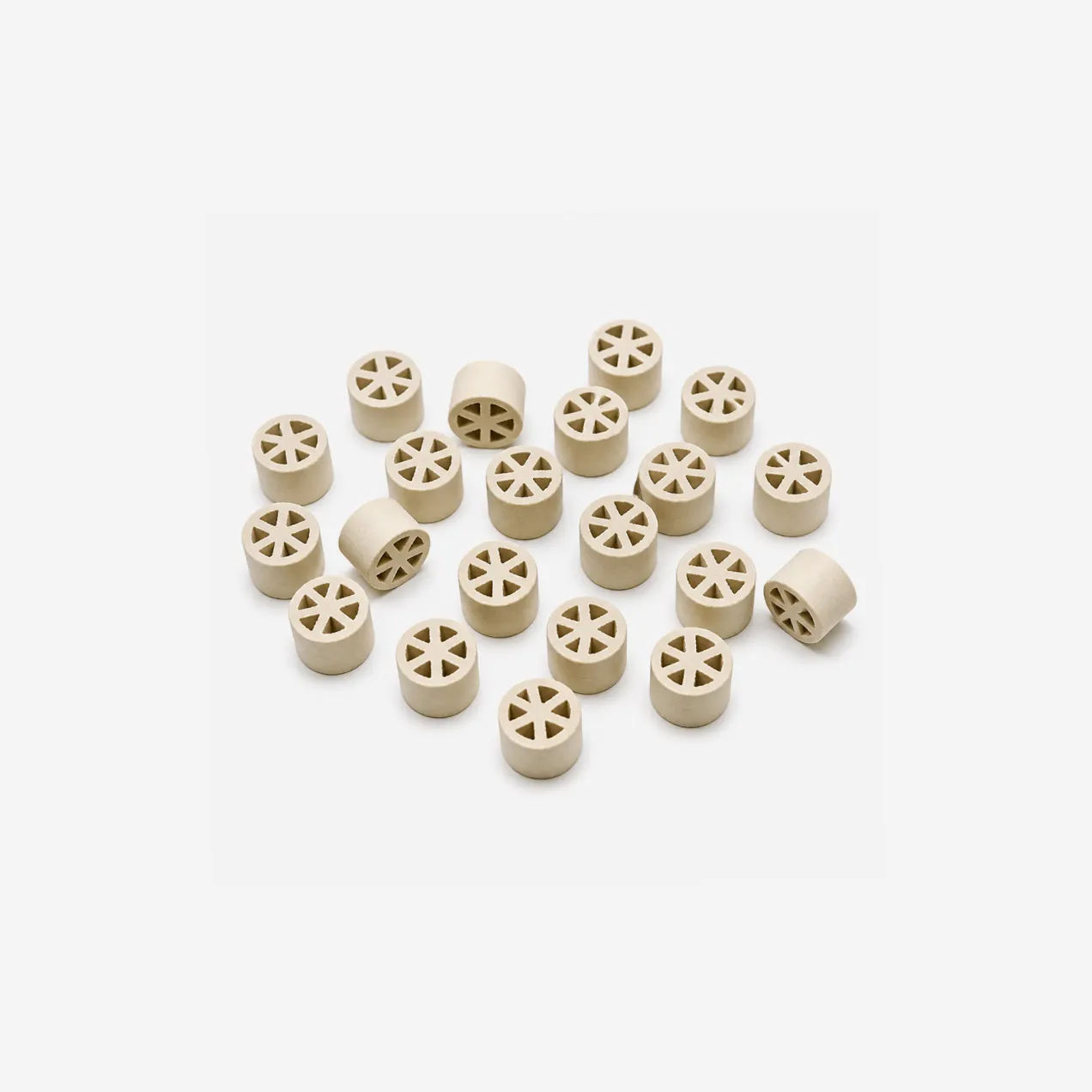
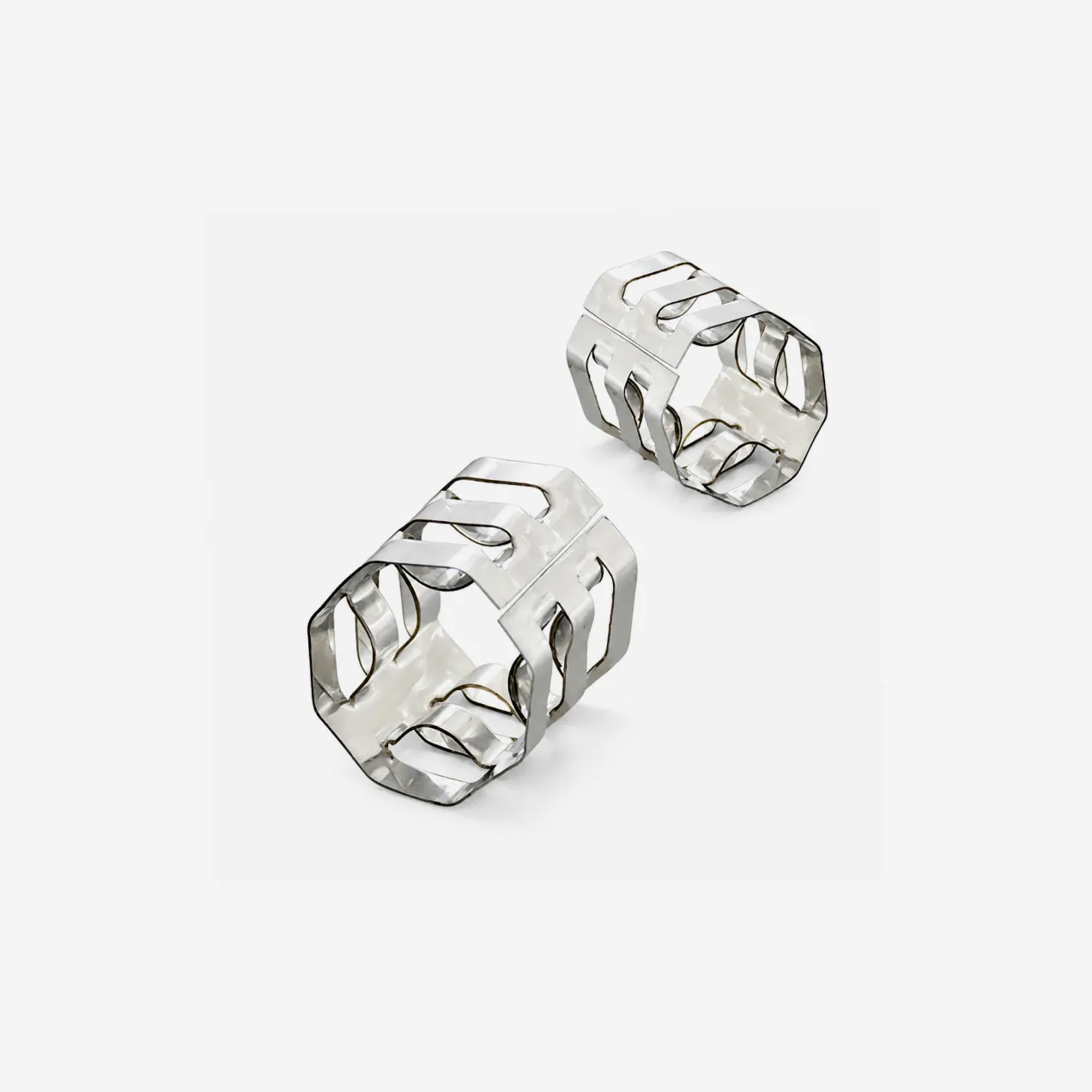
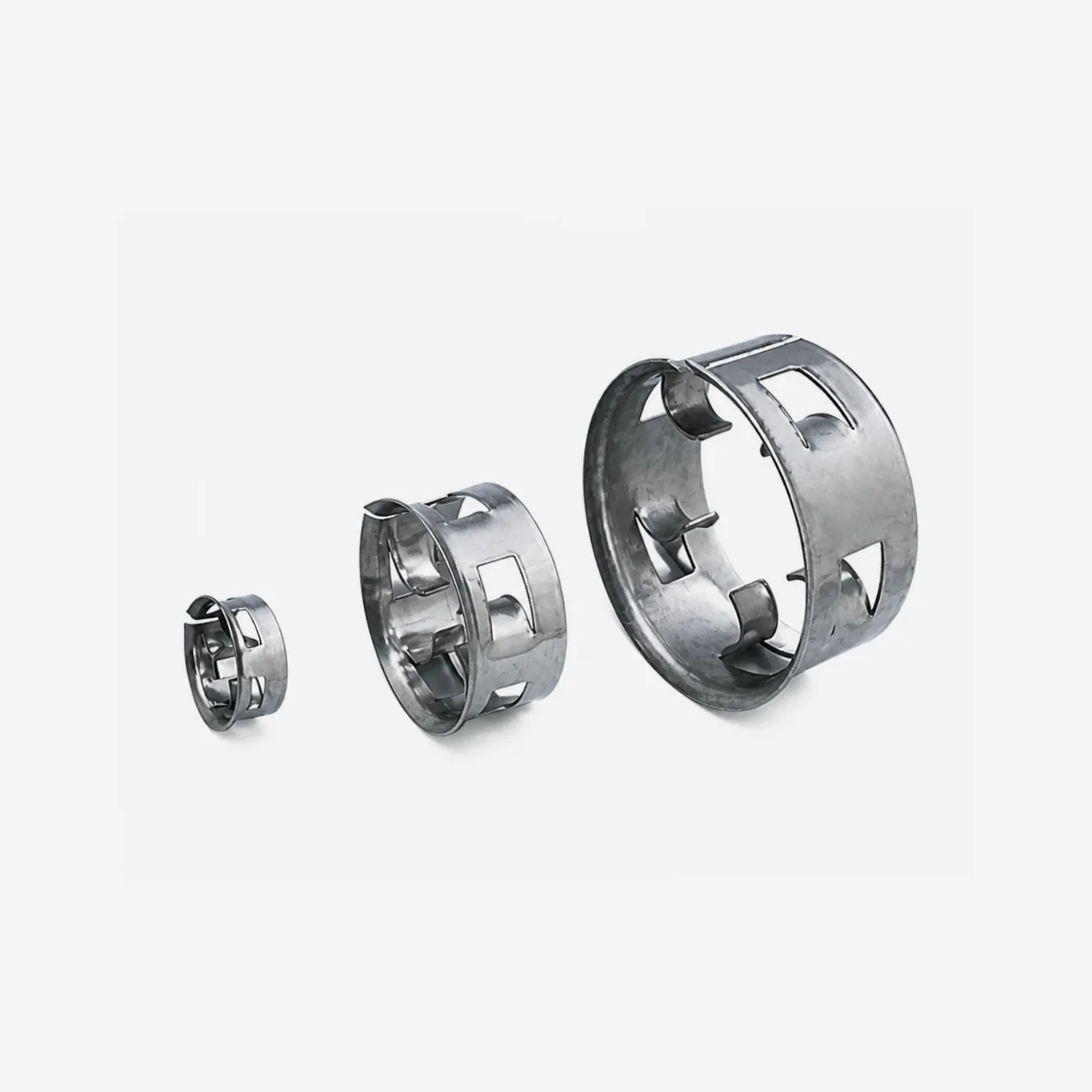
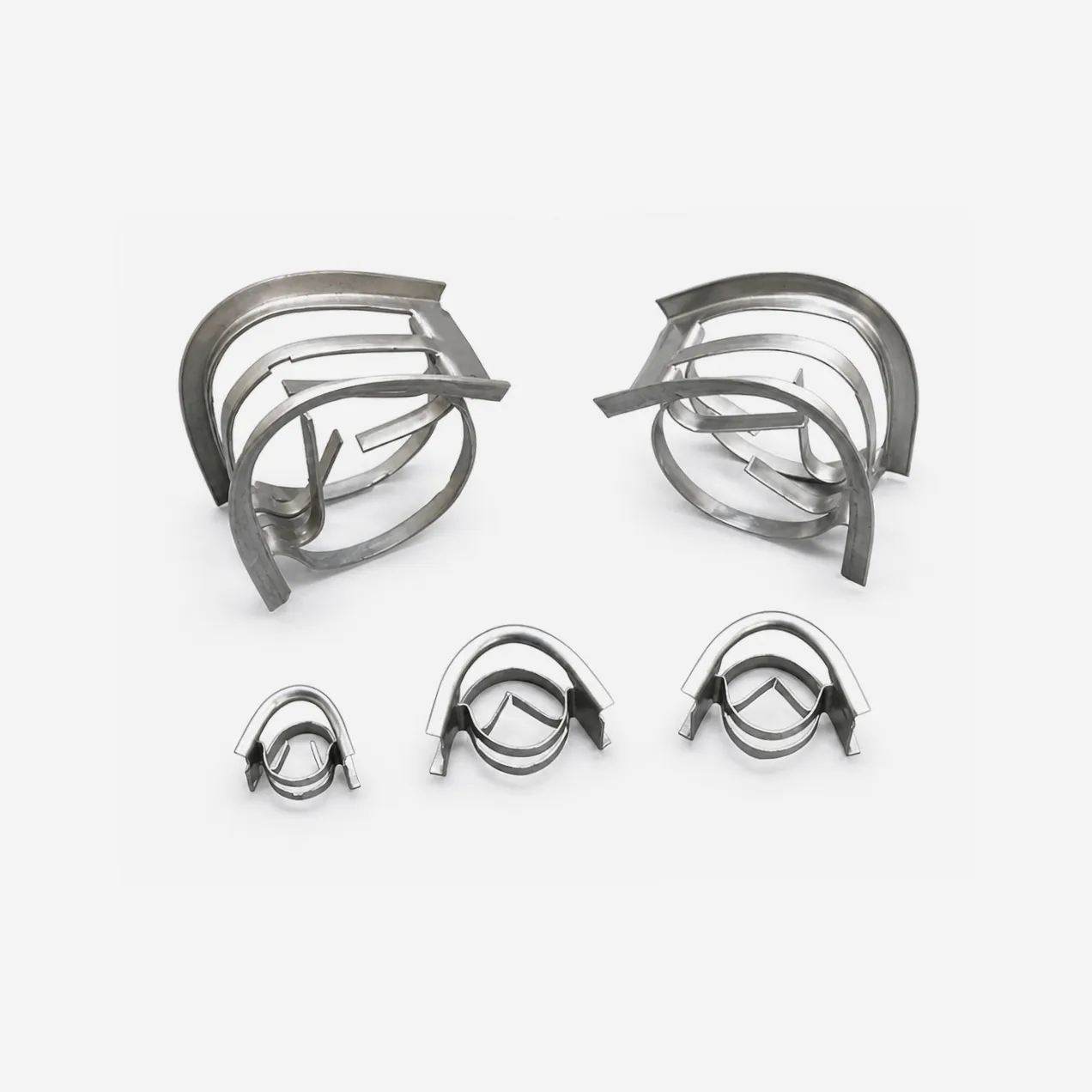
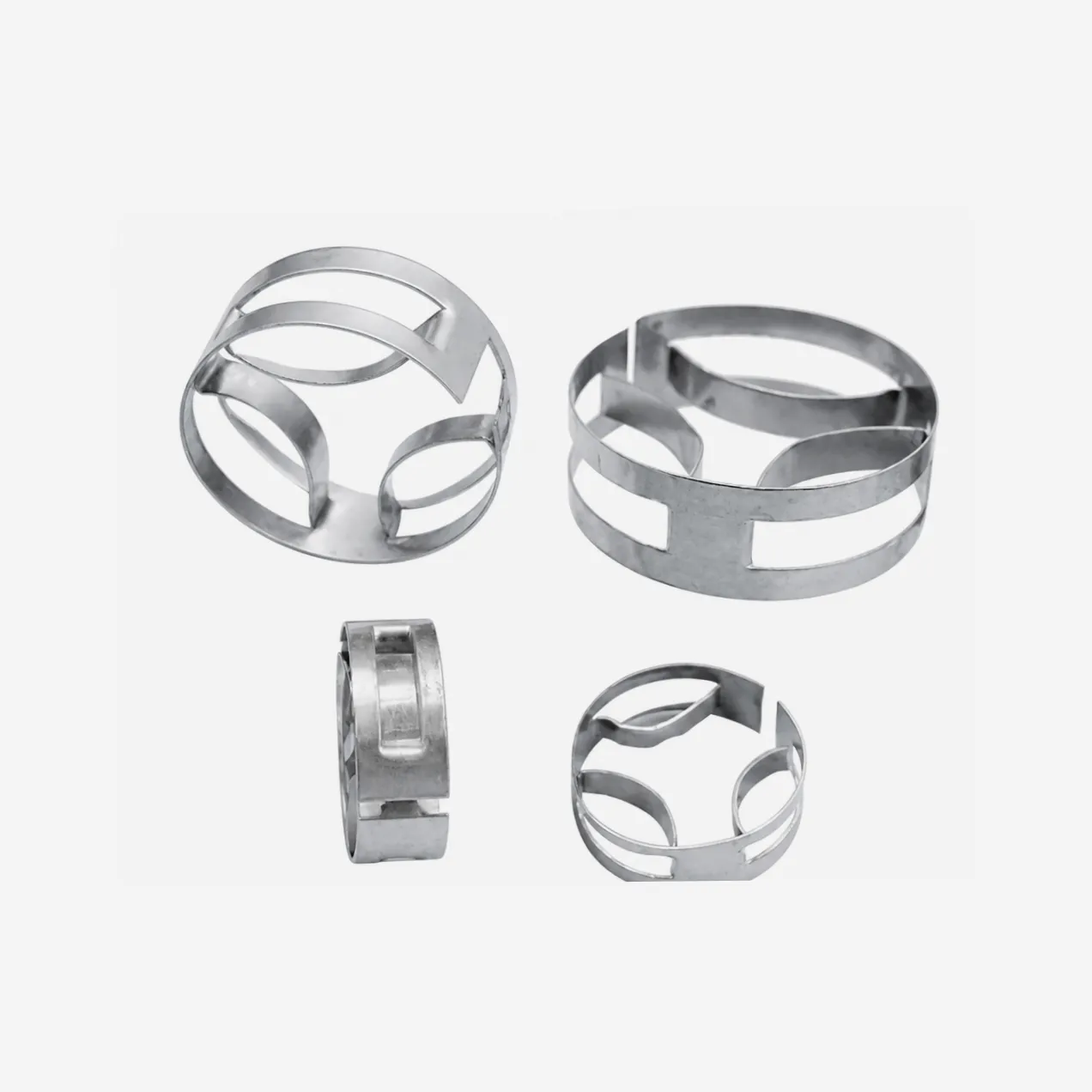
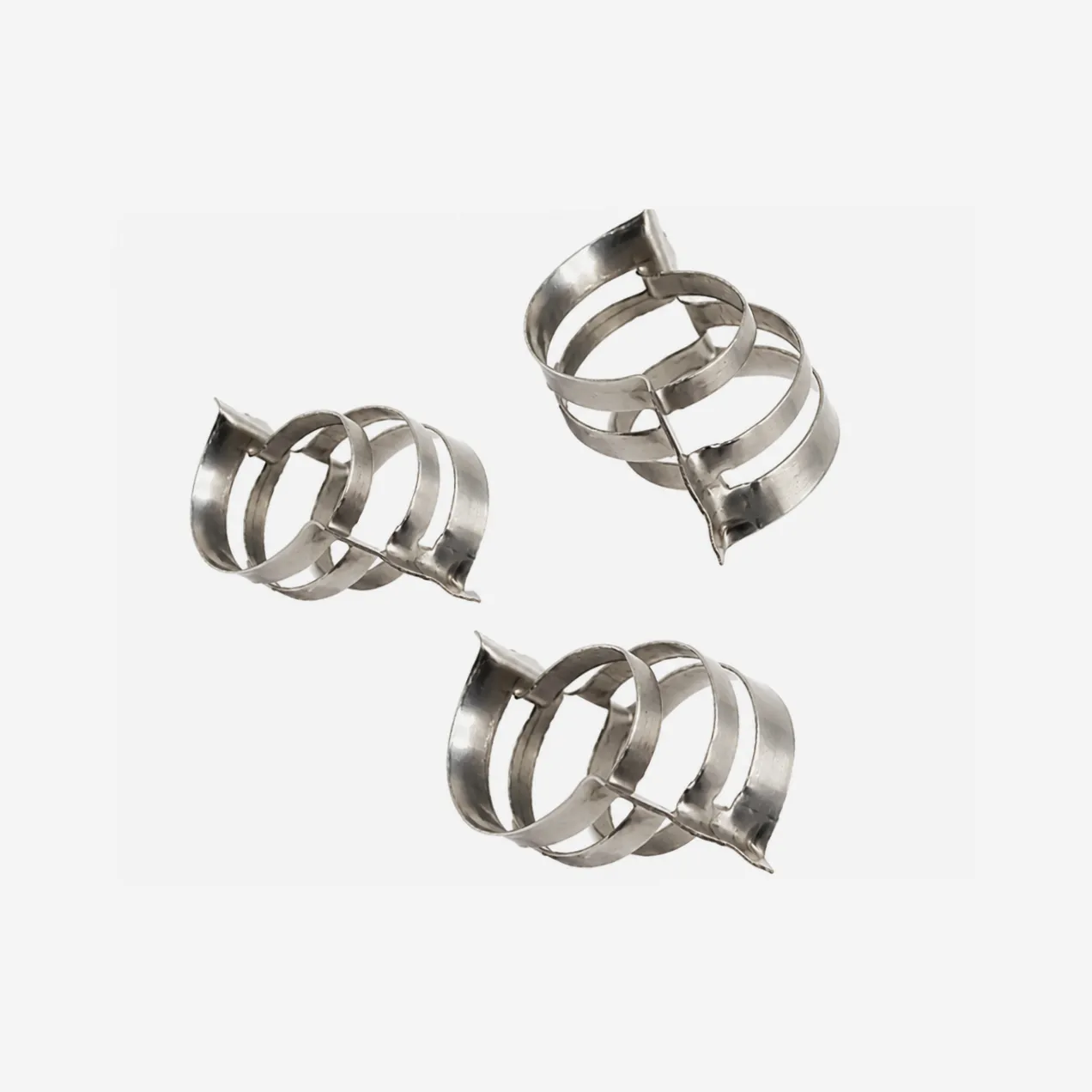
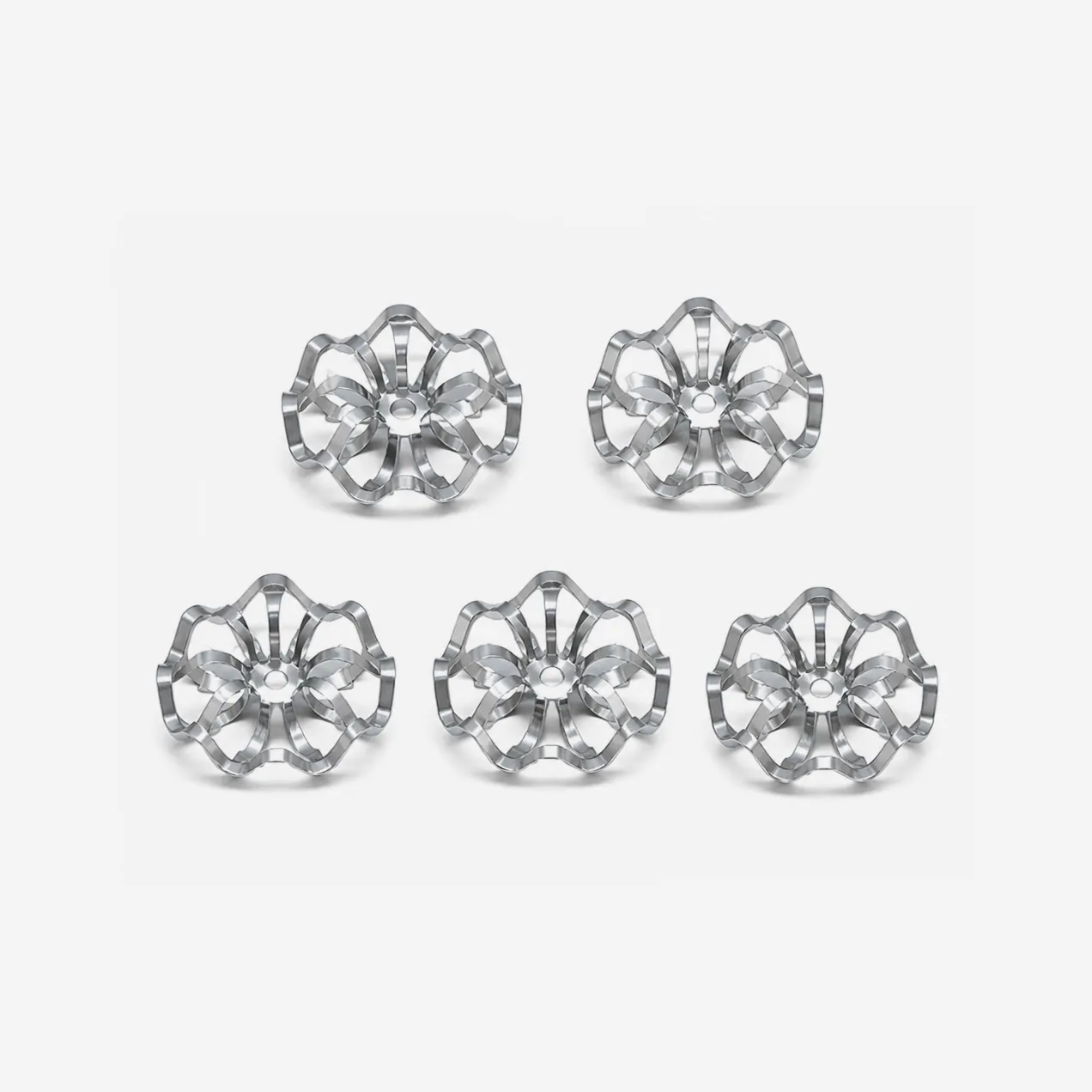
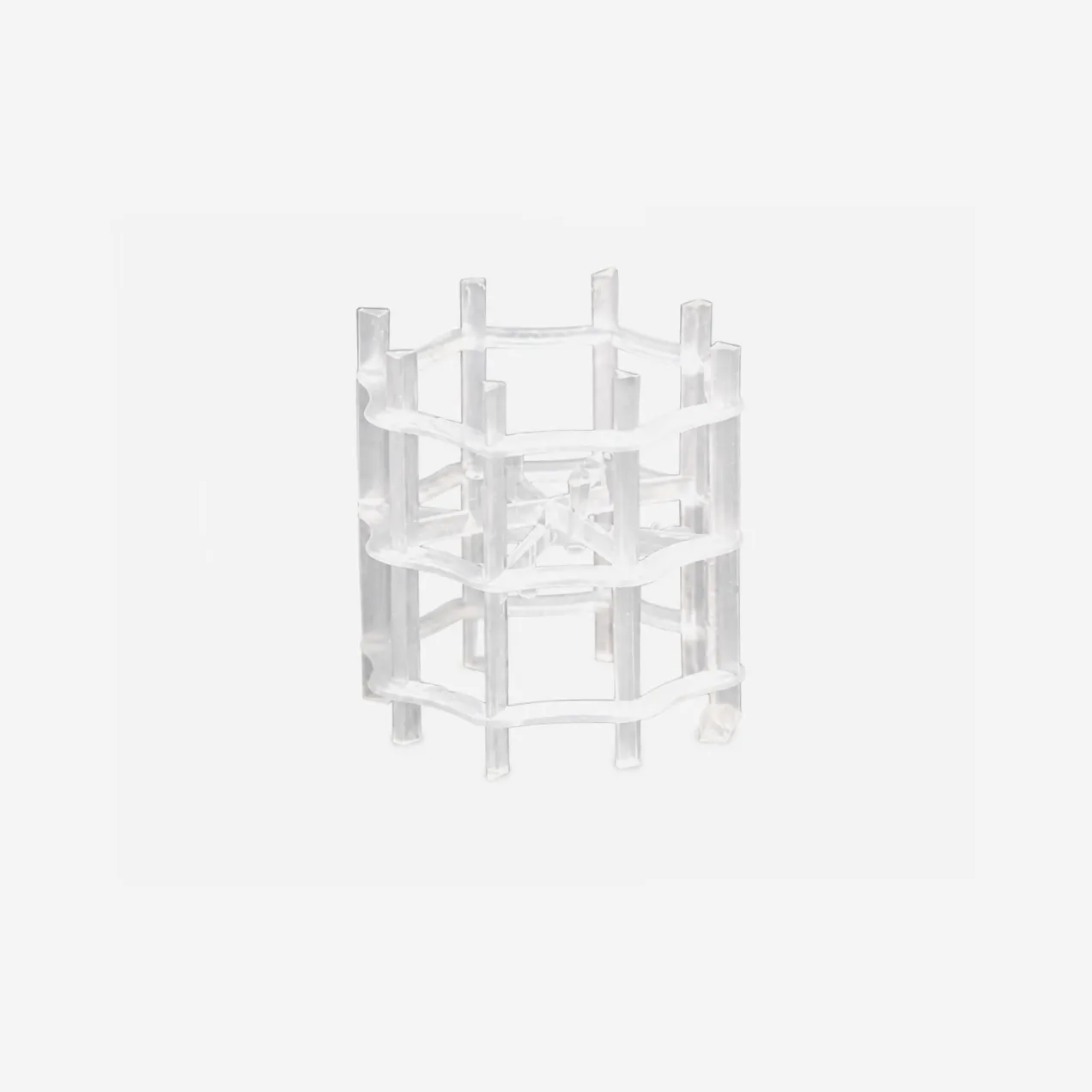
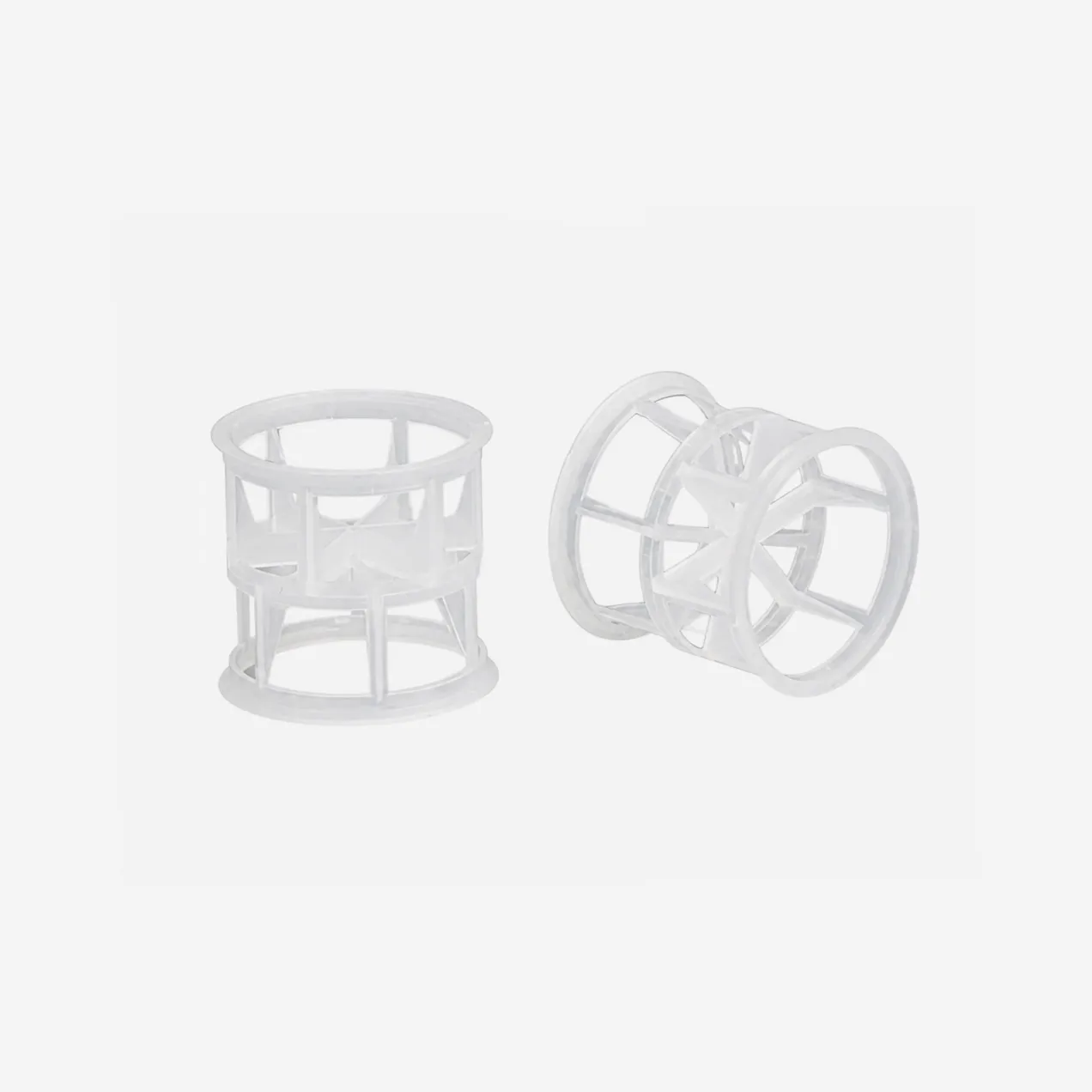
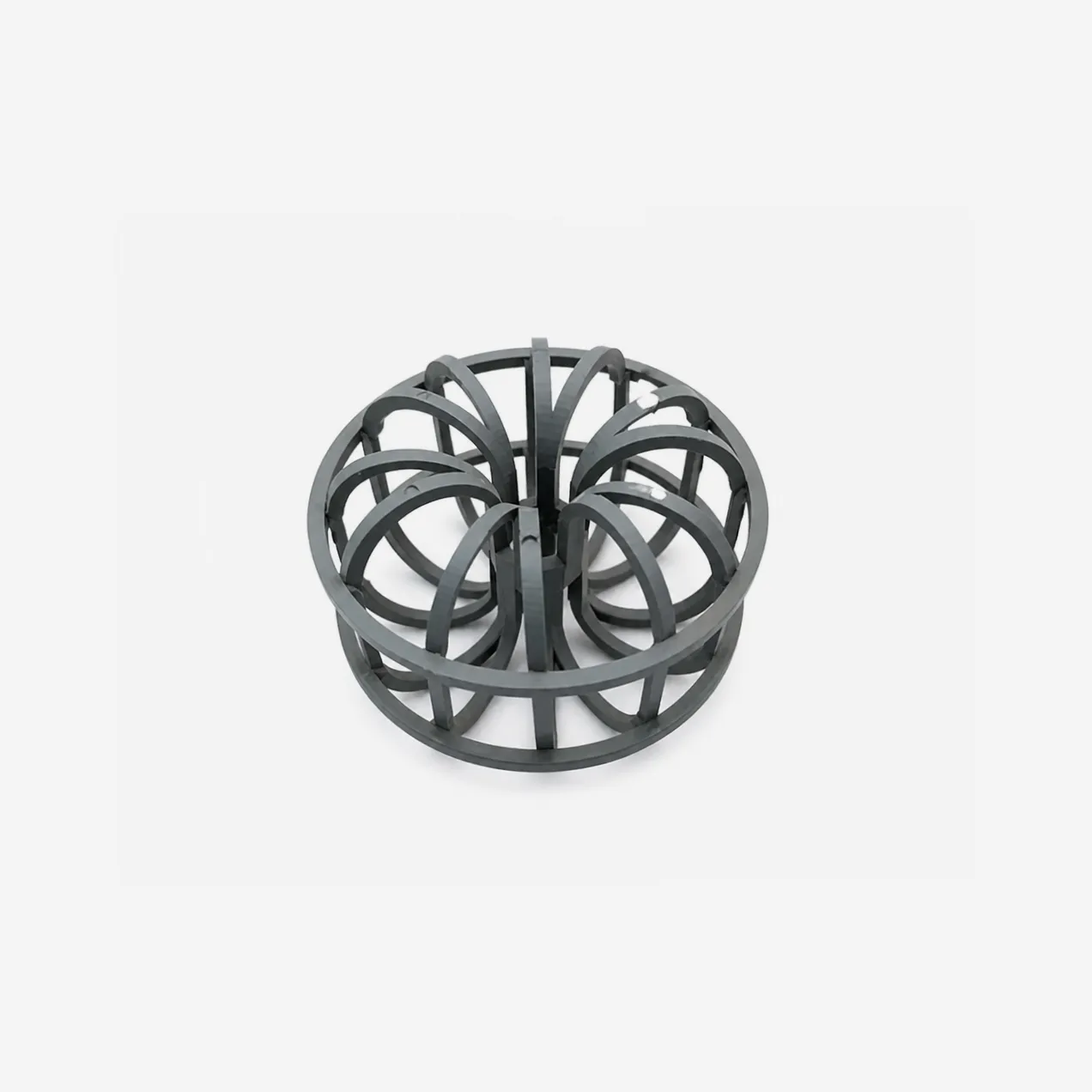
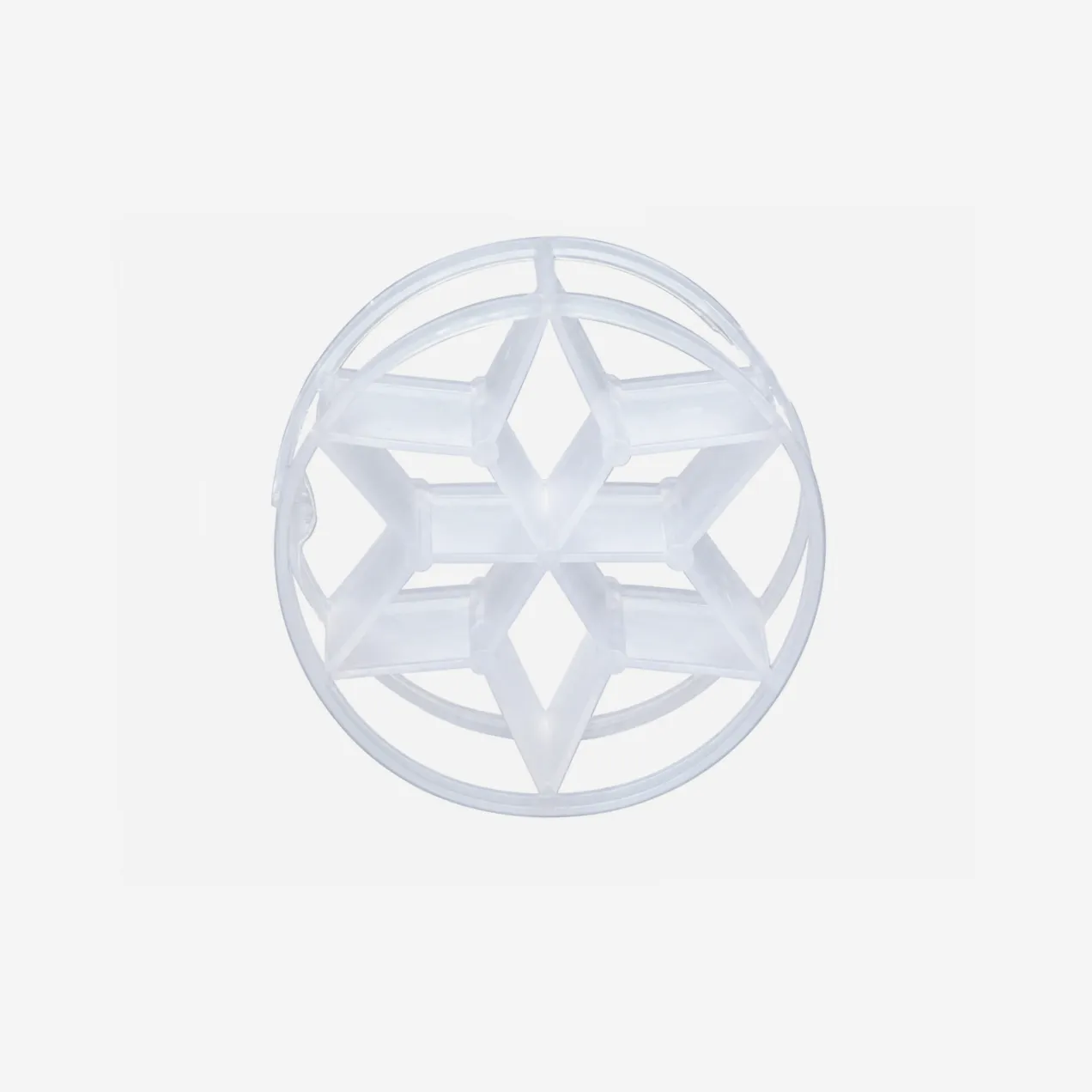
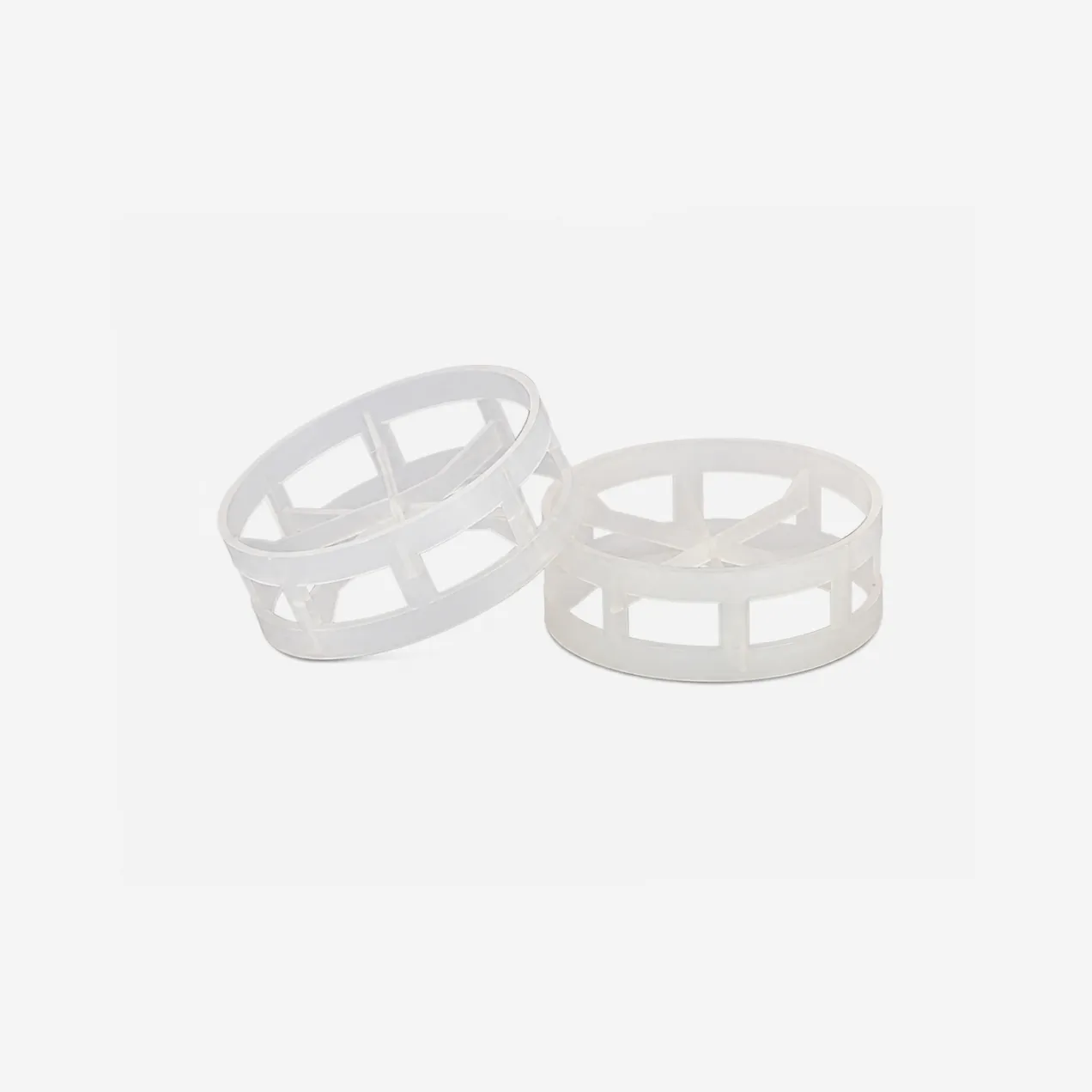
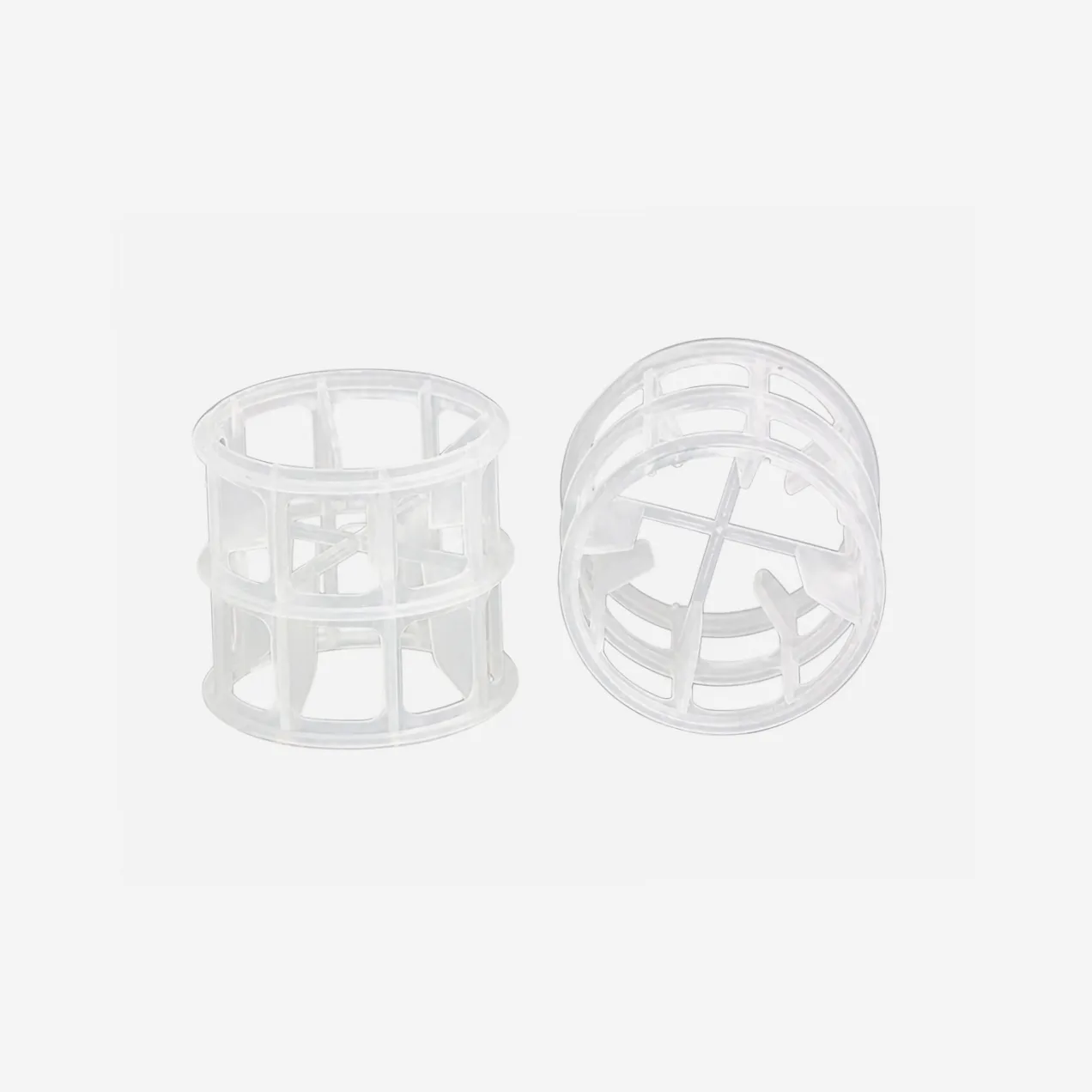
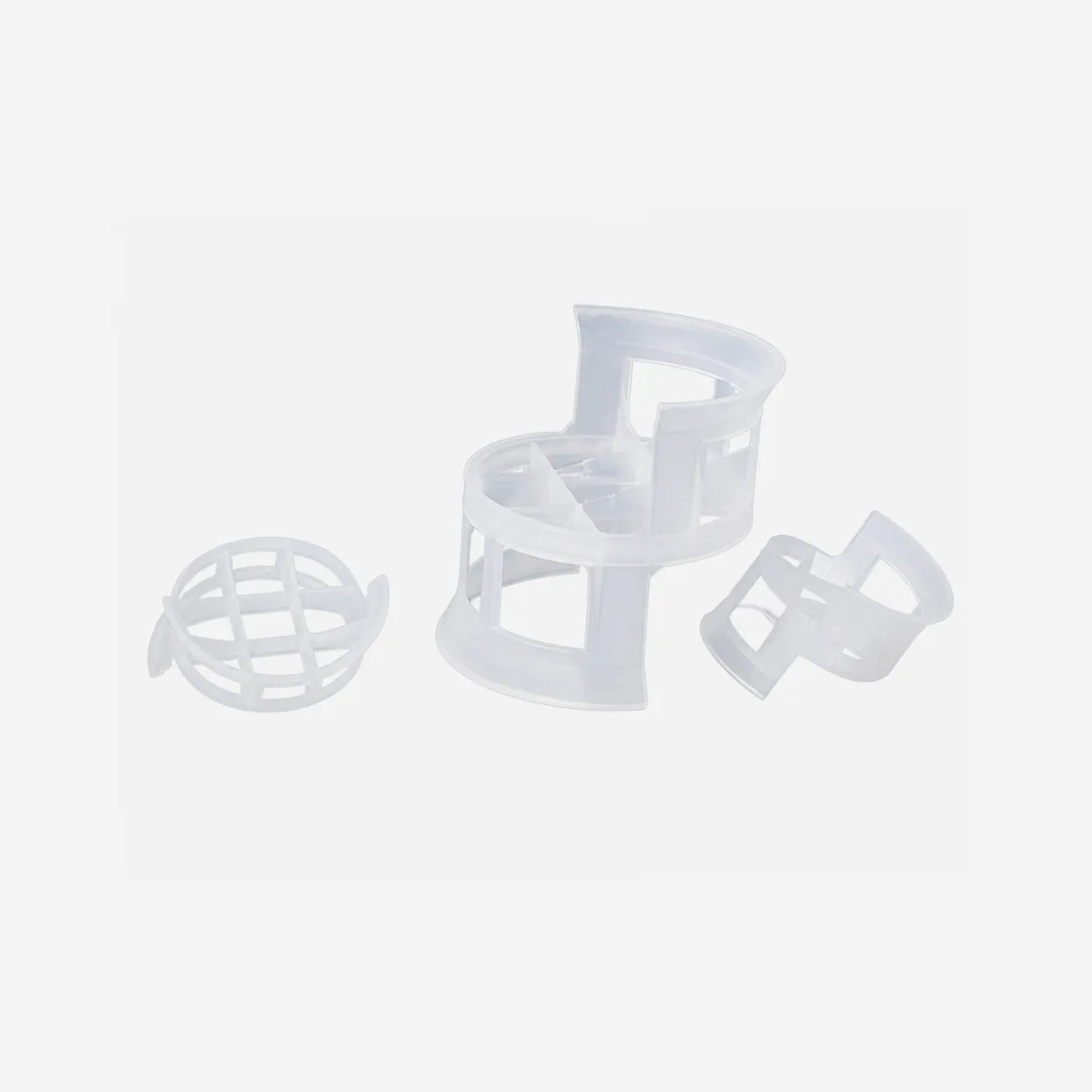
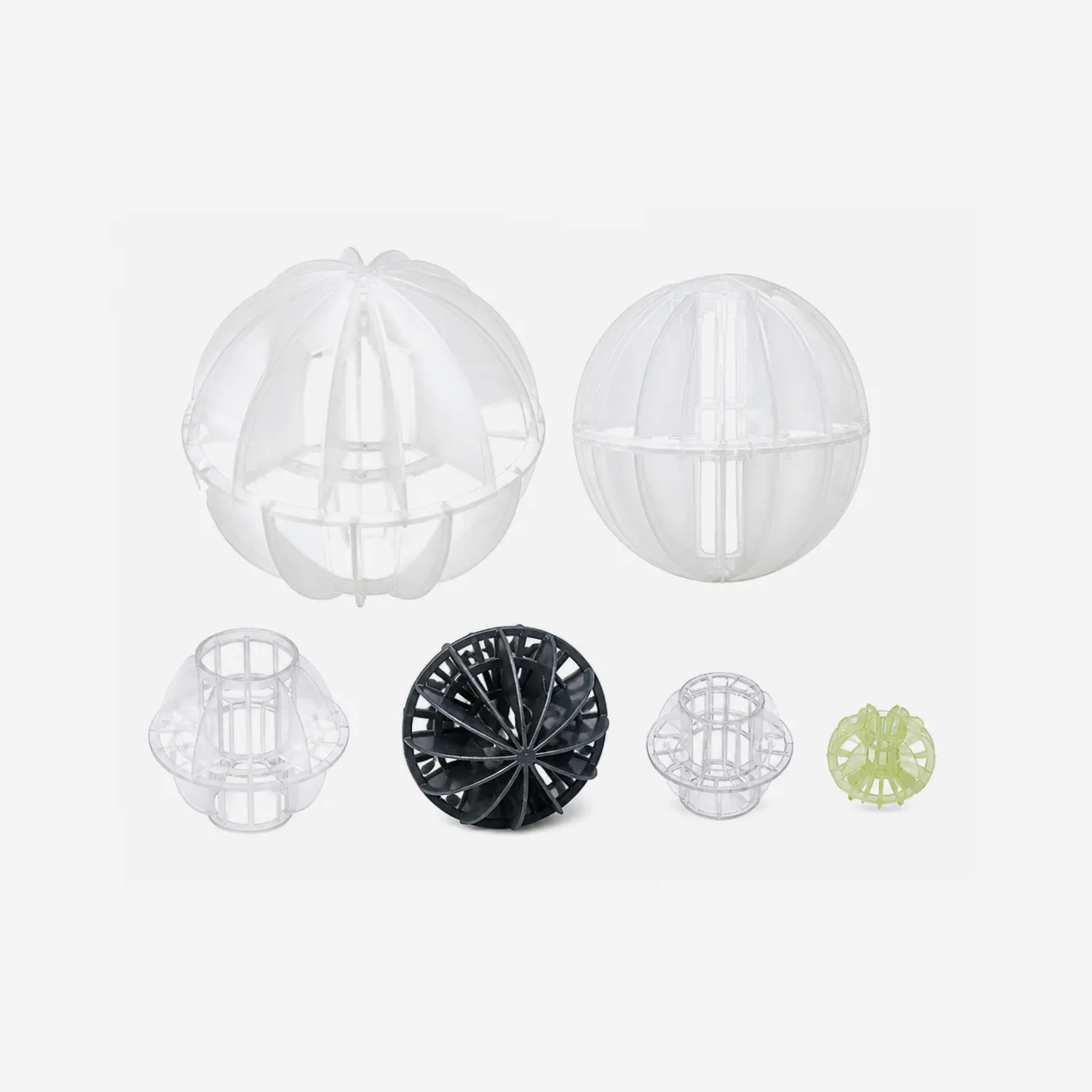
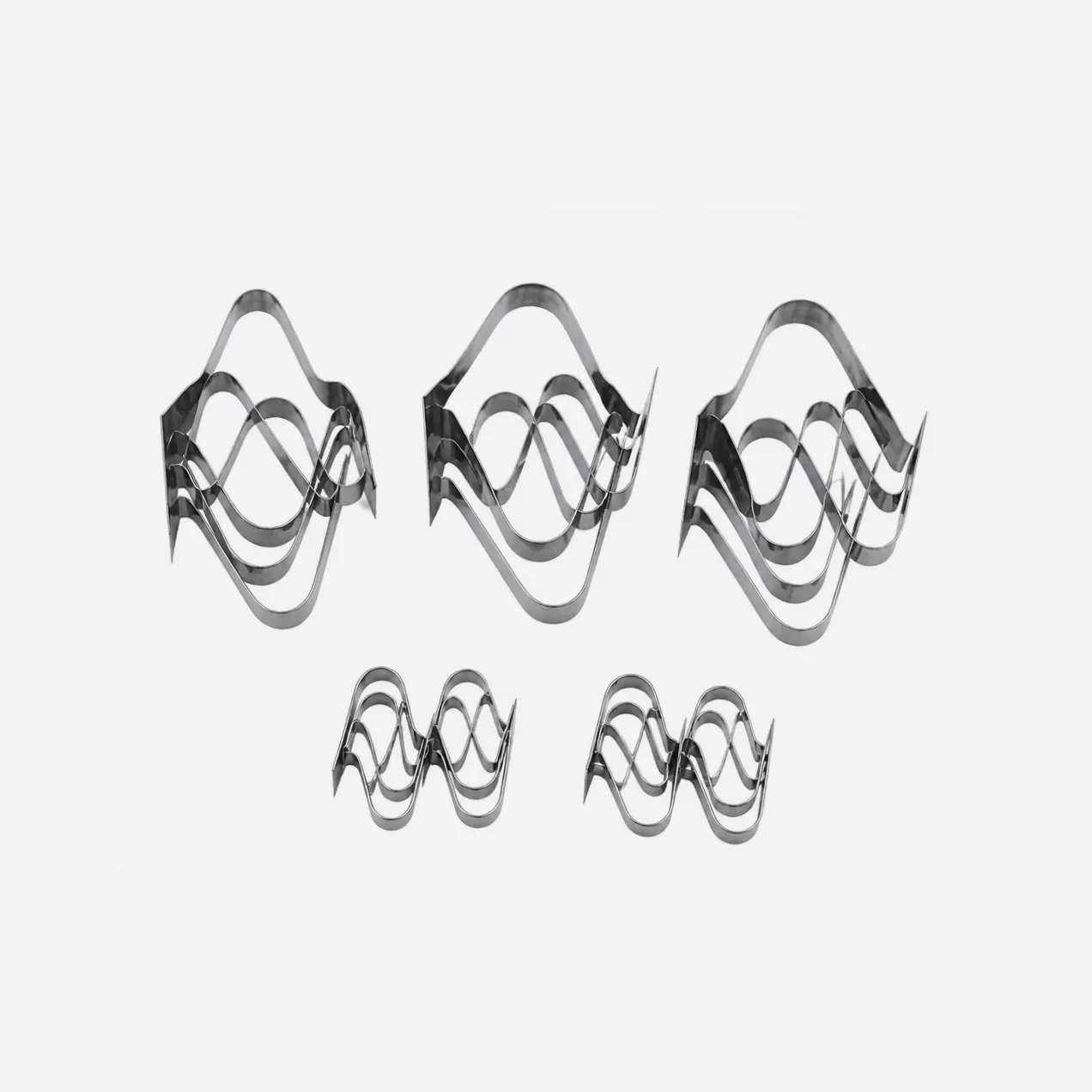
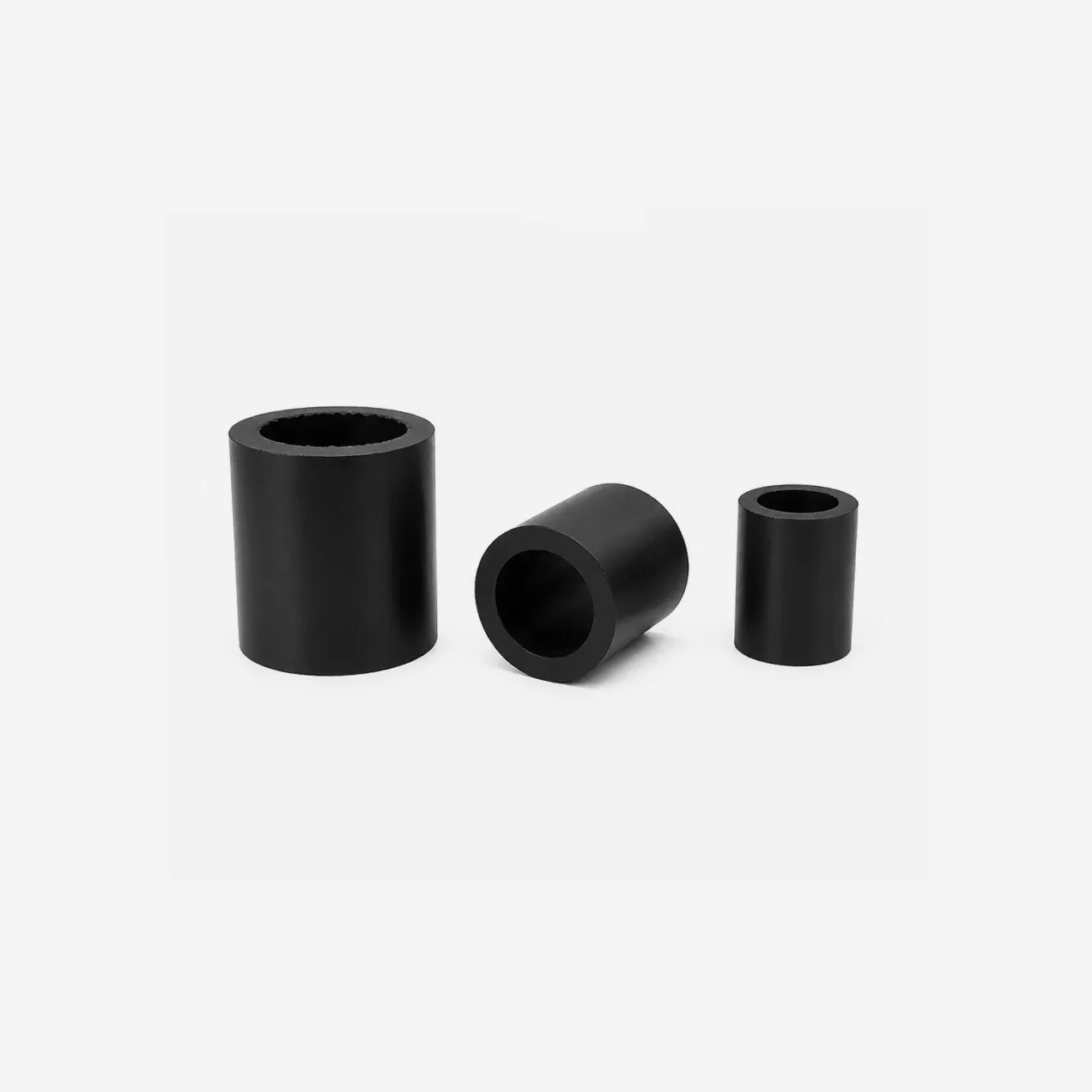
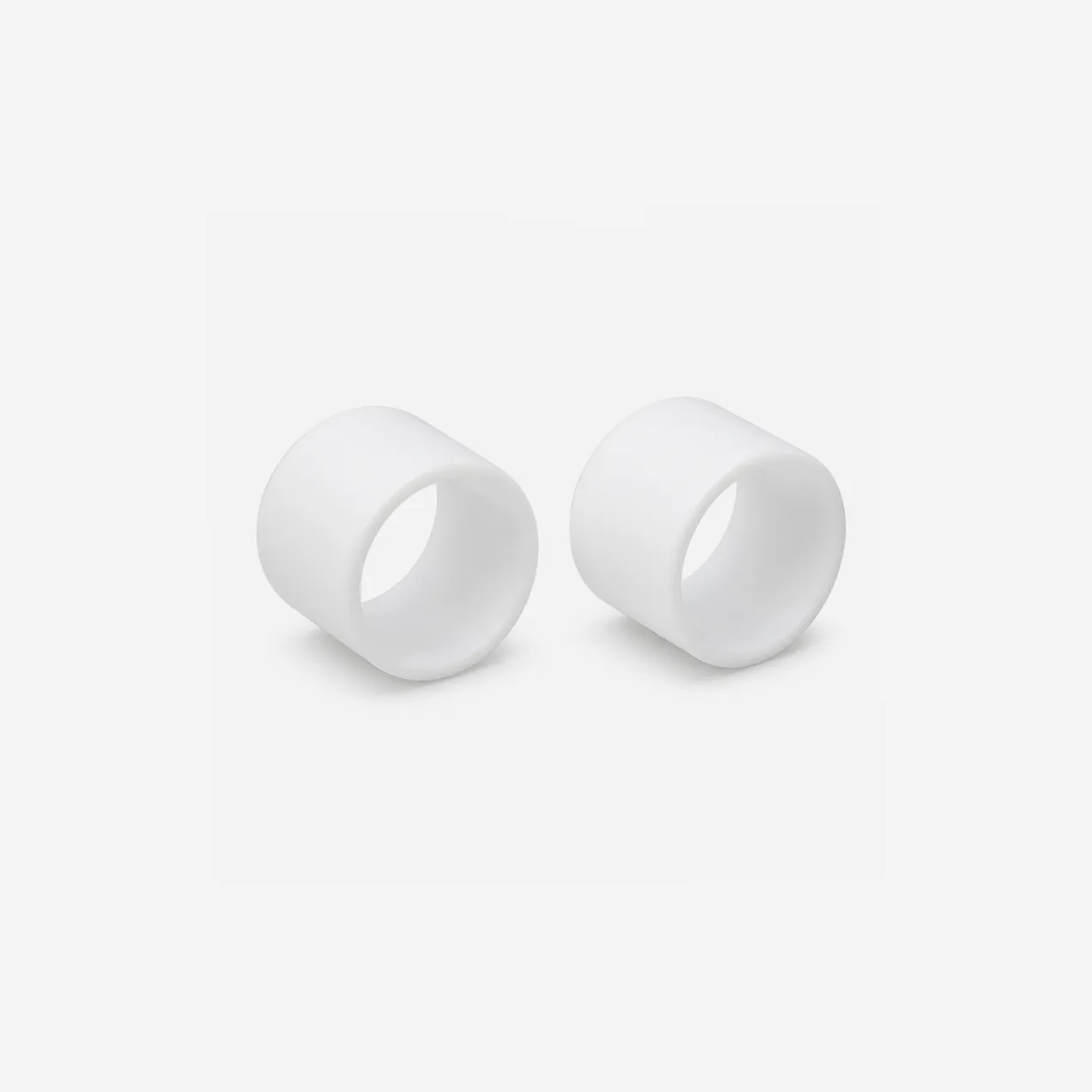
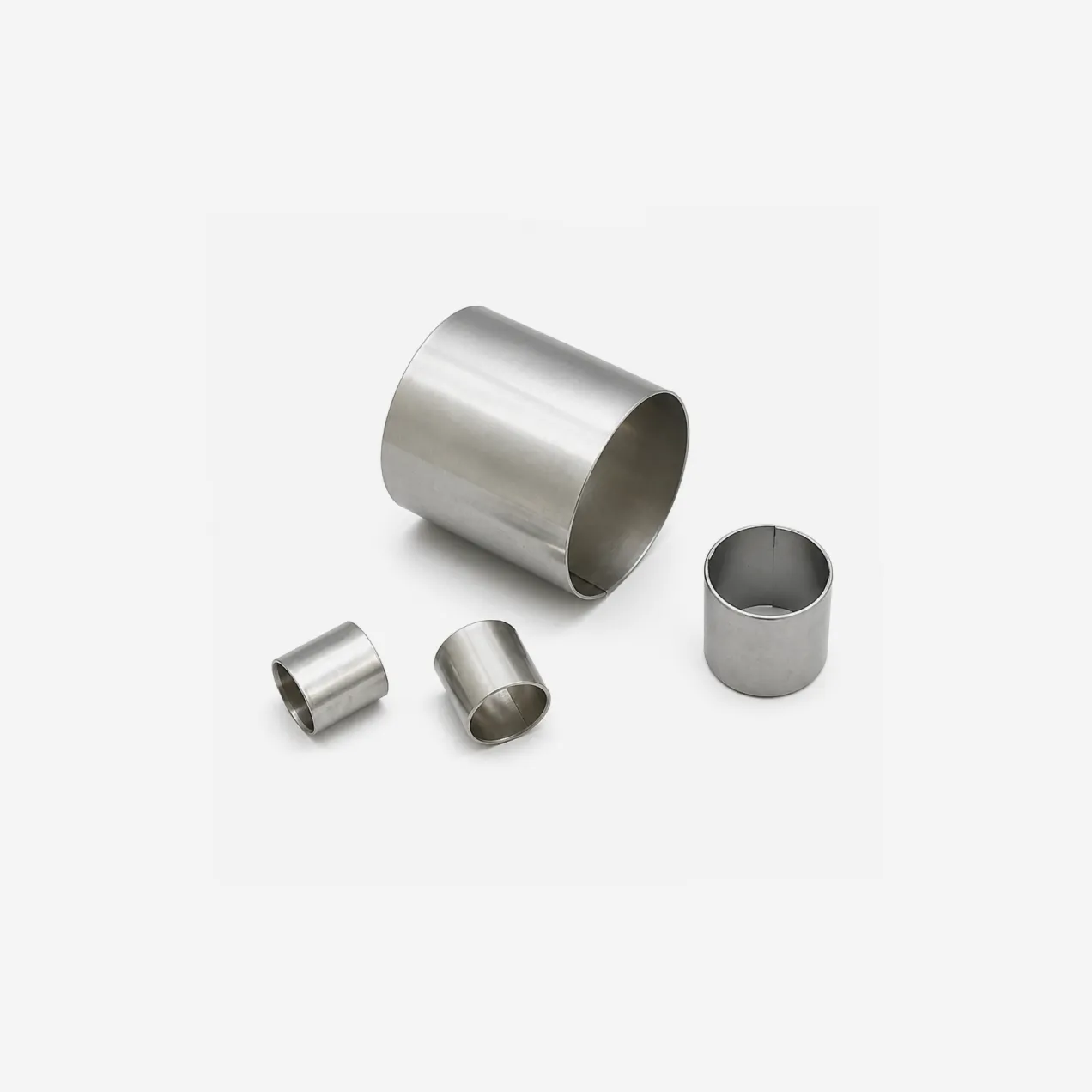
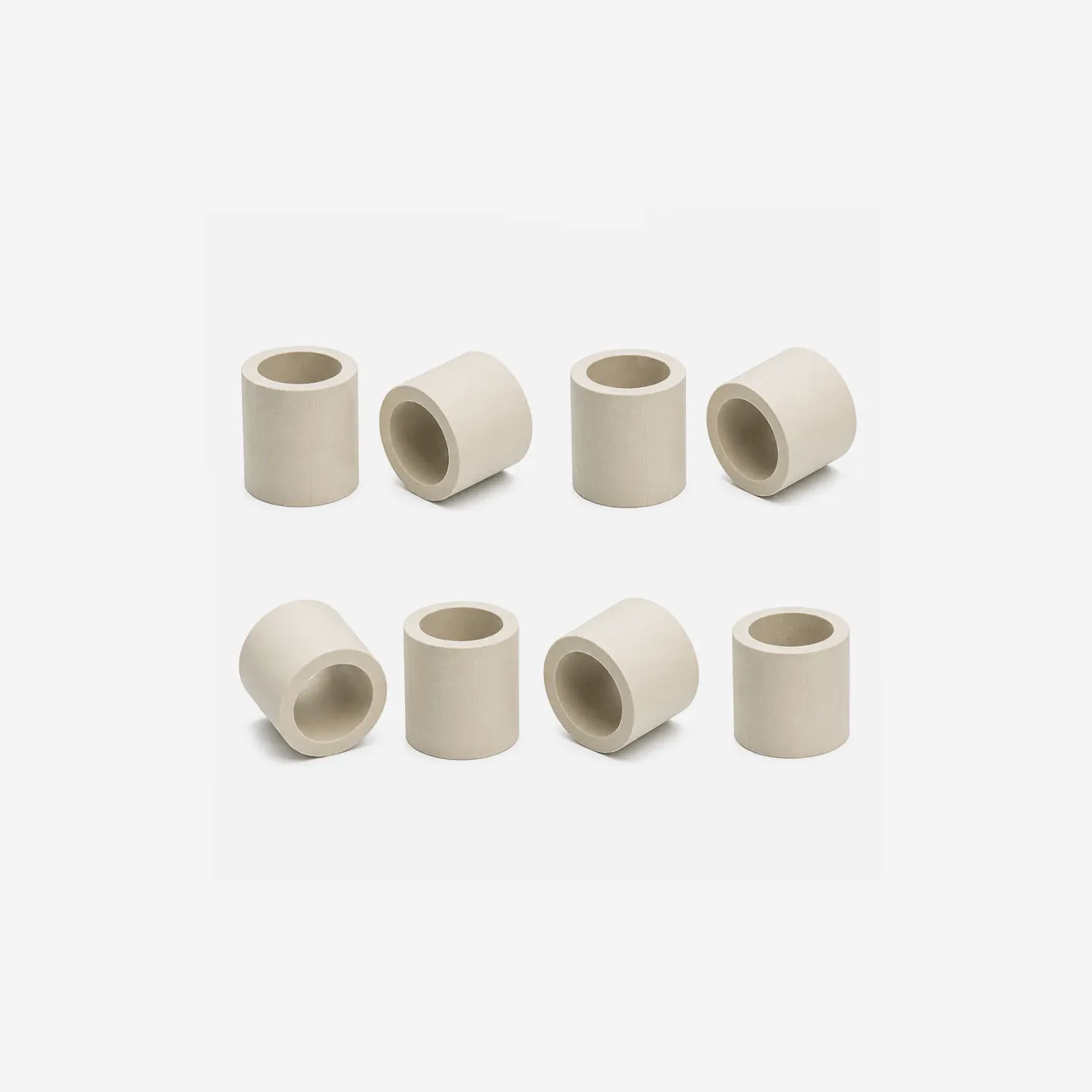
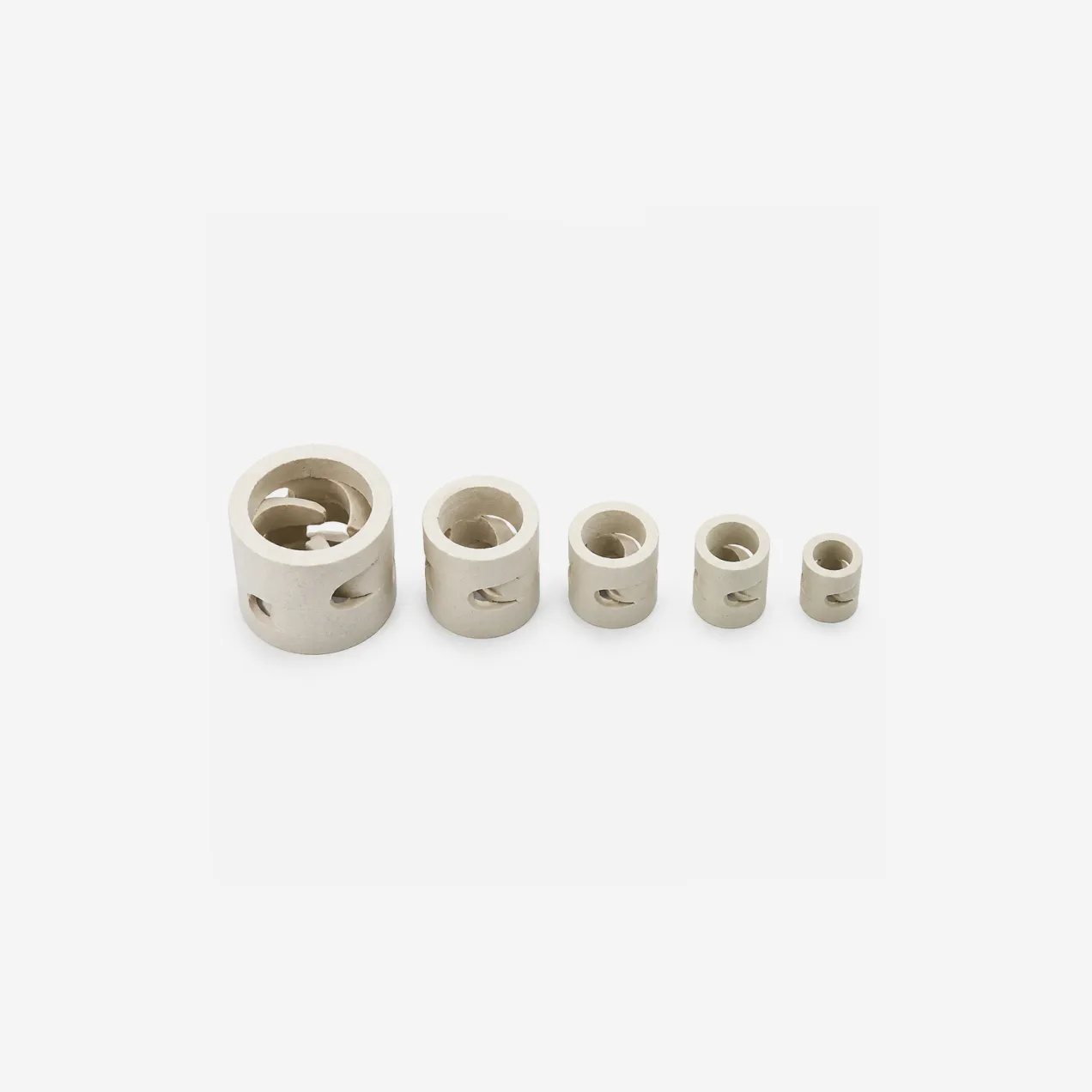
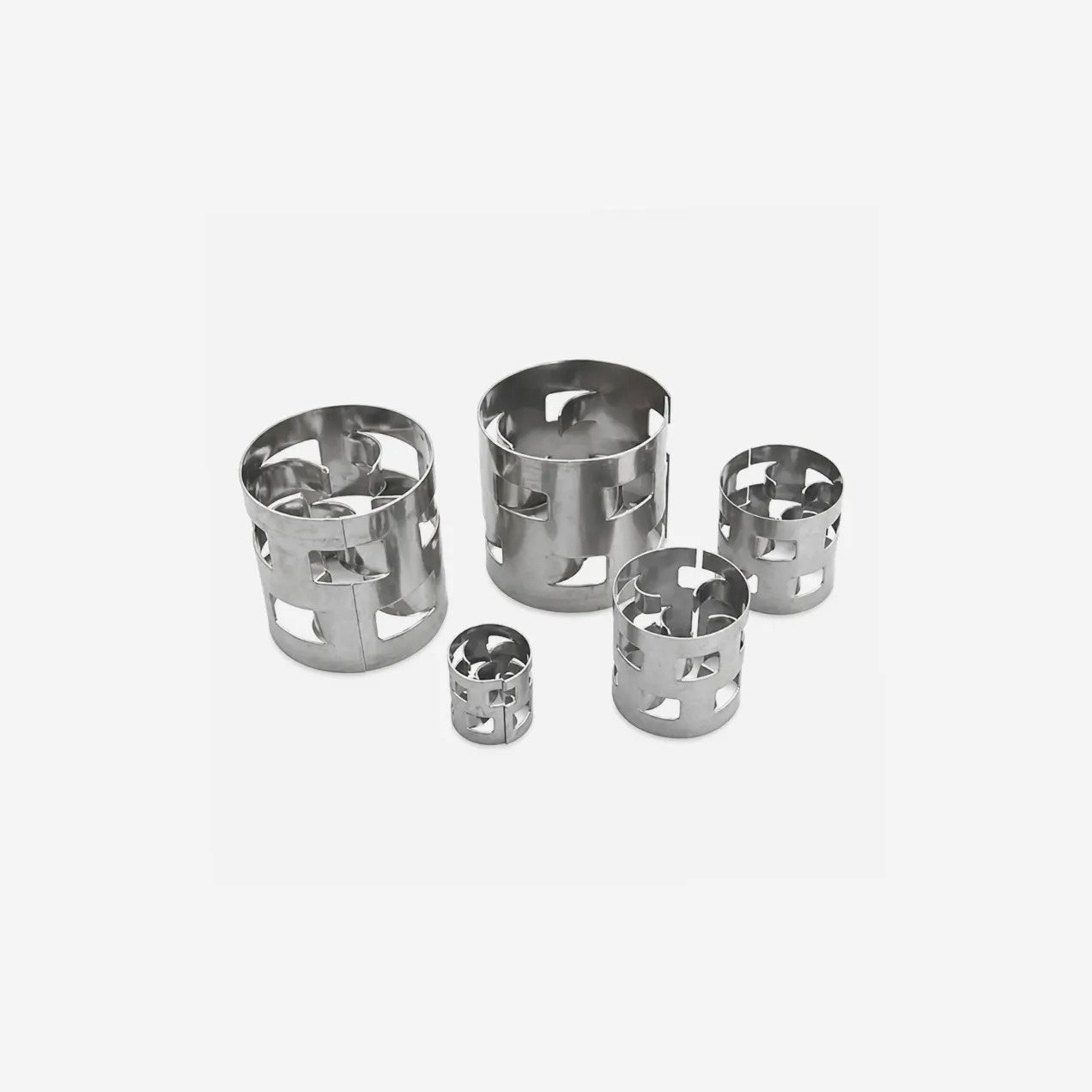
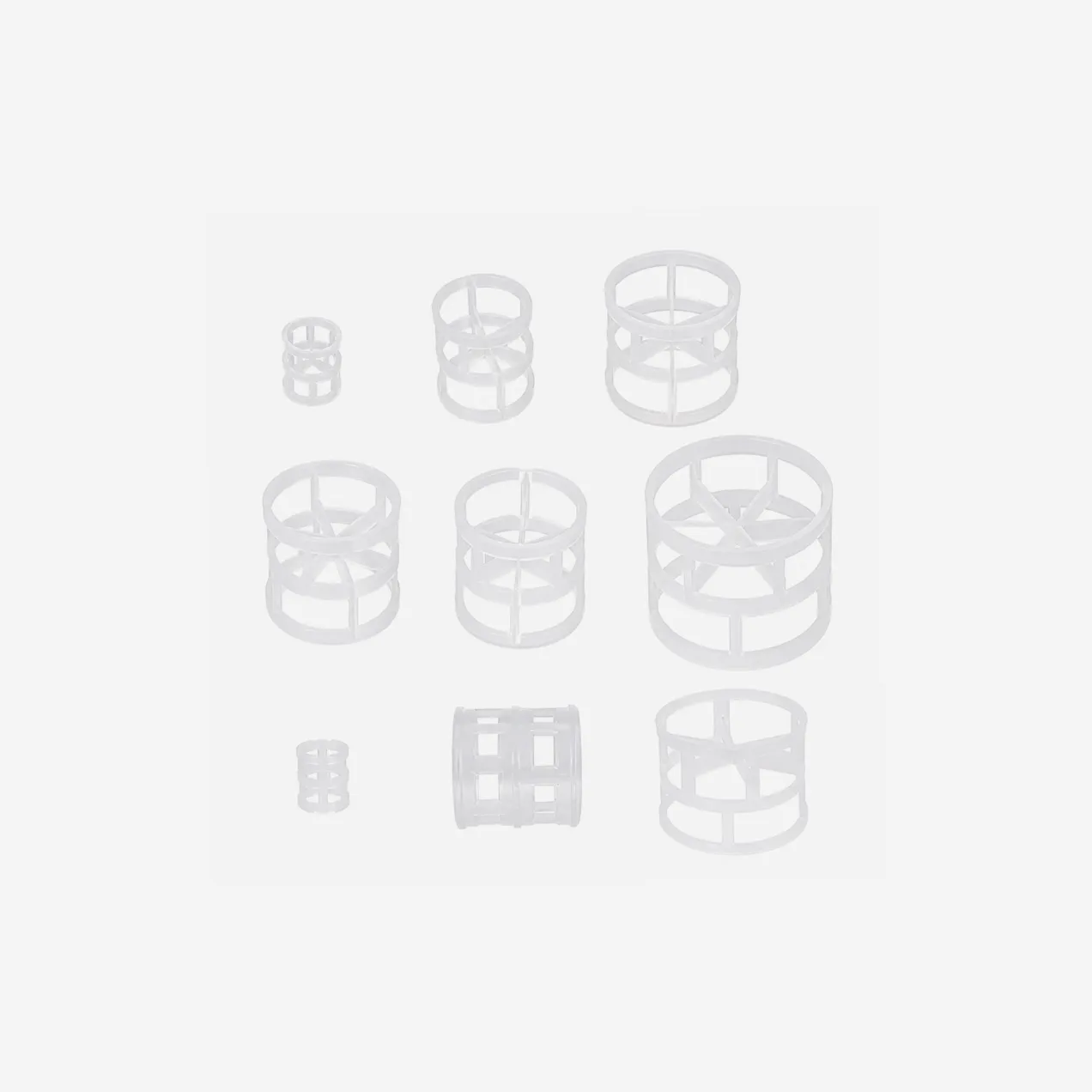
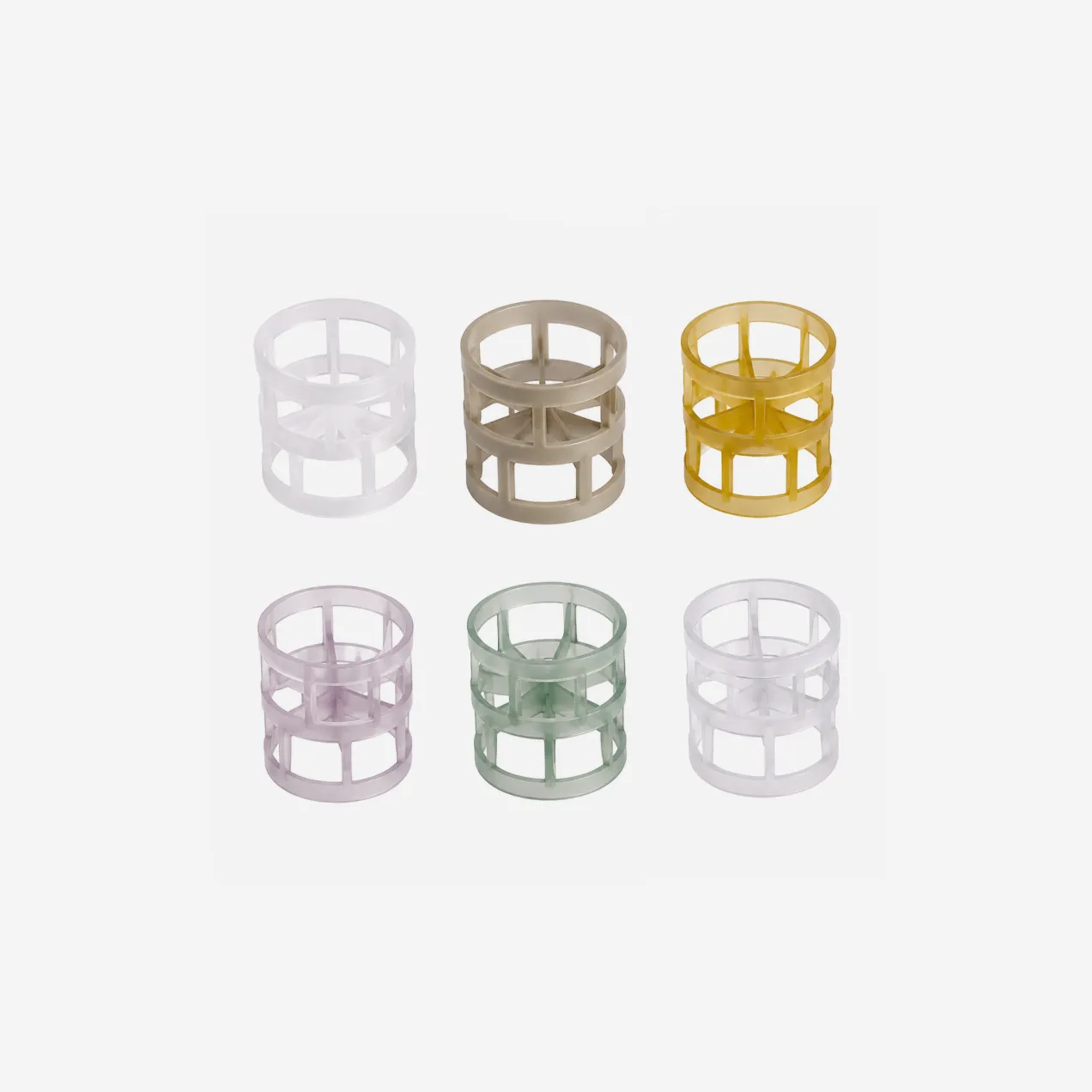
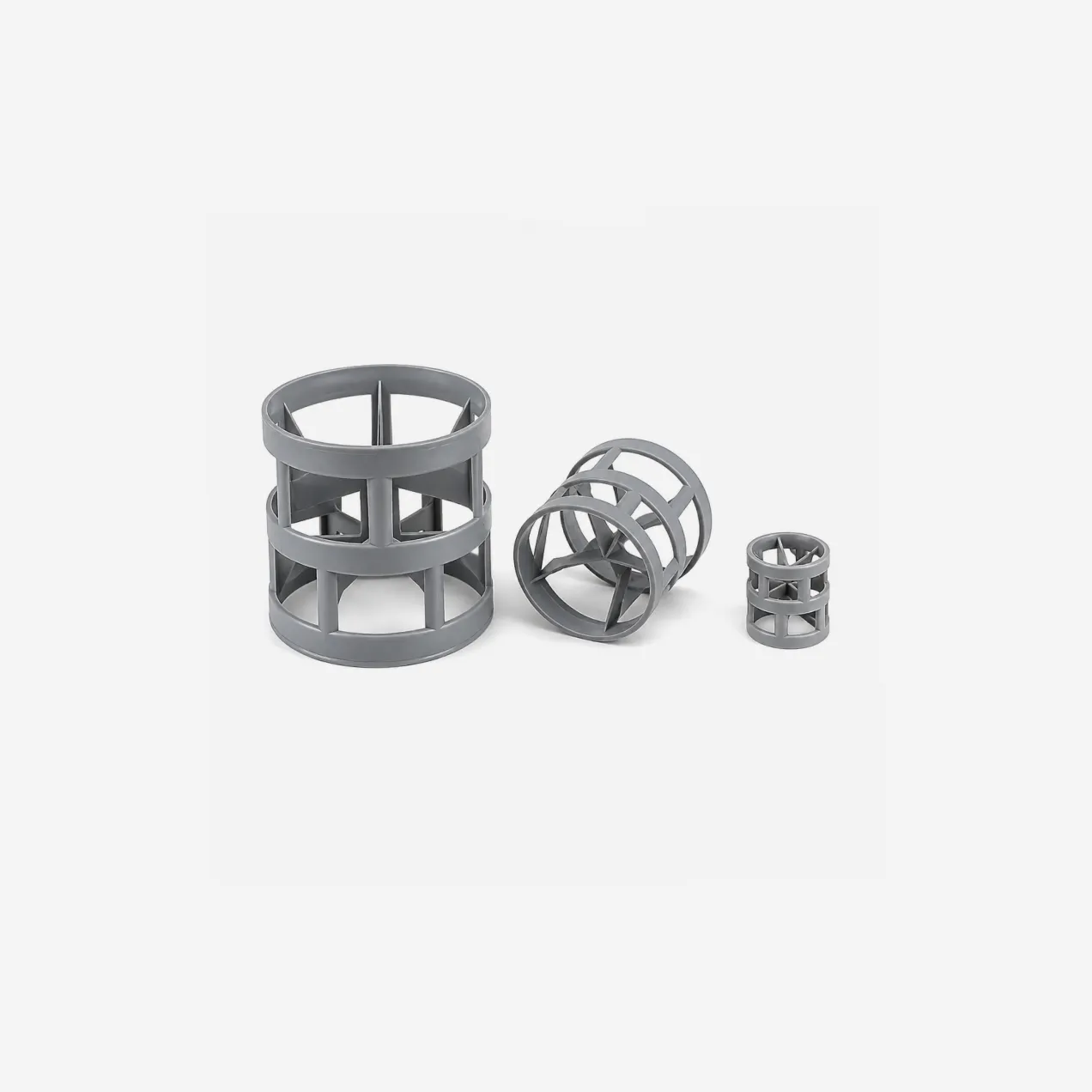
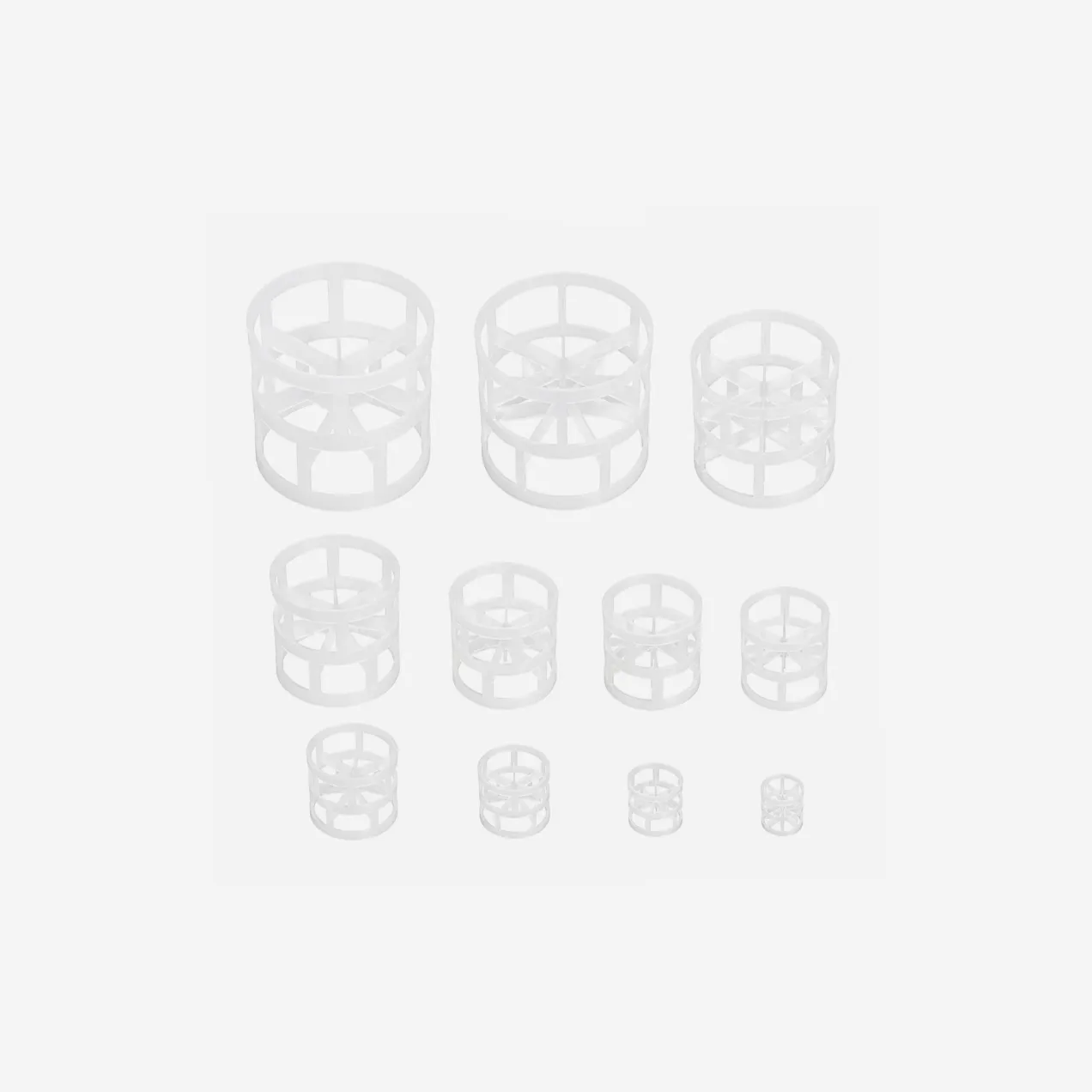
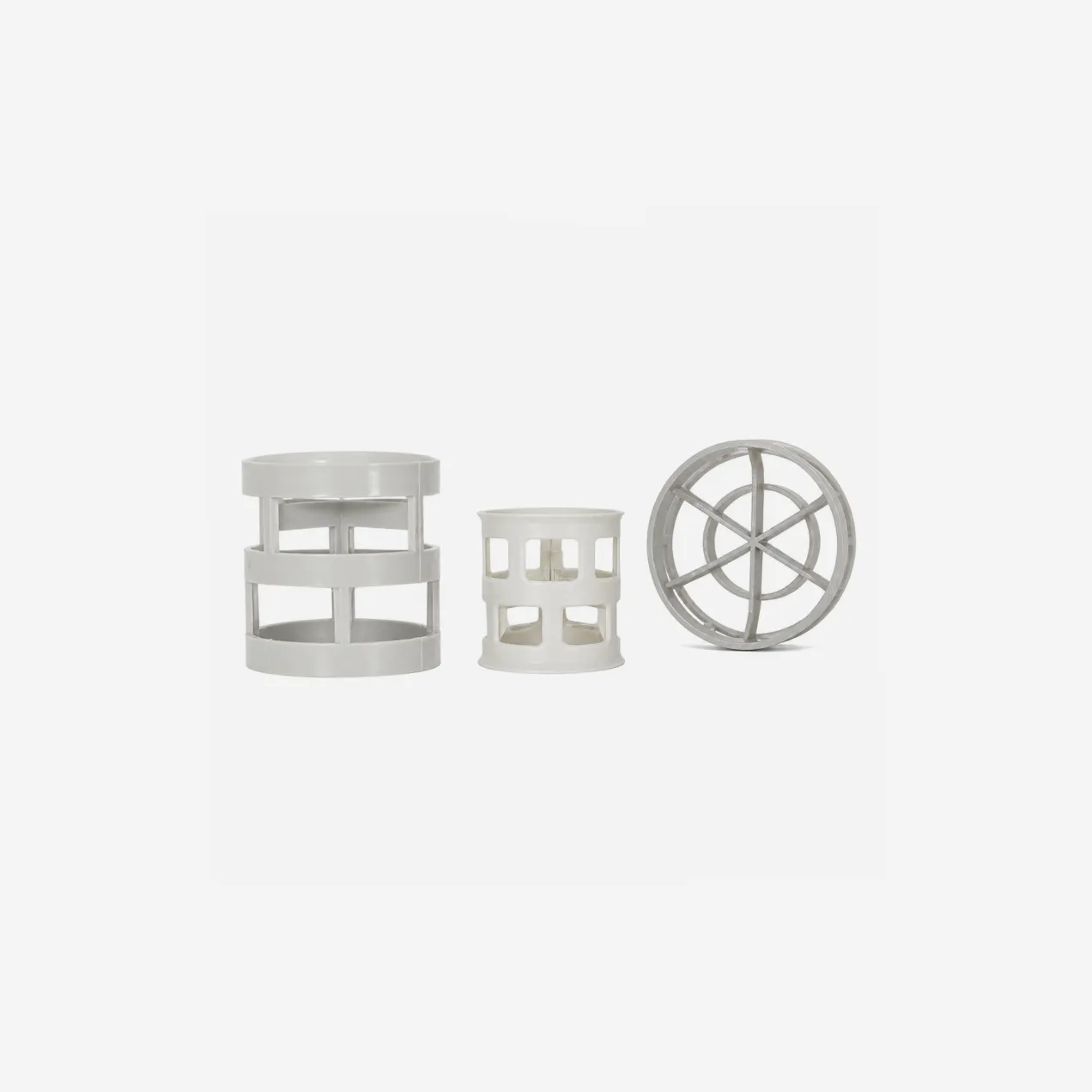
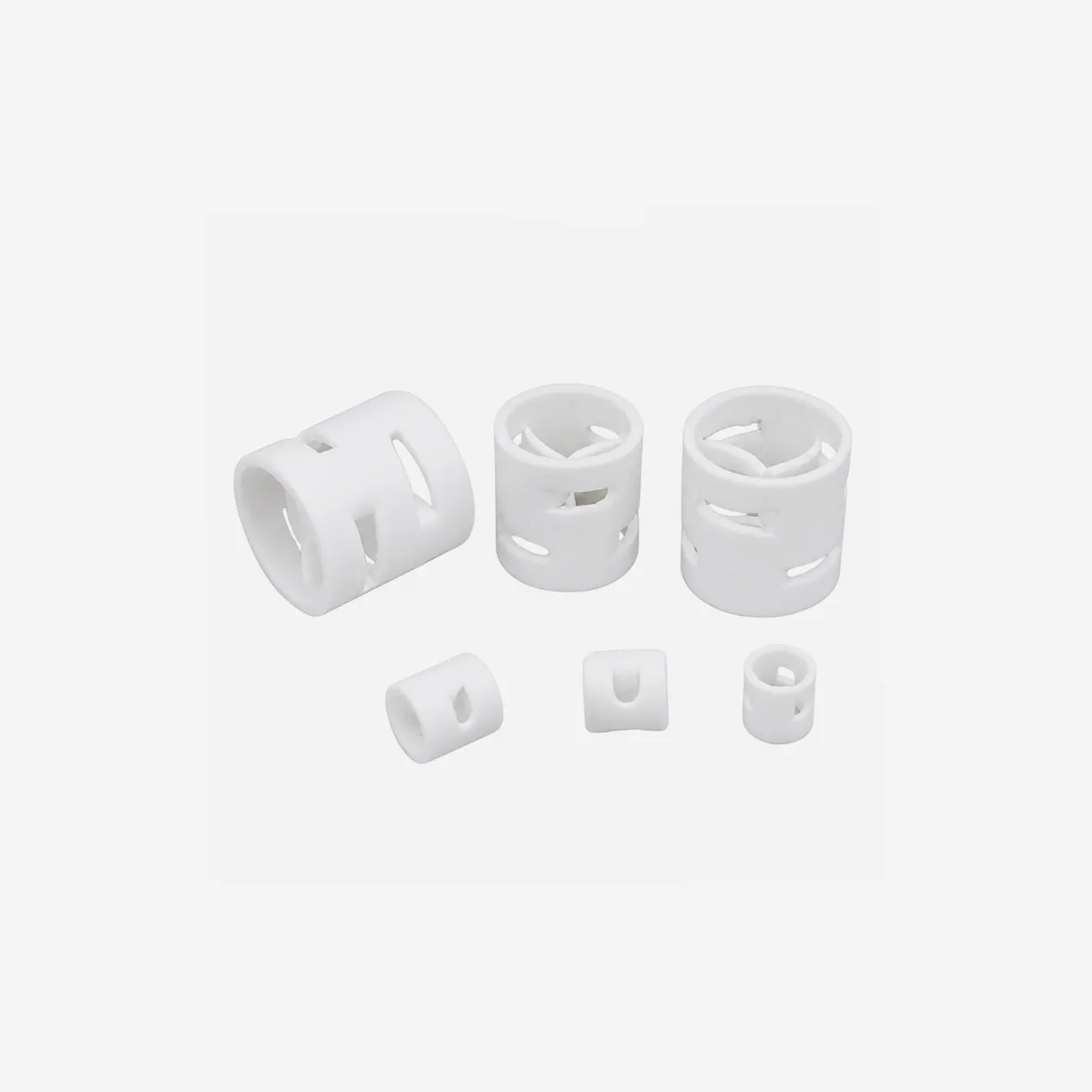
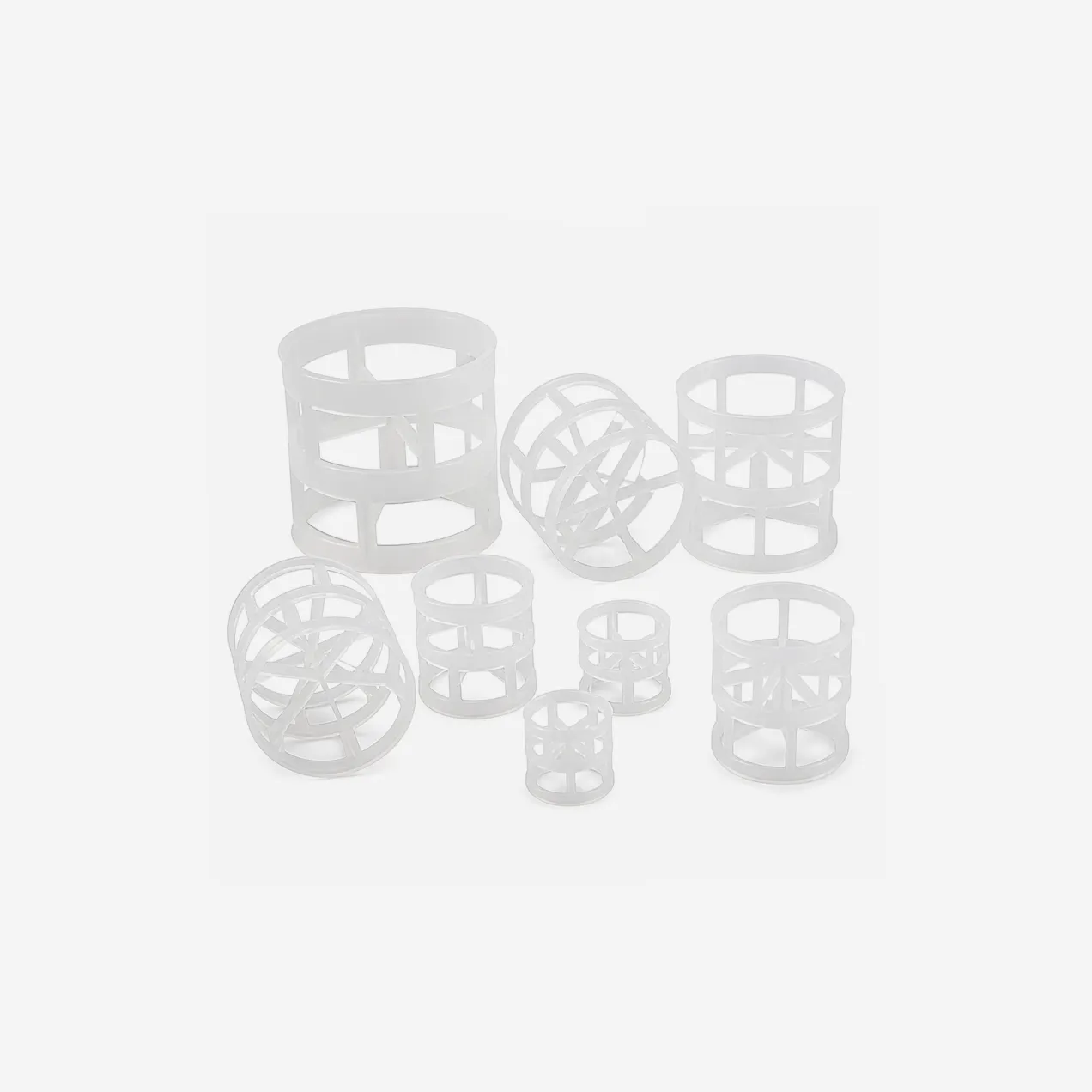
The hexagonal ring takes its name and its character from what sits inside it. The outer shell is an ordinary short cylinder, but bridging across it are six blades that meet at the centre in a six-pointed star. That internal star is the whole point of the design: it turns an otherwise empty ring into a piece packed with working surface, dividing the bore into six channels and giving the liquid far more area to wet and many more edges to spread across. The shell is moulded from a corrosion-resistant plastic — polypropylene, reinforced PP, PVC, CPVC or PVDF — chosen to match the stream, and the packing runs in media from about 60 to 150 degrees.
What the internal star does, feature by feature:
| Hexagonal-ring feature | What it does |
|---|
| Six blades meeting in a star | Split the ring into six channels and pull liquid off the wall into the body |
| Many blade edges and junctions | Serve as redistribution points that tear and renew the liquid film |
| Large internal wetted area | Adds gas-liquid contact surface for efficient mass transfer |
| Open cylindrical shell | Lets gas pass freely so the bed stays free-flowing |
That makes the hexagonal ring a contact-area-first packing, at home in separation, absorption and scrubbing towers across petroleum, chemical, chlor-alkali, gas and environmental plants. Against a plain Raschig ring it offers vastly more internal surface, and against a Pall ring it trades a little openness for more contact and better liquid distribution. No manufacturer datasheet came with this item, so exact surface-area, void and count figures should be confirmed against the supplier's spec sheet before ordering. For sizing help, pass along the column diameter, the service and the flow.