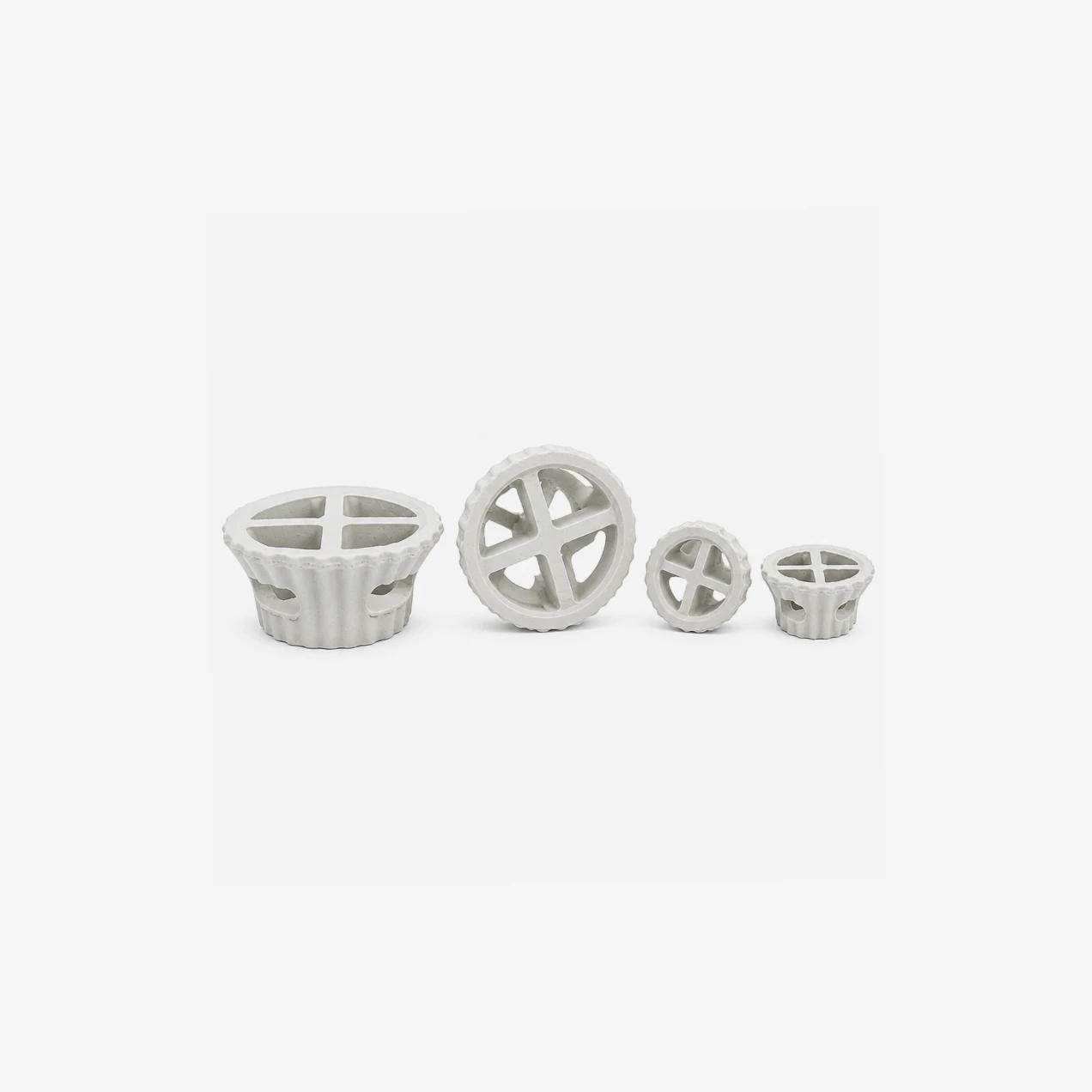
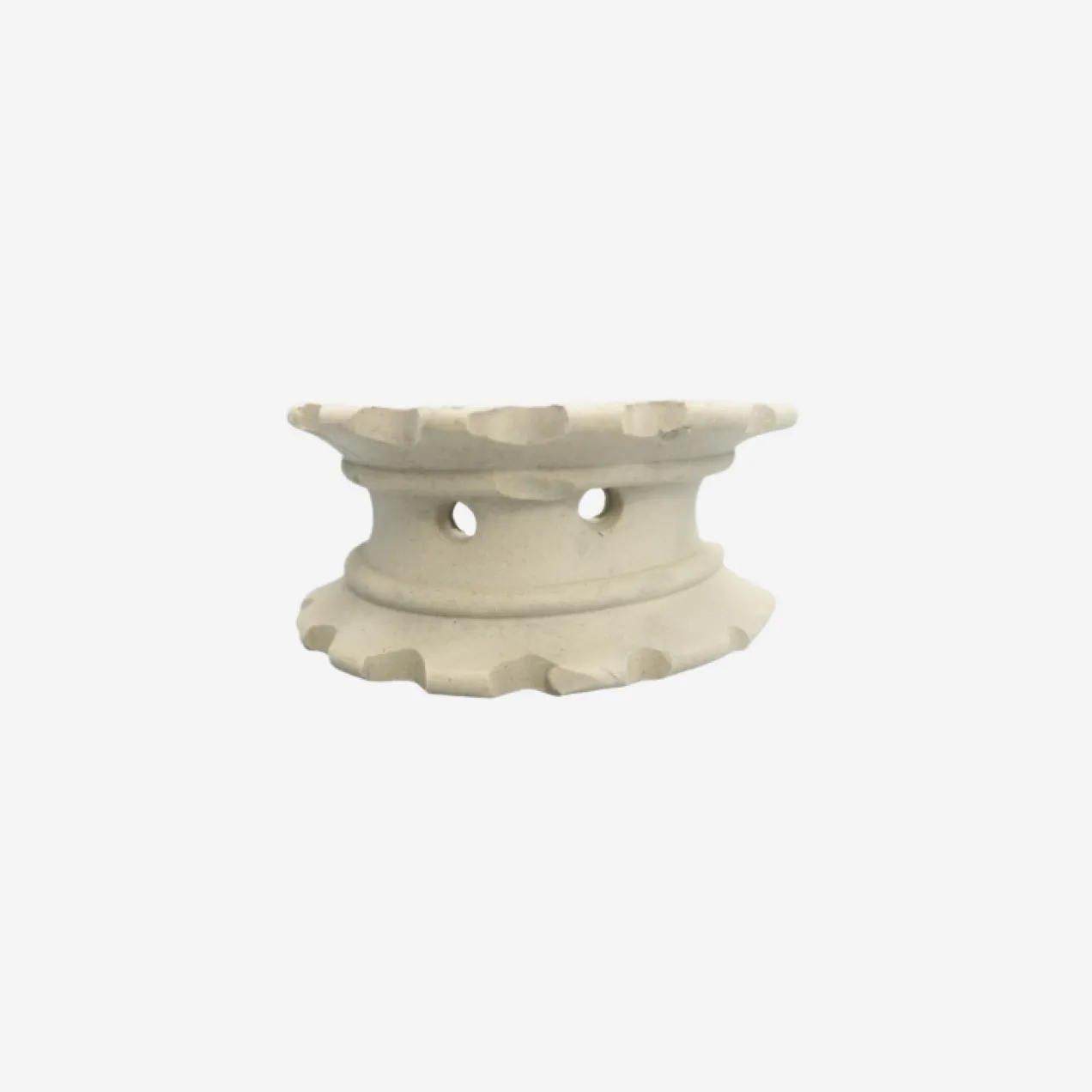
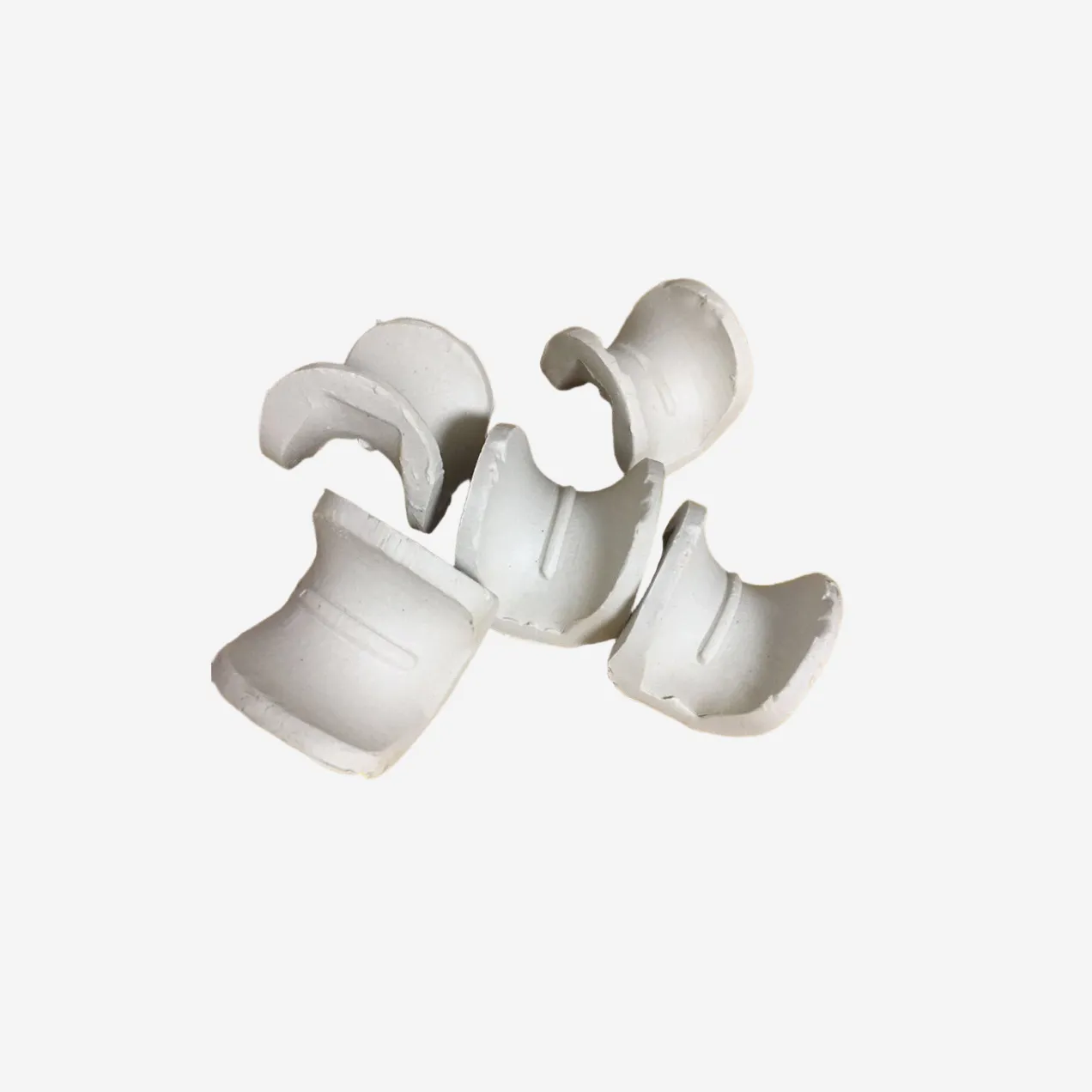
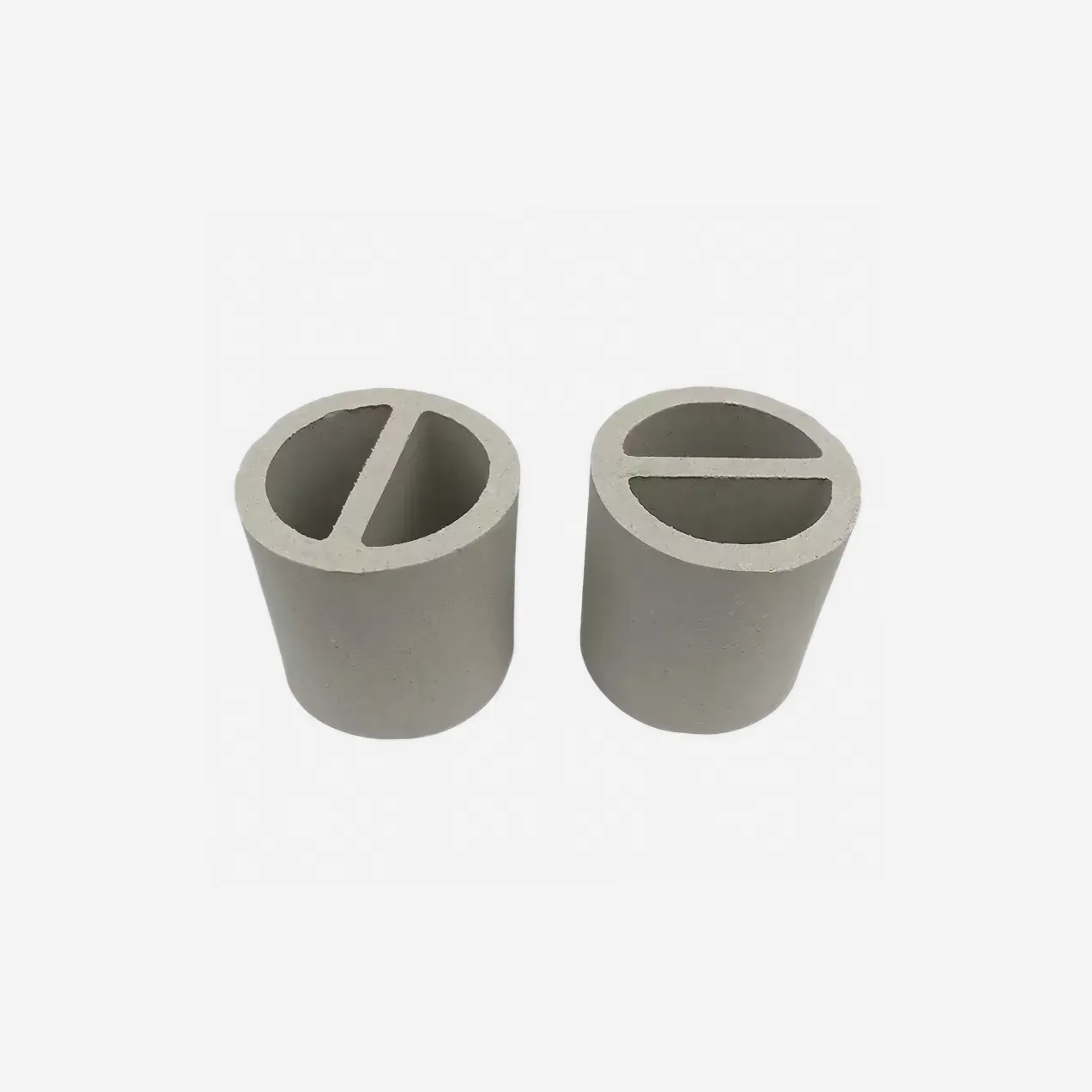
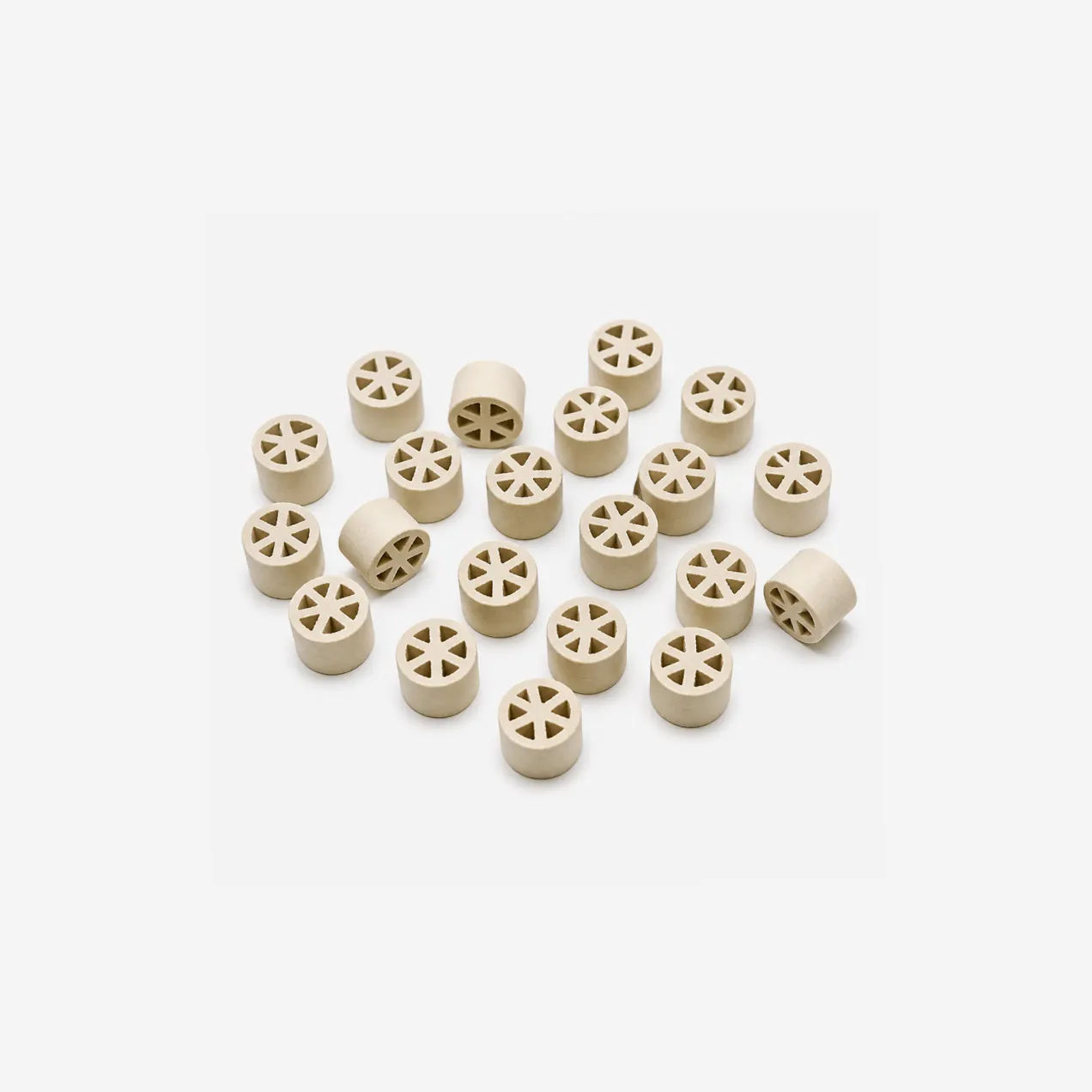
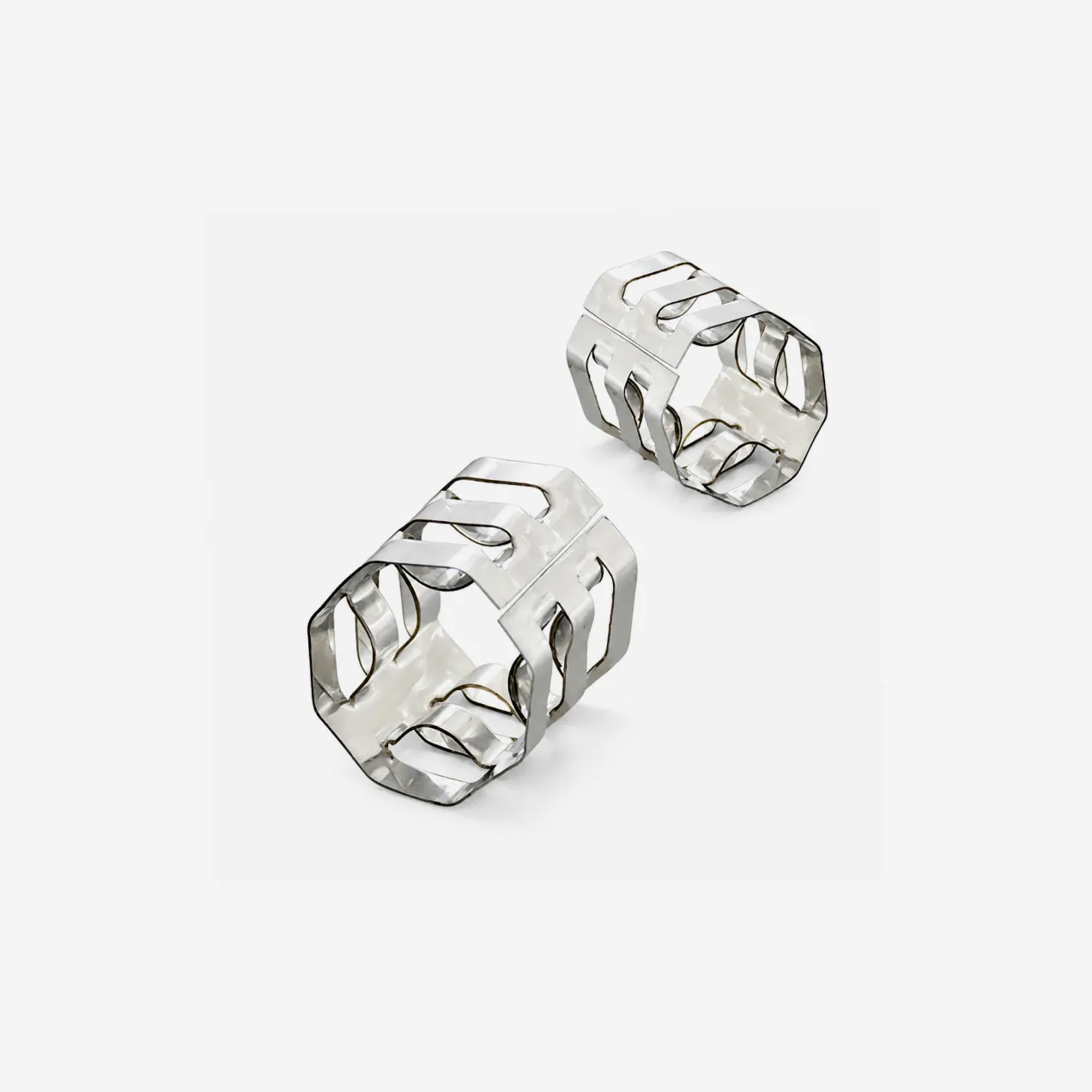
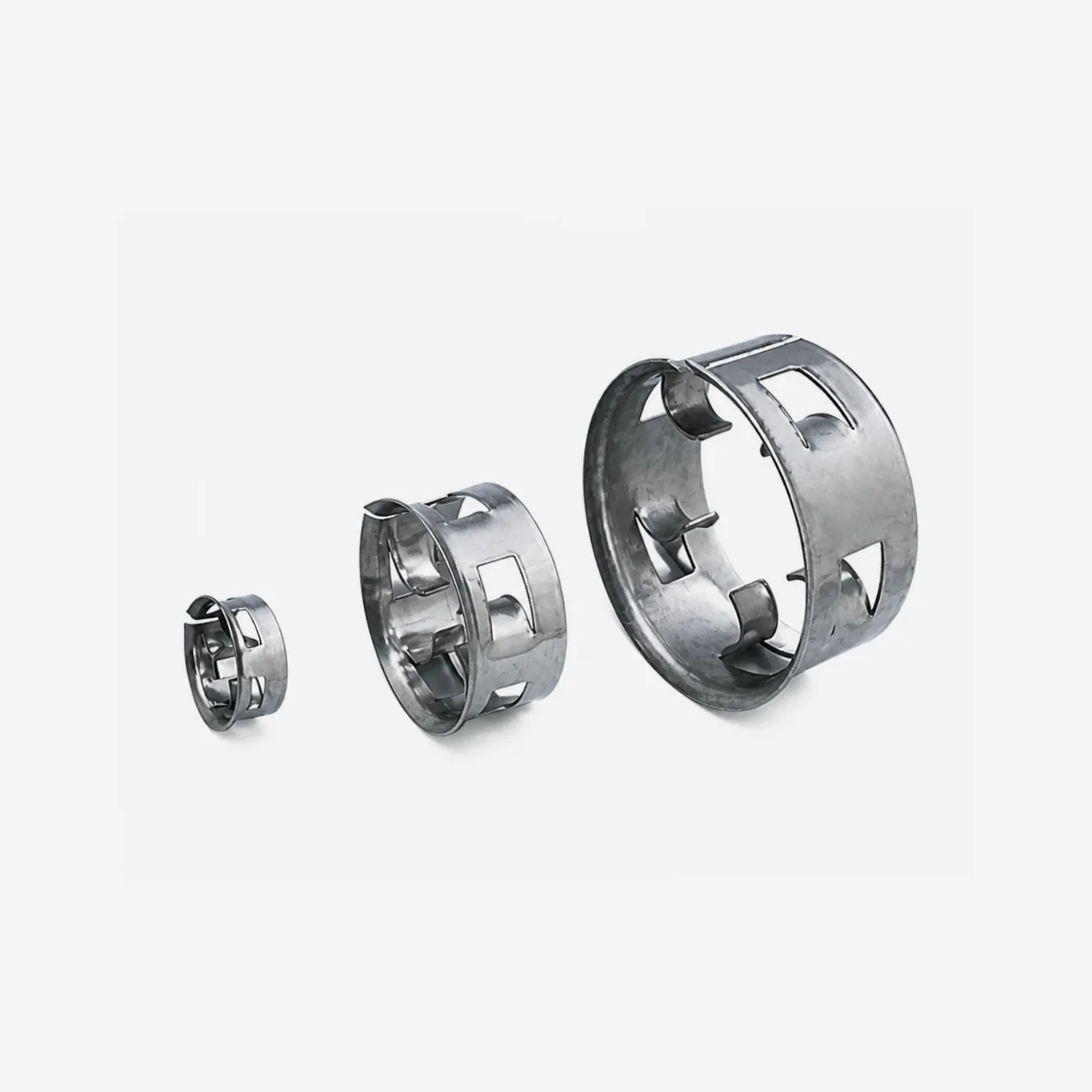
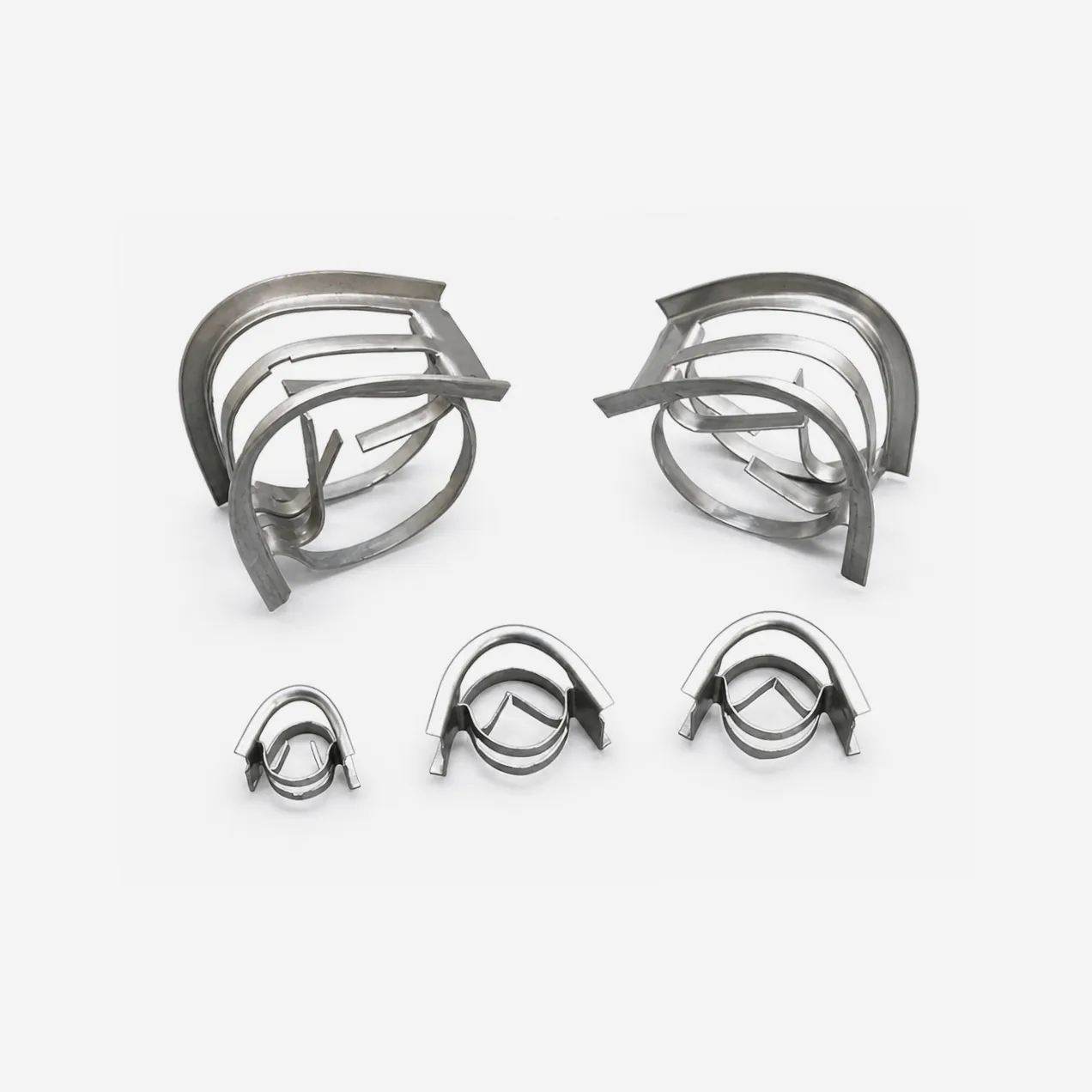
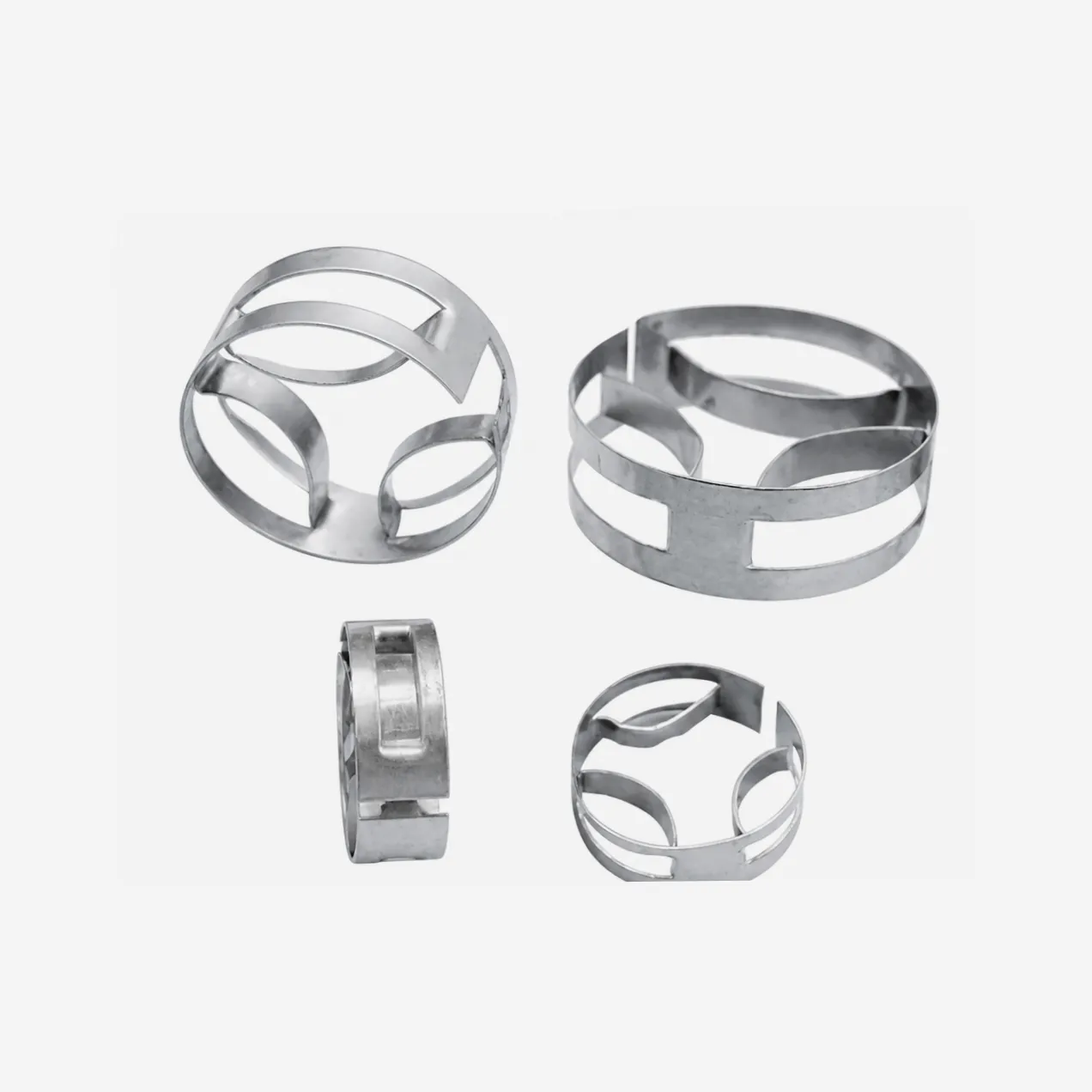
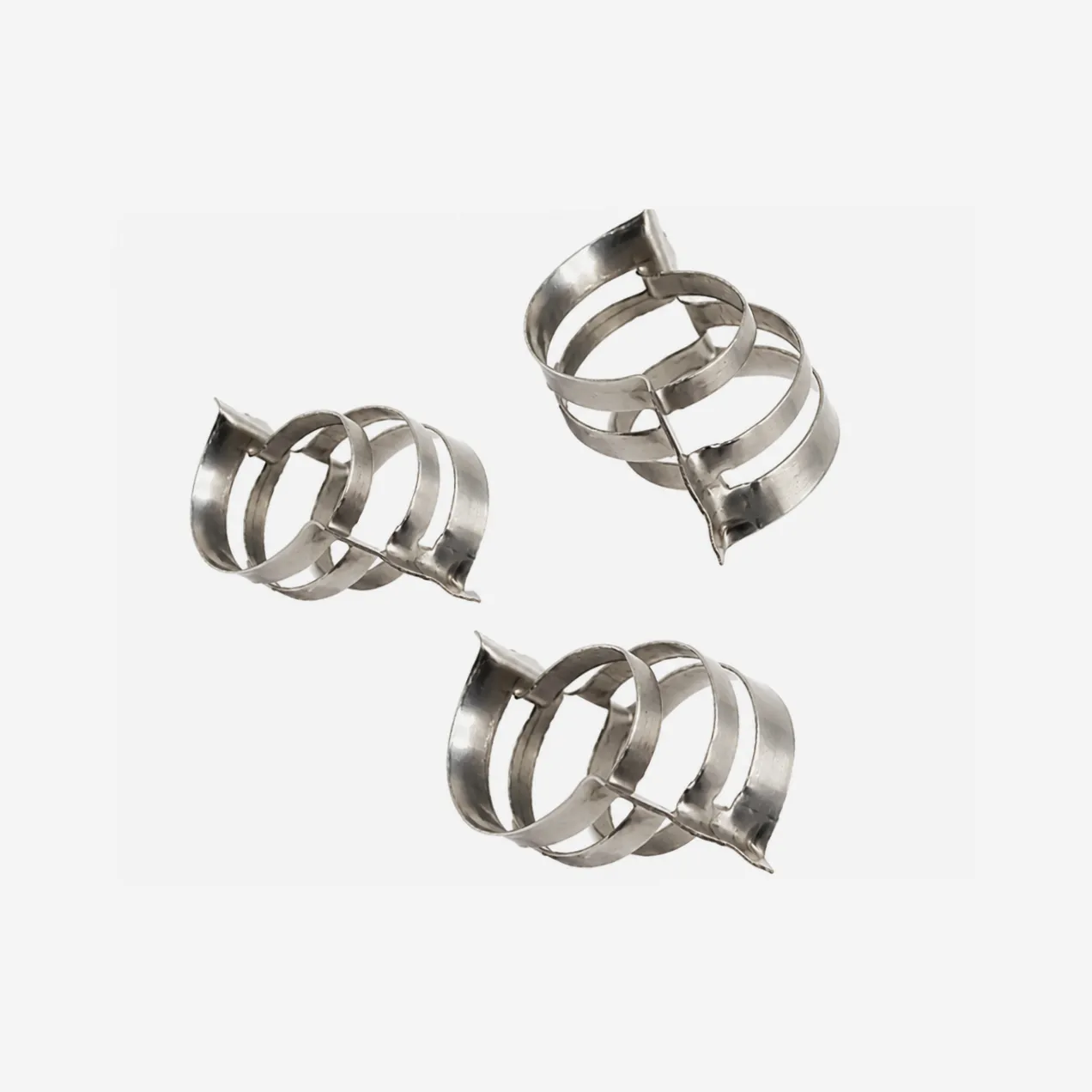
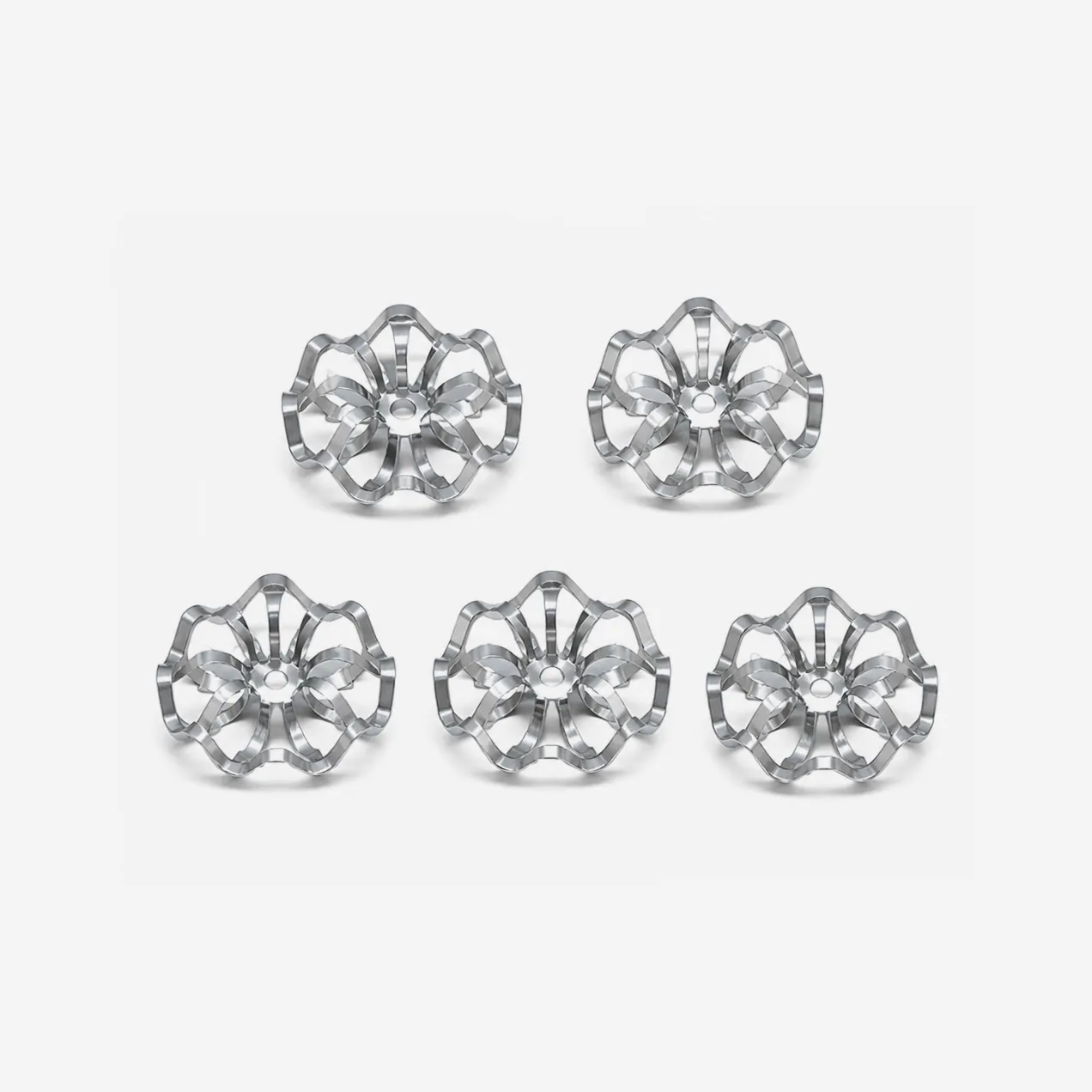
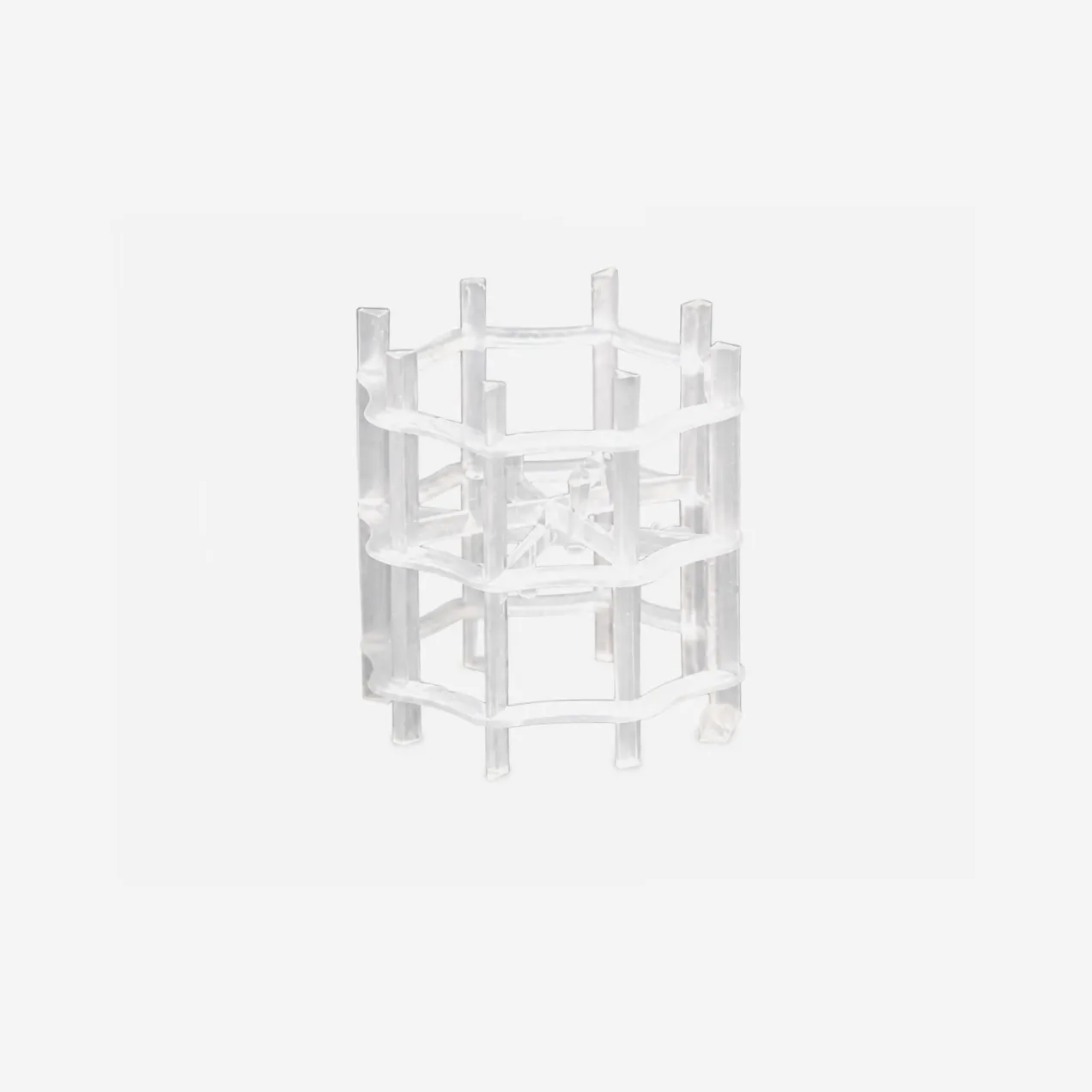
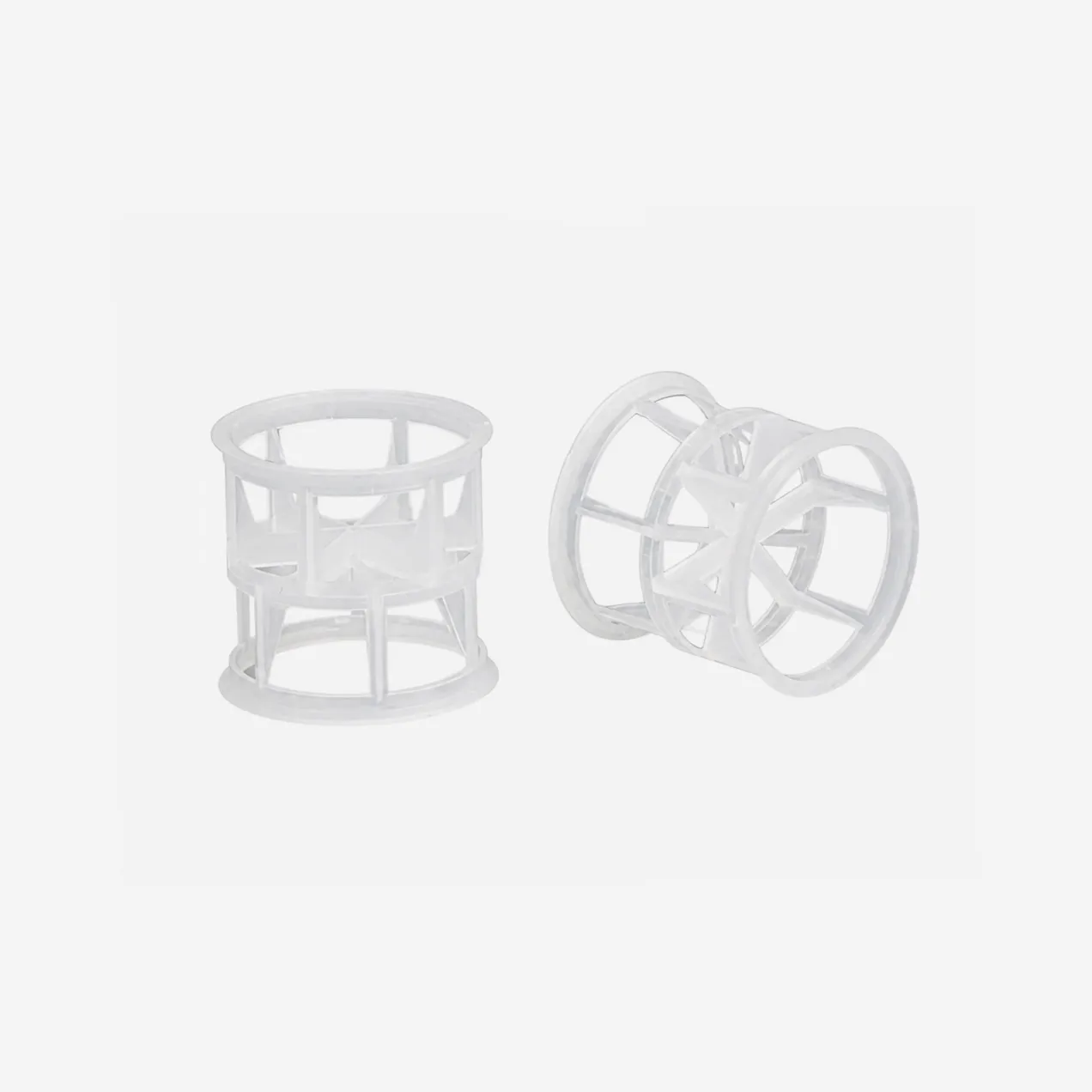
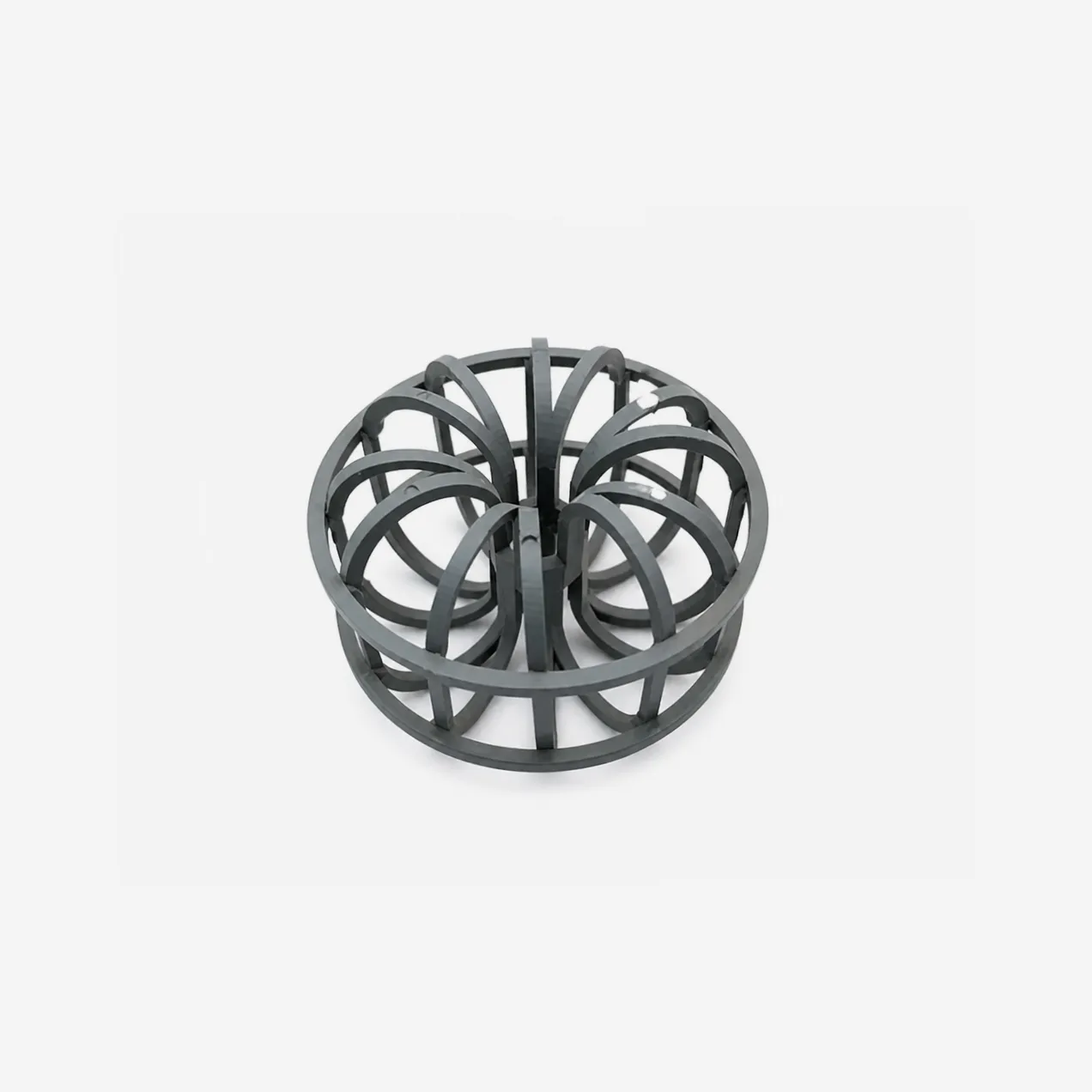
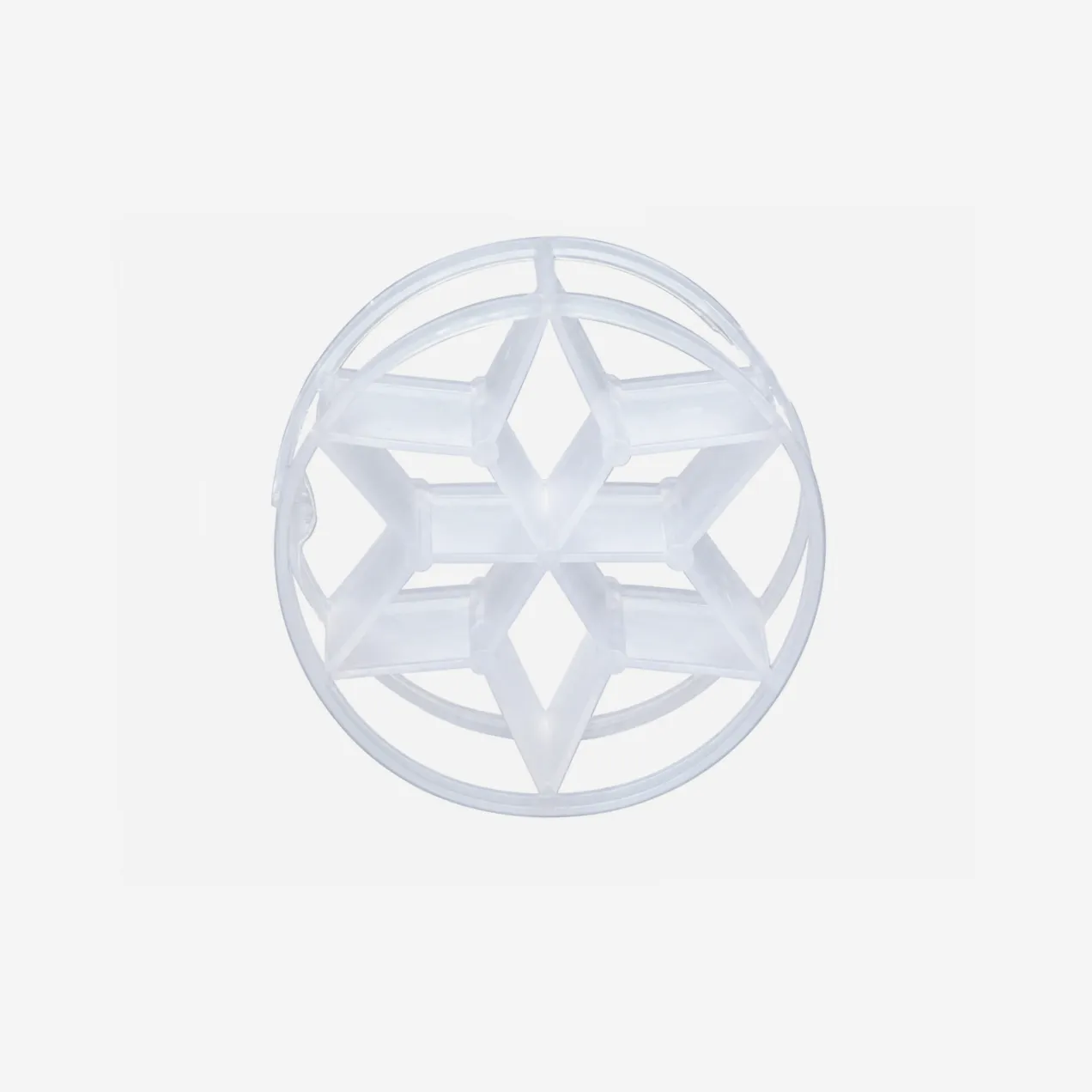
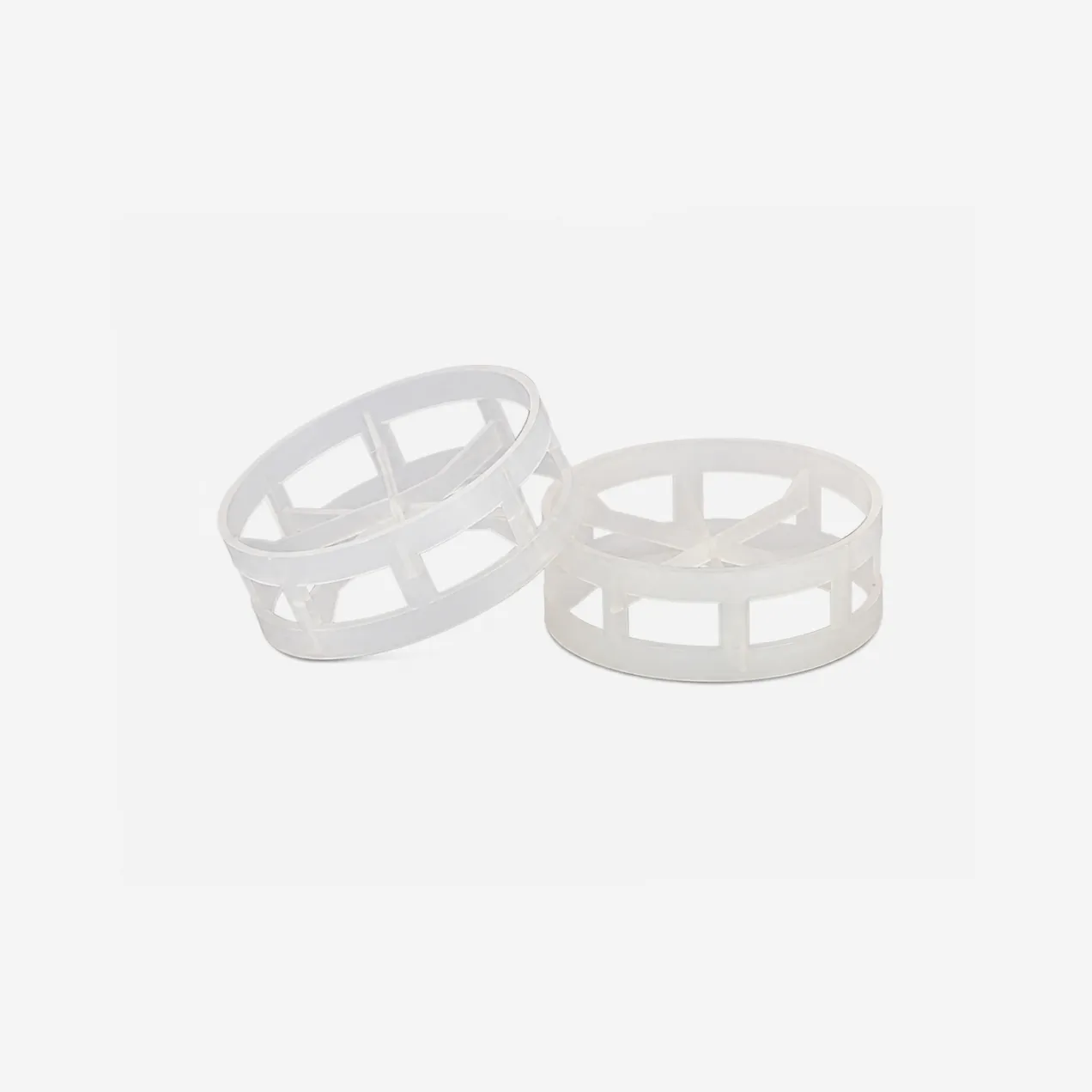
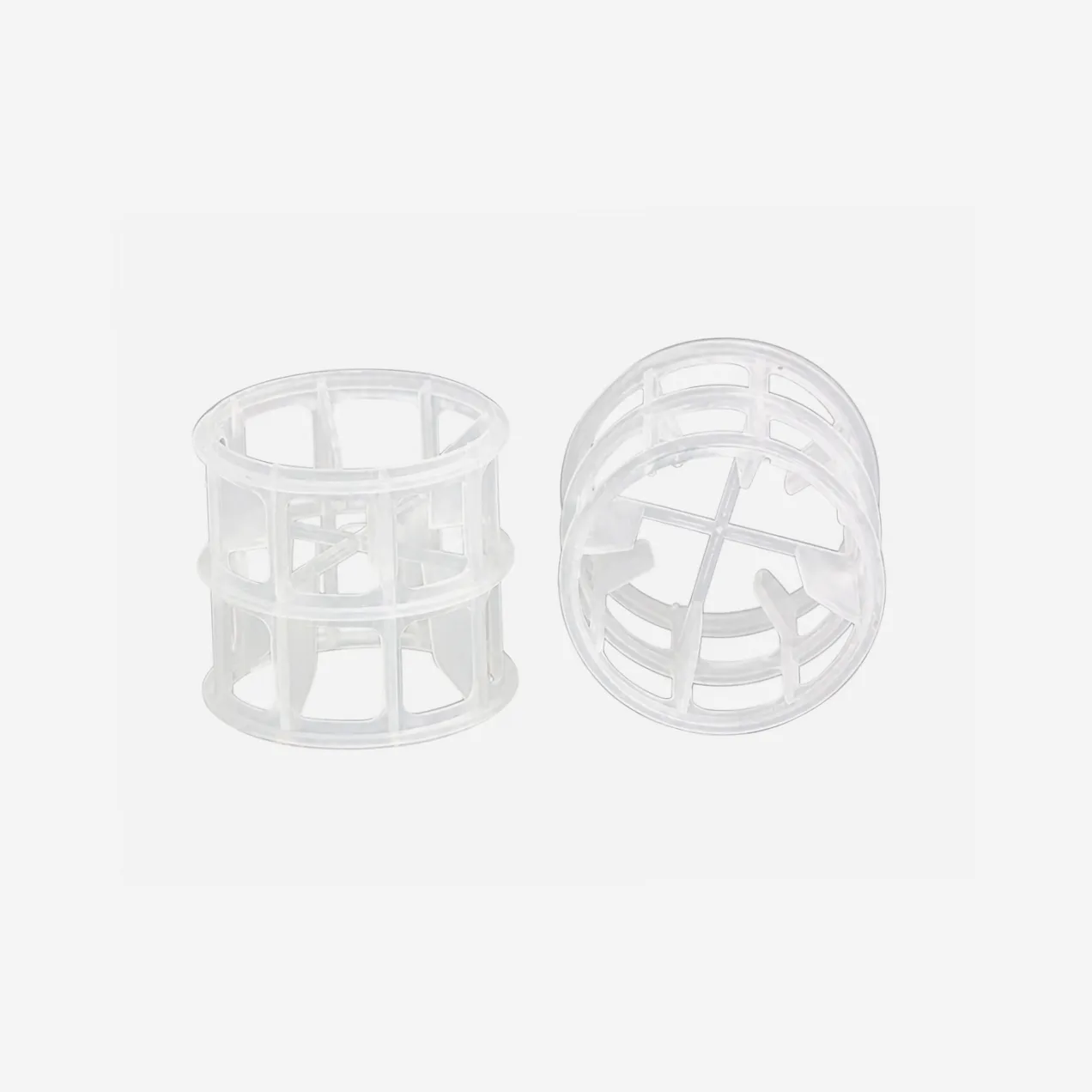
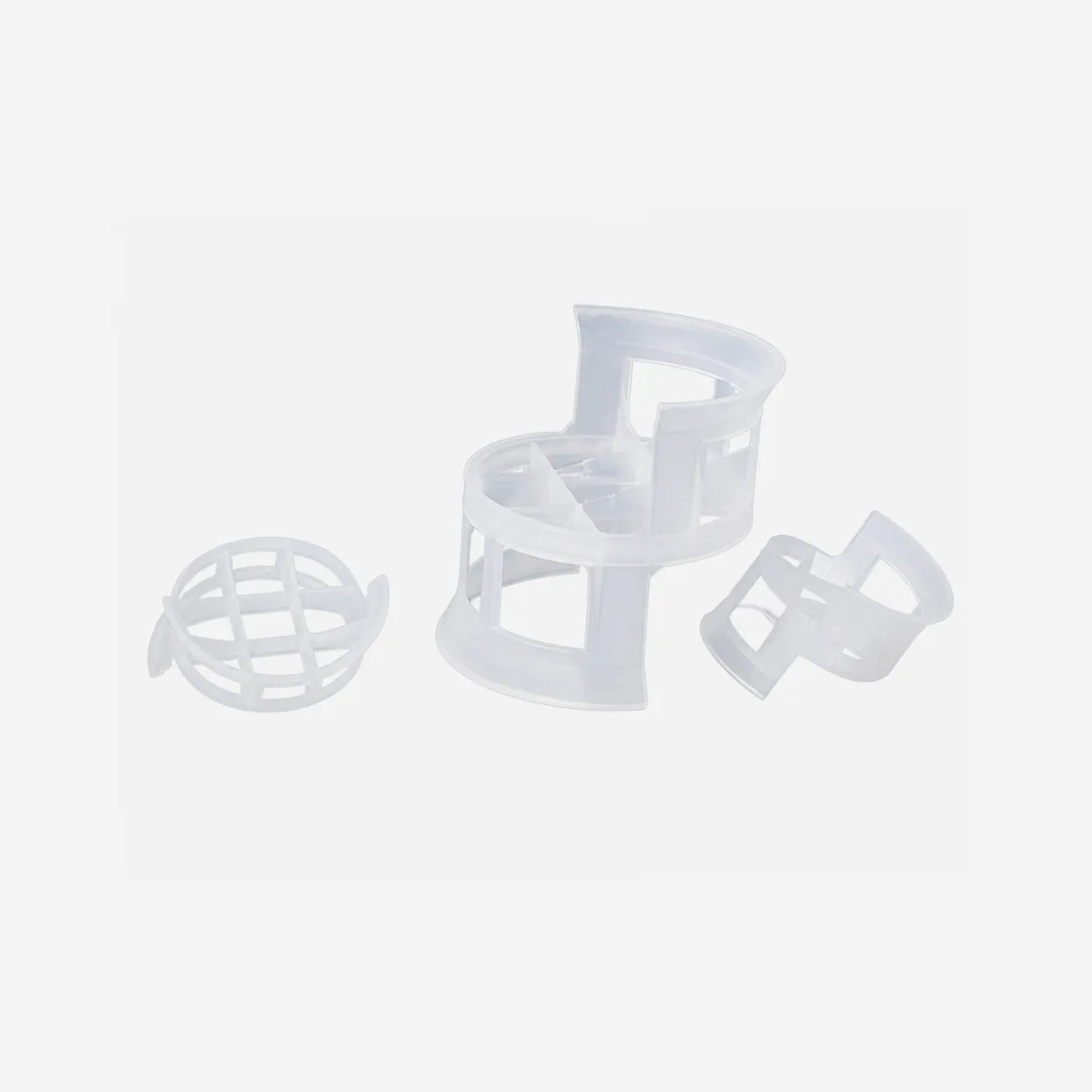
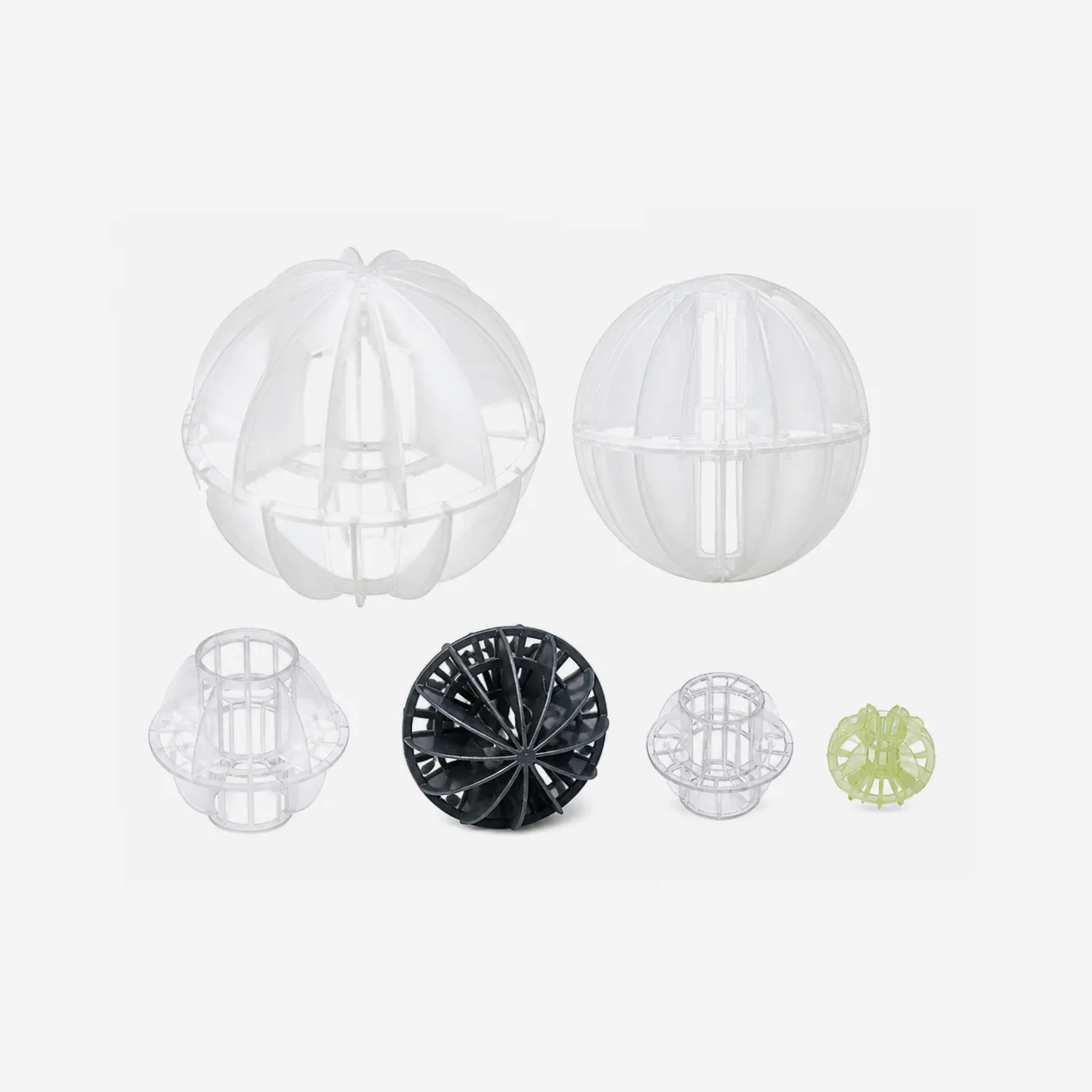
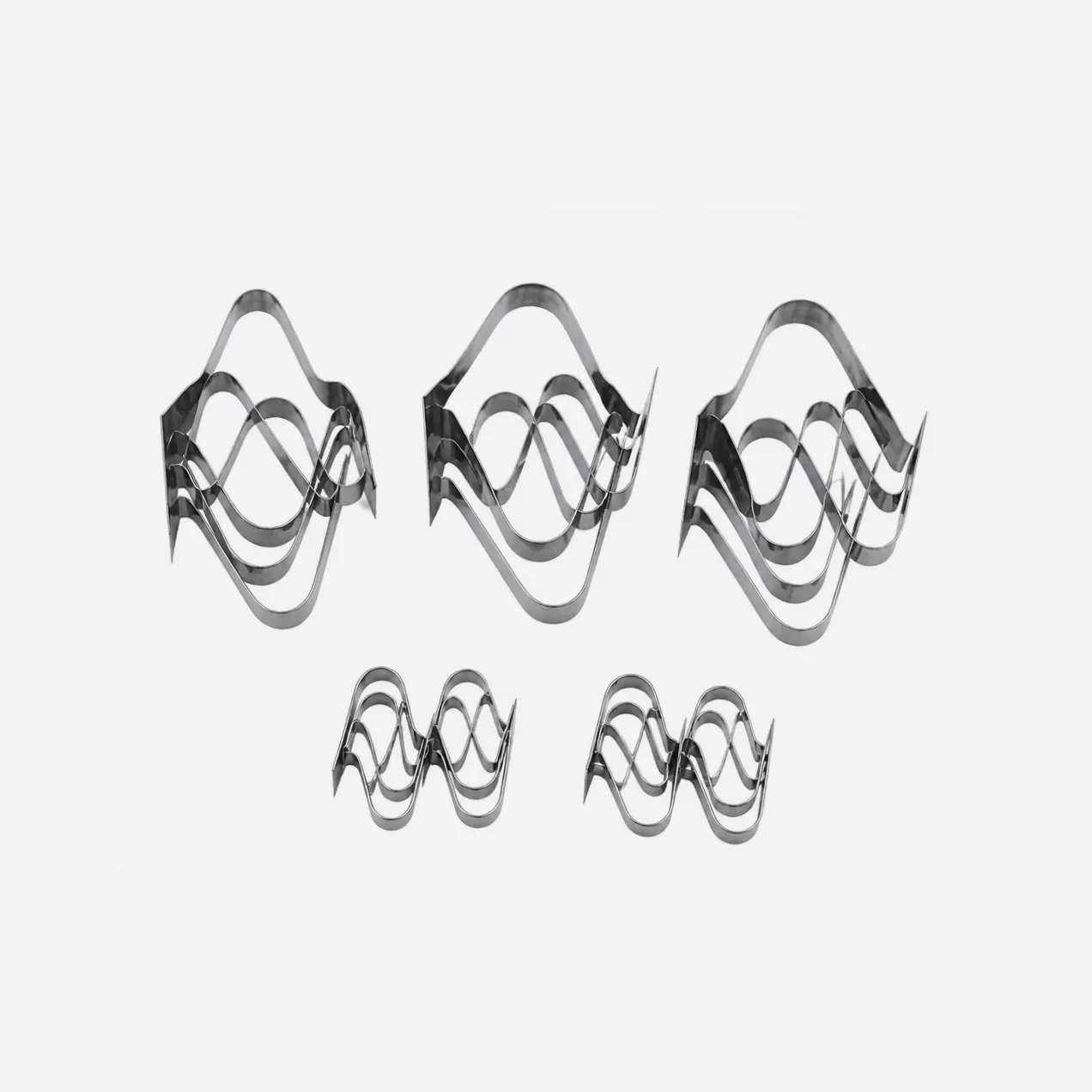
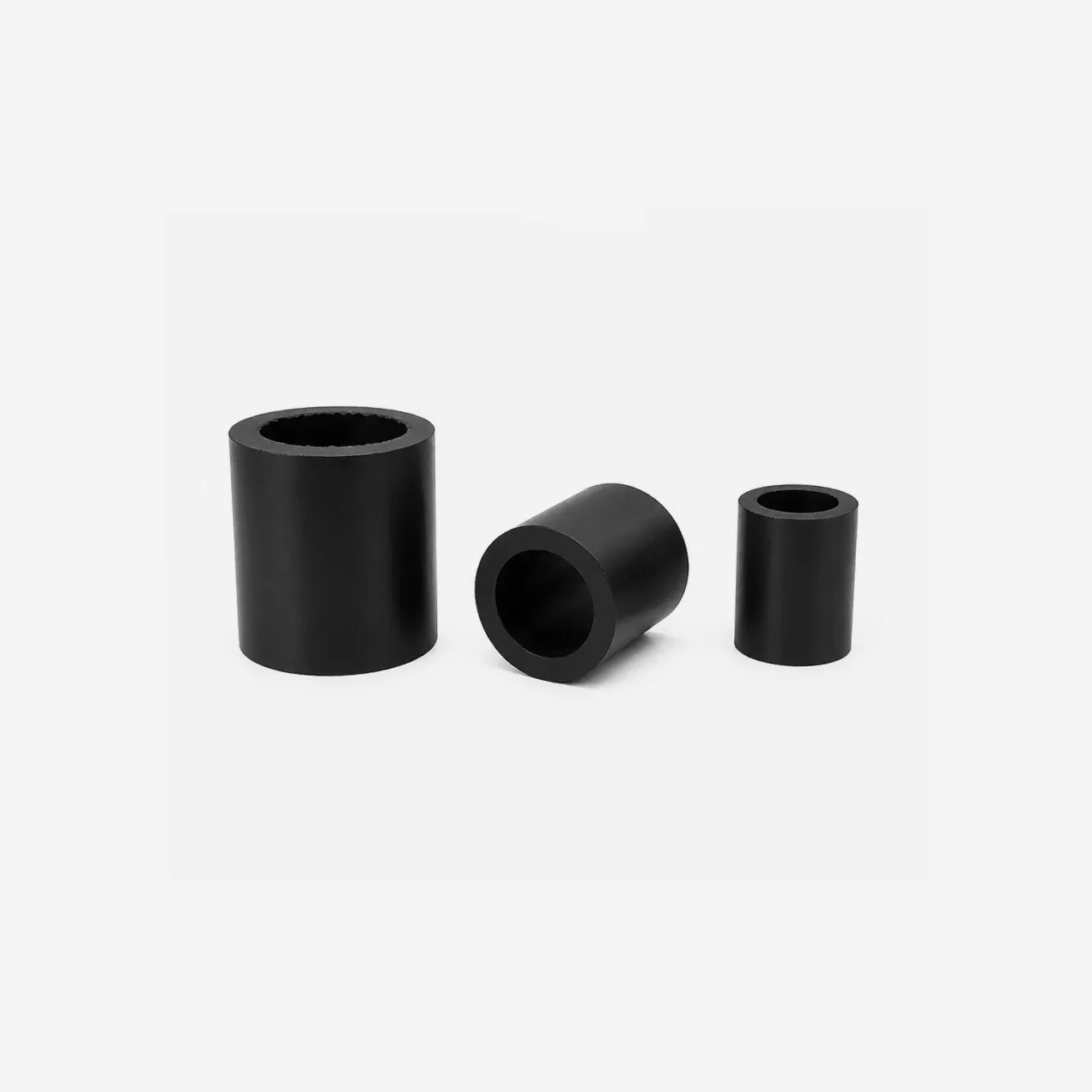
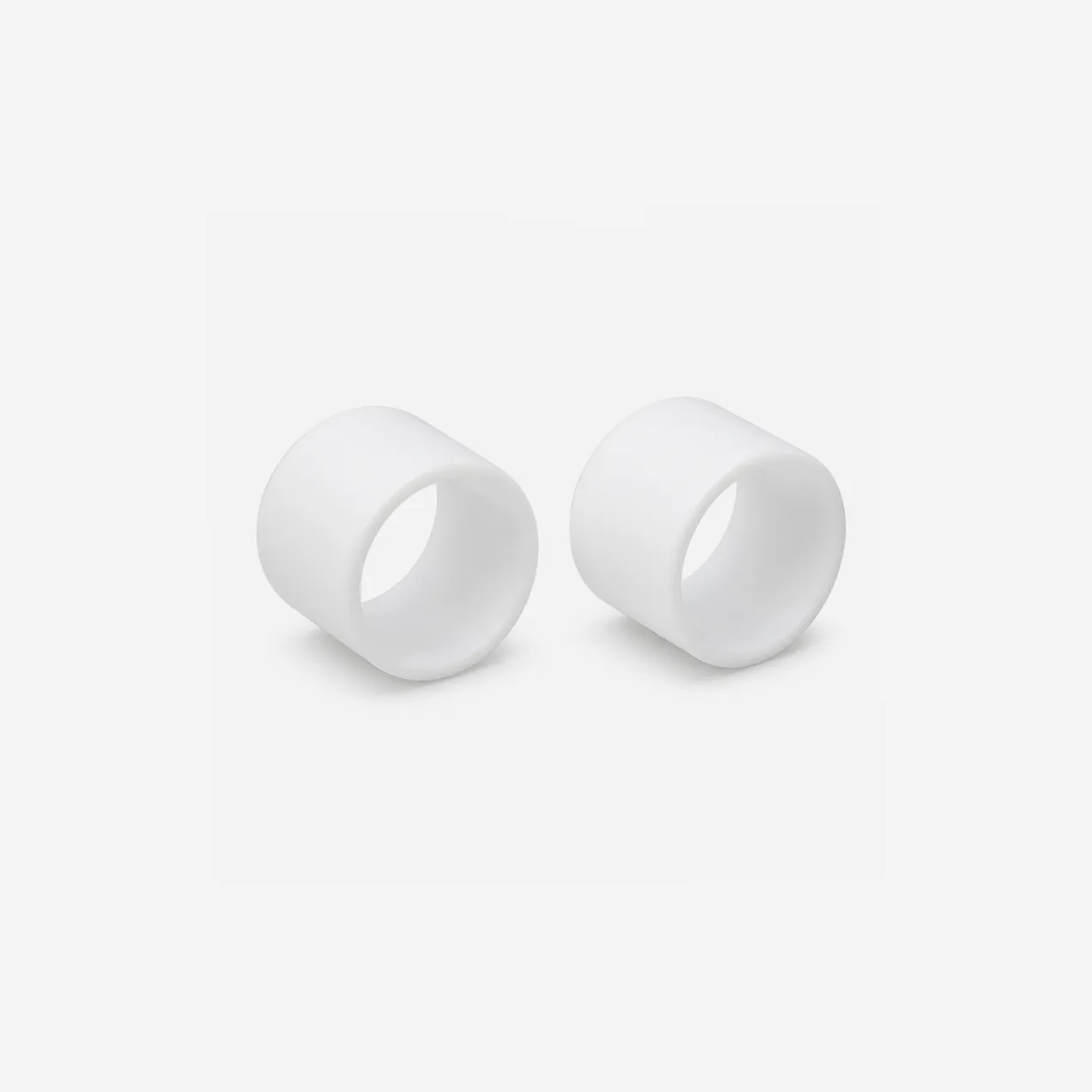
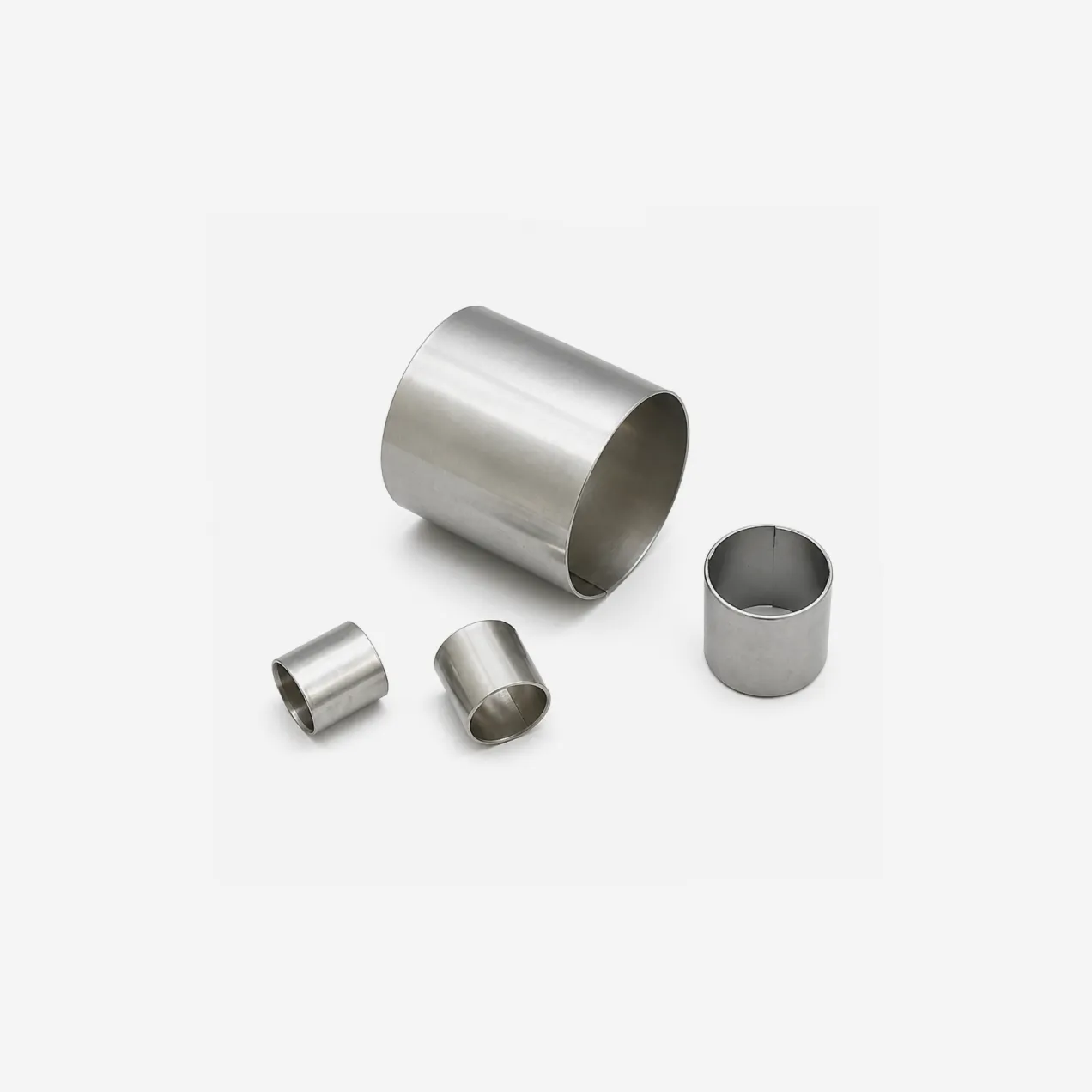
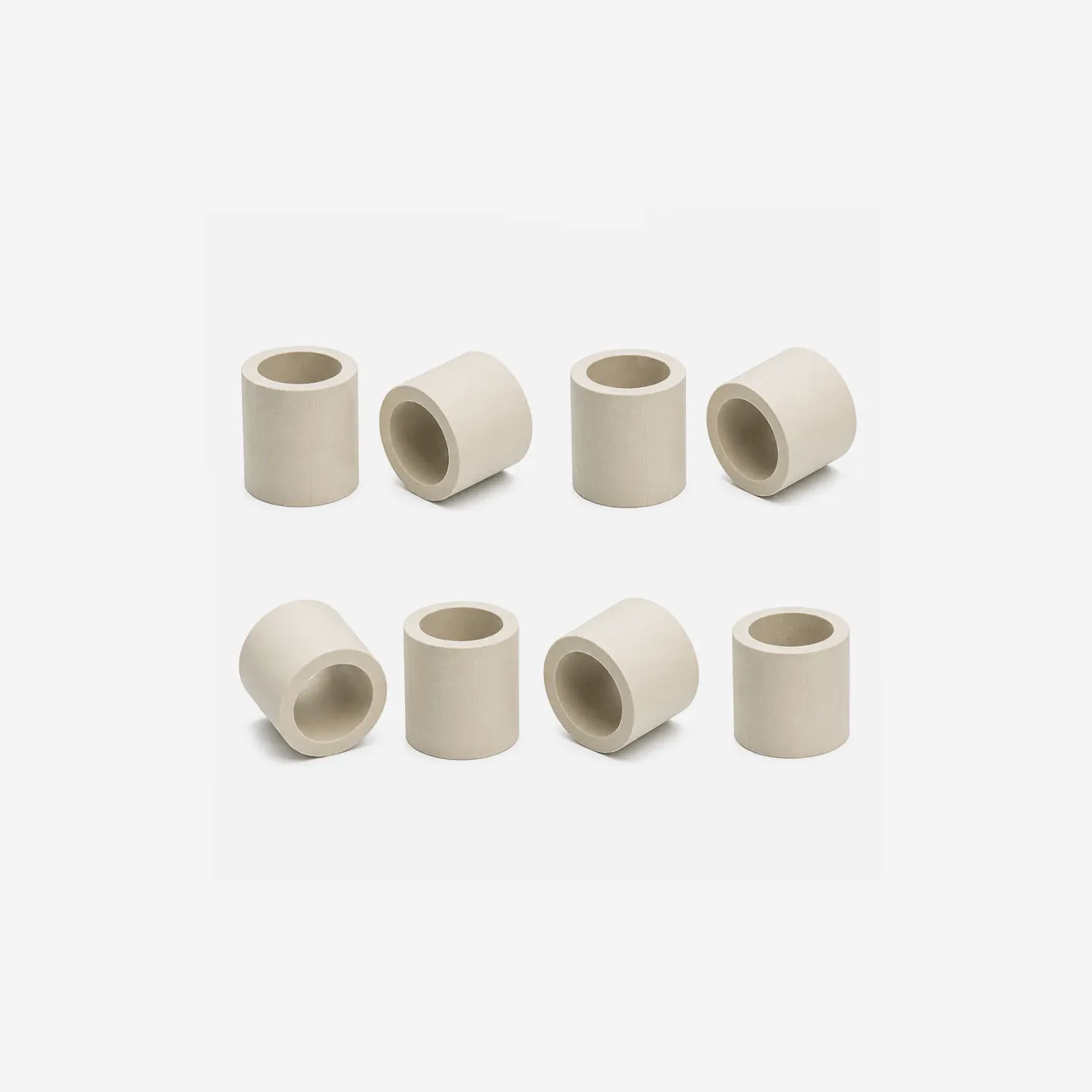
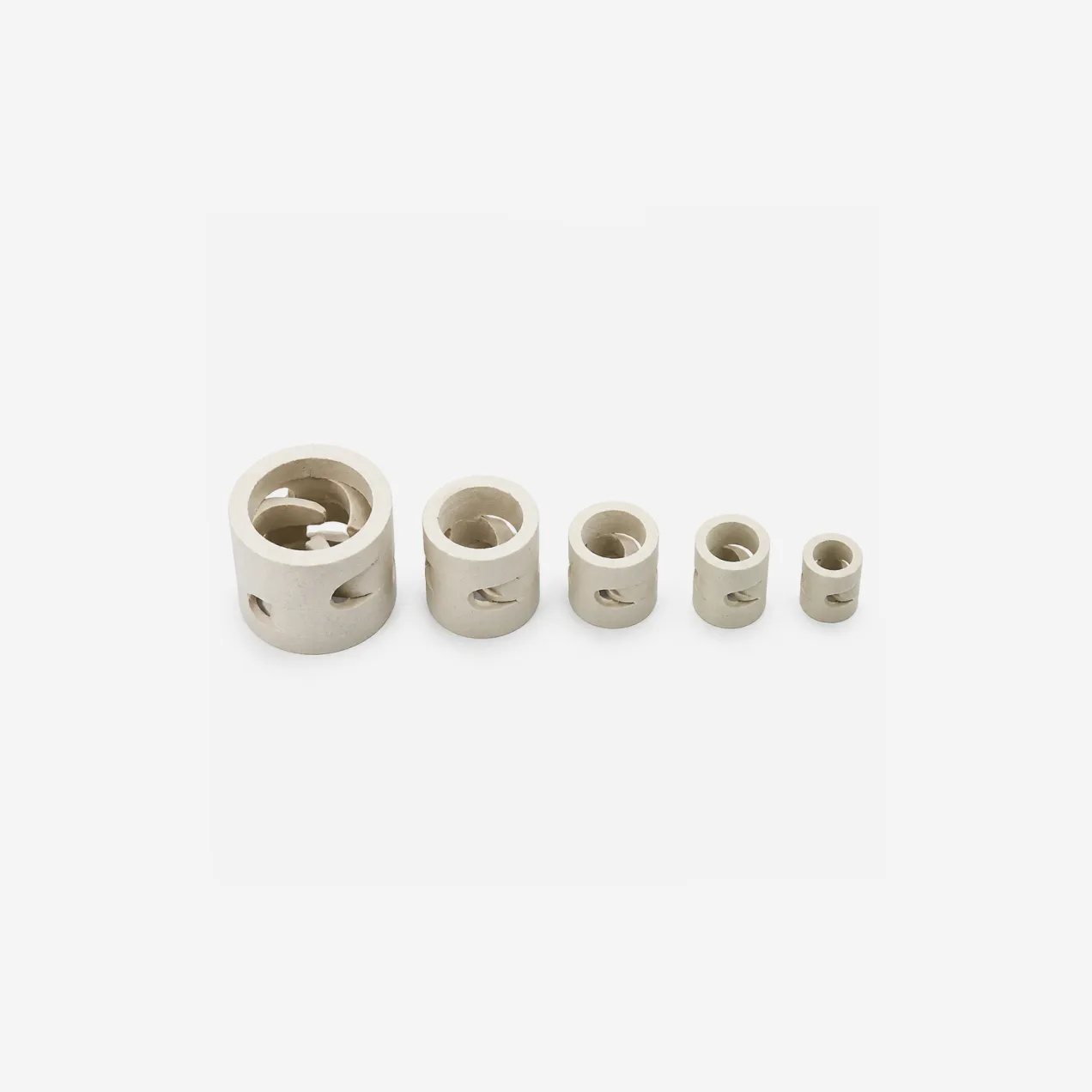
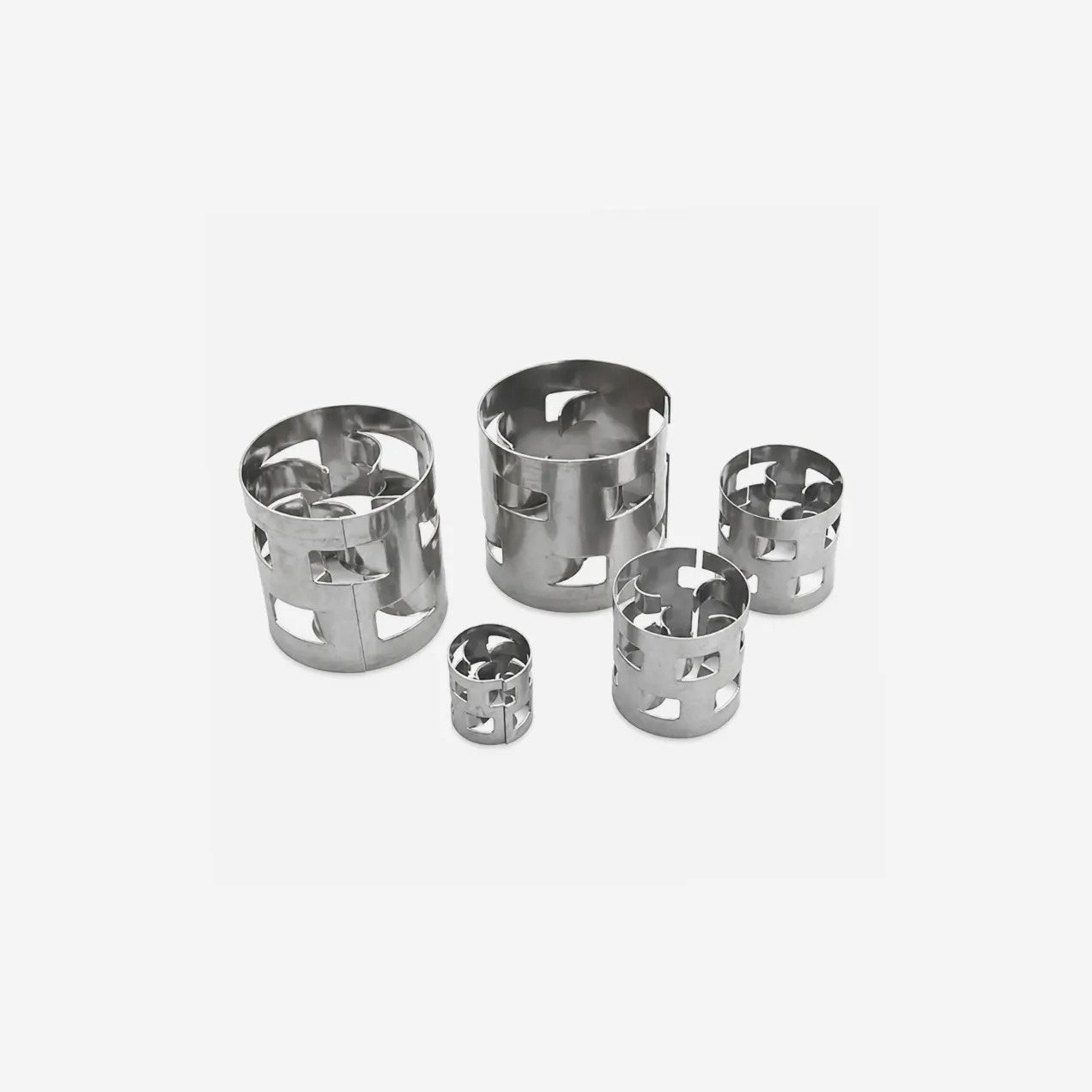
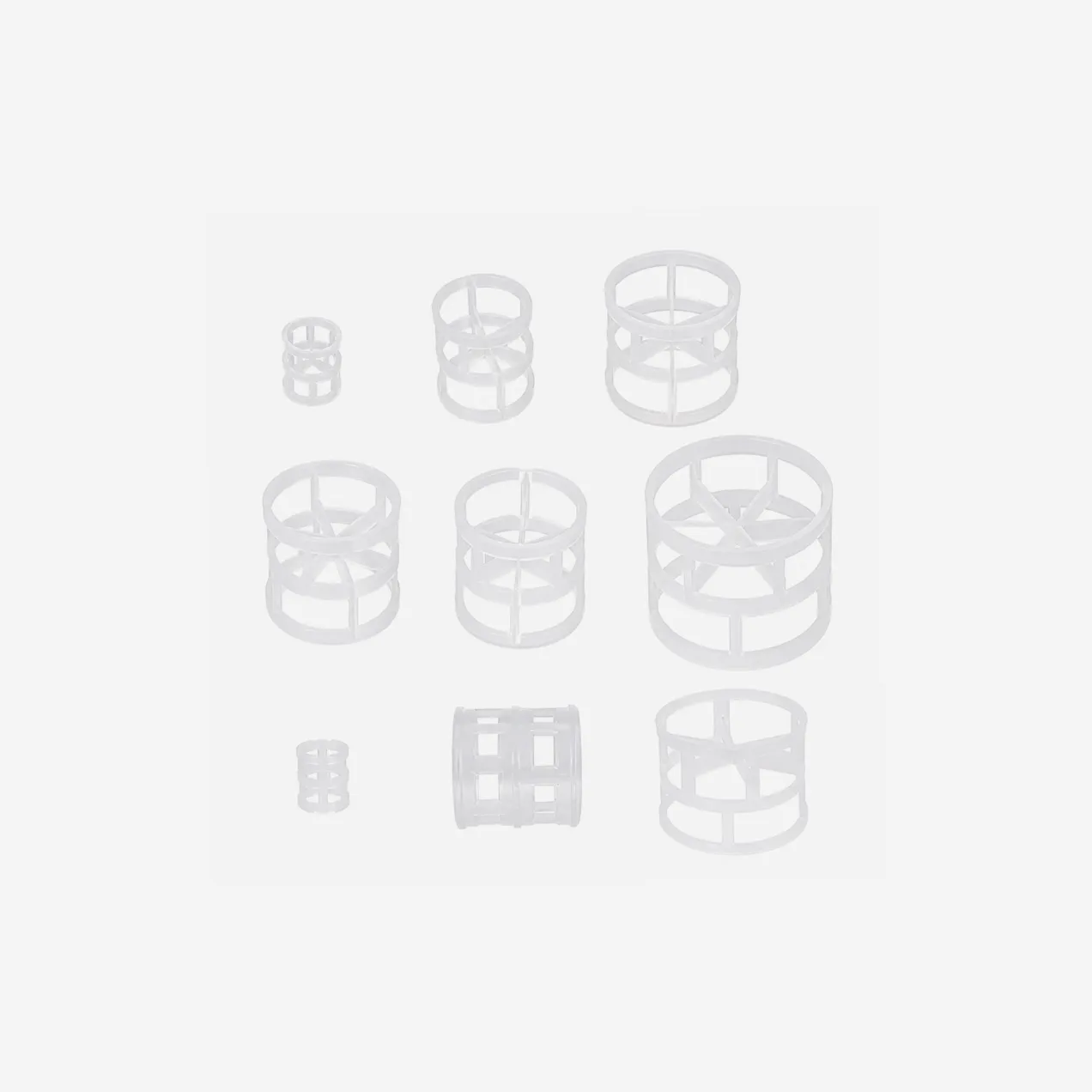
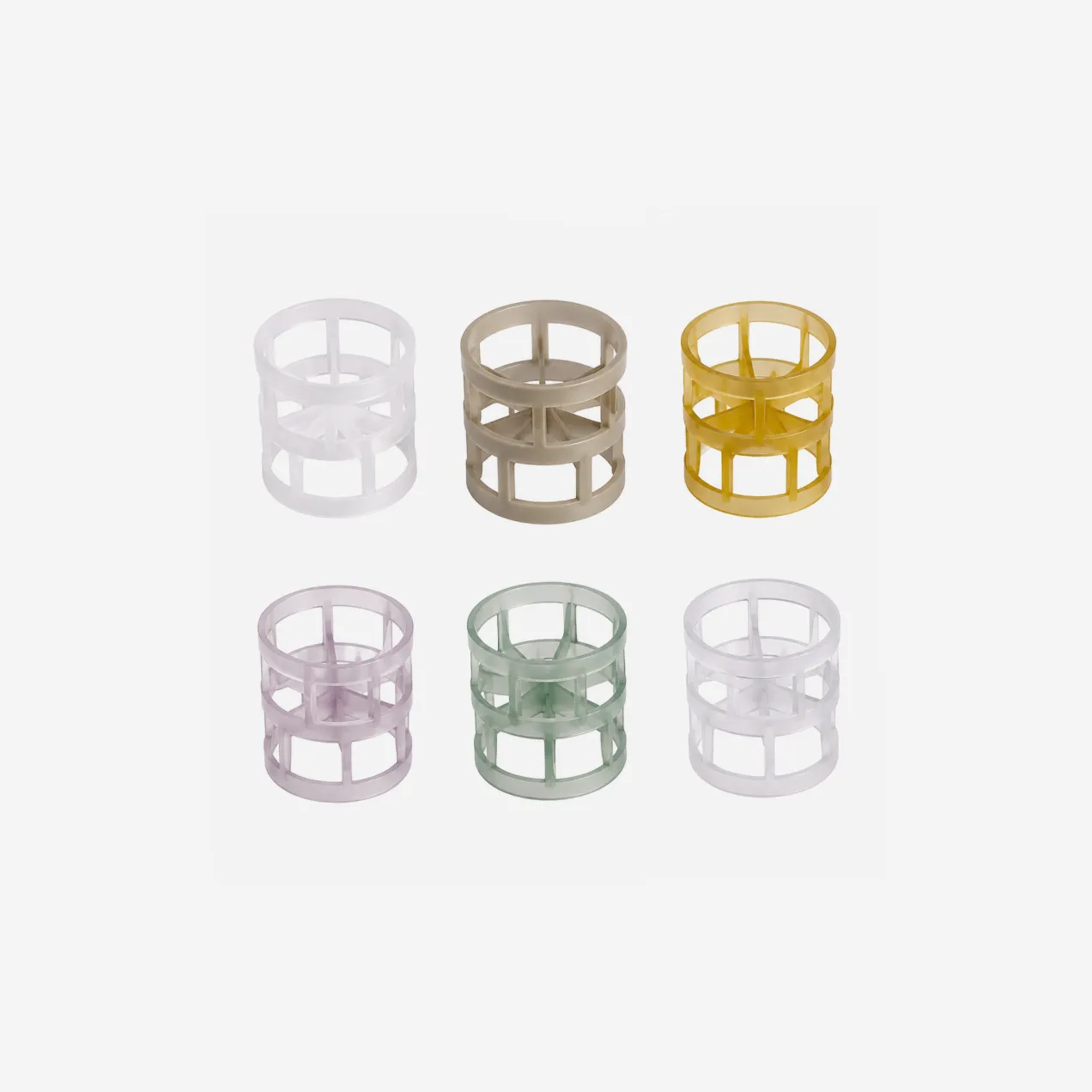
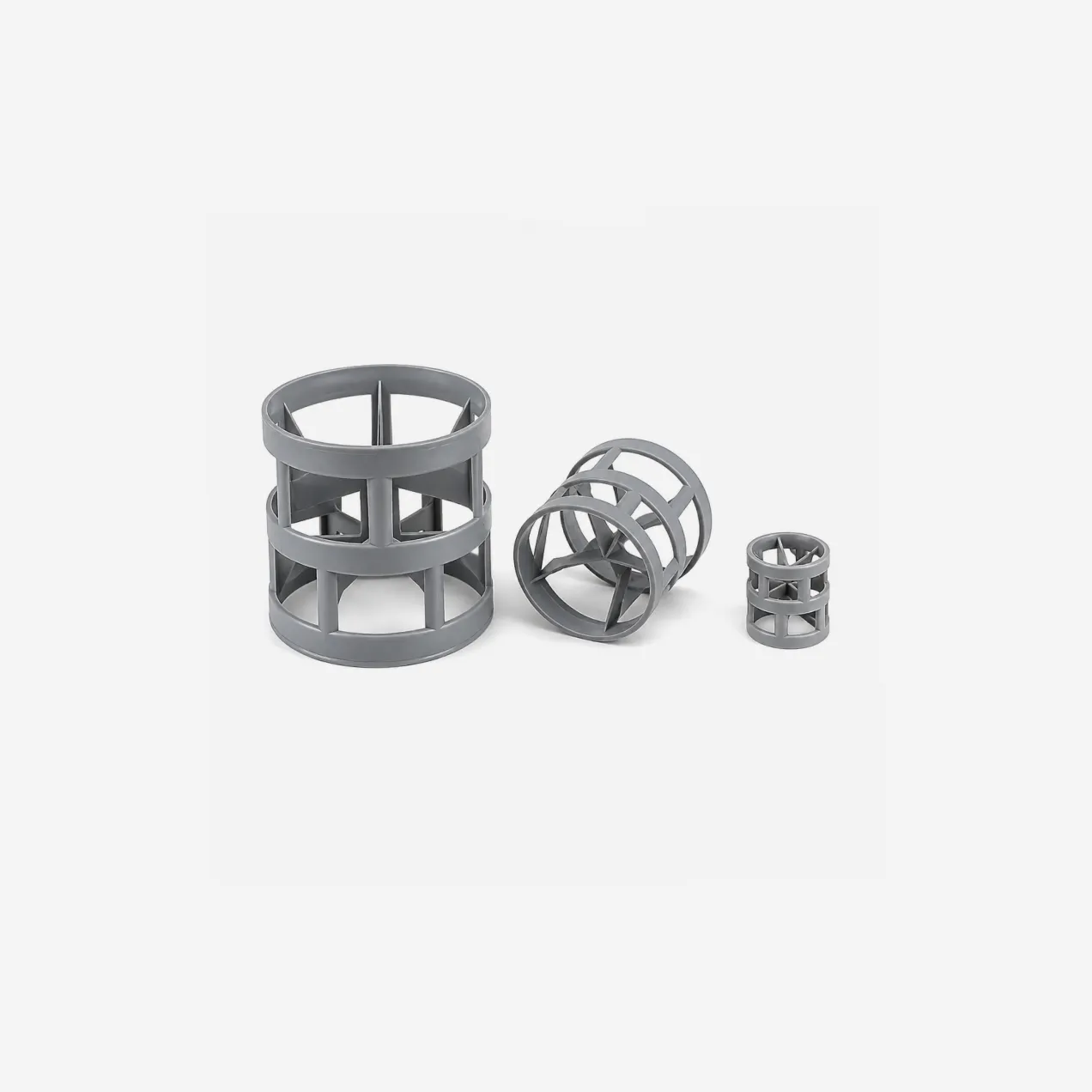
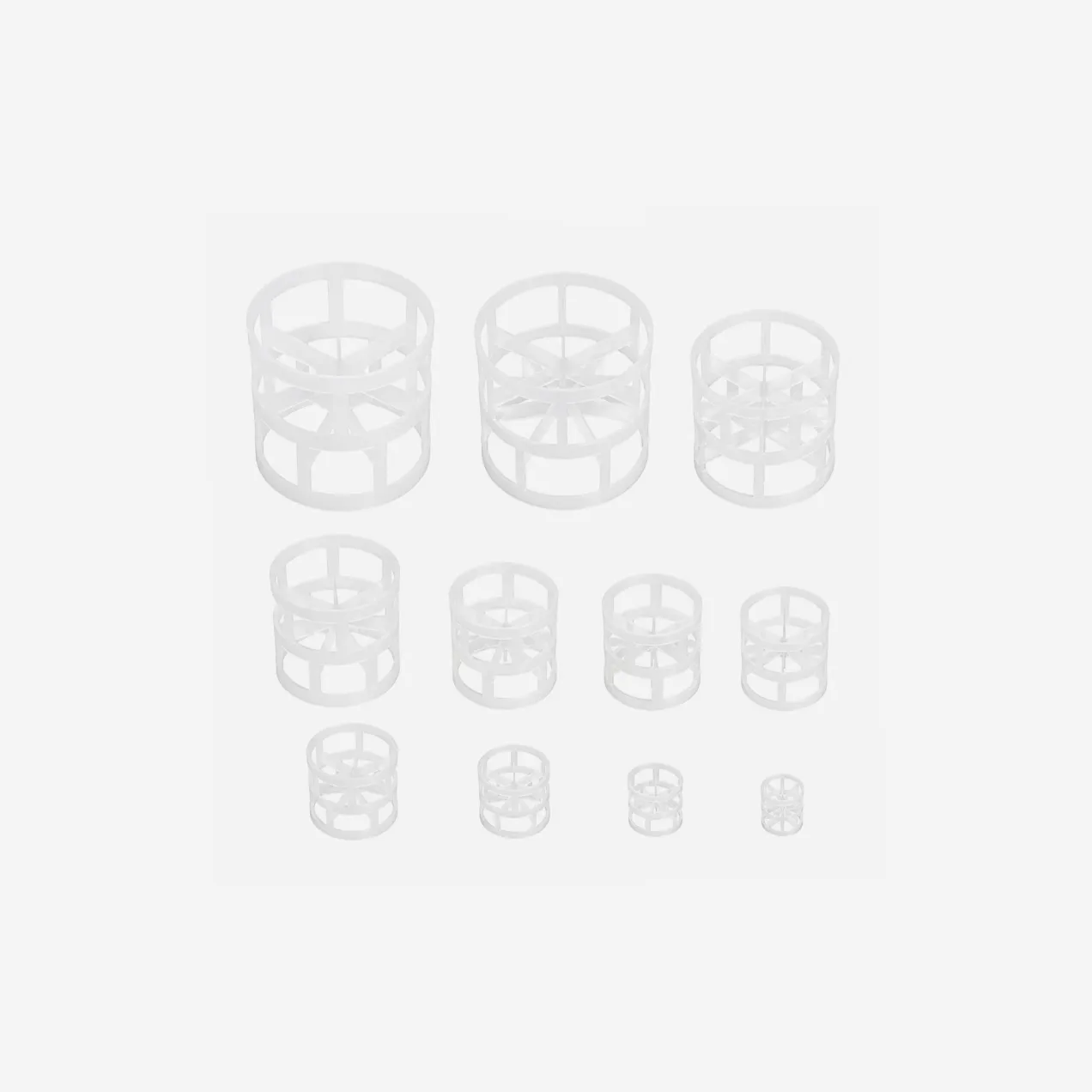
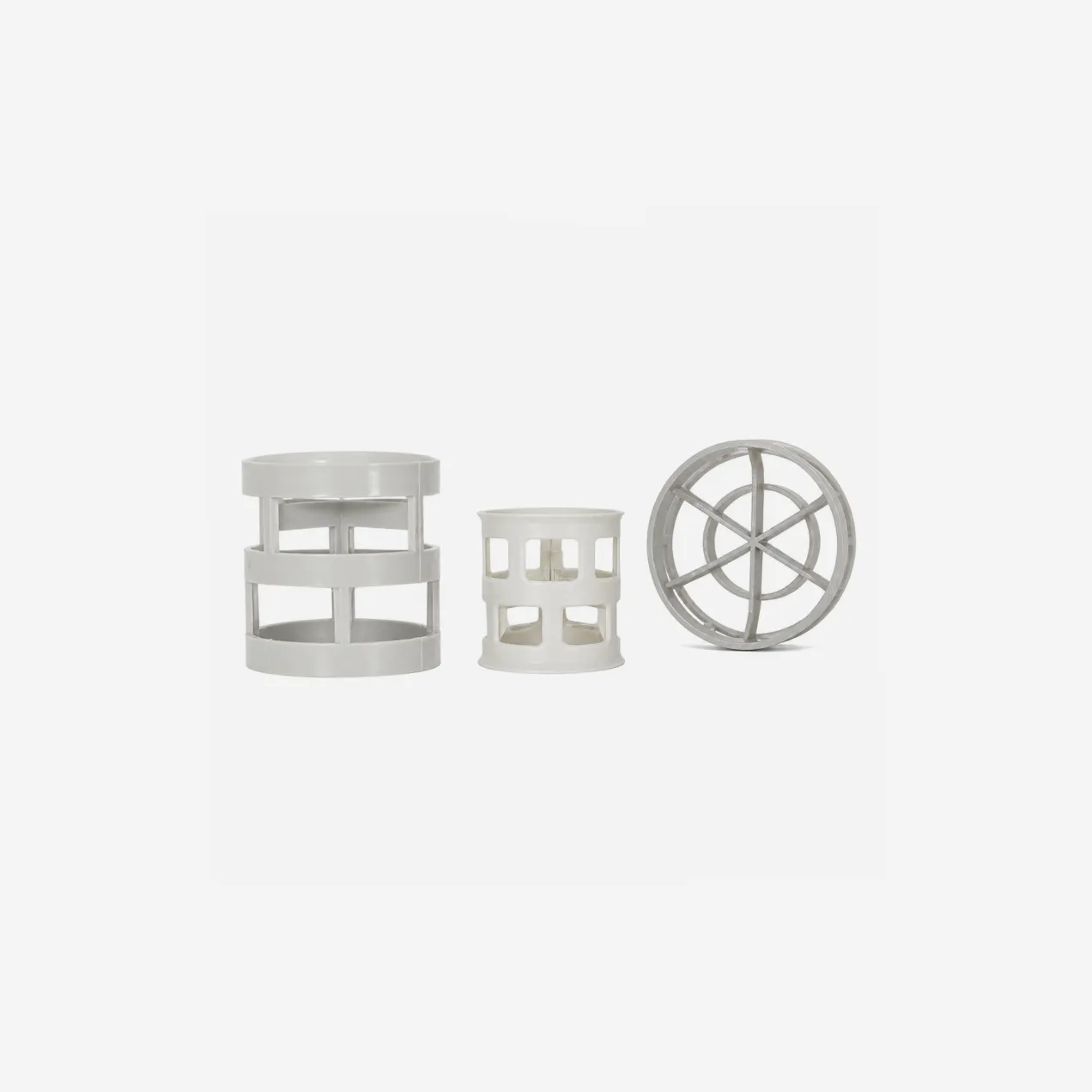
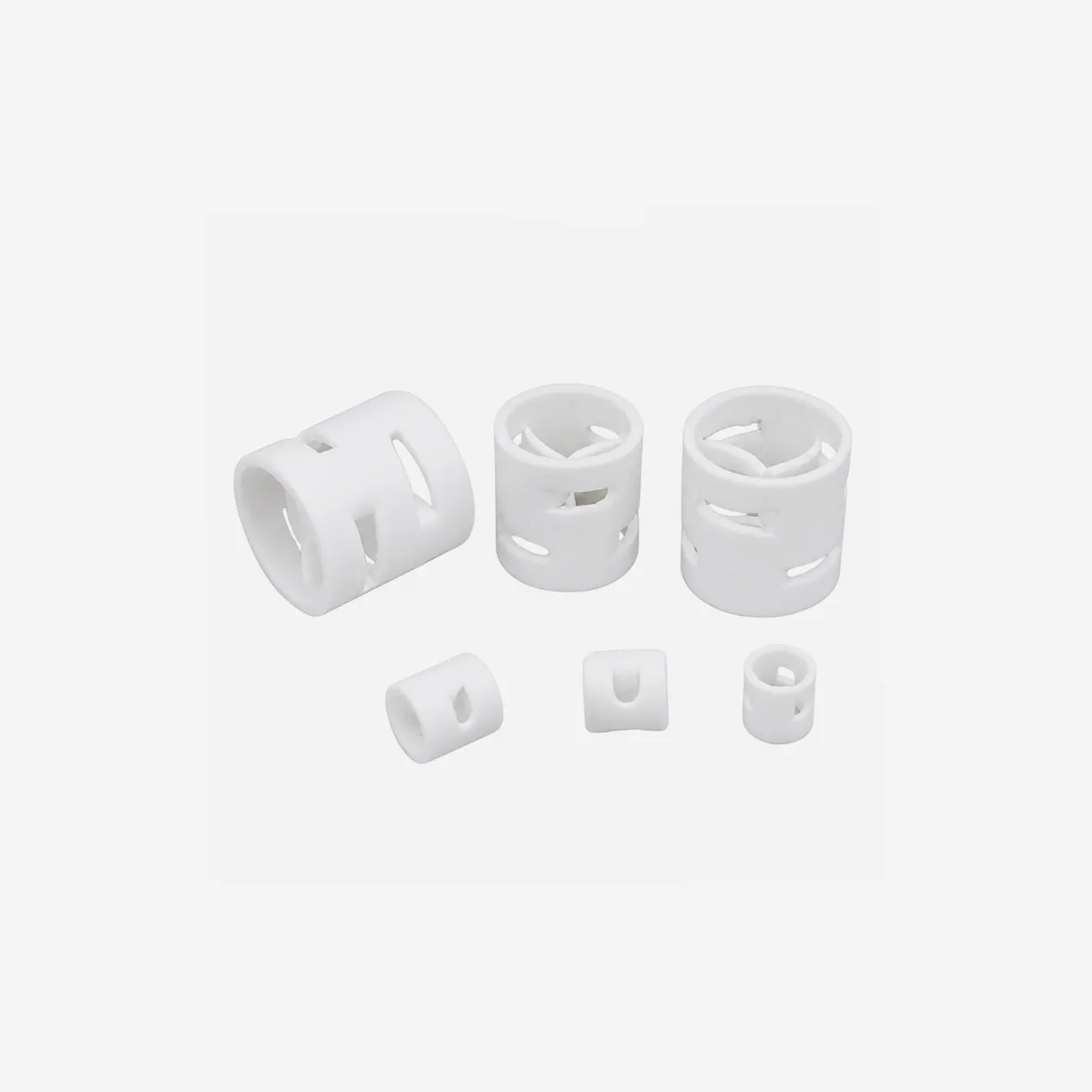
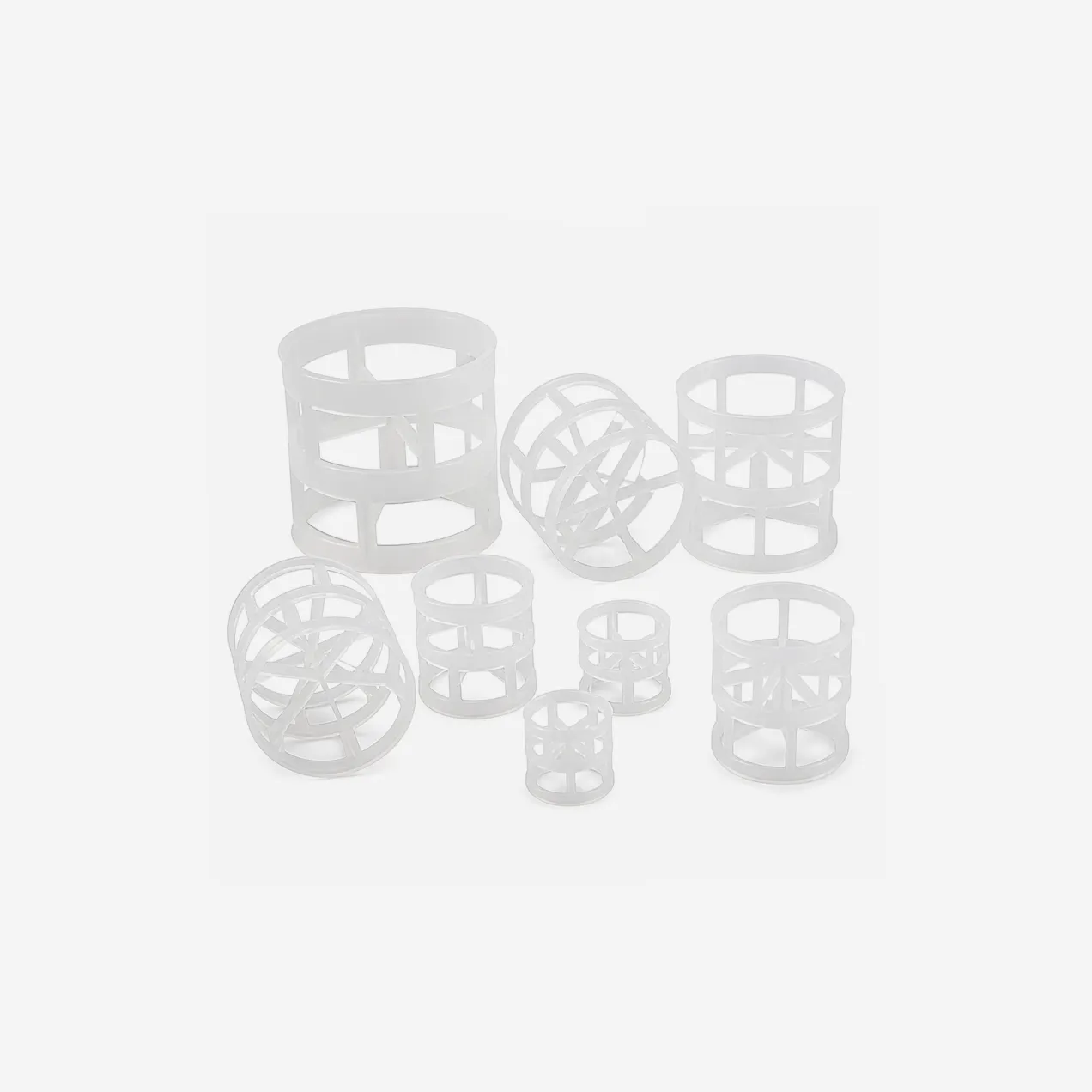
The high flow ring is a capacity-first random packing. Where a Raschig ring is a closed cylinder and a Pall ring adds windows and tabs, the high flow ring goes further still: its wall is opened into staggered vertical strips, and reinforcing ribs run across the centre to keep it stiff. The result is a very open, very light ring, with a void fraction in the mid-to-high nineties in percent, that lets a column pass a large flux at a low pressure drop, yet is rigid enough to bear heavy beds and shrug off fouling. It is moulded in PP, RPP, PVC, CPVC or PVDF, so the resin can be matched to the chemistry, and it works in media roughly between 60 and 150 degrees.
Its high-capacity character shows in the duties it is chosen for:
| Where it is used | Why the high flow ring suits it |
|---|
| Amine decarbonization and desulfurization | High void and large flux move big gas volumes at low pressure drop |
| Atmospheric and vacuum distillation | Low pressure drop is decisive under vacuum and keeps separation sharp |
| Ethylbenzene and iso-octane separation | High efficiency per metre of bed for close-boiling cuts |
| Dirty or fouling columns | Open strips and central ribs resist clogging and hold up under load |
So the high flow ring is the packing to reach for when throughput, vacuum operation or fouling is what limits a column, rather than when a simple, low-cost fill will do. Against a Pall ring of the same size it offers a higher void, a larger capacity and a lower pressure drop, at a somewhat higher price. Send us the tower diameter, the service and the flow rates, and we will work out the size and resin with you.