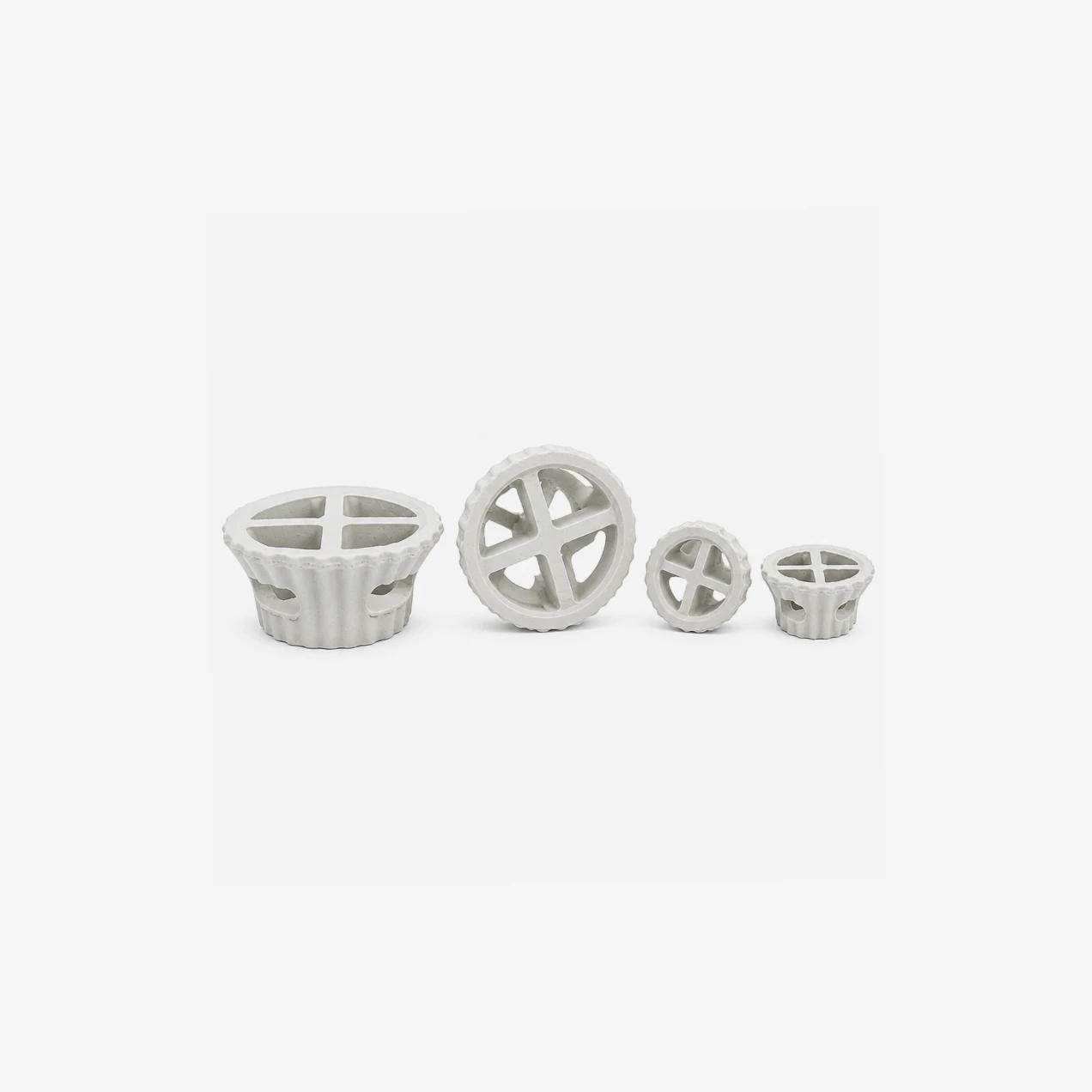
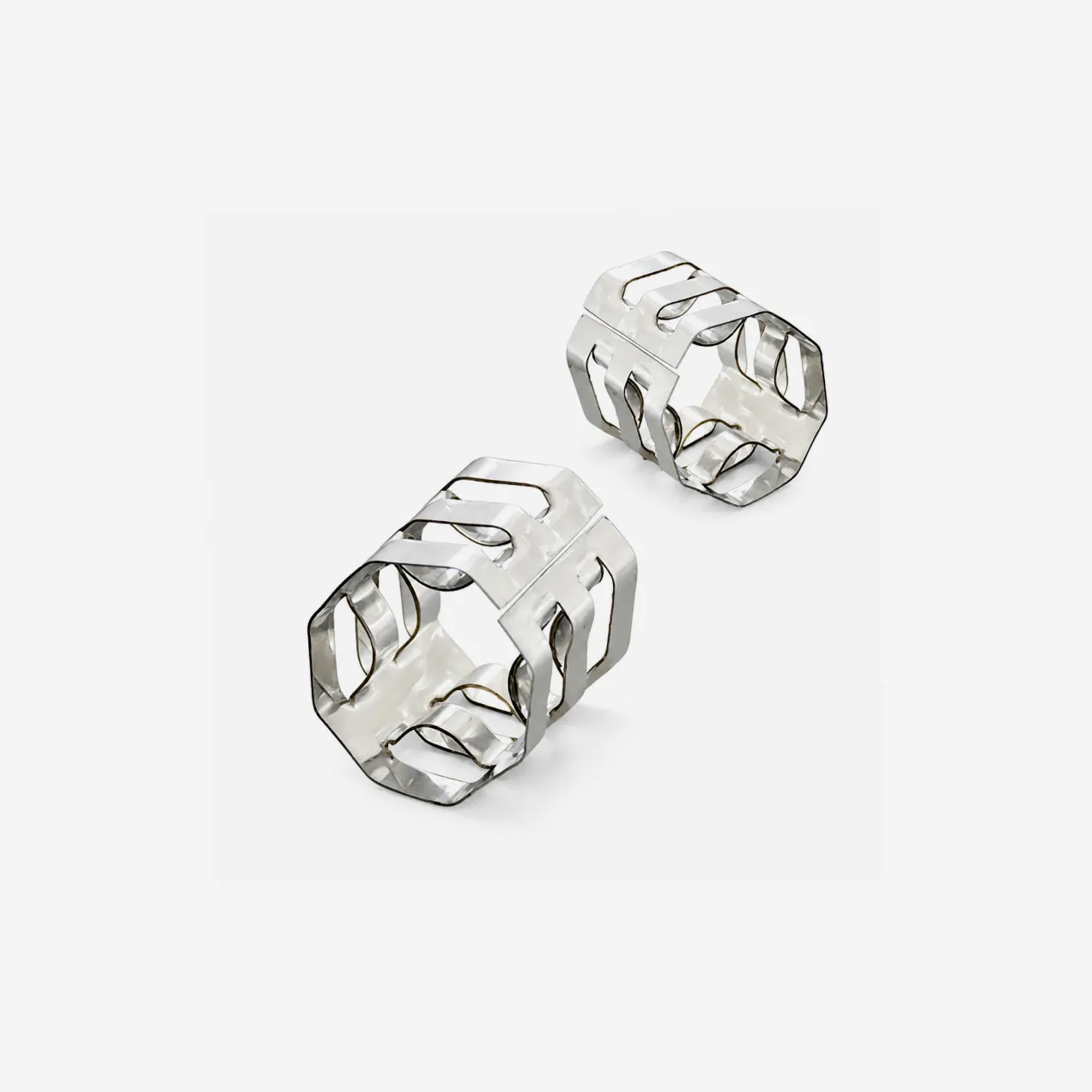
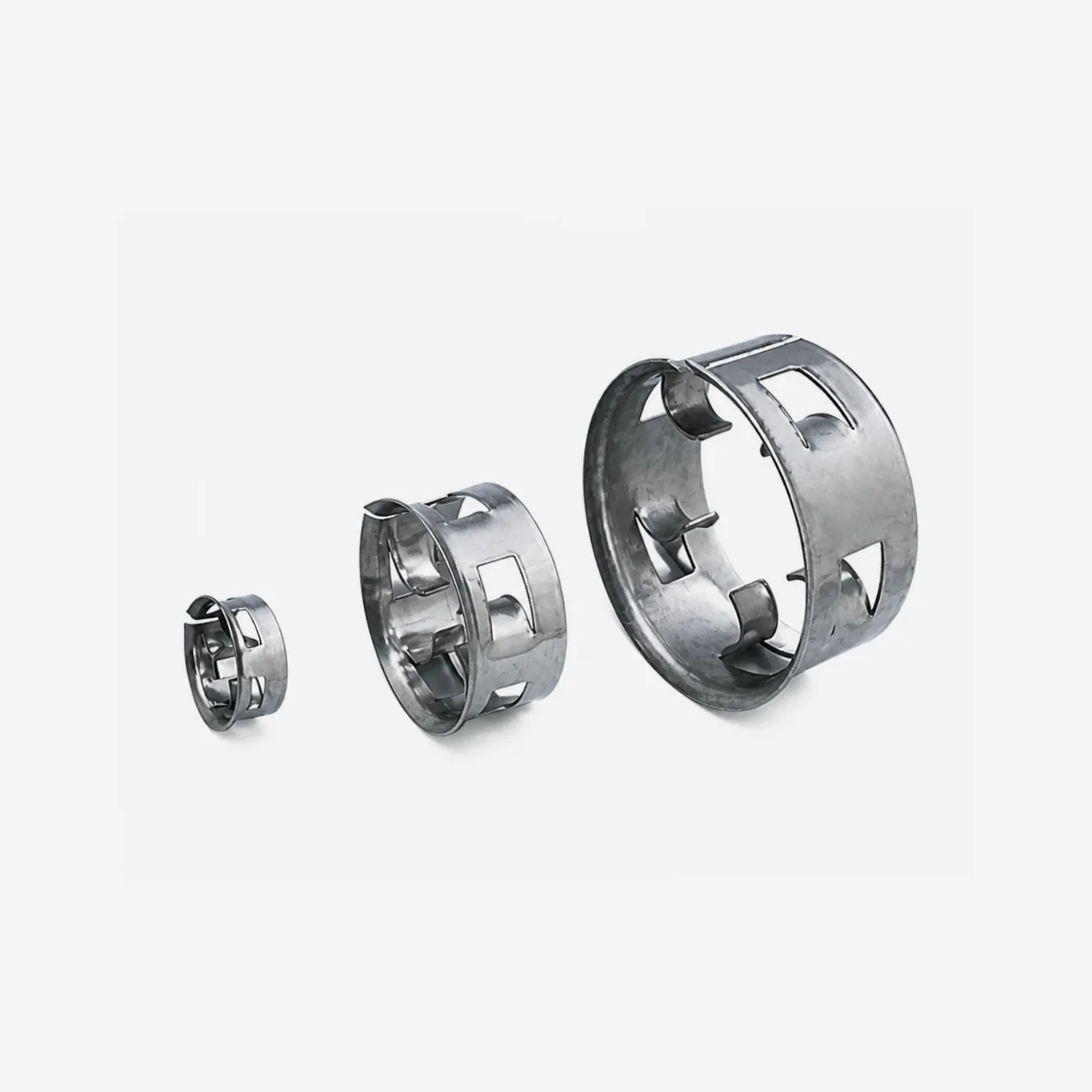
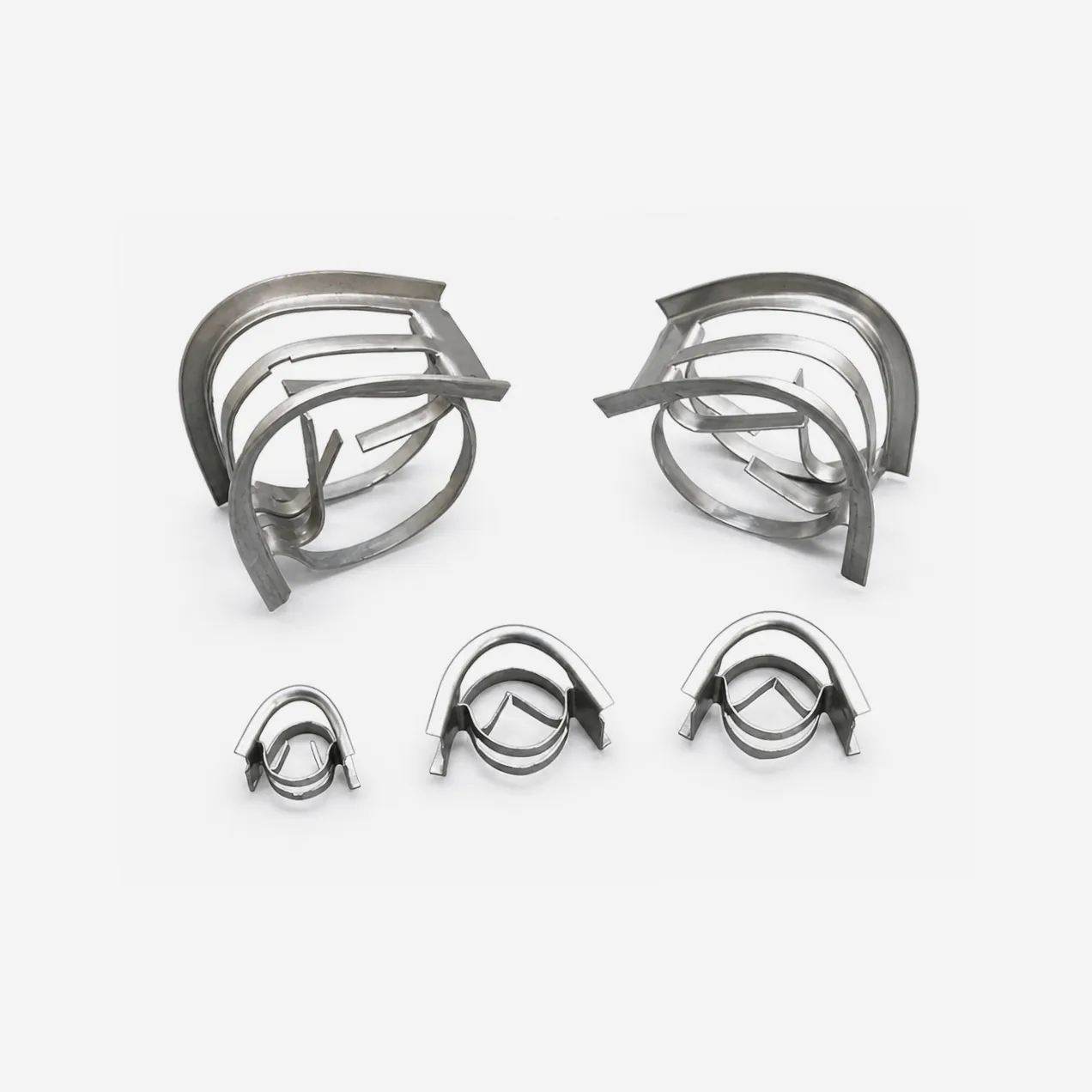
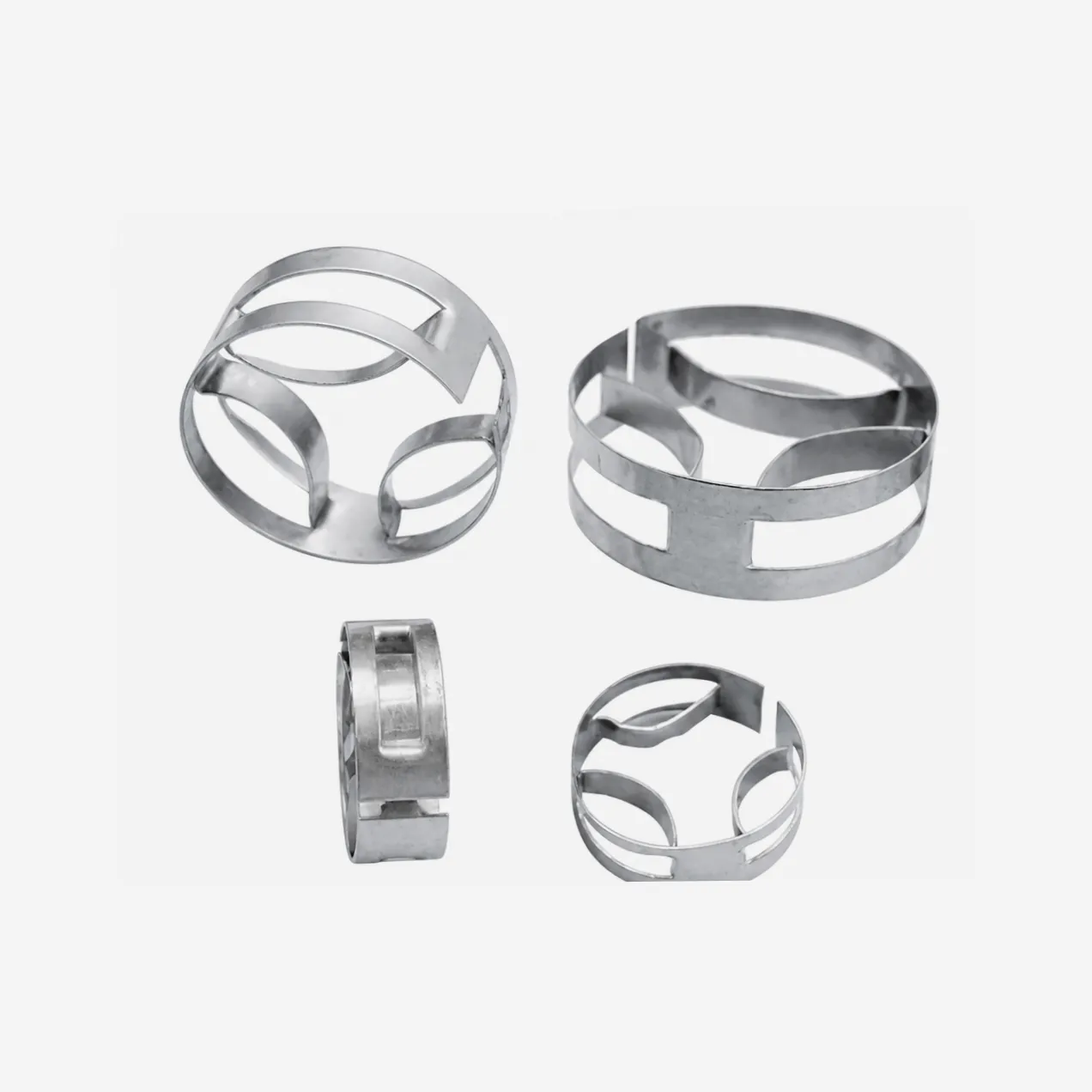
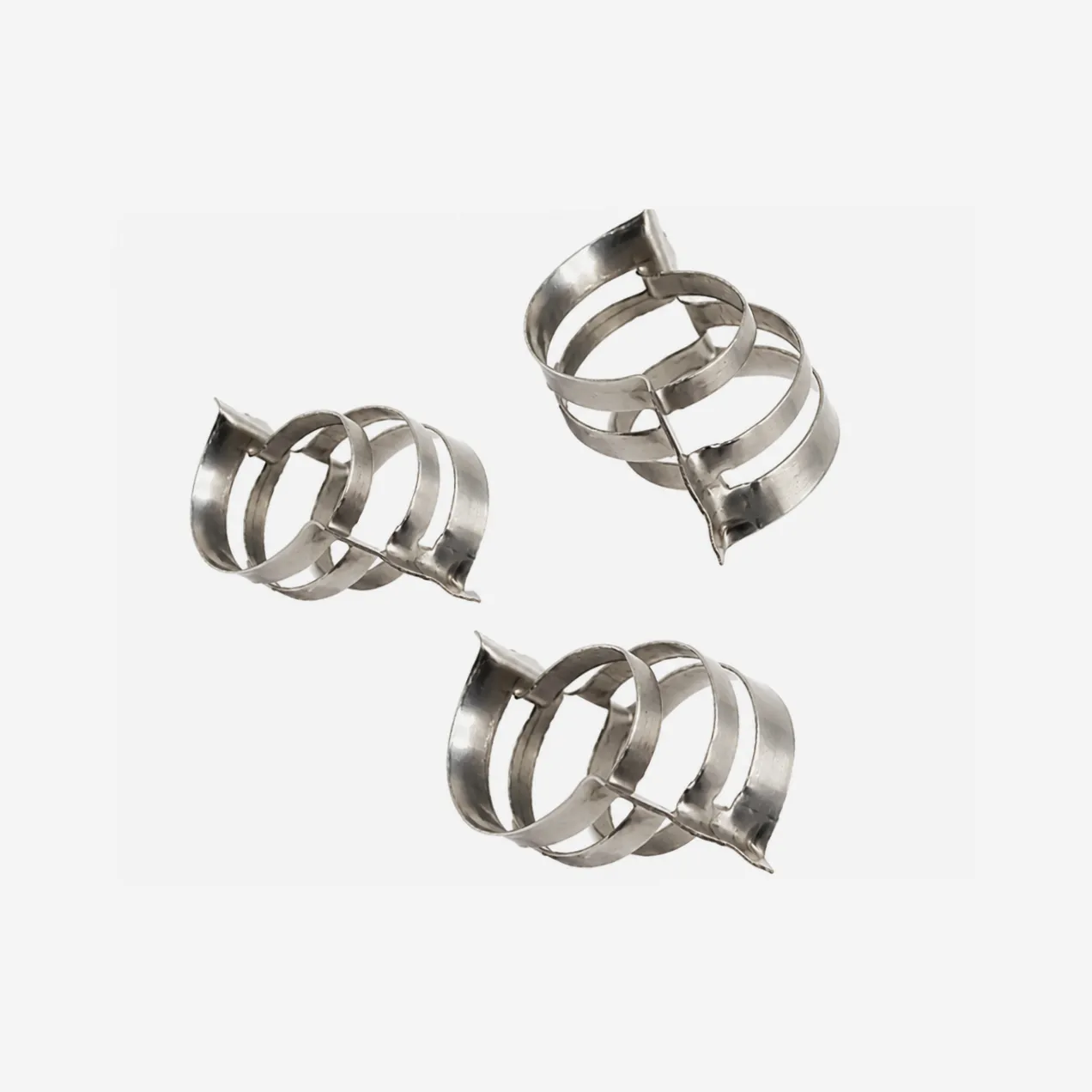
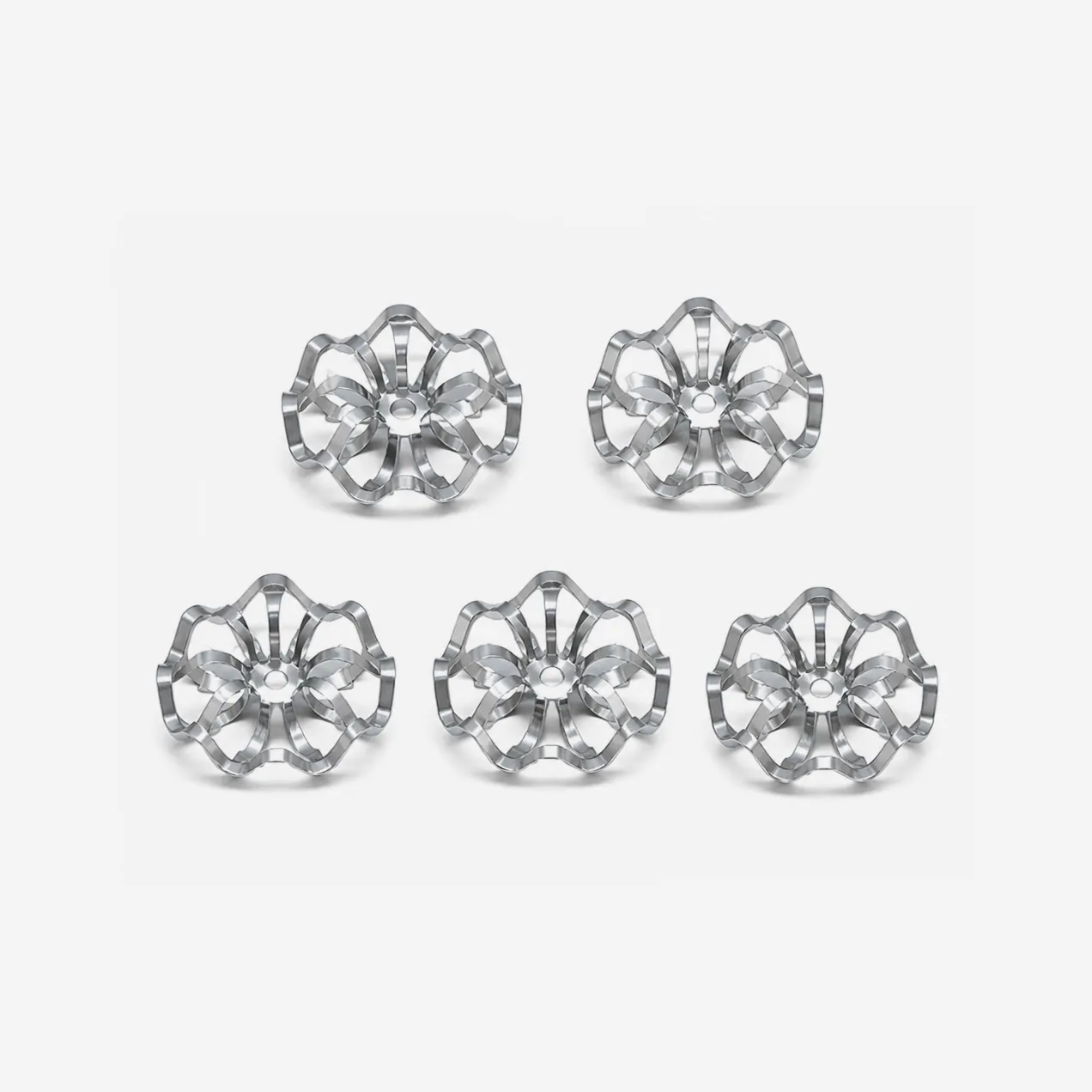
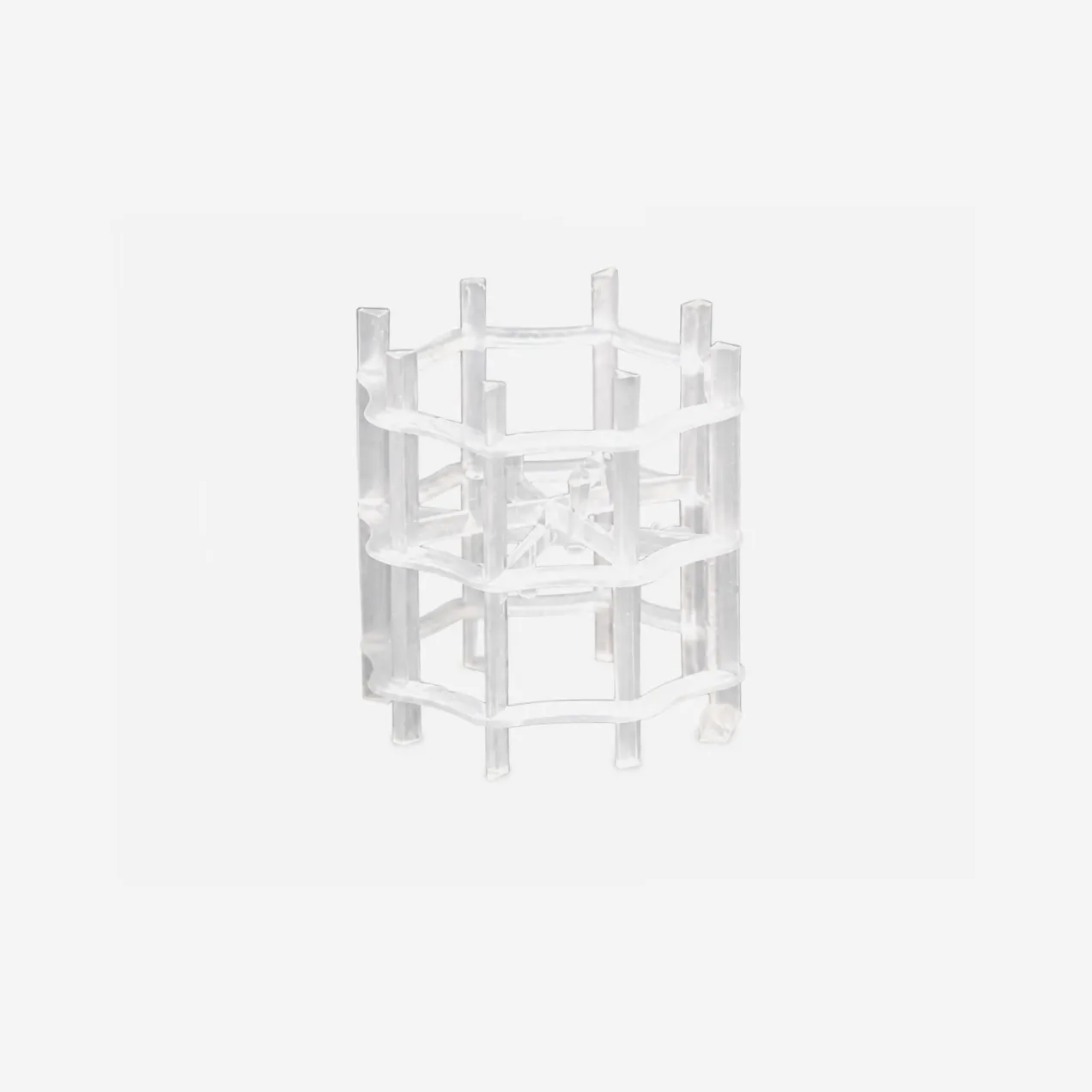
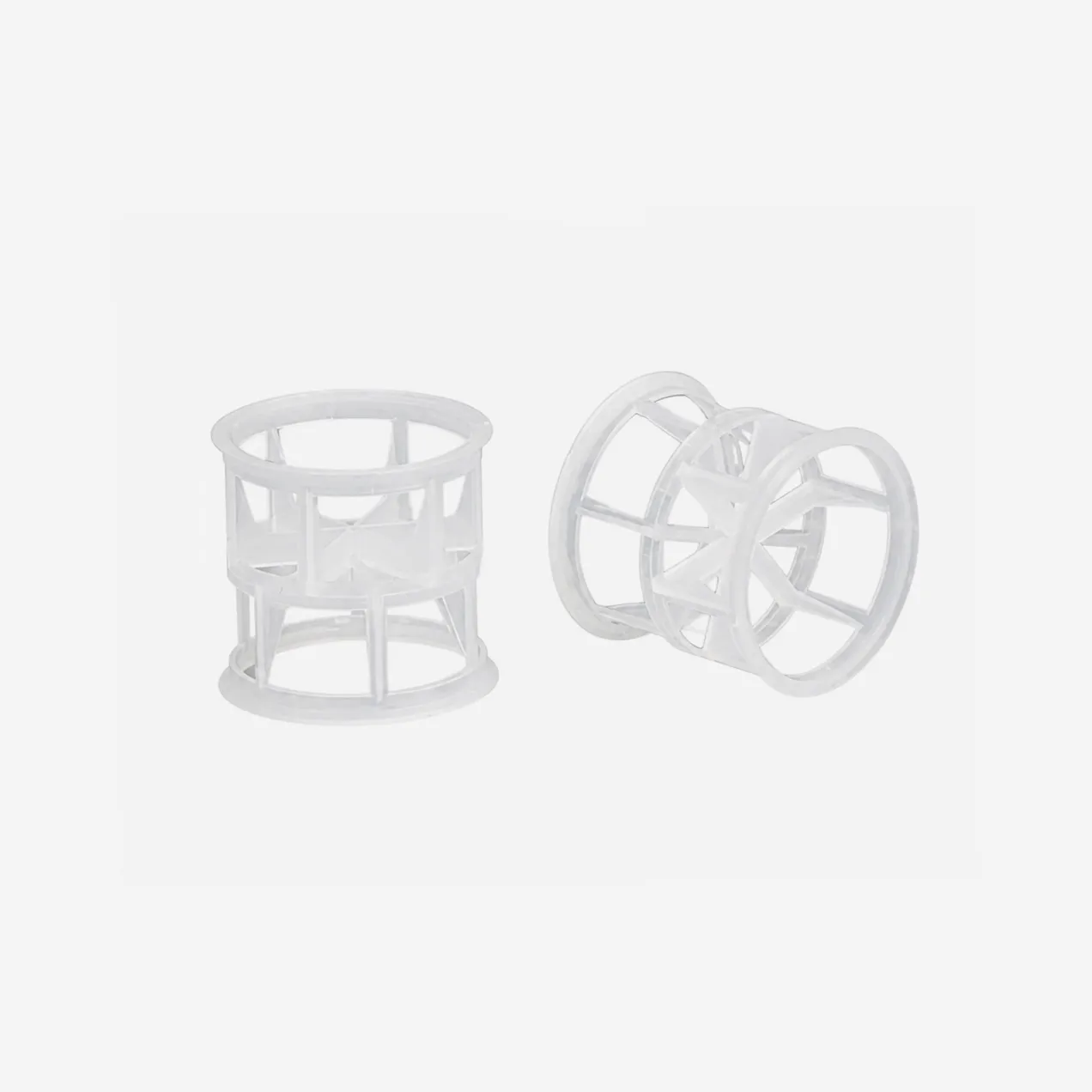
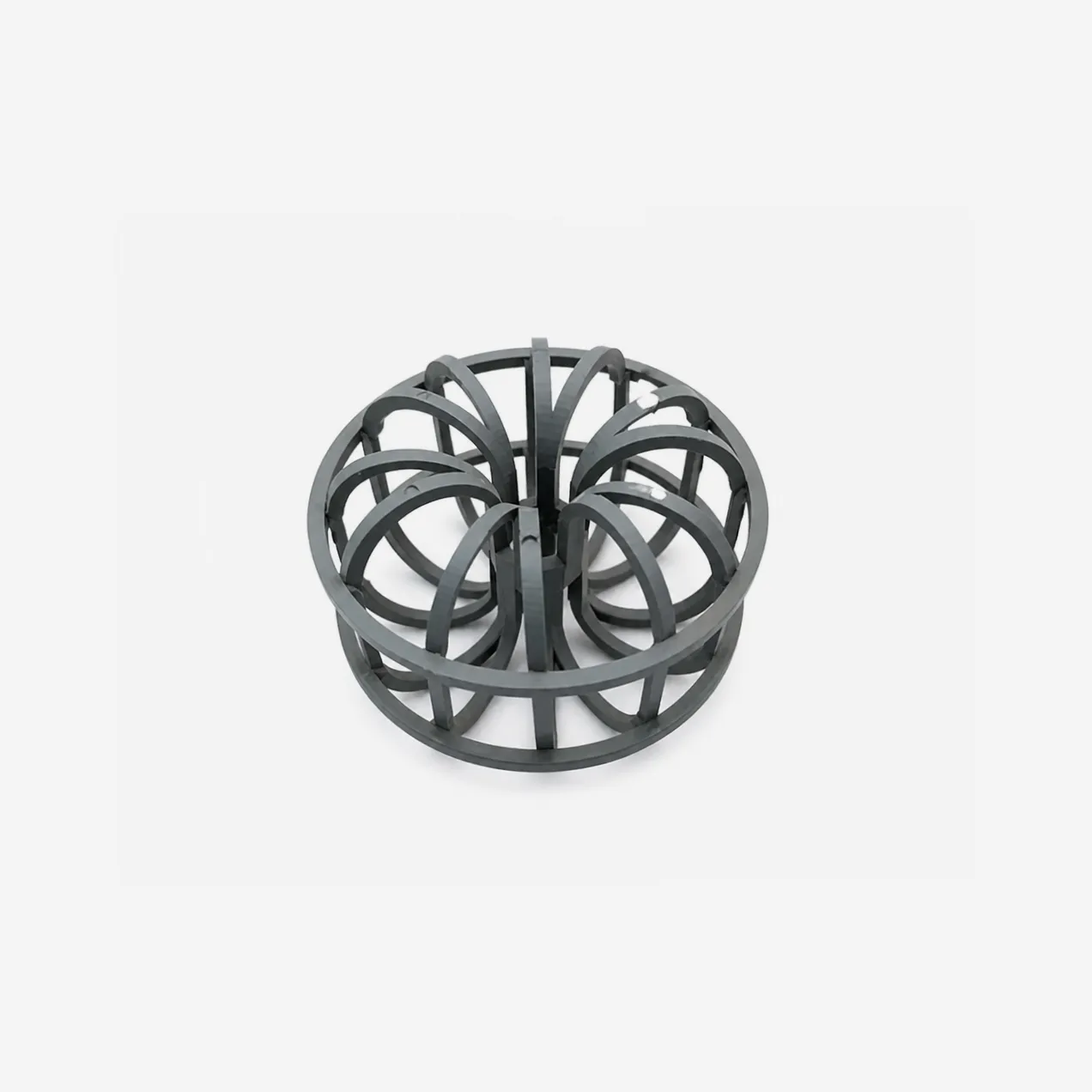
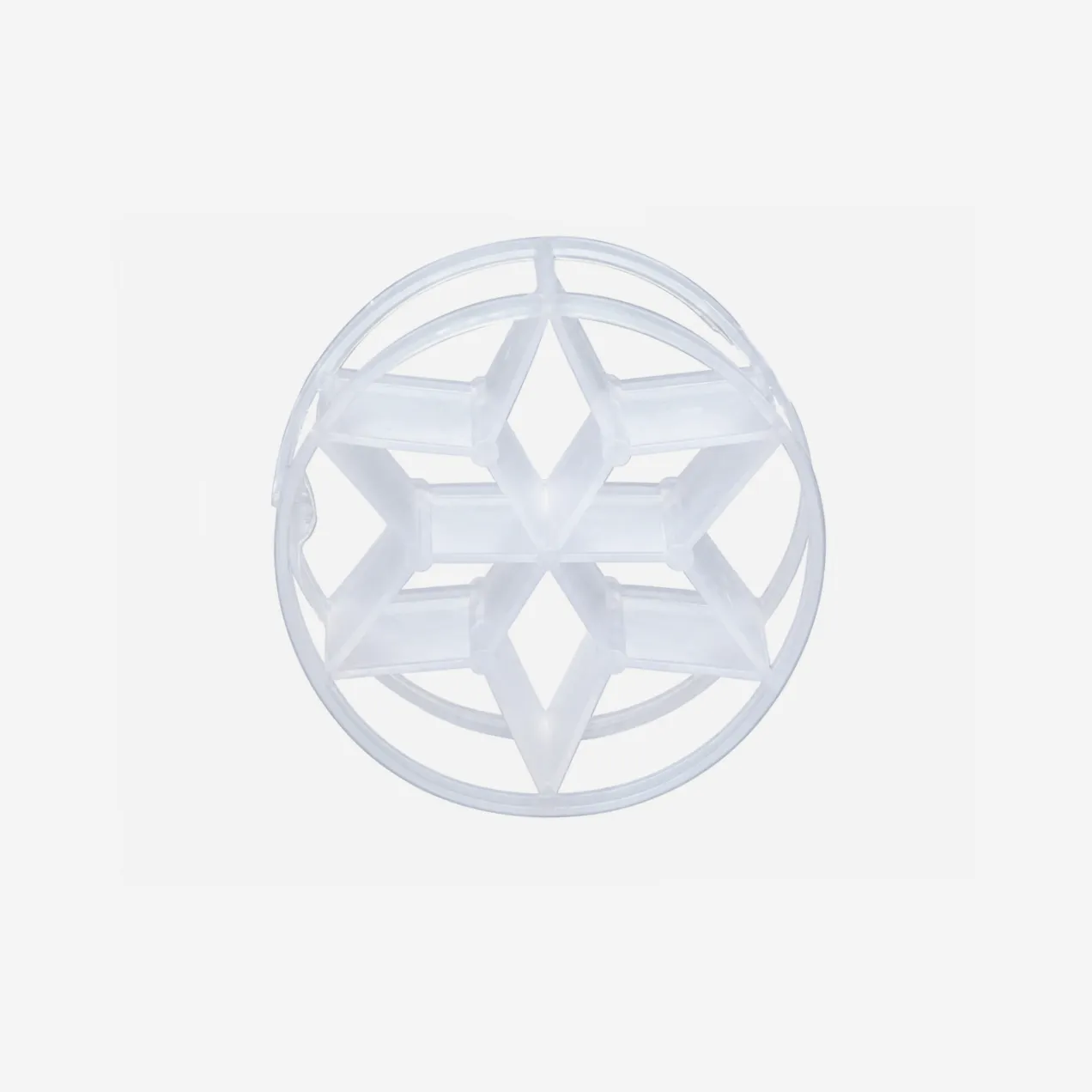
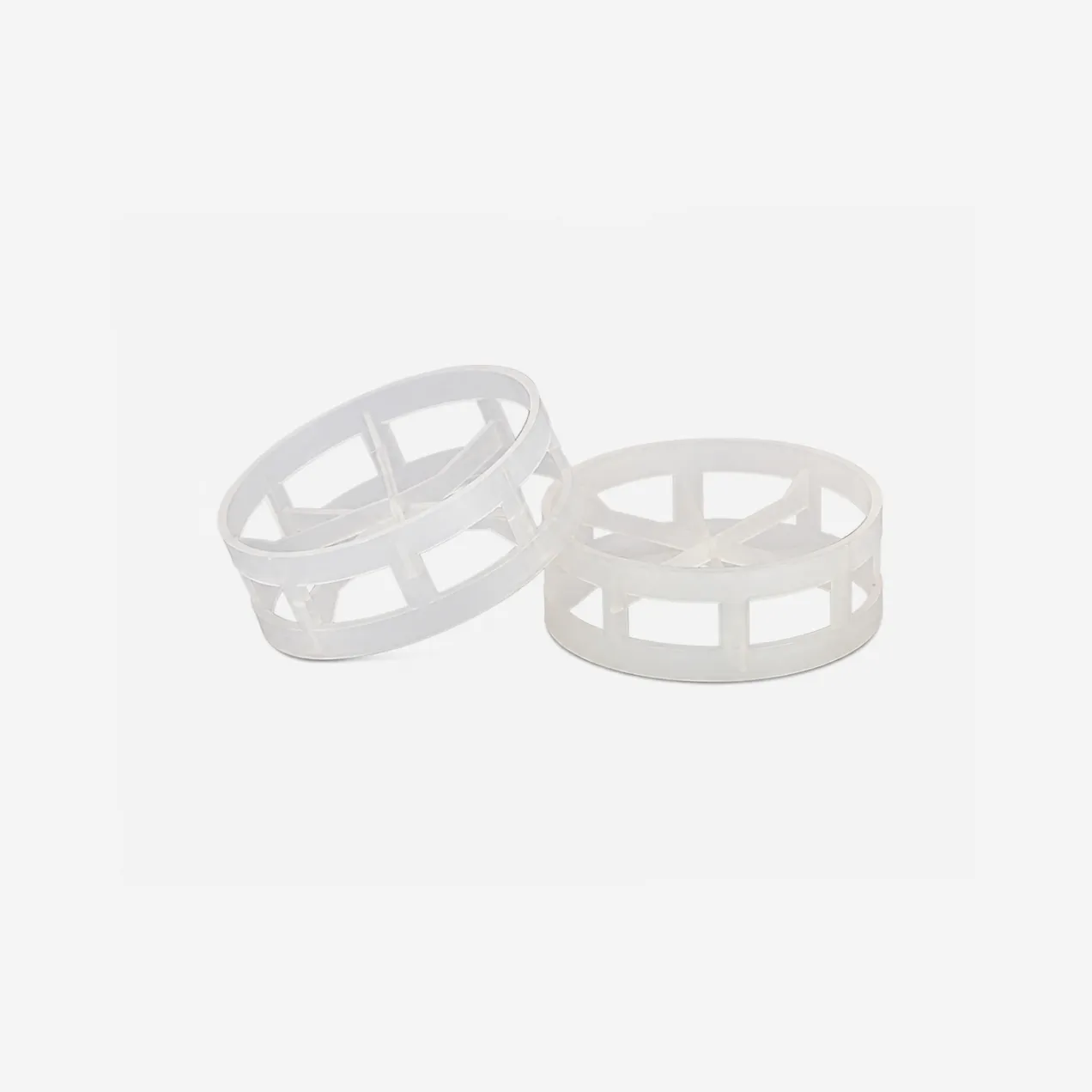
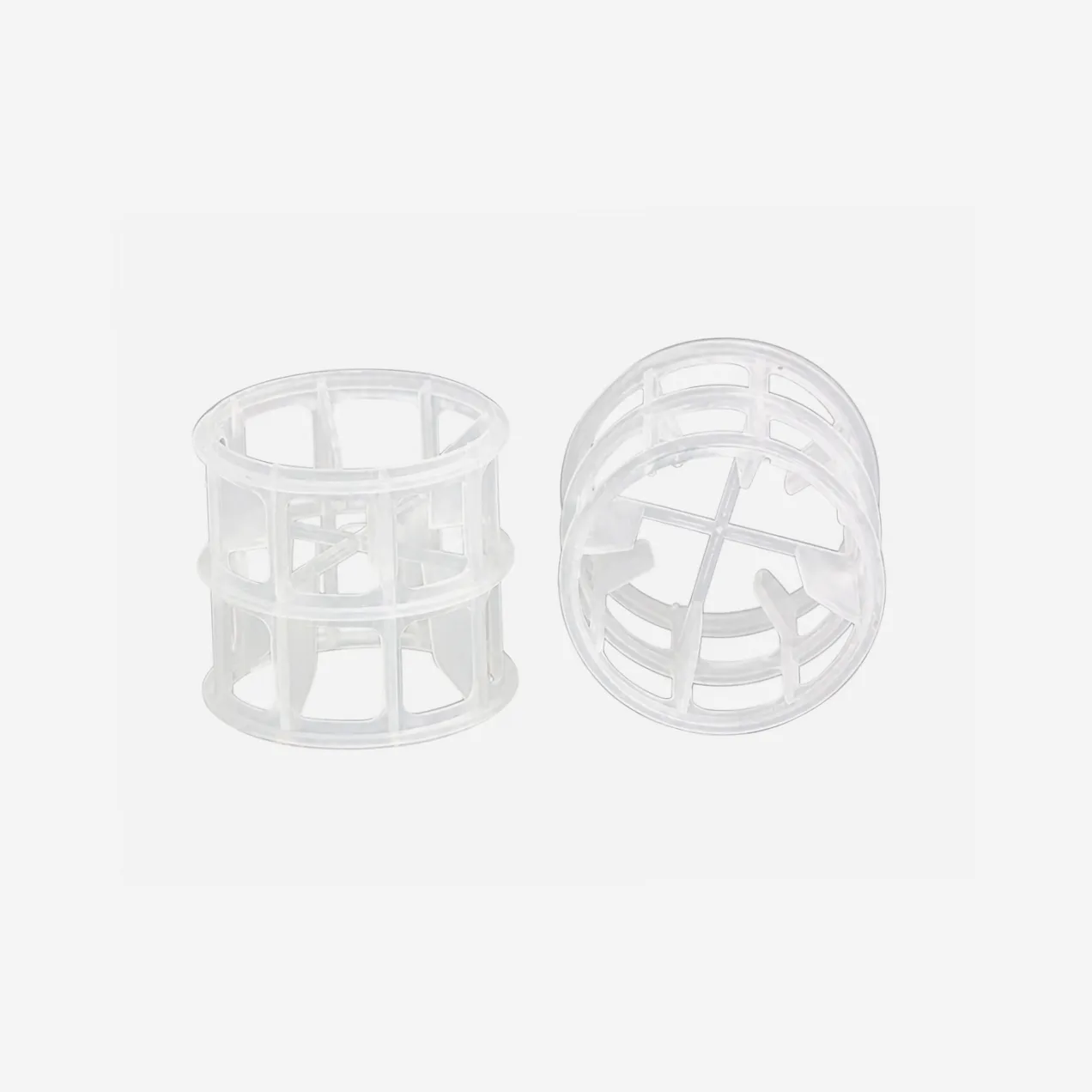
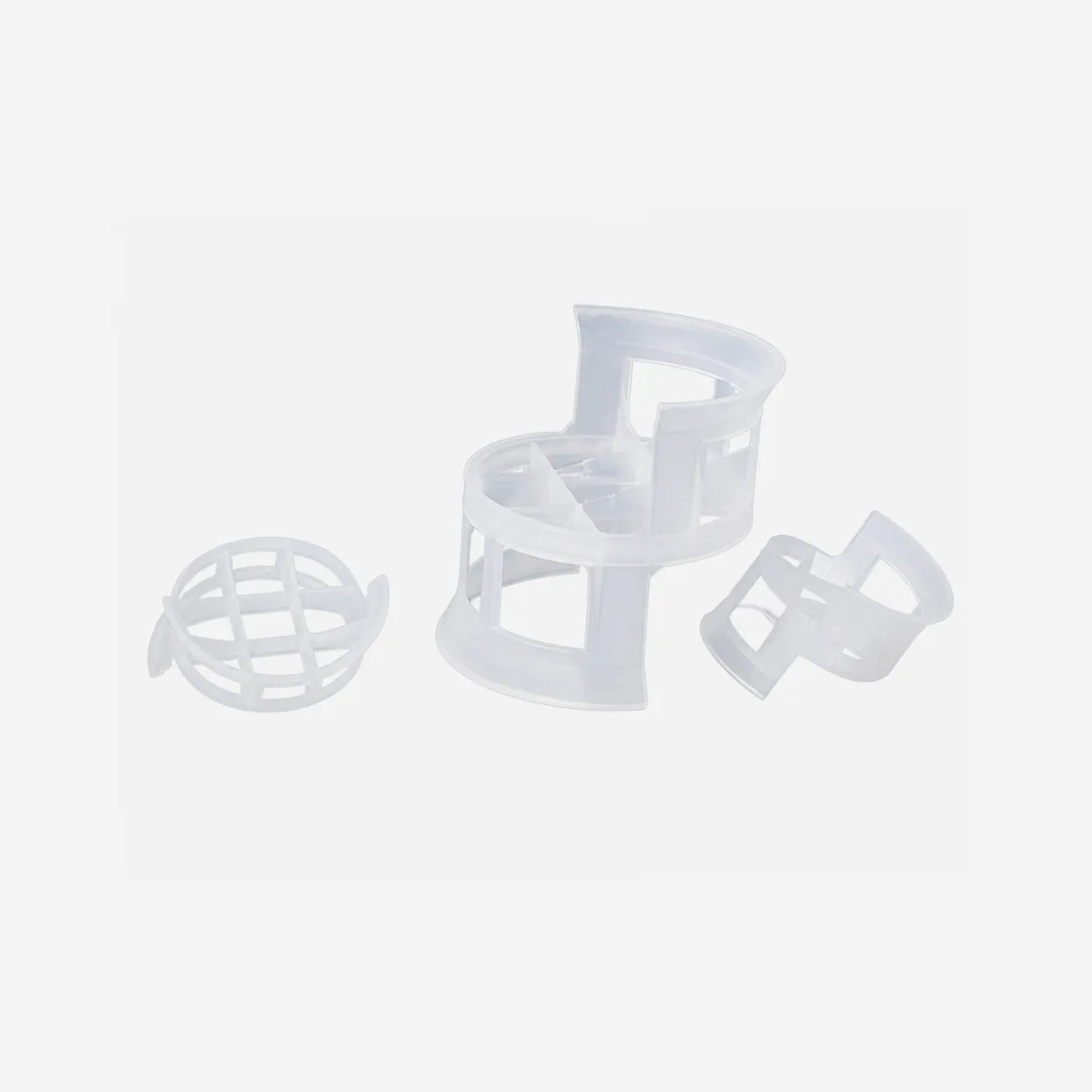
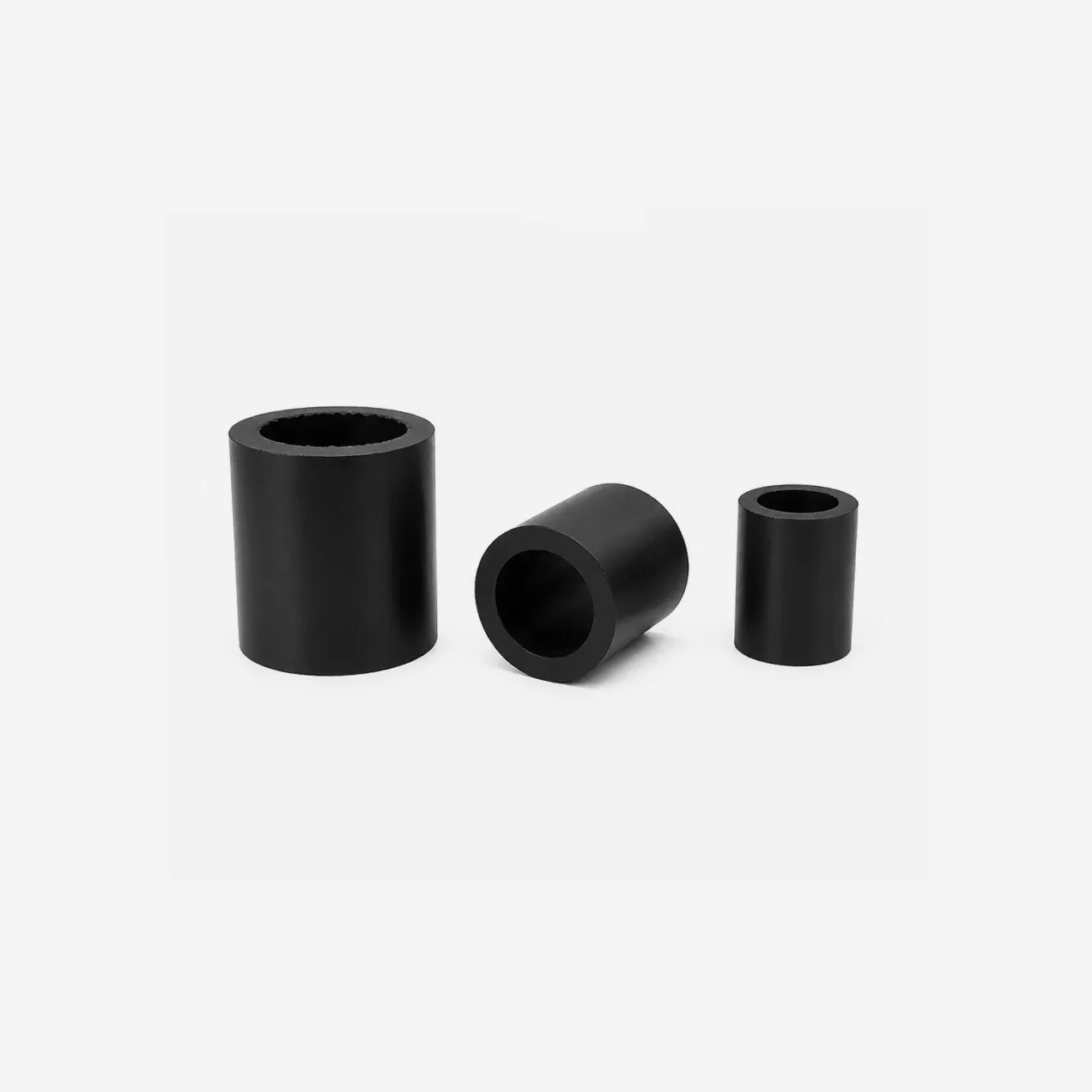
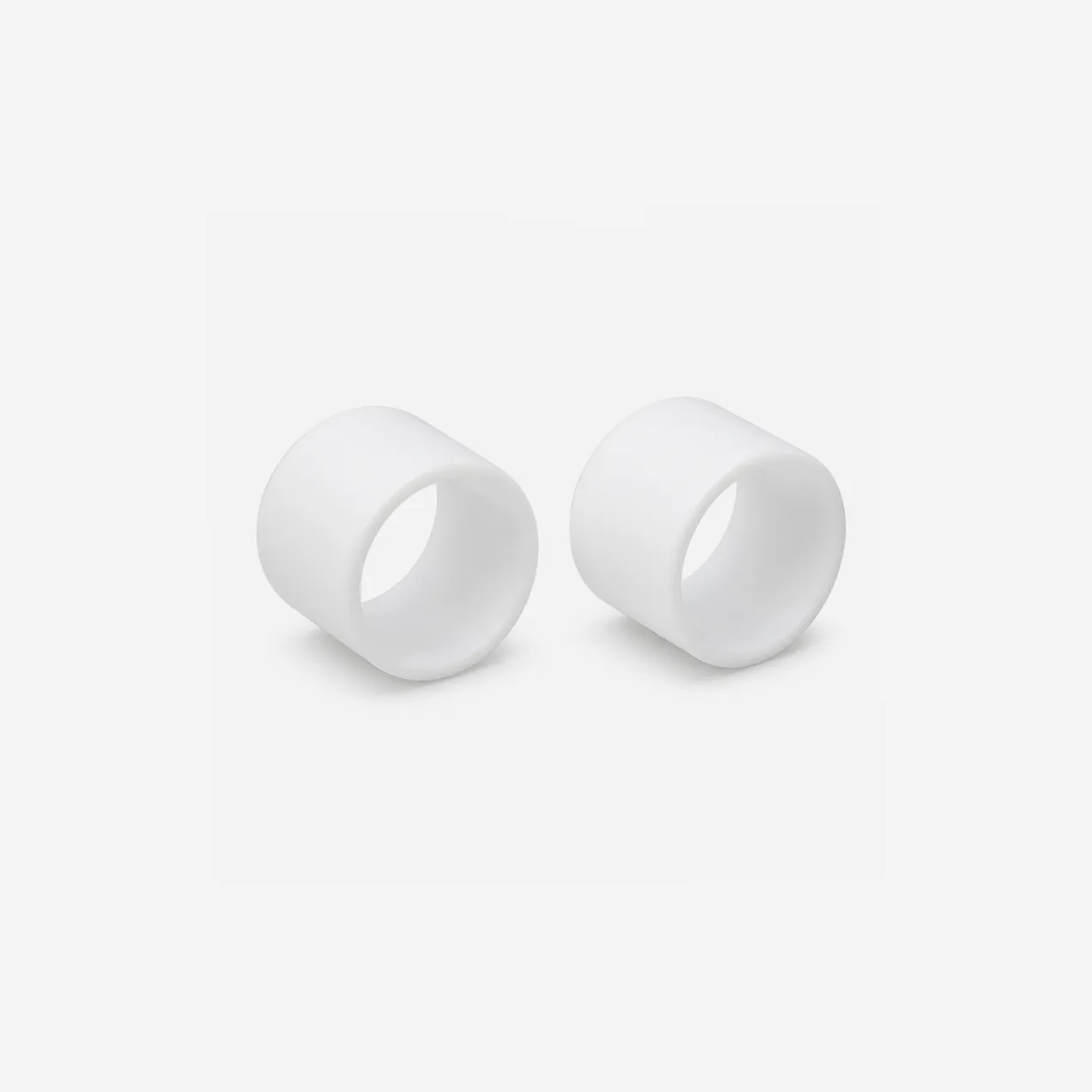
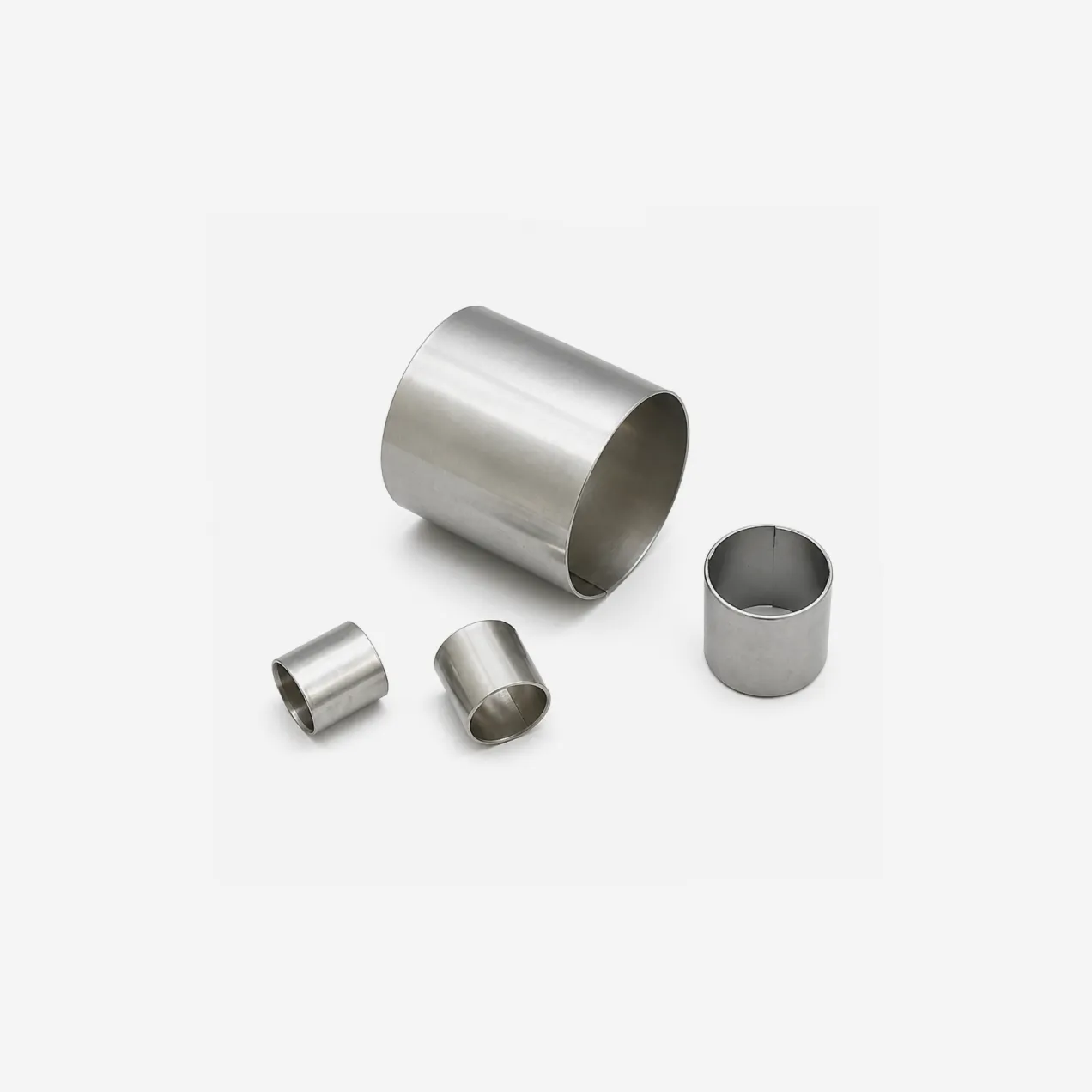
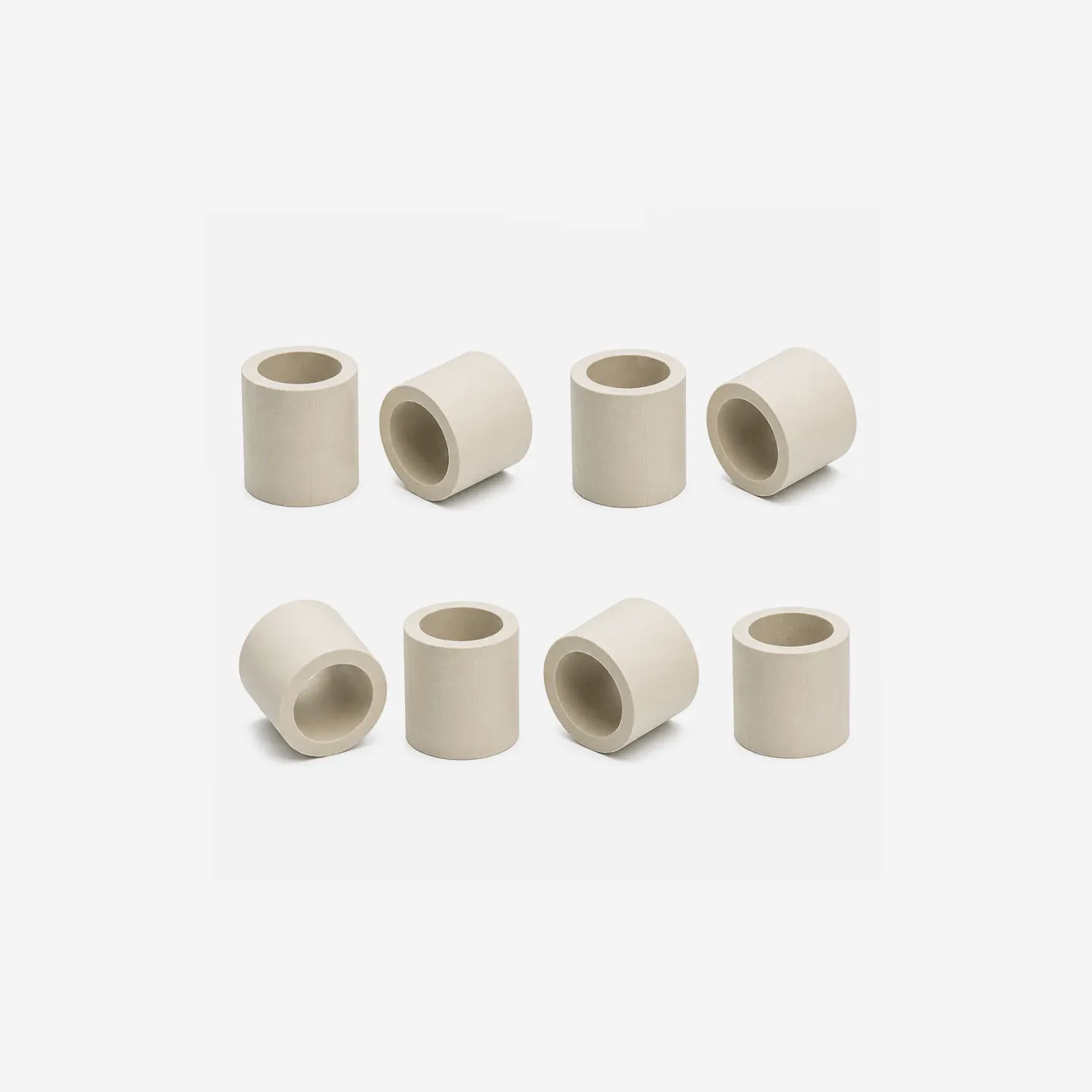
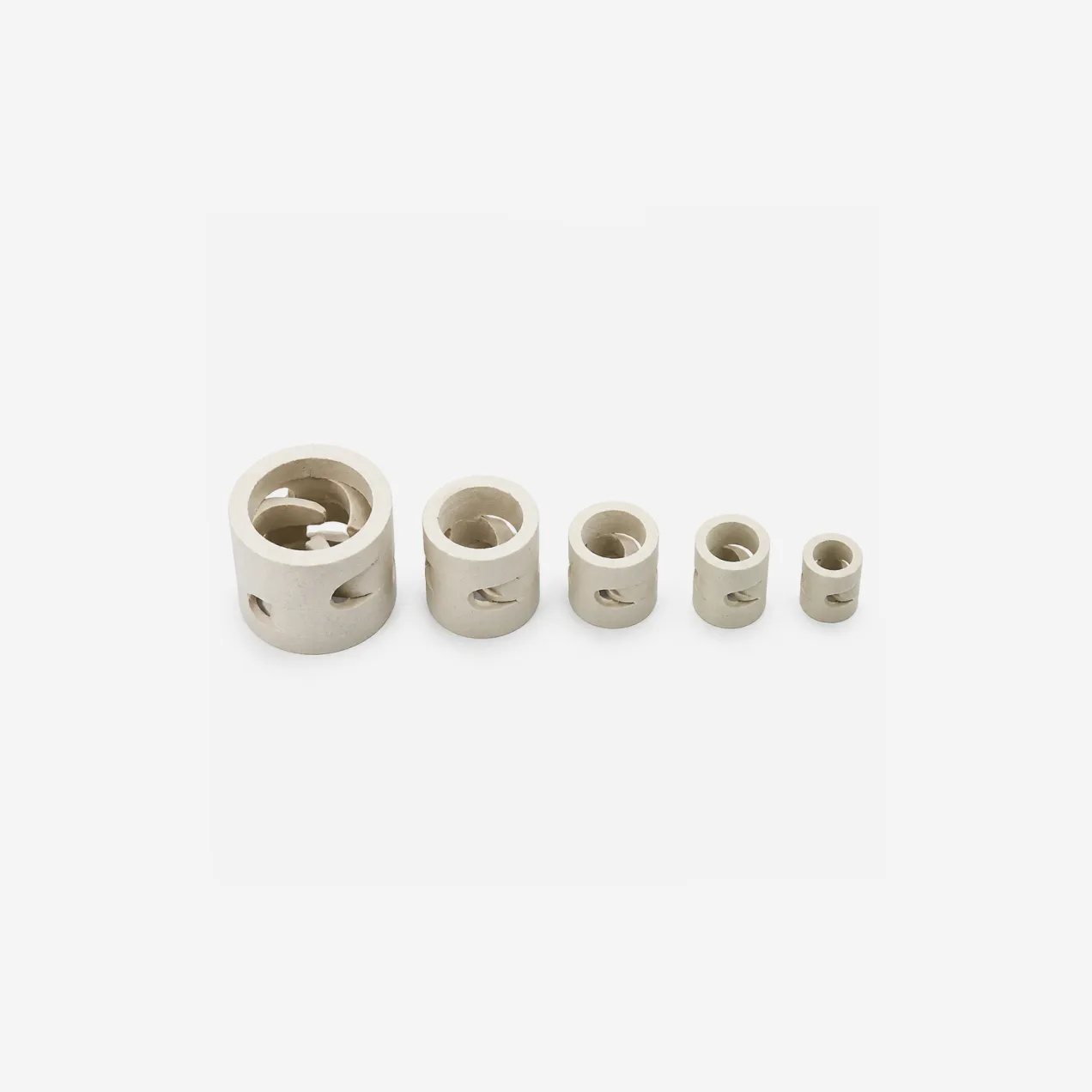
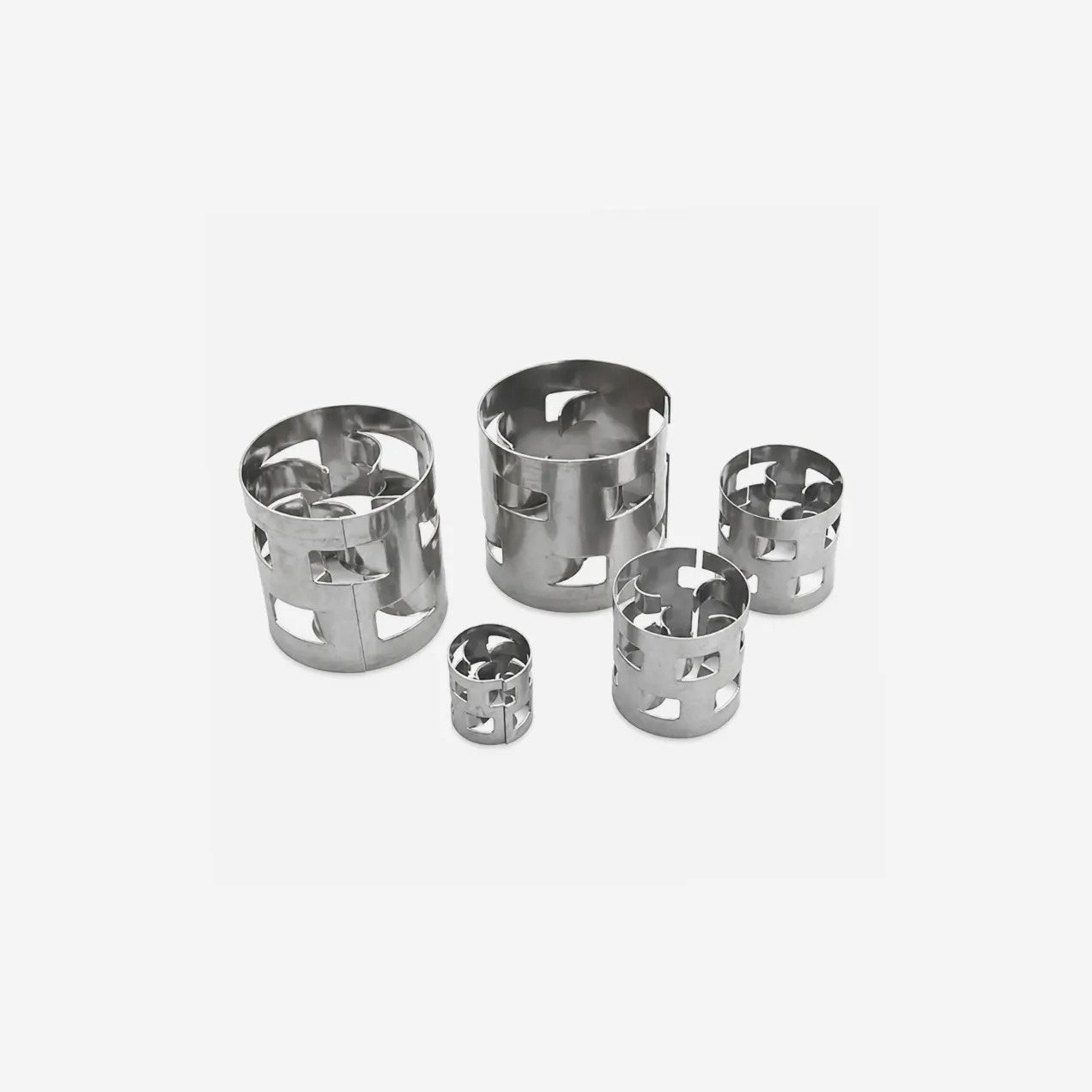
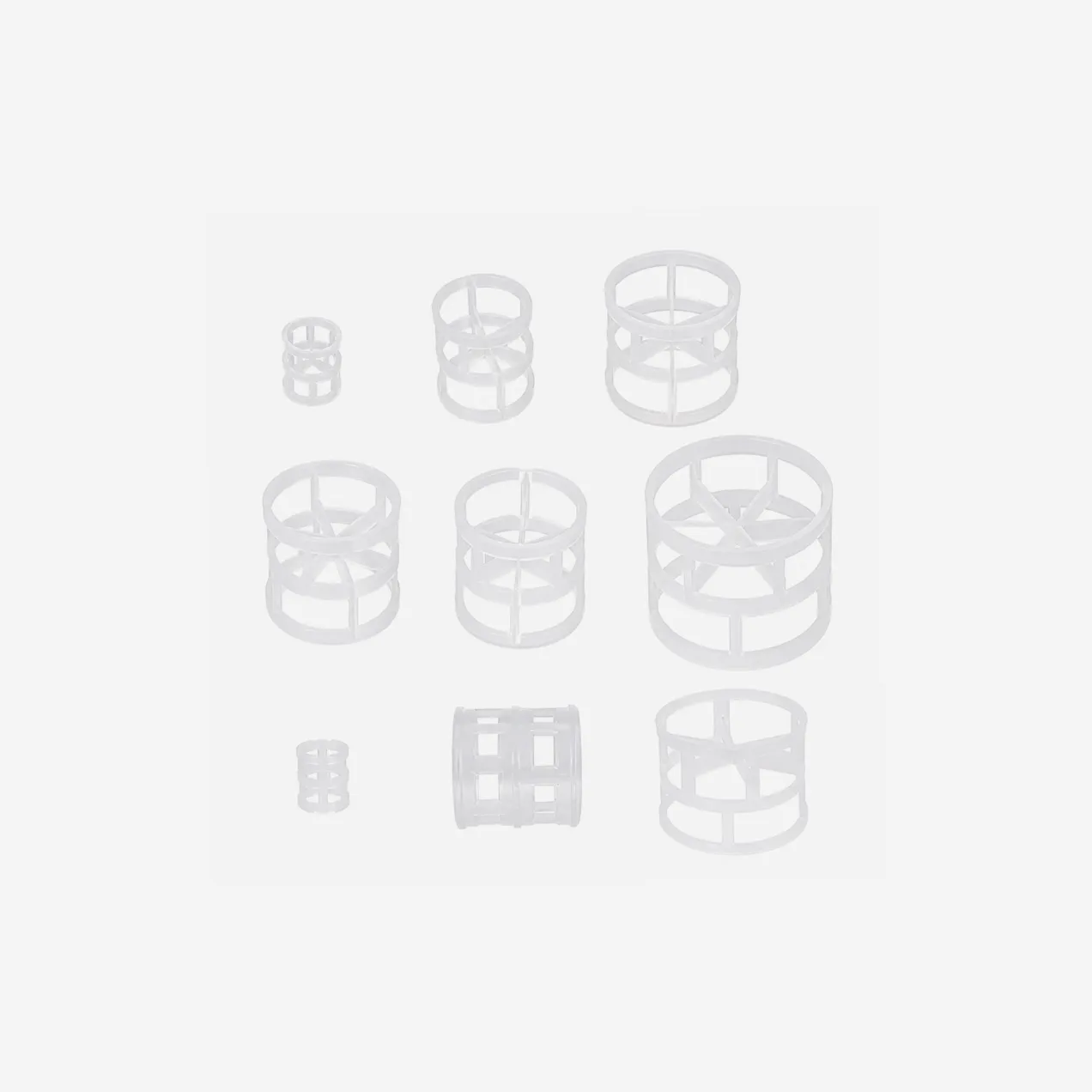
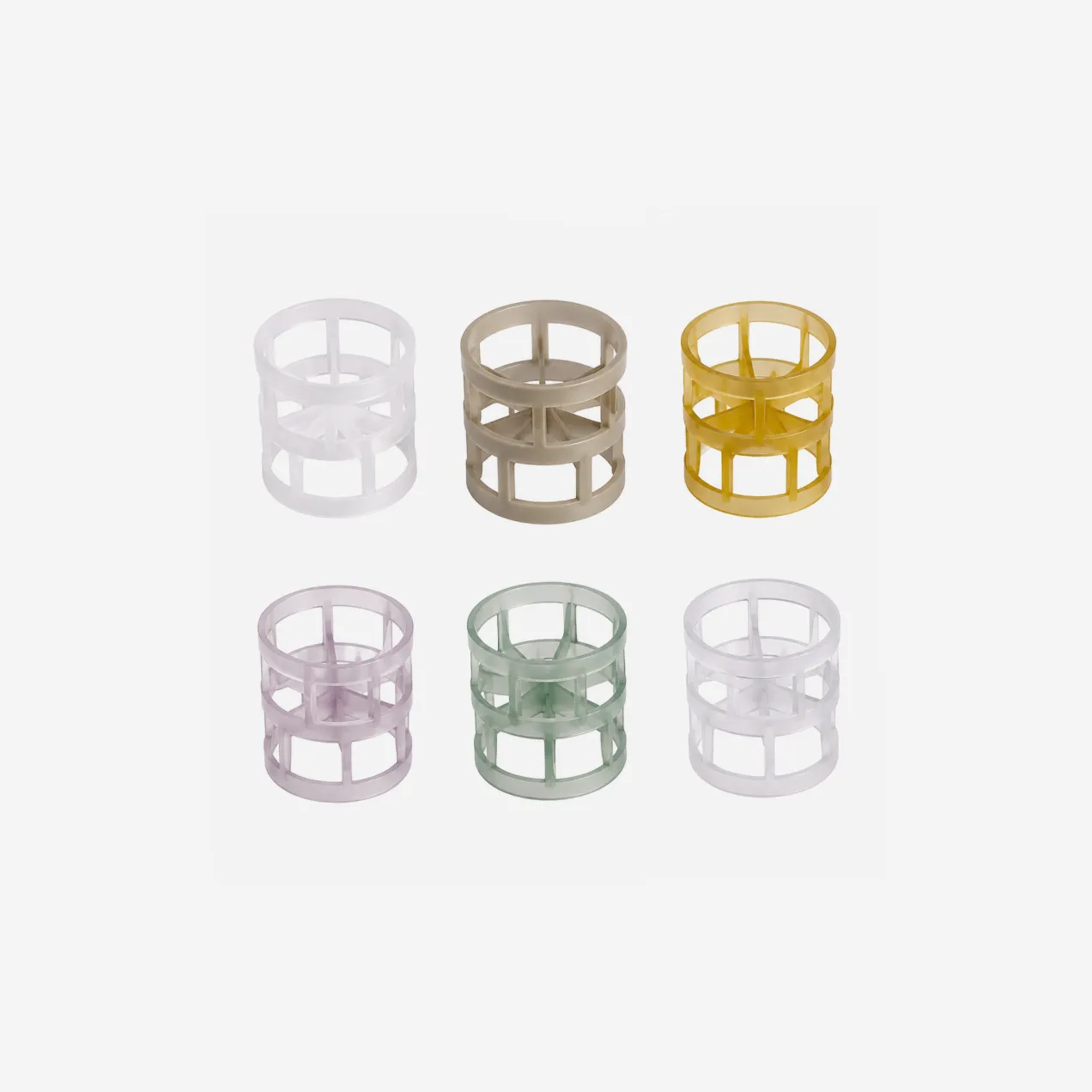
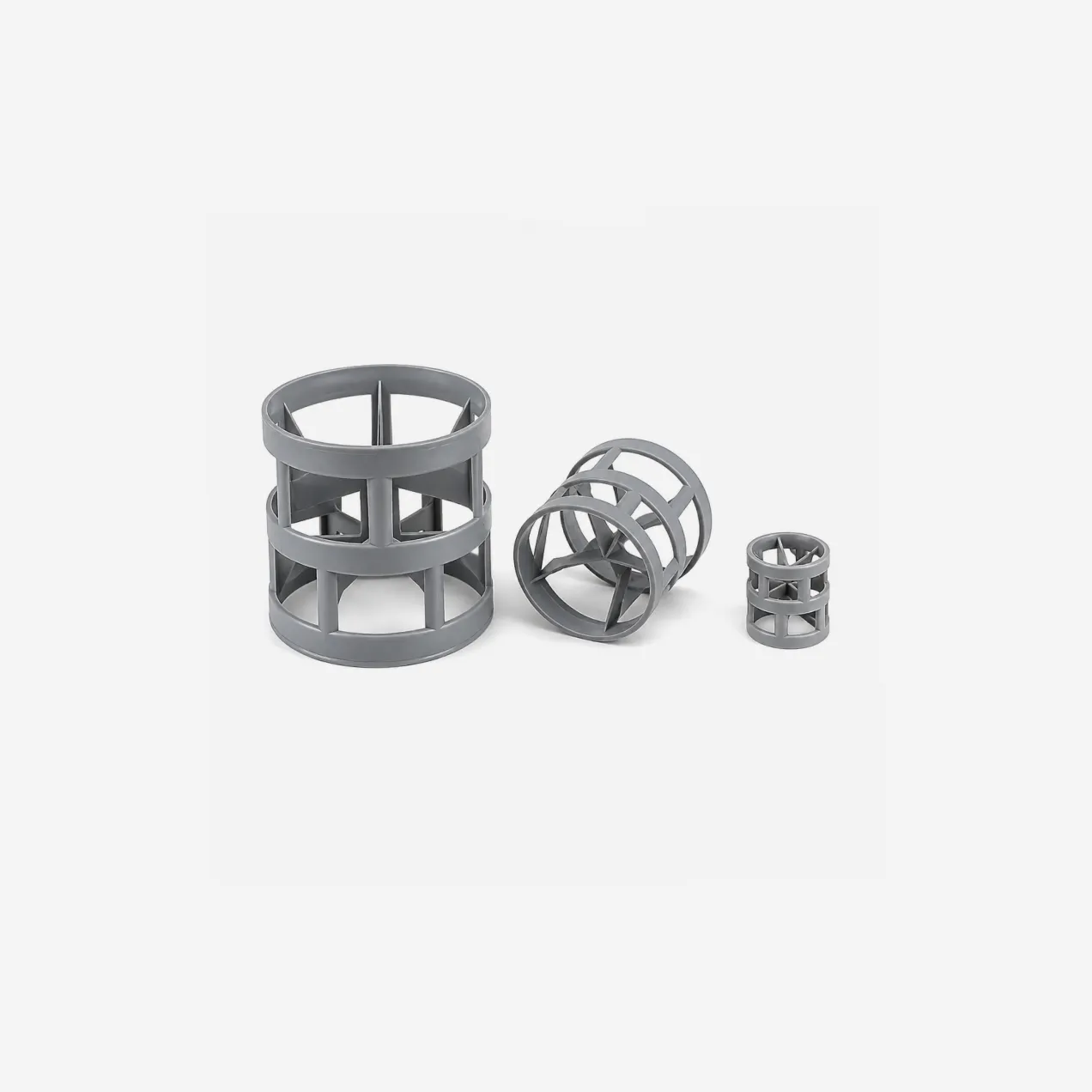
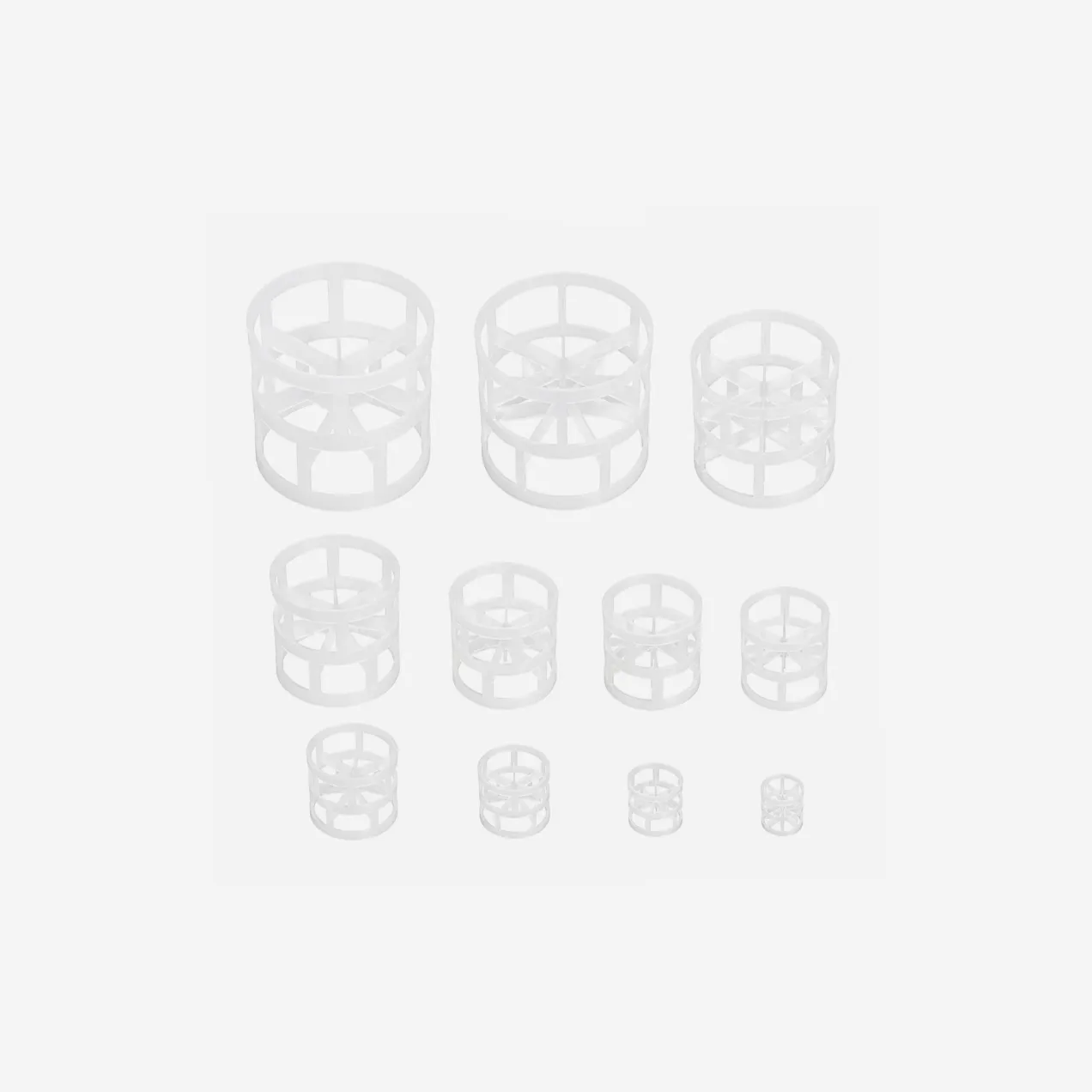
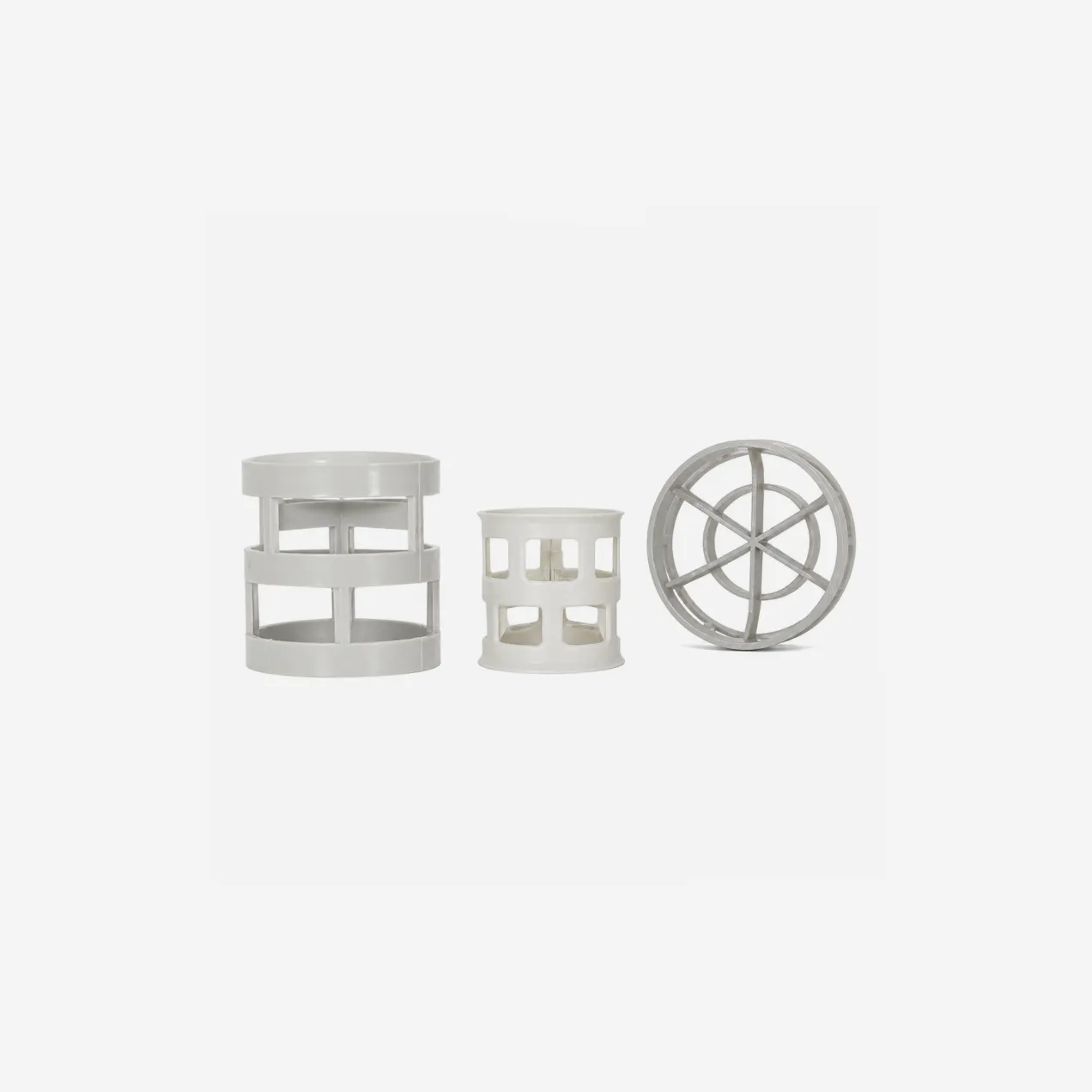
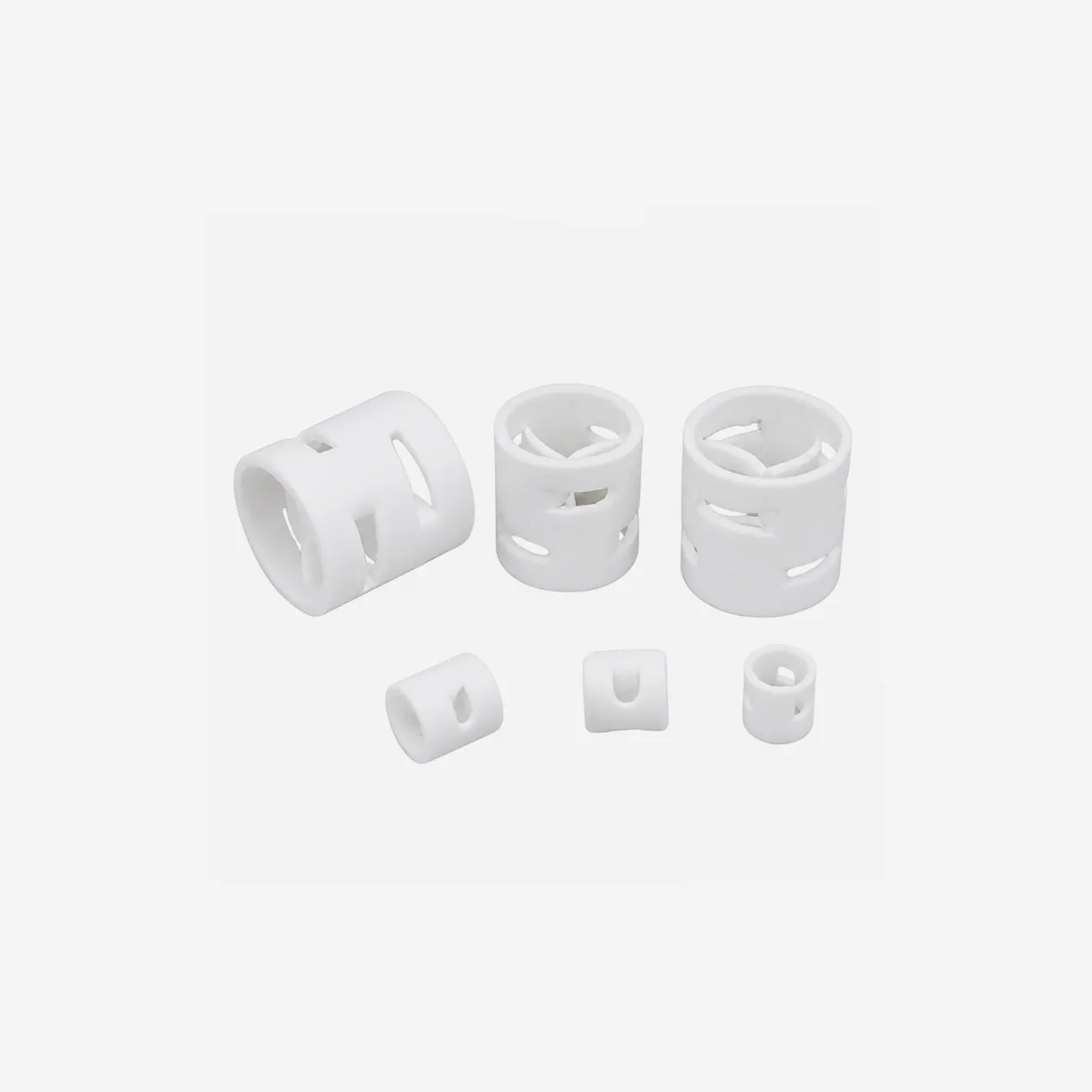
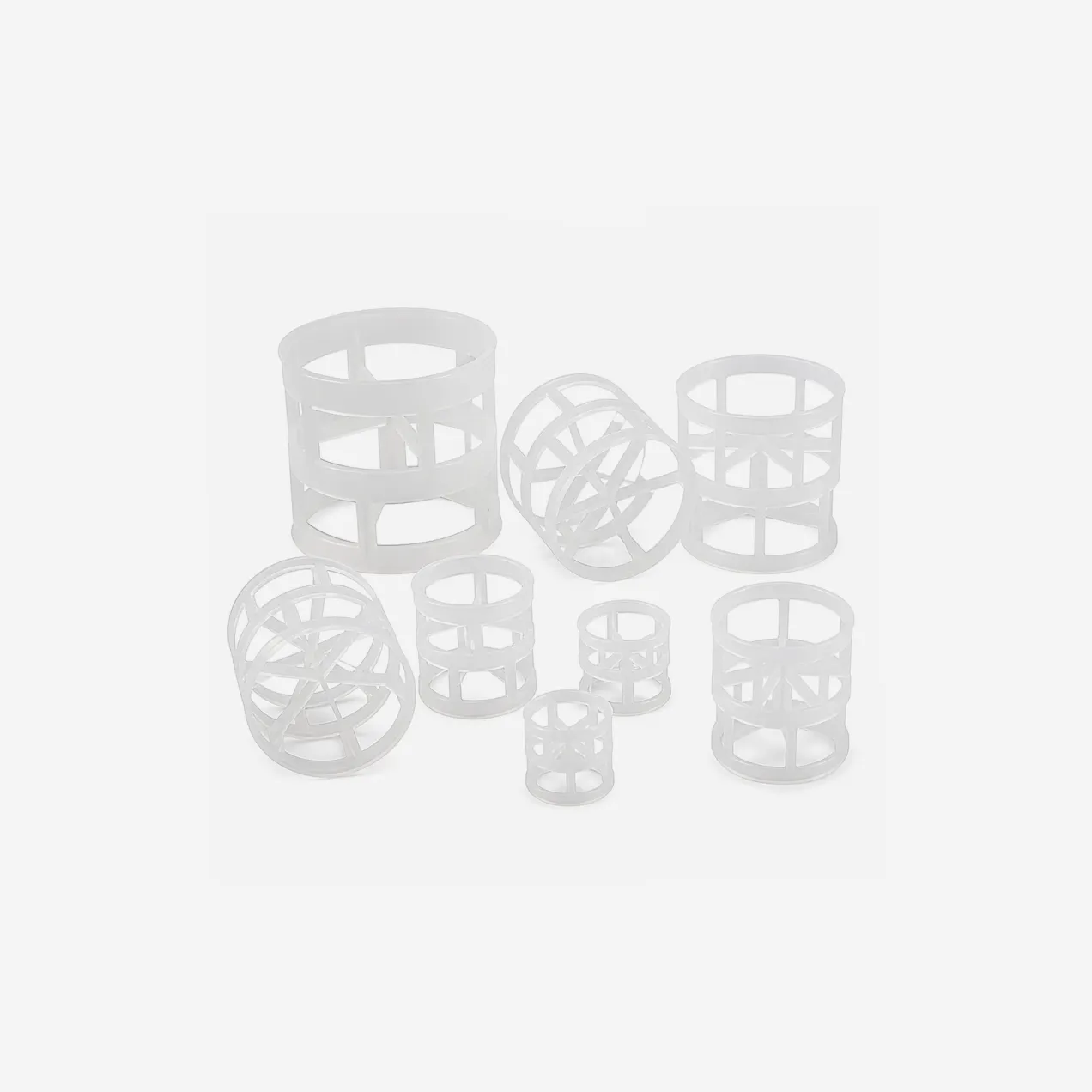
The Pall ring began as a fix for the Raschig ring, the oldest packing of all. A Raschig ring is a plain hollow cylinder; tipped in at random it works, but liquid clings to the outside and the solid wall blocks much of the cross-flow. The Pall ring keeps the same cylinder but stamps two rows of windows into the wall and folds the freed tongues inward toward the axis. Those tongues sit in the gas and liquid path, break the flow into fresh films and droplets, and open the inside of the ring for work. For the same wall material the ring then carries far more traffic at the same resistance.
| Raschig ring | Pall ring |
|---|
| Wall | Solid, no openings | Two rows of windows, inward tongues |
| Capacity at equal pressure drop | Baseline | About 50% higher |
| Pressure drop at equal load | Baseline | About half |
| Liquid distribution | Poor, runs on the outside | Even, wets inside and out |
In a plastic Pall ring the tongues and wall are moulded in one piece from polypropylene, so the ring is light, cheap and free of the rust and scaling that trouble metal. The rings are simply tipped into the column and settle into a random bed with a void fraction near 90%, which is what gives the low pressure drop and the large throughput. Size is matched to the column: keep the ring at or below about an eighth of the tower diameter, using 25 mm rings in narrow columns for surface area, and 50 or 76 mm rings in wide columns where throughput and low resistance matter more.
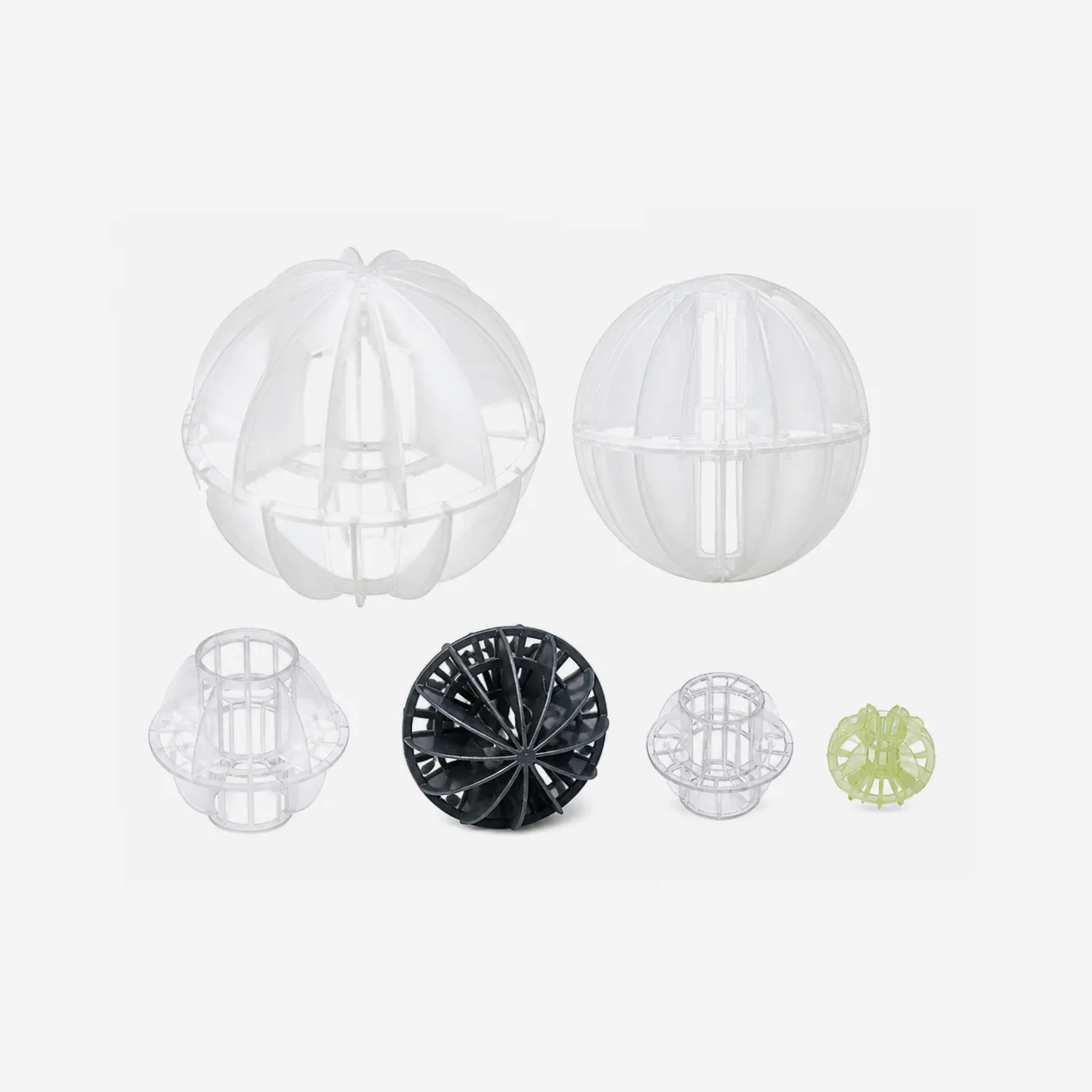
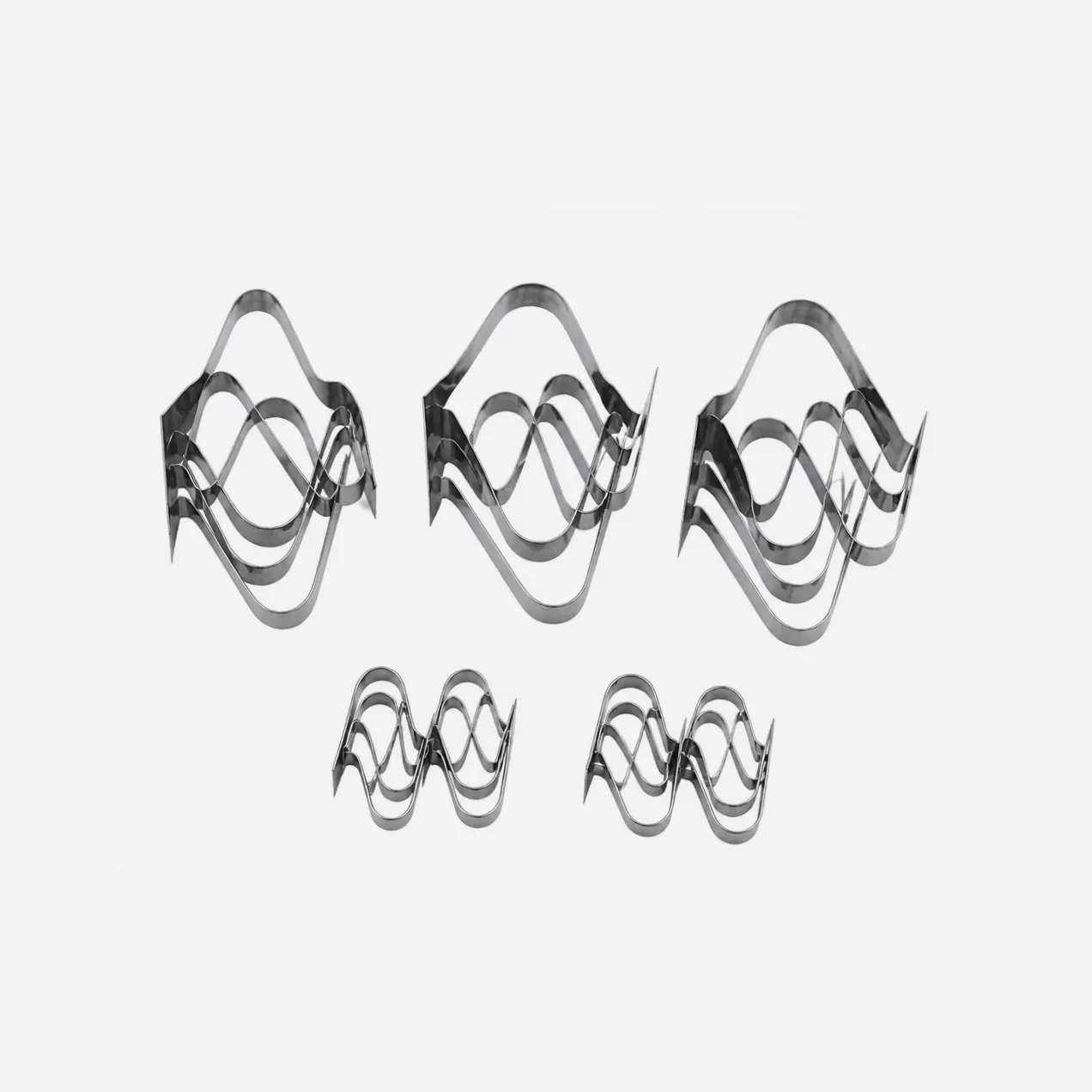
Typical duties are acid and chlorine scrubbing, flue gas desulphurisation, solvent recovery, degassing and deaeration, VOC air stripping, cooling towers, and trickling filters where the open bed carries a biofilm. Polypropylene covers these to about 100 degrees; for hotter or strongly oxidising streams the same ring is moulded in PVDF, and for cooler, milder duty in PVC. Where the process is clean and very hot, metal or ceramic packing takes over, but for wet, corrosive, moderate-temperature service the PP Pall ring is the practical, low-cost standard.