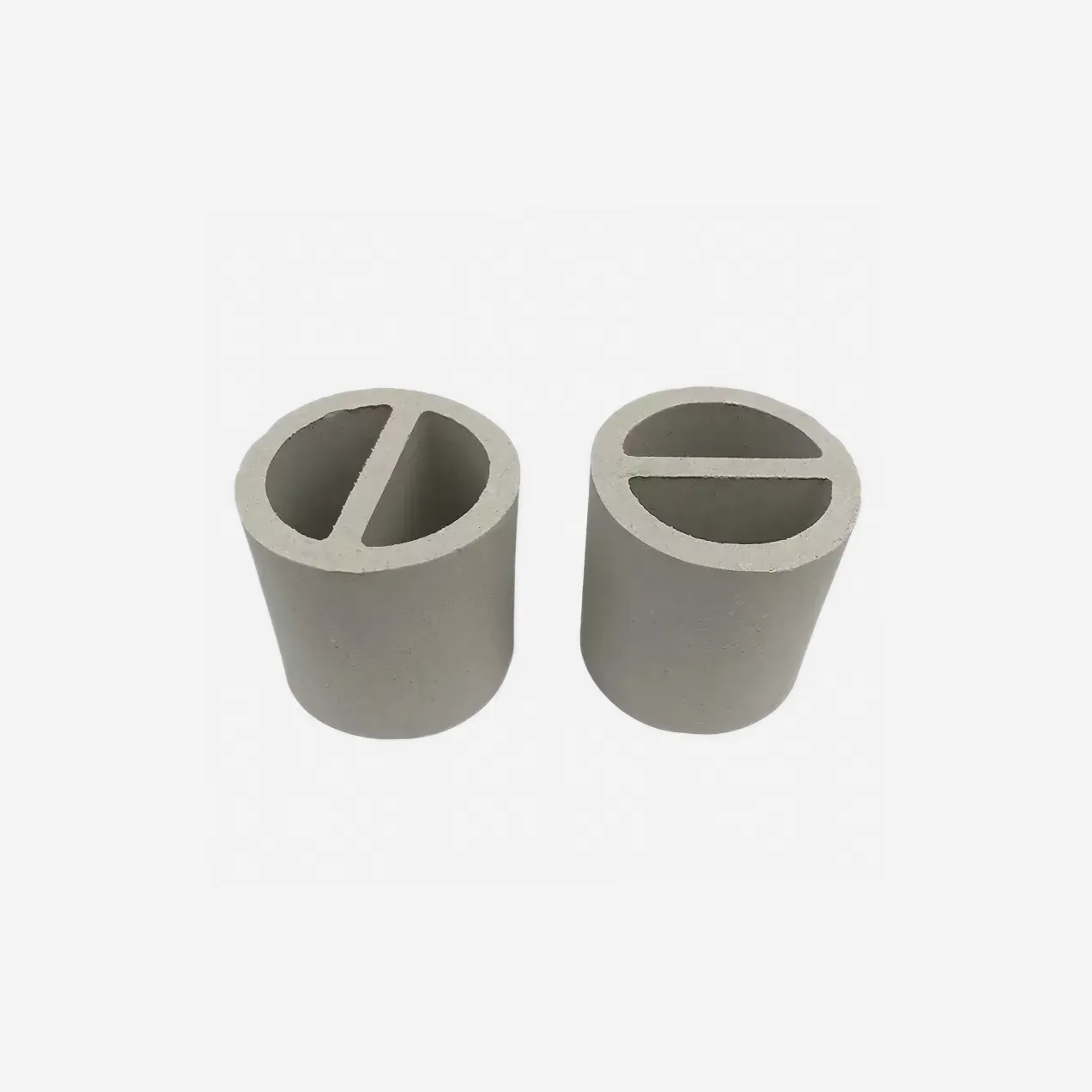
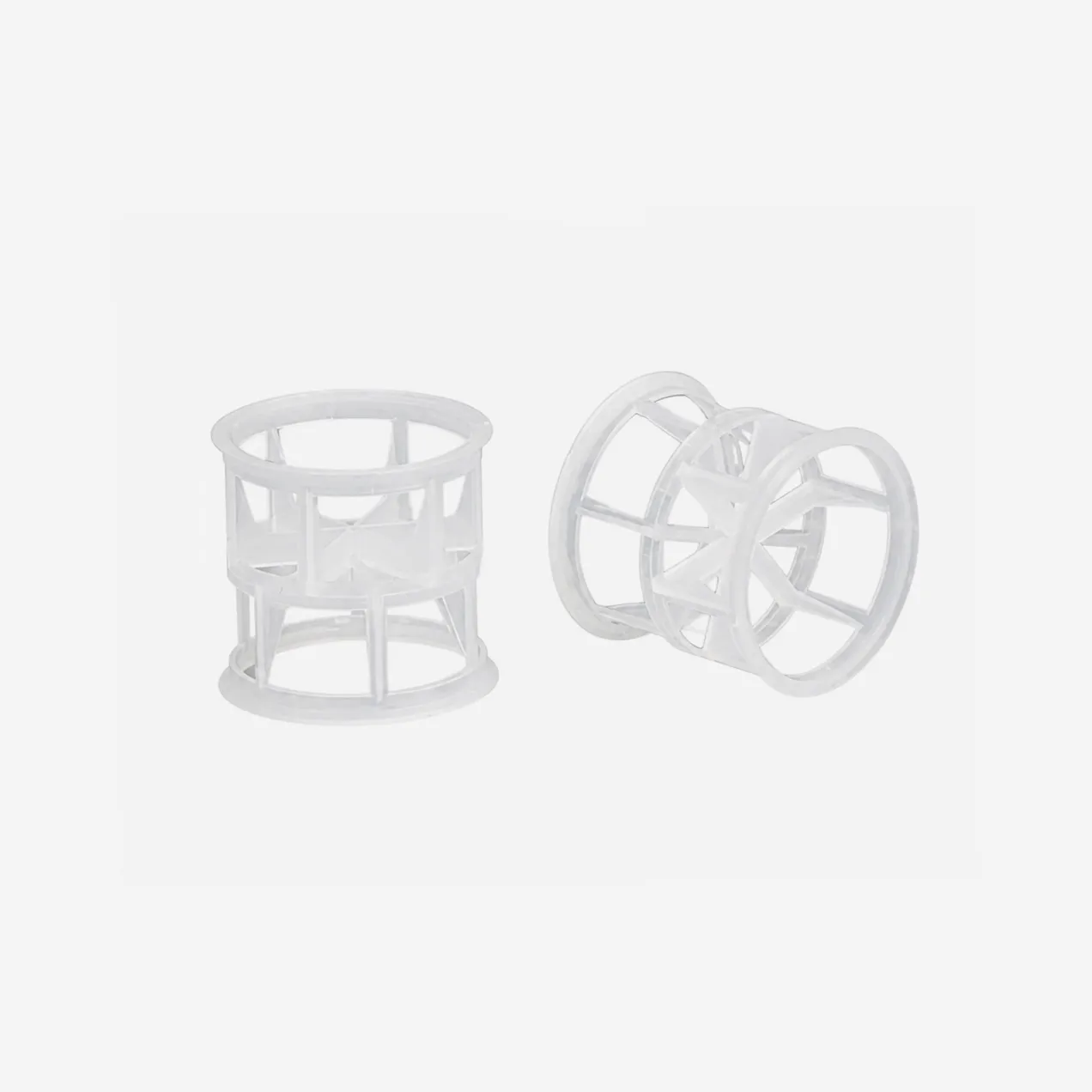
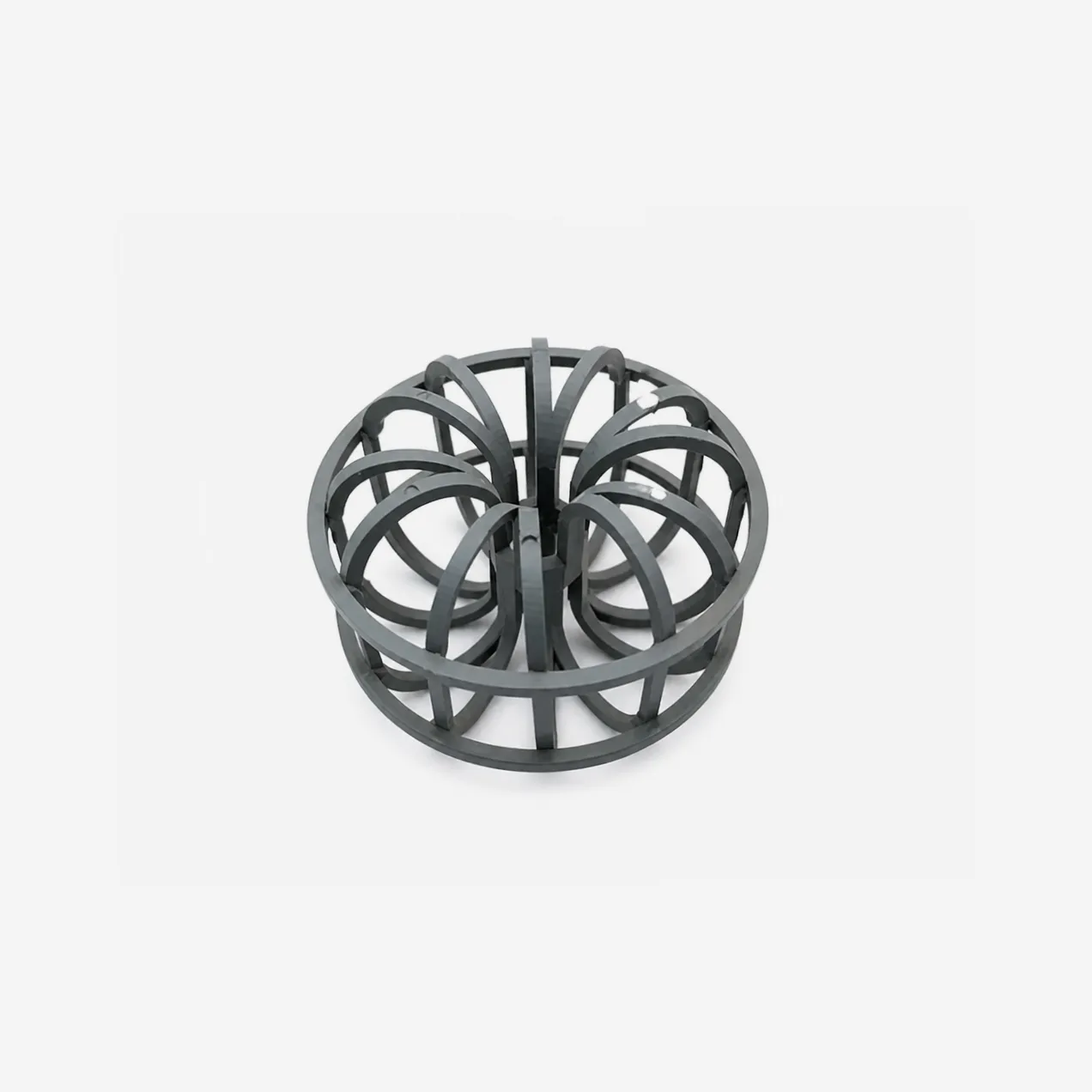
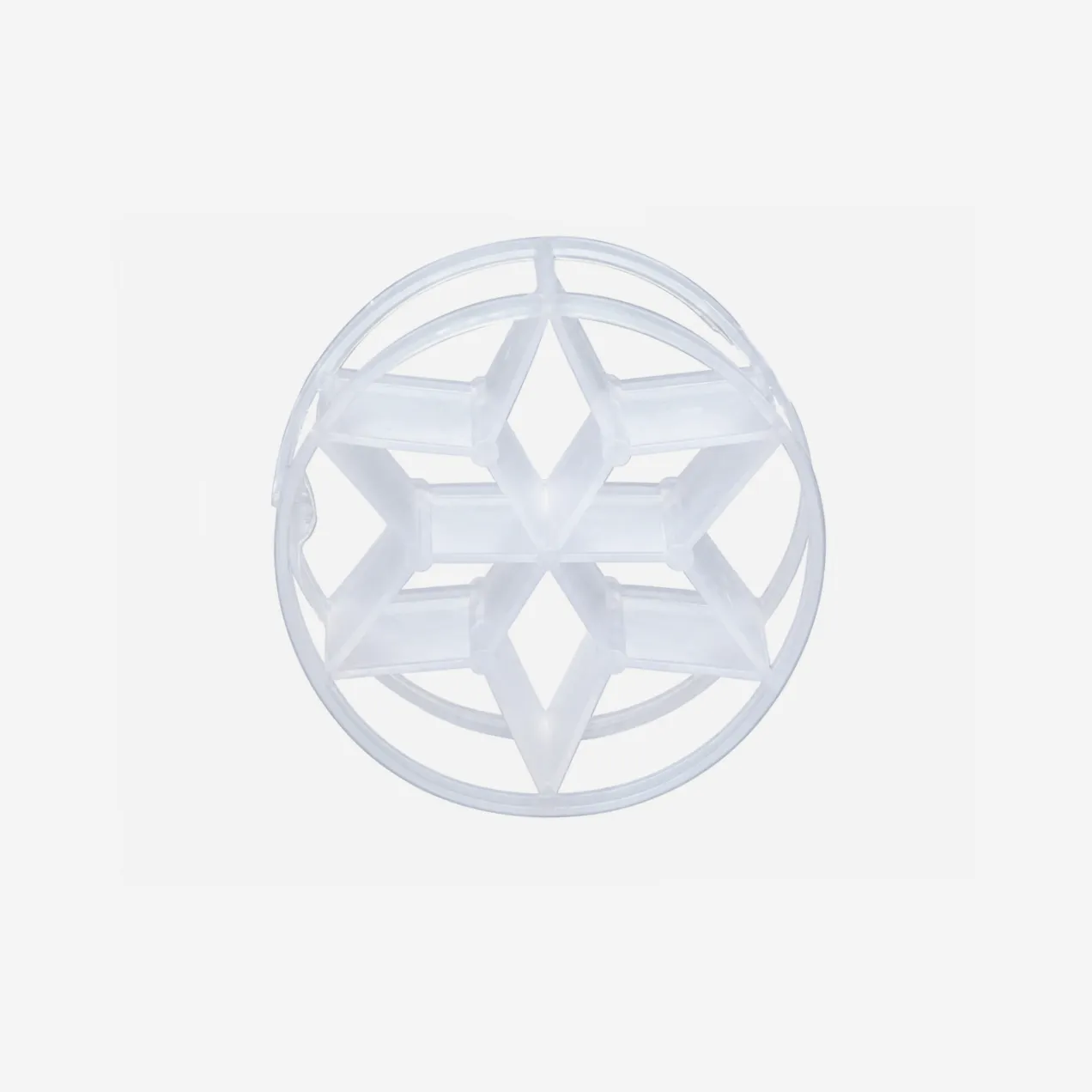
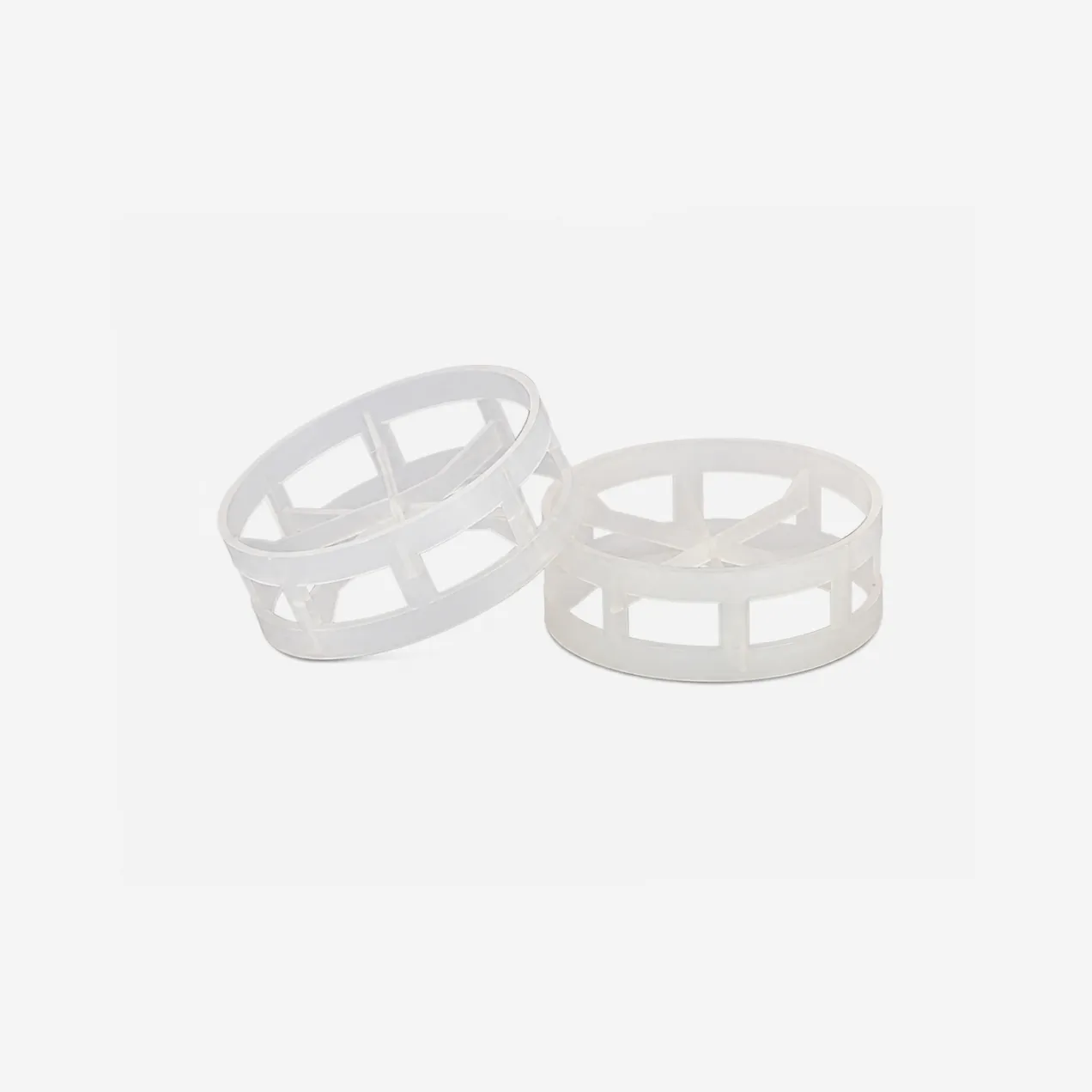
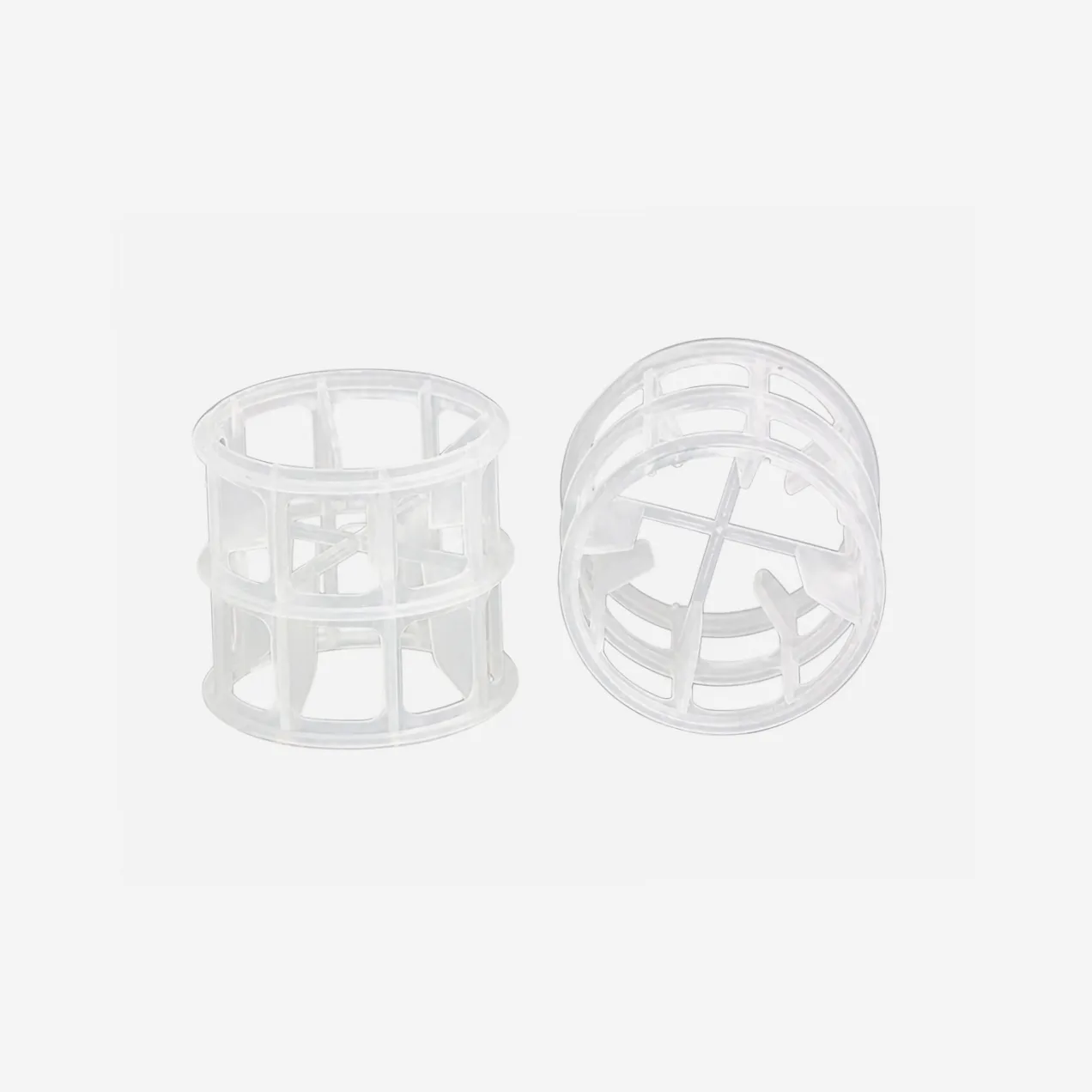
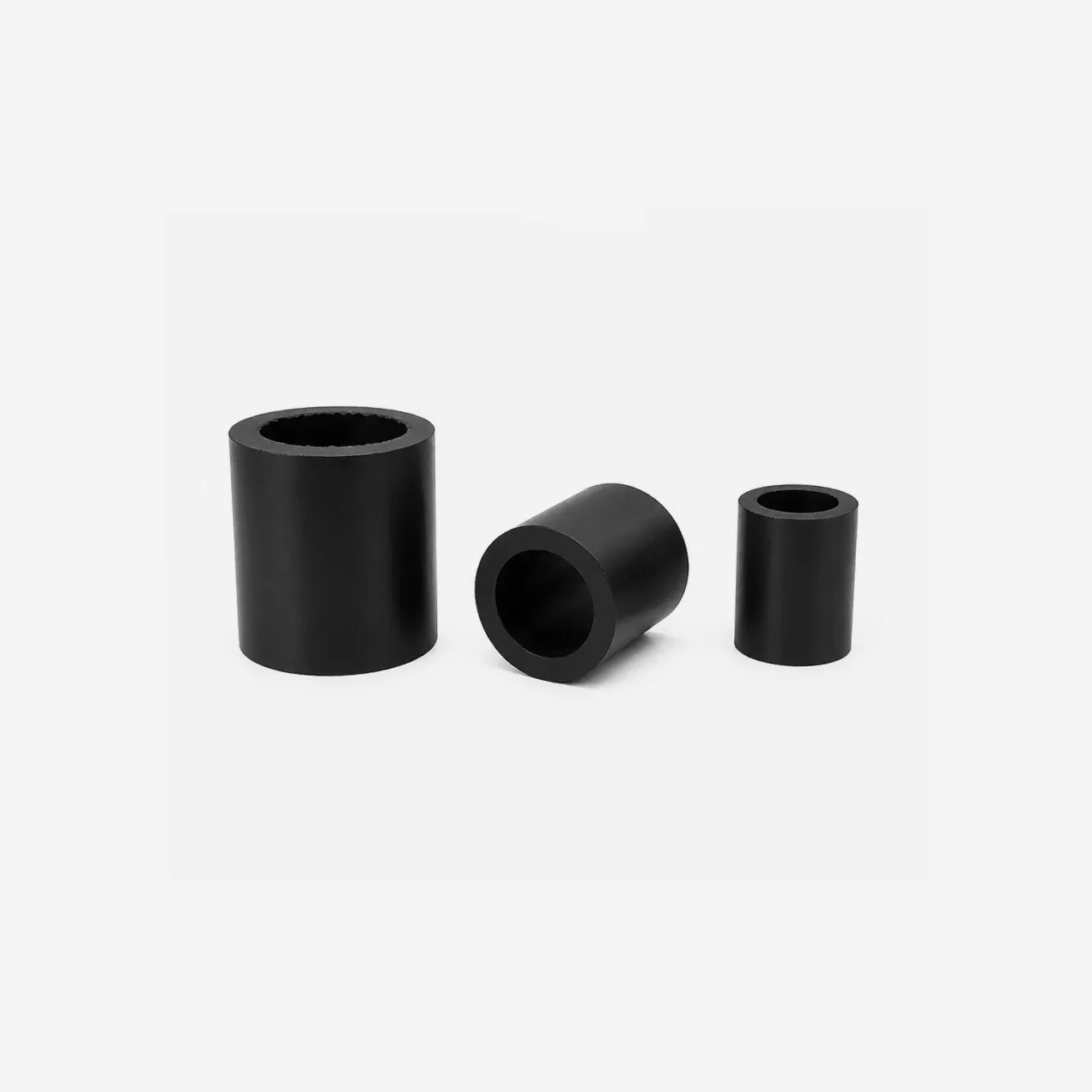
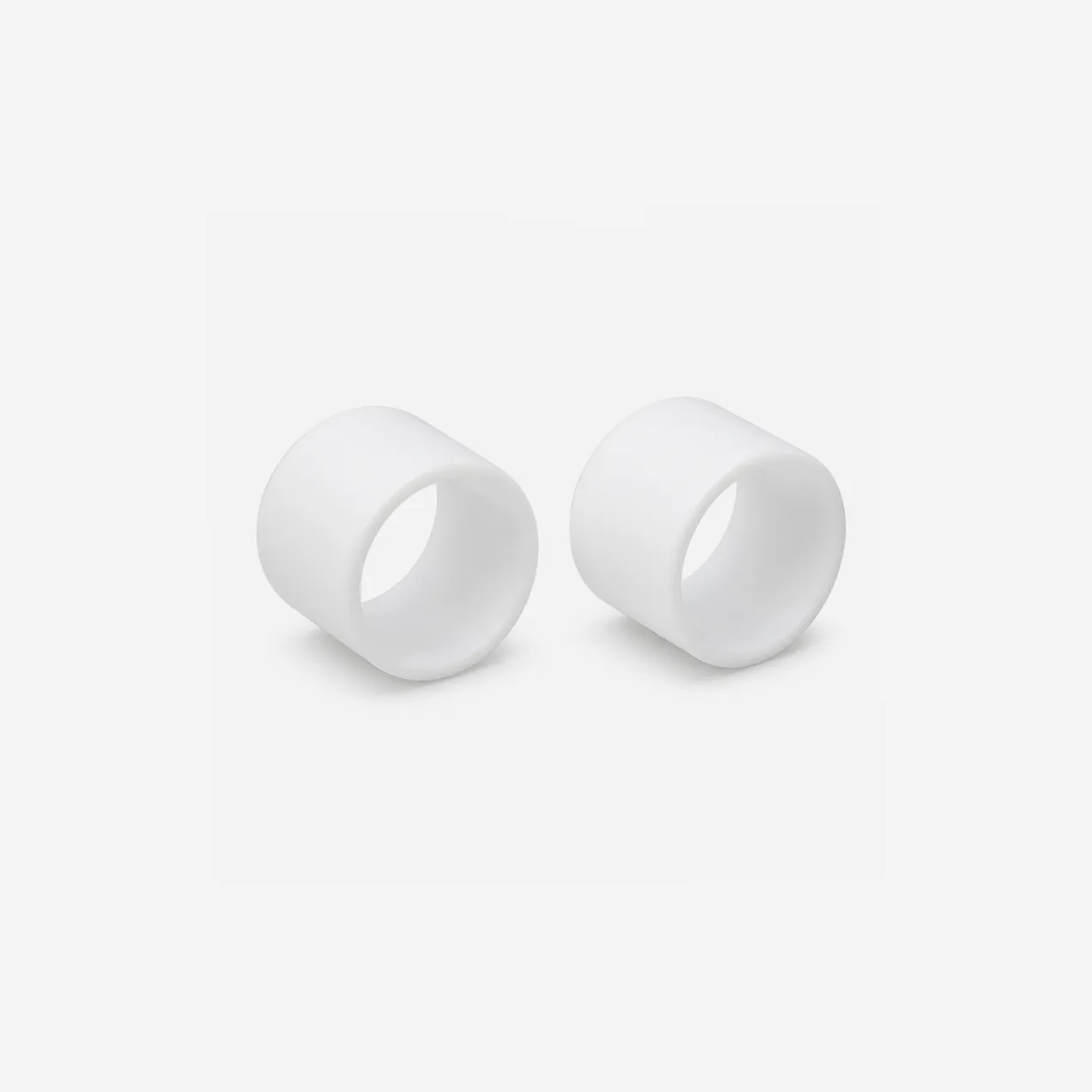
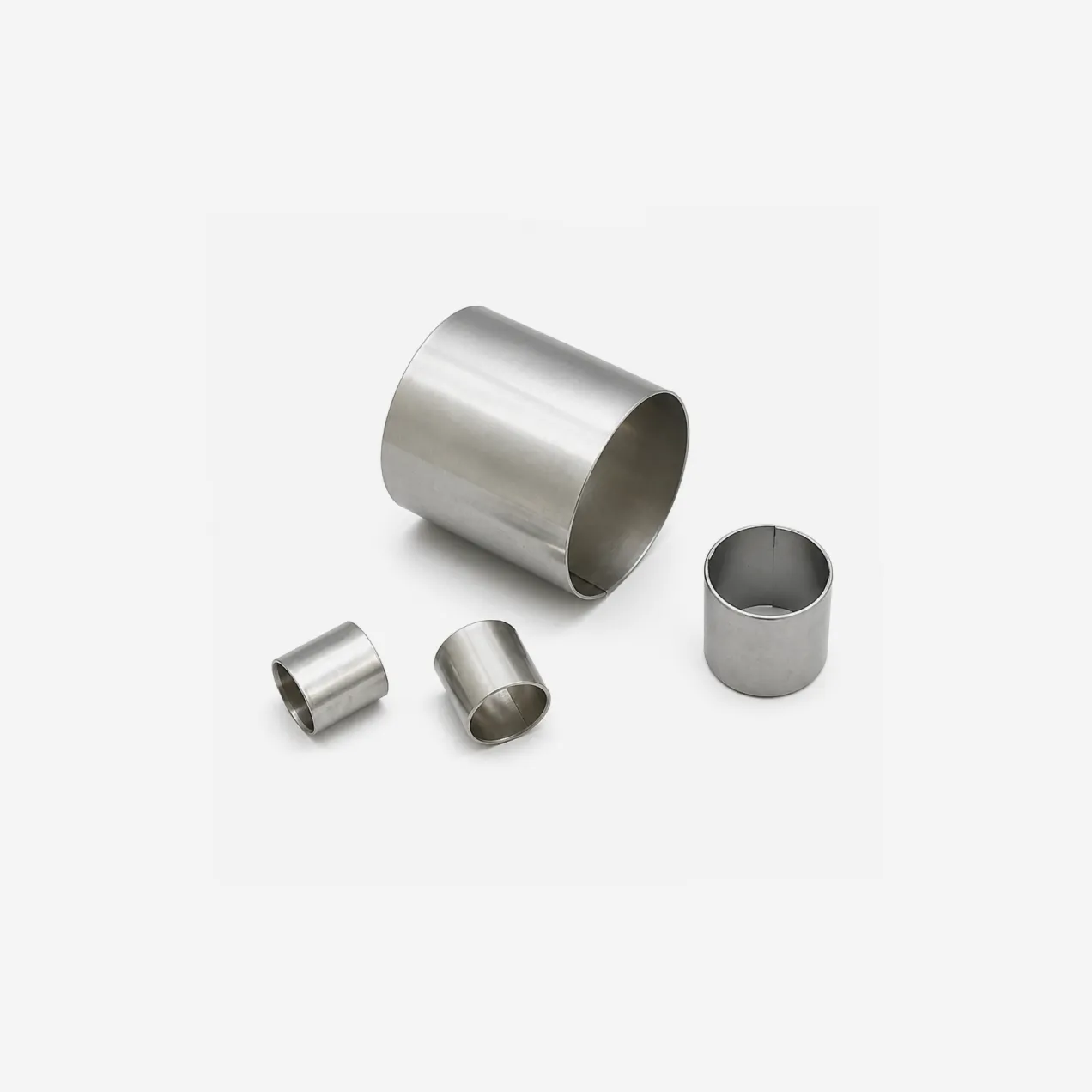
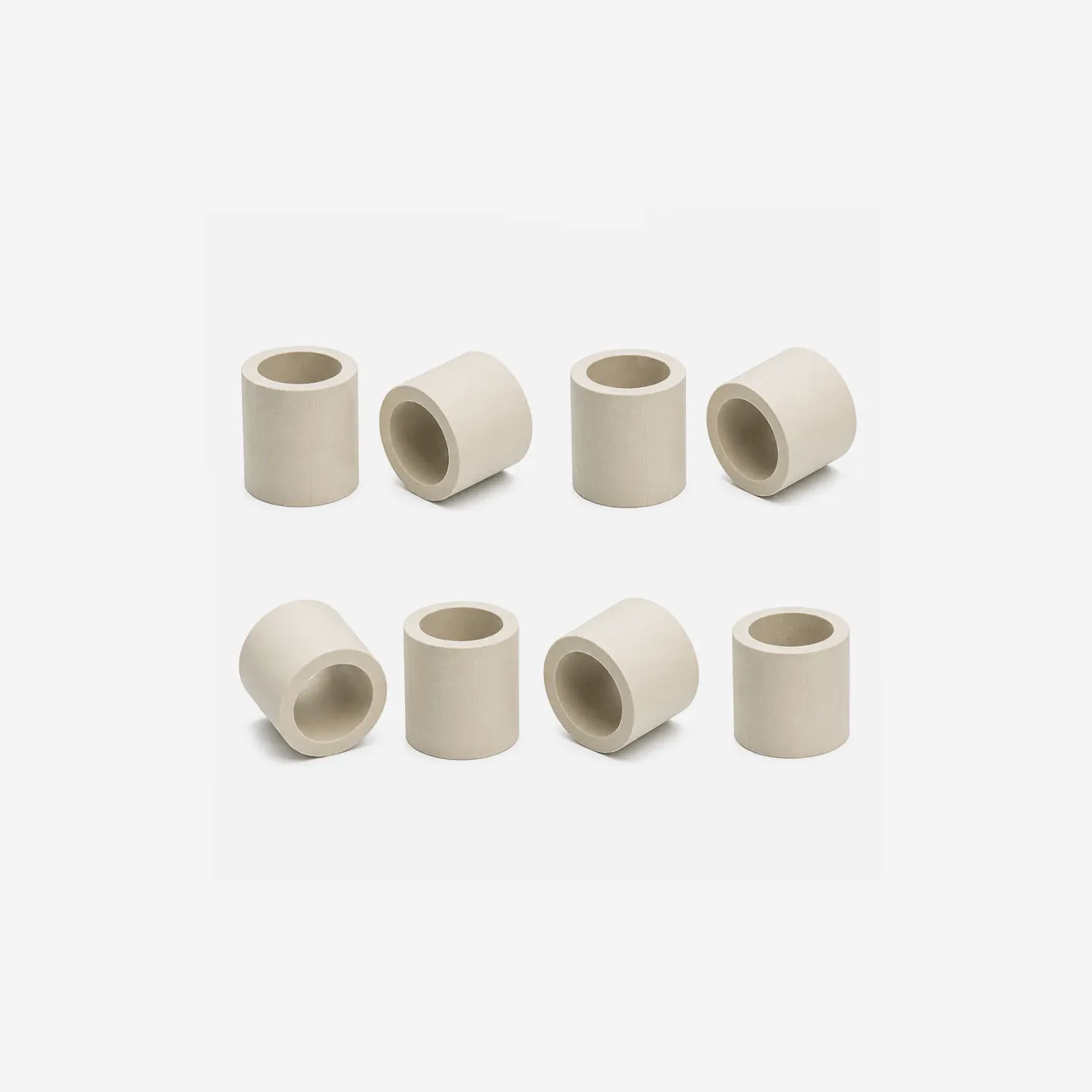
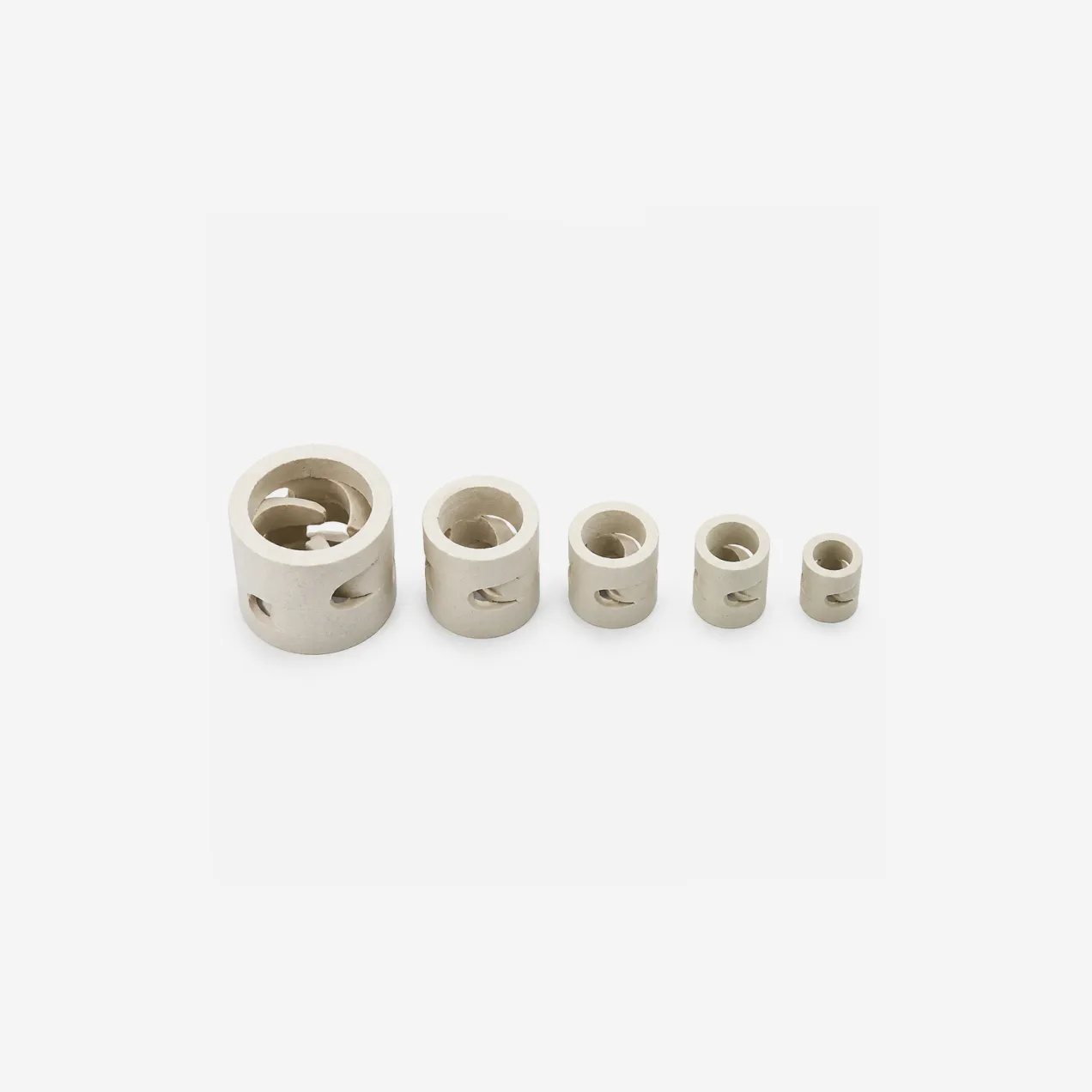
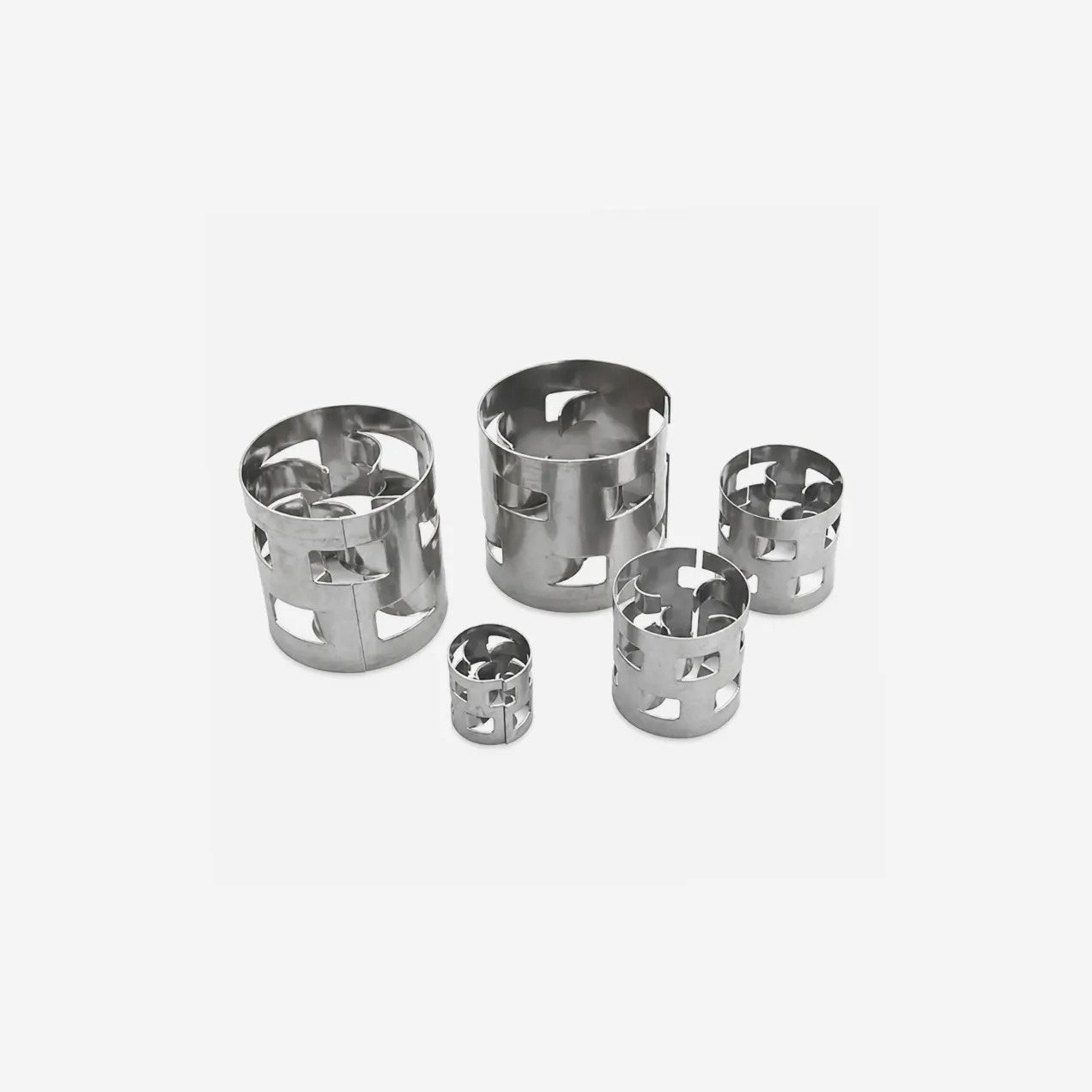
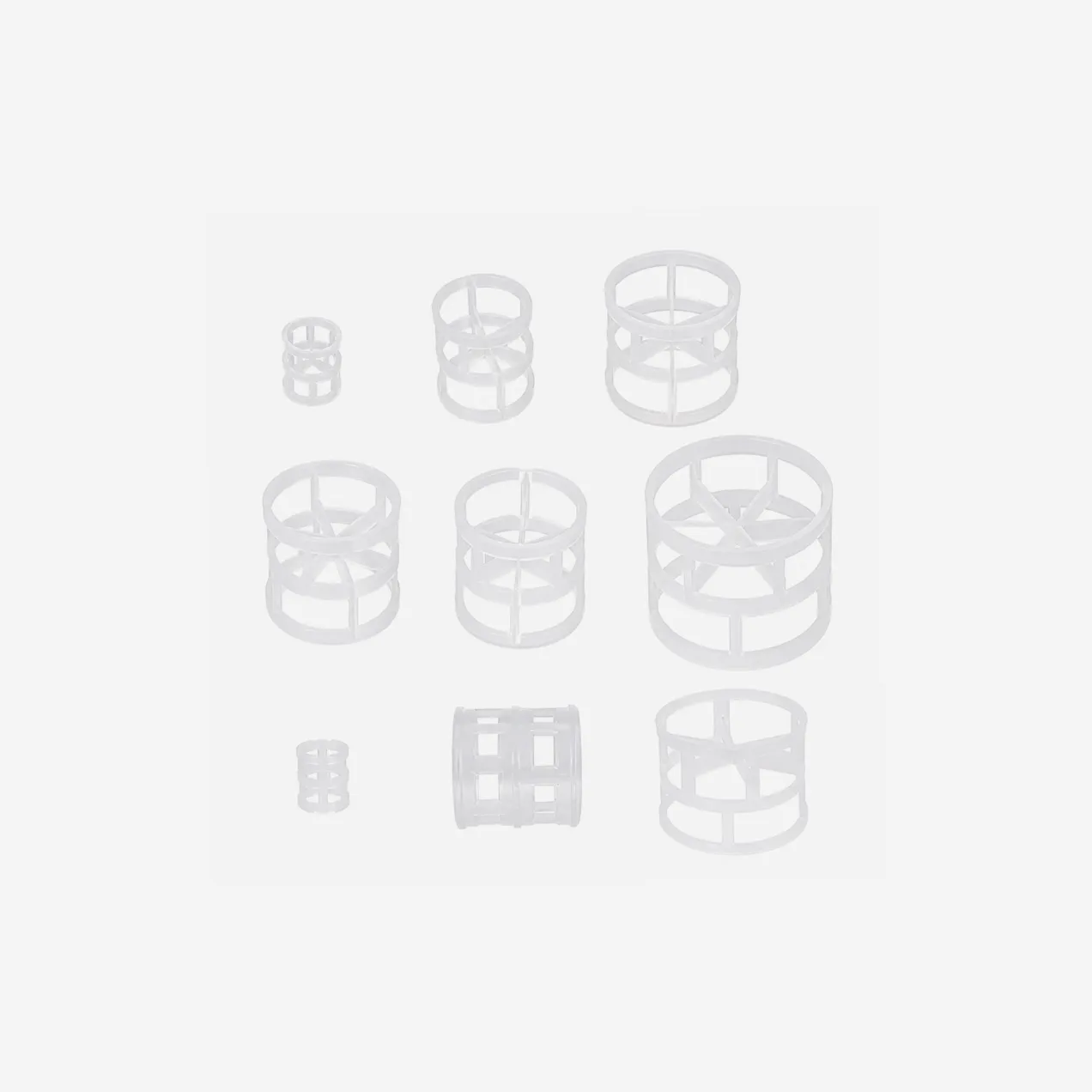
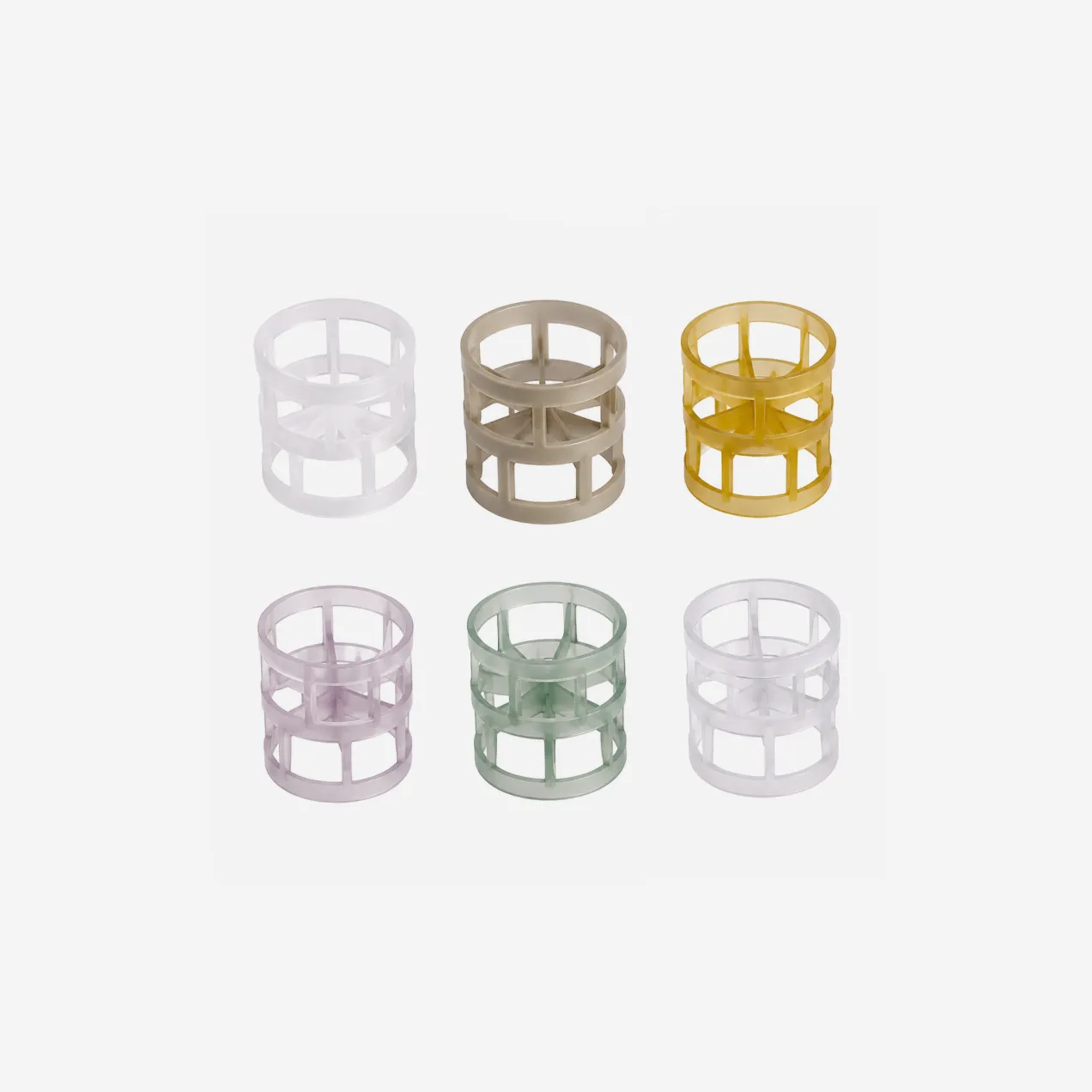
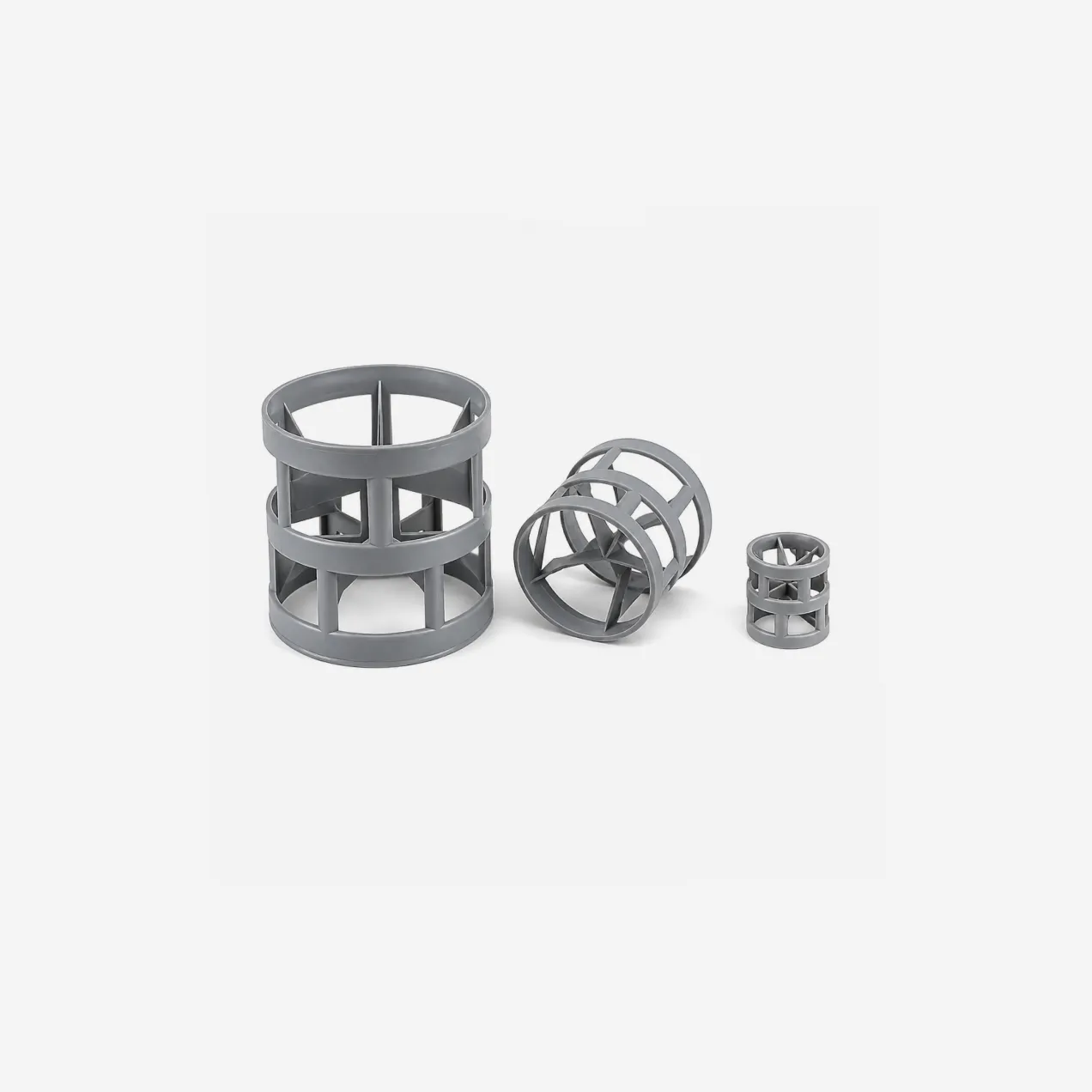
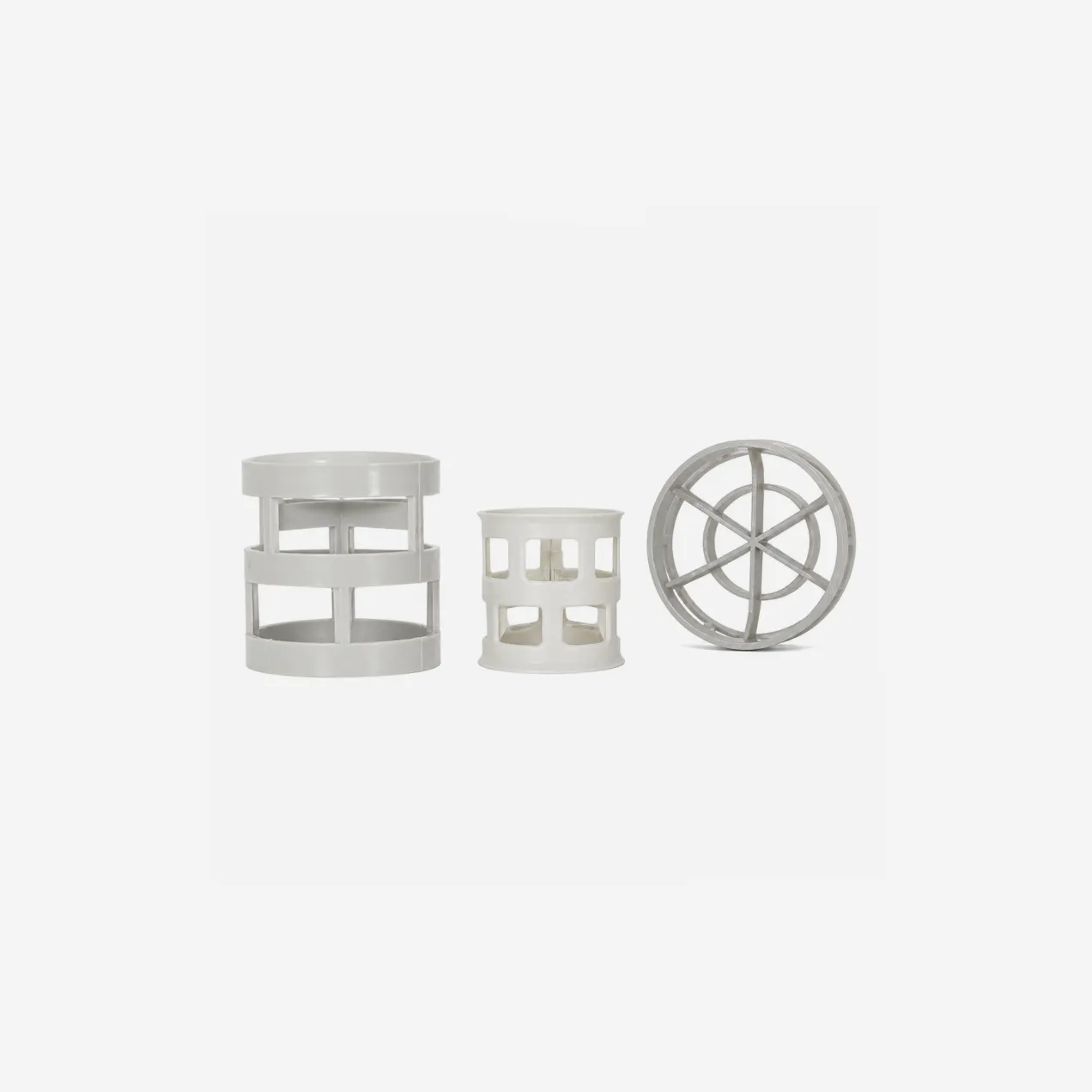
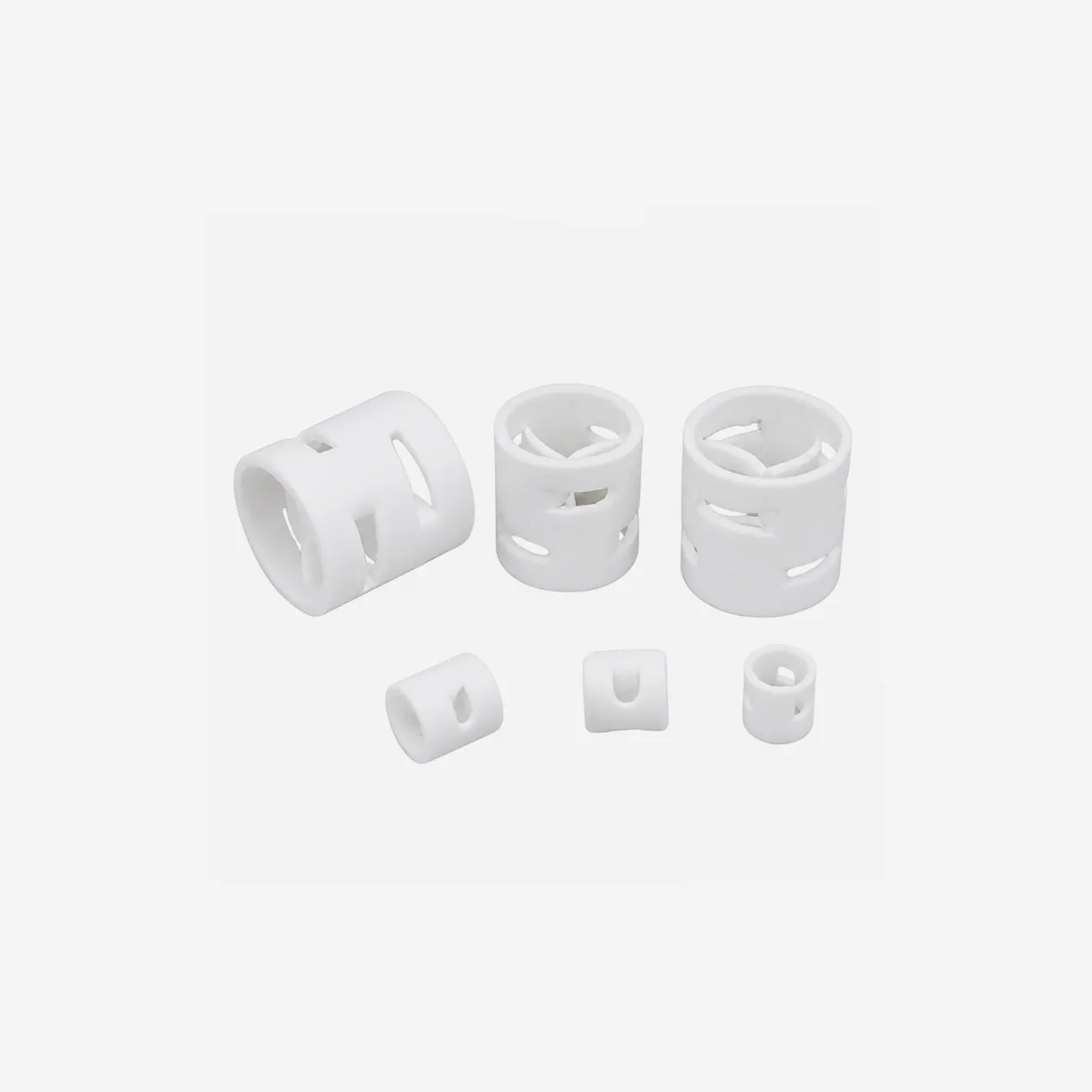
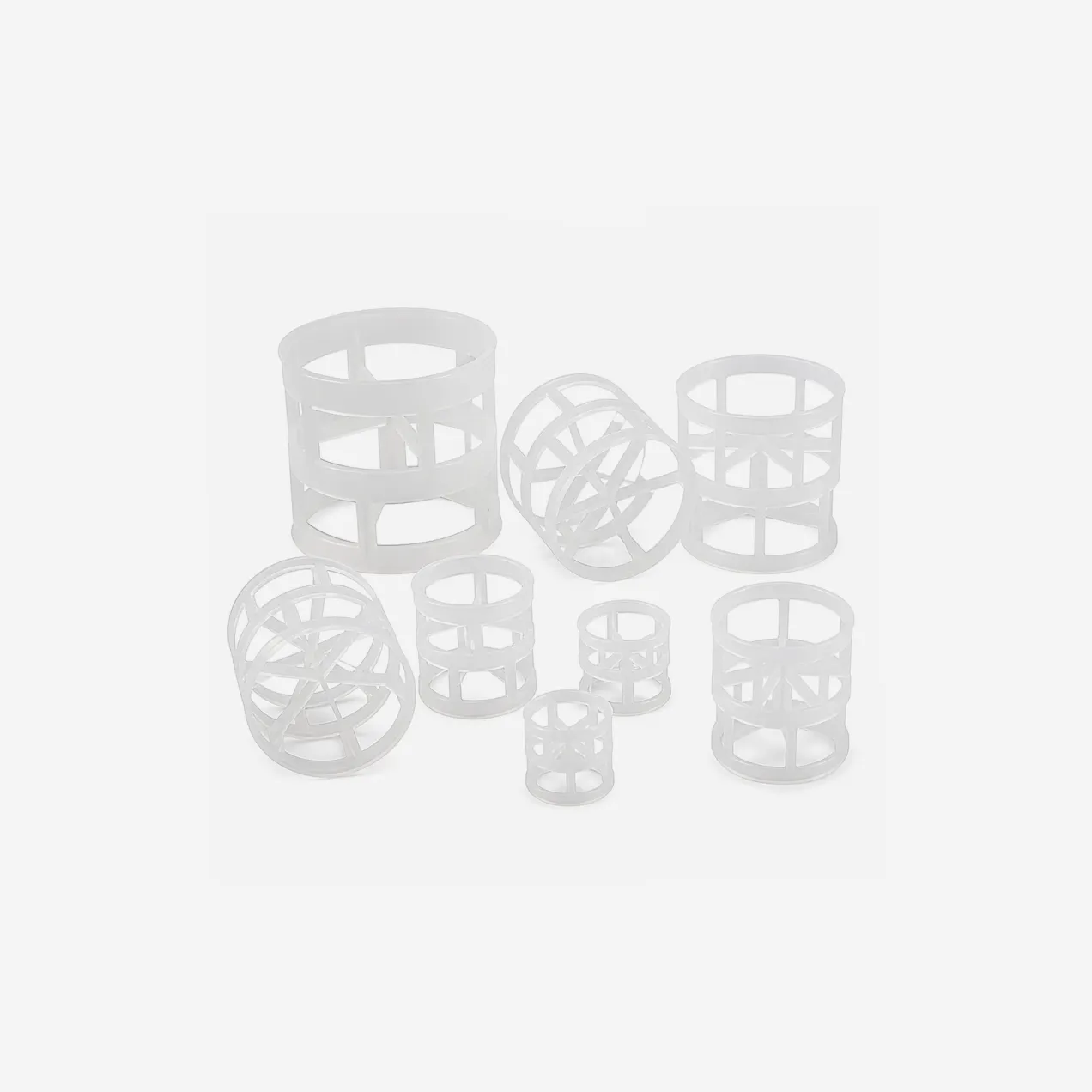
The Raschig ring is the simplest random packing there is — a plain hollow cylinder, as tall as it is wide, with no cut openings — and in plastic it becomes light, corrosion-resistant and cheap. A moulded plastic wall is thin, so the ring holds a high free volume, roughly 92 to 95 percent, which keeps the pressure drop low and lets liquid spread evenly through the bed. What a plastic Raschig ring cannot do is take much heat, and it has less mechanical strength than metal, so it is a packing for corrosive service at modest temperatures rather than for hot or high-pressure towers. Its real advantage is the choice of resin: the same simple shape can be moulded in a cheap polyolefin or in a premium fluoropolymer, so its chemistry and temperature limits are set by the plastic you pick.
The usual grades, from everyday to extreme, line up like this:
| Plastic | Max temperature | Best for |
|---|
| PP (polypropylene) | ~100°C | General acid, alkali and salt duty at low cost |
| PVC / CPVC | ~60°C / ~95°C | Chlorine and acid service, cool or warm |
| PVDF | ~150°C | Hotter and oxidising streams |
| PTFE | ~260°C | Almost any chemical, including HF; highest cost |
Chosen well, a plastic Raschig ring gives long, corrosion-free service in absorption, scrubbing, adsorption and reaction towers, and in acid or alkali fume treatment. Set beside the alternatives, it is lighter and cheaper than metal and often more resistant to particular corrosives, and it is far easier to handle than brittle ceramic; against that, ceramic and metal reach temperatures no plastic can, so genuinely hot duty belongs to them. And next to a plastic Pall ring, the Raschig ring gives up some capacity and efficiency in exchange for a simpler, stiffer, lower-cost piece. Tell us the medium, its temperature and the tower size and we will recommend the resin and the ring size.