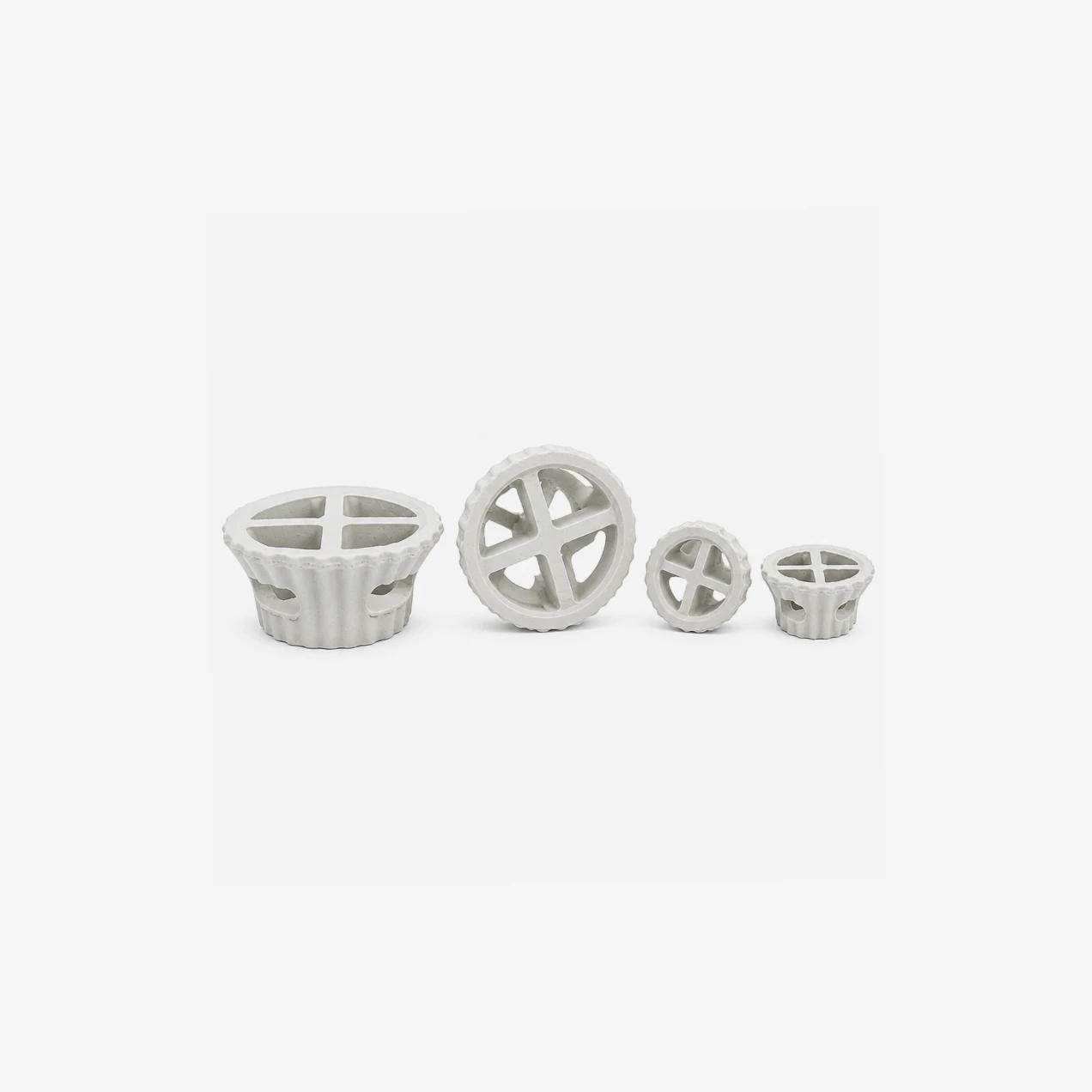
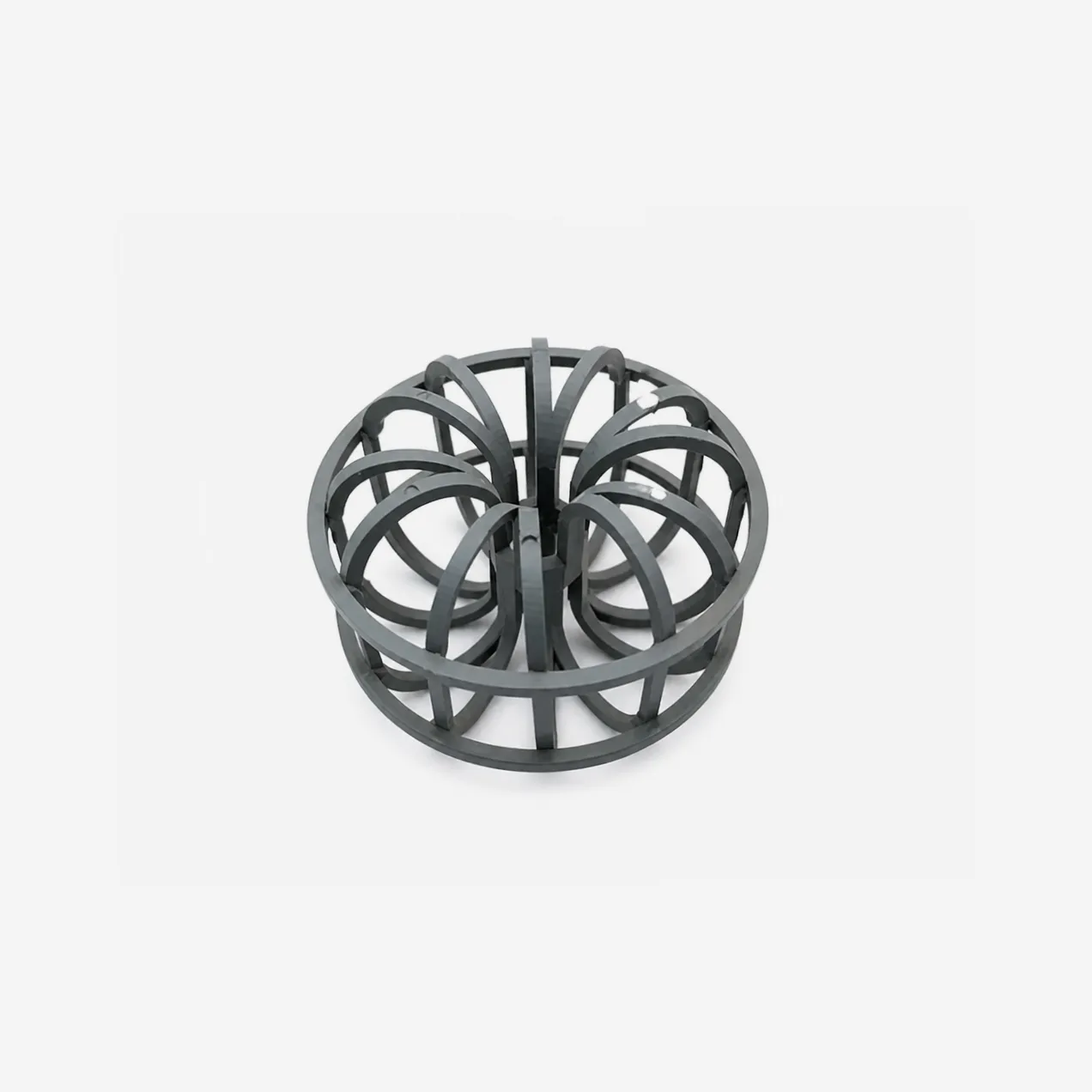
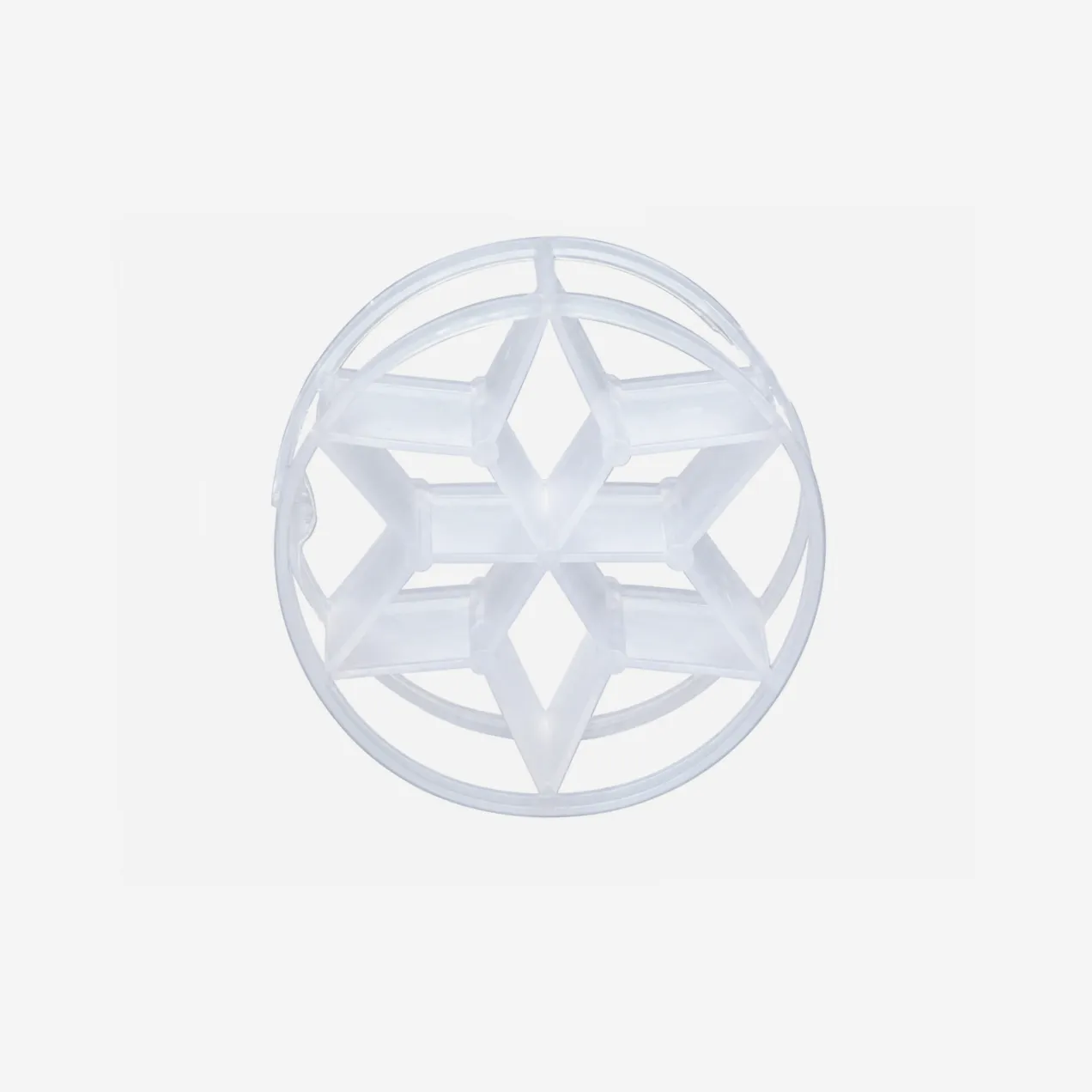
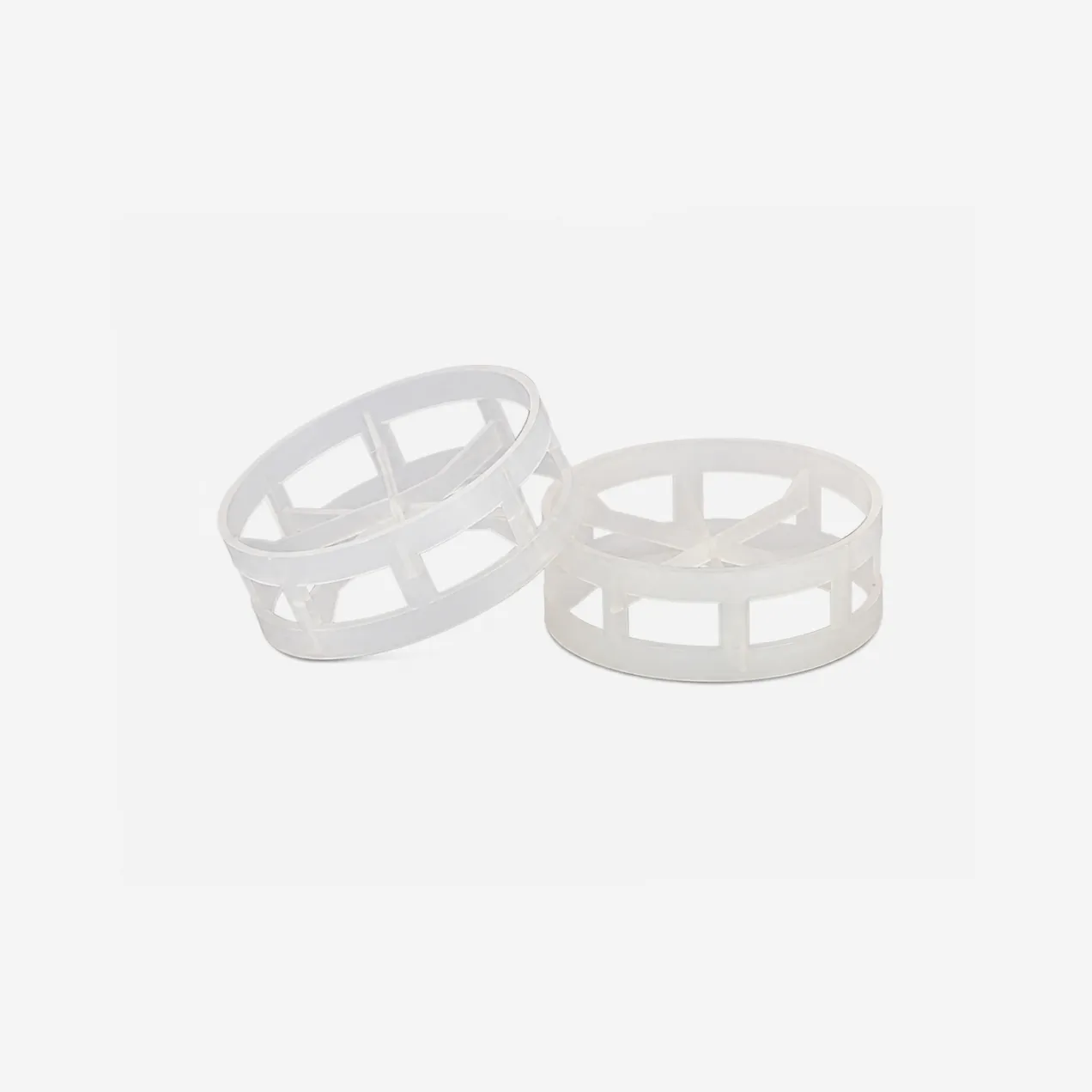
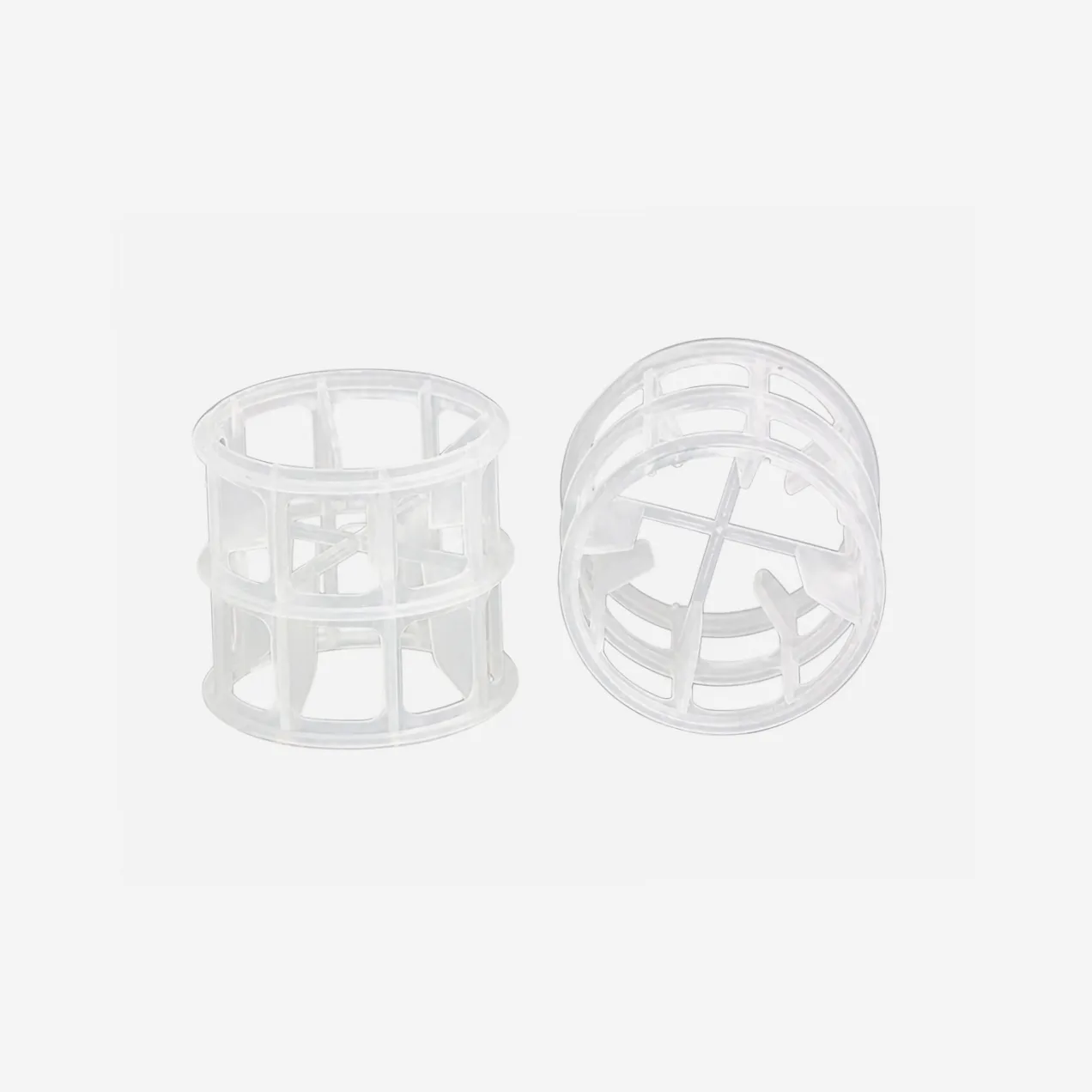
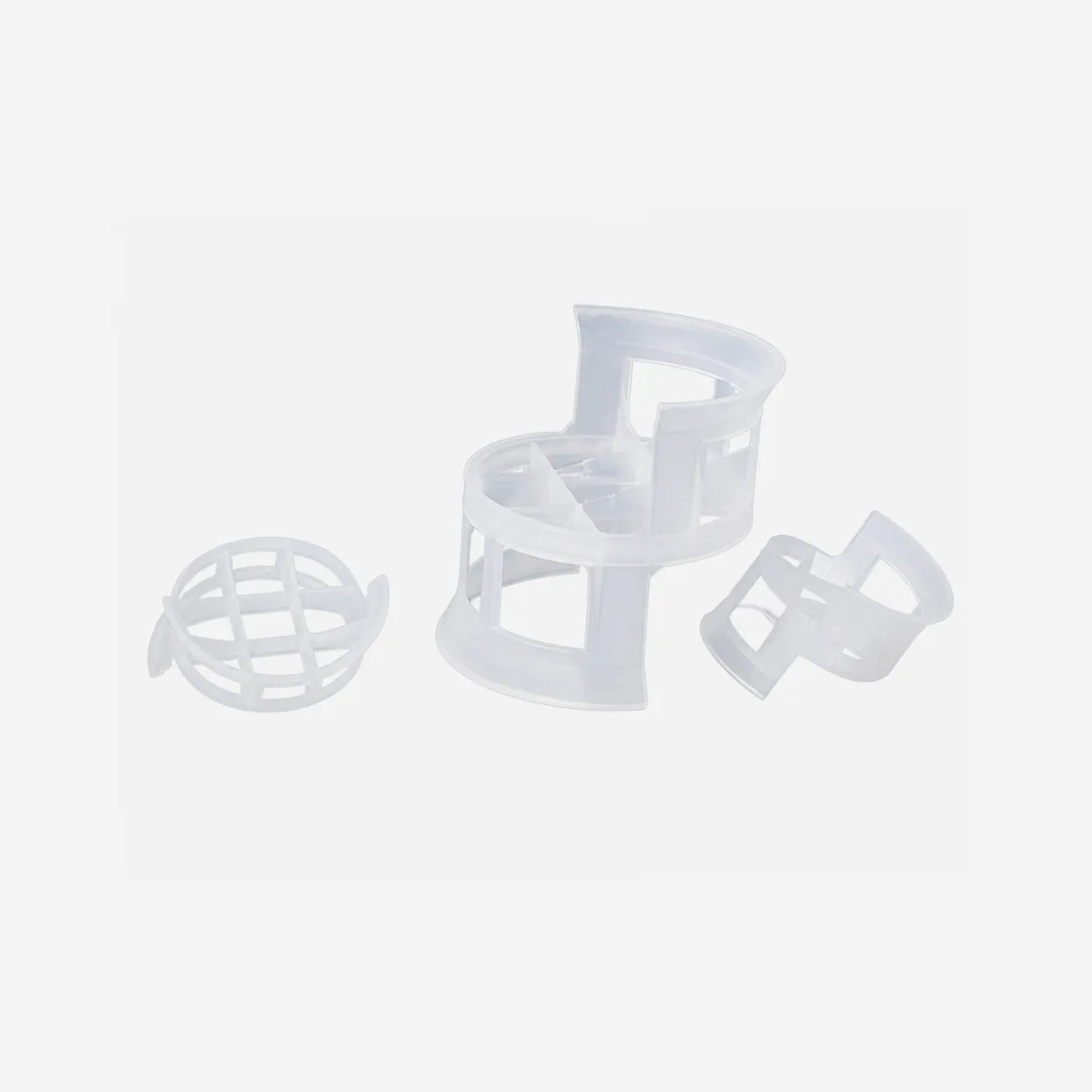
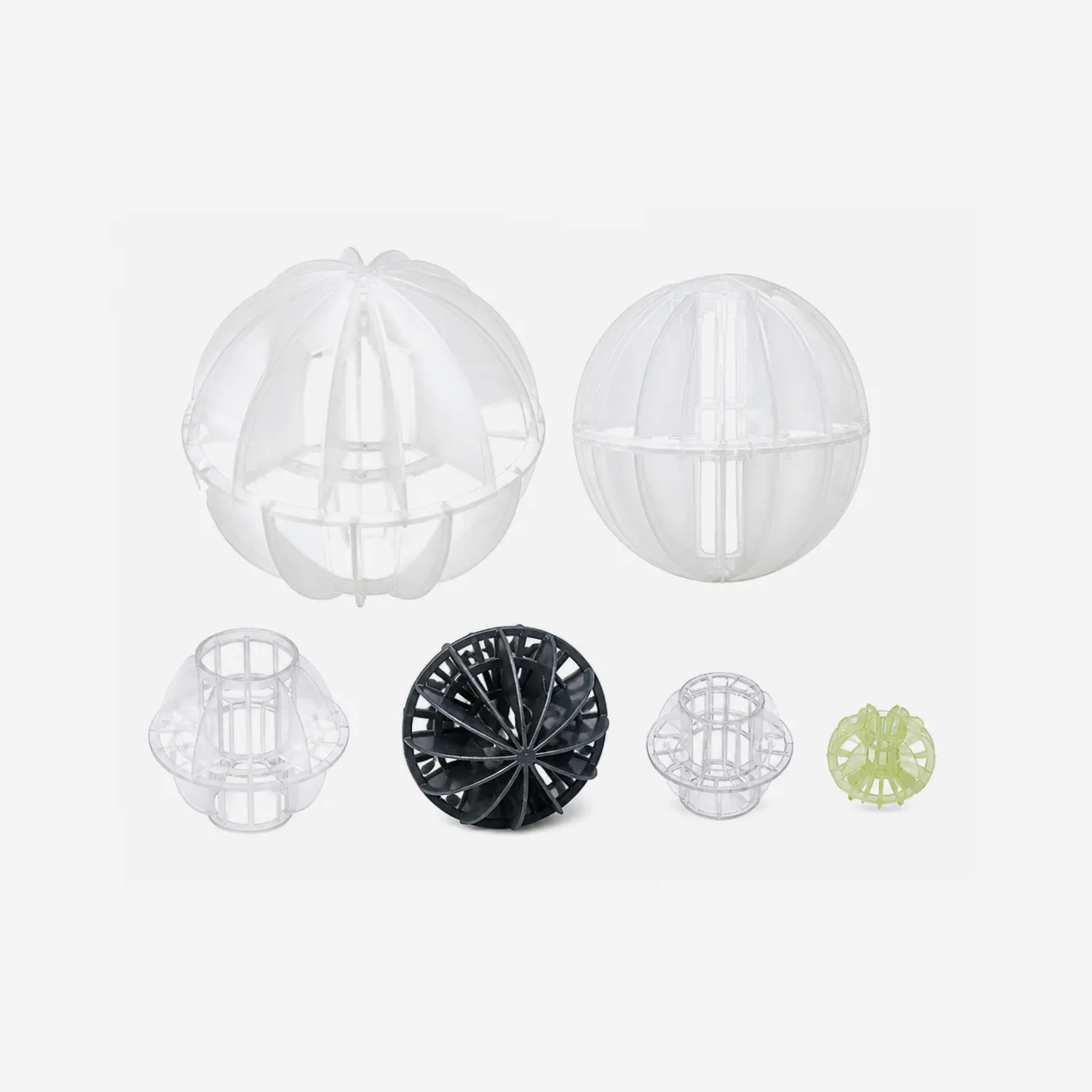
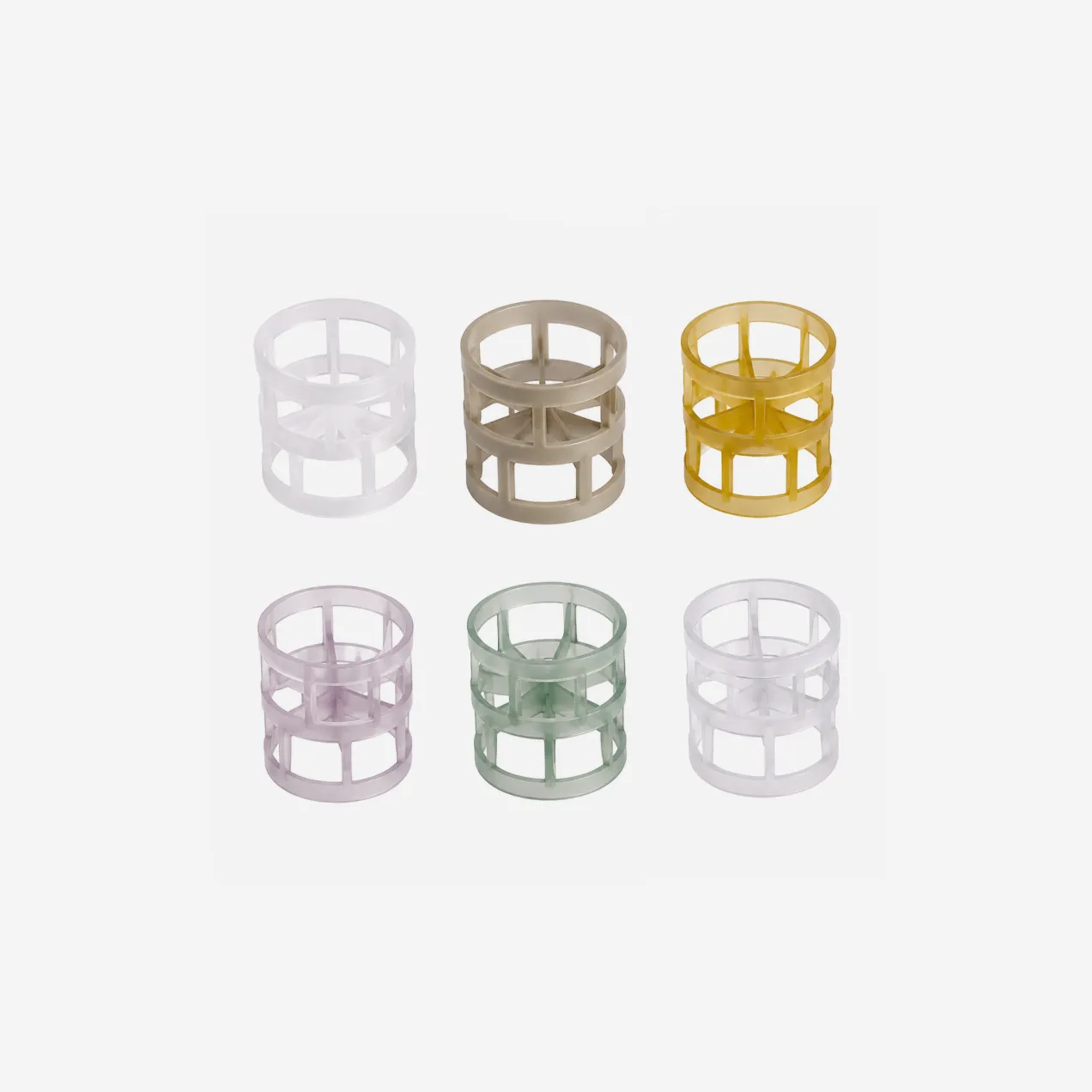
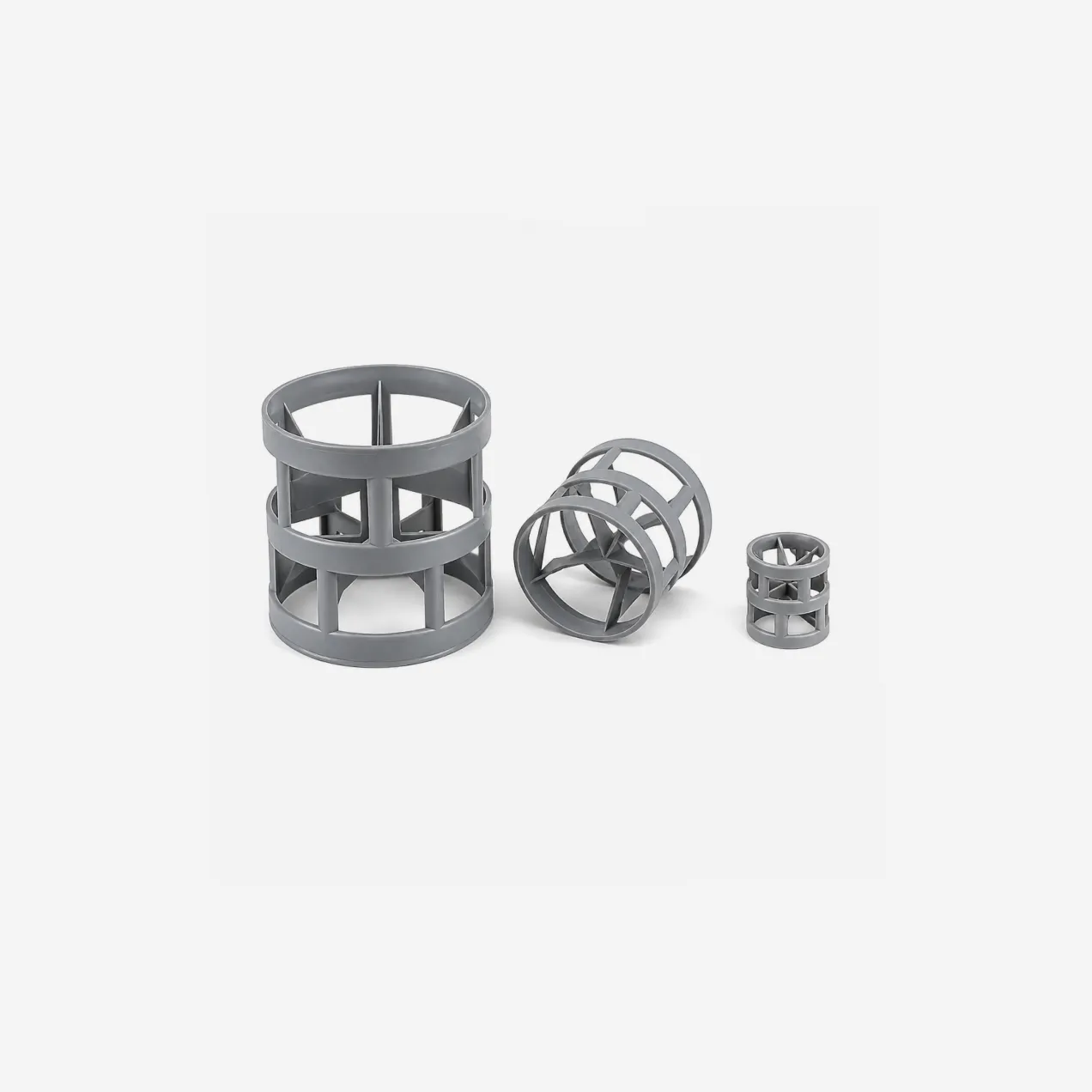
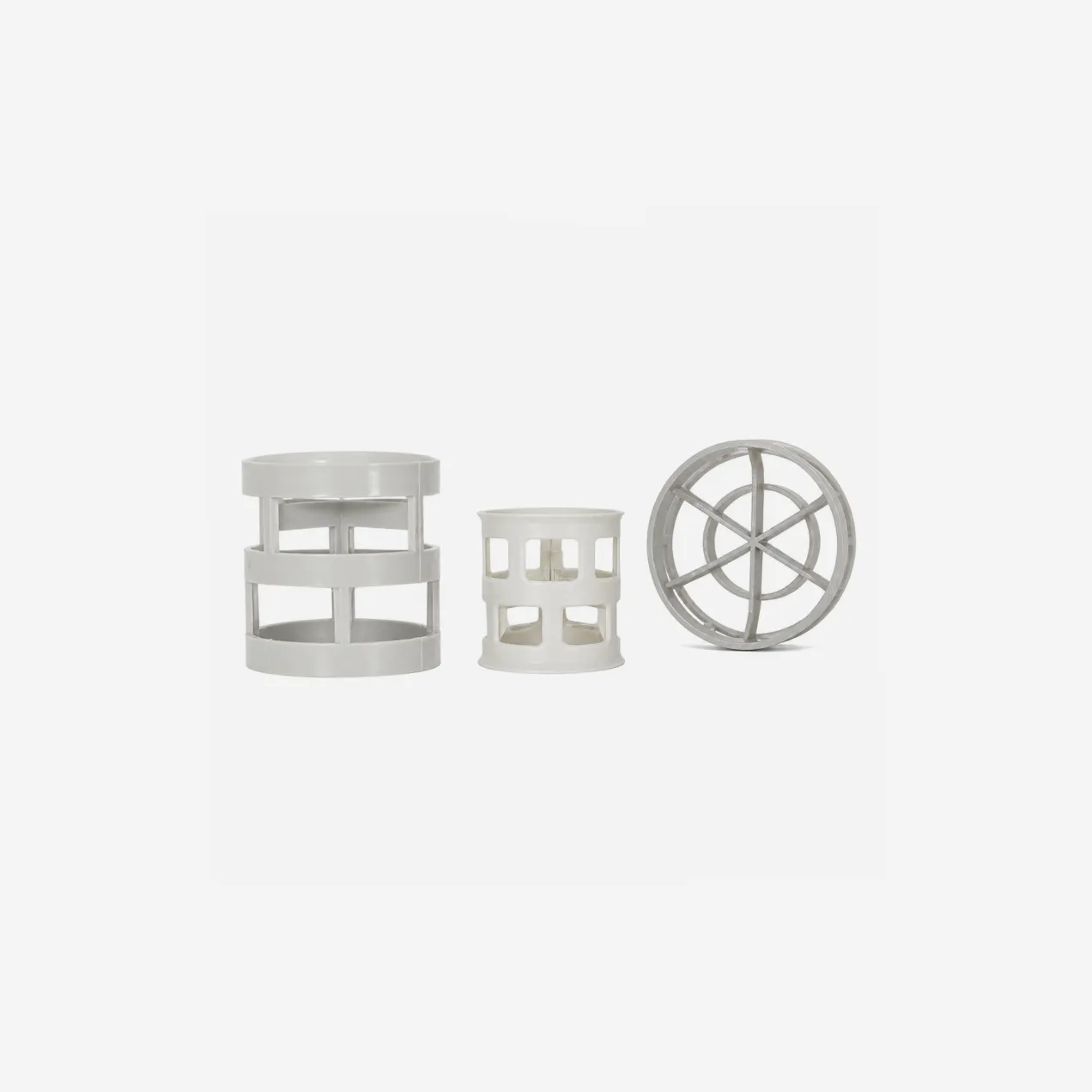
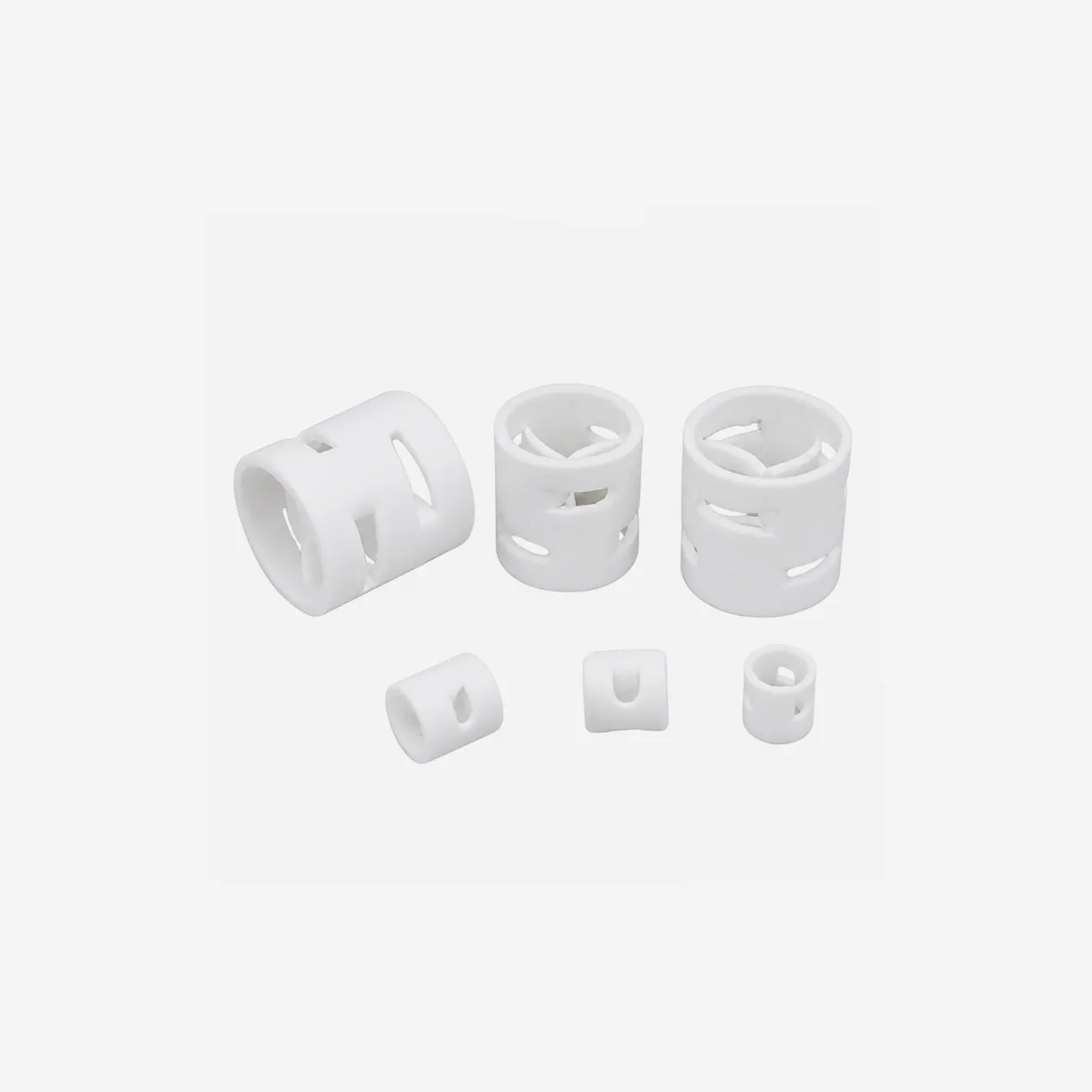
The polyhedral hollow ball is a different shape of random packing from the rings: instead of a cylinder it is a light plastic sphere, moulded in two hemispheres that snap together. Each hemisphere is covered in rows of half fan-shaped leaves set at staggered angles, so the finished ball is open and lattice-like, with a large surface but plenty of room for gas and liquid to move through. Because it is round it tumbles into a tower and settles into an even bed without the pieces locking together, and its surface is made to wet readily, so liquid spreads as a thin film across the whole ball. It is moulded in PP, RPP, PE, PVC or CPVC and works in media from roughly 60 to 150 degrees.
Its structure translates into a clear set of practical benefits:
| Feature | Why it matters |
|---|
| Light plastic sphere | Low weight on the tower and simple to load |
| High free volume (about 90–92%) | Low pressure drop and high gas-liquid throughput |
| Staggered leaf surface | Large hydrophilic area for an even liquid film and good mass transfer |
| Round, anti-nesting shape | Uniform bed with no blocked channels |
| Corrosion-resistant resin | Long life in wet, acidic scrubber and effluent service |
These qualities point the hollow ball squarely at environmental work. It is a mainstay of flue-gas desulphurisation, filling the scrubbing towers that remove sulphur dioxide to cut sulphide emissions, and of sewage and wastewater treatment, where its large surface carries the biofilm that breaks down pollutants. It also serves in general gas absorption, washing and cooling. For high-volume, low-pressure scrubbing and biological treatment it is light, cheap and effective; where the task is distillation or fine chemical separation, a ring packing is the more usual choice. Tell us the tower and the duty and we will recommend the size and the plastic.