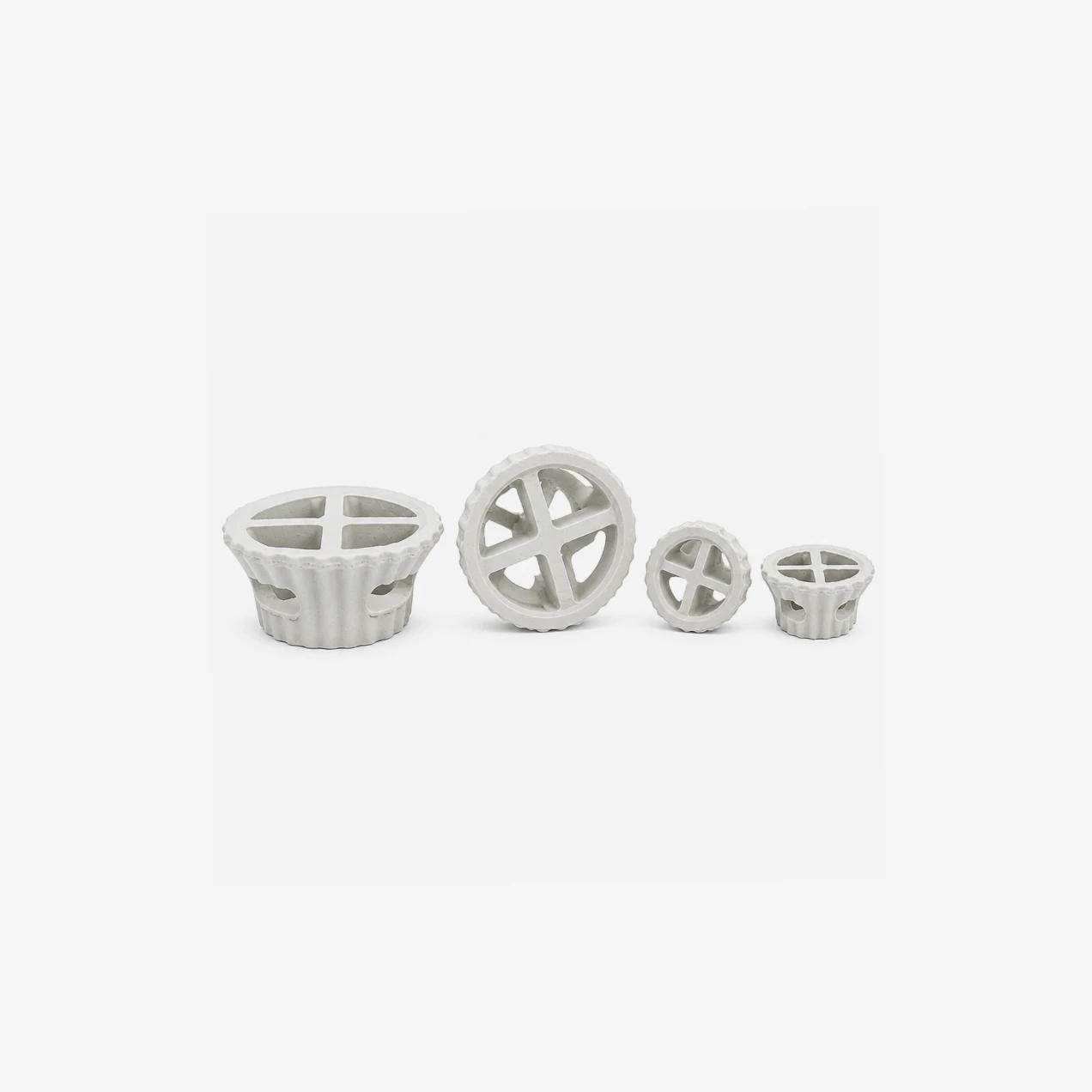
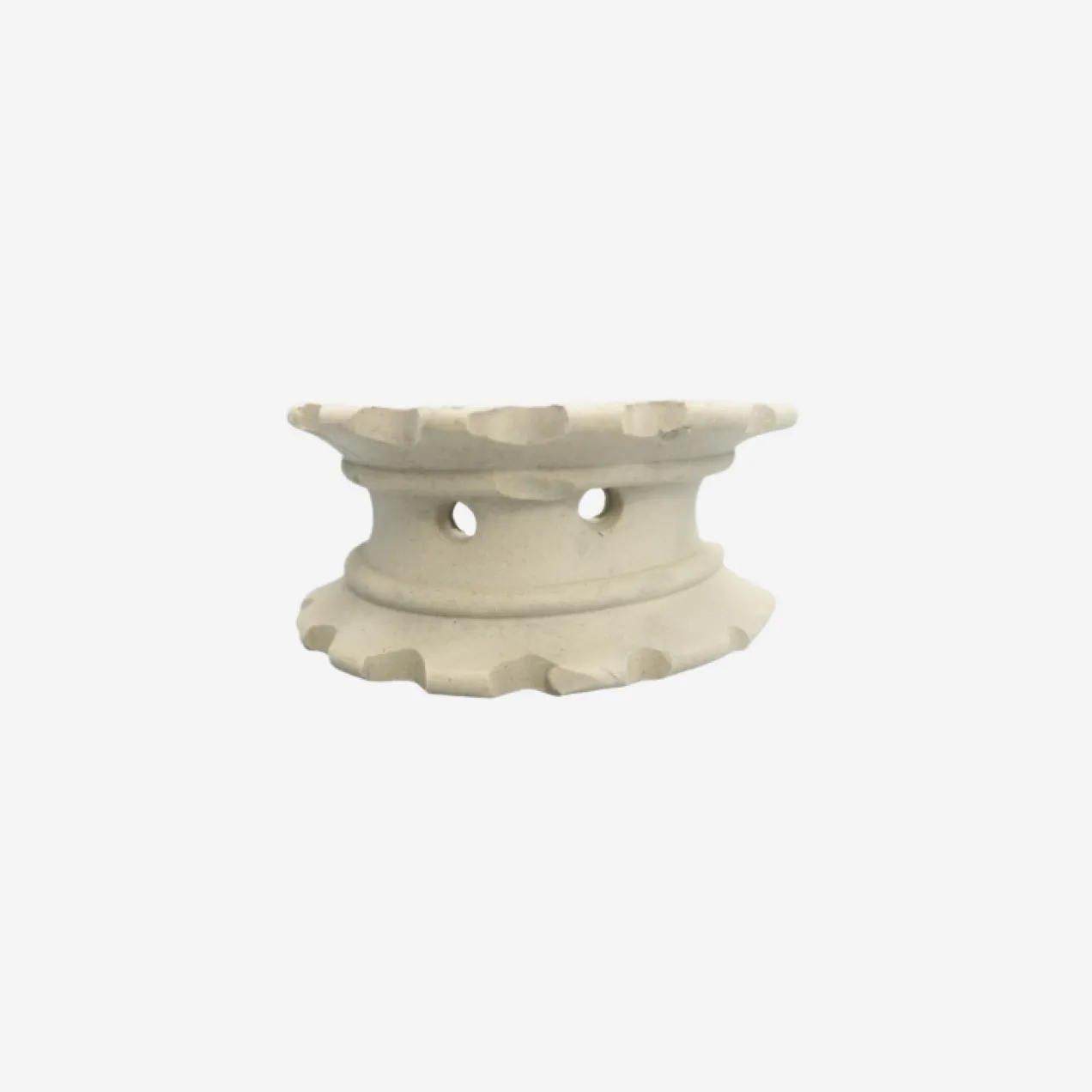
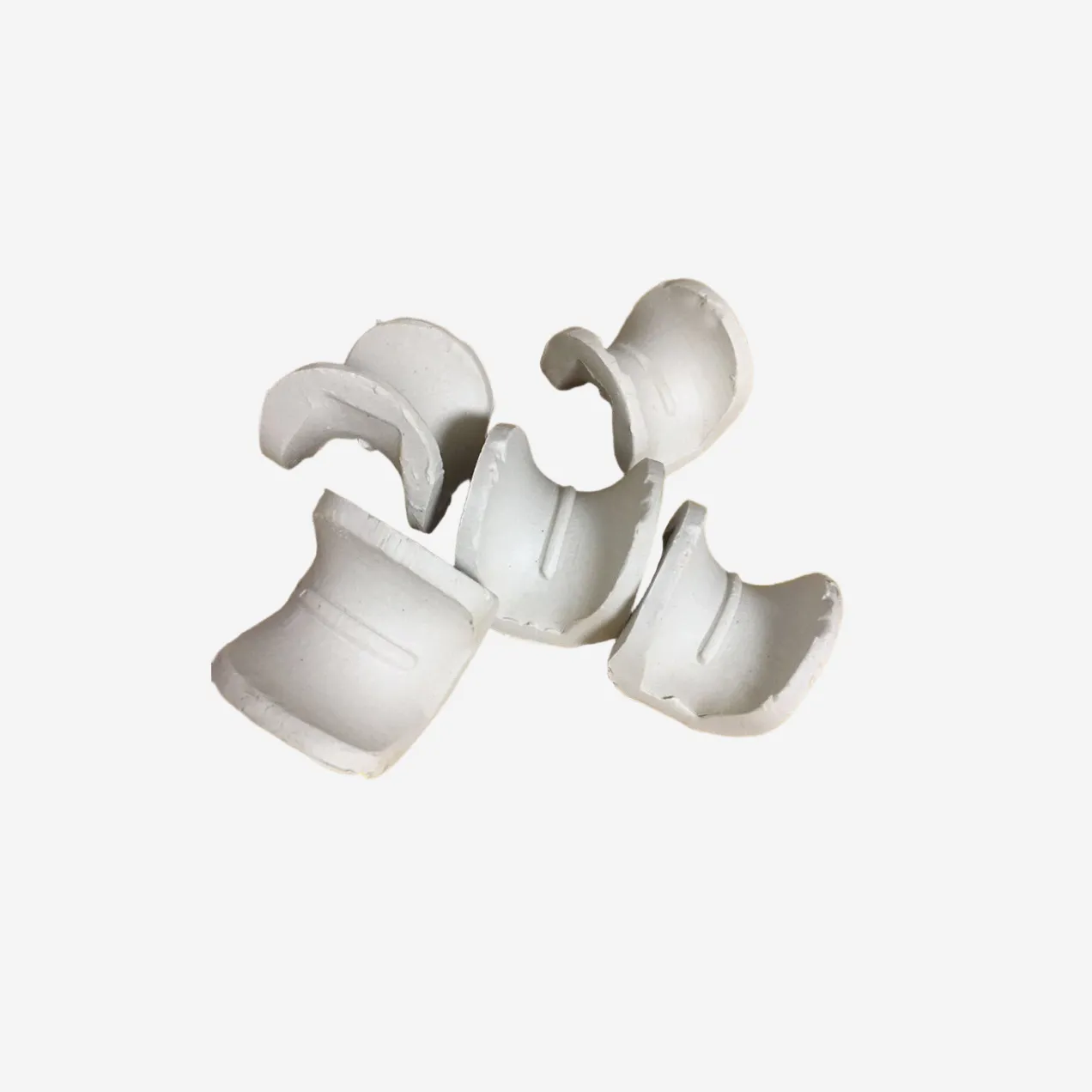
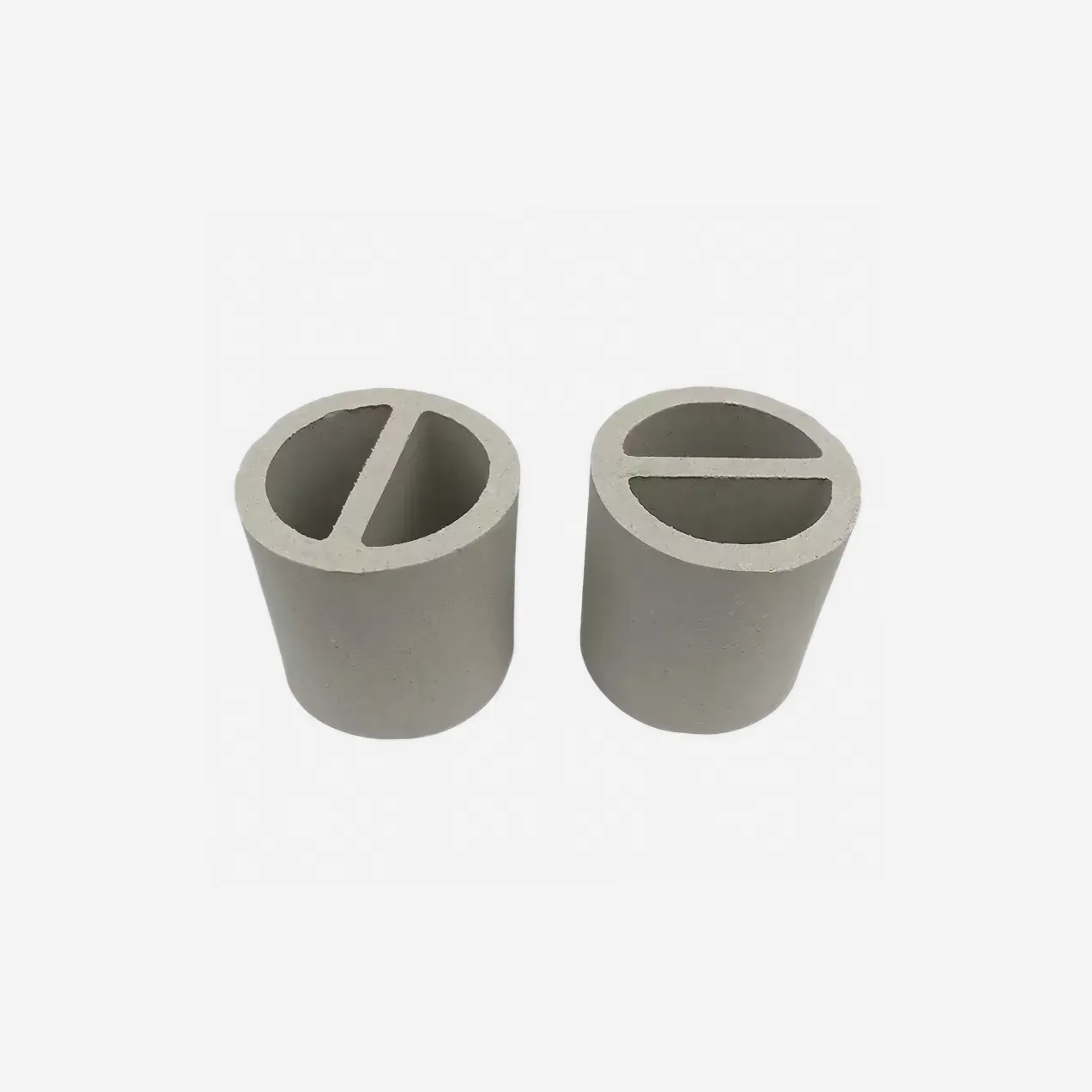
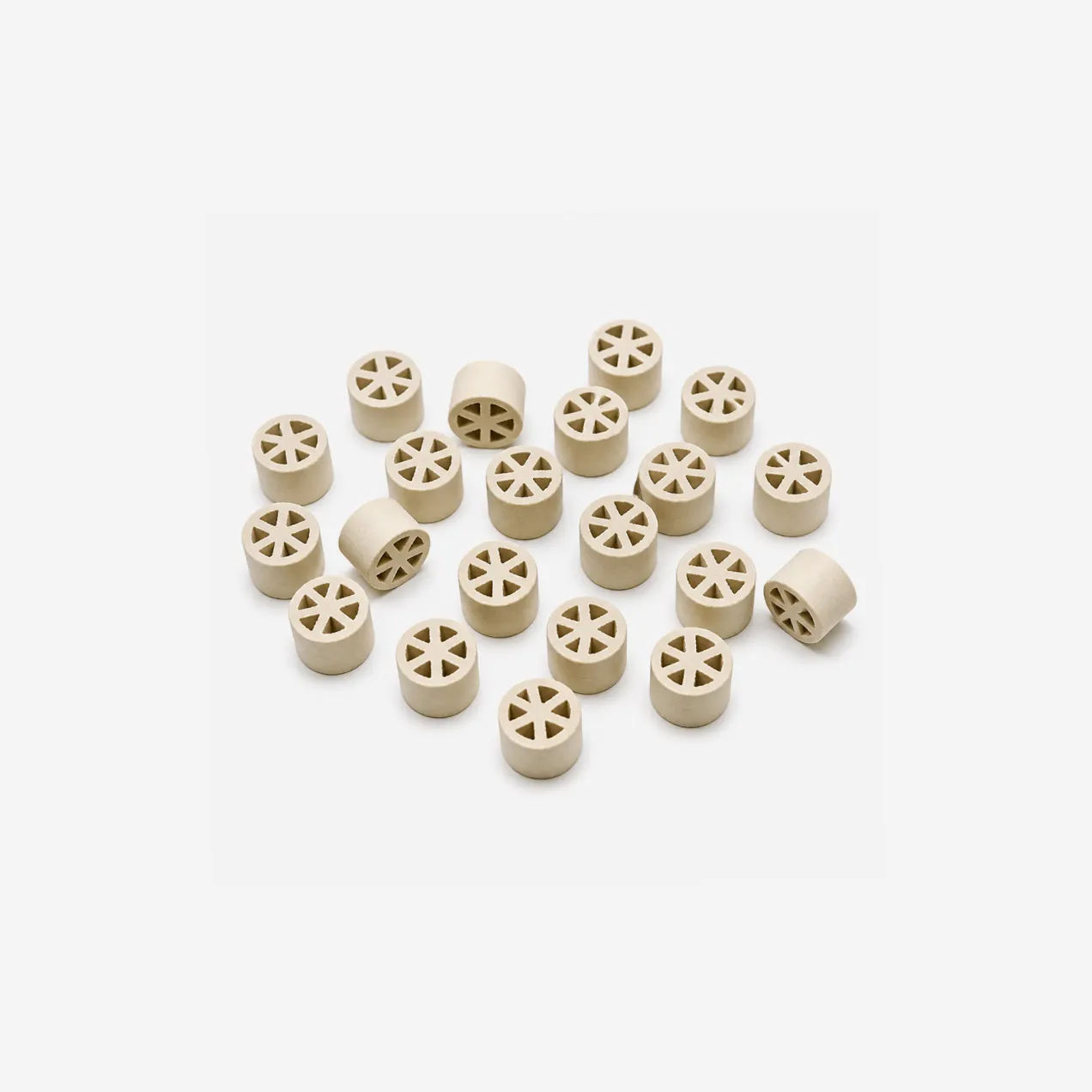
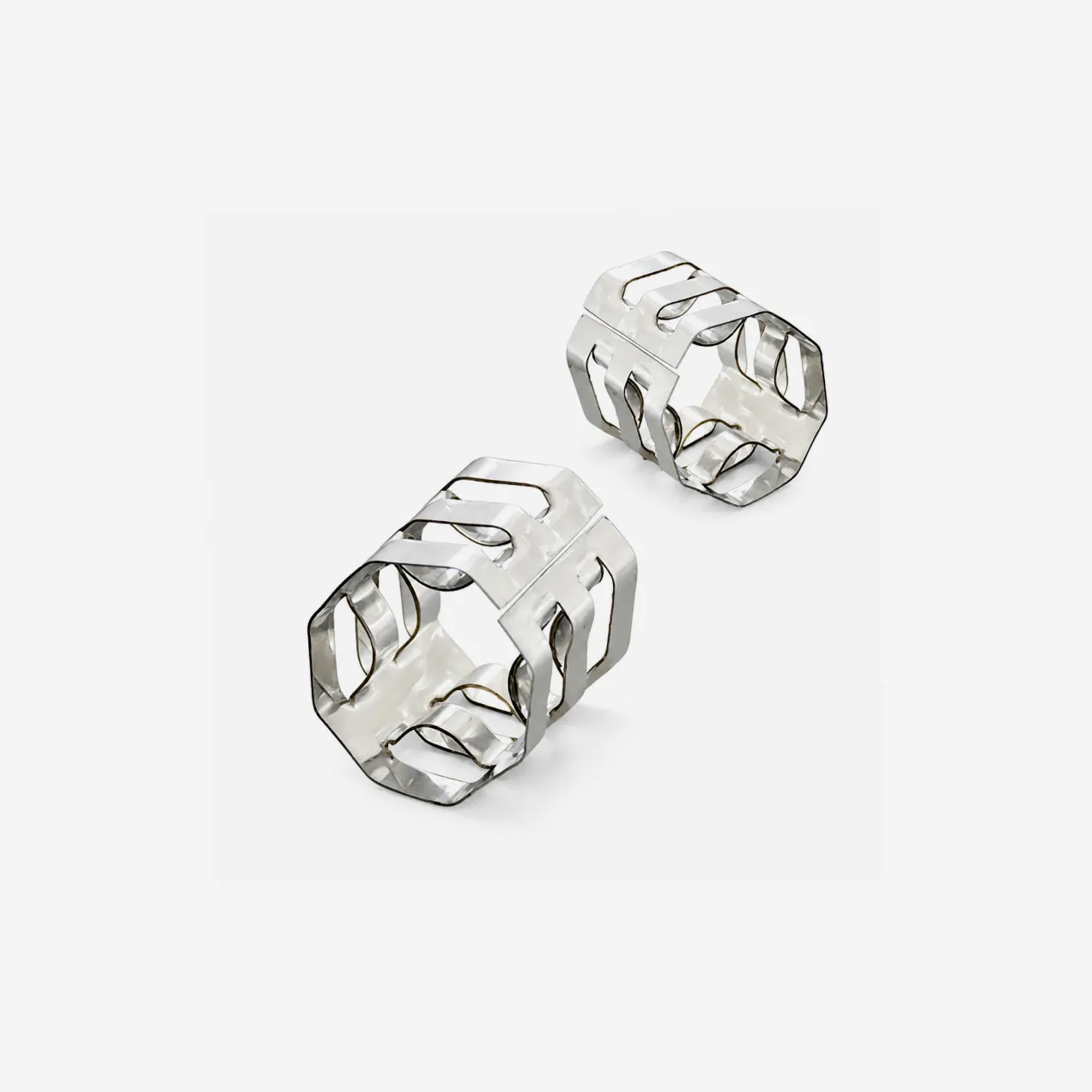
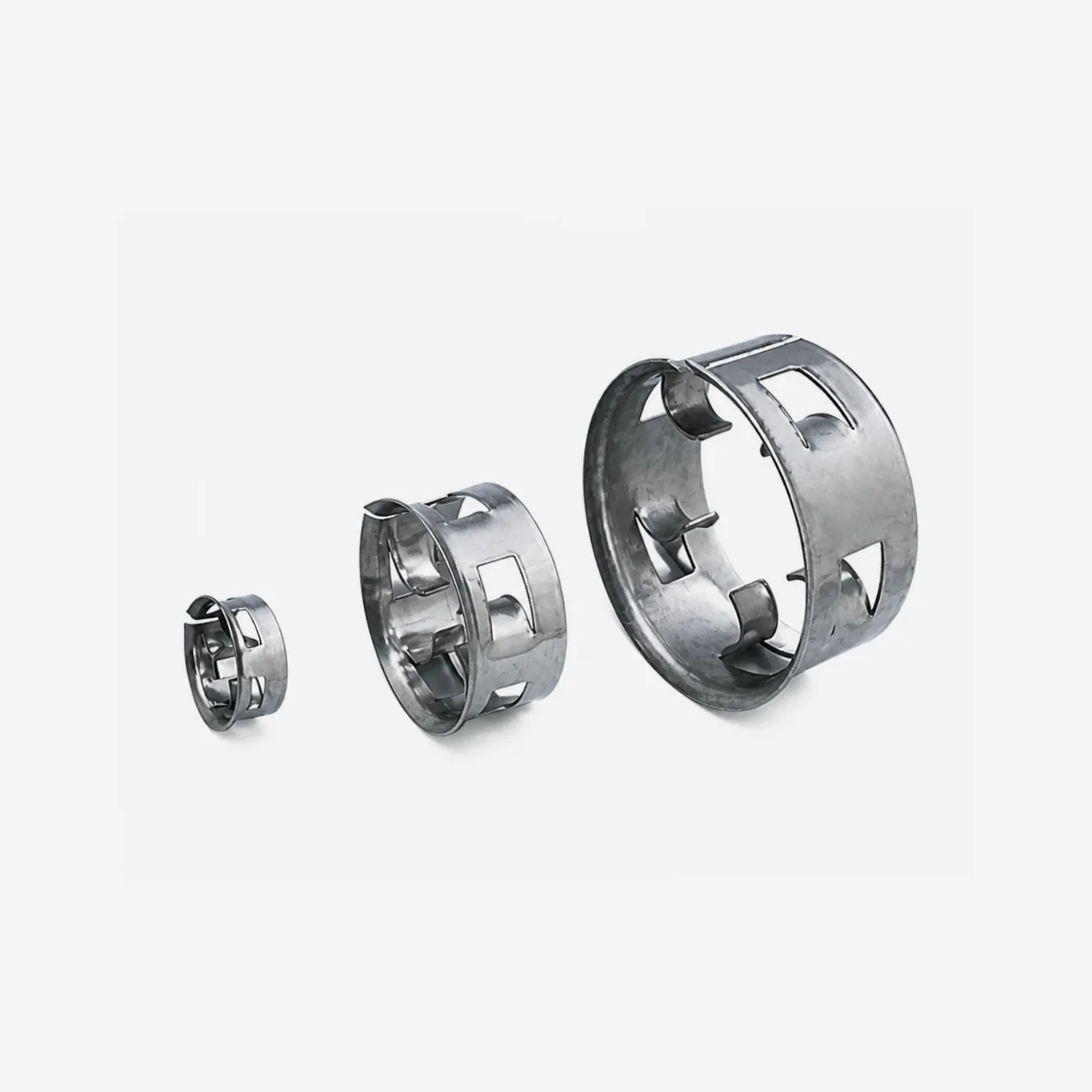
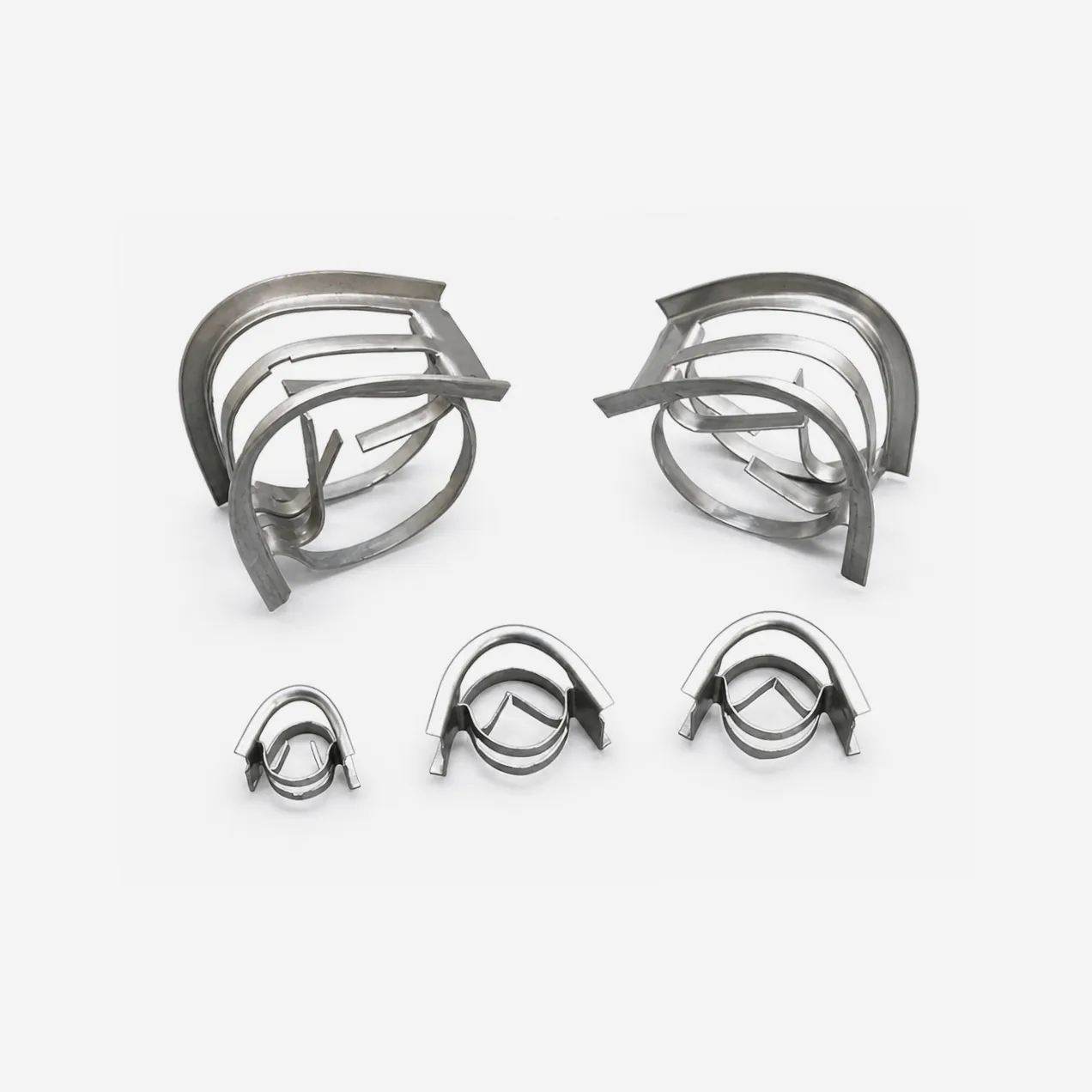
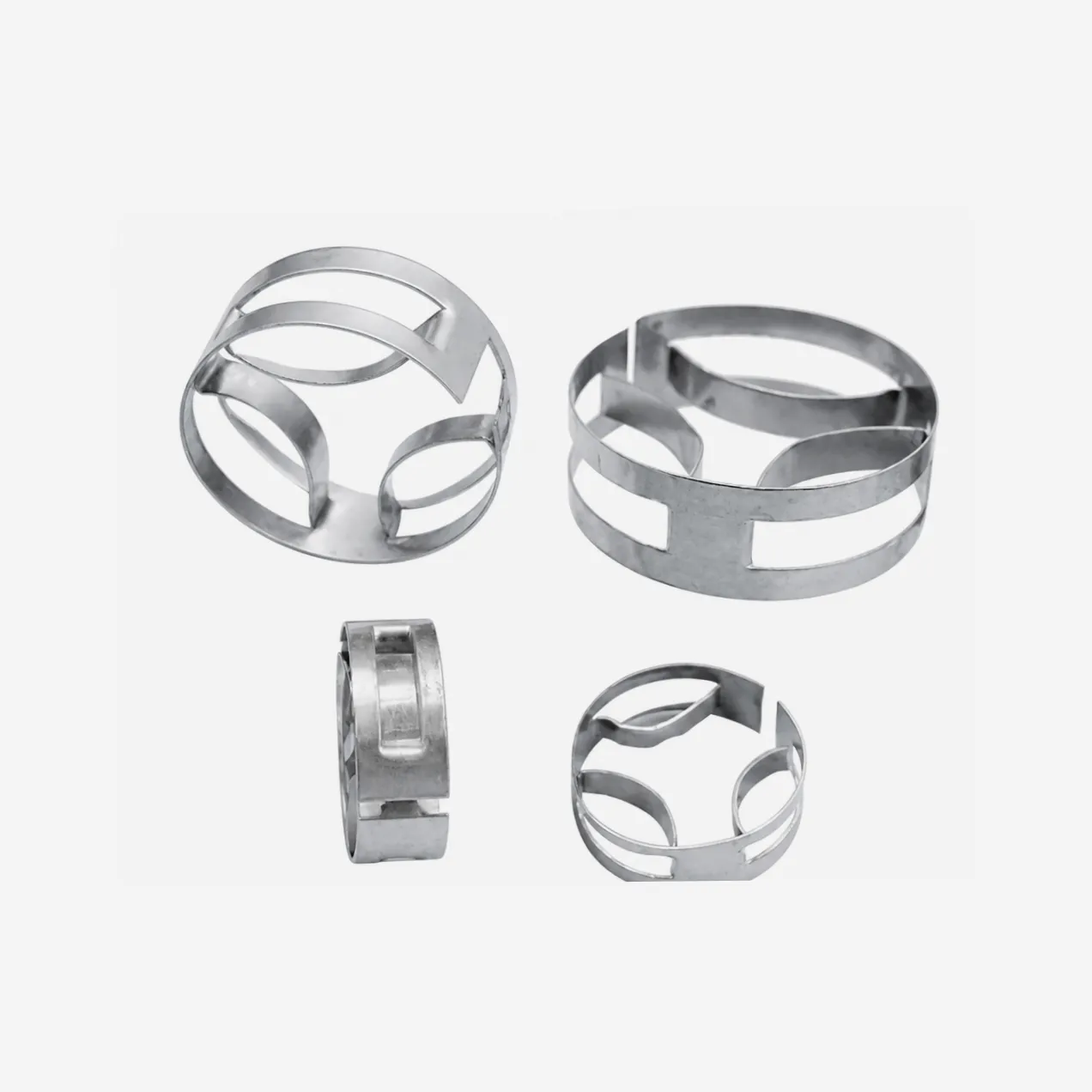
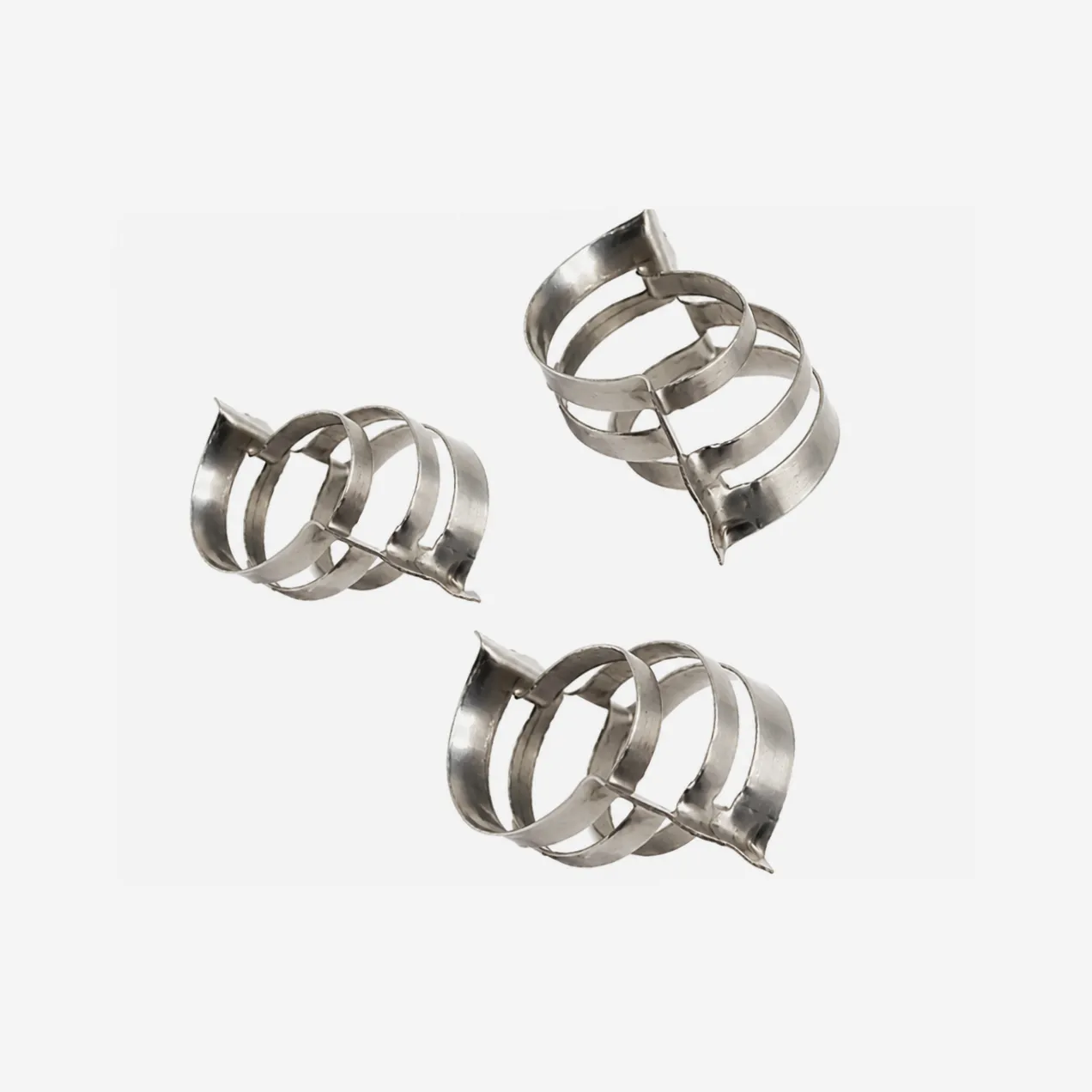
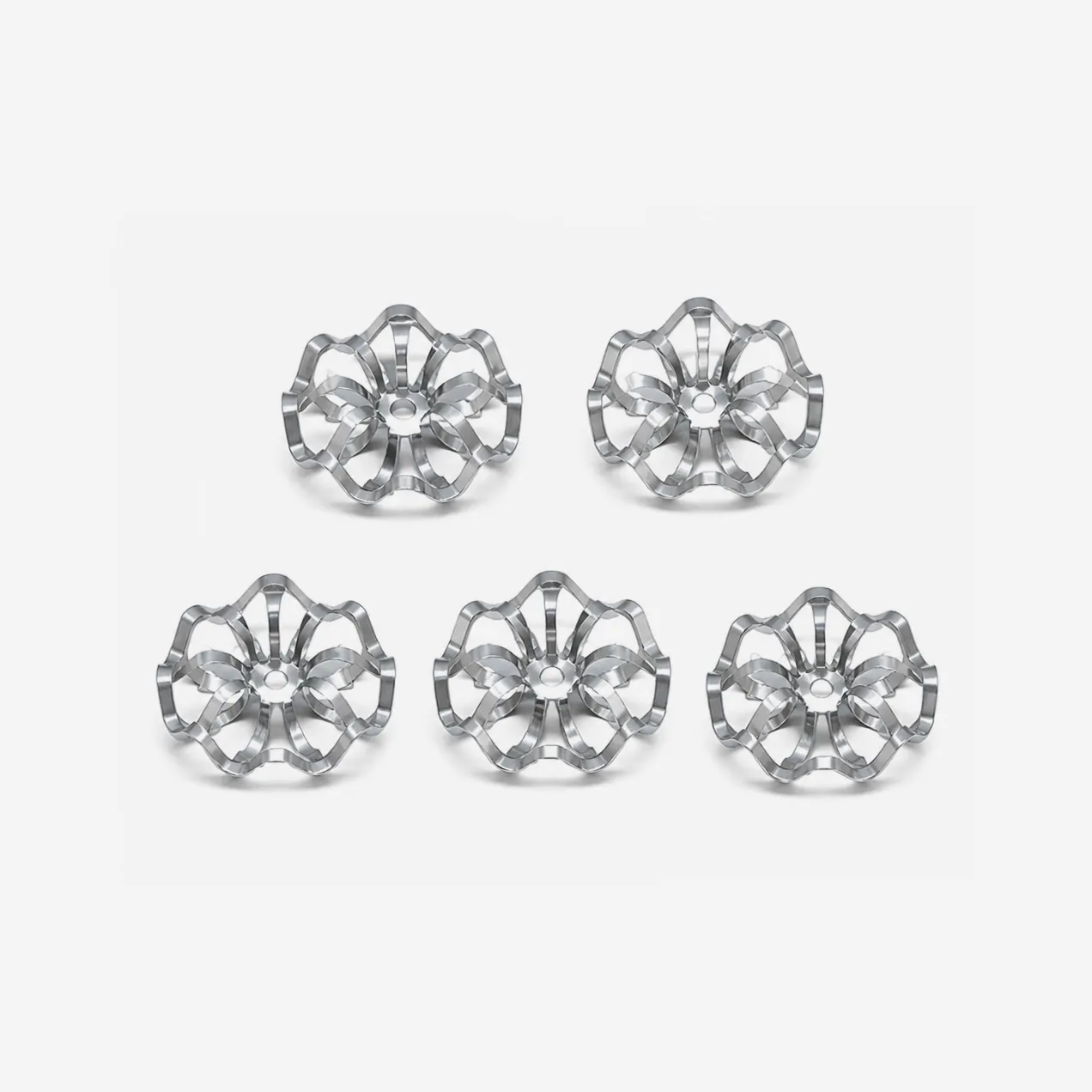
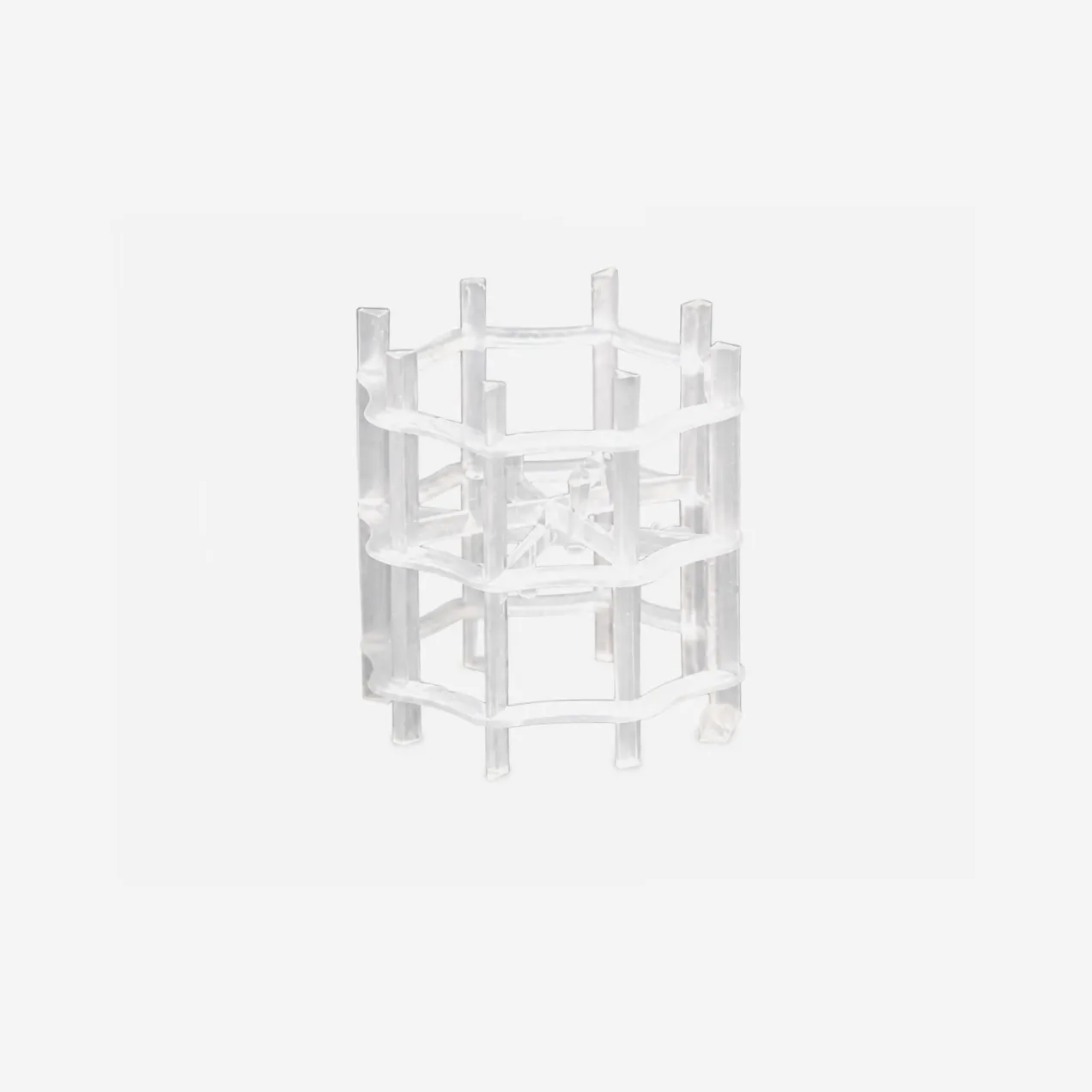
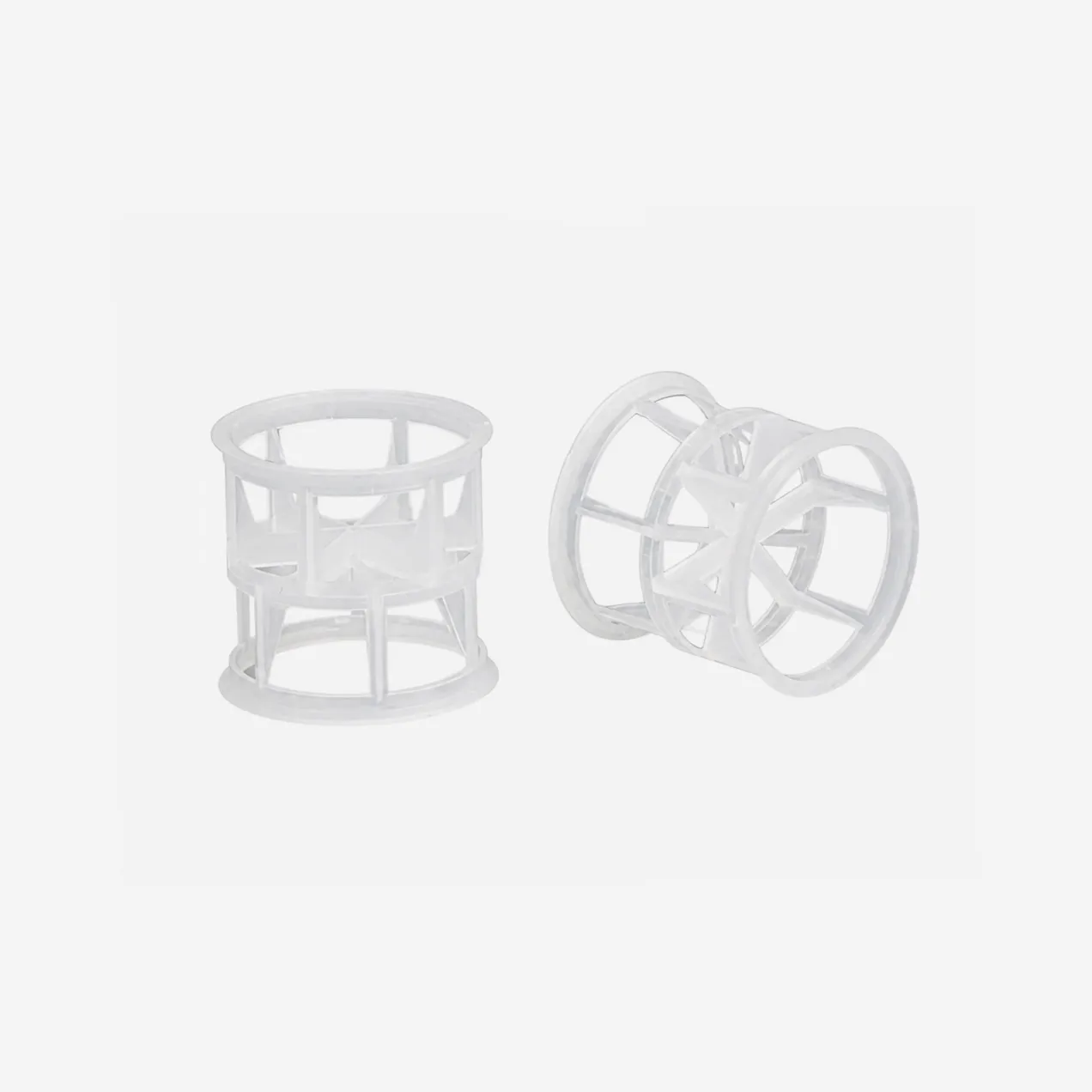
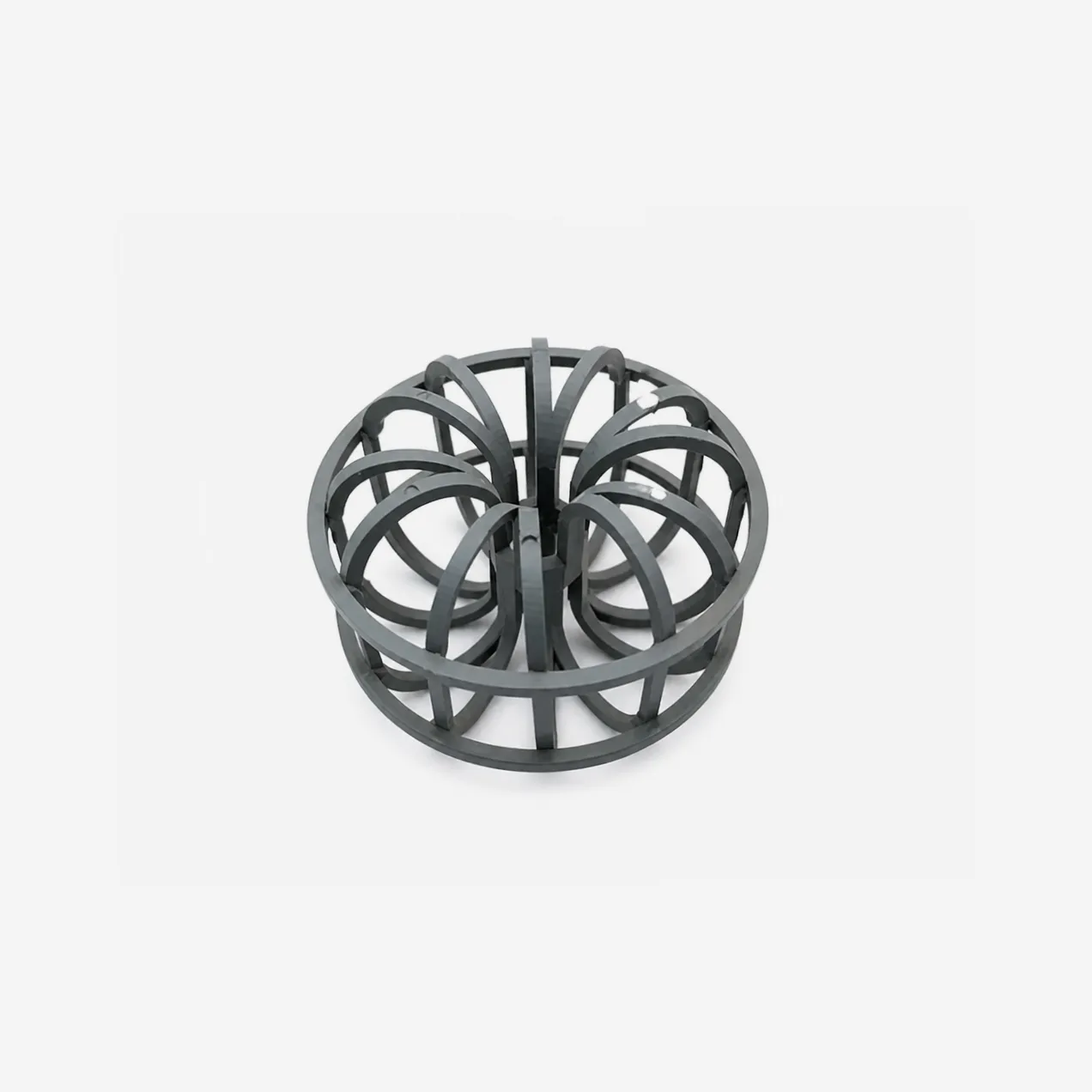
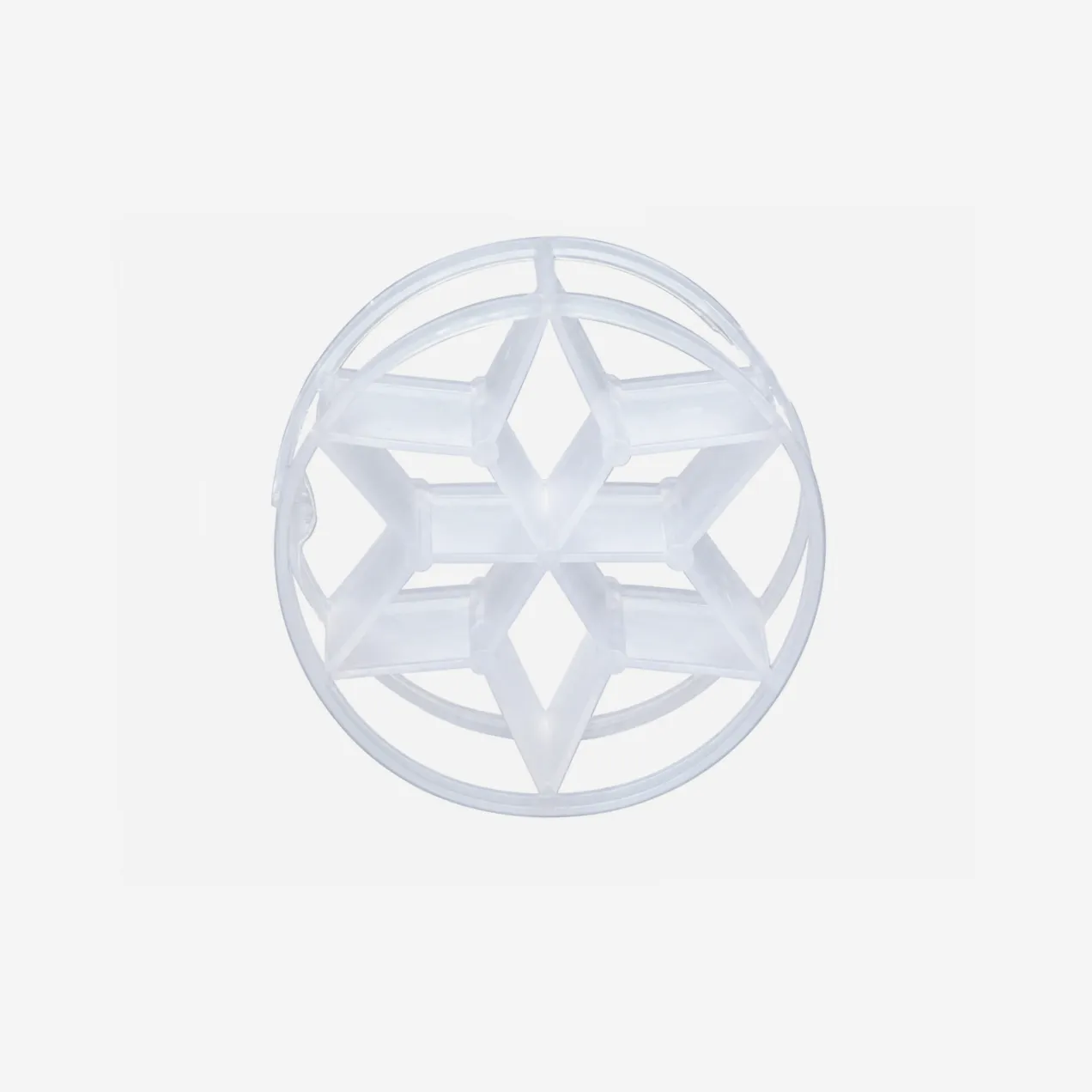
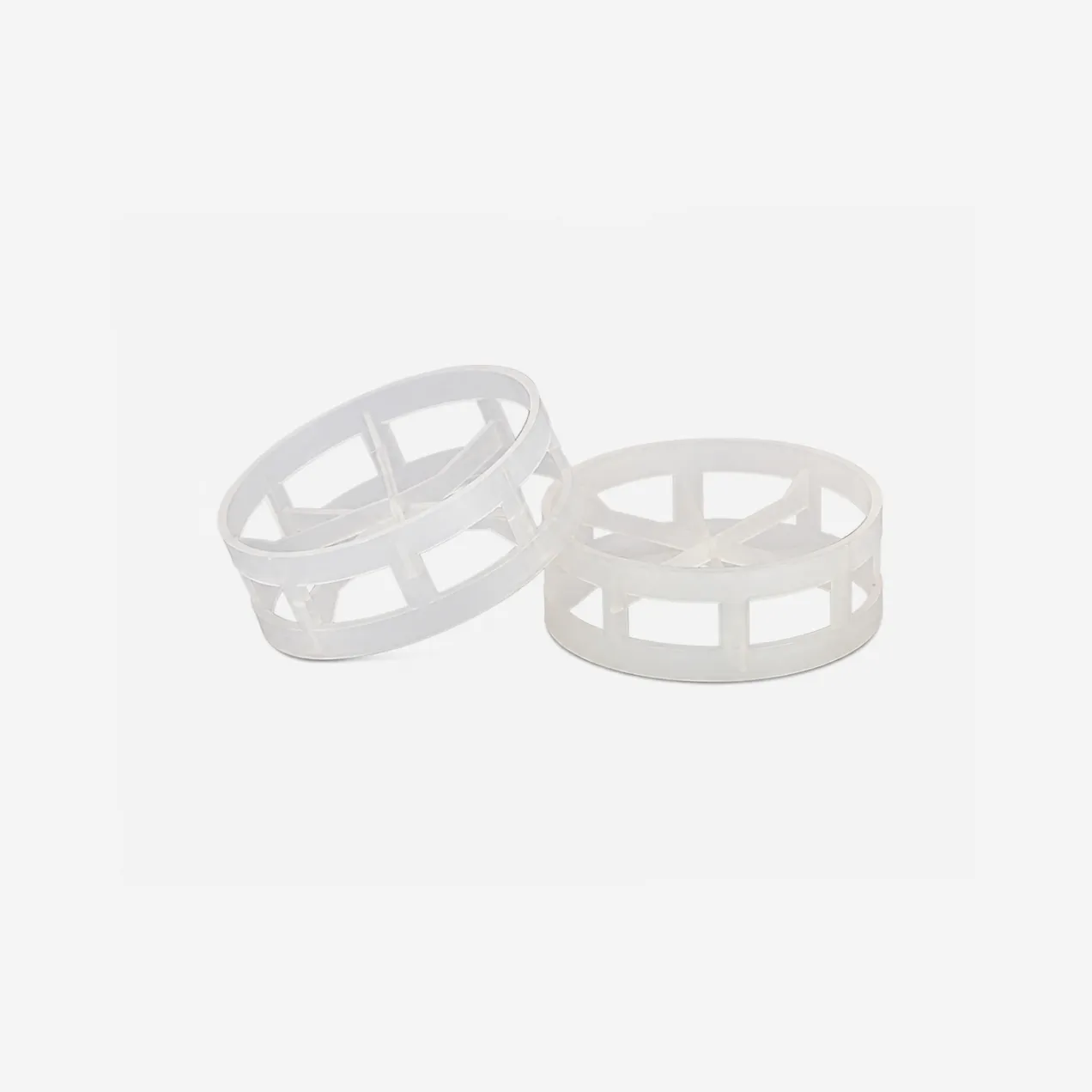
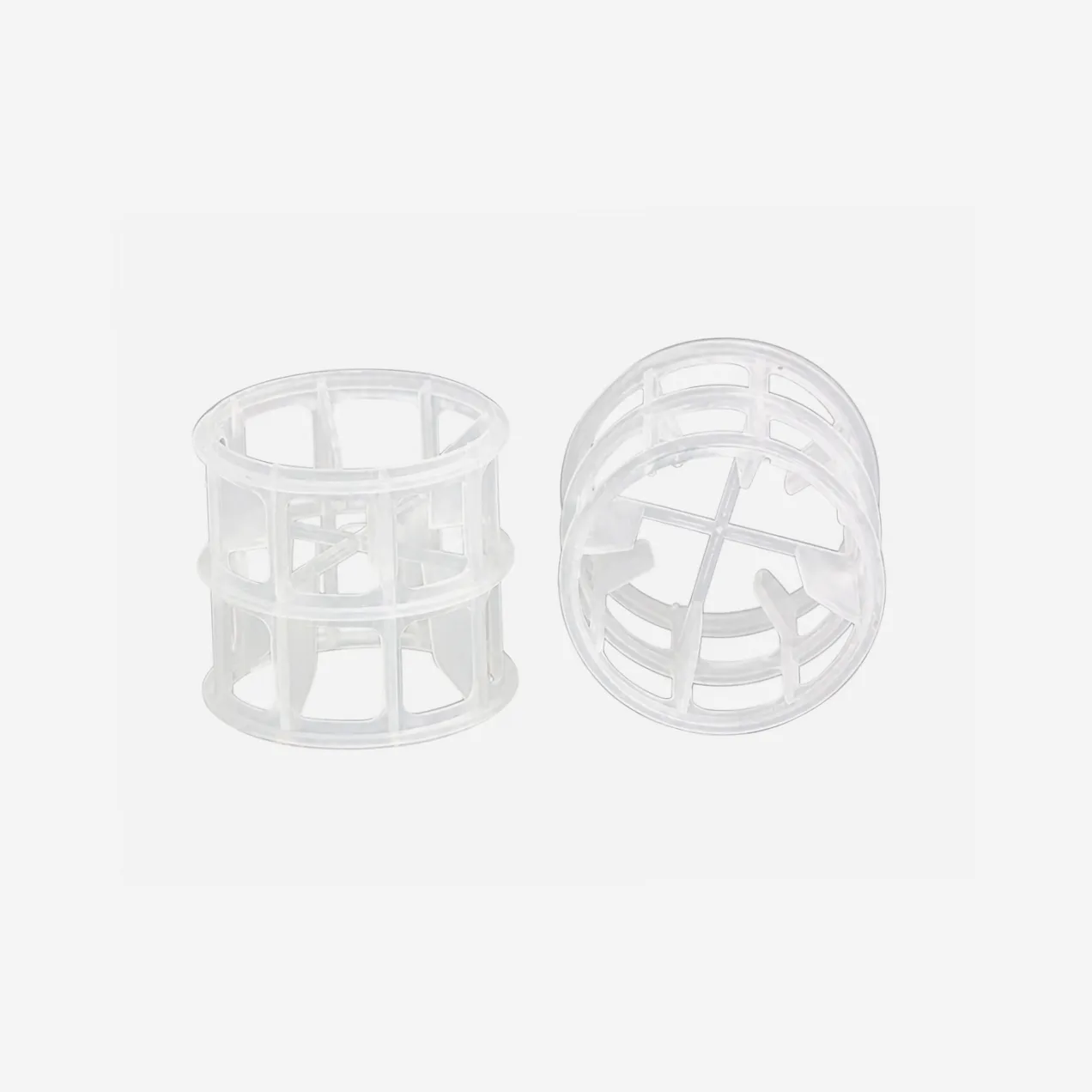
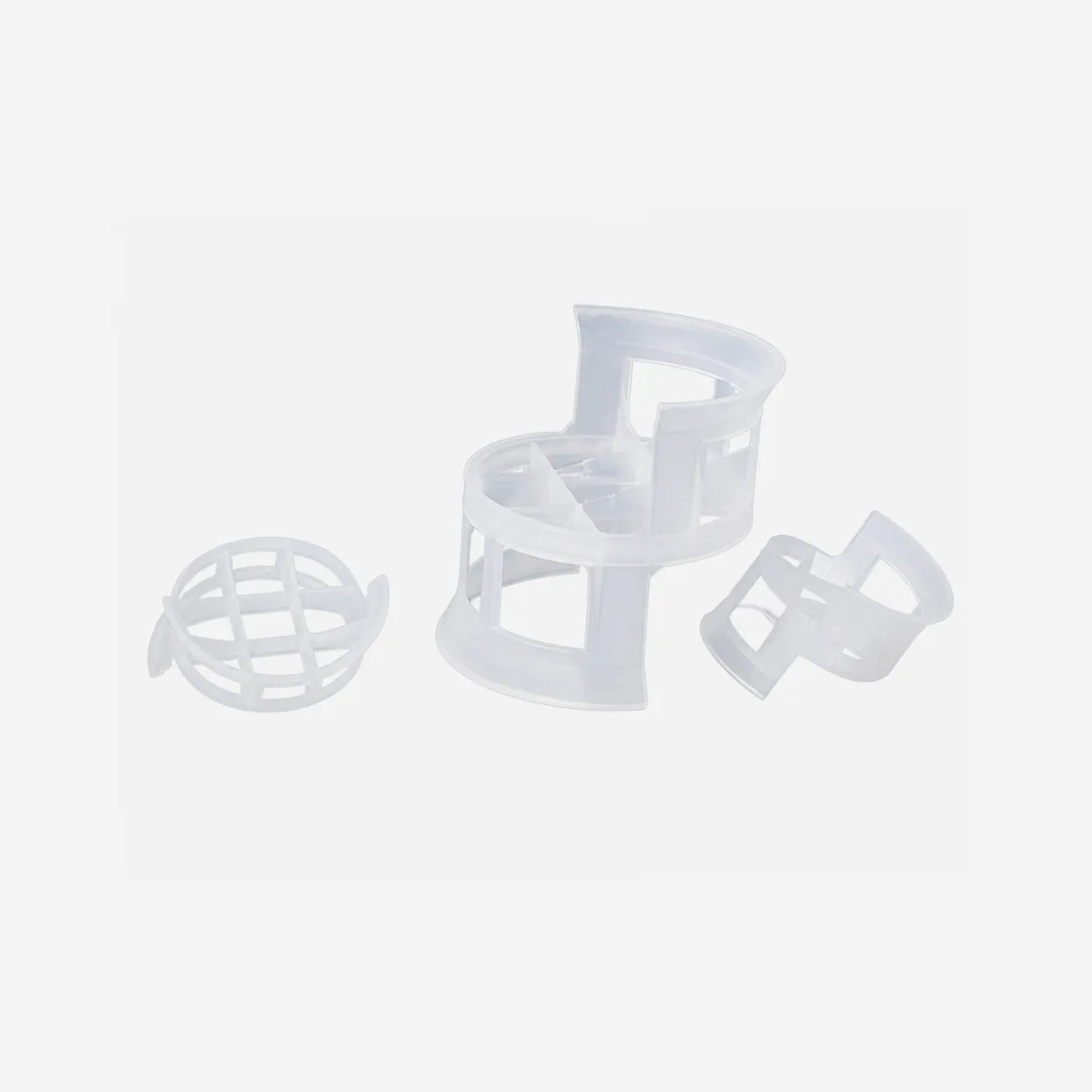
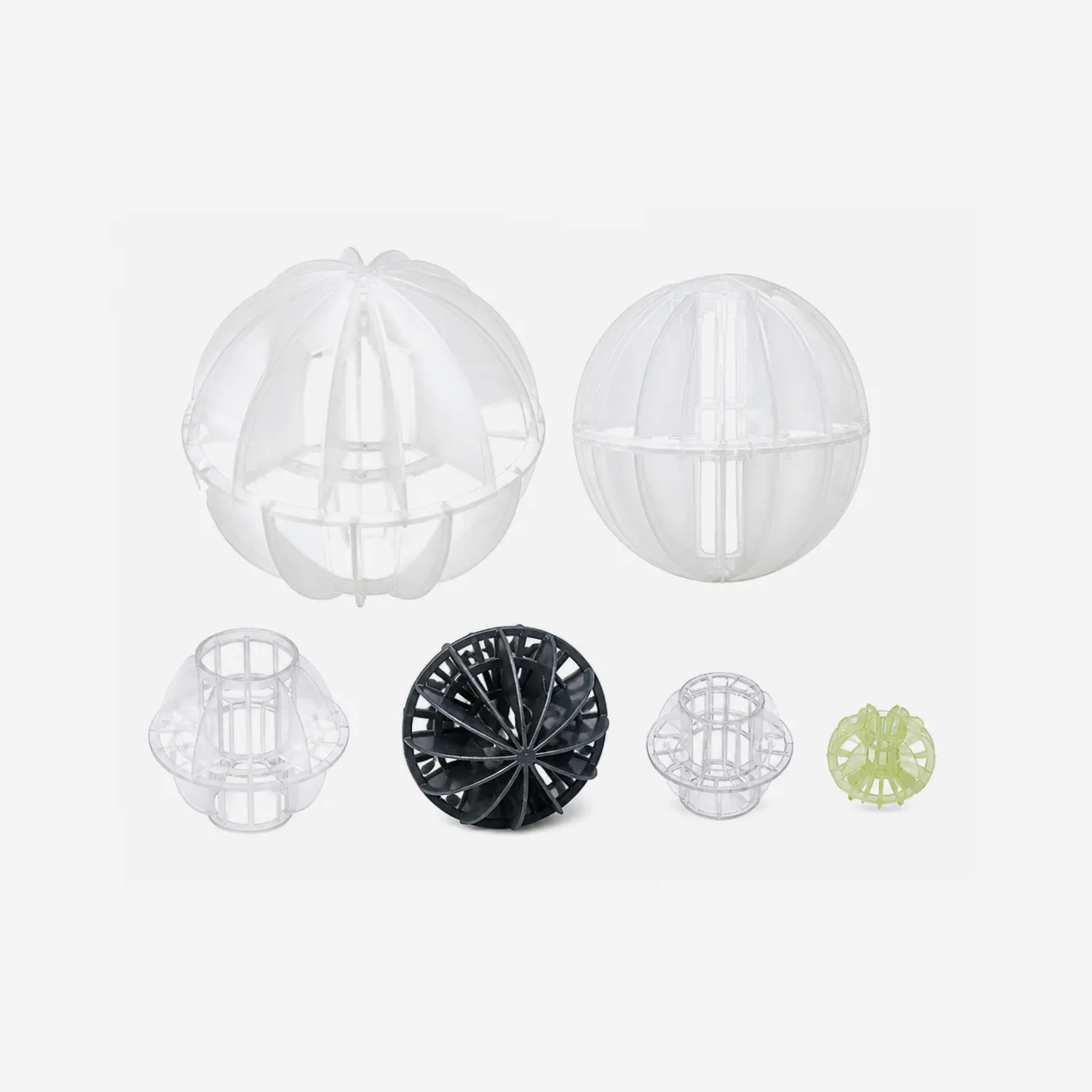
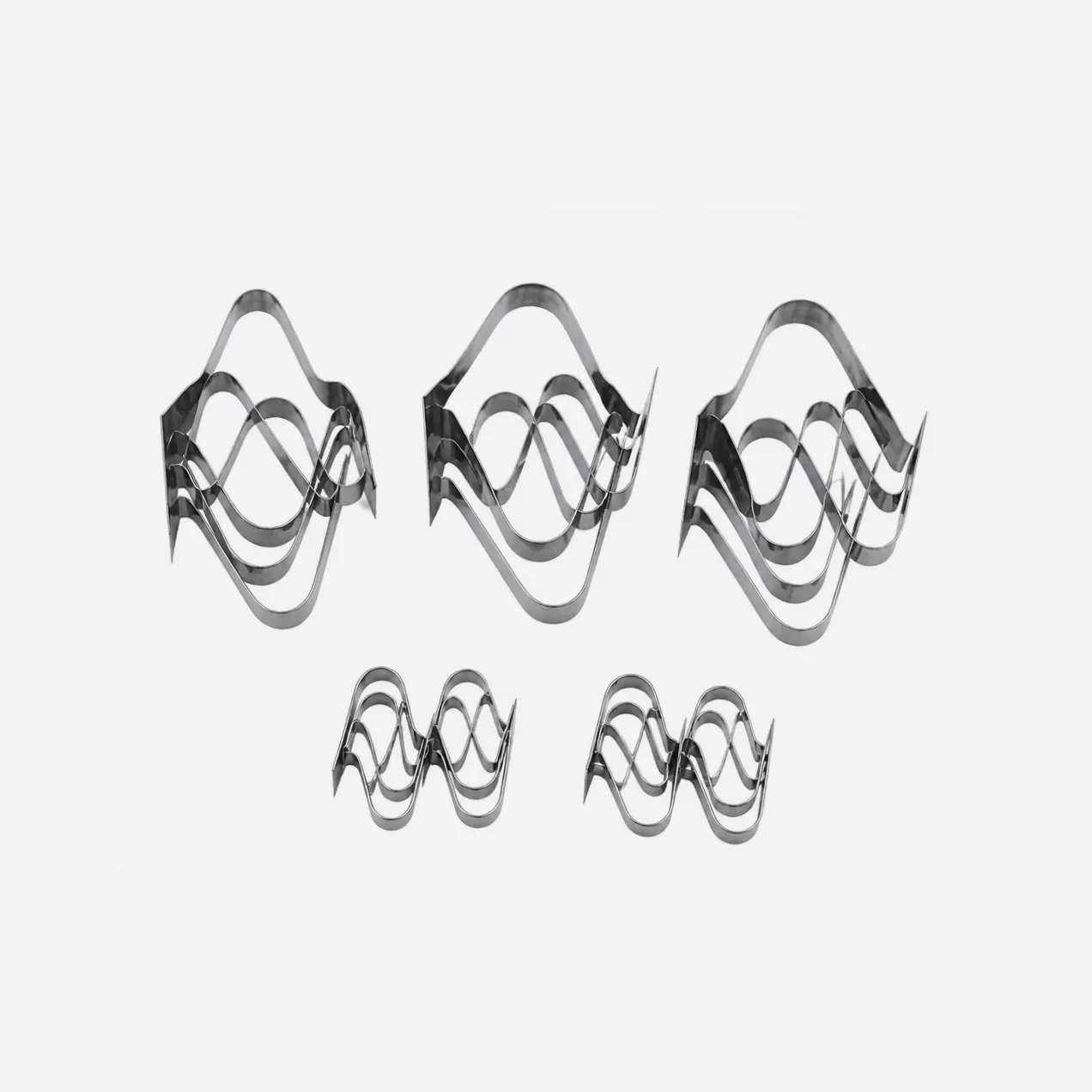
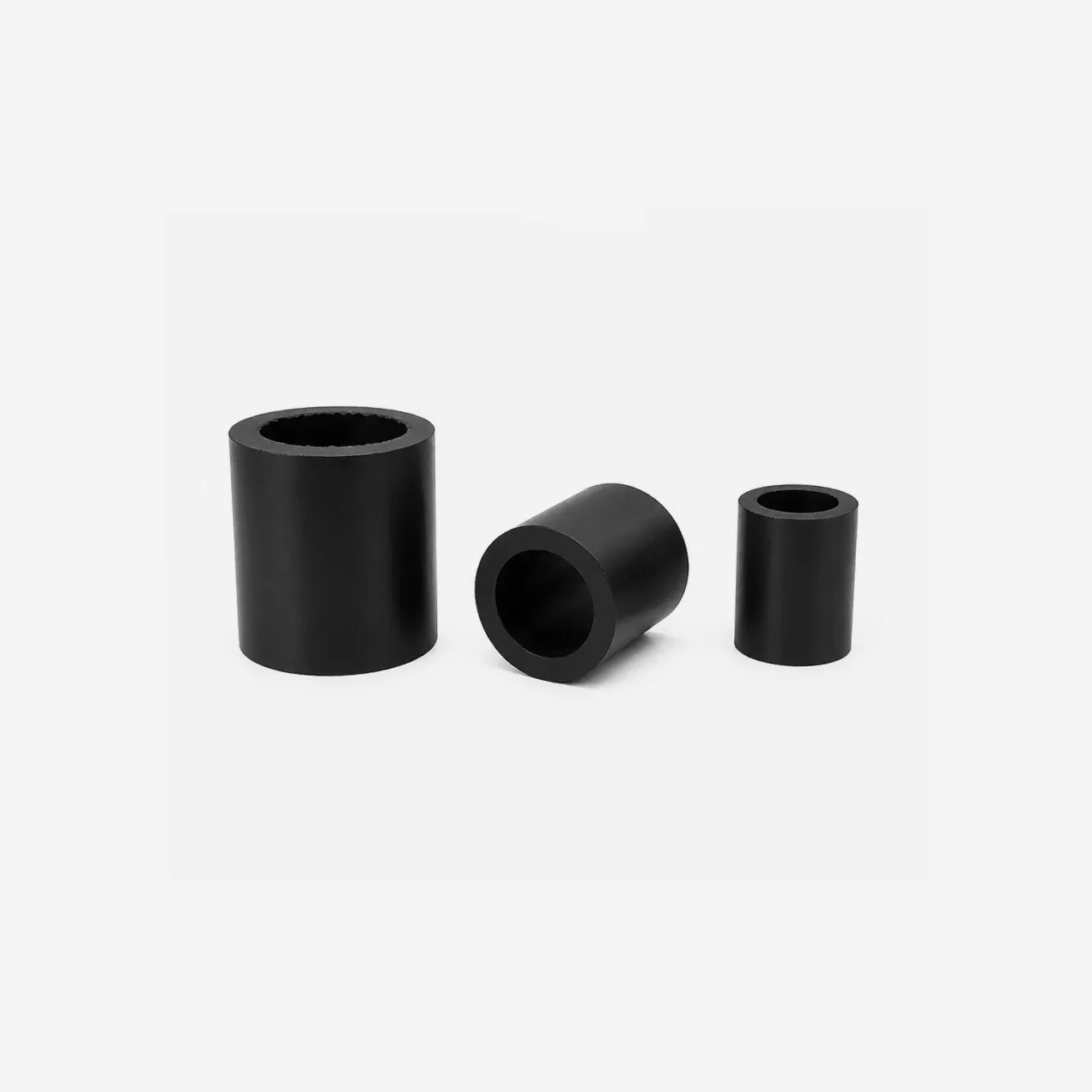
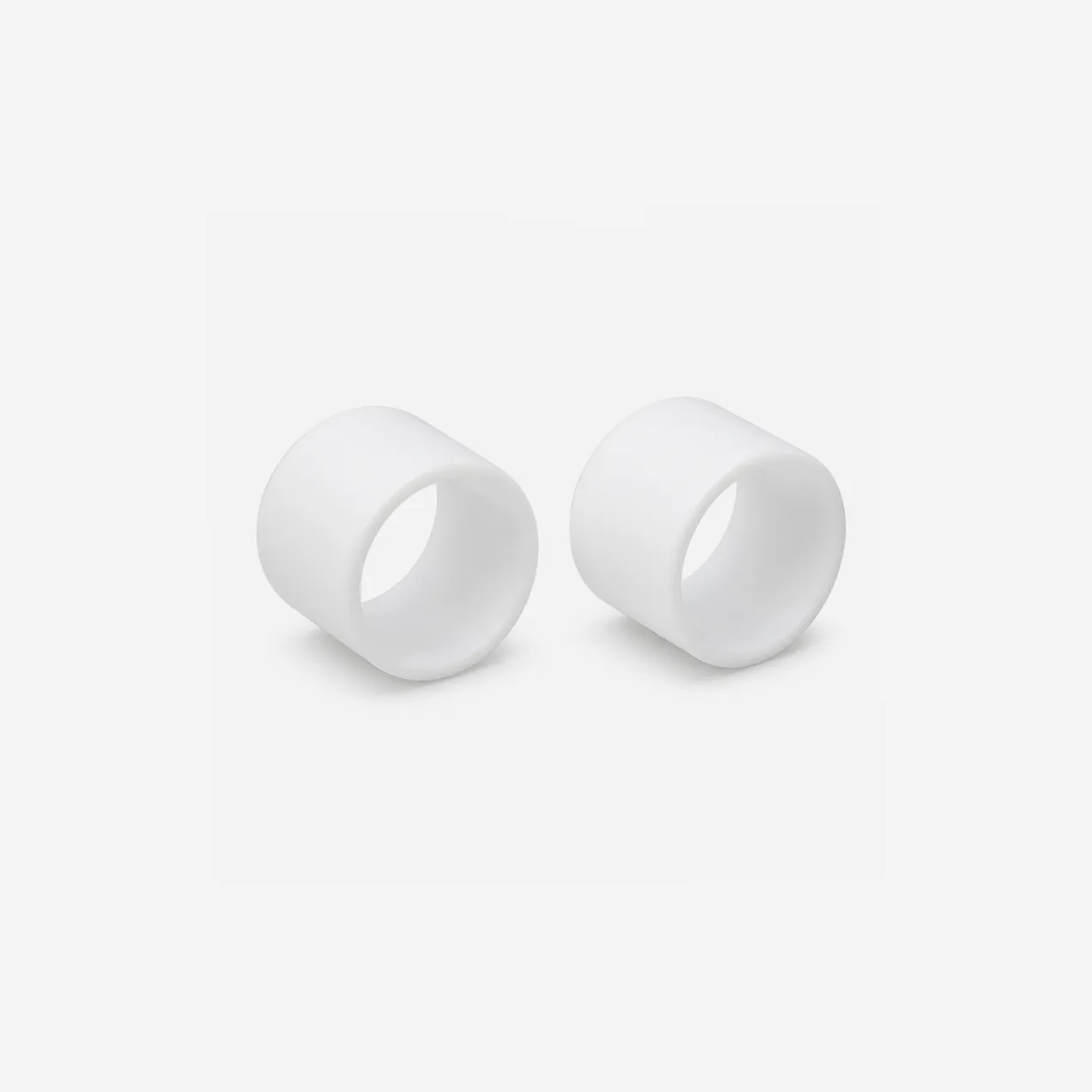
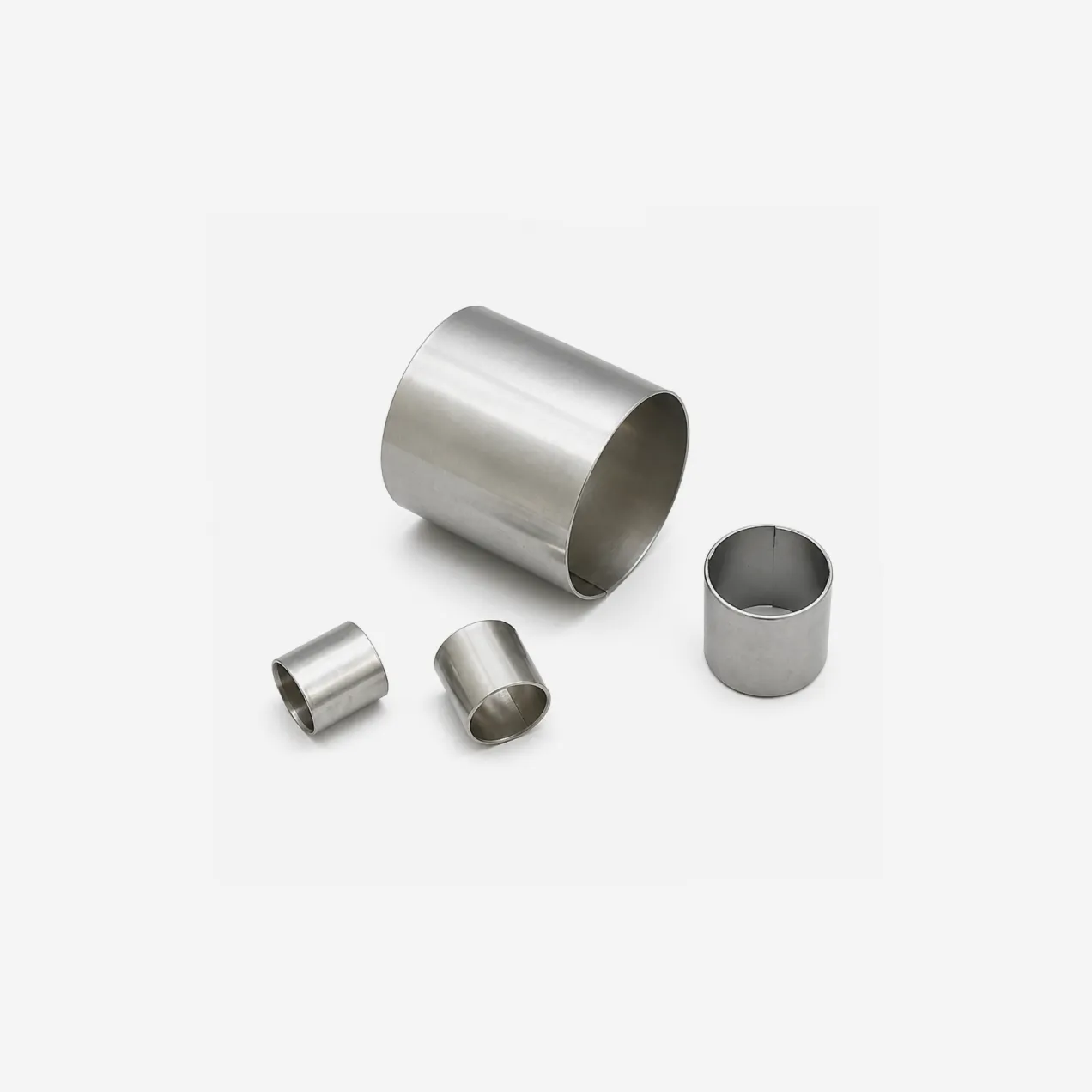
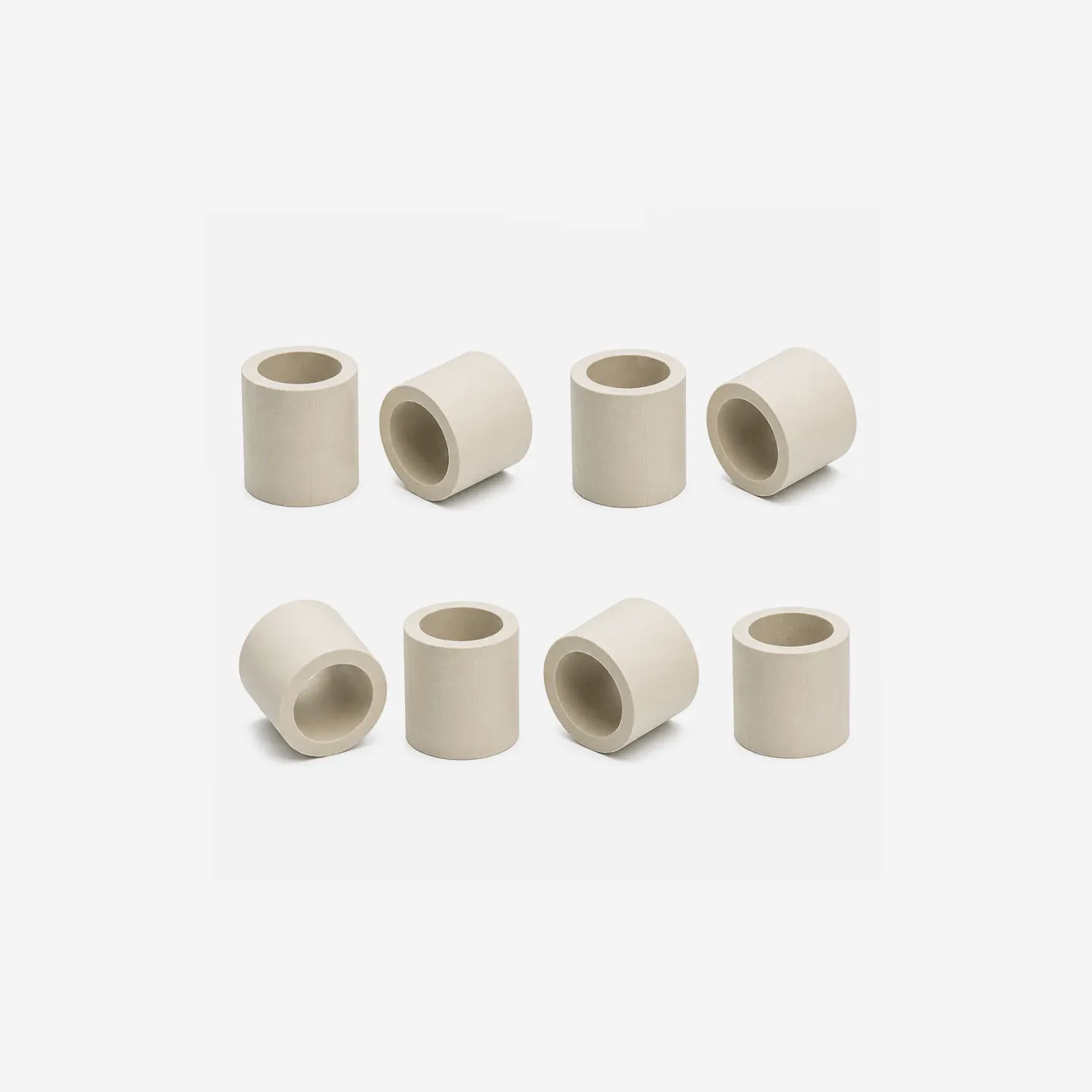
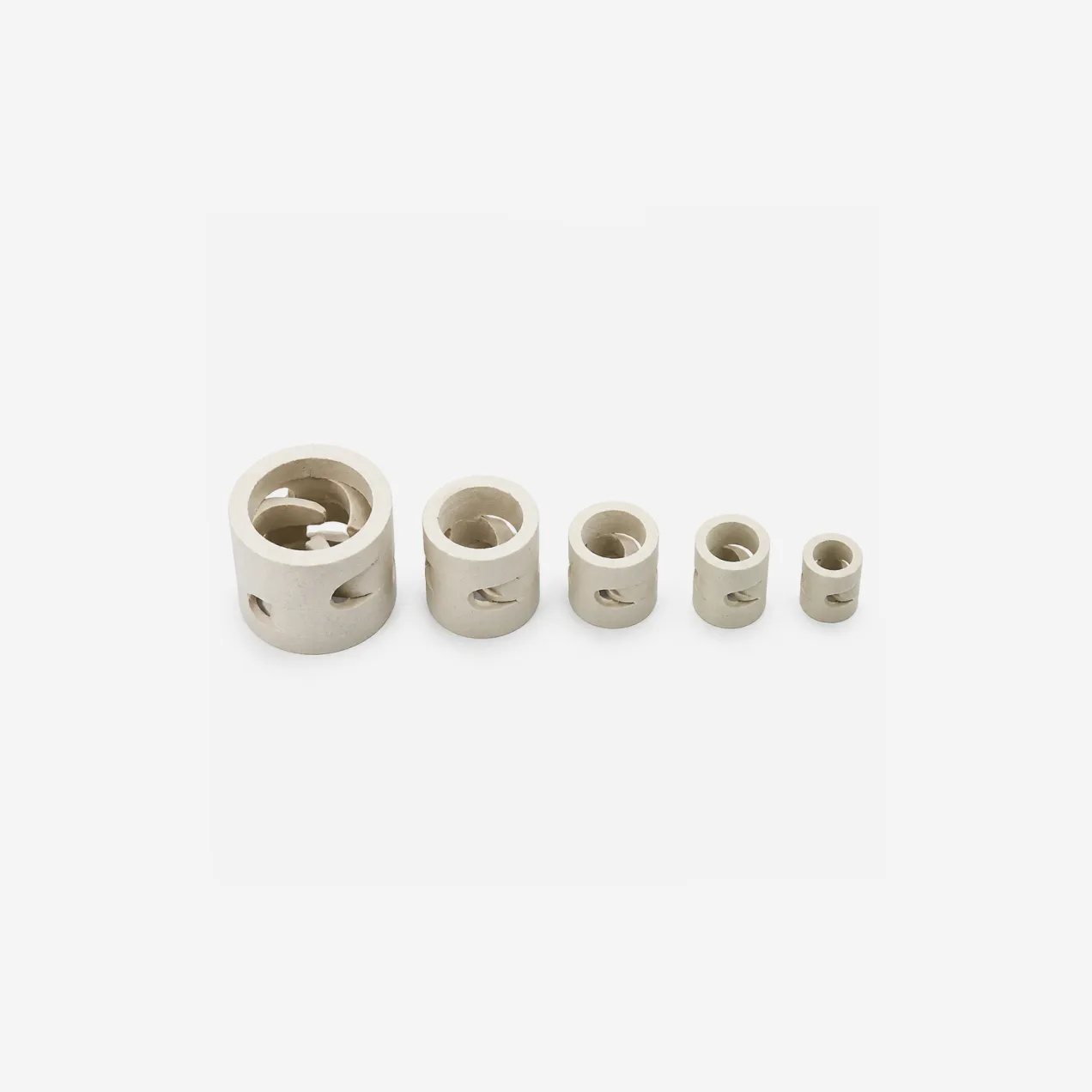
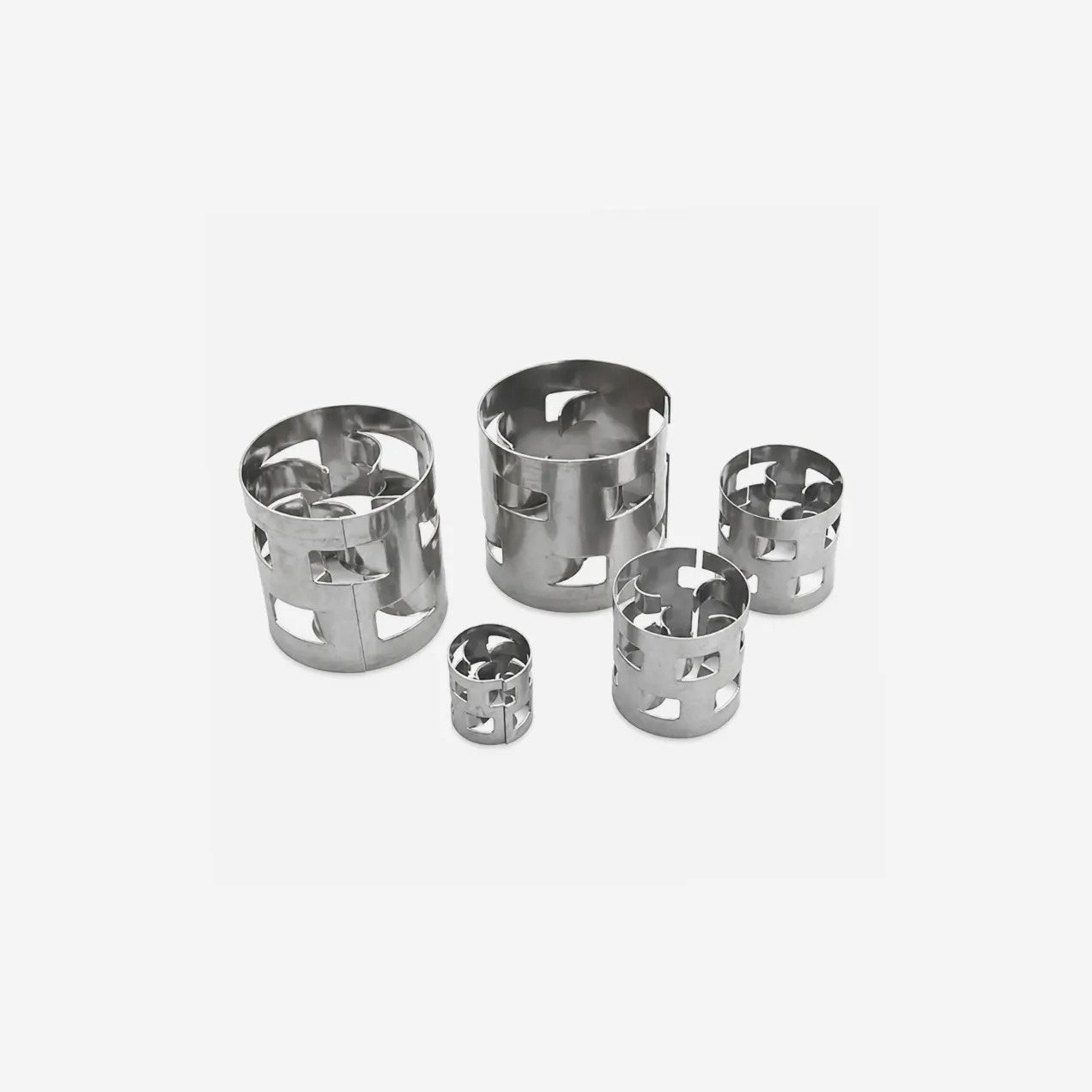
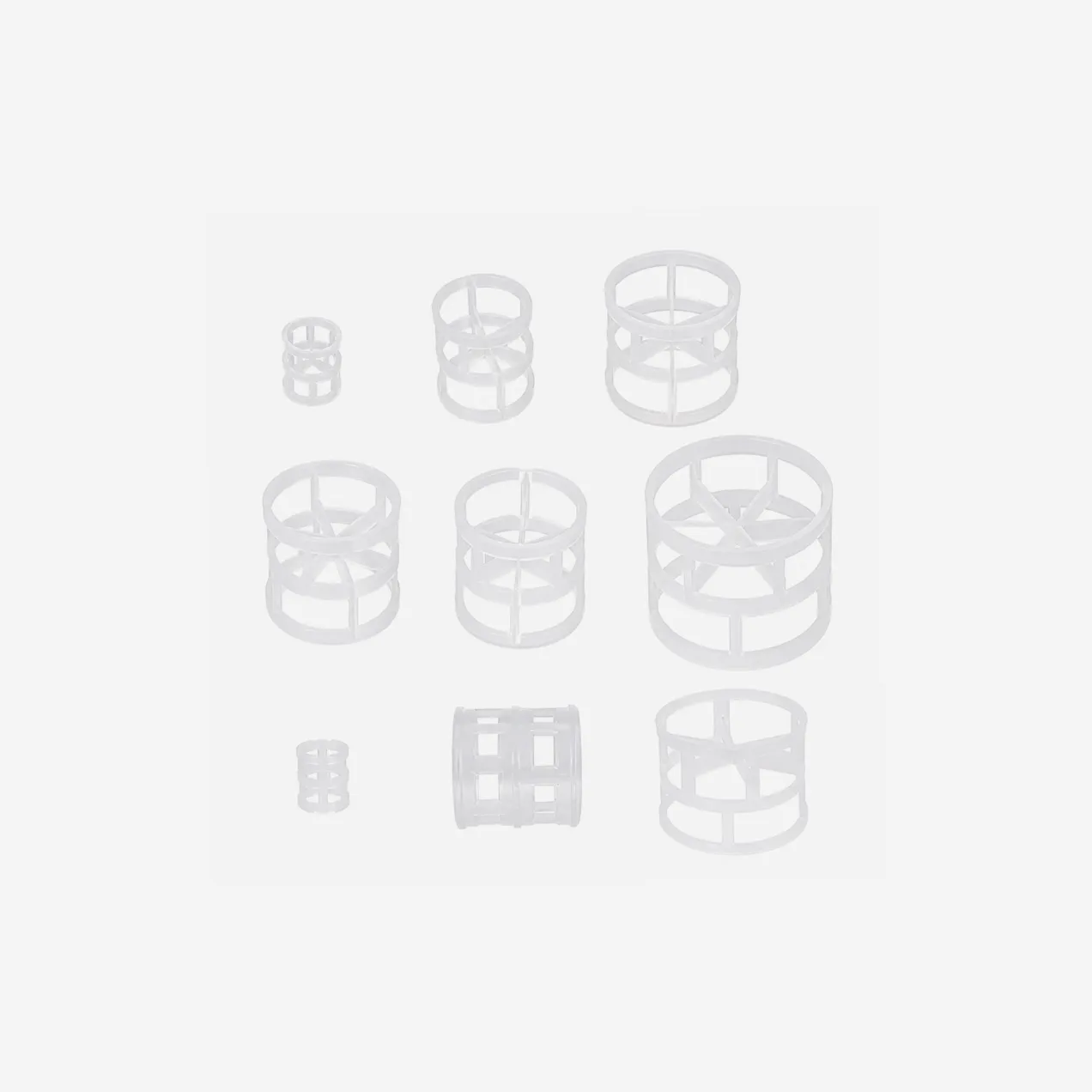
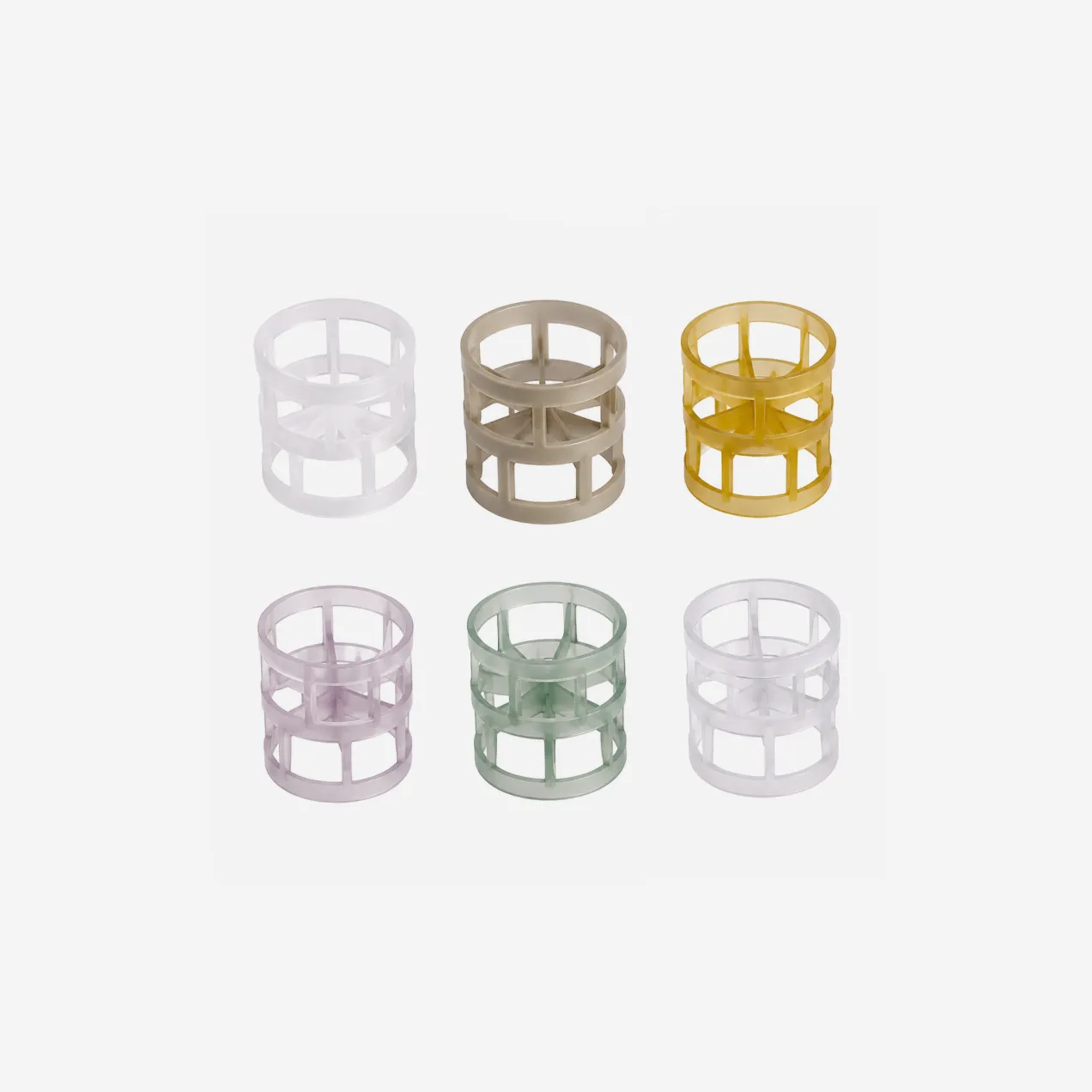
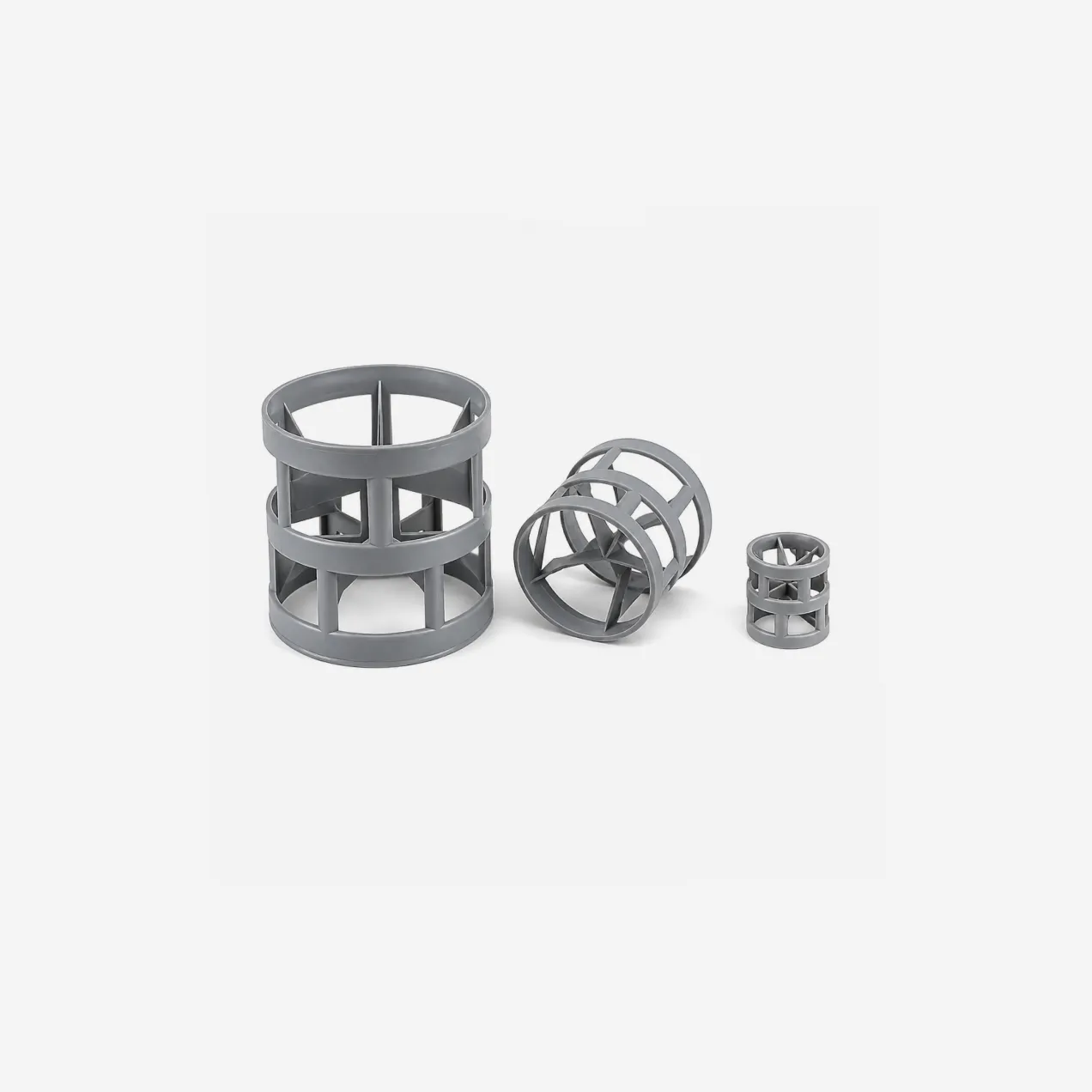
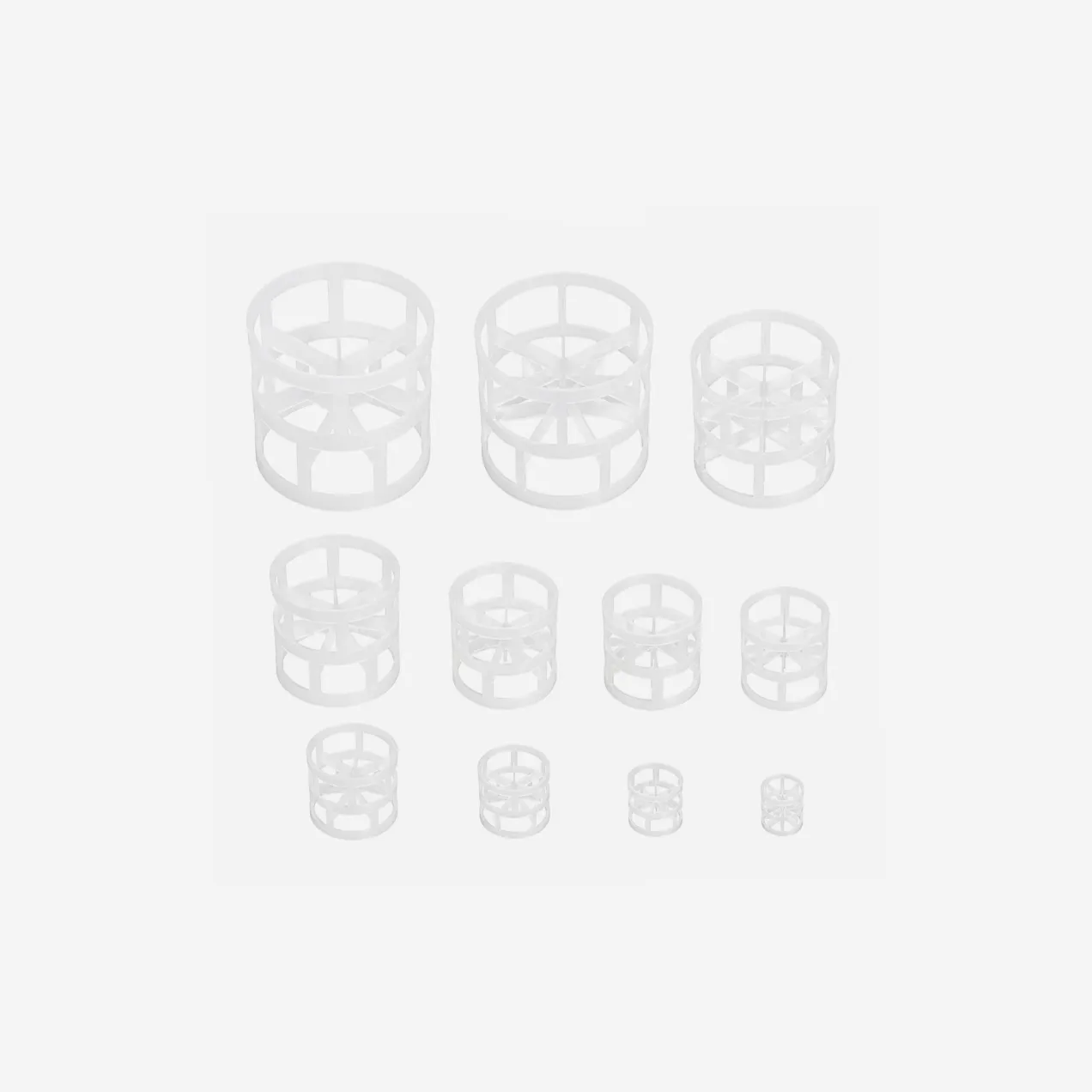
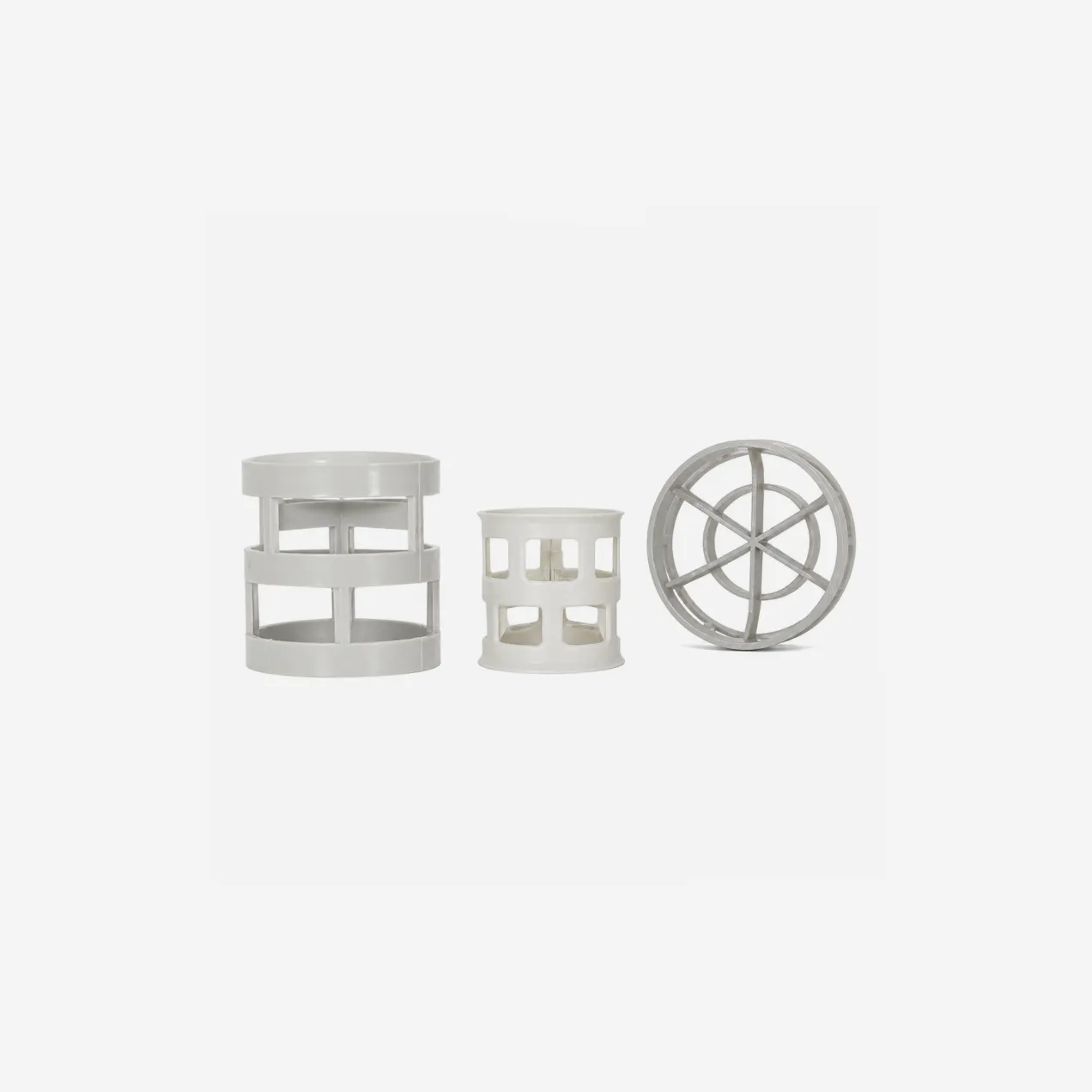
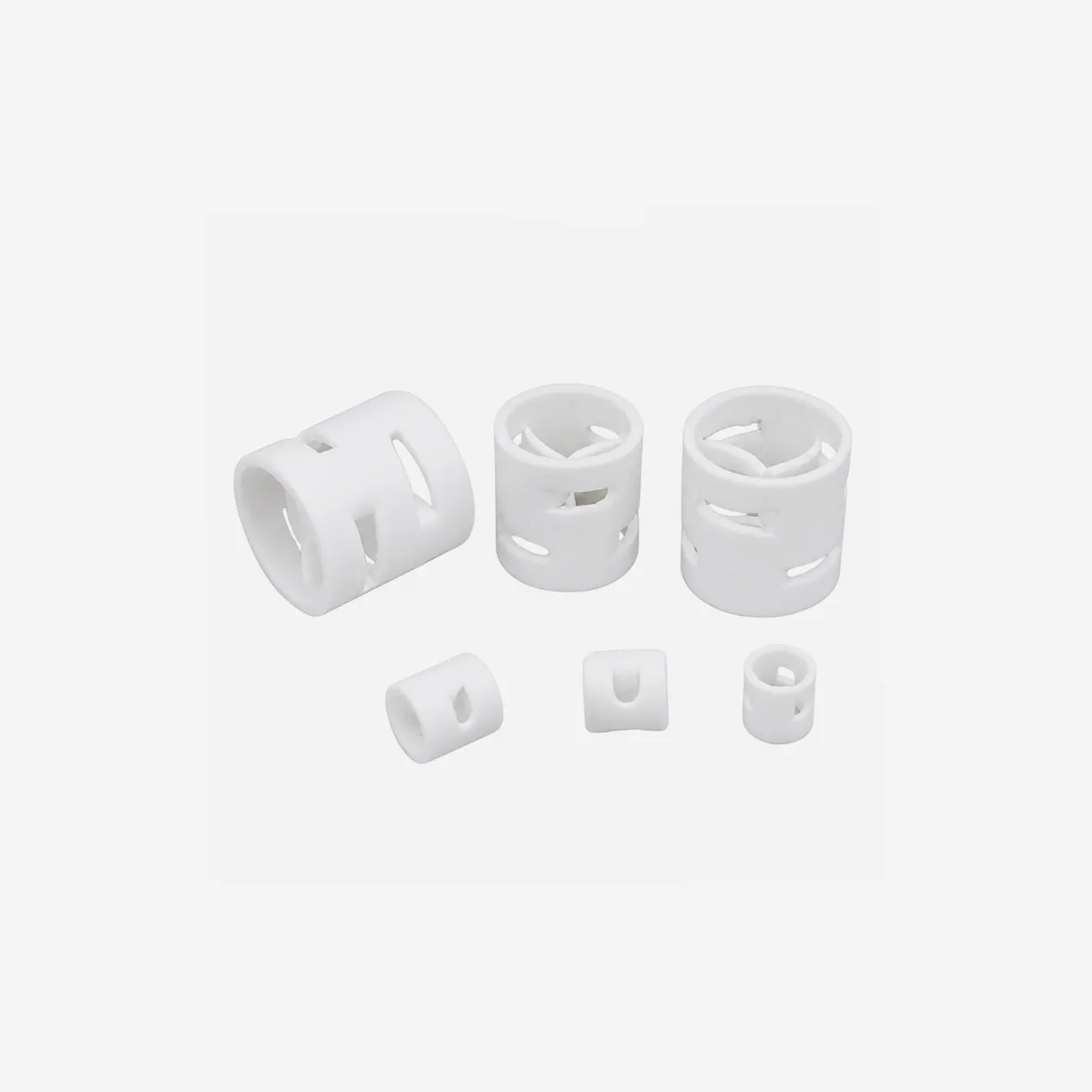
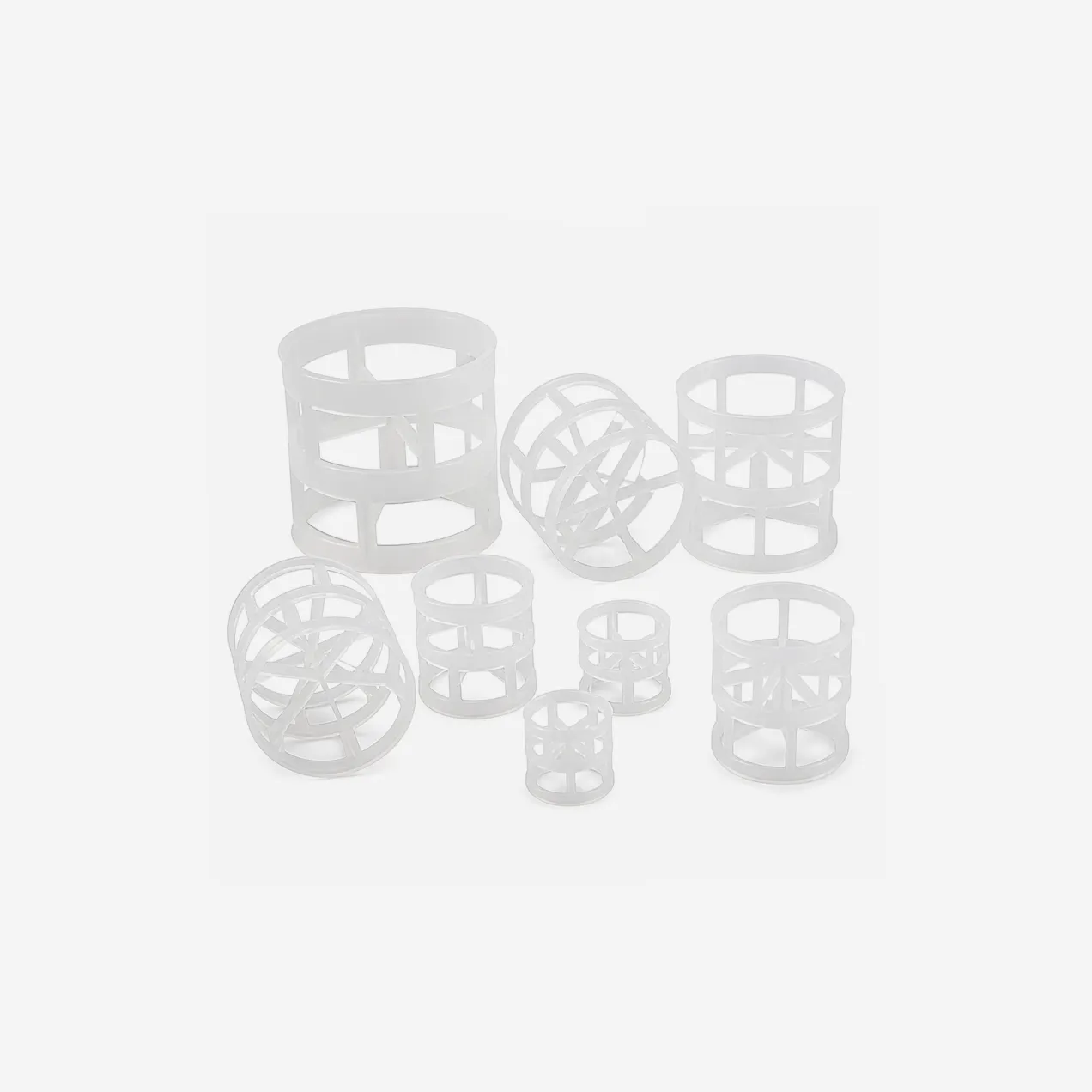
The plastic conjugate ring is a third-generation random packing, designed to outperform the plain Raschig ring and the windowed Pall ring that came before it. Its trick is to combine two different packing shapes. Saddle packings are open and curved, and they spread liquid gently with little flow resistance; ring packings are compact and strong, with good capacity. The conjugate ring fuses the two into a curved-fin body with toothed, fringed ends and a balanced length-to-diameter ratio. Because of that shape the pieces meet each other, and the tower wall, only at points, so they cannot nest or lie flat against one another — the bed stays open and its porosity stays uniform and high, in the mid-nineties in percent.
It is easiest to understand as the sum of what it borrows:
| Borrowed from | What it contributes |
|---|
| Saddle packing | Open curved surfaces that spread liquid evenly at low resistance |
| Ring packing | A compact, self-supporting body with good capacity and strength |
| Conjugate fins and fringed ends | Point contact only — no nesting or overlap, uniform porosity |
Produced in PP, RPP, CPVC, PVDF and PVC, the conjugate ring is light, shrugs off corrosion and drops easily into a column; the plastic it is moulded from sets its heat limit, somewhere between 60 and 150 degrees. Its open, high-void bed and even distribution give it more capacity, a lower pressure drop and better mass transfer than a Pall ring of the same size, which is why it serves as high-performance filling in petroleum, chemical, chlor-alkali and environmental towers. For a new column, or to uprate one that an older packing is holding back, it is a straightforward and effective choice. Send us the column diameter, the service and the operating temperature, and we can size the packing and choose the grade for you.