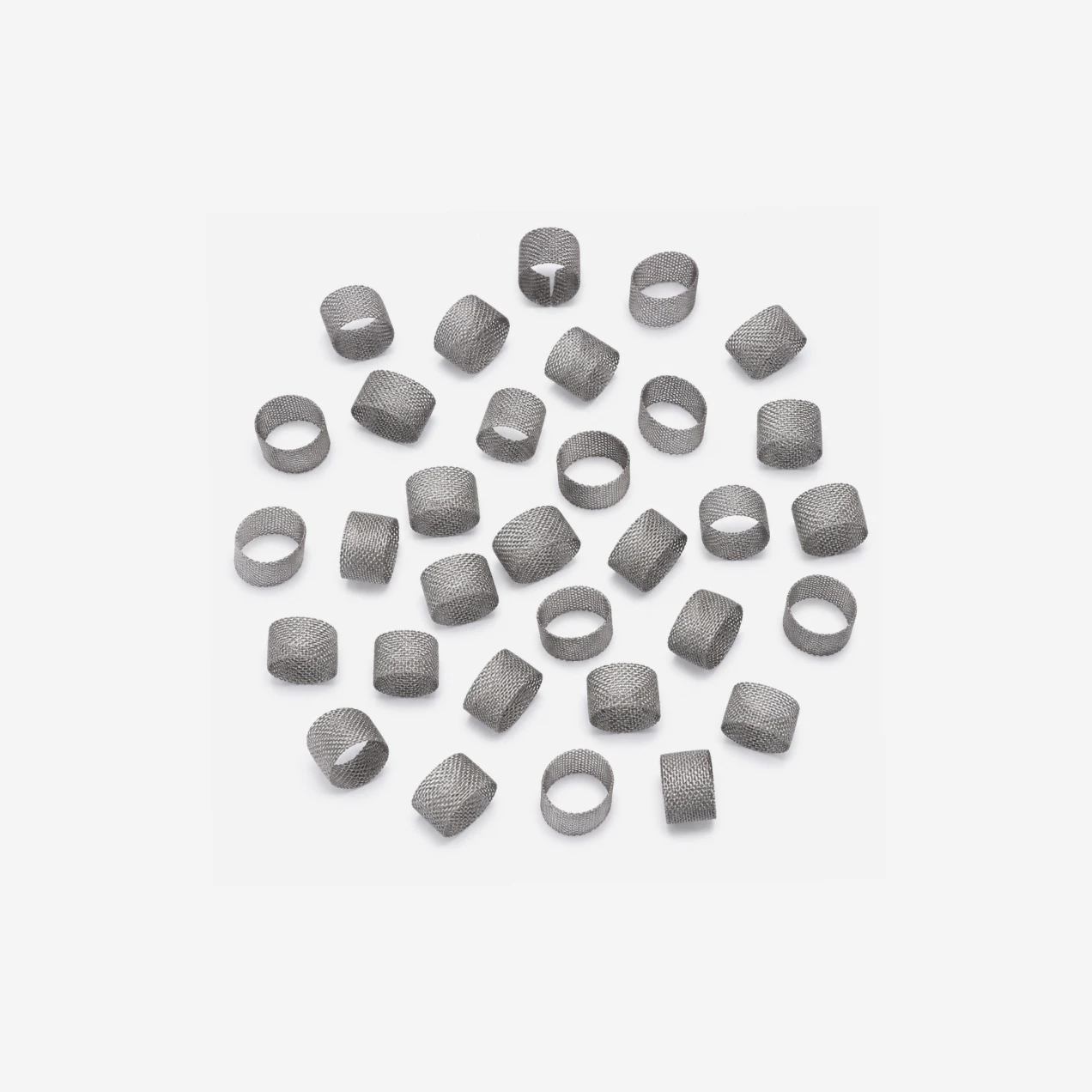
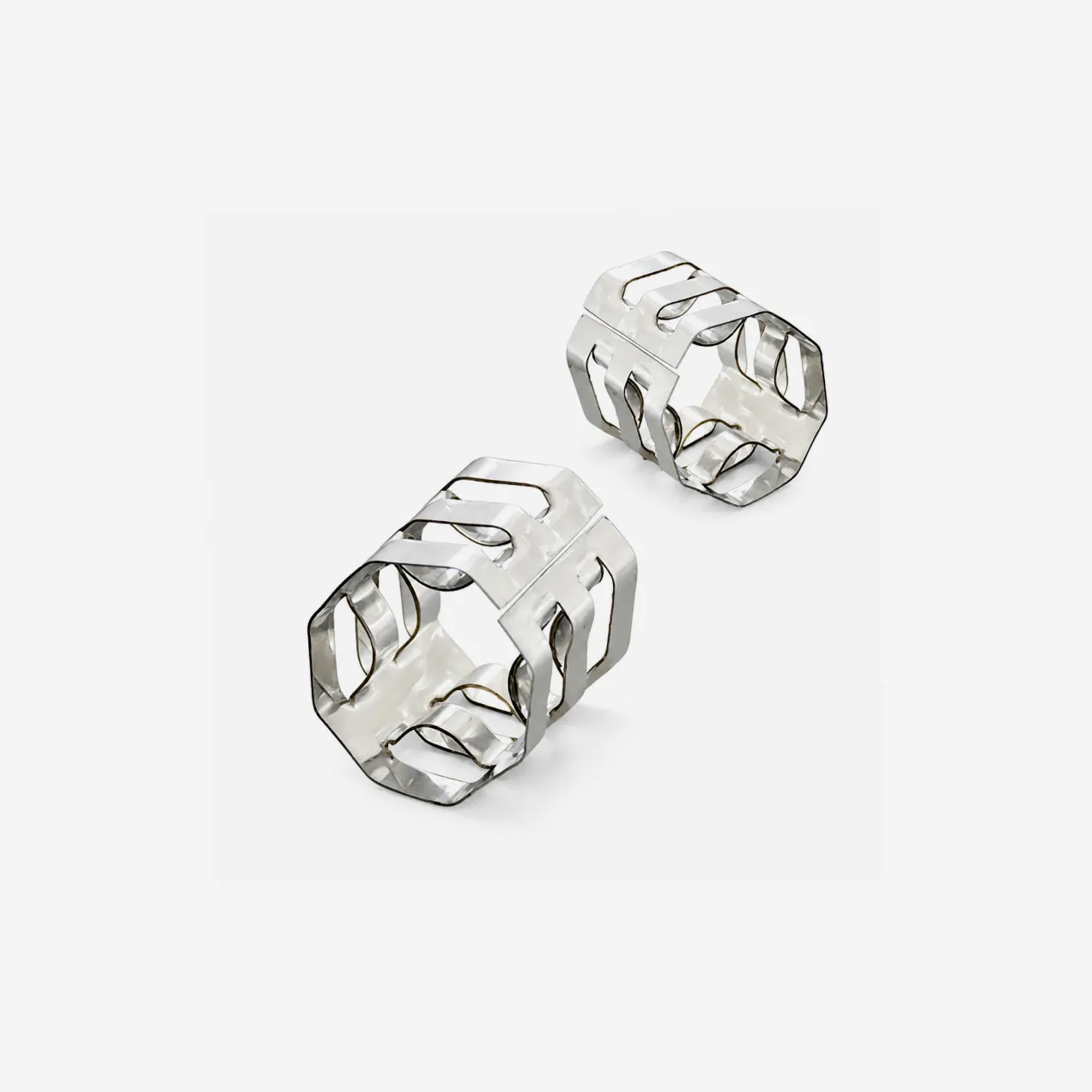
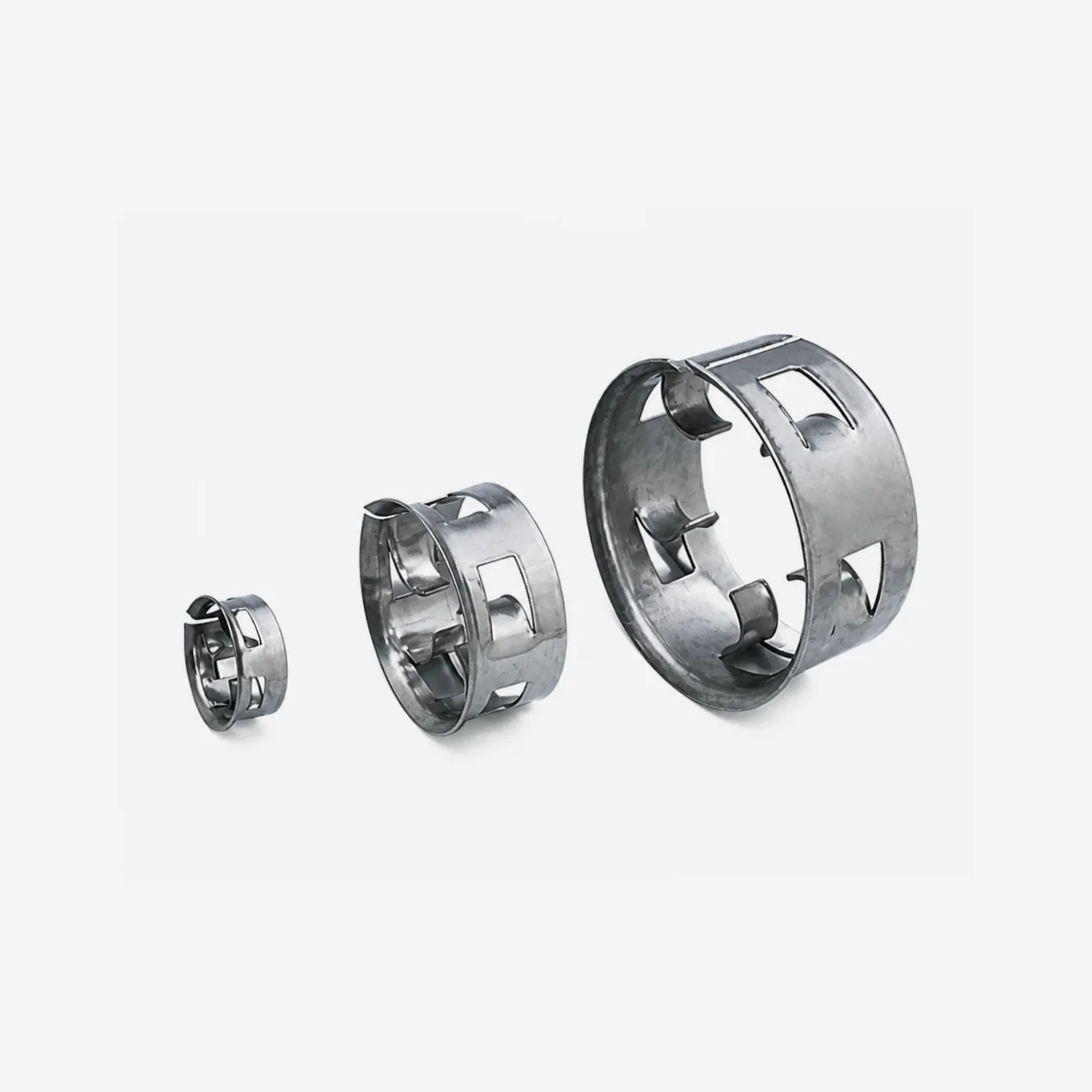
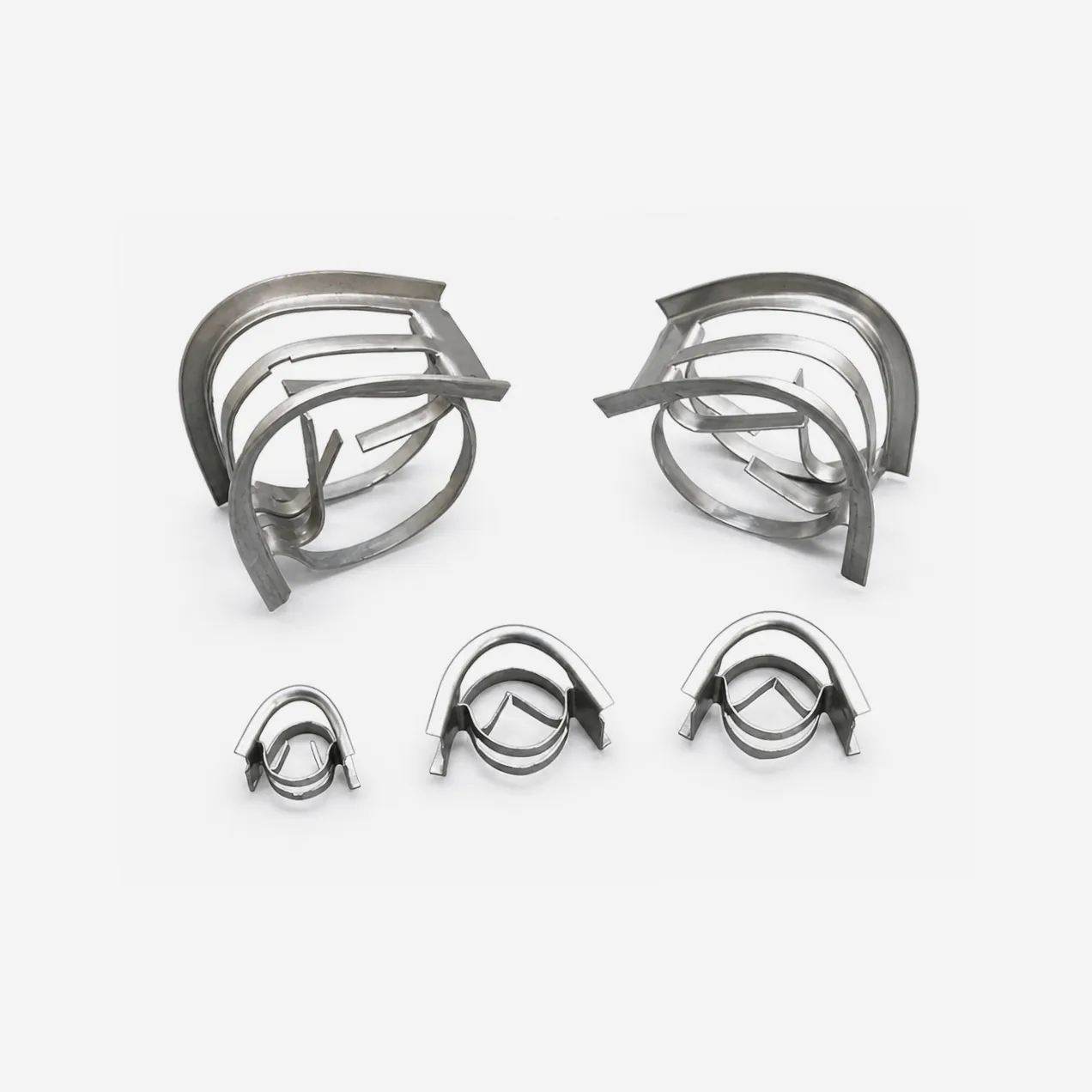
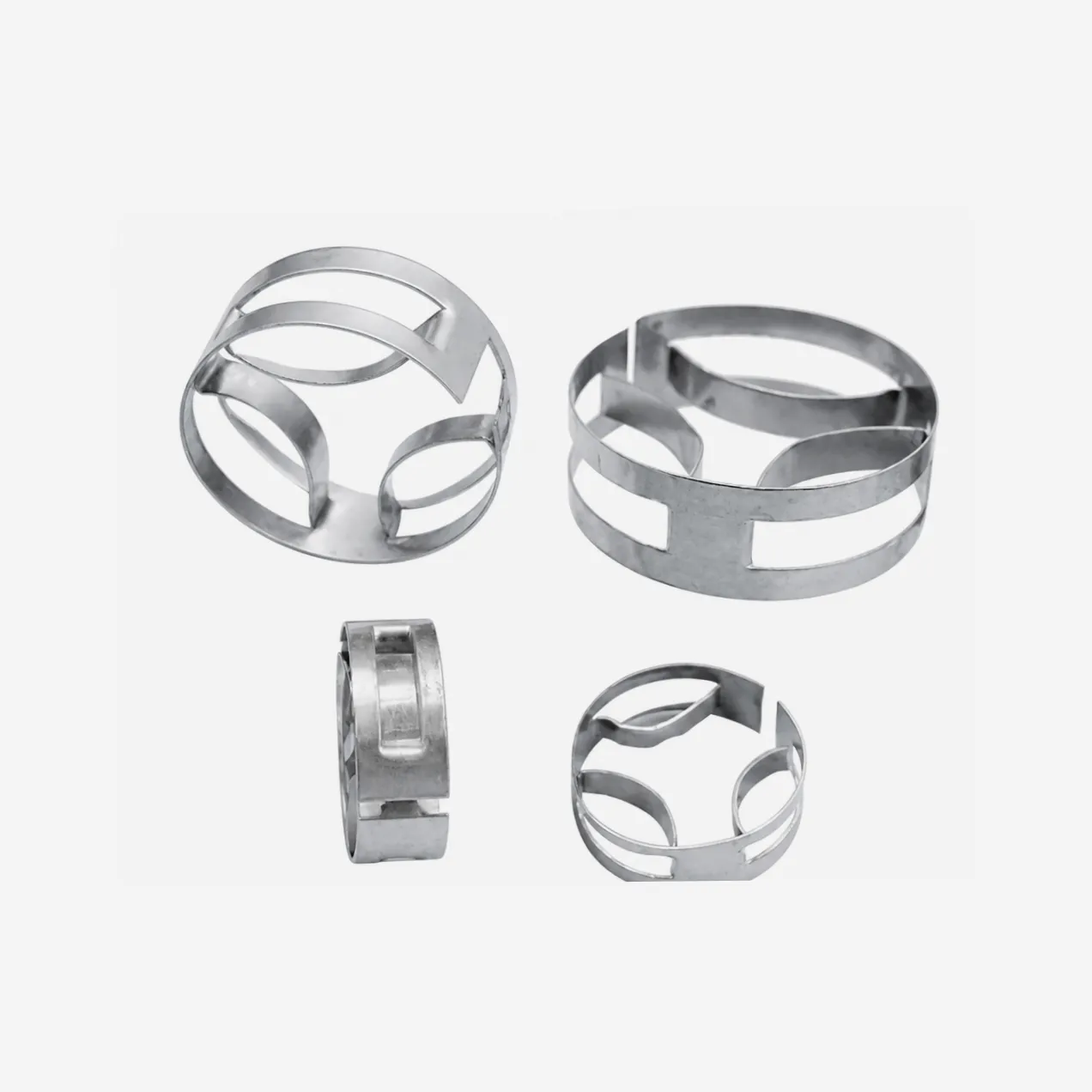
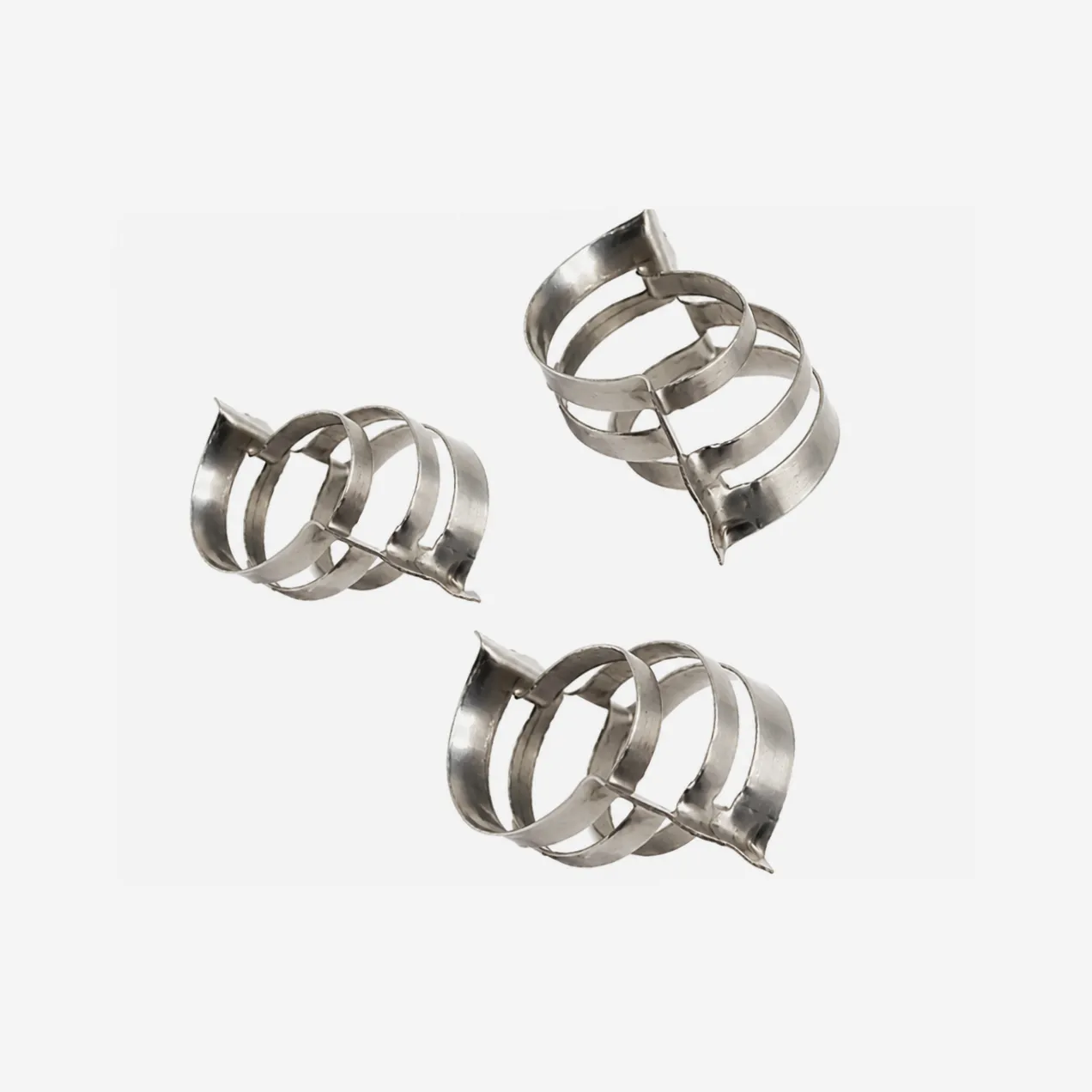
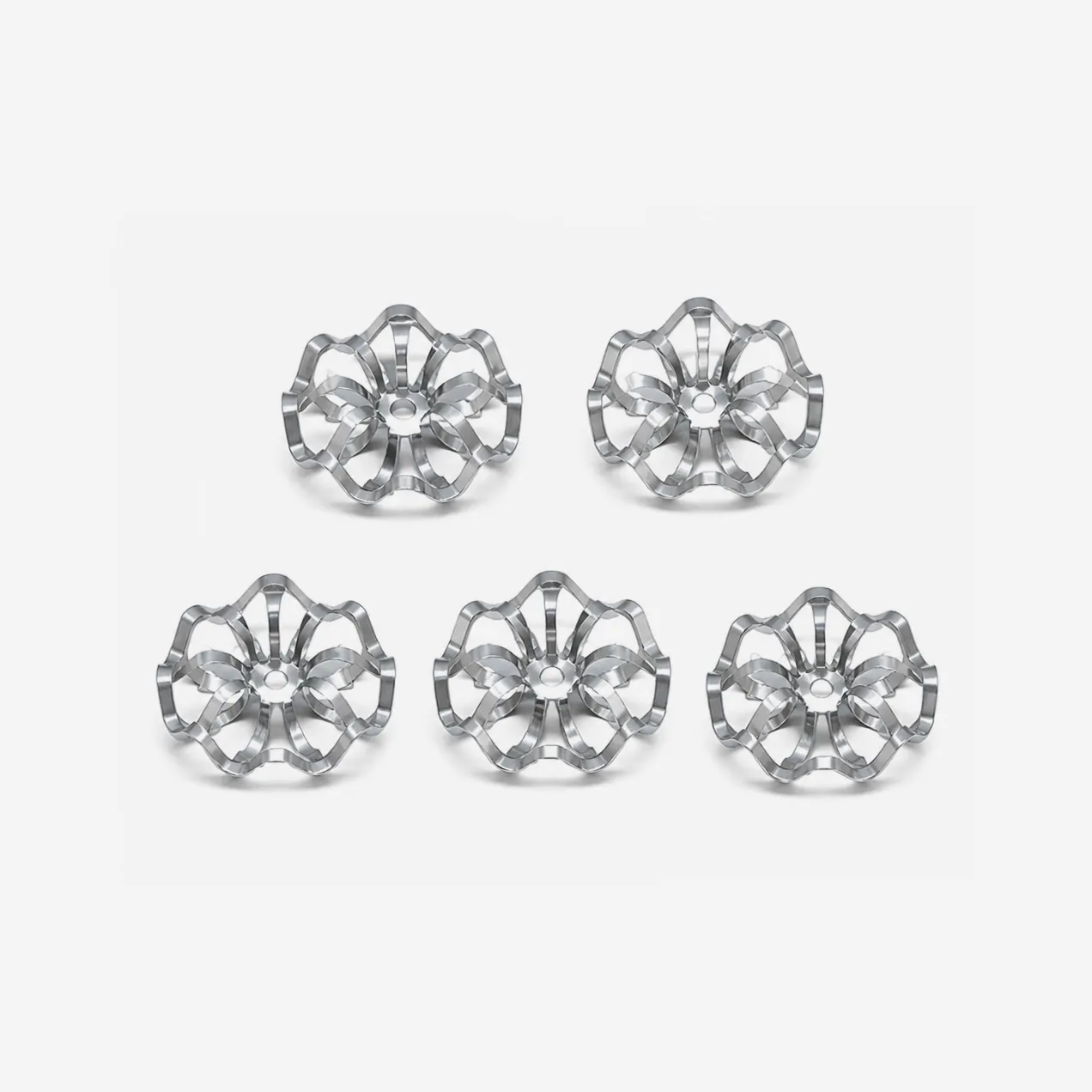
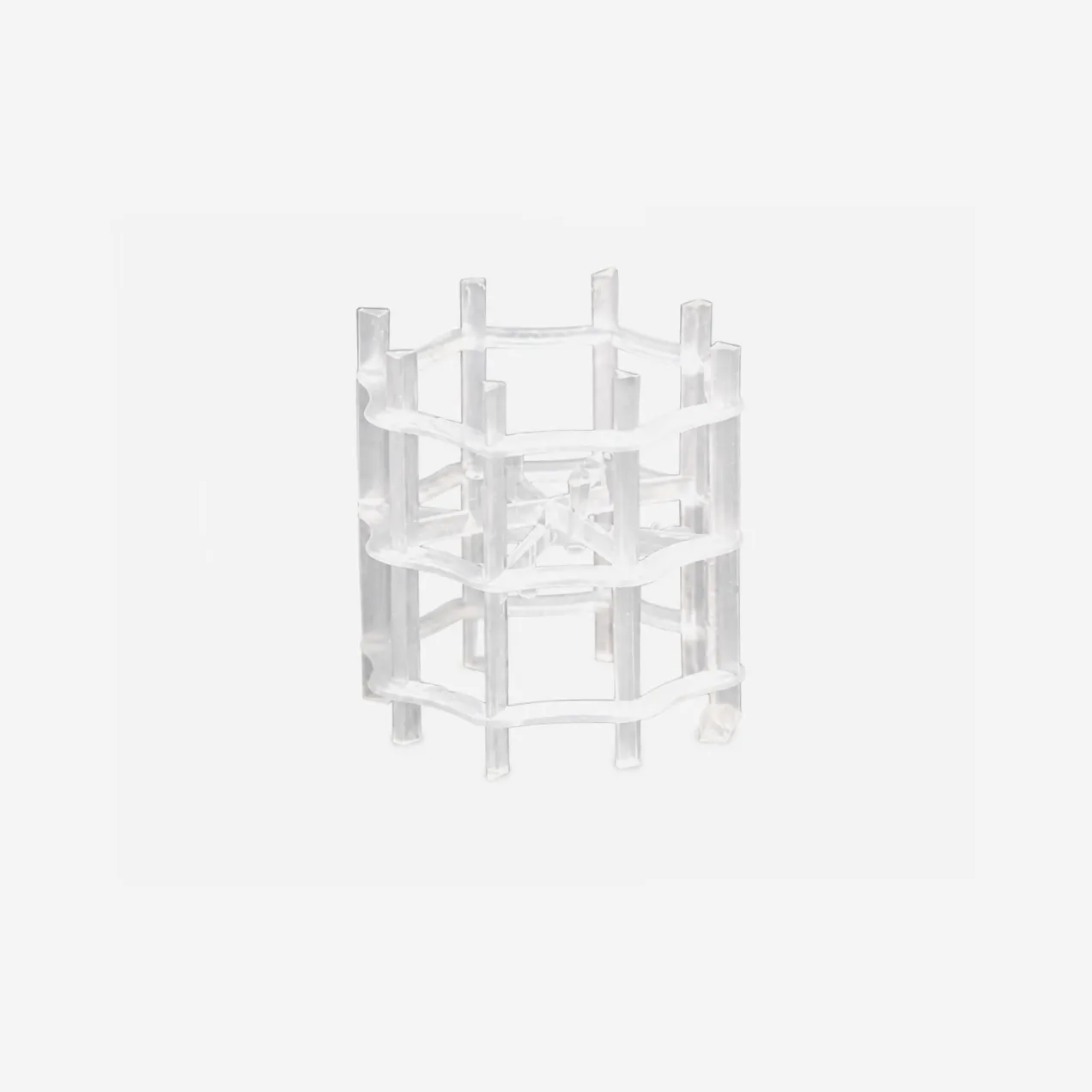
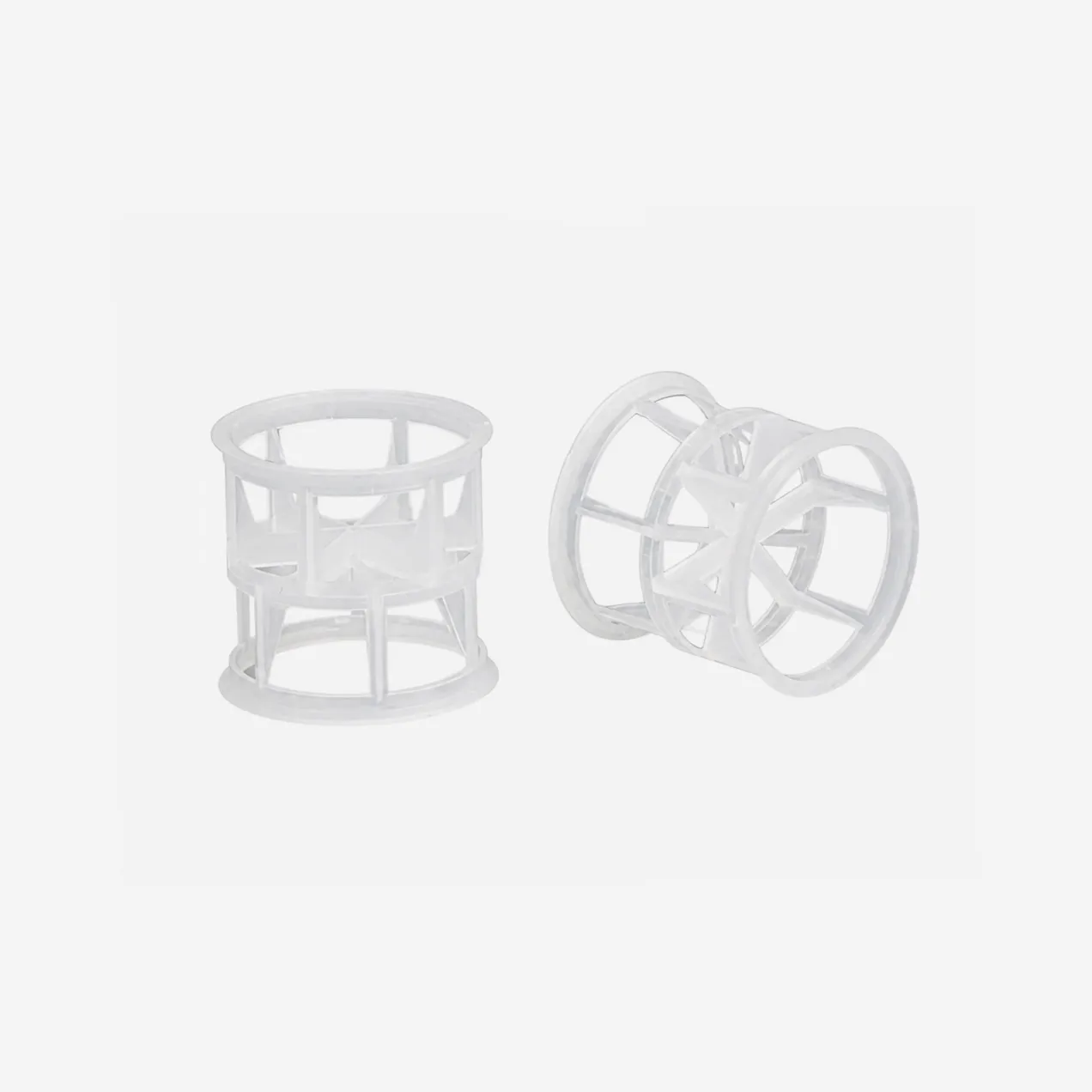
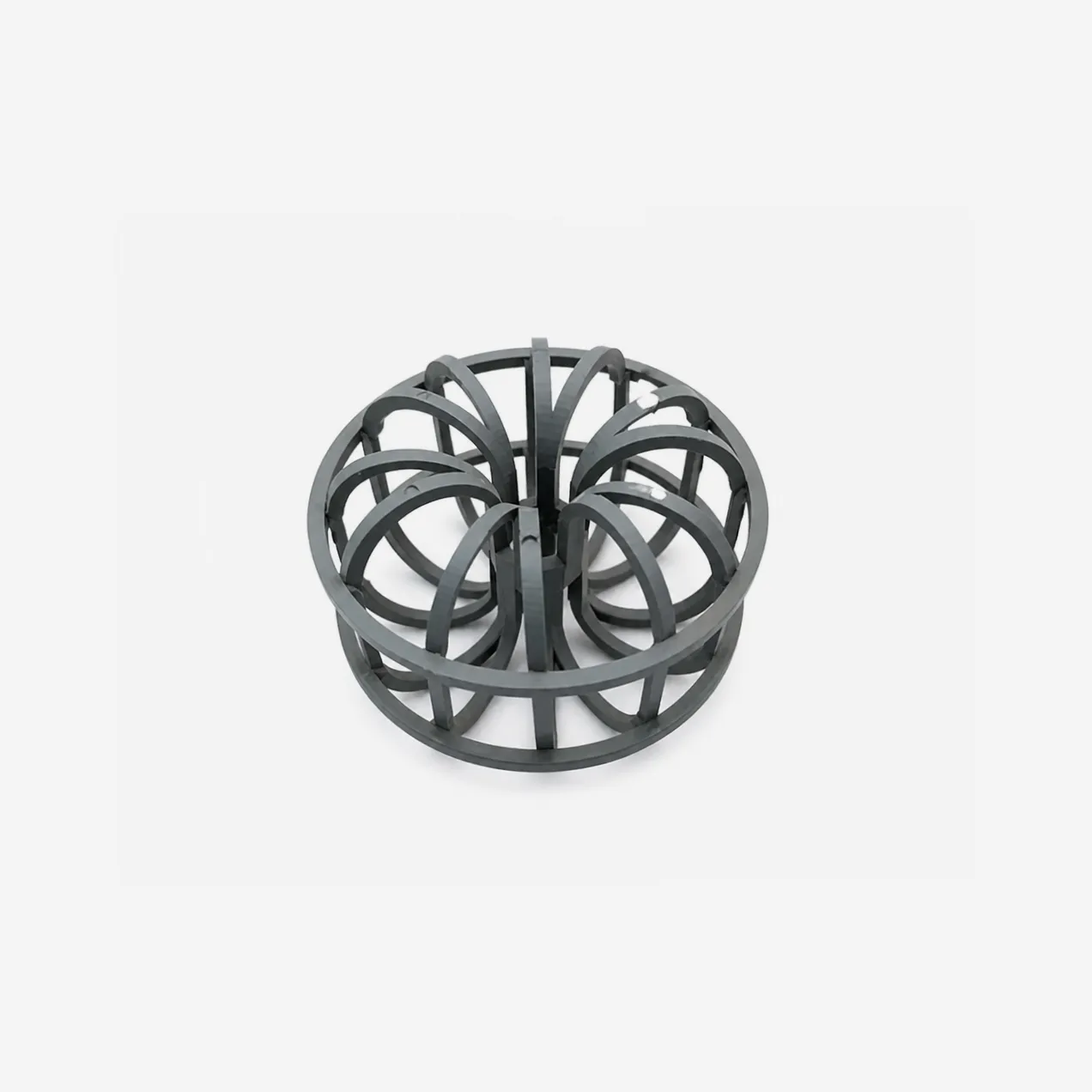
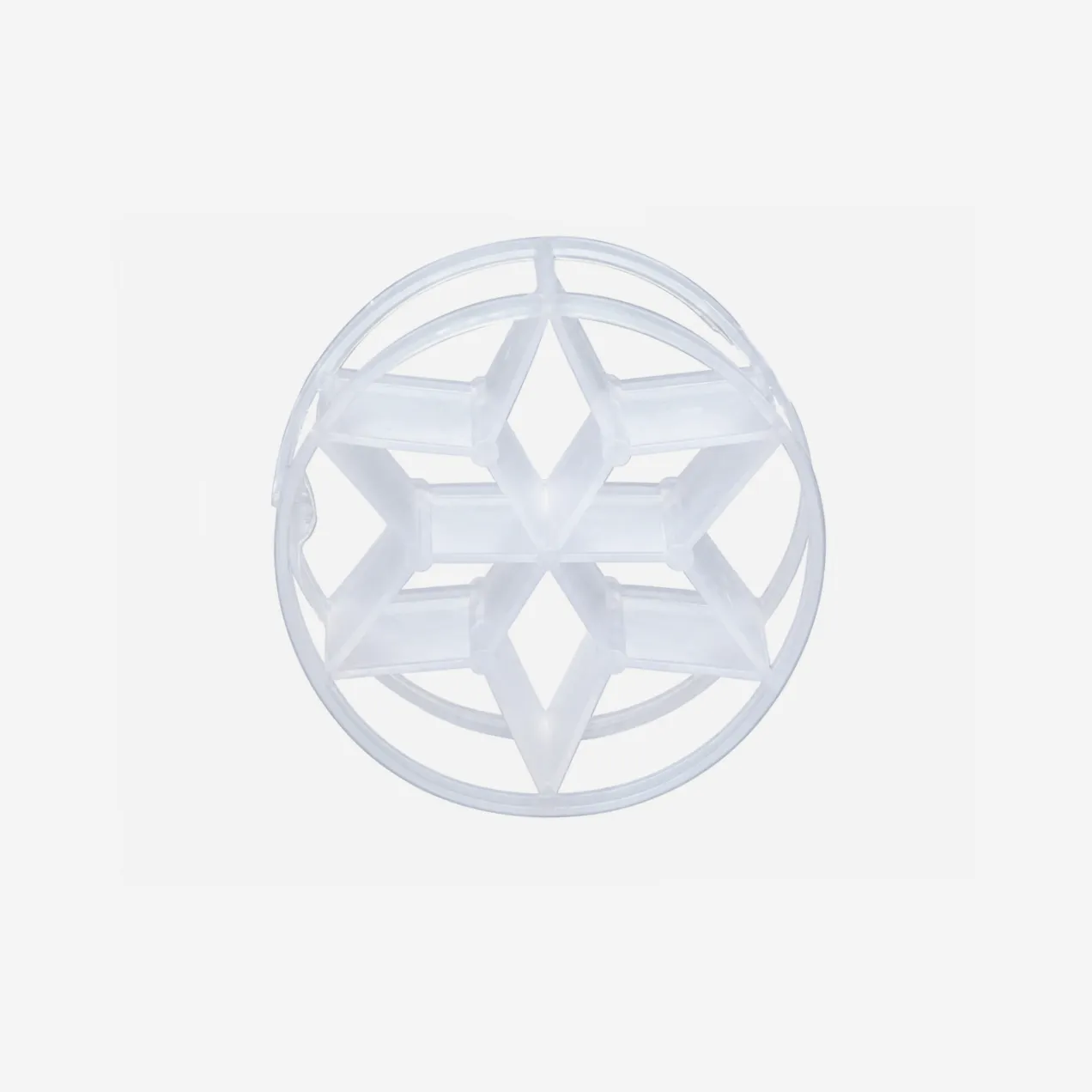
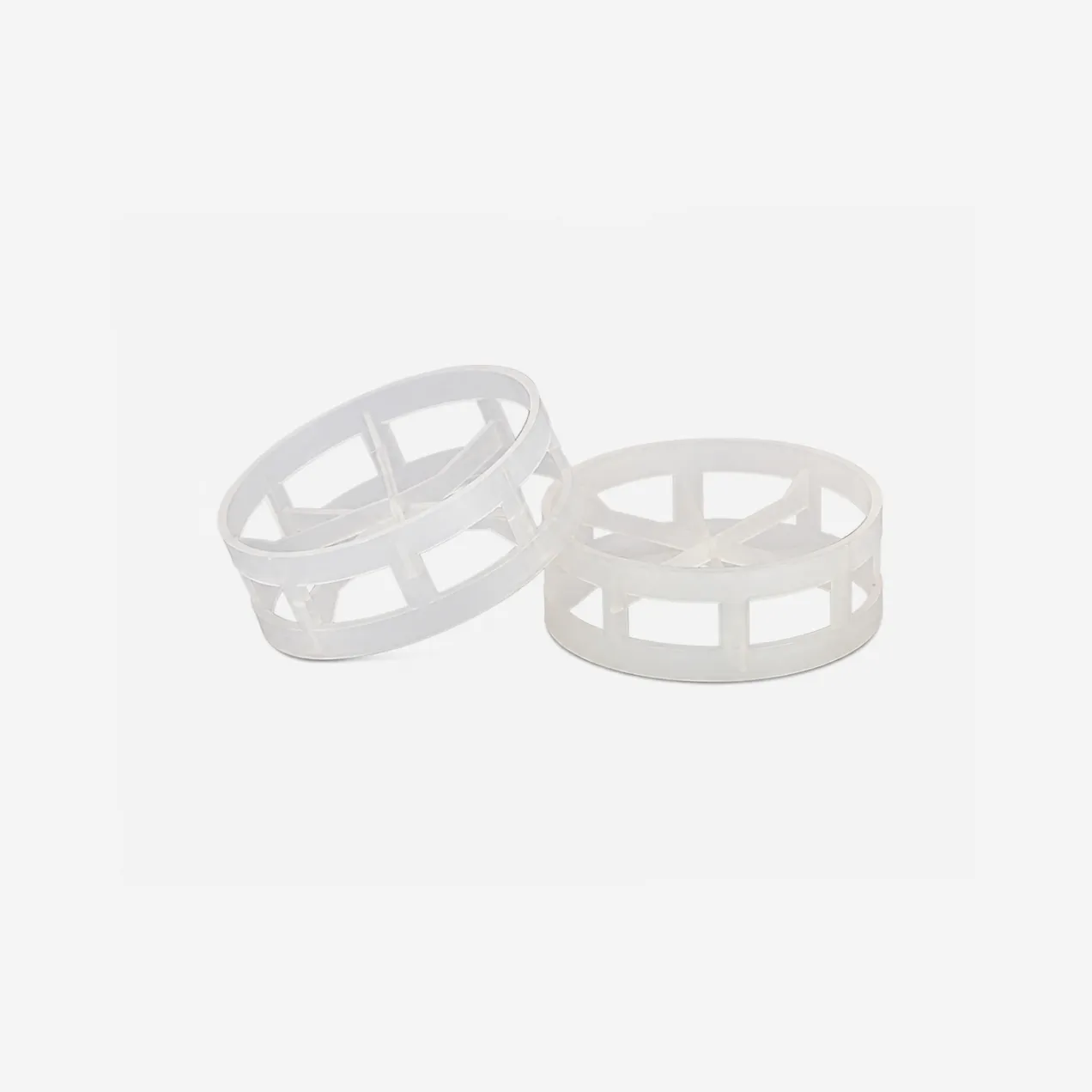
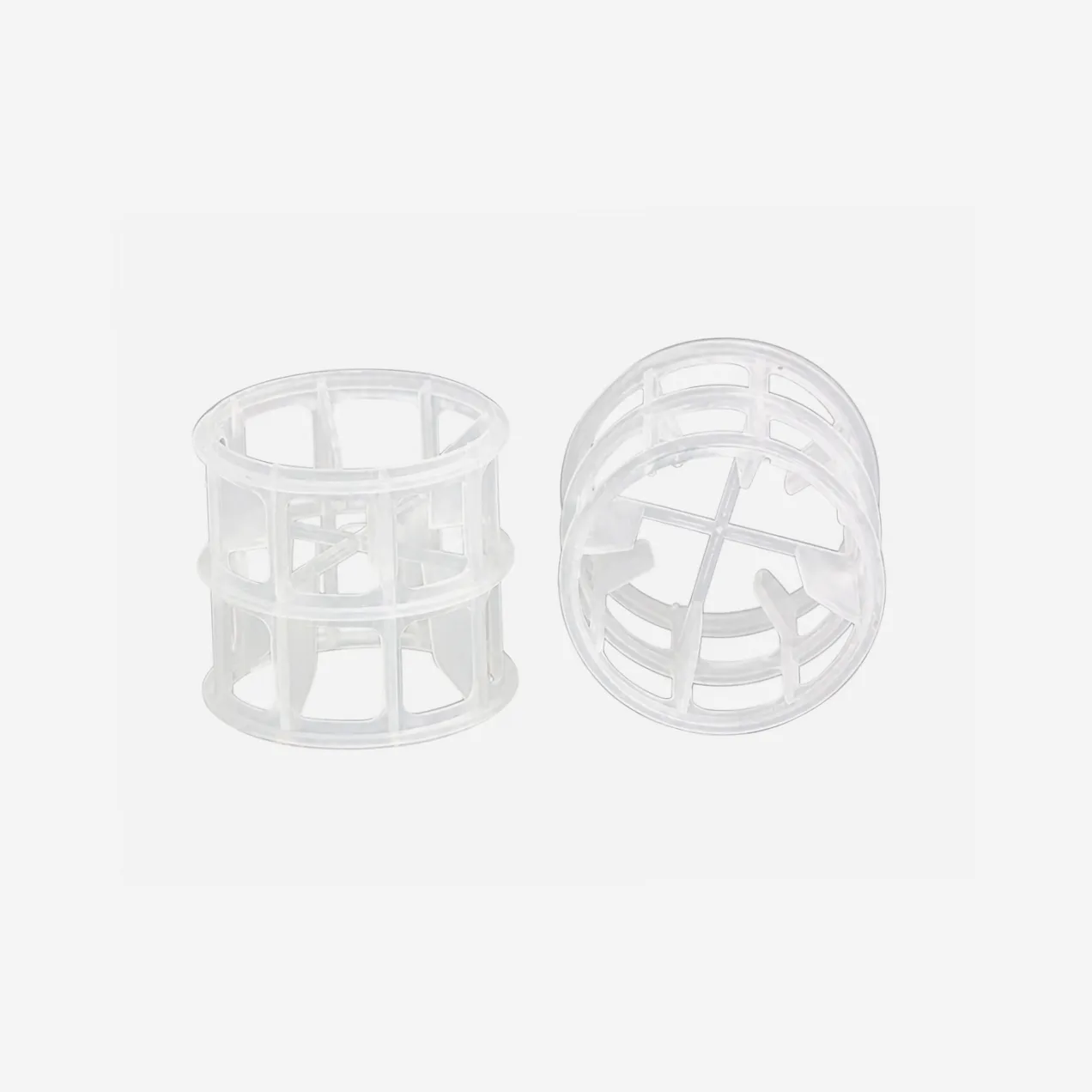
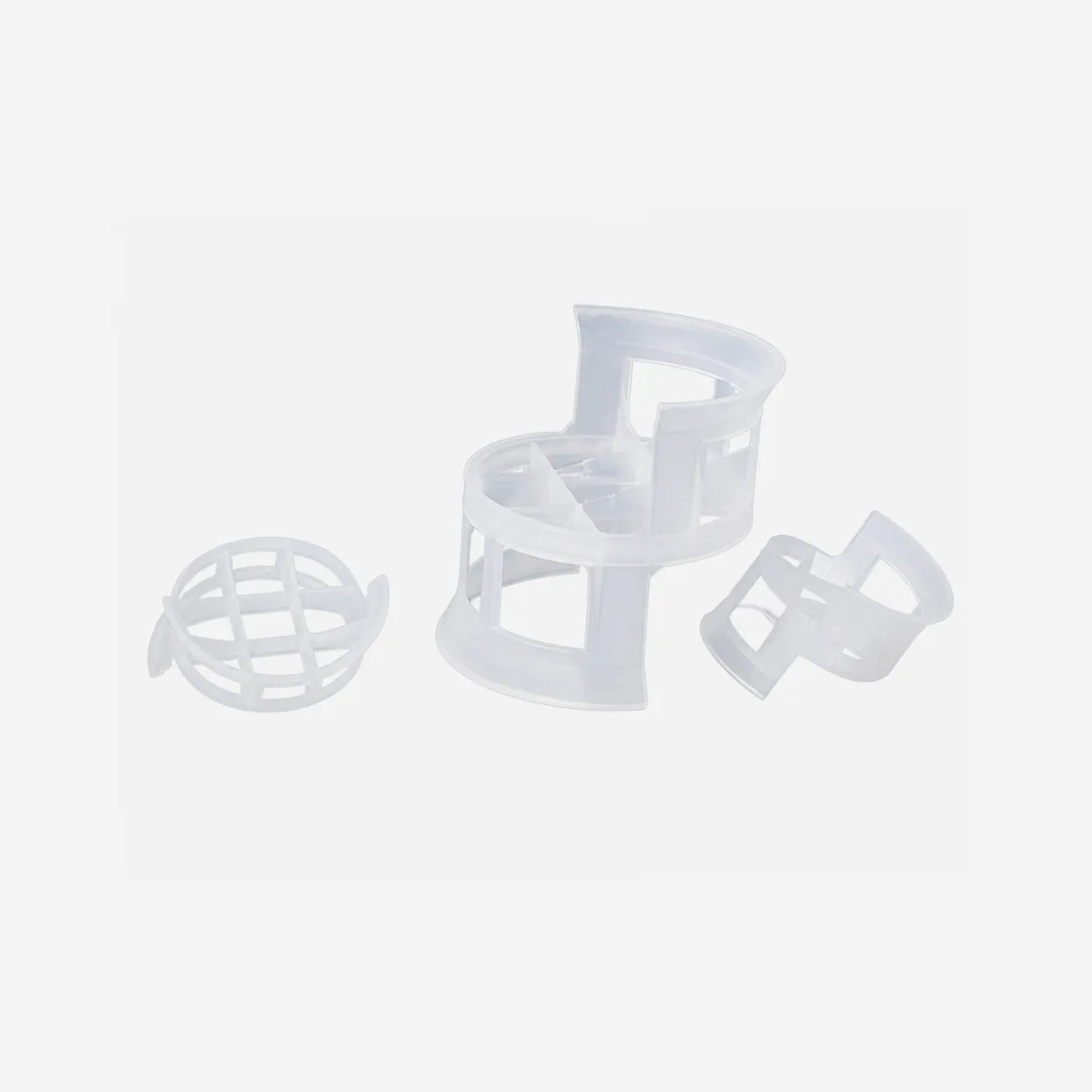
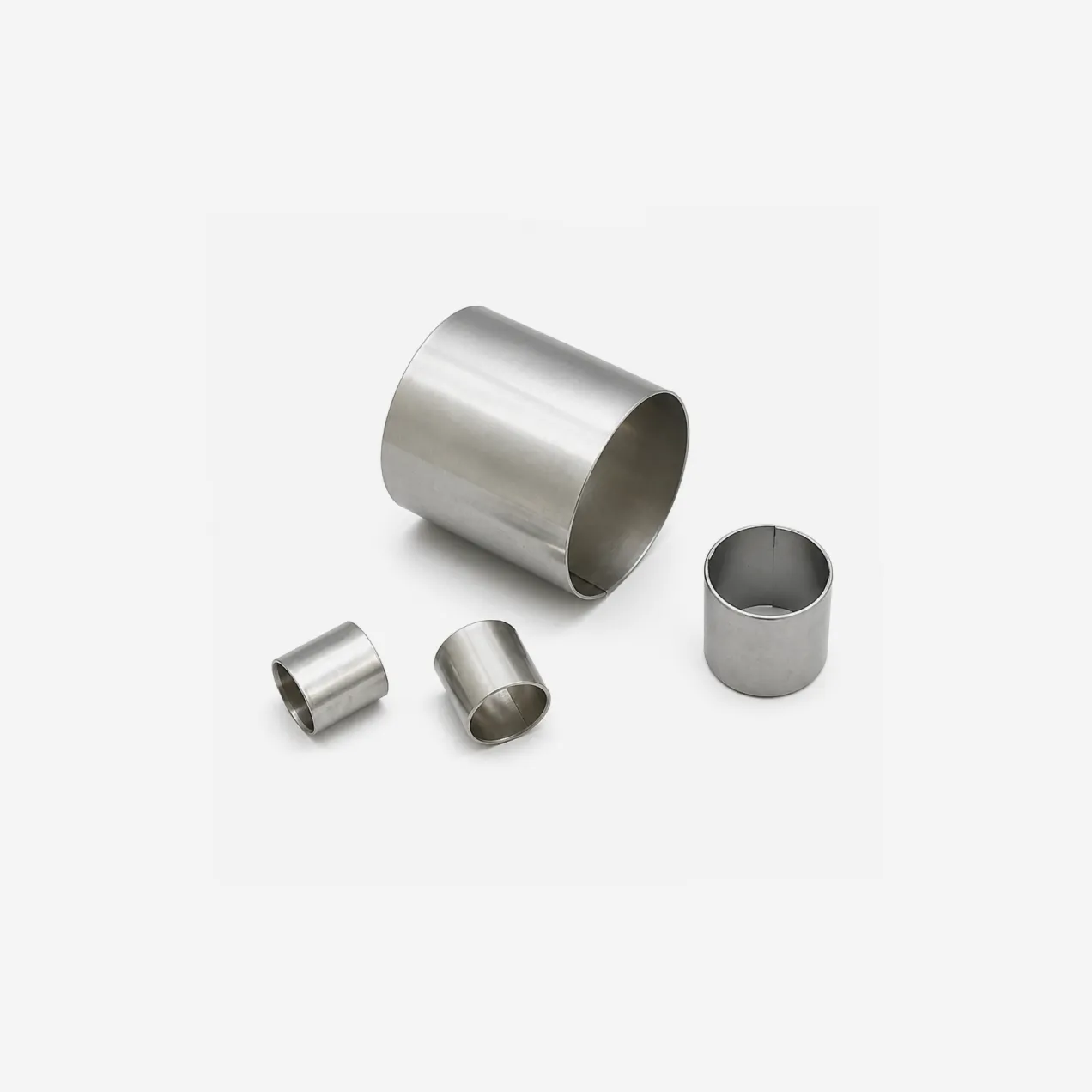
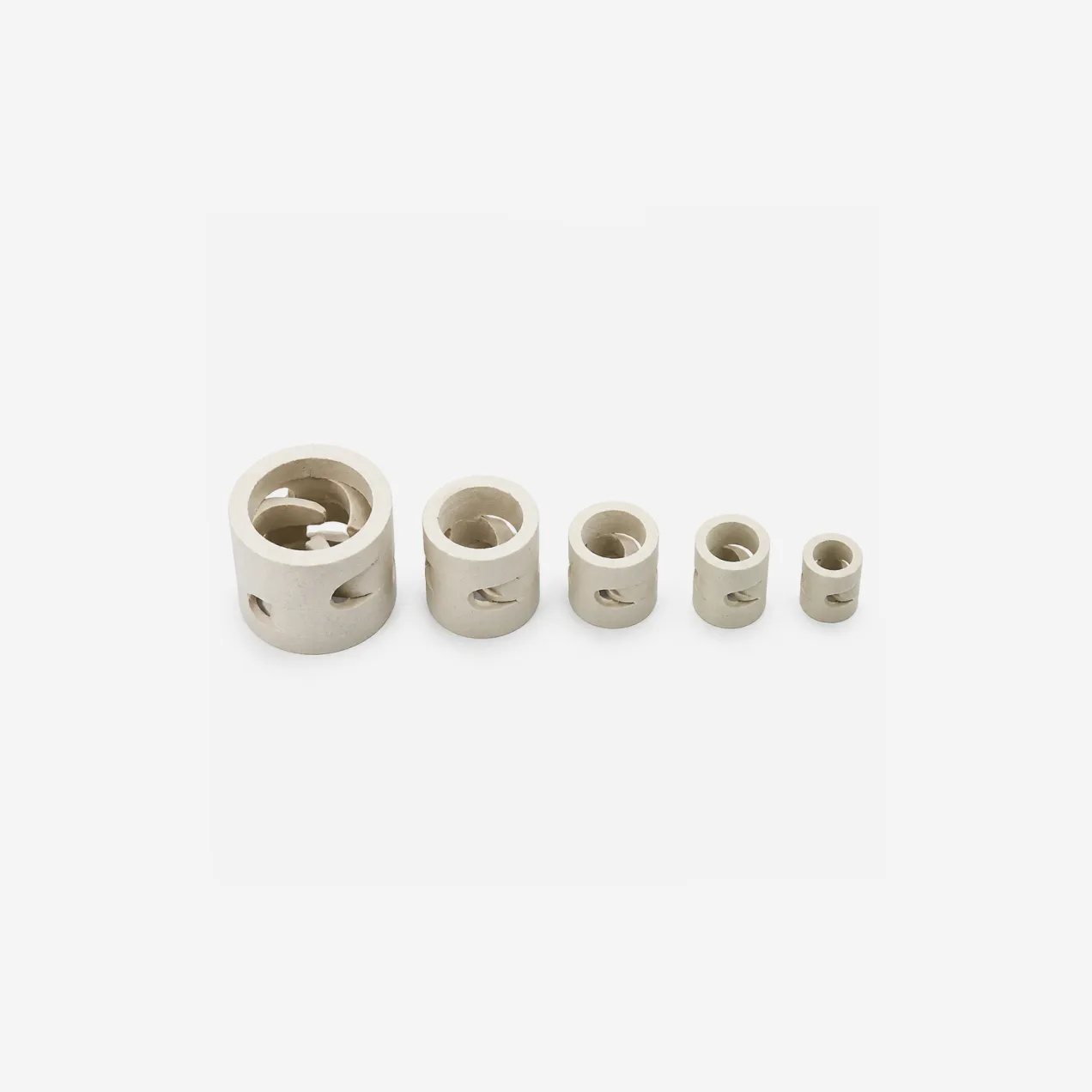
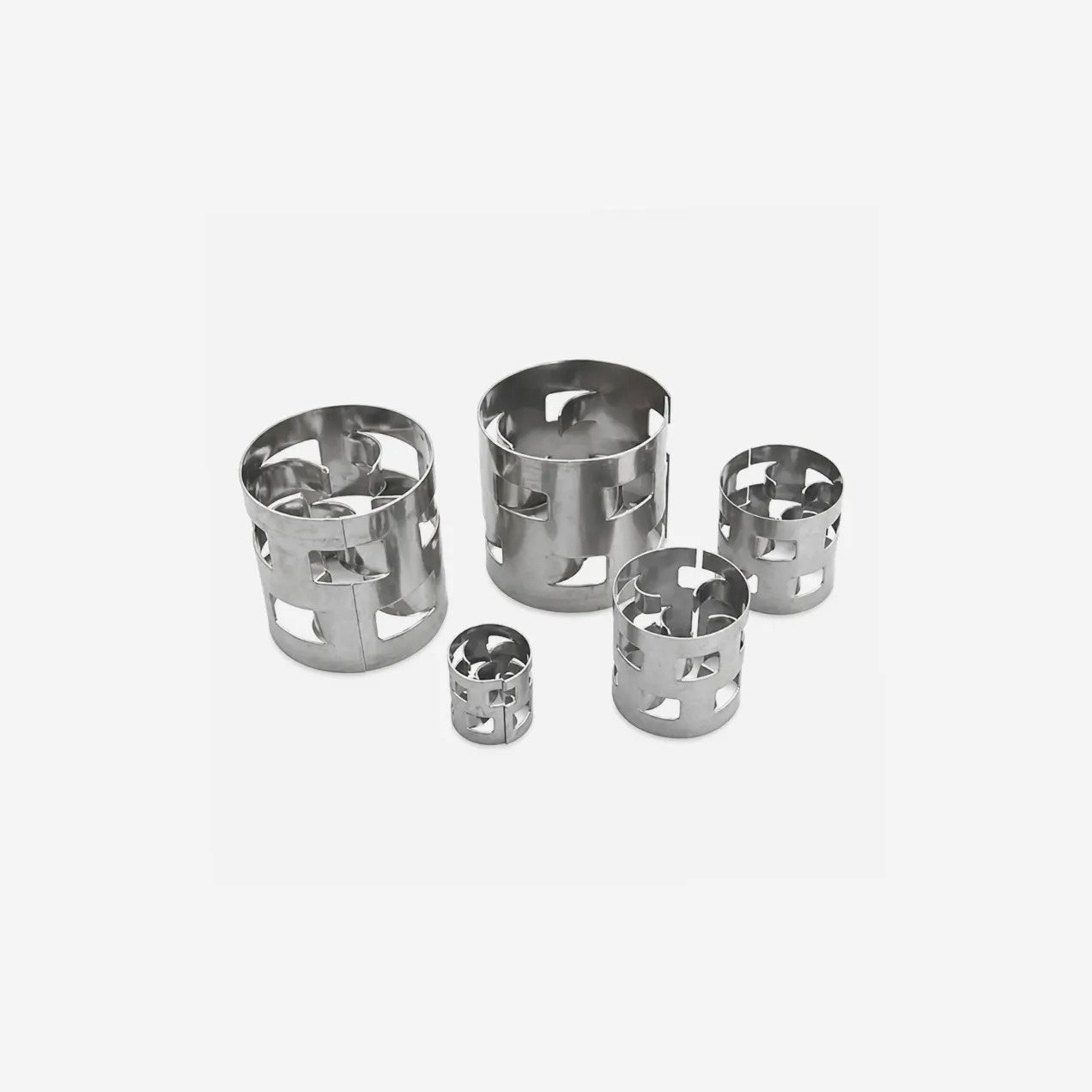
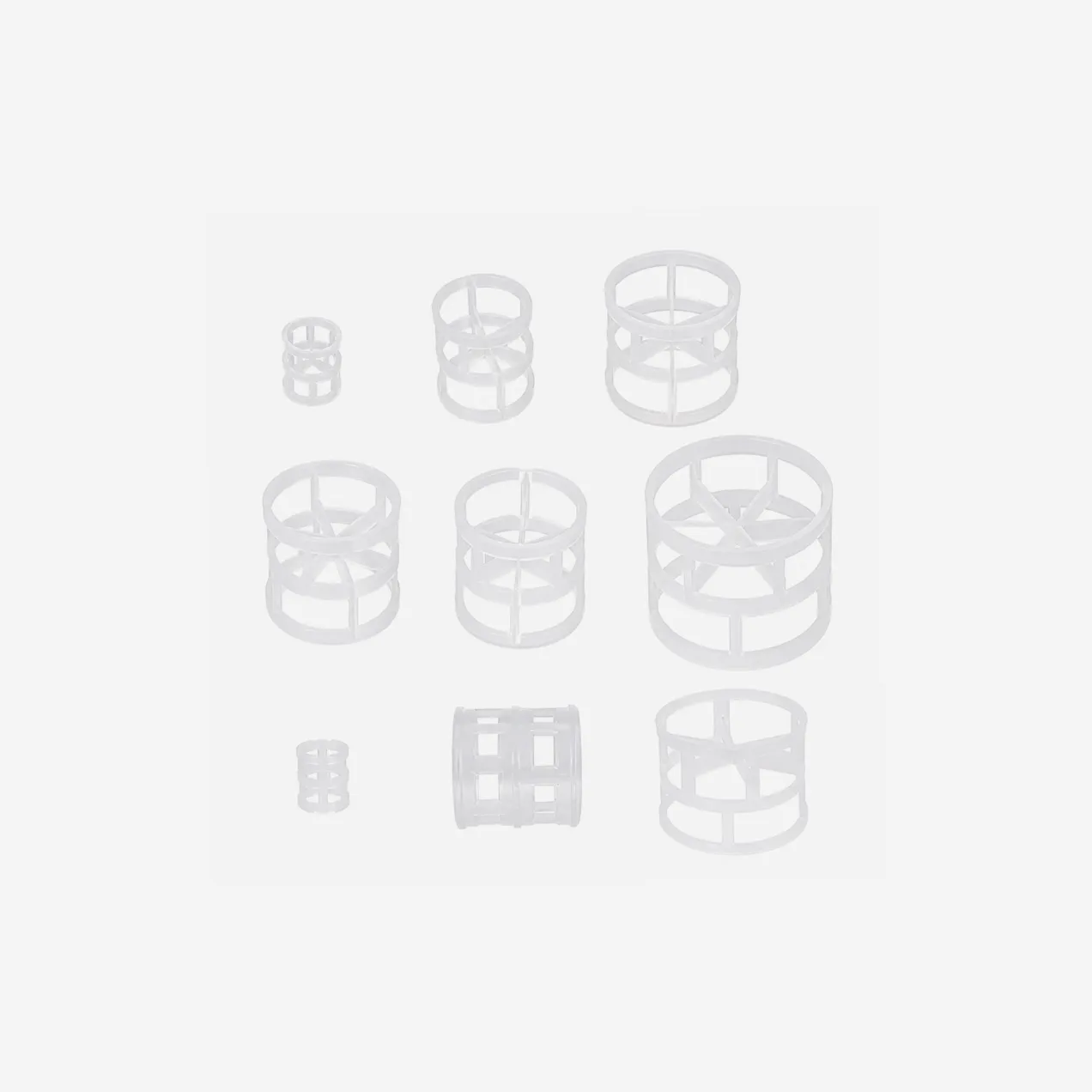
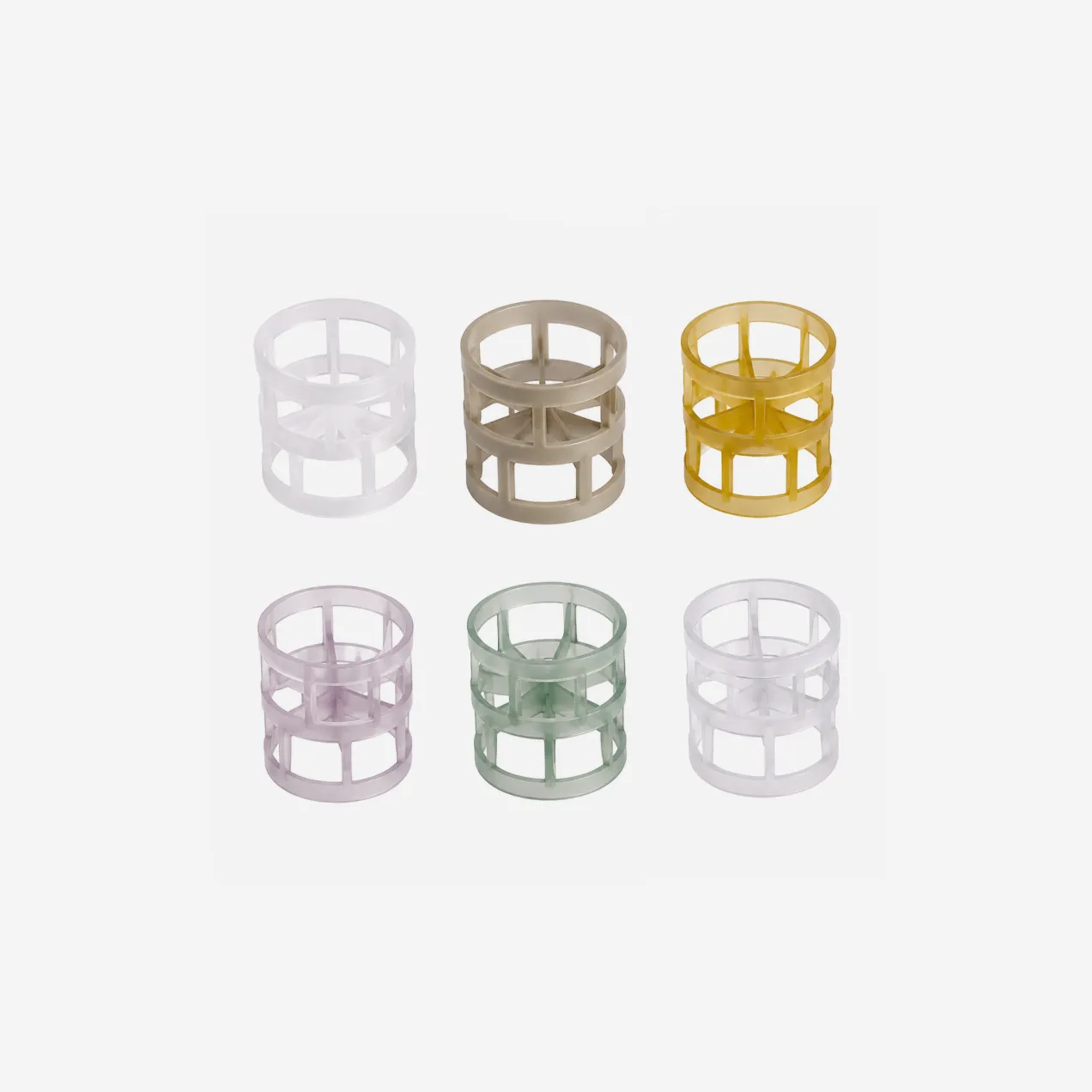
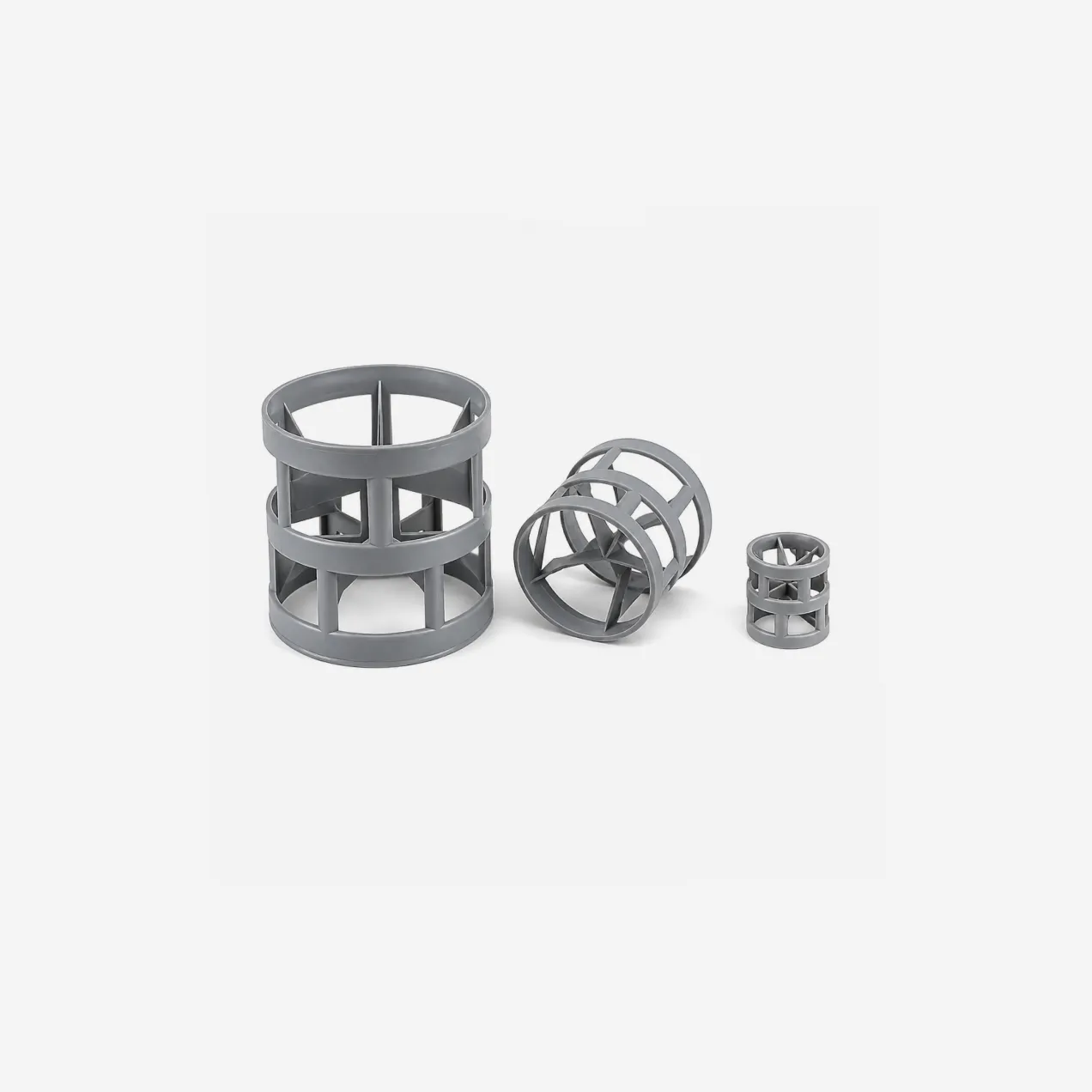
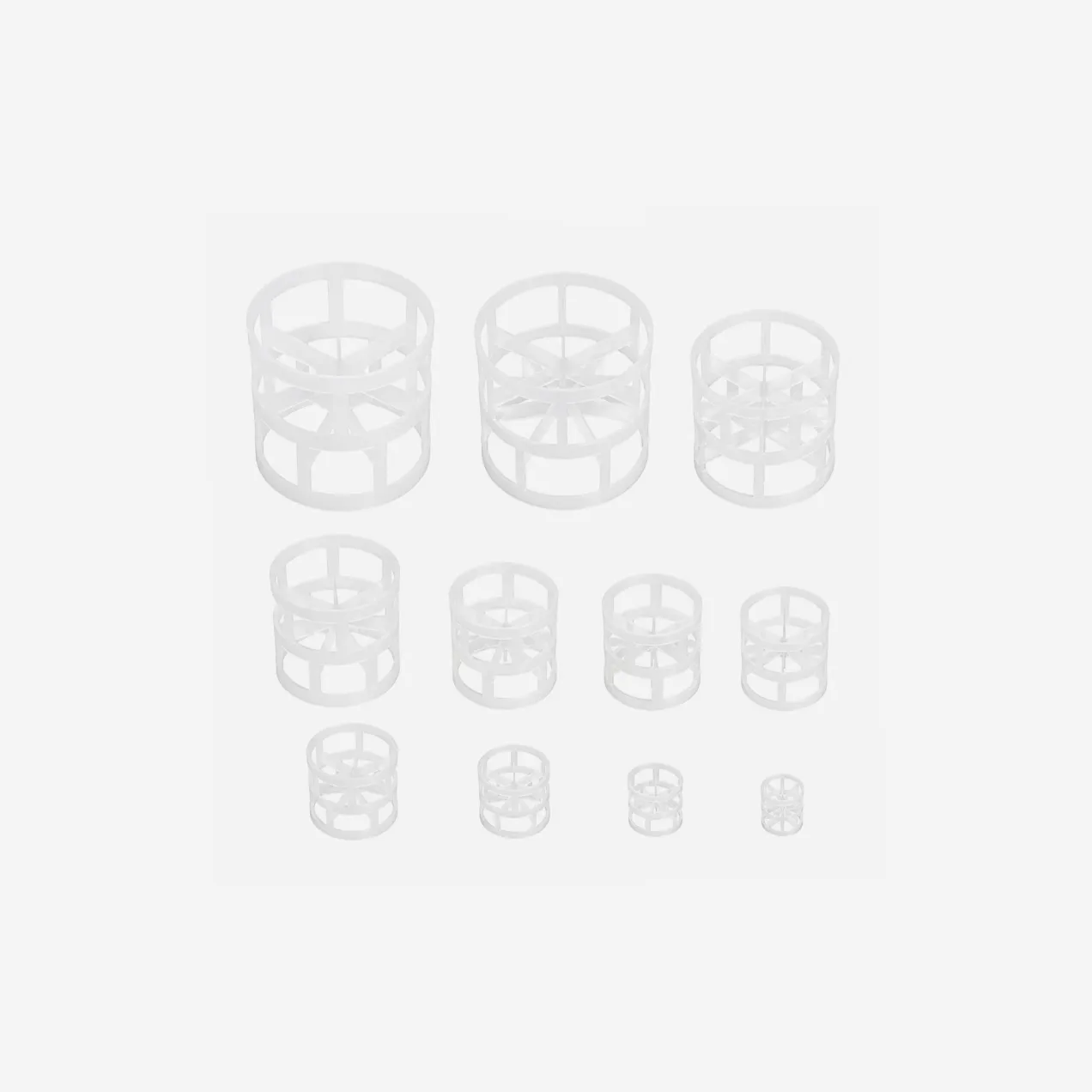
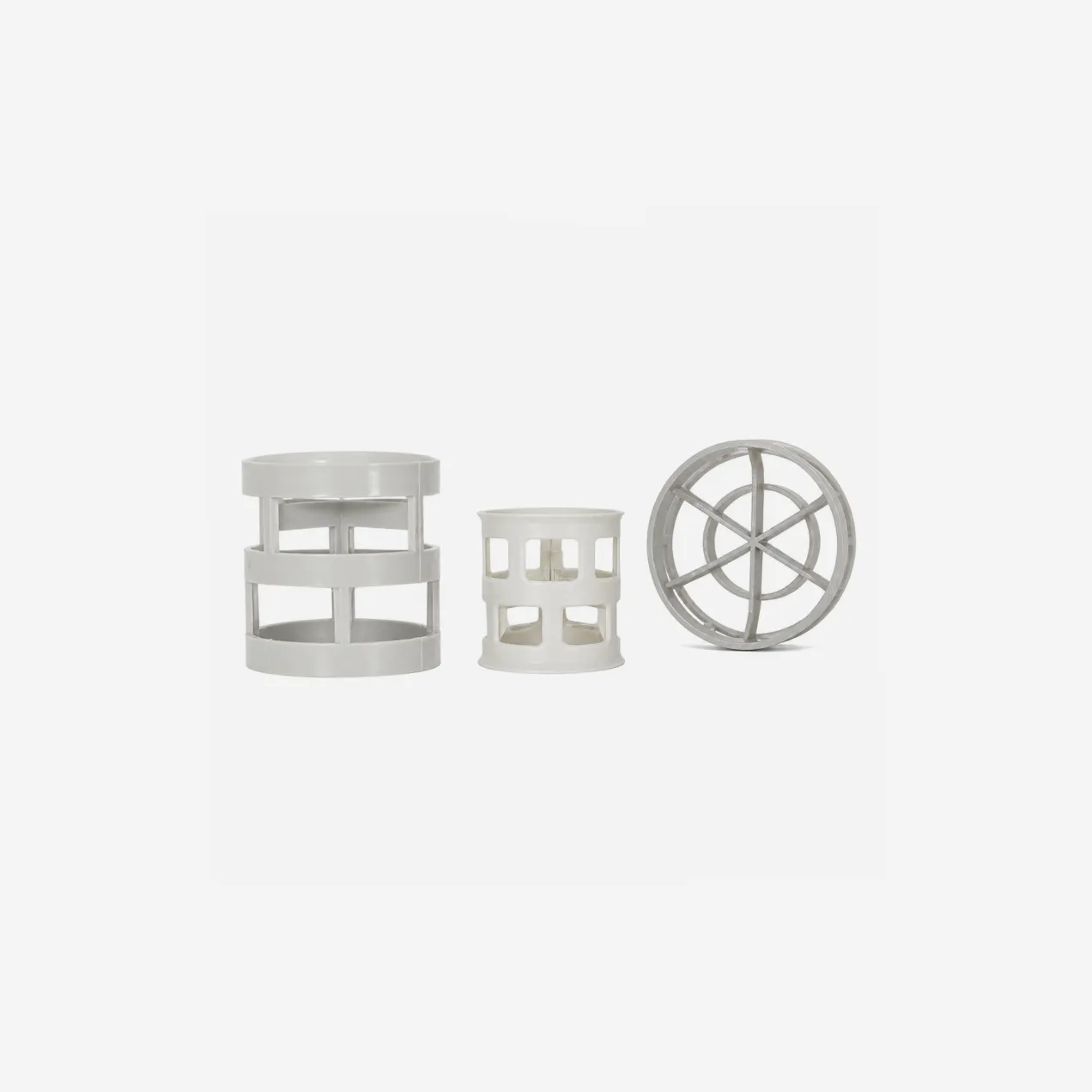
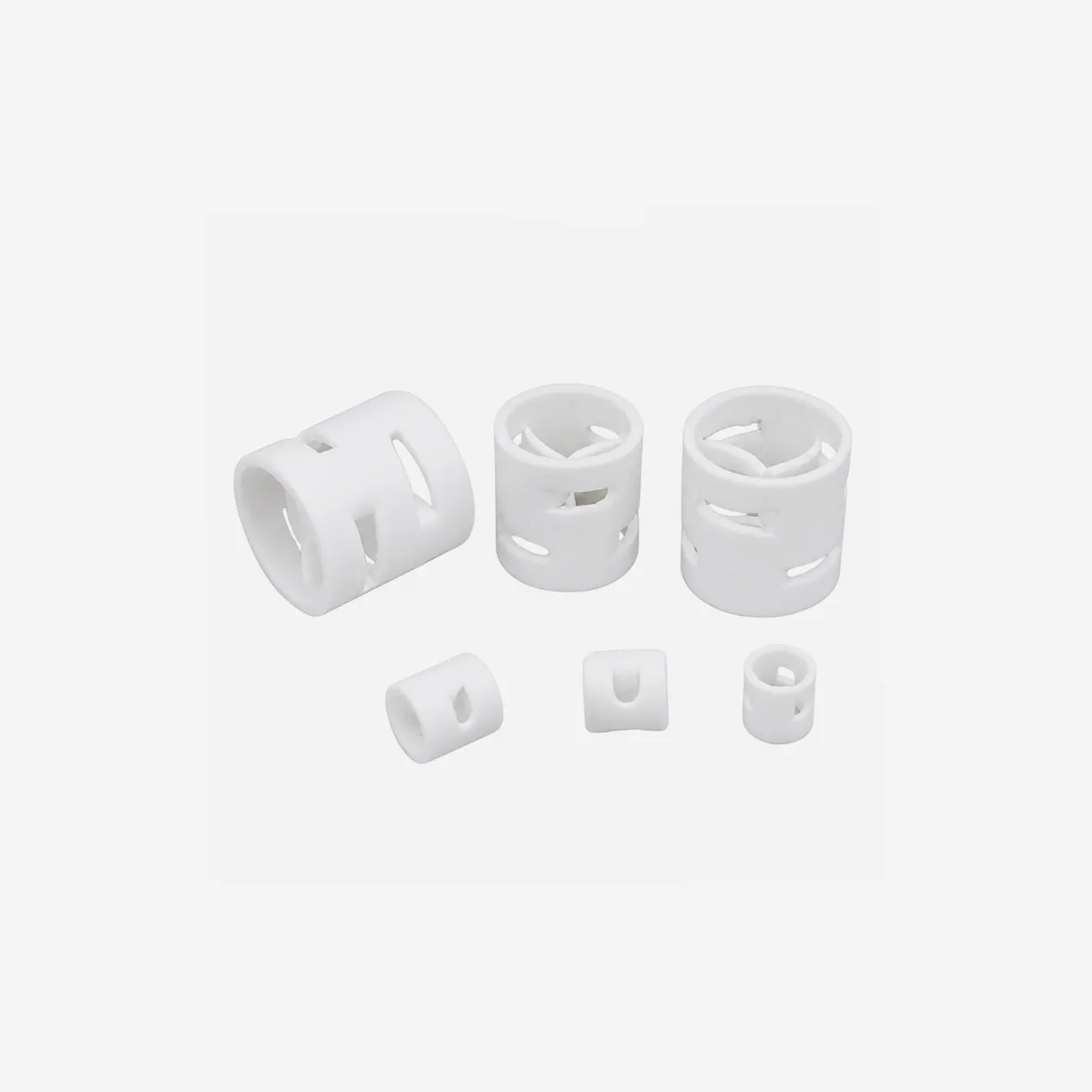
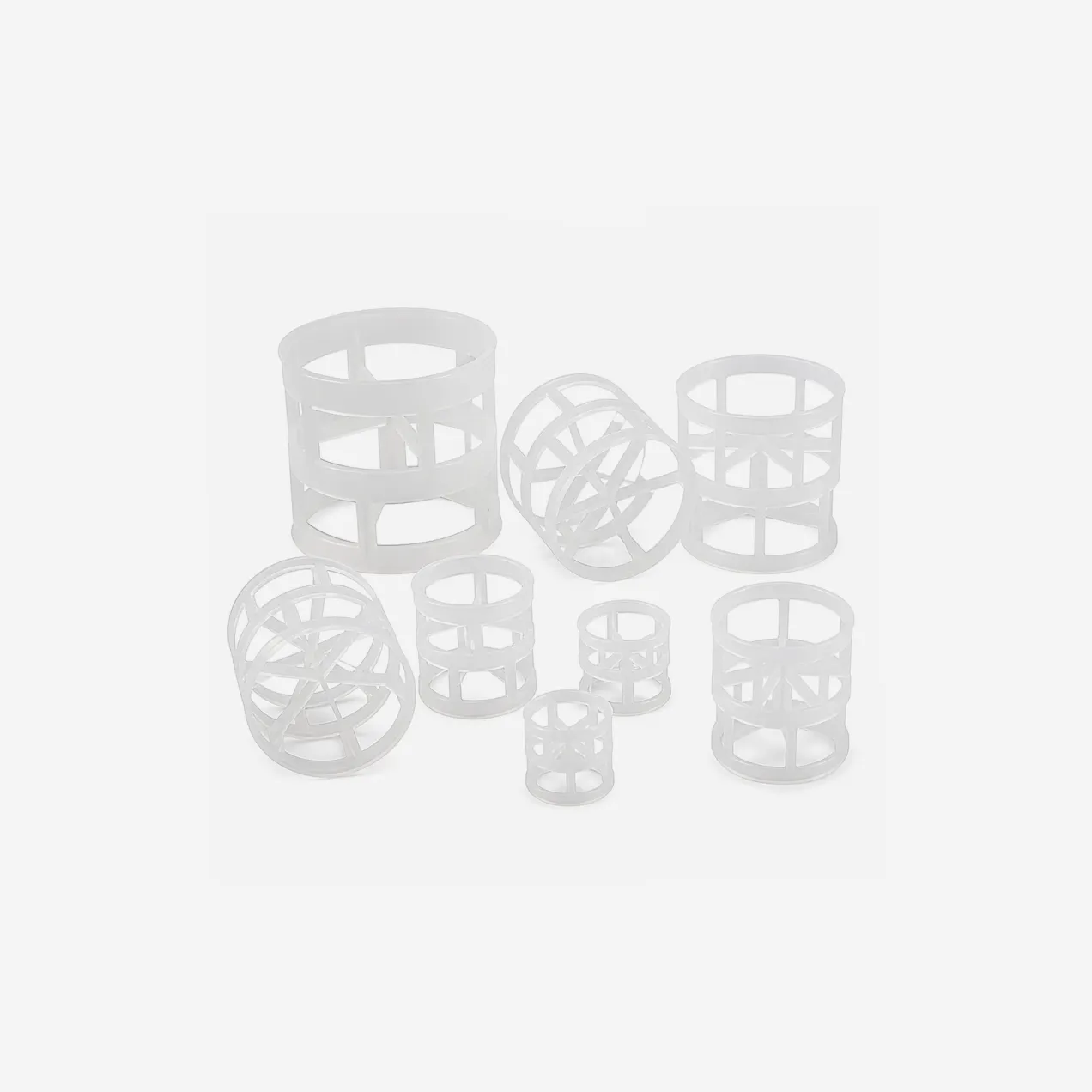
The metal conjugate ring is a windowed, or louvered, metal packing. A thin metal cylinder, carbon steel or stainless steel, has two staggered rows of windows punched into its wall, with the cut tongues folded inward. The open wall and the inward tongues are the whole point of the design: gas and liquid move freely through the roughly 35 percent open area, while the tongues catch and re-spread the liquid so the two phases mix thoroughly. That combination lifts efficiency well above a plain ring, at a low pressure drop, and because the ring is metal it keeps its shape and strength across a very wide temperature range.
Where the design earns its keep, feature by feature:
| Design feature | What it delivers |
|---|
| Two staggered rows of windows | More than 30 percent higher mass-transfer efficiency than older packings |
| Inwardly bent tongues | Even fluid distribution and continual renewal of the liquid film |
| About 35 percent open wall area | Low gas resistance, so a low pressure drop at high flow |
| Thin steel wall | High capacity and strength, from deep cold up to roughly 600 degrees |
Those qualities make it a versatile, cost-effective packing for demanding gas-liquid work: distillation columns, absorption and stripping towers, scrubbers, cooling and quench towers, and heat recovery, across petrochemical, wastewater, pharmaceutical and food plants. It is made from carbon steel or stainless steel 304, 304L, 410, 316 or 316L, in sizes from 16 to 90 mm. For the plastic form of the same ring, used in cooler corrosive service, ask about the plastic conjugate ring instead. For a quote, send the tower duty, the chemistry and the operating heat, and we will size it and pick the steel.